商汤科技

Search documents
想要复刻Anthropic模式,智谱仍面临许多挑战
3 6 Ke· 2026-01-07 09:52
Group 1 - The core viewpoint of the article highlights the challenges and opportunities faced by large model companies, particularly focusing on their transition towards a more stable business model centered around API services for B2B clients [2][3][10] - The article discusses the significant interest in IPOs for large model companies, with notable subscription rates for companies like Zhipu and MiniMax, indicating a strong market appetite [1] - It emphasizes the competitive landscape, where companies like Anthropic are leading the enterprise-level LLM API market, with a projected 32% market share by 2025, and the need for domestic companies to adapt to this trend [2][15] Group 2 - Zhipu's business model is shifting from localized deployment to a focus on API services, aiming to increase the revenue share from API business to 50% [4][9] - The financial performance of Zhipu shows a concerning trend, with net losses increasing significantly from 1.44 billion in 2022 to 29.58 billion in 2024, and a projected loss of 23.58 billion in the first half of 2025 [19][21] - The article outlines the challenges faced by Zhipu in achieving profitability, with a negative gross margin for its cloud deployment business and high R&D costs primarily driven by computing power expenses [5][14][21] Group 3 - The competitive environment in the domestic market is described as a "red ocean," with price wars becoming a significant factor as companies strive to capture market share [22][26] - Zhipu's strategy includes integrating its G2B and B2B operations to streamline resources and improve efficiency, reflecting a broader trend among large model companies to focus on core capabilities [27][29] - The article concludes that the ability to convert R&D investments into stable cash flow will be a critical test for all large model companies as they navigate the transition to public markets [29]

壁仞、沐曦等国产GPU“上桌”之前,这家公司搭起自主算力底座 | 电厂
Xin Lang Cai Jing· 2026-01-06 11:49
Core Insights - The domestic GPU companies are entering a critical phase as they prepare for significant market opportunities, with several companies like Birran Technology and Moer Thread successfully listing on stock exchanges [1][2] - The collaboration among these companies is essential for building a robust domestic computing and model ecosystem, with projections indicating rapid growth in GPU supply by 2026 [2][3] Group 1: Market Developments - Birran Technology officially listed on the Hong Kong Stock Exchange on January 2, 2025, following successful listings of other companies like Moer Thread and Muxi Technology [1] - The domestic AI sector is no longer limited to a few key players, as companies like SenseTime and Cambricon are now joined by others, expanding the investment landscape [1] Group 2: Industry Collaboration - The companies are not isolated entities but are part of a collaborative effort to enhance the domestic computing ecosystem, with a focus on integrating AI across various industries [2] - SenseTime has established a comprehensive collaboration system with major domestic chip manufacturers, ensuring compatibility and optimizing the application of AI technologies [5][6] Group 3: Technological Advancements - SenseTime's SenseCore platform has achieved full compatibility with several leading domestic chips, facilitating a complete cooperation framework from computing supply to application deployment [5] - The company has developed innovative frameworks like LightX2V, which significantly enhance the efficiency of model training and adaptation to various hardware [7] Group 4: Performance Metrics - SenseTime's Seko model demonstrates competitive performance against international counterparts, achieving similar results in video generation with domestic chips [8] - The Seko platform has rapidly gained traction, surpassing 200,000 creators within six months of launch, indicating strong market acceptance [8] Group 5: Strategic Initiatives - SenseTime has established a "three-in-one" strategy focusing on large devices, models, and applications, which has led to a significant increase in its generative AI business [15] - The company plans to raise funds through a new share placement to expand its AIDC capabilities and increase the domestic production ratio [16]

商汤全栈AI布局获好评,单日拉升超7%!银河证券给予3.18港元目标价上涨空间47%
Sou Hu Cai Jing· 2026-01-06 08:05
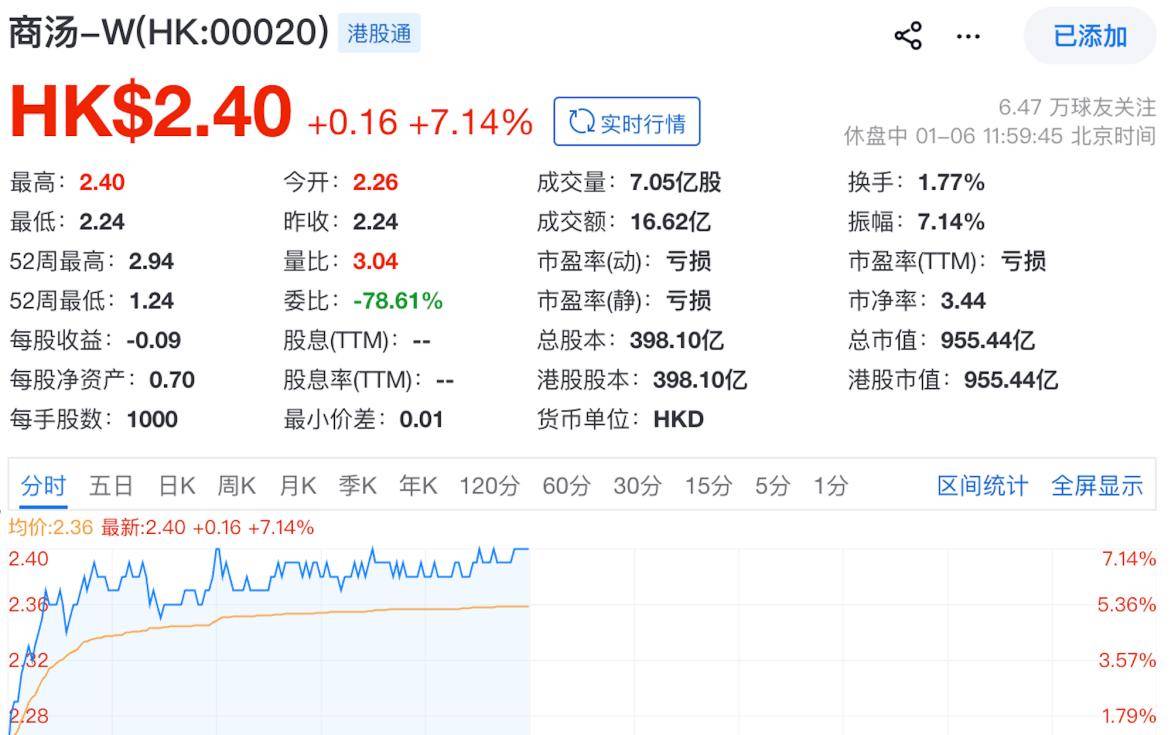
Core Viewpoint - SenseTime's stock price surged to HK$2.40, a 7.14% increase, driven by short-term catalysts in the "robotics, AI" sector and long-term improvements in its fundamentals, supported by institutional ratings and increased trading volume [1][2] Group 1: Stock Performance - The stock reached a peak of HK$2.40 with a trading volume of 705 million shares and a total turnover of HK$16.62 billion [1][2] - The stock's 52-week high is HK$2.94, while the low is HK$1.24, indicating significant volatility [2] Group 2: Institutional Support - Galaxy Securities initiated coverage on SenseTime with a target price of HK$3.18, suggesting a 47% upside from the closing price of HK$2.16 on December 10, 2025 [2] Group 3: Product Launches - SenseTime launched several new products during its "Product Release Week," including the innovative multi-episode generation agent Seko2.0 and various AI applications for office and e-commerce [3][5] - The new products aim to address industry pain points such as high energy consumption and implementation challenges [5] Group 4: Growth Projections - Galaxy Securities forecasts a compound annual growth rate (CAGR) of 30% for SenseTime from 2024 to 2027, with revenue expected to rise from RMB 3.8 billion to RMB 8.3 billion, and profitability anticipated by 2027 [4] - SenseTime's generative AI business is projected to account for 77% of total revenue by mid-2025, becoming a core growth driver [4] Group 5: Technological Advancements - The launch of new products and technological innovations is expected to solidify SenseTime's growth foundation, with significant improvements in product functionality and efficiency [5][6] - The open-source multi-modal NEO architecture requires only 3.9 million training data points to achieve top-tier performance, showcasing the company's technological capabilities [5] Group 6: Valuation Insights - The recent product launches and technological breakthroughs are seen as key drivers for valuation recovery, with Galaxy Securities noting that the current enterprise value/sales ratio of 13 times for the 2026 fiscal year does not fully reflect the growth potential of generative AI [6] - The combination of continuous technological innovation, clear strategic focus, and positive capital ratings creates a resonant effect that may enable SenseTime to realize its growth potential [6]
国产GPU厂商曦望获得国企混改基金投资
Sou Hu Cai Jing· 2026-01-06 01:59
Group 1 - The domestic GPU manufacturers are experiencing a wave of IPOs, with companies like Moore Threads, Muxi Co., and Birun Technology recently listing on the A-share and Hong Kong stock markets [1] - Several other GPU companies are also in the process of going public, indicating a growing trend in the industry [1] - Shanghai Zhenliang Intelligent Technology Co., Ltd. has recently increased its registered capital to approximately 815 million yuan, with new shareholders including Ningbo Yuexiu Yongyuan Equity Investment Partnership and China State-Owned Enterprise Mixed Ownership Reform Fund [1] Group 2 - Shanghai Zhenliang is an affiliate of Hangzhou Xiwang Chip Intelligent Technology Co., Ltd., which focuses on high-performance GPU development and positions itself as a "chip company that understands AI better" [1] - Hangzhou Xiwang was established in June 2025 with a registered capital of 20 million yuan and is fully owned by Shanghai Zhenliang [1] - Xiwang was incubated by SenseTime and completed nearly 1 billion yuan in financing in June 2025, launching its S2 and S3 product lines [1]
“国产GPU四小龙”上市潮下的生态协同:AI巨头企业牵头构建国产AI芯片全适配网络
Mei Ri Jing Ji Xin Wen· 2026-01-05 08:11
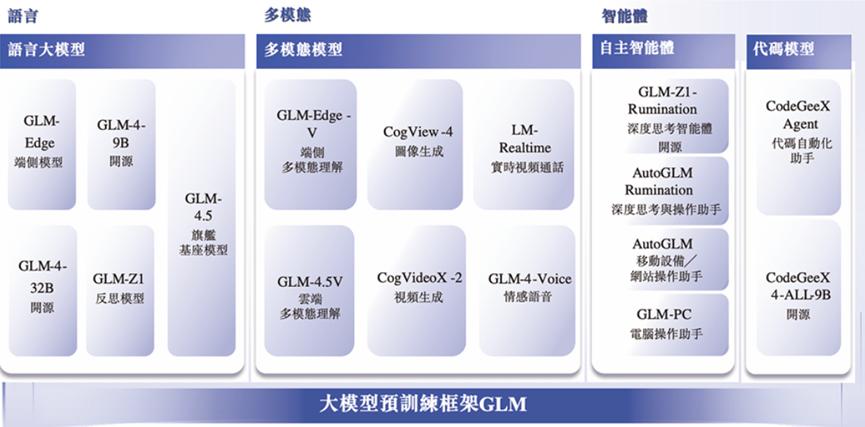
Group 1 - The domestic GPU industry is experiencing a capital surge, with the "Four Little Dragons" of domestic GPUs—Biran Technology, Moore Threads, Muxi Co., and TianShu ZhiXin—actively pursuing capital market opportunities [1] - Biran Technology officially listed on the Hong Kong Stock Exchange on January 2, 2026, becoming the leading domestic GPU stock, with an opening price increase of 82% and a market capitalization exceeding 100 billion HKD [1] - The four leading domestic GPU companies are long-term strategic partners of SenseTime, collaborating based on a "computing power supply-algorithm demand" logic, aiming for a domestic substitution strategy [1] Group 2 - The successful listing of Biran Technology marks a significant moment for domestic GPU companies, highlighting the value of their collaboration with AI software vendors [2] - SenseTime has launched the first multi-episode generative AI agent, Seko2.0, which has successfully adapted to the domestic AI chip Cambricon, achieving a critical leap in domestic computing power across various AIGC core scenarios [2] - SenseTime has established a comprehensive domestic ecosystem by deeply adapting with over ten top chip companies, including Biran Technology and Cambricon, promoting the transition of domestic AI chips from "usable" to "user-friendly" [2] Group 3 - SenseTime has built a full-link cooperation system from computing power supply to scene implementation, collaborating with various domestic partners to provide high-performance domestic computing power at low costs [3] - The MTT S series GPU from Moore Threads has completed full adaptation with SenseTime's SenseCore large device, undergoing industrial-grade testing in training and inference of large models [3] - SenseTime has also launched the industry's first real-time video generation inference framework, LightX2V, which supports multiple domestic chips through a highly compatible plugin model [3] Group 4 - SenseTime's ability to act as a "connector" for domestic chip adaptation is rooted in its comprehensive technical capabilities, from computing power scheduling to application optimization [4] - The collaboration with Cambricon has led to significant enhancements in inference performance, with improvements exceeding three times through hardware-friendly innovations [4] - SenseTime's proprietary heterogeneous interconnection technology and scheduling platform have achieved unified training capabilities across various acceleration cards, significantly shortening training cycles [4] Group 5 - The technological advancements in domestic adaptation have translated into accessible product experiences, such as the Seko multi-episode generative AI agent showcasing efficient video creation capabilities [5] - Applications like Xiaohuanxiong are optimized for personal PCs and domestic terminals, providing secure and high-precision AI services [5] - New products like the Daxiao robot and RuYing marketing AI agent leverage the collaborative advantages with domestic chips to promote the domestic substitution process in various fields [6]
谁拿走最多大模型项目?2025年中标排行榜出炉,科大讯飞蝉联“标王”
Jing Ji Guan Cha Wang· 2026-01-05 03:16
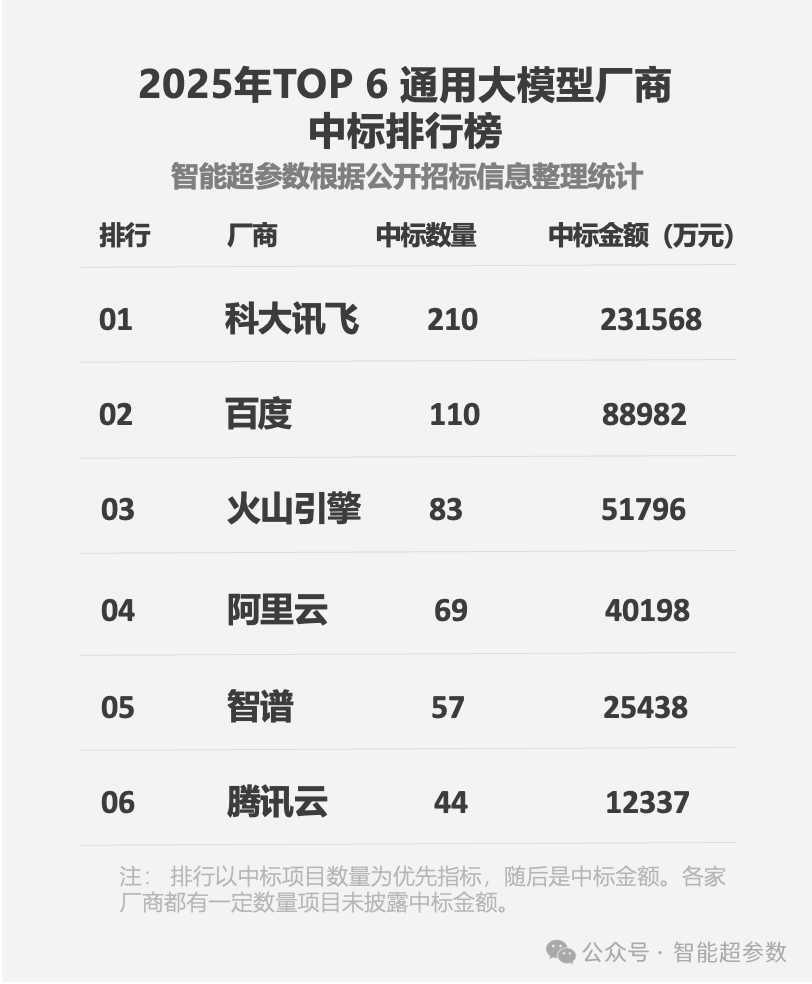
Core Insights - The report highlights a significant increase in the number of large model-related bidding projects in 2025, with a total of 7,539 projects, marking a 396% growth compared to 2024. The disclosed bid amounts reached 29.52 billion yuan, reflecting a 356% increase [1][2]. Group 1: Market Overview - Large models have emerged as a new hotspot in the technology market, with many institutions reallocating budgets towards purchasing large model technology stacks [2]. - A few companies have begun to dominate the bidding landscape, with general large model vendors being the primary winners in the bidding market [3]. Group 2: Leading Companies - The top 30 bidding companies include major general large model vendors such as iFLYTEK, Baidu, Volcano Engine, Alibaba Cloud, Zhiyuan, and Tencent Cloud, all of which rank highly in terms of project numbers [3][4]. - Telecommunications operators have also secured a significant number of large model projects, with 10 out of the top 30 companies having a telecom background, as clients in sectors like government and healthcare prefer these firms for compliance reasons [3]. Group 3: Performance of Major Vendors - iFLYTEK led the bidding performance in 2025 with 210 projects and a disclosed bid amount of 2.31568 billion yuan, dominating various sectors including education, healthcare, finance, and government [6][7]. - Baidu followed with 110 projects and a bid amount of 889.82 million yuan, primarily in the finance sector, showcasing its comprehensive AI capabilities [8]. - Volcano Engine secured 83 projects with a bid amount of 517.96 million yuan, focusing on financial and governmental applications [9]. - Alibaba Cloud achieved 69 projects with a bid amount of 401.98 million yuan, emphasizing standardized solutions in AI [10]. - Zhiyuan reported 57 projects with a bid amount of 25.438 million yuan, mainly in energy and government sectors [11]. - Tencent Cloud completed 44 projects with a bid amount of 123.37 million yuan, focusing on media and content generation [11].

AI霸权竞逐白热化:这场全球竞赛,远比你以为的更“无国界”
Sou Hu Cai Jing· 2026-01-02 17:40
Core Insights - The AI competition is not limited to the US and China, as many other countries are emerging as serious contenders in AI development and investment [1][3] - Countries like France, Israel, the UK, Canada, Germany, Japan, and South Korea are making significant strides in AI, with substantial government support and funding initiatives [3][5][21][29] Group 1: Investment and Funding - AI startups raised a record $12 billion in 2017, more than double the previous year's venture capital, with most funding concentrated in the US and China but increasingly from international sources [3][5] - Japan's SoftBank has accumulated a $100 billion investment fund, with significant contributions from global investors [3] - The US government has prioritized AI funding, with a $2 billion investment planned by the Department of Defense for AI initiatives [10] Group 2: Government Strategies - China aims to become the world leader in AI by 2030, targeting an industry value of approximately $150 billion and investing heavily in AI research and applications across various sectors [5][6] - Japan's AI strategy includes a roadmap for industrialization and collaboration between industry, government, and academia, with a focus on productivity and welfare [13] - The UK government announced £68 million in funding for AI and robotics projects, aiming to invest around $1.3 billion in AI over the coming years [18][20] Group 3: Technological Ecosystems - China's tech ecosystem includes major players like Alibaba, Baidu, Tencent, and Huawei, which are heavily investing in AI technologies [6] - Germany is recognized for its engineering capabilities and is a leader in autonomous driving patents, with a focus on AI in the automotive sector [26] - South Korea is home to major tech companies like Samsung and LG, with government support for AI development, although it lacks a robust venture capital ecosystem [17] Group 4: Ethical and Regulatory Considerations - The UK aims to position itself as a leader in ethical AI standards, recognizing the importance of establishing guidelines for AI development [20] - France is focusing on creating unbiased datasets and addressing ethical concerns related to AI, while also sharing public data for AI service development [24] - Germany has established a data ethics committee to guide AI development and usage, reflecting its commitment to responsible AI practices [26] Group 5: Global AI Landscape - Countries like Russia are investing in AI for national security, with plans to automate 30% of military equipment by 2025, although overall investment remains low compared to other nations [27][29] - Many countries, including Israel, India, and Singapore, view AI as a national strategic priority, developing tailored strategies to enhance their AI capabilities [29][31] - The AI race is characterized by collaboration and ongoing research, with various nations benefiting from advancements in cognitive technologies [31]

壁仞科技上市首日市值破千亿,专家:市场看好中国AI算力自主长期形势
Sou Hu Cai Jing· 2026-01-02 13:17
Core Viewpoint - Wallen Technology (06082.HK) debuted on the Hong Kong Stock Exchange on January 2, 2023, with a significant opening price of HKD 35.7, reflecting an 82.14% increase, marking it as the first domestic GPU company listed in Hong Kong and the third overall in China [1][2]. Company Overview - Founded in 2019, Wallen Technology focuses on GPGPU (General-Purpose Graphics Processing Unit) chips and intelligent computing solutions, primarily generating revenue from product sales, support services, and rental income from intelligent computing clusters [2][4]. - The company has consistently recorded net losses since its inception, indicating challenges in commercializing its products and solutions [2][4]. Financial Performance - Wallen Technology's revenue for the years ending December 31 and June 30 is projected as follows: - 2022: RMB 499,000 - 2023: RMB 62.03 million - 2024: RMB 337.9 million - 2025 (first half): RMB 58.9 million - The gross profit margins are expected to decline from 100% in 2022 to 31.9% by mid-2025, with cumulative losses exceeding RMB 6.3 billion [4][5]. - The company heavily relies on a few major clients, with revenue from the top five clients accounting for 98.1% in 2023, which poses risks of revenue volatility [5]. Market Position and Competition - Wallen Technology holds a market share of 0.16% in the Chinese intelligent computing chip market and 0.2% in the general GPU market as of 2024, with expectations to reach 0.19% by 2025 [1]. - The Chinese smart computing chip market is highly concentrated, with Nvidia and Huawei's HiSilicon accounting for 94.4% of the market share, leaving Wallen Technology and over 15 other players to compete for the remaining share [1][2]. Research and Development - The company has incurred substantial R&D expenses, totaling RMB 10.18 billion in 2022, RMB 8.86 billion in 2023, and projected RMB 8.27 billion in 2024, which constitutes a significant portion of its total operating expenses [5][6]. - As of mid-2025, Wallen Technology employs 657 R&D personnel, representing 83% of its workforce, with a majority holding advanced degrees and significant industry experience [5][6]. IPO and Future Plans - The IPO proceeds are primarily intended for R&D of intelligent computing solutions, commercialization efforts, and general corporate purposes, with the company aiming to leverage its technological advantages in the AI model computing power sector [6][7].

壁仞上市,连投两轮的这家大股东赚翻了
Xin Lang Cai Jing· 2026-01-02 03:06
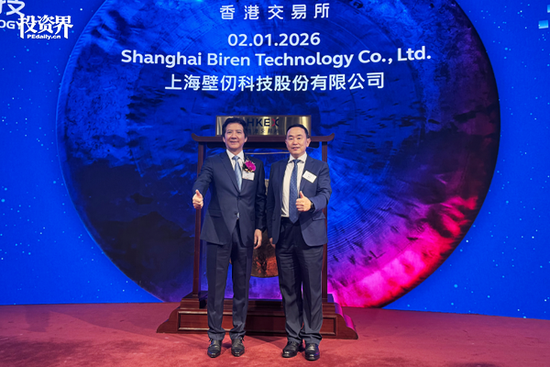
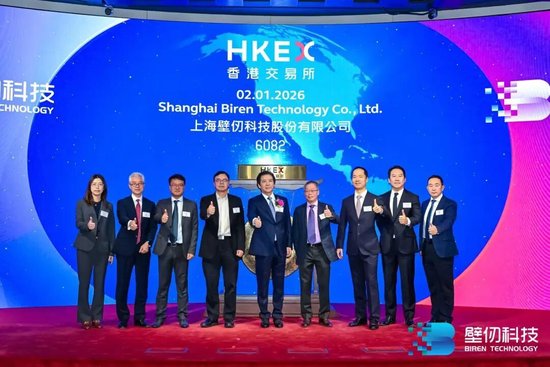
Group 1 - Wallran Technology (壁仞科技) officially listed on the Hong Kong Stock Exchange on January 2, 2026, opening with a rise of over 110%, reaching a peak of 42.88 HKD per share, with a total market capitalization of approximately 99 billion HKD [2][23] - Wallran Technology is recognized as the "first GPU stock" in Hong Kong and has the largest issuance scale since the implementation of the 18C rule [2][23] - The IPO price was set at 19.6 HKD per share, with a global offering of approximately 248 million H shares, and cornerstone investors subscribed for about 64% of the fundraising amount, totaling 372.5 million USD [2][23] Group 2 - Founded in September 2019, Wallran Technology is one of the earliest companies among the "four small dragons" of domestic GPUs, focusing on original core architecture and pioneering Chiplet high-performance chips [2][23] - As of the end of 2025, Wallran Technology has applied for over 1,500 patents globally, ranking first among Chinese general GPU companies, with over 600 patents granted and a 100% invention patent authorization rate [3][24] Group 3 - Wallran Technology's products have been deployed in key industries such as AI data centers, telecommunications, energy, and financial technology, effectively supporting the computational needs of AI training and research innovation [3][24] - The company has established a customer base that includes several Fortune China 500 and Fortune Global 500 companies, achieving large-scale commercial deployment of domestic computing clusters with the three major telecom operators [3][24] Group 4 - Early investor Songhe Capital (松禾资本) has seen significant returns from its investment in Wallran Technology, holding 1.89% of the shares as of the listing, with an estimated investment return of about 60 times based on initial valuation [4][25] - Songhe Capital has invested a total of 200 million USD in Wallran Technology through two funding rounds, becoming one of its core early investors [4][25] Group 5 - The founder of Songhe Capital, Li Wei, recognized the potential of Wallran Technology's founder, Zhang Wen, during their first meeting, leading to a decisive investment in the company [6][26] - Zhang Wen's vision for Wallran Technology was driven by the need for domestic AI companies to reduce reliance on imported GPU chips, especially in light of increasing geopolitical risks [6][26] Group 6 - Wallran Technology has achieved rapid financing success, raising a total of over 9 billion RMB through 11 rounds of financing, including a record 4.7 billion RMB in 18 months [8][29] - The company's core team includes experienced professionals from leading firms like NVIDIA and Huawei, with 83% of employees in R&D roles [9][30] Group 7 - Songhe Capital emphasizes a long-term investment strategy, focusing on companies that can "change the world" through hard technology, with a management scale exceeding 24 billion RMB and over 500 projects invested [12][33] - The firm has strategically invested in various sectors, including digital technology, precision medicine, and innovative materials, with a focus on addressing core pain points in computing power [34][36] Group 8 - The investment landscape for hard technology is evolving, with recent regulatory changes in both the A-share and Hong Kong markets facilitating the listing of innovative companies [17][37] - Songhe Capital plans to launch venture capital bonds in 2026 to support its continued investment in hard technology, emphasizing a value-oriented approach rather than a scale-oriented one [38][39]
一家深圳VC爆发:18天三个IPO
Xin Lang Cai Jing· 2026-01-02 02:55
Core Viewpoint - Wall Street-backed GPU unicorn Birun Technology has officially listed on the Hong Kong Stock Exchange, becoming the first GPU stock in Hong Kong, with an IPO price of HKD 19.60 per share and a market capitalization exceeding HKD 100 billion at opening [3][17]. Company Overview - Zhang Wen, the key figure behind Birun Technology, began his career on Wall Street and returned to China to start multiple ventures, officially entering the domestic GPU wave in 2019 with the founding of Birun Technology [3][17]. - Birun Technology has attracted significant investment, leading to a financing frenzy in the domestic GPU sector, with a long list of investors [3][17]. Investment Highlights - The successful IPO of Birun Technology marks the third major IPO for Songhe Capital within 18 days, following the listings of Angrui Micro on December 16 and 51WORLD on December 30 [3][9][17]. - Songhe Capital's investment in Birun Technology began with a USD 2 million stake during its A-round financing, which set a record for the highest A-round financing in the domestic industry at RMB 1.1 billion [5][19]. - Prior to the IPO, Songhe Capital held a 1.89% stake in Birun Technology, resulting in over 60 times return on investment based on initial valuation [6][20]. Industry Context - The domestic GPU market is critical as 99.9% of GPUs were previously imported, creating a significant bottleneck for industry development [5][19]. - Songhe Capital has strategically focused on key areas within the semiconductor and artificial intelligence sectors, investing in companies that address critical pain points in the industry [21][22]. Broader Investment Strategy - Songhe Capital has built a comprehensive investment portfolio in hard technology, including investments in GPU, CPU, and DPU sectors, as well as sensor technologies [22][23]. - The firm has also invested in various AI application companies, demonstrating a commitment to supporting the growth of the AI ecosystem [22][23]. Historical Perspective - Over the past 30 years, Songhe Capital has evolved alongside the Chinese venture capital industry, maintaining a focus on hard technology and achieving significant milestones, including managing over RMB 24 billion and investing in 500 companies [24][25]. - The firm emphasizes a disciplined investment philosophy, focusing on areas of deep understanding and avoiding excessive pursuit of trends [25][26].