
国家开发银行

Search documents
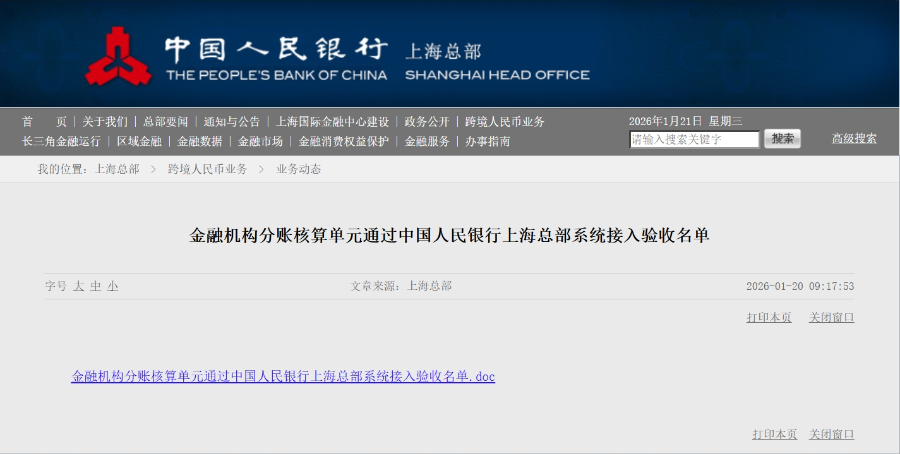
摩根大通银行、浙江稠州商业银行获批资格!FT账户密集扩容
2 1 Shi Ji Jing Ji Bao Dao· 2026-01-21 03:49
Group 1 - The Shanghai Free Trade Account (FT Account) has seen significant developments recently, with the approval of new financial institutions and upgrades to existing accounts, indicating a potential increase in foreign participation in China's cross-border financial activities [1][2] - Morgan Stanley Bank (China) Limited's Shanghai branch has been approved as the first new FT account financial institution in over five years, marking a notable opportunity for foreign banks in the region [1] - As of the latest update, there are 62 financial institutions with FT account qualifications in Shanghai, with 49 being banks, reflecting a growing trend in the FT system [1] Group 2 - The implementation of the "Implementation Measures for the Function Upgrade of Free Trade Accounts" by the People's Bank of China on December 5 has introduced significant policy upgrades, allowing for more flexible cross-border fund transfers [2][4] - The new regulations enable trial enterprises to conduct capital account business without the constraints of external debt quotas or prior registration with foreign exchange authorities, enhancing operational efficiency [2][4] - Major banks, including state-owned and foreign banks, have quickly responded to the new policy by facilitating the opening of upgraded FT accounts for clients, indicating strong market interest and potential for increased cross-border trade [3][4] Group 3 - The recent policy changes are expected to create a multiplier effect for cross-border trade and investment, improving the efficiency of capital allocation for enterprises [4] - The expansion of the FT account system is anticipated to continue, with more financial institutions likely to be added to the list of qualified entities in the future [5]







2025年全国林草产业总产值近11万亿元 金融“活水”进山入林激活生态价值
Zhong Guo Jing Ying Bao· 2026-01-20 17:37
Core Insights - The core viewpoint of the articles is that China's forestry and grassland industry is projected to reach a total output value of nearly 11 trillion yuan by 2025, driven by policy reforms, financial support, and the integration of green consumption and digitalization [1][2]. Group 1: Industry Growth Projections - By 2025, the annual wood production is expected to reach 140 million cubic meters, with the output value of wood processing and bamboo products estimated at 3.4 trillion yuan [1]. - The forestry tourism sector is anticipated to receive nearly 3 billion visitors annually, highlighting the growth in eco-tourism [1]. Group 2: Policy and Financial Support - The financial sector is expected to play a crucial role in supporting the forestry industry, with a focus on diverse funding mechanisms and the implementation of the "Notice on Financial Support for High-Quality Development of Forestry" issued by multiple government departments [2][3]. - Major banks, including policy banks and state-owned commercial banks, are providing specialized loans for national reserve forest projects, with loan terms potentially extending up to 30 years [3]. Group 3: Challenges and Innovations - Despite increased financial support, challenges remain in converting ecological value into tradable financial assets, with issues in asset evaluation and market liquidity [4]. - Innovations in financial products are emerging, focusing on collateralized loans based on forest rights and carbon credits, as well as green bonds and insurance linked to the forestry industry [4][5]. Group 4: Future Directions - The National Forestry and Grassland Administration plans to deepen collective forest rights reforms and enhance financial and tax support to stimulate the development of the forestry industry [5].
17家银行总行重仓海南
21世纪经济报道· 2026-01-19 09:29
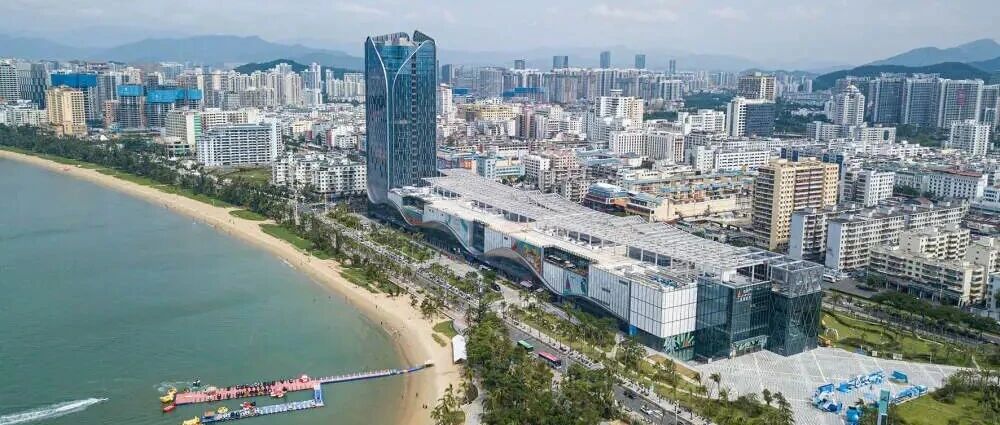
Core Viewpoint - The establishment of a total of 17 strategic partnerships between Hainan Holdings and major banks marks a significant step in the financial support for the Hainan Free Trade Port, enhancing credit capacity and optimizing financial resources for key projects and new industries [5][6]. Financial Institutions' Involvement - Hainan Holdings has achieved a financial credit limit exceeding 200 billion yuan, partnering with 17 banks, including major state-owned banks and joint-stock banks, to support various sectors such as infrastructure and new productivity [2][3]. - The total assets of the banking sector in Hainan Free Trade Port reached 1,959.8 billion yuan by October 2025, reflecting a 39.68% increase since the end of 2020, while the insurance sector's total assets grew by 47.99% to 70.5 billion yuan [3]. Strategic Cooperation Significance - The strategic cooperation with banks aims to enhance funding security, increase credit flexibility, and lower financing costs, thereby supporting Hainan Holdings' core and emerging business sectors [5][6]. - Hainan Holdings is recognized as a key strategic partner for several banks, indicating its significant role in the regional economic landscape [5]. Diverse Financial Support System - The 17 banks provide a diversified financial support system, leveraging their unique strengths to meet the specific needs of Hainan's economic development [8][9]. - Major banks like the Industrial and Commercial Bank of China and China Construction Bank focus on project financing and supply chain finance, while others like the Agricultural Development Bank emphasize policy-driven financial support [9][10]. Non-Banking Financial Institutions - Non-banking financial institutions, including insurance companies and venture capital funds, are also increasing their investments in Hainan, with notable entries from HSBC and Allianz [12][13]. - The Hainan Free Trade Port Construction Fund has doubled its registered capital to 20 billion yuan, reflecting a strong commitment to long-term development and support for enterprises [13][14]. Future Industry Focus - The Hainan Free Trade Port Construction Fund plans to focus on advanced sectors such as biomanufacturing and hydrogen energy, aiming to create a collaborative ecosystem for technology transfer and market expansion [14]. - The establishment of a gold storage facility in Hainan marks a significant development in the local financial infrastructure, facilitating efficient and secure operations for the gold industry [14].
固定收益专题报告:绿色债券浅析
BOHAI SECURITIES· 2026-01-19 09:26
Report Industry Investment Rating The provided content does not mention the report industry investment rating. Core Viewpoints - Green bonds are securities raised for green industries, projects, or economic activities, and have become an important financing tool. As of the end of 2025, the cumulative issuance scale in China reached 5.32 trillion yuan [2]. - The development of China's green bond market can be divided into three stages: the exploration and launch stage (2015), the standardization development stage (2016 - 2020), and the system improvement stage (2021 - present) [2][16]. - By the end of 2025, the annual issuance scale increased from 207.231 billion yuan in 2016 to 1.079283 trillion yuan, and the number of issuances rose from 89 to 834. The stock of green bonds was 2,014, with a market size of 2.464521 trillion yuan. Green bonds are suitable for long - term investment [3][109]. - Green bonds generally have a "green spread" over non - green bonds, which has weakened in the past three years but still supports pricing. They are more suitable as a stable portfolio base rather than a source of significant excess returns [4]. Summary by Directory 1. Green Bond Development 1.1 Green Bond Concept - Green bonds are securities that raise funds for green industries, projects, or economic activities. They are divided into four types according to the "China Green Bond Principles (2022)" and play an important role in global green finance [13]. 1.2 Policy Context - China's green bond market has established a relatively complete system. The development is divided into three stages: - Exploration and launch stage (2015): The People's Bank of China and the National Development and Reform Commission issued relevant documents, marking the official start of the green bond market [16][17]. - Standardization development stage (2016 - 2020): Multiple departments issued a series of policies to improve the regulatory mechanism, project catalog, and evaluation and certification mechanism [16][18]. - System improvement stage (2021 - present): Policies continued to be refined, the standard system was integrated with international standards, and cross - border green financing advanced steadily [16][25]. 2. Green Bond Value 2.1 Value to Issuers - Green bonds generally have a lower issuance interest rate than non - green bonds, showing a "green spread," which has weakened in the past three years. They can also access overseas ESG funds [34]. 2.2 Value to Investors - Green bonds are fixed - income tools. Their credit risk is mainly determined by the issuer's quality and credit enhancement. They are suitable as a stable portfolio base and can meet institutional ESG and sustainable investment goals. Their tradability has also improved [46]. 3. Green Bond Issuance Statistics 3.1 Green Asset - Backed Securities - Their issuance rhythm has different stages. From 2016 - 2018, it was in the start - up phase; 2019 - 2020 saw market expansion; 2021 entered the accelerated development stage; 2022 - 2023 maintained a high - level operation; 2024 - 2025 had a decline in scale. They are mainly short - term and ultra - long - term products, with concentrated underlying assets [48][49]. 3.2 Non - Asset - Backed Green Bonds - The issuance showed phased characteristics. It expanded steadily from 2016 - 2020, jumped significantly in 2021, reached a high in 2022, declined in 2023, and significantly increased in 2025. State - owned enterprises are the main issuers, and bank - to - bank market is the main trading platform. Their issuance interest rate has been declining, and the term is mainly medium - short term [59][61][71]. 4. Green Bond Stock and Transaction Analysis 4.1 Green Bond Stock Analysis - As of the end of 2025, the stock of green bonds was 2,014, with a market size of 2.464521 trillion yuan. Financial bonds accounted for nearly half of the stock, followed by medium - term notes and asset - backed securities. The stock was concentrated in short - and medium - term bonds, a few industries, and regions such as Beijing, Shanghai, and Guangdong [83][90][95]. 4.2 Green Bond Transaction Analysis - The secondary - market trading volume of green bonds has been rising with fluctuations, and the turnover rate has shown a trend of "falling from a high level, fluctuating in the central range, and weakening again in recent years." Compared with credit bonds and financial bonds, the turnover rate of green bonds is relatively low, but it has stable trading and periodic surges. The valuation of green bonds shows a clear stratification [100][101][105]. 5. Investment Viewpoint - Similar to the core viewpoints, green bonds have good development prospects, supply - side expansion, and are suitable for long - term investment and portfolio optimization [108][109][110].





金融“国家队”双轮驱动,养老产业迎资本新篇
Yang Zi Wan Bao Wang· 2026-01-16 05:54
Core Insights - The long-term investment in policy-based finance and the forward guidance from central bank credit tools are injecting certainty into China's silver economy, indicating a systematic gathering of capital towards this future industry [1] Group 1: Policy Support and Financial Framework - The policy support system for the elderly care industry is deepening, with multiple ministries releasing policies to optimize access and cultivate main bodies [1] - The National Development Bank announced a nearly 20 billion yuan investment-loan linkage scale for the elderly care sector, showcasing the tangible results of developmental finance [4] - The People's Bank of China signaled future policy intentions by indicating that the health industry will be included in the special re-lending support scope [1][3] Group 2: Financial Sector Dynamics - Recent policy releases have formed a logical support loop, transitioning from improving the institutional and market environment to injecting capital into the core phase of support [2] - The central bank's tools and policy banks are addressing the critical capital factor in industrial upgrades, creating a comprehensive support system from nurturing to growth [2] Group 3: Central Bank's Role - The inclusion of the health industry in the "service consumption and elderly re-lending" support indicates that recognized quality elderly health enterprises may receive favorable credit support [3] - The central bank aims to lower financing thresholds for enterprises by providing low-cost re-lending funds to financial institutions, sending clear signals about industry priorities [3] Group 4: Developmental Achievements - The National Development Bank's nearly 20 billion yuan investment is aimed at supporting community home care services and enhancing elderly care institutions, forming the physical foundation for a comprehensive service system [4] - The bank is also exploring support for smart care devices and digital health applications, aiming to cultivate new productive forces within the industry [4] - Support for industrial clusters in key regions like Beijing-Tianjin-Hebei and the Yangtze River Delta is intended to optimize industrial chain layouts and create competitive silver economy clusters [4] Group 5: Long-term Implications - The coordinated efforts of the financial "national team" signify a fundamental shift in the relationship between the elderly care industry and the financial system, moving towards a new ecosystem of deep symbiosis [5] - A modern elderly health industry that is standardized, professionalized, and technological will provide stable, high-quality assets for the financial system, while comprehensive financial support will accelerate technological iterations and scale expansions [5] - The combination of long-term investments from policy banks and forward-looking credit guidance from the central bank indicates that the development of the silver economy is a clear long-term strategic focus for financial resource allocation [5]

国开行2025年投放超2900亿元
Ren Min Wang· 2026-01-16 01:10
Core Viewpoint - The National Development Bank plans to invest over 290 billion RMB in 2025 to support the high-quality development of the Belt and Road Initiative [1] Group 1: Investment Focus - In 2025, the National Development Bank will focus on key areas such as infrastructure, international industrial cooperation, trade, and financial collaboration [1] - The bank will utilize various financial products and services, including RMB financing windows and special loans for the Belt and Road Initiative, to support significant projects and smaller community-focused initiatives [1] Group 2: Strategic Goals - The bank aims to enhance "hard connectivity" in infrastructure, "soft connectivity" in rules and standards, and "people-to-people connectivity" among the countries involved in the Belt and Road Initiative [1] - The International Financial Department of the National Development Bank will leverage its comprehensive financial service advantages to strengthen traditional cooperation and gradually expand into emerging areas [1]
金融支持实体经济持续显效(锐财经)
Ren Min Ri Bao Hai Wai Ban· 2026-01-15 22:44
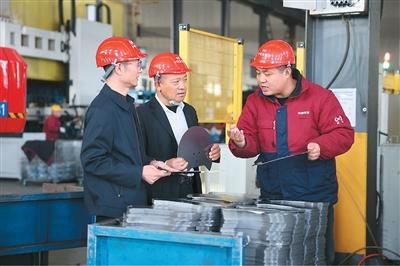
河北省邢台市新河县农村信用合作联社近日走访小微经营主体,提供"一站式"金融服务。图为该农村信 用合作联社工作人员在一家公司了解融资需求。 李世强摄(人民视觉) 1月15日,国新办举行新闻发布会,介绍货币金融政策支持实体经济高质量发展成效。中国人民银行新 闻发言人、副行长邹澜在会上表示,2025年,人民银行实施适度宽松的货币政策,在货币金融环境较为 宽松的状态下,在存量政策接续发挥作用的基础上,又宣布实施了一揽子金融支持举措,巩固经济回升 向好势头。从全年金融数据看,货币金融政策支持实体经济效果明显。 信贷支持力度强 2025年,金融支持实体经济成效如何?人民银行有关负责人从多个方面作了介绍。 金融总量较快增长。2025年12月末,社会融资规模存量同比增长8.3%,广义货币供应量M2同比增长 8.5%,明显高于名义GDP增速;人民币贷款余额272万亿元,同比增长6.4%,还原地方化债影响后,增 速在7%左右,信贷支持力度持续较强。 社会综合融资成本进一步降低。2018年下半年以来,人民银行累计10次下调政策利率,还通过强化利率 政策执行和监督,更好发挥存量政策效能,促进社会综合融资成本稳步下行。2025年12月 ...
发力三大核心领域,2025年92个城市更新项目落地泉城
Qi Lu Wan Bao· 2026-01-15 08:23
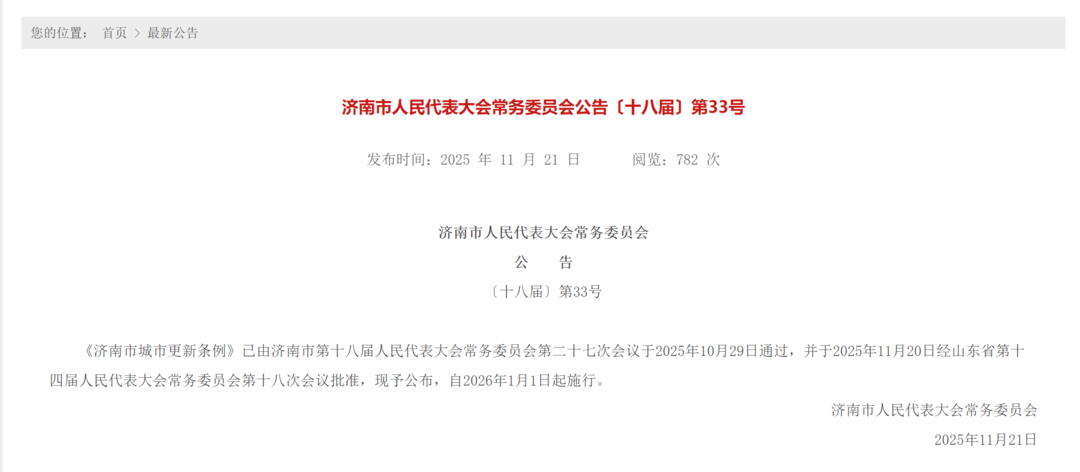
齐鲁晚报.齐鲁壹点记者孟杰 为破解城市更新"是什么、谁来管、怎么干"等关键难题,出台省内第一部城市更新领域的地方性法规——《济南市城市更新条例》,条例已于2026年1月1 日正式开始实施,标志着济南城市更新迈入法治化、规范化新阶段。同时,启动编制《济南市城市更新行动专项规划(2026—2030年)》,印发了技术导 则、社会资本参与等8类34项政策规范,做到了规划有依据、建设有标准、管理有细则。随着系列法规政策的推出和完善,济南建立起了"1+N+X"的城市 更新法规政策体系,推动更新由"单点突破"转向"统筹推进"。以再次入选全国城市体检样本为契机,济南优化"体检引领更新机制",绘制了"片区更新需 求地图",谋划更新示范项目83个,形成了"城市体检—片区策划—项目实施方案"的工作闭环。 1月15日,山东住房城乡建设工作会议在济南召开。会上,济南市住房和城乡建设局党组书记、局长亓伟在发言交流环节介绍,2025年,济南以城市更新 为提升城市能级、增进民生福祉的关键抓手。聚焦制度构建、项目推进、资金保障三大核心领域精准发力,推动泉城城市更新工作取得丰硕成果。2025 年,济南成功入选2025年度中央财政支持实施城市更新 ...
国开行:助力投融资多元化保障 服务共建“一带一路”高质量发展
Xin Hua She· 2026-01-15 08:20
Core Insights - The National Development Bank (NDB) is actively supporting the high-quality construction of the "Belt and Road" initiative, with significant financing agreements and projects being established across various regions, including Central Asia, Africa, and South America [1][2][3]. Group 1: Project Financing and Impact - On December 16, 2025, NDB signed a loan agreement for the China-Kyrgyzstan-Uzbekistan railway project, marking a significant step in enhancing connectivity across Central Asia [1]. - NDB has issued a special loan of 1.41 billion yuan (approximately $2.1 billion) to support over 20,000 small and medium-sized enterprises (SMEs) in Egypt, contributing to local economic development [1]. - In the past year, NDB has invested over 290 billion yuan (approximately $43.5 billion) in various projects related to the "Belt and Road" initiative, reinforcing its role as a key financial institution in this endeavor [2]. Group 2: Infrastructure Development - The NDB is financing the ±800 kV ultra-high voltage direct current transmission project in Brazil, which will supply clean energy to approximately 12 million people [2]. - In Laos, the NDB-supported Vientiane Saysettha Comprehensive Development Zone has attracted investments from multiple countries, with an annual output value exceeding $3 billion [3]. - The Kaduna-Kano railway project in Nigeria, supported by NDB financing, is progressing well, with over 60% of construction completed, enhancing transportation links in the region [3]. Group 3: Regional Development Initiatives - NDB's Xinjiang branch is focusing on infrastructure and energy cooperation to establish Xinjiang as a key hub for Eurasian connectivity [4][5]. - The NDB's Guangxi branch is enhancing cooperation with ASEAN countries, particularly in artificial intelligence and digital finance, to foster new growth drivers [5]. - In Yunnan, NDB is supporting key projects like the China-Laos highway and vocational training institutions, aiming to improve local transportation and skill development [6]. Group 4: Financial Cooperation and Trade Support - NDB is enhancing bilateral financial cooperation through various international forums and initiatives, including the establishment of a 30 billion yuan (approximately $4.5 billion) special loan for the China-Europe Railway Express [7]. - The bank is also focusing on supporting foreign trade by providing targeted financial services to over 10,000 small and micro foreign trade enterprises [8]. - In Egypt, NDB is facilitating the expansion of the China-Egypt TEDA Suez Economic and Trade Cooperation Zone, aiming to attract more Chinese enterprises and enhance industrial cooperation [9].
支持共建“一带一路”
Xin Lang Cai Jing· 2026-01-14 21:48
Core Insights - The National Development Bank (NDB) plans to invest over 290 billion RMB in 2025 to support the high-quality development of the Belt and Road Initiative [1] - The NDB will focus on key areas such as infrastructure, international industrial cooperation, trade, and financial collaboration [1] Investment Strategy - The NDB will utilize various financial products and services, including RMB financing windows and special loans for the Belt and Road Initiative, to support significant projects and smaller community-focused initiatives [1] - A special loan of 30 billion RMB for the China-Europe Railway Express will be established to enhance infrastructure and operational support for related enterprises [1] Support for Africa - The NDB's subsidiary, the China-Africa Development Fund, will increase direct investment in promising projects, with an additional investment of 8.39 billion RMB in 2025, leading to a total of 20.39 billion RMB in domestic enterprise investments in Africa [1] Trade Support - The NDB has set up a stable foreign trade quota to support new foreign trade business models, based on thorough research of funding needs among foreign trade enterprises [1] - The bank will enhance loan support, benefiting over 10,000 small and micro foreign trade enterprises [1] Future Directions - The NDB aims to leverage its comprehensive financial service advantages to strengthen traditional cooperation areas while gradually expanding into emerging sectors, thereby better supporting the high-quality development of the Belt and Road Initiative [2]