
Arm

Search documents
Arm,最新预测
半导体芯闻· 2025-12-31 08:56
如果您希望可以时常见面,欢迎标星收藏哦~ 世界与计算的关系正在发生变化——从集中式云到覆盖所有设备、表面和系统的分布式智 能。2026年,我们将进入智能计算的新时代——计算将更加模块化、节能高效,并在云 端、物理环境和边缘人工智能环境中无缝连接。 基于此,Arm预测以下20项技术将在2026年引领下一波创新浪潮。 1. 模块化芯片重新定义了硅设计 随着硅芯片行业不断突破技术极限,从单片芯片到模块化芯片设计的转变将加速。通过将计算、存 储和I/O分离成可重用的构建模块,设计人员可以混合使用不同的工艺节点,降低成本,并更快地 扩展规模。对模块化的日益重视将标志着芯片设计从"更大的芯片"向"更智能的系统"转变,使芯片 团队能够自由地混合使用不同的工艺节点,并快速定制片上系统 (SoC) 以适应各种工作负载。这 将推动可定制芯片的持续发展——这些高度可配置的模块将通用计算与特定领域的加速器、存储单 元或专用人工智能引擎相结合——使芯片团队无需从零开始即可构建差异化产品,从而显著缩短设 计周期并降低创新门槛。此外,预计行业标准化也将不断发展,新兴的开放标准将使来自不同供应 商的芯片能够可靠且安全地组合使用。这将降低集成 ...


投资英特尔,英伟达大挣180亿
半导体行业观察· 2025-12-30 01:45
Core Viewpoint - NVIDIA's acquisition of Intel shares for $5 billion has turned into a strategic financial operation, now valued at $7.58 billion, following the approval from the Federal Trade Commission [1] Group 1: Acquisition Details - NVIDIA CEO Jensen Huang and Intel CEO Pat Gelsinger agreed on a purchase price of $23.28 per share for Intel stock, totaling 214 million shares [1] - The acquisition was completed on December 26, with Intel's stock closing at $36.68 per share on the following Monday [1] Group 2: Joint Development Agreement - NVIDIA and Intel will collaborate on developing "multi-generation" chips for data centers and personal computers, aiming to capture market share across their customer base [1] - Intel will customize x86 CPUs for NVIDIA, which will integrate these CPUs into its AI infrastructure platform [1] Group 3: Technical Advancements - The partnership will utilize NVIDIA's NVLink technology, providing a bandwidth of up to 1.8 TB/s per GPU, which is 14 times the bandwidth of PCIe 5.0 x16 slots [1] - Intel will also manufacture x86 system-on-chip (SoC) integrated with NVIDIA's RTX GPU chips, enhancing the performance of integrated CPU and GPU PCs [2] Group 4: Regulatory Context - The agreement is reminiscent of NVIDIA's previous attempt to acquire Arm for $40 billion, which faced regulatory scrutiny and was ultimately abandoned [2] - The Federal Trade Commission had previously expressed concerns that such mergers could stifle competition and innovation in the semiconductor industry [2]



帮主郑重眼中的2025:十大财经事件背后的真相与谎言
Sou Hu Cai Jing· 2025-12-28 12:02
Group 1: Economic Events - Trump's tariff policy initiated on April 2 led to significant market declines, with the S&P 500 dropping 11% in two days and the Hang Seng Index falling over 13% on April 7 [3][4] - The U.S. manufacturing sector faced challenges, with nine consecutive months of contraction and rising inflation due to tariff policies, indicating a lack of substantial economic benefits from these measures [4] - Global debt reached a record high of $355 trillion in Q2 2025, with a debt-to-GDP ratio of 368%, raising concerns about sustainability and future economic risks [8] Group 2: Market Trends - Gold prices surged over 70% in 2025, surpassing $4,000, reflecting a growing distrust in the current monetary system and a shift towards safer reserve assets [5] - Nvidia's market capitalization exceeded $5 trillion, driven by strong demand for its Blackwell chips, although its valuation is high compared to historical averages [6] - The AI sector transitioned from speculative enthusiasm to a focus on cash flow and profitability, with investors demanding evidence of financial returns from tech giants [11] Group 3: Geopolitical and Regulatory Changes - Geopolitical tensions escalated, with over thirty countries experiencing conflicts, making geopolitical risks a significant concern for investors [12] - Germany revised its 2035 ban on combustion engines, indicating a shift in energy transition strategies and the ongoing importance of traditional energy sources [13] Group 4: Notable Figures and Events - Warren Buffett announced his retirement at the end of 2025, marking the end of an era in value investing, although his principles continue to influence investors [9][10] - Bitcoin experienced extreme volatility, reaching a peak of $120,000 before a liquidity crisis led to a significant drop, highlighting the fragility of the cryptocurrency market [14]
Nvidia's Groq deal underscores how the AI chip giant uses its massive balance sheet to 'maintain dominance'
Yahoo Finance· 2025-12-26 18:33
Core Insights - Nvidia has entered a non-exclusive licensing deal with chip startup Groq, valued at $20 billion, marking its largest deal to date [1] - The deal is seen as a strategic move to leverage Nvidia's strong balance sheet and maintain its dominance in the AI market [1][2] - Nvidia's cash inflow increased by over 30% year-over-year to $22 billion in the most recent quarter [1] Nvidia's AI Strategy - The licensing agreement with Groq is part of Nvidia's broader strategy of investing in various AI firms, including large language model developers and AI service providers [3] - Nvidia has also invested in chipmakers like Intel and Enfabrica, and previously attempted to acquire Arm [4] - The company faces potential competition in the inference space from custom chips like Google's TPUs and Groq's LPUs, which may offer advantages in speed and energy efficiency [6] Groq's Position - Groq, founded in 2016, specializes in language processing units (LPUs) designed for AI inferencing, positioning itself as an alternative to Nvidia's GPUs [5] - The company was aiming to become a competitor to Nvidia before the licensing deal [4]
Nvidia makes its biggest purchase ever
Yahoo Finance· 2025-12-25 06:07
According to CNBC, Nvidia has agreed to pay about $20 billion in cash for Groq, a specialist in AI accelerator chips used to power inference—the stage where trained AI models actually answer questions, generate text, or drive real-time applications. Alex Davis, CEO of investment firm Disruptive, which led Groq’s latest financing round, told CNBC that the deal came together quickly, months after Groq raised $750 million at a valuation of roughly $6.9 billion. Disruptive has invested more than $500 million ...
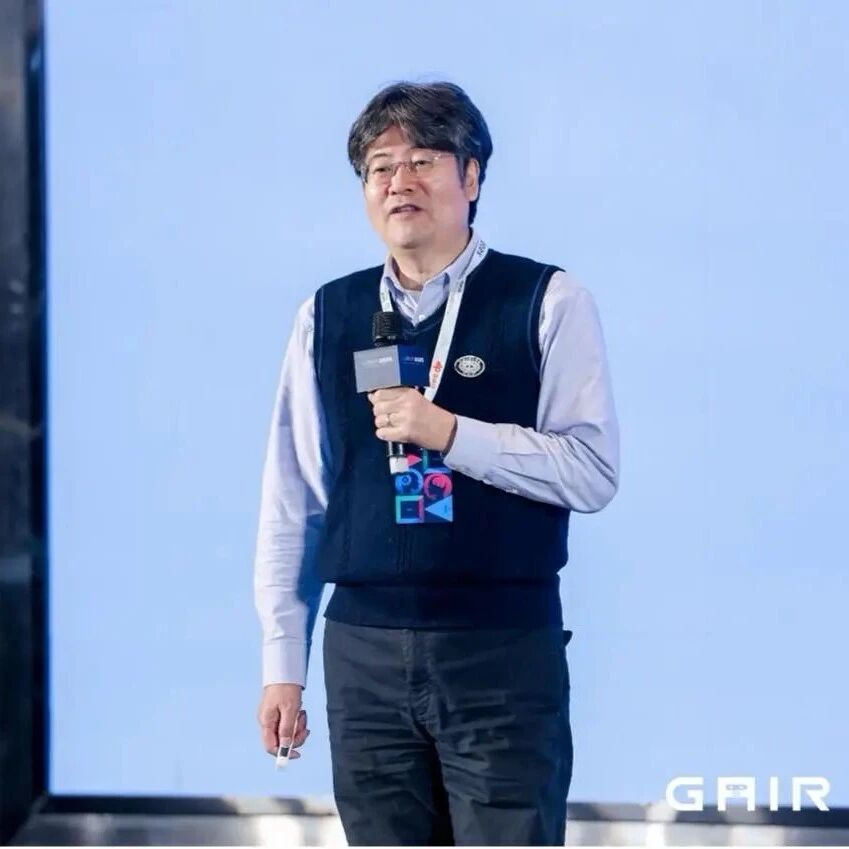
深圳理工大学唐志敏:异构计算已成必然,软件决定芯片胜负丨GAIR 2025
雷峰网· 2025-12-24 03:19
Core Viewpoint - RISC-V has the potential to integrate the characteristics of CPU, GPU, and AI processors, breaking through the ecological barriers of CUDA [47] Group 1: AI and Computing Power - The eighth GAIR Global AI and Robotics Conference will be held in Shenzhen, focusing on the core of intelligent systems—computing power [2] - Computing power is not just a reflection of hardware performance but a capability system to complete tasks under resource and time constraints [3] - The rapid growth of generative AI's demand for computing power necessitates heterogeneous computing (CPU + XPU) as CPUs alone cannot meet real-world needs [11][16] Group 2: Software and Ecosystem - The true determinant of computing power release is the software and application ecosystem, rather than the hardware itself [20] - The ecosystem includes all software that runs on processors, and the productivity is generated by application software, not the chips [24] - The x86 ecosystem has a significant market share and inertia, making it challenging for new architectures to compete [26] Group 3: RISC-V and Market Challenges - RISC-V's openness presents new possibilities, but openness does not guarantee success; many open CPUs have failed commercially [27][28] - RISC-V faces commercialization difficulties, particularly in complex computing fields, due to an immature software ecosystem [29] - The need for a robust software ecosystem is critical for RISC-V to succeed in the competitive landscape [20][29] Group 4: Future Directions - The future of computing architecture may return to a CPU-centric model, with RISC-V having the potential to unify CPU, GPU, and AI processor characteristics [47] - The importance of building a domestic computing ecosystem is recognized at the national level to avoid dependency on foreign technologies [33] - Successful chip development hinges on the ability to create a comprehensive software ecosystem that adds significant value to products and services [34][45]
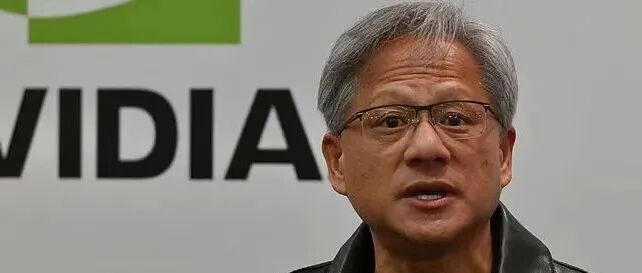
英伟达市值暴跌万亿,黄仁勋紧急发声
Xin Lang Cai Jing· 2025-12-19 12:06
当潮水退去,才知道谁在裸泳。 出品 | 新行情 作者 | 松涛 来源:市场资讯 (来源:新行情) 今年10月,英伟达市值首次突破5万亿美元,规模超过了英、法、德等主要经济体的股市总值,也将市 场对AI算力的乐观情绪推至高潮。 然而高峰过后,形势急转直下。 短短一个多月内,英伟达市值连续经历数次大幅下跌,万亿市值蒸发,再次成为舆论焦点。 英伟达市值的剧烈波动,不仅仅是单只股票的涨跌,更反映了市场情绪的集体转变:资本从狂热追逐逐 渐转为冷静审视。 其中也透露出市场的担忧:天价芯片订单是否依赖脆弱的融资循环?激烈的竞争与国际环境波动,是否 在侵蚀其护城河?就连黄仁勋本人关于"未向OpenAI付款"的澄清,也被市场解读出了别样的信号。 一场关于"AI泡沫"的疑虑,正随着英伟达市值的剧烈波动而扩散。风暴尚未停息,它迫使整个行业在狂 飙突进之后,必须直面那些悬而未决的根本问题。 英伟达市值暴跌 12月18日,英伟达股价报收于170.94美元,当日下跌3.81%,市值在一夜之间蒸发1648亿美元(约合 1.16万亿人民币)。 | 170.940 " | 176.130 昨收 177.720 量比 1.29 | | | -- ...
美股三大指数收跌 英伟达市值蒸发万亿 特斯拉跌4%
Sou Hu Cai Jing· 2025-12-19 02:01
甲骨文股价的显著回落与其AI基础设施扩张计划遭遇波折密切相关。据媒体报道,其最大数据中心合 作伙伴Blue Owl Capital已决定不再参与一项价值100亿美元的数据中心项目。不过,甲骨文随后回应 称,该项目谈判仍在按计划推进,整体进展符合预期,且该交易本就不包含Blue Owl Capital的参与。 分析指出,尽管甲骨文试图淡化影响,但此事件折射出当前私募信贷市场对AI相关资本支出趋于谨 慎。随着融资环境收紧,高度依赖外部资金支持的AI基础设施建设可能面临资金链断裂的风险,进而 对整个科技板块估值构成压力。 其中,英伟达股价收报170.94美元,跌幅3.81%,单日市值蒸发1648亿美元(约合人民币11608亿元)。 同属芯片领域的超微电脑、阿斯麦、AMD和Arm跌幅均超过5%,科磊下跌逾4%,博通与特斯拉跌幅也 超过4%。此外,Meta、苹果等大型科技公司股价均下跌超1%,甲骨文更大幅下挫逾5%。 【CNMO科技消息】当地时间12月17日,美国股市三大指数集体下挫,道琼斯工业平均指数下跌 0.47%,纳斯达克综合指数重挫418.14点,跌幅达1.81%,标普500指数亦下跌1.16%。科技股普遍承压 ...
Siemens' new PAVE360 Automotive drives next-generation vehicle development with real-world validation
Prnewswire· 2025-12-18 14:00
System-level digital twins for SDVs using existing technologies can be complex and time consuming to create and validate. To solve this bottleneck, PAVE360 Automotive delivers a fully integrated, system-level digital twin that can be deployed on day one – reducing the time, effort and cost required to build such environments from scratch. PAVE360 Automotive using Arm Following prior collaboration with Arm which resulted in accelerated virtual environments for its Arm Cortex- A720AE in 2024 and Arm Zena Comp ...

美股全线下跌,纳指跌超400点!英伟达市值蒸发超1600亿美元
Zheng Quan Shi Bao Wang· 2025-12-18 05:15
Group 1: Market Overview - Major tech stocks experienced declines, with Tesla and Broadcom dropping over 4%, Google down over 3%, and Meta and Apple falling over 1% [1] - Energy and precious metals sectors saw gains, with ConocoPhillips rising over 4% and ExxonMobil and BP increasing over 2% [1] Group 2: Oracle's Challenges - Oracle faced significant setbacks in its ambitious AI infrastructure expansion plan, as its largest data center partner, Blue Owl Capital, decided to withdraw support for a $10 billion data center project [1] - Despite the setback, Oracle stated that negotiations for the project are proceeding as planned and that the overall progress is on track, with the deal not including Blue Owl Capital [1] - Analysts suggest that this incident highlights potential risks in the funding chain for AI infrastructure as private credit markets tighten [1] Group 3: Nvidia's Market Impact - Nvidia shares fell by 3.81%, resulting in a market value loss of $164.8 billion (approximately 1160.8 billion RMB) [2][3] - The decline is attributed to competitive pressures and a broader downturn in the sector [3] Group 4: Medline's IPO Success - Medline Inc. had a successful IPO, with shares rising 41.38% on the first day to $41, after pricing at $29, raising $6.26 billion [4][5] - The company specializes in manufacturing and distributing medical supplies, including gloves and surgical gowns, and has secured commitments from cornerstone investors [4]

