
Arm Holdings plc

Search documents
存储芯片,走向失控
半导体行业观察· 2026-02-16 01:58
Core Viewpoint - A global storage crisis is emerging, driven by a significant shortage of memory chips, particularly DRAM, which is impacting profits across various sectors, including consumer electronics and automotive industries [2][3][4]. Group 1: Causes of the Crisis - The shortage of DRAM is primarily attributed to the increasing demand from artificial intelligence data centers, which require high bandwidth memory (HBM) for processing large datasets [3][6]. - Companies like Alphabet Inc. and OpenAI are purchasing millions of memory chips for AI applications, leading to a competitive squeeze on supply for consumer electronics manufacturers [4][5]. - The price of DRAM has surged dramatically, with some prices increasing by 75% from December to January, reminiscent of hyperinflation [4][23]. Group 2: Impact on Companies - Major semiconductor manufacturers, including SK Hynix, Samsung, and Micron, control over 90% of global memory chip production and are experiencing record valuations due to the demand surge [4][5]. - The shift in production focus from traditional DRAM to HBM has resulted in reduced availability of standard memory chips for consumer electronics, affecting companies like Apple and Tesla [2][5]. - The memory crisis is causing significant disruptions in product release schedules, with companies like Sony considering delays for their next-generation gaming consoles [19][23]. Group 3: Market Predictions - TrendForce predicts that DRAM and NAND flash prices will rise by 90% to 95% and 55% to 60%, respectively, in the first quarter alone [4][6]. - The demand for HBM is expected to grow by 70% year-on-year by 2026, indicating a long-term shift in the memory market dynamics [6][22]. - The supply-demand imbalance is projected to persist throughout the year, with potential declines in smartphone shipments and increased prices for low-end devices [23][19].



Rampant AI demand for memory is fueling a growing chip crisis
Fortune· 2026-02-16 00:42
Core Viewpoint - A global shortage of memory chips is emerging, significantly impacting profits, corporate strategies, and prices across various sectors, including consumer electronics and automotive industries. This situation is expected to worsen as demand from AI data centers escalates [1][2]. Group 1: Industry Impact - Major corporations like Tesla and Apple have indicated that the shortage of DRAM will limit production capabilities, with Apple warning of compressed iPhone margins [2][8]. - The demand for memory chips is being driven primarily by AI data centers, with companies like Alphabet and OpenAI consuming a large share of production to support their applications [4][17]. - The price of DRAM has surged dramatically, with one type increasing by 75% from December to January, leading to daily price adjustments by retailers [5][12]. Group 2: Corporate Responses - Companies are adapting to the crisis; for instance, Tesla is considering building its own memory fabrication plant to mitigate supply issues [2][3]. - Sony is contemplating delaying the launch of its next PlayStation console to 2028 or 2029 due to the memory shortage, which disrupts its strategic planning [9]. - Chinese smartphone manufacturers are reducing shipment targets, with Oppo cutting its forecast by up to 20% for 2026 [10]. Group 3: Future Projections - Analysts predict that memory chip prices will continue to rise, with Bernstein's Mark Li stating that prices are going "parabolic," benefiting manufacturers like Samsung and Micron while hurting the broader electronics sector [7][22]. - The demand for high-bandwidth memory (HBM) is expected to increase by 70% year-over-year in 2026, further straining the supply of standard DRAM [19][21]. - The current supply-demand imbalance is projected to persist throughout the year, with significant implications for various industries, including automotive and telecommunications [22][23]. Group 4: Economic Implications - The rising costs of memory chips could lead to DRAM accounting for up to 30% of the bill of materials for low-end smartphones, tripling from 10% in early 2025 [25]. - Companies across the electronics sector are warning consumers to prepare for higher prices, particularly ahead of key midterm elections in the US, where inflation may become a critical issue [25][26].



Prediction: This AI Stock Will Recover Faster Than Microsoft After the Sell-Off
The Motley Fool· 2026-02-15 16:45
Core Insights - The semiconductor company Arm Holdings is positioned to recover faster than other AI stocks like Microsoft due to its unique business model focused on licensing and royalties rather than direct chip manufacturing [2][6][12] Business Model - Arm Holdings primarily generates revenue through licensing fees and royalties, with over half of its revenue coming from royalties based on the number of chips manufactured and sold [7] - Unlike traditional chipmakers, Arm is a designer of high-performance processors, which has led major tech companies like Amazon, Google, and Apple to increasingly adopt its designs for their AI applications [5][9] Licensing Agreements - There are numerous licensing agreements that have not yet fully begun to generate royalty revenue, indicating potential future growth for Arm [8][10] - The relationship with Amazon, particularly regarding the Graviton data center processors, exemplifies the deepening reliance on Arm's architecture, which is expected to yield significant royalty income in the coming years [8][12] Market Performance - Despite a recent decline in stock price due to disappointing quarterly results, the long-term outlook remains positive as many royalty agreements are set to start generating revenue soon [12] - Analysts project a modest top-line growth of 7% for fiscal 2026, but anticipate a significant revenue increase of over 23% in the following year, suggesting a strong recovery trajectory for Arm [13]


黄金深夜狂飙!前一日刚大跌,今夜突破5040美元,特朗普证实将派第二艘航母
Sou Hu Cai Jing· 2026-02-15 03:07
Economic Indicators - The latest CPI data from the US shows a decrease in the annual rate from 2.7% to 2.4%, the lowest since May 2025, with market expectations at 2.5% [1] - The core CPI annual rate fell from 2.6% to 2.5%, marking the lowest level since March 2021, aligning with market expectations [1] - Following the CPI release, the probability of the Federal Reserve easing policies in June increased from 63% to 69%, with a 50% chance of a third rate cut this year [1] Stock Market Performance - The three major US stock indices showed mixed results, with the Dow Jones up 0.1%, S&P 500 up 0.05%, and Nasdaq down 0.22% [2] - Over the week, the Dow Jones fell by 1.23%, S&P 500 by 1.39%, and Nasdaq by 2.1% [2] Individual Stock Movements - Major tech stocks experienced declines, with Apple and Nvidia down over 2%, while Tesla saw a slight increase of 0.09% [4] - Semiconductor stocks performed well, with the Philadelphia Semiconductor Index rising by 0.66%, driven by significant gains in Applied Materials and ARM [4] - Gold stocks showed strong performance, with several companies like Coeur Mining and Harmony Gold seeing increases of over 6% [4] Commodity Prices - Gold and silver prices surged, with gold closing at $5042.808 per ounce, up over 2.4%, and silver reaching $77.338 per ounce after a rise of over 5% [6] Geopolitical Developments - The US is increasing military presence in the Middle East, with President Trump confirming the deployment of a second aircraft carrier strike group to pressure Iran into negotiations [8] - Trump emphasized the need for a deal with Iran within a month, warning of severe consequences if negotiations fail [9] - Israeli officials expressed skepticism about the potential agreement, stressing the importance of including issues related to Iran's nuclear capabilities and missile programs [9]


UCIe,万事俱备
半导体行业观察· 2026-02-14 01:37
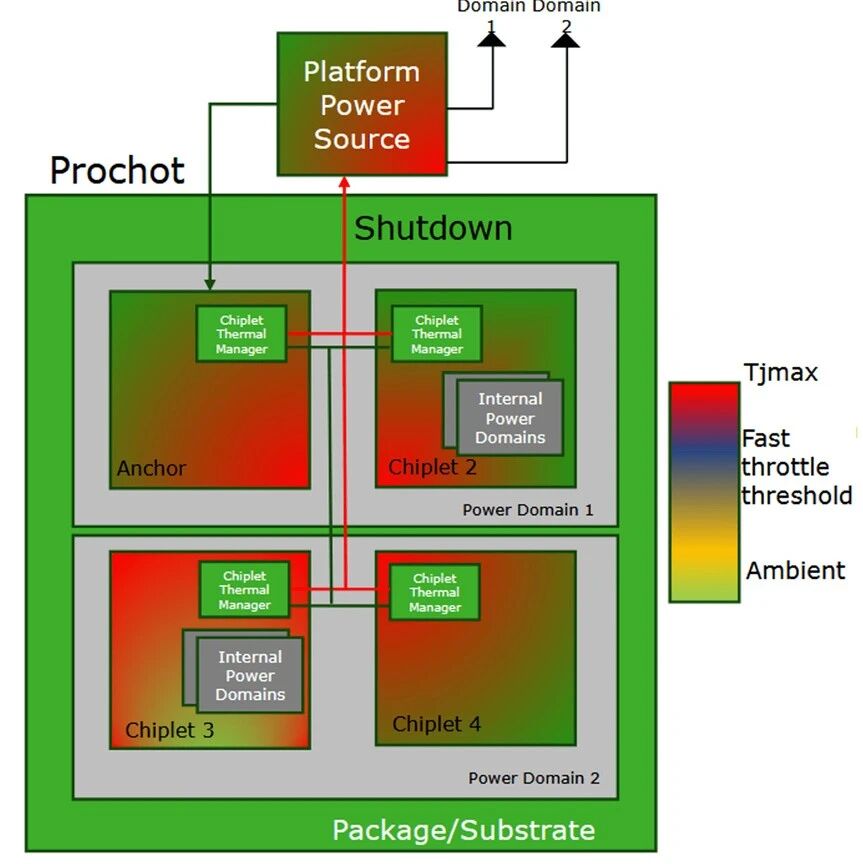
Core Viewpoint - The article discusses the advancements in UCIe 3.0, particularly its increased data rates and improved management features, which are crucial for meeting the growing demands of artificial intelligence workloads in data centers [2][3]. Group 1: UCIe 3.0 Features - UCIe 3.0 doubles the maximum allowed data rate for UCIe-S and UCIe-A from 32 GT/s to 64 GT/s, with 48 GT/s also mentioned [5]. - The new version introduces better management capabilities, allowing for more efficient firmware distribution across multiple Chiplets [10]. - UCIe 3.0 enhances streaming transmission and recalibration functions, addressing previously unresolved issues [15][20]. Group 2: Technical Improvements - The use of quarter-rate signaling enables higher data rates of 48 GT/s and 64 GT/s, significantly reducing risks for users and vendors in creating new intellectual property [6][7]. - The error rates for 48 GT/s and 64 GT/s are acceptable at 10¹⁵ and 10¹² respectively, especially when considering CRC checks and replay mechanisms [6]. - Power consumption remains below 0.5 pJ/bit at lower data rates, with higher rates targeting 0.75 pJ/bit [7]. Group 3: System Design and Integration Challenges - The increasing complexity of heterogeneous integration poses new challenges, including rising power and thermal demands, as well as system-level verification across stacked architectures [9]. - As UCIe moves to 64 Gbps, design margins shrink, increasing wiring density and signal integrity risks [9]. Group 4: Compatibility and Adoption - UCIe 3.0 maintains compatibility with previous versions, allowing for new bandwidth without changing bump locations [8][21]. - The industry is shifting towards UCIe standards, with many previously using custom solutions now considering UCIe due to its advancements [21].
黄金:不好意思,我又反弹了!前一日大跌后,深夜黄金又大涨突破5040美元
Sou Hu Cai Jing· 2026-02-14 01:14
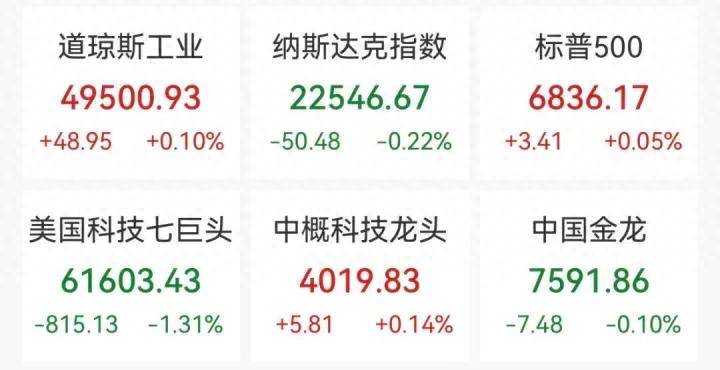
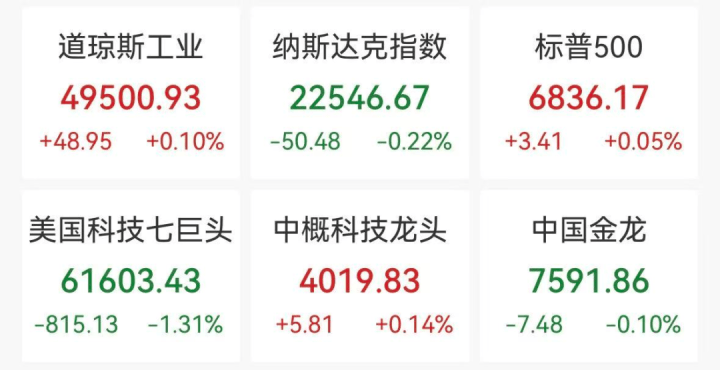
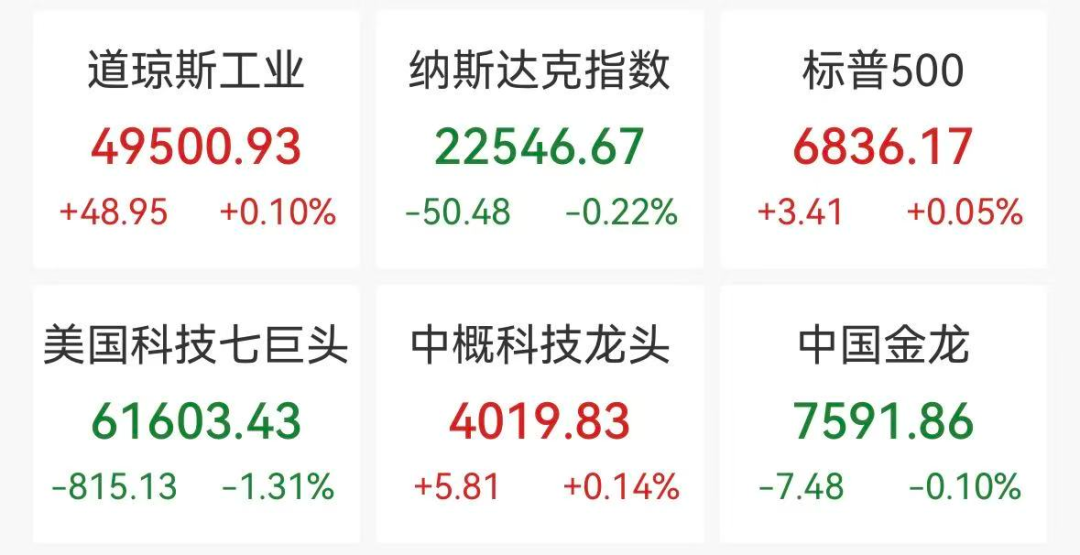
Group 1 - The core CPI year-on-year rate in the US fell from 2.7% to 2.4%, the lowest since May 2025, while the core CPI year-on-year rate decreased from 2.6% to 2.5%, the lowest since March 2021, both aligning with market expectations [1] - Following the CPI data release, the probability of the Federal Reserve easing policies in June increased to 69% from 63%, with traders estimating a 50% chance of a third rate cut this year [1] - The expected rate cut by the Federal Reserve in 2026 rose to 61 basis points from 58 basis points prior to the CPI announcement [1] Group 2 - The Dow Jones Industrial Average rose by 0.1% to close at 49,500.93, while the S&P 500 increased by 0.05% to 6,836.17, and the Nasdaq Composite fell by 0.22% to 22,546.67 [2] - Major technology stocks mostly declined, with Apple and Nvidia dropping over 2%, while Facebook and Google fell more than 1%, and Tesla saw a slight increase of 0.09% [2] - The Philadelphia Semiconductor Index rose by 0.66%, with notable gains in Applied Materials (over 8%) and ARM (over 2%), despite an initial drop of nearly 1% at the market open [2] Group 3 - Gold stocks performed strongly, with notable increases in companies such as Coeur Mining (over 7%), Harmony Gold, and Kinross Gold (over 6%), while Barrick Gold rose by over 5% [3] - The Nasdaq Golden Dragon China Index fell by 0.10%, with Tencent Music rising over 4% and Yum China increasing by over 3%, while JinkoSolar and Alibaba saw declines of over 2% [3] - Gold and silver prices surged, with gold closing at $5,042.808 per ounce, marking a daily increase of over 2.4%, and silver reaching $77.338 per ounce after a rise of over 5% [4][6]
全球市场早报 | 美股三大指数涨跌不一,苹果、英伟达跌超2%
Sou Hu Cai Jing· 2026-02-13 23:36
Market Performance - The US stock indices closed mixed, with the Dow Jones up 0.1% at 49,500.93 points, the S&P 500 up 0.05% at 6,836.17 points, and the Nasdaq down 0.22% at 22,546.67 points. For the week, the Dow fell 1.23%, the S&P 500 fell 1.39%, and the Nasdaq fell 2.1% [1] - In the technology sector, major stocks mostly declined, with the Wande American Technology Seven Giants Index down 1.31%. Notable declines included Apple and Nvidia, both down over 2%, while Tesla saw a slight increase of 0.09% [1] - Bank stocks showed mixed results, with Morgan Stanley up nearly 2% and Goldman Sachs up 0.04%, while Citigroup fell 0.31% [1] - Energy stocks were also mixed, with ExxonMobil down over 1% and Chevron up 0.73% [1] - Semiconductor stocks mostly rose, with the Philadelphia Semiconductor Index up 0.66%, and Applied Materials up over 8% [1] - Gold stocks performed strongly, with several companies like Coeur Mining and Harmony Gold seeing increases of over 6% [1] Chinese Stocks - The Nasdaq China Golden Dragon Index fell 0.10%, while the Wande Chinese Technology Leaders Index rose 0.15%. Notable gainers included Zai Lab up over 6% and Tencent Music up over 4% [2] - Conversely, JinkoSolar fell nearly 3%, and Alibaba dropped over 2% [2] Economic Indicators - The US January unadjusted CPI rose 2.4% year-on-year, the lowest since May 2025, with a month-on-month increase of 0.2% [2] - The core CPI also showed a year-on-year increase of 2.5%, the lowest since March 2021, indicating a potential easing of inflation concerns [2] - Economists suggest that the slowdown in basic inflation indicators may provide the Federal Reserve with more flexibility to lower interest rates if necessary [2] European Market Performance - European stock indices showed mixed results, with the FTSE 100 up 0.42% and the DAX up 0.25%, while the CAC40 fell 0.35% [3] - International oil prices saw slight increases, with light crude oil futures up 0.08% and Brent crude up 0.34% [3] - Precious metals futures generally rose, with COMEX gold futures up 2.33% [3] Currency Market - The US dollar index saw a slight decline of 0.01%, closing at 96.922 [4]
深夜黄金突破5040美元,美股黄金股爆发,芯片股反弹,特朗普证实美军第二艘航母将派往中东
2 1 Shi Ji Jing Ji Bao Dao· 2026-02-13 23:27
Market Performance - On February 13, the three major U.S. stock indices closed mixed, with the Dow Jones up 0.1%, S&P 500 up 0.05%, and Nasdaq down 0.22% [1] - For the week, the Dow Jones fell 1.23%, S&P 500 dropped 1.39%, and Nasdaq decreased by 2.1% [1] Sector Performance - Most large tech stocks declined, with Apple and Nvidia down over 2%, Facebook and Google down over 1%, while Tesla saw a slight increase of 0.09% [3] - Semiconductor stocks mostly rose, with the Philadelphia Semiconductor Index up 0.66%, and notable gains in Applied Materials (over 8%), ARM (over 2%), and Qualcomm (over 1%) [3] - Gold stocks performed strongly, with Coeur Mining up over 7%, Harmony Gold, Kinross Gold, and Pan American Silver up over 6%, and Barrick Gold up over 5% [3] Chinese Stocks - The Nasdaq Golden Dragon China Index fell 0.10%, with Tencent Music up over 4%, Yum China up over 3%, and Hesai Technology and NetEase up over 2% [3] - Declines were seen in JinkoSolar (down nearly 3%), Canadian Solar, New Oriental, Alibaba (down over 2%), and Li Auto (down nearly 2%) [3] Commodity Prices - Precious metals saw a rebound, with spot gold rising 2.4% to surpass $5040 per ounce, and spot silver increasing by 2.8% to $77.3 per ounce [3] - WTI crude oil futures rose by 0.08% to $62.89 per barrel, while Brent crude oil futures increased by 0.34% to $67.75 per barrel [4] Cryptocurrency Market - The cryptocurrency market experienced a collective rebound, with Bitcoin rising over 4% to approach $69,000 per coin, and over 90,000 traders liquidated in the past 24 hours [4][5] Economic Indicators - The U.S. Consumer Price Index (CPI) for January showed a year-over-year increase of 2.4%, below the market expectation of 2.5%, marking a decrease from 2.7% in December 2025 [6] - The month-over-month CPI, seasonally adjusted, rose by 0.2%, also below the expected 0.3%, indicating a significant cooling of inflation [6] - Following the CPI release, the probability of the Federal Reserve implementing a rate cut in June surged to 83% from 49.9% [6]
深夜黄金突破5040美元,美股黄金股爆发,芯片股反弹,特朗普证实美军第二艘航母将派往中东
21世纪经济报道· 2026-02-13 23:23
Market Performance - On February 13, the three major U.S. stock indices closed mixed, with the Dow Jones up 0.1%, S&P 500 up 0.05%, and Nasdaq down 0.22% [1] - For the week, the Dow Jones fell 1.23%, S&P 500 dropped 1.39%, and Nasdaq decreased by 2.1% [1] Index and Stock Movements - The Dow Jones Industrial Average closed at 49,500.93, with a gain of 48.95 points [2] - The Nasdaq Composite Index closed at 22,546.67, down 50.48 points [2] - The S&P 500 Index closed at 6,836.17, up 3.41 points [2] - Major tech stocks mostly declined, with Apple and Nvidia down over 2%, while Facebook and Google fell over 1% [2] - Semiconductor stocks saw a majority increase, with the Philadelphia Semiconductor Index rising 0.66% [2] Gold and Precious Metals - Gold stocks performed strongly, with notable increases such as Coeur Mining up over 7% and Harmony Gold up over 6% [2] - Spot gold rose 2.4%, surpassing $5,040 per ounce, while spot silver increased by 2.8%, reaching $77.3 per ounce [3] Commodity Prices - WTI crude oil futures rose 0.08%, closing at $62.89 per barrel, while Brent crude oil futures increased by 0.34%, closing at $67.75 per barrel [4] Cryptocurrency Market - The cryptocurrency market saw a collective rebound, with Bitcoin rising over 4%, nearing $68,847 per coin [5] - Ethereum also increased by 6.93%, reaching $2,055.93 [5] Economic Indicators - The U.S. Consumer Price Index (CPI) for January showed a year-over-year increase of 2.4%, lower than the expected 2.5% [5] - The CPI's month-over-month increase was 0.2%, also below the anticipated 0.3%, indicating a significant cooling of inflation [5] - Following the CPI release, the probability of the Federal Reserve implementing a rate cut in June surged to 83% from 49.9% [5]

Stocks Recover as Chipmakers Rebound
Yahoo Finance· 2026-02-13 16:10
Market Overview - Overseas stock markets are lower, with the Euro Stoxx 50 down by -0.40%, China's Shanghai Composite down -1.26%, and Japan's Nikkei Stock 225 down -1.21% [1] - The markets are pricing in a 10% chance for a -25 basis point rate cut at the next policy meeting on March 17-18 [1] Earnings Reports - Q4 earnings season shows positive results, with 76% of the 358 S&P 500 companies that have reported beating expectations [2] - S&P earnings growth is expected to increase by +8.4% in Q4, marking the tenth consecutive quarter of year-over-year growth [2] - Excluding the Magnificent Seven megacap technology stocks, Q4 earnings are expected to rise by +4.6% [2] Inflation Data - US January CPI rose +2.4% year-over-year, weaker than the expected +2.5% and the smallest increase in 7 months [3] - January core CPI rose +2.5% year-over-year, matching expectations and marking the smallest increase in 4.75 years [3] Stock Movements - Stocks initially moved lower, with the S&P 500 and Nasdaq 100 hitting 1-week lows due to concerns over AI disrupting various sectors [4] - Stock indexes recovered from early losses, with a rebound in chip makers leading the market, particularly Applied Materials which jumped +10% after reporting stronger-than-expected Q1 adjusted EPS [5][9] - Cryptocurrency-exposed stocks are climbing, with Bitcoin up more than +4% and Coinbase Global up more than +14% [10] Sector Performance - Metal companies are under pressure due to reports of the Trump administration working to narrow tariffs on steel and aluminum products, with Century Aluminum down more than -6% [11] - Rivian Automotive is up more than +19% after reporting Q4 revenue of $1.29 billion, exceeding consensus expectations [12] - Arista Networks is up more than +5% after reporting Q4 revenue of $2.49 billion, better than consensus [13] - Airbnb is up more than +4% after reporting Q4 gross booking value of $20.4 billion, exceeding expectations [14] Company Forecasts - DraftKings is down more than -12% after forecasting full-year revenue of $6.5 billion to $6.9 billion, below consensus [15] - Expedia Group is down more than -5% despite better-than-expected Q4 earnings, as AI poses a long-term risk for the online travel industry [16]