
Rokid

Search documents
补贴与展会双重加持,智能眼镜迎来“成人礼”
Jin Rong Jie· 2026-01-09 06:34
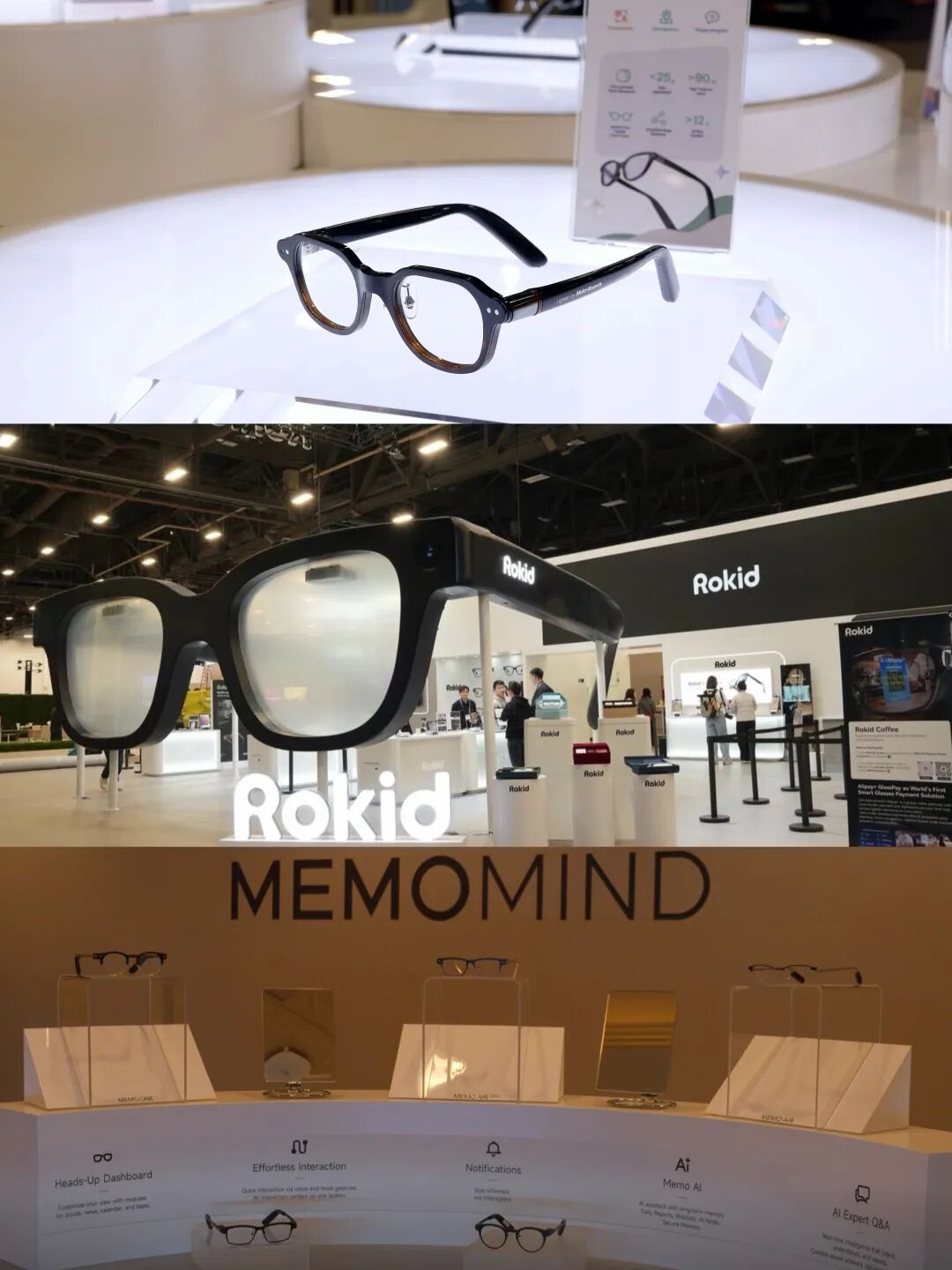
Core Insights - The Chinese government has introduced a subsidy for consumers purchasing smart glasses priced under 6000 yuan, offering a 15% discount, with a maximum of 500 yuan [2] - The CES 2026 event has showcased a significant shift towards AI glasses, with various companies presenting innovative products that enhance user experience [3][4] Policy Support - The new policy, effective from 2026, includes smart glasses in the consumer goods trade-in subsidy program, reflecting government support for the AI terminal industry [2] - This policy change indicates a move from conceptual products to mainstream consumer acceptance of smart glasses [2] Exhibition Highlights - CES 2026 featured 4112 companies, with major players like Nvidia, AMD, and Hisense showcasing their latest AI glasses [3] - The event highlighted AI as a core driver in product development, moving beyond being an additional feature [3] Technological Differentiation - Companies are adopting various technological paths, with some focusing on ultra-lightweight designs while others emphasize functional integration [4] - Innovations include modular designs and advanced interaction technologies, such as Meta's EMG handwriting recognition [4] Practical Applications - The maturity of smart glasses is evident, with many products weighing under 30 grams and offering diverse interaction methods [5] - Companies are exploring accessibility features, such as special subsidies for visually impaired users [6] Market Opportunities - The subsidy policy is expected to lower the entry barrier for consumers, making smart glasses more attractive [6] - Different market segments are emerging, with companies like BleeqUp targeting professional sports and others like MemoMind focusing on everyday use [6] Future Trends - The smart glasses market is shifting from general-purpose devices to specialized solutions tailored for specific scenarios [7] - The integration of AI models is expected to transform smart glasses into proactive assistants, enhancing user experience and driving market growth [7]
康耐特光学20260108
2026-01-08 16:02
Summary of 康耐特光学 Conference Call Company Overview - 康耐特光学 is a leading resin lens manufacturer globally, ranked second in sales and covering over 90 countries and regions [2][6] - The company has a strategic investment from 歌尔股份, holding approximately 20% of shares, enhancing its position in the AI glasses supply chain [2][6] Industry Insights - The AI glasses market is expected to grow significantly, with 康耐特光学 projected to capture a 30% market share, increasing average selling prices to 300-400 RMB and achieving a net profit margin of 30-35% [2][3] - The global market for AI glasses could reach 600 million units, corresponding to a market size of 2 trillion RMB [4][15] Financial Performance - From 2018 to 2024, 康耐特光学's revenue is expected to grow at a CAGR of 16%, with net profit growing at 33%, reaching 430 million RMB by 2024 [2][7] - The company’s gross margin is projected to increase from 35% in 2020 to 41% by 2025, with net profit margin rising from 12% to 25% [7] Product and Market Strategy - High refractive index lenses are a key driver for profitability, with 康耐特光学 being the only domestic producer of 1.74 refractive index lenses, holding a 50% market share [2][8][10] - The company employs a C to C to N customization model, achieving a 60% gross margin on customized lenses, which currently represent 19% of total sales [2][13] Competitive Landscape - 康耐特光学 benefits from a cost advantage over imported brands while maintaining quality, allowing it to capture significant market share in high refractive index lenses [10][11] - The company is positioned to respond quickly to market demands and expand its market share through overseas production facilities in Japan and Thailand [4][14][21] Future Growth Potential - The company’s valuation is currently around 460 billion RMB, with potential for 2-3x growth, driven by the AI glasses market and new national subsidy policies [4][5] - The expected increase in net profit from AI glasses could elevate the profit margin to 30-35%, with a potential revenue increase of 1.2 billion RMB from XR business [22] Key Risks and Considerations - The company faces competition from global leaders like 依视路, which may limit its market share growth despite its technological advantages [21] - The impact of tariffs on overseas markets has been noted, but the establishment of production facilities abroad is seen as a mitigating factor [14] Conclusion - 康耐特光学 is well-positioned to capitalize on the growing AI glasses market, with strong financial performance, innovative product offerings, and strategic international expansion plans. The company’s unique capabilities in high refractive index lenses and customization are expected to drive future growth and profitability [2][3][4][22]
轻量化“内卷”与eSIM加持下,智能眼镜迎来新纪元?
Guo Ji Jin Rong Bao· 2026-01-08 13:24
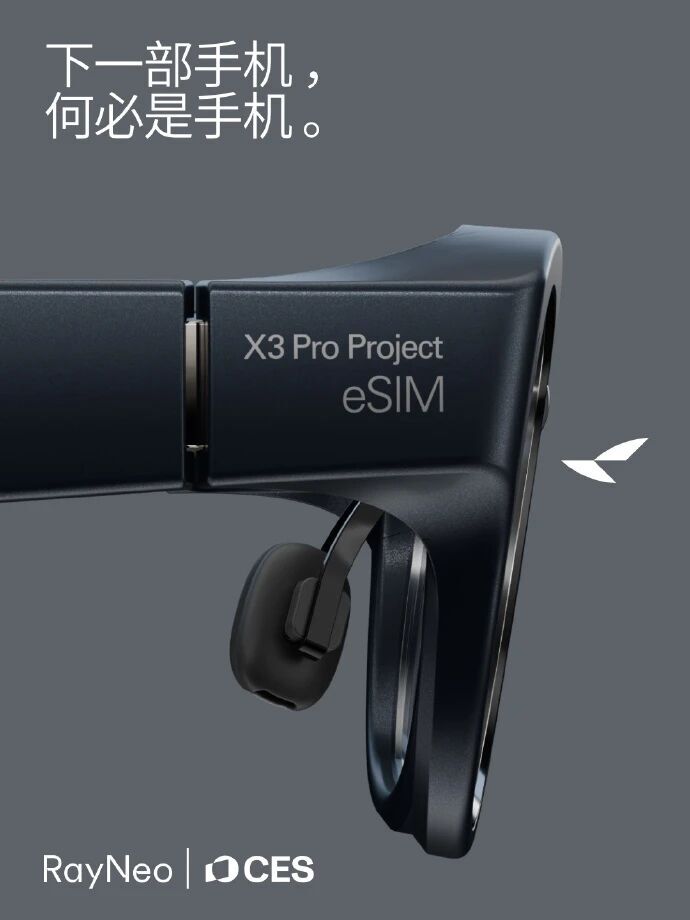
Core Insights - The smart glasses industry is expected to transition from a niche market to a mainstream one by 2025, with significant growth in market size and product penetration [1] - Global smart glasses sales are projected to surge by 350.82% year-on-year to 13.448 million units in 2025, with the Chinese market seeing a 159.76% increase to 3.286 million units [2] - The introduction of eSIM technology is anticipated to enhance the functionality of smart glasses, allowing them to operate independently from smartphones [7][8] Market Trends - The CES 2026 showcased smart glasses as a focal point, with 38 exhibition booths dedicated to this category, highlighting the growing interest and competition in the market [4] - Lightweight design has become a core competitive factor, with several companies unveiling ultra-light models, such as Rokid's 38.5g AI glasses and MoJie's 25g AR glasses [5][6] - The integration of eSIM technology is seen as a pivotal development, enabling smart glasses to function as independent communication devices, similar to smartwatches [8] Industry Challenges - The smart glasses industry faces challenges in achieving product differentiation, maintaining lightweight designs, and effectively utilizing AI technology to establish themselves as independent smart devices [3][10] - The competition is expected to shift from a chaotic phase to a more structured one, focusing on quality, technology, and ecosystem capabilities [9] - Key challenges include balancing power consumption, size, and functionality, as well as establishing a robust application ecosystem that creates indispensable use cases for smart glasses [10]


AR眼镜光波导技术与碳化硅材料的创新融合
Xin Lang Cai Jing· 2026-01-08 11:43
Group 1: Optical Solutions for AR Glasses - The optical solutions for AR glasses are primarily divided into two camps: "Birdbath" and "Waveguide" [1][17] - The Birdbath optical scheme is characterized by a simple structure that uses a beam splitter and a curved semi-transparent mirror to reflect images into the eye while allowing real light to pass through. It offers a large field of view and high contrast but has lower light transmittance and is difficult to miniaturize [1][17] - The Waveguide technology utilizes total internal reflection to transmit images through ultra-thin glass or crystal sheets, balancing device slimness with a large field of view, which is crucial for achieving a "normal glasses" form factor [4][20] Group 2: Types of Waveguide Technology - Waveguide technology is mainly categorized into geometric waveguides and diffractive waveguides. Geometric waveguides rely on traditional optical reflection/refraction principles and are characterized by high light utilization but are typically thicker [4][20] - Diffractive waveguides use nano-scale gratings on the lens surface to control light propagation, allowing for ultra-thin lenses but with lower light utilization efficiency [4][20] Group 3: Advantages of Silicon Carbide in Waveguides - Silicon carbide (SiC) materials exhibit multiple advantages in AR glasses waveguides, including a high refractive index (approximately 2.6), which allows for larger field angles and more compact designs [7][23] - SiC has excellent thermal conductivity (350-490 W/mK), enabling simplified heat management and lightweight designs for AR glasses [7][23] - The hardness and chemical stability of SiC enhance the durability and lifespan of waveguides, making them resistant to scratches and corrosion [7][23] Group 4: Market Trends and Developments - The commercialization of SiC waveguides in AR glasses is accelerating, with companies like Hangzhou Qiuguo planning to release mass-producible SiC waveguide XR glasses by 2025 [9][25] - Meta is set to showcase a prototype AR glasses named Orion in September 2024, featuring SiC lenses that significantly enhance the field of view compared to existing devices [9][25] - Companies are forming strategic partnerships to advance SiC waveguide technology, with a focus on integrating AR and AI trends [10][27] Group 5: Challenges in SiC Waveguide Commercialization - The complexity of manufacturing SiC waveguides poses challenges, as the material's hardness requires precision nano-scale manufacturing processes [15][31] - The high cost of SiC materials compared to traditional waveguide materials is a significant barrier to widespread adoption, particularly in consumer-grade AR glasses [15][31] - Integrating SiC waveguides with other optical components remains a technical challenge due to the material's properties [15][31] Group 6: Future Market Outlook - The market for SiC waveguides is projected to grow significantly, with forecasts indicating a production of 60 million units by 2030, primarily starting in industrial applications before moving to consumer electronics [16][32] - The optimization of light sources and waveguides will be crucial for enhancing AR glasses performance, with future designs focusing on the synergy between different light sources and waveguide technologies [16][32]

Touch-Free Magic Arrives: Wearable Devices and Rokid Partner to Power AI and AR Glasses with Neural Control
Globenewswire· 2026-01-07 13:59
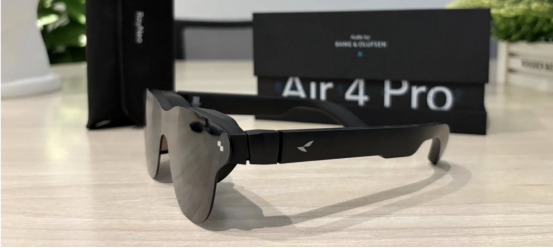
Core Viewpoint - Wearable Devices Ltd. has announced a collaboration with Rokid to create a consumer bundle that combines the Mudra Link wristband with Rokid Glasses, aiming for a launch in Q2 2026, with live demonstrations at CES 2026 [1][4] Group 1: Product Collaboration - The collaboration focuses on enhancing user experience by enabling touch-free, wrist-based control of Rokid Glasses through the Mudra Link wristband, which is designed for personalized gesture control [2][3] - Rokid Glasses are marketed as the world's lightest AI and AR glasses, weighing just 49 grams, featuring a 12MP camera and various AI functionalities [3][4] Group 2: Market Strategy - The companies plan to simplify the setup process and make daily interactions more intuitive for users by ensuring compatibility and joint marketing efforts [3][4] - A consumer bundle is being developed for initial rollout in Q2 2026, with pre-mapped gestures and a shared setup flow to enhance user convenience [6] Group 3: Event Demonstrations - The combined experience of Mudra Link and Rokid Glasses will be showcased at CES 2026, providing opportunities for media and analysts to engage with the products [4][6] Group 4: Company Background - Wearable Devices specializes in AI-powered touchless sensing wearables, while Rokid is recognized for its advancements in AR and AI technologies, serving a global market [7][8] - Both companies are positioned to lead in the neural input category, enhancing user experiences across various tech markets [7]


直击CES:AI,加速影响物理世界
Zhong Guo Zheng Quan Bao· 2026-01-07 04:44
Group 1: AI Technology and Developments - AI has become the central theme at CES 2026, with discussions focusing on extending AI into the physical world [2][3] - NVIDIA's CEO Jensen Huang announced that the company's open-source physical AI model "Cosmos" has reached one million downloads, indicating a significant shift in AI capabilities [2] - AMD introduced several new AI products, including the MI455X GPU AI chip and Ryzen AI processors, with plans to launch the MI500 series chip in 2027, aiming for a 1000-fold increase in AI performance over the next four years [2] - Qualcomm's new high-performance robot processor, the Snapdragon IQ10 series, is designed for industrial autonomous mobile robots and advanced humanoid robots [2][3] Group 2: Robotics and Smart Products - The humanoid robot TORA-ONE showcased at CES 2026 demonstrates strong adaptability in new retail scenarios, featuring advanced tactile sensors with high precision and sampling rates [4] - Companies like 松延动力 are targeting key global markets for their products, aiming for significant overseas expansion in 2026 [5] - The exhibition highlighted various smart home products, including robotic lawn mowers and pool cleaning robots, indicating a growing market for AI-integrated home appliances [6] Group 3: Autonomous Driving - The maturity of technology is pushing L4-level autonomous driving into everyday life, with significant advancements in AI driving this trend [7] - Huang announced the Alpamayo R1, an open-source VLA inference model for assisted driving, suggesting that autonomous driving may become a mainstream application of physical AI [7]


港科大教授实测AI眼镜“作弊”:30分钟碾压95%的学生,把传统教学评估体系整破防了
猿大侠· 2026-01-07 04:11
Core Viewpoint - The article discusses a recent experiment at Hong Kong University of Science and Technology where an AI-powered glasses equipped with ChatGPT-5.2 took a final exam, achieving a score of 92.5, outperforming over 95% of human students, raising questions about the validity of traditional educational assessment methods [1][4][6]. Group 1: Experiment Overview - The AI glasses, developed by a team led by Professors Zhang Jun and Meng Zili, were designed to "cheat" in a controlled exam environment for the course "Computer Network Principles" [7][8]. - The AI glasses utilized a combination of hardware and software, including a camera for capturing exam questions and a cloud-based model for generating answers [13][12]. - The experiment aimed to evaluate the performance of AI in a traditional academic setting, highlighting the potential challenges to existing educational evaluation systems [5][6]. Group 2: Performance Metrics - The AI glasses scored 92.5, with perfect scores in multiple-choice and single-page short answer questions, and a high score in multi-page short answer questions [14]. - The performance demonstrated strong reasoning capabilities, even in complex questions that required contextual understanding [14][15]. - The experiment revealed that the AI could effectively complete the reading, understanding, and answering process, raising concerns about the relevance of traditional assessment methods [22][23]. Group 3: Implications for Educational Assessment - The success of the AI in the exam challenges the effectiveness of current educational assessments that focus primarily on standardized answers [22][33]. - The article suggests that traditional assessments may not adequately measure critical skills such as problem-solving, creativity, and understanding, which are essential in real-world scenarios [39][43]. - There is a growing need to shift the focus of educational evaluations from merely providing correct answers to assessing the reasoning processes and understanding behind those answers [40][48].

中国智能眼镜“扎堆”CES 2026
Guo Ji Jin Rong Bao· 2026-01-06 14:55
Core Insights - The CES 2026 event in Las Vegas is showcasing advancements in technology, particularly in the fields of semiconductors, artificial intelligence, and consumer electronics, with a notable focus on smart glasses as a potential replacement for smartphones [1] Group 1: Smart Glasses Market Developments - The global first eSIM smart glasses are set to be unveiled by Thunderbird Innovation, which has also secured over 1 billion yuan in funding from major Chinese telecom operators, indicating a significant investment in the smart glasses sector [3] - Rokid has launched its AI smart glasses, Rokid Style, at CES, which are marketed as the lightest full-featured AI glasses at 38.5 grams, priced starting at $299, and compatible with multiple AI engines [3] - XREAL has introduced the ROG Xreal R1, the first AR glasses with a 240Hz refresh rate, targeting the gaming market and enhancing the AR experience [4] Group 2: Industry Collaborations and Innovations - Google has announced its return to the smart glasses market with Project Aura, collaborating with XREAL to integrate advanced optical and AI capabilities [6] - Lenovo is set to unveil several AI concept products, including a personal AI smart glasses prototype, during CES, highlighting its collaboration with NVIDIA in the AI space [6] - XGIMI has expanded its strategic focus from home projectors to personal smart glasses with the launch of its MemoMind brand, offering two series of AI glasses [7] Group 3: Market Predictions and Policy Support - The Chinese government has included smart glasses in its new subsidy policy for digital and smart products, marking a significant step for the industry [9] - IDC forecasts that the global smart glasses market will exceed 23.687 million units by 2026, with China's market expected to surpass 4.915 million units, indicating a shift towards large-scale growth [10]

炸,百款新品狂轰,百亿资金疯涌,十位创始人万字综述2025智能眼镜史
3 6 Ke· 2026-01-06 12:19
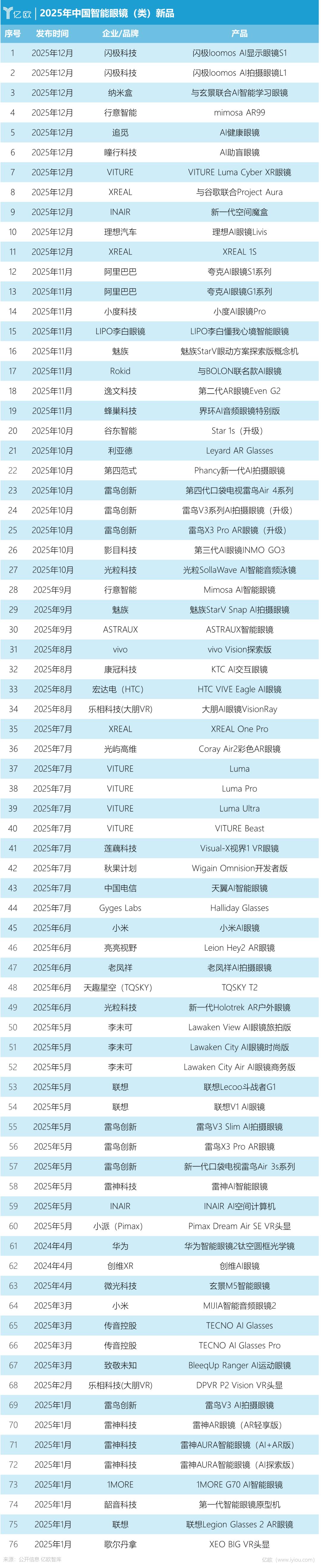
Group 1 - The year 2025 is marked by significant advancements in the AI hardware market, particularly in the smart glasses sector, with a notable increase in new product launches and investments [1][4][5] - A total of 76 new smart glasses products were introduced in China in 2025, representing a 40% increase compared to 2024 [5][6] - The industry is experiencing a shift from product and marketing competition to a focus on technology and innovation [3][5] Group 2 - The number of listed companies entering the smart glasses market has expanded to 176, doubling from the previous year [2][42] - Major players in the industry include both startups and established companies from various sectors, including technology, automotive, and consumer electronics [29][43] - The market is transitioning from a technology-driven approach to a value-driven one, with consumers becoming more experience-sensitive [26][27] Group 3 - Significant funding has flowed into the smart glasses sector, with nearly 10 billion yuan invested [3] - The industry is witnessing a trend towards vertical integration, with products increasingly tailored to specific use cases such as sports, health, and office environments [27][28] - Companies are focusing on creating a complete user experience by integrating perception, decision-making, and interaction capabilities [28] Group 4 - The competitive landscape is intensifying, with major companies like ByteDance, Xiaomi, and Alibaba entering the market, bringing substantial traffic and visibility [22][23] - Innovations in product design and functionality are crucial for gaining consumer acceptance, as evidenced by the success of products like the BleeqUp Ranger smart glasses [15][17] - The industry is facing challenges such as feature homogeneity and the need to balance lightweight design with high performance and battery life [34][36]
蓝思科技20260105
2026-01-05 15:42
Summary of the Conference Call for Lens Technology (蓝思科技) Industry and Company Overview - Lens Technology is a leading player in the consumer electronics and automotive sectors, with a strong focus on precision manufacturing for smart devices, including smartphones, computers, smart cars, and servers [2][3]. Key Financial Highlights - Revenue is projected to increase from 45.2 billion to 69.8 billion CNY, while profit is expected to rise from 2 billion to 3.6 billion CNY, indicating robust growth momentum [2][3]. Core Business Insights - The company maintains close collaborations with major North American clients in the consumer electronics sector and is actively expanding its AI glasses business through partnerships with Rokid, Meta, and Apple, suggesting stable growth in this area [2][3]. - In the automotive sector, Lens Technology offers a diverse product line, including smart cockpit glass, B-pillars, body structural components, and rearview mirrors, with partnerships established with leading clients like Tesla and Xiaomi, indicating a promising market outlook [2][4]. - Since 2016, the company has provided joint modules, dexterous hands, and complete assembly services to various robotics companies, accumulating significant technical expertise for future developments in the robotics field [2][5]. New Business Developments - Through acquisitions of Feimei Gao International and Yuanshi Technology, Lens Technology has rapidly entered the AI server market, forming an integrated capability for material module assembly and securing orders from specific domestic and international clients, which is expected to become a new growth engine [2][5]. - The company has made significant progress in commercial aerospace, with established shipments of satellite protection glass and radiation-proof glass to North American clients, while also expanding its domestic market presence [4][6]. Future Growth Directions - Lens Technology plans to continue its focus on multiple sectors, including consumer electronics, new terminal glasses, new energy vehicles, robotics, AI servers, and commercial aerospace. The upcoming 20th-anniversary special edition release from Apple is expected to significantly benefit the company as a core structural component supplier [7]. - New business lines such as automotive laminated glass, humanoid robot joint modules, and liquid-cooled AI servers are anticipated to become additional growth points [7].
