淮北矿业

Search documents
淮北矿业(600985) - 淮北矿业控股股份有限公司董事会审计委员会工作细则(2025年8月修订)
2025-08-26 11:20
淮北矿业控股股份有限公司 董事会审计委员会工作细则 第一章 总则 第一条 为充分发挥淮北矿业控股股份有限公司(以下简称"公司")审计 委员会对公司财务信息、内部控制、内外部审计等工作的监督作用,健全公司内 部监督机制,根据《中华人民共和国公司法》(以下简称"《公司法》")《中华人 民共和国证券法》《上市公司独立董事管理办法》《上海证券交易所自律监管指引 第 1 号—规范运作》等相关法律法规、规范性文件的规定,制定本细则。 第二条 审计委员会是董事会下设的专门委员会,行使《公司法》规定的监 事会的职权,对董事会负责,向董事会报告工作。 第二章 人员组成 (一)具有注册会计师资格; 1 (二)具有会计、审计或者财务管理专业的高级职称、副教授及以上职称或 者博士学位; (三)具有经济管理方面高级职称,且在会计、审计或者财务管理等专业岗 位有五年以上全职工作经验。 第八条 审计委员会成员的任期与公司其他董事相同,每届任期不得超过三 年,任期届满,连选可以连任,但独立董事成员任期不得超过 6 年。期间如有委 员因辞任或者其他原因不再担任公司董事职务,自其不再担任董事之时自动辞去 审计委员会职务,并由董事会根据上述第三至 ...

淮北矿业(600985) - 淮北矿业控股股份有限公司总经理办公会议事规则(2025年8月修订)
2025-08-26 11:20
淮北矿业控股股份有限公司 总经理办公会议事规则 第一章 总 则 第一条 为进一步规范公司总经理办公会议事程序,保证公司经理层依法行 使职权,提高议事效率,推进企业持续健康发展,根据《中华人民共和国公司法》 《中华人民共和国证券法》《上海证券交易所股票上市规则》《公司章程》《公 司董事会授权经理层及总经理向董事会报告工作制度》等规定,特制订本议事规 则。 第二条 公司总经理及经理层应当遵守法律法规和《公司章程》的规定,履 行诚信和勤勉的义务。 第三条 公司设总经理 1 名,副总经理 5-11 名,总经理、副总经理、财务 负责人、董事会秘书、总工程师、安监局局长等高级管理人员构成公司经理层, 是公司日常生产经营的决策和管理核心。 第四条 公司办公室是总经理办公会归口组织部门,负责总经理办公会的日 常组织和管理工作。 第二章 议事原则 第五条 公司总经理主持公司安全、生产、经营管理工作,副总经理等其他 高级管理人员按照分工各司其职,协助总经理开展工作,并在各自分管的范围内 从事日常经营管理活动。 第六条 总经理对董事会负责,行使下列职权: (一)主持公司的生产经营管理工作,组织实施董事会决议,并向董事会报 告工作; ...
淮北矿业(600985) - 淮北矿业控股股份有限公司财务管理制度(2025年8月修订)
2025-08-26 11:20
淮北矿业控股股份有限公司 财务管理制度 第一章 总则 第一条 为规范淮北矿业控股股份有限公司(以下简称"公司")财务管理 行为,加强财务管理和内部控制,提高公司风险防控能力,维护股东、债权人及 公司的合法权益,规范会计管理及核算工作,提高会计工作水平和会计信息质量, 促进公司可持续、协调发展,根据《公司法》、《会计法》、《证券法》、《企业会计 准则》《会计档案管理办法》《公司章程》等规定,结合本公司实际情况,制订本 制度。 第二条 本制度适用于公司本部及各级子分公司和具有实质性控制的其他 企业。本公司的联营、合营企业与参股公司参照执行。 第三条 公司应切实做好财务管理的各项基础工作,建立健全财务管理和会 计核算体系,如实反映公司财务状况、经营成果和现金流量情况,有效控制财务 风险,加强财务队伍建设,重视财务会计人员的业务培训和知识更新,不断提高 公司财务人员的业务水平和职业道德,不断提高公司财务管理水平。 第四条 本制度是公司财务工作的基本制度,在公司范围内统一执行。公司 各级财务管理部门应根据本制度和相应的法律法规、会计准则和内控规范的要求, 结合本单位的实际情况建立和完善各项财务工作制度,并报公司财务部备 ...
破发股华塑股份股东拟减持 A股募17亿国元证券保荐IPO
Zhong Guo Jing Ji Wang· 2025-08-26 03:39
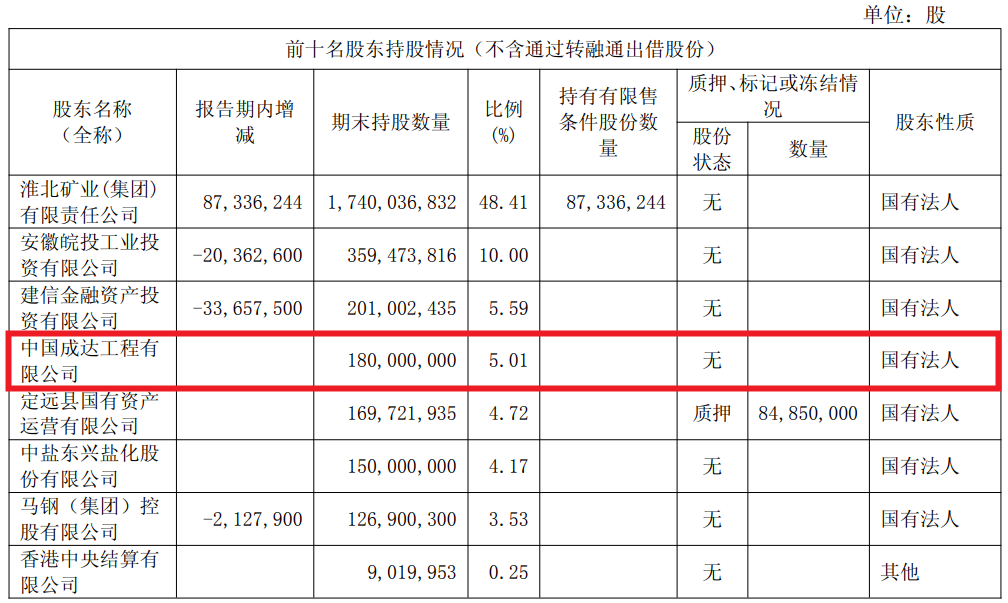
Core Viewpoint - China Chengda Engineering Co., Ltd. plans to reduce its stake in Huashu Co., Ltd. by up to 10 million shares, representing 0.28% of the total share capital, within a 90-day period [1] Shareholder Reduction Plan - China Chengda intends to sell no more than 10,000,000 shares, which is capped at 1% of the total shares within any consecutive 90 days [1] - As of the announcement date, China Chengda holds 180,000,000 shares, accounting for 5.01% of Huashu's total share capital [1] Shareholding Structure - The top shareholders include Huai Bei Mining Group with 1,740,036,832 shares (48.41%), Anhui Wantou Industrial Investment Co., Ltd. with 359,473,816 shares (10.00%), and China Chengda Engineering Co., Ltd. with 180,000,000 shares (5.01%) [2] - Huashu Co., Ltd. was listed on the Shanghai Stock Exchange on November 26, 2021, with an initial public offering of 386 million shares at a price of 3.94 yuan per share [2] Fundraising and Financials - Huashu raised a total of 1.521 billion yuan through its initial public offering, with a net amount of 1.402 billion yuan after deducting issuance costs [3] - The company plans to use the raised funds for various projects, including energy efficiency upgrades and production expansions [3] - The total fundraising from two rounds amounts to 1.721 billion yuan [4]


煤炭进口数据拆解:25年7月进口煤量收缩趋势放缓,未来增量有待观察
Shanxi Securities· 2025-08-26 02:49
Investment Rating - The report maintains an investment rating of "A" for the coal sector, indicating expected performance leading the market [1]. Core Insights - The coal import volume has shown a slowing trend of contraction, with a cumulative decrease of 13% from January to July 2025. Despite a continuous negative growth rate for five months, July saw a year-on-year decrease of 22.94% but a month-on-month increase of 7.78% [1][3]. - The overall import price for coal types averaged $67 per ton, continuing a downward trend year-on-year, with a month-on-month decrease of $6.23 in July [1]. - Domestic coal production has contracted both year-on-year and month-on-month, leading to an increase in import demand due to a domestic supply gap [3]. Summary by Sections Import Data Analysis - The report highlights that all coal types have shown negative year-on-year growth, with only anthracite coal experiencing a month-on-month decline. The increase in coking coal imports is primarily from Mongolia and Russia, while thermal coal imports are mainly from Australia, and lignite imports are from Indonesia [1][3]. Price Trends - The report notes that the import prices for all coal types have significantly decreased compared to the previous year, with July showing a downward trend across all categories [1]. Future Outlook - The report suggests that while there is an increase in import volume, the prices have not risen correspondingly, indicating a potential imbalance in the overseas supply-demand structure. The future demand for coal remains uncertain due to domestic economic conditions and the impact of the "anti-involution" campaign [3]. Investment Recommendations - The report recommends focusing on coal stocks that are expected to recover in performance due to rising coal prices, highlighting companies such as Huayang Co., Jinkong Coal Industry, and Shanxi Coking Coal as key investment targets [2][3].
从财务及固定资产视角看价格支撑 - 煤炭成本专题研究
2025-08-25 14:36
Summary of Coal Industry Conference Call Industry Overview - The conference call focuses on the coal industry, specifically the production costs and financial pressures faced by coal companies [1][2][3]. Key Points and Arguments - **Rising Production Costs**: Coal companies have seen a steady increase in production costs over the years, with labor costs exceeding 20%, materials and power costs around 20%, depreciation and amortization costs between 10%-20%, and safety maintenance costs between 15%-20% [1][2]. - **Indirect Costs Decline**: The overall indirect cost rate in the coal industry has decreased, with management expenses being the largest component at approximately 8%. Employee compensation constitutes over 50% of management expenses [4]. - **Resource Tax Increases**: Resource tax is a significant part of the taxes and additional charges for coal companies, with some provinces raising resource tax rates to increase fiscal revenue. For instance, Shanxi raised its resource tax to 10% and Xinjiang to 9% [5]. - **Cost Increase from 2015 to 2023**: The average cost of thermal coal has increased by approximately 130 CNY/ton, while coking coal has risen by around 307 CNY/ton, with the latter experiencing a higher increase due to labor and safety costs [6][7]. - **Mining Rights and Construction Costs**: The price of mining rights has surged from 2-3 CNY/ton to 10-15 CNY/ton, and construction costs have risen from 500 CNY/ton to an average of 1,169 CNY/ton, with some regions exceeding 1,800 CNY/ton [3][10]. - **Financial Pressures**: New mines are expected to raise production costs by about 40 CNY/ton, with the average production cost of thermal coal now at approximately 130 CNY/ton, indicating limited room for cost reduction [11]. - **Comparison with 2015**: The current coal market differs significantly from 2015, with improved supply-demand dynamics and lower debt levels among coal companies, leading to a more stable financial environment [12][15]. - **Future Price Predictions**: The bottom price for coal is estimated to be around 610 CNY, with limited upward elasticity due to increasing renewable energy installations impacting demand [16]. - **Investment Recommendations**: Investors are advised to focus on leading companies with strong dividend yields above 4.5%, such as China Shenhua, Shaanxi Coal, and others, while also considering coking coal companies for potential gains [17]. Additional Important Information - **Labor Cost Drivers**: The rise in labor costs is attributed to the diminishing low-cost labor advantage, inflation-driven wage increases, and stricter safety regulations [9]. - **Tax and Additional Charges**: Taxes and additional charges account for about 10% of coal revenue, with resource tax being the most significant component [5]. - **Market Dynamics**: The coal market is currently experiencing a phase of temporary supply-demand imbalance, primarily due to seasonal factors like warm winters affecting electricity demand [14].
从福建煤矿事故看煤炭供给脆弱性
Changjiang Securities· 2025-08-25 05:12
Investment Rating - The report maintains a "Positive" investment rating for the coal industry [9]. Core Viewpoints - The recent coal mine accident in Fujian has raised concerns about the vulnerability of coal supply in China. The accident is expected to amplify local safety regulation efforts, potentially impacting coal supply. Despite this, stable demand and rigid supply constraints suggest that coal prices may continue to rise in the short term [2][7]. - The coal index (Yangtze) increased by 0.99% this week, underperforming the CSI 300 index by 3.19 percentage points, ranking last among all industries [6][14]. - The market anticipates that the upcoming "Golden September and Silver October" period will support coal demand, particularly as non-electric demand begins to pick up [6][7]. Summary by Sections Supply and Demand Overview - As of August 21, the daily coal consumption in 25 provinces was 6.427 million tons, up 8.0% week-on-week. The supply of coal was 6.324 million tons, an increase of 3.8% [31]. - The total coal inventory in these provinces was 119.798 million tons, a decrease of 0.4% from the previous week, with an available days supply of 18.6 days, down 1.6 days [31]. Price Trends - As of August 22, the market price for Qinhuangdao 5500 kcal thermal coal was 704 RMB/ton, reflecting a week-on-week increase of 6 RMB/ton (+0.86%) [38]. - The price for coking coal at Jingtang Port remained stable at 1610 RMB/ton [6]. Market Performance - The report highlights that the coal sector's performance has been mixed, with the thermal coal index rising by 1.09% and the coking coal index increasing by 0.76%, both underperforming compared to the CSI 300 index [14][18]. - The report identifies several companies with strong investment potential, including Yanzhou Coal Mining Company, Shanxi Coking Coal Group, and China Shenhua Energy [8]. Company Announcements - China Shenhua announced the approval of its Chongqing Wanzhou Power Plant expansion project, which will add 2×1000 MW capacity [52]. - Yanzhou Coal's Australian subsidiary reported a revenue of 2.675 billion AUD for the first half of 2025 [53]. Future Outlook - The report suggests that while daily consumption may gradually decline, the overall demand for coal remains robust, supported by seasonal factors and ongoing supply constraints [6][15]. - The focus will be on monitoring safety regulations and their impact on supply, as well as the performance of coal prices in the context of broader market conditions [7][8].



上半年盈利承压印证底部,煤价中枢有望稳步回升 | 投研报告
Zhong Guo Neng Yuan Wang· 2025-08-25 02:50
Core Viewpoint - The coal industry is currently in the early stages of a new economic cycle, with a combination of fundamental and policy factors supporting the sector. The report suggests that it is an opportune time to accumulate coal sector assets at lower prices [6]. Price Summary - As of August 23, the market price for Qinhuangdao port thermal coal (Q5500) is 702 RMB/ton, an increase of 7 RMB/ton week-on-week. The price for thermal coal from Yulin, Shaanxi remains stable at 630 RMB/ton, while the price from Dongsheng, Inner Mongolia is 535 RMB/ton, also stable. However, the price from Datong has decreased by 9 RMB/ton to 575 RMB/ton [2]. - Internationally, Newcastle NEWC5500 thermal coal FOB price is 71.0 USD/ton, up by 1.0 USD/ton week-on-week, while ARA 6000 kcal thermal coal price is 100.7 USD/ton, up by 6.2 USD/ton [2]. Production Capacity Utilization - As of August 22, the capacity utilization rate for sample thermal coal mines is 91.9%, a decrease of 2.0 percentage points week-on-week. In contrast, the utilization rate for sample coking coal mines is 85.21%, an increase of 1.5 percentage points week-on-week [3][6]. Consumption Trends - Coastal provinces have seen an increase in daily coal consumption, with a rise of 16.30 thousand tons/day (6.86%) week-on-week. Inland provinces also experienced an increase of 31.20 thousand tons/day (8.72%) week-on-week [4][6]. - Chemical coal consumption has increased by 6.83 thousand tons/day (1.00%) week-on-week, while the steel furnace operating rate has decreased to 83.4%, down by 0.23 percentage points [5][6]. Investment Insights - The coal sector is characterized by high performance, cash flow, and dividends, with a favorable long-term outlook. The report emphasizes the importance of investing in high-quality coal companies that demonstrate strong profitability and cash flow [7]. - The report suggests that the coal sector is currently undervalued, with a potential for valuation improvement as coal prices stabilize and rise. The sector is expected to maintain a tight supply-demand balance in the next 3-5 years, reinforcing the attractiveness of coal assets [6][7].
动力煤修复剑指第三目标750元,煤炭布局稳扎稳打行业周报 | 投研报告
Zhong Guo Neng Yuan Wang· 2025-08-25 02:28
Group 1 - The core viewpoint of the report indicates that the price of thermal coal has been rebounding, with the Qinhuangdao Q5500 thermal coal closing price reaching 704 RMB/ton as of August 22, marking a 15.6% increase from the lowest price of 609 RMB/ton in the first half of the year [1][2] - The supply side shows weakness due to production restrictions and rainfall in major coal-producing regions, with the operating rate of 442 coal mines in Shanxi, Shaanxi, and Inner Mongolia at 81.7%, which is still at a relatively low level for the year [1][2] - Port inventories have been declining, with the inventory in the Bohai Rim region at 23.274 million tons as of August 22, down 29.82% from the highest inventory of 33.163 million tons in the first half of the year [2] Group 2 - The demand side remains strong during the summer, with daily consumption at high levels, and the domestic methanol operating rate at 80.65%, which is among the highest in recent years [2] - Coking coal prices have also rebounded significantly, with the price at Jing Tang Port reaching 1610 RMB/ton, up from a low of 1230 RMB/ton in early July, and coking coal futures rising from 719 RMB to 1162 RMB, a cumulative increase of 61.61% [2] - The investment logic suggests that both thermal and coking coal prices are on the right side of the turning point, with expectations for further price recovery towards long-term contract prices [2] Group 3 - The report outlines four main investment lines in the coal sector, emphasizing the dual logic of cycles and dividends, with selected coal stocks expected to benefit from the current market conditions [3] - The first line focuses on cyclical logic with companies like Jinko Coal and Yanzhou Coal Mining, while the second line emphasizes dividend potential with companies like China Shenhua and China Coal Energy [3] - The third line highlights diversified aluminum elasticity with companies like Shenhua Holdings and Electric Power Investment, and the fourth line focuses on growth logic with companies like Xinji Energy and Guanghui Energy [3]
煤炭行业周报:持续大雨及查超产致产地供应偏紧,短期煤价震荡-20250824
Shenwan Hongyuan Securities· 2025-08-24 13:43
Investment Rating - The report maintains a "Positive" outlook on the coal industry, indicating an expectation for the sector to outperform the overall market performance [3]. Core Insights - The report highlights that the coal market is experiencing short-term price fluctuations due to supply constraints caused by heavy rainfall and production checks in key mining areas. It anticipates that coal prices will stabilize as temperatures drop across most regions [3]. - The report provides specific price data for thermal coal and coking coal, noting that while some thermal coal prices have decreased, others have seen slight increases. The overall trend suggests a mixed but stable pricing environment [3][10][12]. - The report emphasizes the importance of supply and demand dynamics, with increased daily coal inflow and outflow at the ports, leading to a decrease in coal inventory levels [21]. Summary by Sections Recent Industry Policies and Developments - The report discusses recent developments in coal mining projects and safety initiatives, including approvals for increased production capacities in certain regions [9]. Price Trends - Thermal coal prices have shown mixed results, with some prices remaining stable while others have increased slightly. Coking coal prices are expected to experience minor fluctuations before potentially rising again due to seasonal demand [10][12]. International Oil Prices - The report notes an increase in Brent crude oil prices, which may influence coal pricing dynamics. The relationship between international oil prices and coal prices is highlighted, with a noted increase in the ratio of oil to coal prices [17]. Port Inventory and Shipping Costs - The report indicates a decrease in coal inventory at the ports, with increased daily inflow and outflow rates. Shipping costs for domestic routes have also risen slightly, reflecting broader market trends [21][27]. Company Valuation - The report includes a valuation table for key companies in the coal sector, providing insights into their market performance and earnings projections. Companies such as China Shenhua and Shaanxi Coal are highlighted for their stable operations and high dividend yields [33].