Neuralink

Search documents
马斯克才做了7例,中国却悄悄完成30例!他说脑病研究已迈入AI时代
Sou Hu Cai Jing· 2025-11-14 08:57
Group 1 - The probability of developing dementia increases significantly with age, from 6.3%-6.5% for those aged 65 to 52% for those aged 90, but this probability can be altered through interventions [1] - Brain-computer interface (BCI) technology offers new hope for the prevention and control of Alzheimer's disease and other brain disorders, as highlighted by academic experts [1][4] - Domestic research in brain-computer interfaces is progressing steadily, with clinical trials showing promising results, including patients regaining the ability to interact with the physical world [3][4] Group 2 - The establishment of the brain-computer interface clinical and translational center at Shandong First Medical University aims to apply existing BCI technologies in clinical settings, develop new technologies, and collaborate with enterprises for device commercialization [5] - Over 30 clinical trials of brain-computer interfaces have been completed in China, demonstrating significant advancements in treating conditions like Parkinson's disease and improving the quality of life for dementia patients [4][5] - The integration of artificial intelligence and brain-computer interface technology is expected to revolutionize human-device interaction, moving beyond traditional methods [3][5] Group 3 - Depression is a prevalent mental health issue, with a lifetime prevalence rate of 6.9% in China, highlighting the need for increased awareness and treatment options [6][7] - The lack of public understanding regarding mental health issues has been a long-standing challenge, necessitating ongoing education and outreach efforts [6][7] - The establishment of specialized sleep medicine departments and the development of clinical guidelines reflect a growing recognition of the importance of sleep health in overall well-being [8][9]

数字科技产业观察 | 双周要闻(2025年10月28日—11月14日)
Mei Ri Jing Ji Xin Wen· 2025-11-14 08:53
Government Initiatives - The State Council issued opinions to accelerate the cultivation and large-scale application of new scenarios, emphasizing the importance of connecting technology and industry for promoting commercialization of new technologies and products [1] - The Ministry of Industry and Information Technology (MIIT) announced plans to enhance the systematic layout and high-level construction of manufacturing pilot platforms, aiming to establish a modern pilot platform system by the end of 2027 [1] - MIIT initiated the 2025 AI industry and new industrialization innovation tasks, focusing on key areas such as AI infrastructure and "AI + manufacturing" to foster technological innovation and application [1] Local Actions - Jiangsu Province is promoting a new paradigm for immersive sports event consumption by integrating technologies like AI, big data, and digital twins into sports event activities [4] - Guangdong Province is collecting quality projects for smart tourism, focusing on new information technologies such as cloud computing, AI, and the metaverse to enhance tourism experiences [5][6] Industry Developments - Neuralink has implanted devices in 12 individuals, enabling them to regain abilities and pursue careers, showcasing advancements in brain-machine interface technology [9] - A new clinical safety-effectiveness dual-track benchmark was established by 32 clinical experts, with a Chinese model, MedGPT, achieving the highest score, indicating significant progress in domestic medical AI capabilities [10] Insights from Experts - Academician Zhang Rong highlighted the synergy between AI and Micro-LED technology, predicting breakthroughs in both fields due to their mutual reinforcement [11] - The next generation of remote sensing systems is evolving into intelligent agents capable of understanding and reasoning, driven by advancements in AI and remote sensing technologies [13] Technological Innovations - A new AI model developed by DeepMind successfully predicted hurricane paths and intensity, demonstrating the potential of AI in disaster management [15] - Huawei Cloud introduced a versatile intelligent platform aimed at addressing challenges in AI deployment, focusing on reducing development barriers and enhancing edge capabilities [16]
脑机接口行业深度报告:脑科学产业与政策趋势共振
China Post Securities· 2025-11-14 08:35
Investment Rating - The report maintains an investment rating of "Outperform" for the brain-computer interface (BCI) industry [1] Core Insights - Continuous policy support is evident, with the Ministry of Industry and Information Technology and six other departments releasing implementation opinions to promote BCI innovation [2] - Significant technological and clinical breakthroughs have been achieved, including China's first invasive clinical trial for BCI technology [2] - The global BCI market is projected to exceed $10 billion, with a compound annual growth rate (CAGR) of over 13% from 2019 to 2023 [2] Summary by Sections What is Brain-Computer Interface? - BCI is defined as a communication system that establishes a direct connection between the brain and external devices, enabling interaction through brain wave recognition [7][10] - The technology is expected to revolutionize medical rehabilitation, assistive communication, and intelligent control [7] Why is BCI at a Critical Turning Point for Industrialization? - Policy support has intensified, with a clear roadmap for BCI standardization and development outlined by various government bodies [35][41] - The industry is expected to see significant advancements in technology and clinical applications, with a focus on creating a robust ecosystem by 2030 [35][46] Investment Recommendations - Companies to watch include Sanbo Brain Science, Zhongke Information, Entropy Technology, and Yanshan Technology, which are involved in clinical applications or product development [2]
Elon Musk at Ron Baron's Baron Capital Conference, Nov 14, 2025
Youtube· 2025-11-14 06:00
Core Insights - The discussion highlights the transformative impact of Elon Musk on various industries, particularly electric vehicles and robotics, suggesting that the advancements are just beginning [1][2] - The potential for humanoid robots, such as Optimus, to perform a wide range of functions raises questions about the future of human employment and the nature of meaningful work in a world dominated by AI and robotics [2][3] - The vision for sustainable abundance through robotics and AI aims to provide everyone with access to advanced technologies and services, including healthcare [5][6] Group 1: Robotics and AI Development - The production goal for Optimus is projected to scale from 1 million units to 10 million, and eventually to 1 billion, indicating a significant ramp-up in manufacturing capabilities [3][4] - The anticipated cost for Optimus robots is estimated to be between $20,000 and $30,000 per unit after reaching steady-state production, raising questions about affordability and business models [4][5] - The potential for humanoid robots to achieve dexterity comparable to human hands is crucial for performing complex tasks, including medical procedures [5][6] Group 2: Neuralink and Human Enhancement - Neuralink's advancements could enable individuals with disabilities to regain mobility through robotic enhancements, showcasing the intersection of AI and human capability [6][7] - The integration of Neuralink with robotic systems could lead to superhuman capabilities, allowing individuals to perform tasks beyond normal human limits [7] Group 3: Data and AI Infrastructure - The acquisition of Twitter (now X) was driven by the desire to create a platform for free speech and to leverage its data for AI development, emphasizing the importance of real-time data in AI training [9][10] - The establishment of Grok aims to utilize unique data sources and advanced AI hardware to create innovative solutions, positioning the company as a strong competitor in the AI space [14][15] Group 4: Future of AI and General Intelligence - Grok 5 is anticipated to be a significant advancement in AI, with a 6 trillion parameter model that could potentially achieve artificial general intelligence (AGI) [16][18] - The development of Grok 5 includes multimodal capabilities, allowing it to process and understand various forms of data, which is essential for achieving AGI [18][19] Group 5: Energy and Sustainability - Plans to deploy solar-powered AI satellites aim to provide a sustainable energy source for AI operations, with a target of adding 100 gigawatts of power, which is a quarter of the U.S. electricity output [19][20] - The vision includes exploring other planets and civilizations, reflecting a long-term goal of expanding human knowledge and presence in the universe [28]

X @Elon Musk
Elon Musk· 2025-11-13 16:05
RT Joe Lonsdale (@JTLonsdale)Flying home to Austin, TX.American Renaissance city.Great food & music; and lots of my favorite people live in town. Many are building stadiums, clubs or other fun places.@uaustinorg, @Saronic, @neuralink, @basepowerco, @MeritFirstUS, and dozens of others bringing in stars. ...
国内首次,侵入式脑机产品进审批“绿色通道”
3 6 Ke· 2025-11-13 02:10
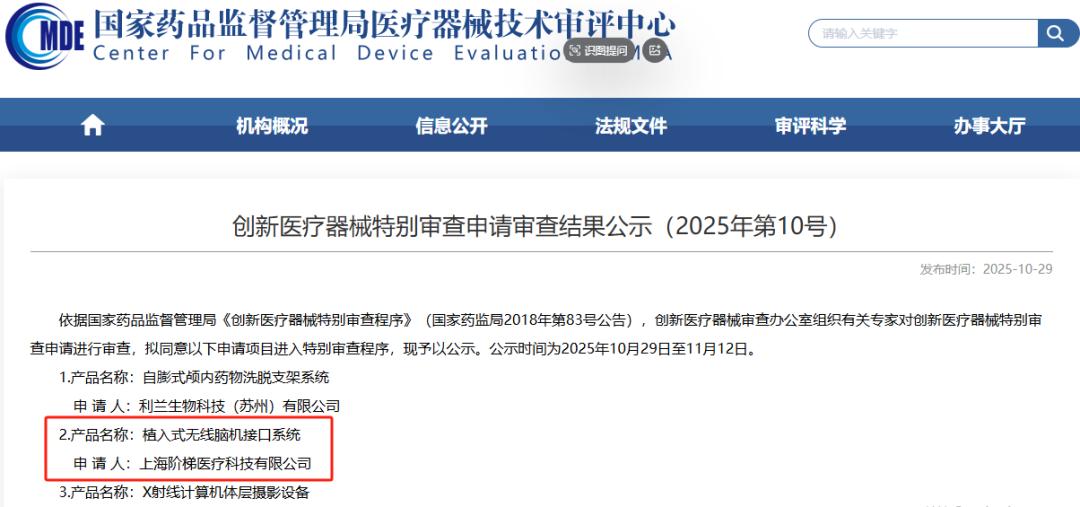
Core Insights - The article highlights the significant potential of new materials and flexible electrodes in China, particularly in the field of brain-computer interfaces (BCIs) [1][7] - The approval of the first invasive brain-computer interface product by Shanghai Ladder Medical Technology Co., Ltd. marks a milestone in the domestic medical device industry [1][4] Industry Overview - The innovative medical device special review procedure established by the National Medical Products Administration (NMPA) aims to encourage innovation in medical devices, providing expedited review for products with core technology patents and significant clinical value [2][3] - The invasive brain-computer interface technology requires surgical implantation, which presents higher technical barriers and risks but offers higher quality and precision in neural signal acquisition compared to non-invasive methods [3][4] Company Developments - Shanghai Ladder Medical, founded in 2021, focuses on the development of implantable brain-computer interface technology and has recently completed a 350 million yuan Series B financing round [3][4] - The company's ultra-flexible electrode technology allows for minimally invasive implantation, significantly reducing the risk of tissue damage and immune response [4][6] Clinical Progress - Ladder Medical has initiated clinical trials, with a recent case demonstrating a participant controlling a computer cursor using thought after undergoing the brain-computer interface implantation [6][8] - The company is now the second globally, after Neuralink, to enter the clinical phase of invasive brain-computer interfaces [6][8] Market Potential - The global brain-computer interface market is projected to grow from approximately $2.62 billion in 2024 to $12.4 billion by 2034, with a compound annual growth rate of 17.35% [8] - The Chinese brain-computer interface market is expected to expand from 3.2 billion yuan in 2024 to 6.14 billion yuan by 2028, indicating strong growth potential in the sector [8] Regulatory Environment - Recent policy developments, including the establishment of industry standards for brain-computer interface medical devices, are expected to facilitate faster market entry for approved products [7][8] - The NMPA's new standards for brain-computer interface terminology will take effect on January 1, 2026, marking a significant step in regulatory clarity for the industry [7][8]
马斯克的万亿薪酬赌局
3 6 Ke· 2025-11-12 11:11
Core Viewpoint - Tesla's shareholders approved Elon Musk's unprecedented ten-year compensation plan, which could yield approximately $1 trillion in stock if all performance targets are met, marking a significant gamble for both Tesla's future and the broader tech industry [1][2][10]. Group 1: Compensation Plan Details - The approved compensation plan is valued at $1 trillion, a staggering increase from the previous $55 billion plan in 2018, representing a nearly 20-fold increase [2]. - 75% of Tesla shareholders voted in favor of the plan, reflecting a strong belief in Musk's leadership, similar to the 73% support for the previous plan [2]. - Musk's current net worth exceeds $500 billion, and this new compensation could nearly double his existing wealth, highlighting the scale of the gamble [2]. Group 2: Reasons Behind the Plan - The primary reason for the high compensation is to retain Musk, as the board believes his leadership is crucial for Tesla's survival and growth [3]. - The board emphasized that without Musk, Tesla would not exist in its current form, indicating the high stakes involved in the decision [3]. - Tesla is transitioning from an electric vehicle manufacturer to a major player in AI and robotics, with Musk seen as the key figure to lead this transformation [3]. Group 3: Performance Targets - Musk must achieve 12 sets of escalating performance targets over the next ten years to unlock the $1 trillion in stock [4]. - The market capitalization target requires Tesla's value to increase from approximately $1.5 trillion to $8.5 trillion, a more than fivefold increase [4]. - Operational goals include delivering 20 million vehicles, launching 1 million fully autonomous "robotaxis," and achieving an adjusted EBITDA of $400 billion, among others [5]. Group 4: Governance Concerns - The compensation plan has sparked controversy, with concerns about shareholder dilution and over-reliance on Musk as a single leader [6]. - Critics argue that the plan could dilute existing shareholders' equity by approximately 12% if all stock awards are granted [6]. - There are worries that tying the company's future too closely to one individual could undermine corporate governance and stability [6]. Group 5: Current Challenges - Tesla faces significant challenges, including declining sales and increased competition in the electric vehicle market, which could jeopardize the ambitious compensation plan [7]. - Musk's political controversies have negatively impacted Tesla's brand perception, with consumer interest dropping from 70% in 2021 to 46% currently [7]. - The company is also grappling with technical issues related to its Autopilot system, which has led to safety investigations [7]. Group 6: Future Vision - Despite the challenges, shareholders' approval of the compensation plan reflects a bet on the future of AI and robotics, with Musk envisioning a shift from car sales to a "mobility as a service" model [8][10]. - Musk predicts that Tesla's robotics business will surpass its automotive business in value, aiming to dominate the market with at least 1 billion robots in various sectors within the next decade [9]. - The plan is seen as a bold move in the context of historical corporate gambles, with the potential to reshape the transportation ecosystem and human-robot interaction [10].
半年4起,AMD又收购一家AI公司!
美股研究社· 2025-11-11 10:09
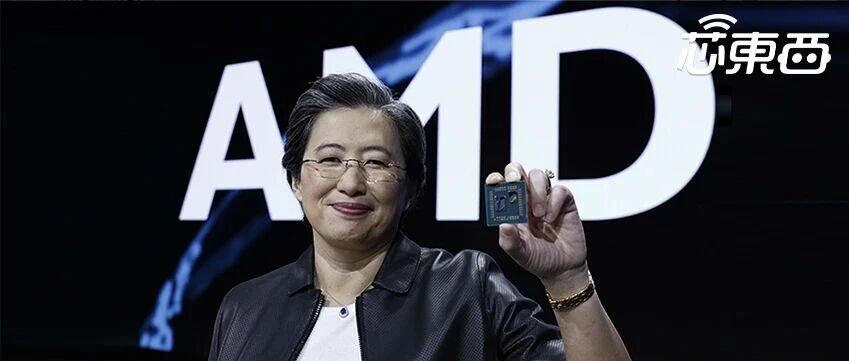
Core Viewpoint - AMD has completed the acquisition of AI inference startup MK1, which will enhance its capabilities in AI software and high-speed inference, contributing to its broader AI strategy [4][9]. Group 1: Acquisition Details - MK1, led by Paul Merolla, focuses on high-speed inference and AI technologies optimized for large-scale deployment, with a team comprising former engineers from Neuralink, Meta, Tesla, and Apple [4][9]. - The acquisition is part of AMD's strategy to strengthen its AI software ecosystem and improve its offerings in enterprise-level AI solutions [9]. Group 2: Financial Performance - AMD reported a record revenue of $9.25 billion for Q3, a 36% year-over-year increase, with a net profit of $1.2 billion, up 61% [11]. - The company forecasts Q4 revenue midpoint at $9.6 billion, exceeding market expectations [11]. Group 3: Strategic Moves - AMD has made several acquisitions this year, including Enosemi and Untether AI, investing a total of $36 million in these efforts [11]. - The company is also collaborating with OpenAI, with plans to deploy 1 GW of AMD Instinct MI450 GPUs by the second half of 2026 [11]. Group 4: Market Performance - AMD's stock price has doubled this year, reaching $243.98 per share, with a total market capitalization of $397.2 billion [12].

视频 | 马斯克万亿美元薪酬背后:造车没意思了?
2 1 Shi Ji Jing Ji Bao Dao· 2025-11-11 09:43
Core Insights - Tesla's board has approved a ten-year compensation plan for CEO Elon Musk, valued at up to $1 trillion, which is more of a stringent "bet agreement" than a salary [1] - The plan requires Tesla's market value to increase from over $1 trillion to $8.5 trillion and annual profits to reach $400 billion, a 20-fold increase from last year's profit of approximately $17 billion [1] - The agreement emphasizes breakthroughs in four core areas: vehicle deliveries, Full Self-Driving (FSD), Robotaxi, and humanoid robots [1] Group 1 - Tesla aims to transform from a traditional car manufacturer to a service-oriented business model, similar to Apple's ecosystem, where the car becomes a data-collecting platform and a service hub [2] - The company plans to leverage its Shanghai Gigafactory, which is the most efficient and cost-effective in its global network, to achieve significant profit margins [2][3] - The strategy involves deep integration with China's robust supply chain to reduce R&D and innovation costs, making it a crucial lever for achieving ambitious targets [3] Group 2 - Despite the grand vision, market skepticism remains, as reflected in Tesla's stock price decline, indicating concerns over the execution difficulty of Musk's ambitious plans [3] - The simultaneous management of multiple companies by Musk, including SpaceX and Neuralink, raises questions about whether he is spreading his focus too thin [3] - The transition from car manufacturing to creating an ecosystem poses significant risks, with potential failures in any key area threatening the entire business model [3]
苏姿丰又收购一家AI公司,马斯克朋友创办
3 6 Ke· 2025-11-11 08:15
Core Insights - AMD has completed the acquisition of AI inference startup MK1, which will enhance its AI software stack and capabilities in high-speed inference and enterprise-level AI solutions [1][6] - MK1, led by Paul Merolla, focuses on high-speed inference technologies optimized for large-scale deployment, with a team comprising former engineers from Neuralink, Meta, Tesla, and Apple [1][6] - The acquisition is part of AMD's broader AI strategy, which includes multiple acquisitions aimed at strengthening its software capabilities [6][7] Company Developments - The MK1 team will integrate its software innovations with AMD's computing power, contributing to the development of a robust AI software ecosystem [1][2] - AMD's recent acquisitions include ZT Systems for $4.9 billion, Enosemi, and Untether AI, indicating a strong push into the AI sector [6][7] - AMD reported a record revenue of $9.25 billion for Q3, a 36% year-over-year increase, and a net profit of $1.2 billion, up 61% [7] Financial Performance - AMD's Q4 revenue guidance is projected at $9.6 billion, exceeding market expectations [7] - The company anticipates its AI business revenue to reach hundreds of billions by 2027 [7] - AMD's stock price has doubled this year, currently at $243.98 per share, with a market capitalization of $397.2 billion [7]