Stellantis N.V.

Search documents
Stellantis warns this issue could destroy the European auto industry
Yahoo Finance· 2025-11-26 17:33
Core Insights - U.S. automakers are adapting to tariff burdens while benefiting from regulatory changes under the Trump administration, which have eased restrictions on emissions and fuel economy standards [1][2][3] - The elimination of penalties related to Corporate Average Fuel Economy (CAFE) rules has provided significant financial relief to automakers, particularly General Motors and Stellantis, who previously faced substantial fines [3][4][7] Regulatory Changes - The One Big Beautiful Bill Act has dismantled many Biden-era climate policies, benefiting original equipment manufacturers (OEMs) [1] - The Biden administration's emissions standards were deemed to exceed authority, leading to a reevaluation of expected electric vehicle adoption [2] Financial Implications - General Motors faced a $145.8 million penalty and forfeited $300 million in emission credits due to compliance issues, with total costs related to emission compliance reaching approximately $450 million through 2023 [5][7] - Stellantis incurred $191 million in civil penalties for failing to meet fuel economy requirements for 2019 and 2020, in addition to nearly $400 million in fines from 2016 to 2019 [7] Market Performance - U.S. market share for automakers stands at 17%, with electric vehicle sales reaching 67,000 units and an EV market share of 16.5% [8] - Dealer inventory has decreased by 16% year over year, while EV inventory has dropped by 30% since June [8] Industry Advocacy - Stellantis has supported proposals to eliminate CAFE penalties and is actively petitioning for lower emissions standards in the European Union, warning of potential industry decline if changes are not made [9][10]

Tesla Stock Is a ‘Must Own’ Now Before ‘Hundreds of Billions in Value’ Changes Hands, According to This 1 Analyst
Yahoo Finance· 2025-11-26 15:07
Core Viewpoint - The world is undergoing rapid changes due to advancements in artificial intelligence and machine learning, with a significant impact expected on Tesla's value in the coming years due to its improved full self-driving software [1][2]. Company Overview - Tesla is the largest automaker globally, with a market capitalization of $1.4 trillion, primarily generating sales from its Model Y electric SUV and Model 3 electric sedan, along with other models like the Model S, Model X, and Cybertruck [4]. - The company incorporates advanced technology in its vehicles, including centralized touchscreens, autopilot features, and over-the-air software updates [4]. Stock Performance - Tesla's shares have increased over 4% this year, which is moderate compared to other automakers, with General Motors leading at a 36% increase, while Toyota and Honda are up less than 5%, and Stellantis NV has decreased nearly 20% [5]. - The price-to-earnings ratio for Tesla is exceptionally high at 280, indicating that investors are paying a significant premium for the stock compared to other automakers, which have P/E ratios below 15 [6]. Financial Results - In the third quarter, Tesla reported revenue of $28.09 billion, up from $25.18 billion year-over-year, but experienced a decline in margins from 10.8% to 5.8% [7]. - The net income for the quarter was $1.95 billion, down from $2.18 billion in Q3 2024, and the earnings per share were $0.37, missing analysts' expectations of $0.41 [7].

Archer Aviation's FAA Certification Progress -- What Investors Need to Know Now
The Motley Fool· 2025-11-26 13:50
Core Viewpoint - Archer Aviation is positioned to potentially replace helicopters with its eVTOL aircraft, but its future success is contingent on regulatory approvals and production scaling [1][3]. Company Overview - Archer Aviation went public via a SPAC merger in September 2021, attracting both bullish and bearish sentiments regarding its production capabilities and financial performance [1]. - The company aims to produce 10 Midnight aircraft in 2024, scaling up to 650 by 2027, with projected revenues increasing from $42 million in 2024 to $3.44 billion in 2027 [4]. Current Production and Financial Status - As of August, Archer delivered its first test aircraft to the U.S. Air Force but has not generated significant revenue, with only six commercial aircraft in production and a projected net loss of $605 million for the year [5]. - Archer has a backlog of $6 billion in orders from major clients, including United Airlines and the U.S. Air Force, which could support future growth [6]. Regulatory Approval Process - Archer requires four FAA certifications to commence commercial operations, having only secured maintenance and air carrier certifications so far [8][9]. - The FAA's new eVTOL Integration Pilot Program may expedite the certification process, which is crucial for Archer's operational launch [10]. Future Revenue Projections - Analysts forecast Archer's revenue to grow from zero in 2025 to $62 million in 2026, with expectations of a widening net loss to $723 million due to rising production costs [11]. - The company ended its latest quarter with $1.64 billion in cash, indicating a potential need for additional funding through secondary offerings [12]. Market Valuation and Competition - With a market cap of $5.26 billion, Archer's valuation appears high at 85 times next year's sales, although revenue could reach $306 million by 2027 if the company successfully scales [13]. - Archer faces significant competition from Joby Aviation, which offers faster and more efficient eVTOL aircraft, highlighting the speculative nature of Archer's stock [14].


两年内放弃中国零件,特斯拉做得到吗?
创业邦· 2025-11-26 03:34
Core Viewpoint - The article discusses the ongoing trend of American automotive companies, including Tesla and General Motors, moving away from Chinese supply chains due to U.S. government policies aimed at boosting domestic manufacturing and reducing reliance on foreign components, particularly from China [6][10][21]. Group 1: U.S. Policy and Automotive Industry Response - The U.S. government has implemented policies, such as the Inflation Reduction Act, which restricts the use of Chinese components in electric vehicle batteries, pushing American automakers to seek alternatives [13][15]. - Tesla is reportedly planning to stop using Chinese-made parts in its U.S. vehicles within the next one to two years, reflecting a broader trend among U.S. automakers to "de-China" their supply chains [6][10]. - General Motors has also indicated plans to shift away from Chinese suppliers, with requirements for suppliers to comply starting in 2024 [13][21]. Group 2: Impact on Global Supply Chains - The U.S. has proposed significant tariffs on imported vehicles and parts, which could increase production costs for American-made cars, potentially leading to higher prices for consumers [15][16]. - European automakers are also feeling the pressure, with companies like Ferrari announcing price increases due to U.S. tariffs affecting their imports [15][16]. - The article highlights that while U.S. automakers are attempting to sever ties with Chinese suppliers, the complexity and reliance on Chinese components make complete detachment challenging [23]. Group 3: Future Outlook and Market Dynamics - Despite the push for "decoupling," the article suggests that the actual impact on the automotive industry may be less severe than anticipated, as many domestic suppliers still play a crucial role in the supply chain [21][23]. - The article emphasizes that the transition away from Chinese suppliers will not happen overnight, as many components, such as thermal management systems and glass products, are difficult to replace due to their competitive pricing and quality [23]. - The potential for increased vehicle prices in the U.S. market could lead to a shift in consumer behavior, possibly benefiting Chinese exports if American manufacturers cannot meet demand at competitive prices [23].


谈不拢了!稀土坚决不给美国军工,中国必须保持军事领先
Sou Hu Cai Jing· 2025-11-25 15:05
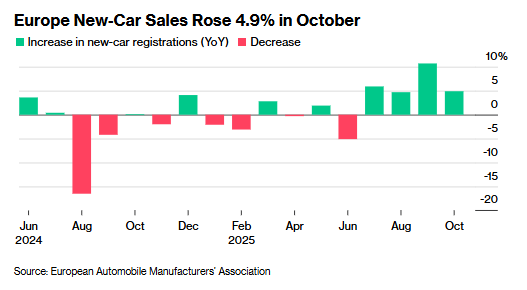
Group 1 - The U.S. government announced a 34% reciprocal tariff on goods from major trading partners, including China, affecting shipping, logistics, and shipbuilding, which violates WTO rules and disrupts the U.S.-China maritime agreement [1] - This policy has led to a more than 30% increase in bilateral trade costs, reflecting a typical unilateralism aimed at reshaping global supply chains and promoting manufacturing return to the U.S. [1] - China responded swiftly by imposing equivalent tariffs on U.S. imports and implementing export controls on seven categories of rare earth elements, emphasizing national security and international non-proliferation responsibilities [4] Group 2 - The U.S. and China engaged in high-level economic talks in Geneva, agreeing to gradually reduce tariffs within 90 days and temporarily suspend some non-tariff countermeasures, showcasing a willingness to dialogue [6] - However, the U.S. quickly violated the agreement by suspending the supply of LEAP-1C engines needed for China's C919 aircraft, tightening restrictions on chip and design software exports, which impacts China's aviation supply chain [6][8] - The ongoing trade tensions have led to an 8.1% year-on-year decline in bilateral trade, while China's export structure has improved, with high-tech products now accounting for 35% of exports [10] Group 3 - Rare earth elements are crucial for high-tech industries, with China controlling 60% of global extraction and 90% of refining, particularly dominating the heavy rare earth sector at 99% [12] - U.S. automakers have already reduced production by 20% due to supply disruptions, with General Motors and Ford warning of potential factory relocations to China if the situation does not improve [12] - China's export control measures are efficient, with a tiered approval system for exports, ensuring that any product containing over 0.1% Chinese rare earths requires a license, particularly for military applications [15] Group 4 - The U.S. military faces significant challenges, with the F-35 fighter jet requiring 920 pounds of rare earths, and Virginia-class submarines needing over 9,000 pounds, leading to increased production costs and delays [17] - The Pentagon's reserves are only sufficient for 18 months, and development of the F-47 sixth-generation fighter has been paused due to supply issues [17] - In contrast, China's military prioritizes domestic supply, achieving an 85% recovery rate of rare earths at one-third of the cost compared to the U.S., highlighting the asymmetrical nature of the ongoing competition [17]
In plea to EU, Stellantis chairman warns European car industry risks 'irreversible decline'
Yahoo Finance· 2025-11-25 14:55
Core Viewpoint - The European auto industry faces an "irreversible decline" if the EU does not ease its carbon emissions regulations, according to Stellantis Chairman John Elkann [1][2]. Group 1: Industry Concerns - The European Commission is set to review EU carbon emissions regulations for the auto industry on December 10 [1]. - Elkann emphasized the need for more flexibility in emissions targets to prevent a decline in the auto sector, suggesting that a constructive approach to emissions reduction could restore lost growth and meet consumer needs [2]. - Stellantis is advocating for proposals that include allowing plug-in hybrids and alternative fuels beyond 2035, averaging interim carbon reduction goals over several years, and introducing a vehicle scrappage scheme [3]. Group 2: Company Strategy - The new hybrid Fiat 500 is a key model for Stellantis, aimed at reversing the decline in Italian output, which has been affected by low demand and competition from Chinese manufacturers [4]. - Stellantis CEO Antonio Filosa stated that urgent action is needed from European authorities to regain customer trust and support future investment and innovation [5]. - The management has not detailed the potential consequences of strict EU regulations, but there are concerns about possible factory closures due to hefty fines related to CO2 emission targets [6].
正式登陆南美,零跑海外10万辆布局展开
Guan Cha Zhe Wang· 2025-11-25 09:56
截至目前,零跑已在巴西和智利推出智能豪华SUV C10的纯电版与增程版,以及中型纯电SUV B10,并 在圣保罗车展上展示了六座智能电动SUV C16。2025年内,零跑将在巴西27城市布局36家网点,在智利 布局5家网点;依托Stellantis现有渠道资源,确保用户从销售、售后到配件供应的一站式服务体验。 此外,零跑推出集成数字钥匙、远程控车、充电导航等功能的LEAP+互联平台,并联合Zletric、GreenV 等本地充电服务商,为用户提供充电、家充安装等权益。 (文/观察者网 张家栋 编辑/高莘) 11月25日,零跑汽车官网发布信息显示,本月,零跑汽车在巴西及智利两国接连上市,并亮相巴西圣保 罗车展,正式登陆南美市场。 零跑汽车官网 零跑汽车表示,公司将以巴西为起点,在南美地区推出覆盖纯电及增程的全系电动产品,并依托 Stellantis成熟的经销商网络与售后体系,为南美用户提供创新技术与本地化服务深度融合的电动出行解 决方案。 曹力曾称,"我们是通过零跑国际来做海外渠道的规划,会优先选择Stellantis在海外渠道网络资源强势 的区域。比如它在欧洲和南美洲做得非常好,我们就会优先考虑;再如德国、法 ...

Stellantis力荐多元路线并存,欧盟2035燃油车禁令或生变?
Zhong Guo Qi Che Bao Wang· 2025-11-25 09:21
Core Viewpoint - Stellantis opposes the EU's 2035 ban on new internal combustion engine vehicles, advocating for the continued sale of plug-in hybrids and range-extended electric vehicles, and supports alternative fuels as a decarbonization pathway [2][4][12] Industry Response - Stellantis is among several European automakers pressuring the EU, highlighting the significant impact on Italy's economy and employment due to the strict implementation of the ban [4][9] - The company promotes a "technology-neutral" principle, arguing for the coexistence of various technological pathways, including plug-in hybrids and synthetic fuels, to address consumer needs and regional differences [4][10] Market Conditions - The European Automobile Manufacturers Association (ACEA) reports that the EU's electric vehicle penetration rate for 2024 is significantly below expectations, indicating that the market is not developing as policymakers envisioned [5][7] - The slow sales of electric vehicles, particularly in major markets like Germany and France, coupled with varying subsidy policies across EU member states, have created challenges for the automotive industry [7][8] Infrastructure Challenges - The lack of adequate charging infrastructure is a major bottleneck for electric vehicle adoption, with the current installation rate of charging stations falling far short of the required pace [8] - High raw material costs are increasing production expenses for automakers, squeezing profit margins and leading to layoffs and factory closures as companies struggle to adapt [8][11] Divergent National Perspectives - There are notable divisions among EU member states regarding the 2035 ban, with countries like Italy advocating for a delay due to the potential devastating impact on their automotive industries [9][10] - Germany is pushing for exemptions for synthetic fuels, viewing them as a viable transitional solution for high-end fuel vehicles to achieve carbon neutrality [10] Future Implications - Regardless of whether the ban is modified, European automakers face pressure to accelerate electrification, which may lead to short-term employment issues and economic repercussions [11][12] - The debate over the ban reflects the broader conflict between environmental ideals and the survival of the automotive industry, with the outcome potentially reshaping global decarbonization strategies [12]

【快讯】每日快讯(2025年11月25日)
乘联分会· 2025-11-25 09:01
Domestic News - The Ministry of Transport emphasizes accelerating the safe and orderly development of the low-altitude economy and high-quality development of the car rental industry [6] - Hebei Province is implementing an industrial innovation project to accelerate the cultivation of industries such as intelligent connected vehicles [7] - FAW Toyota has launched the IT'S TiME 3.0 technology brand, introducing new models with advanced intelligent driving and safety systems [8] - BYD and Midea Group have signed a strategic cooperation agreement to create a smart ecosystem covering "people-vehicle-home" [9] - Avita Technology and Fuyou University have signed a strategic cooperation agreement to enhance collaboration in research and development [11] - Pony.ai and Sunshine Travel have established a strategic partnership to promote autonomous driving services in major cities [12] - The world's first right-hand drive replaceable electric taxi, Hongqi E-QM5, has been launched in Hong Kong, marking a new era for electric public transport [13] - CATL and Yibin have signed a strategic cooperation agreement to build a "zero-carbon Yibin" [14] International News - The U.S. has launched the "Genesis Mission" to accelerate research and development in artificial intelligence [15] - New car sales in Europe increased by 4.9% in October, indicating a potential positive growth trend in the automotive market [16] - NVIDIA has open-sourced the ACCV-Lab, an autonomous driving training acceleration toolkit [17] - Stellantis is increasing the production of Citroën models due to higher-than-expected market demand [18] Commercial Vehicles - China has led the development of the global technical regulation on the durability of electric heavy vehicle batteries, which has been officially implemented [19] - KAVO Group and Yuanda Juhua have reached a strategic cooperation agreement to establish a green technology logistics company [21] - Changan Kaicheng is collaborating with JD.com to promote the intelligence of commercial vehicles [22] - Scania has launched the NEXT ERA model, marking a significant development in the Chinese market [23]

欧洲车市“金九银十”行情延续:平价电动车受捧 销量实现四连涨
智通财经网· 2025-11-25 06:52
Core Insights - European new car registrations increased by 4.9% year-on-year in October, reaching 1.09 million units, marking the fourth consecutive month of growth driven by the introduction of more affordable electric vehicle models [1][3] Group 1: Market Performance - Spain and Germany showed the most significant sales growth among major markets, while the UK and Italy experienced stagnation [1] - In October, electric vehicle sales in Europe saw substantial growth, with plug-in hybrid vehicle registrations surging by 40% and pure electric vehicle registrations increasing by nearly one-third [3] - Renault's sales grew by 11% year-on-year in October, while Volkswagen and BMW also reported steady growth [3] Group 2: Competitive Landscape - BYD, a Chinese automaker, demonstrated remarkable performance in the region, with sales more than doubling, significantly outpacing Tesla, which saw a 48% drop in registrations [3] - Despite ongoing investments in electric vehicle development, some manufacturers are seeking more flexibility from policymakers regarding emission regulations [6] - The upcoming meeting between automakers and EU officials will discuss potential adjustments to the 2035 ban on gasoline vehicles, with differing stances from Germany and Spain on regulatory flexibility [6] Group 3: Future Outlook - Analysts predict that the European automotive market will continue to improve from 2026 to 2027, with local manufacturers expected to begin a recovery process starting next year due to new electric vehicle subsidy policies, cost control measures, and strategic adjustments [7]