
Waymo

Search documents
Waymo gets regulatory approval to expand across Bay Area and Southern California
TechCrunch· 2025-11-22 21:45
Core Insights - Waymo has received authorization to operate fully autonomously in a larger area of California, expanding its reach significantly [1][2] - The company plans to welcome riders in San Diego by mid-2026, with intentions to launch in multiple other cities as well [3] - Recent announcements indicate Waymo's expansion into new markets, including Minneapolis, New Orleans, and Tampa, while also removing safety drivers in Miami [4] Summary by Sections Expansion of Operations - Waymo is now authorized to operate in most of the East Bay, North Bay, and Sacramento in Northern California, and from Santa Clarita to San Diego in Southern California [2] - The company has plans to expand its services to additional cities, including Dallas, Denver, Detroit, Houston, Las Vegas, Miami, Nashville, Orlando, San Antonio, Seattle, and Washington, D.C. [3] Future Plans - Waymo aims to start offering rides in San Diego by mid-2026, although specific timelines for other regions remain unclear [3] - The company is also preparing to provide rides that utilize freeways in major cities like Los Angeles, San Francisco, and Phoenix [4] Industry Context - As Waymo expands its operational territory, there are discussions about the potential for increased usage of robotaxis, which may lead to new patterns of behavior among users [6]



Tesla's robotaxi clears a key hurdle in Nevada
Business Insider· 2025-11-21 05:11
Group 1: Tesla's Robotaxi Deployment - Tesla has completed the self-certification process for its robotaxi in Nevada, allowing for deployment on state roads, pending approval from the Nevada Transportation Authority for commercial operation [1] - CEO Elon Musk aims to expand ride-hailing services to up to 10 metropolitan areas by the end of the year, with a fleet exceeding 1,000 vehicles, including operations in Nevada, Florida, and Arizona [2] - Tesla's robotaxis are already operating commercially in San Francisco and Austin, with ongoing hiring in cities like Las Vegas, Dallas, Houston, Tampa, and Orlando to support deployment [3] Group 2: Competitive Landscape and Regulatory Environment - A competitive landscape is emerging in California, with companies like Uber, Tesla, and Waymo vying to influence robotaxi regulations [4] - Waymo has proposed that companies offering autonomous ride-hailing services submit quarterly reports, a suggestion opposed by Tesla [4] - Amazon has launched its Zoox robotaxi service in San Francisco, providing free rides to select members of the public [4] Group 3: Stock Performance - Tesla's stock price experienced a decline of approximately 2% on Thursday, although it has increased by over 15% in the past year [5]

自动驾驶教父:人形机器人被高估也被低估,空中机器人市场空间将远超地面
Hua Er Jie Jian Wen· 2025-11-21 03:15
Core Insights - The discussion at Morgan Stanley's 24th Asia-Pacific Summit highlighted two major pain points in the current market regarding autonomous driving and humanoid robots [1] Group 1: Autonomous Driving - The "Wright Brothers moment" for autonomous vehicles occurred in 2005, and the technology is now rapidly penetrating the market [2] - Approximately one-third of the 500 attendees at the summit have experienced riding in autonomous vehicles, primarily from Waymo [2] - Morgan Stanley predicts that the penetration rate of autonomous driving is on the verge of transitioning to L4/L5 levels [2] - If Elon Musk can demonstrate a safe commercial Robotaxi using a passive optical (camera-only) approach in Austin, it would be a significant achievement, indicating that the debate between multi-sensor fusion and pure vision solutions is ongoing [2][5] Group 2: Humanoid Robots - Humanoid robots are simultaneously overhyped in market potential and underestimated in technical challenges [3] - The market has overly optimistic expectations regarding the total addressable market (TAM) for humanoid robots replacing human labor [3] - The actual engineering challenges of enabling robots to perform open-ended tasks and possess dexterous hands are severely underestimated, indicating a significant technological gap remains [3][5] Group 3: Future of Robotics - Thrun predicts that the number of aerial robots will far exceed that of ground robots, necessitating urgent upgrades to air traffic control systems [6][5] - The technology for fully automated operations in 3D space already exists, but infrastructure limitations are hindering growth in this area [6] - The focus on eVTOL (electric vertical takeoff and landing) and related infrastructure development presents a long-term investment rationale [6][5]

Generalist发现具身智能的Scaling Law,还让模型能同时思考与行动
3 6 Ke· 2025-11-21 01:52
Core Insights - Generalist, a company founded by Pete Florence, has released a new embodied foundation model called GEN-0, which can scale predictably with the growth of physical interaction data [1][4] - The company aims to create universal robots, focusing initially on the dexterity of robots [4][5] Company Overview - Generalist was co-founded by Pete Florence, Andrew Barry, and Andy Zeng, with a team that includes experts from OpenAI, Waymo, and Boston Dynamics [4] - Early investors include Spark Capital, NVIDIA, and Bezos Expeditions, although the investment amounts remain undisclosed [3] Model Features - GEN-0 is based on high-fidelity raw physical interaction data and employs a multi-modal training approach [5] - A key feature of GEN-0 is "Harmonic Reasoning," allowing the model to think and act simultaneously, which is crucial for real-world applications [6][7] Scaling and Performance - The model exhibits a "phase transition" point in its intelligence capacity, indicating that larger models are necessary to absorb complex sensory-motor data [8][10] - Models with 1 billion parameters struggle to absorb diverse data, while those with 6 billion parameters show strong multi-task capabilities [10][11] - Models with over 7 billion parameters can internalize large-scale pre-training data and quickly adapt to downstream tasks [12] Scaling Law - GEN-0 demonstrates a clear Scaling Law, where increased pre-training data and computational resources lead to predictable improvements in downstream performance [15] - The company has developed a predictive formula to determine the optimal data allocation for specific tasks [15][16] Data Quality and Diversity - The training dataset for GEN-0 consists of 270,000 hours of real-world manipulation trajectories collected from diverse environments, significantly larger than existing datasets [16][18] - The quality and diversity of data are more critical than sheer volume, allowing for the creation of models with different characteristics [18] Industry Context - The field of embodied intelligence is still in its early stages, with various companies exploring foundational models [19] - Despite the presence of numerous top-tier companies, the technology landscape remains fragmented, and commercial applications are limited [19][20] Future Prospects - The advancements in Scaling Law and model capabilities suggest a promising future for the commercialization of embodied intelligence [20] - Chinese entrepreneurs have a competitive advantage in this field due to a mature hardware supply chain and rich data sources [21]
自动驾驶三大技术路线:端到端、VLA、世界模型
自动驾驶之心· 2025-11-21 00:04
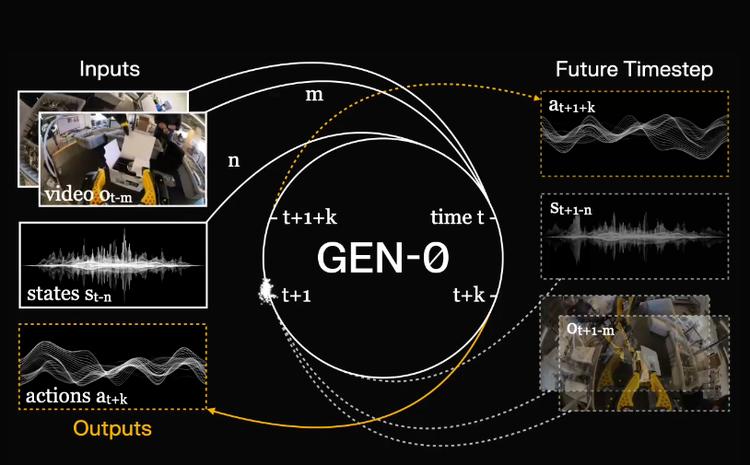
Overview - The article discusses the ongoing technological competition in the autonomous driving industry, focusing on different approaches to solving corner cases and enhancing safety and efficiency in driving systems [1][3]. Technological Approaches - There is a debate between two main technological routes: single-vehicle intelligence (VLA) and intelligent networking (VLM) [1]. - Major companies like Waymo utilize VLM, which allows AI to handle environmental understanding and reasoning, while traditional modules maintain decision-making control for safety [1]. - Companies such as Tesla, Geely, and XPeng are exploring VLA, aiming for AI to learn all driving skills through extensive data training for end-to-end decision-making [1]. Sensor and Algorithm Developments - The article highlights the evolution of perception technologies, with BEV (Bird's Eye View) perception becoming mainstream by 2022, and OCC (Occupancy) perception gaining traction in 2023 [3][5]. - BEV integrates various sensor data into a unified spatial representation, facilitating better path planning and dynamic information fusion [8][14]. - OCC perception provides detailed occupancy data, clarifying the probability of space being occupied over time, which enhances dynamic interaction modeling [6][14]. Modular and End-to-End Systems - Prior to the advent of multimodal large models and end-to-end autonomous driving technologies, perception and prediction tasks were typically handled by separate modules [5]. - The article outlines a phased approach to modularization, where perception, prediction, decision-making, and control are distinct yet interconnected [4][31]. - End-to-end systems aim to streamline the process by allowing direct mapping from raw sensor inputs to actionable outputs, enhancing efficiency and reducing bottlenecks [20][25]. VLA and VLM Frameworks - VLA (Visual-Language-Action) and VLM (Visual-Language Model) frameworks are discussed, with VLA focusing on understanding complex scenes and making autonomous decisions based on visual and language inputs [32][39]. - The article emphasizes the importance of language models in enhancing the interpretability and safety of autonomous driving systems, allowing for better cross-scenario knowledge transfer and decision-making [57]. Future Directions - The competition between VLA and WA (World Action) architectures is highlighted, with WA emphasizing direct visual-to-action mapping without language mediation [55][56]. - The article suggests that the future of autonomous driving will involve integrating world models that understand physical laws and temporal dynamics, addressing the limitations of current language models [34][54].
英伟达财报未能稳住市场,美股三大指数集体收跌,纳指大跌逾2%
Feng Huang Wang· 2025-11-20 23:24
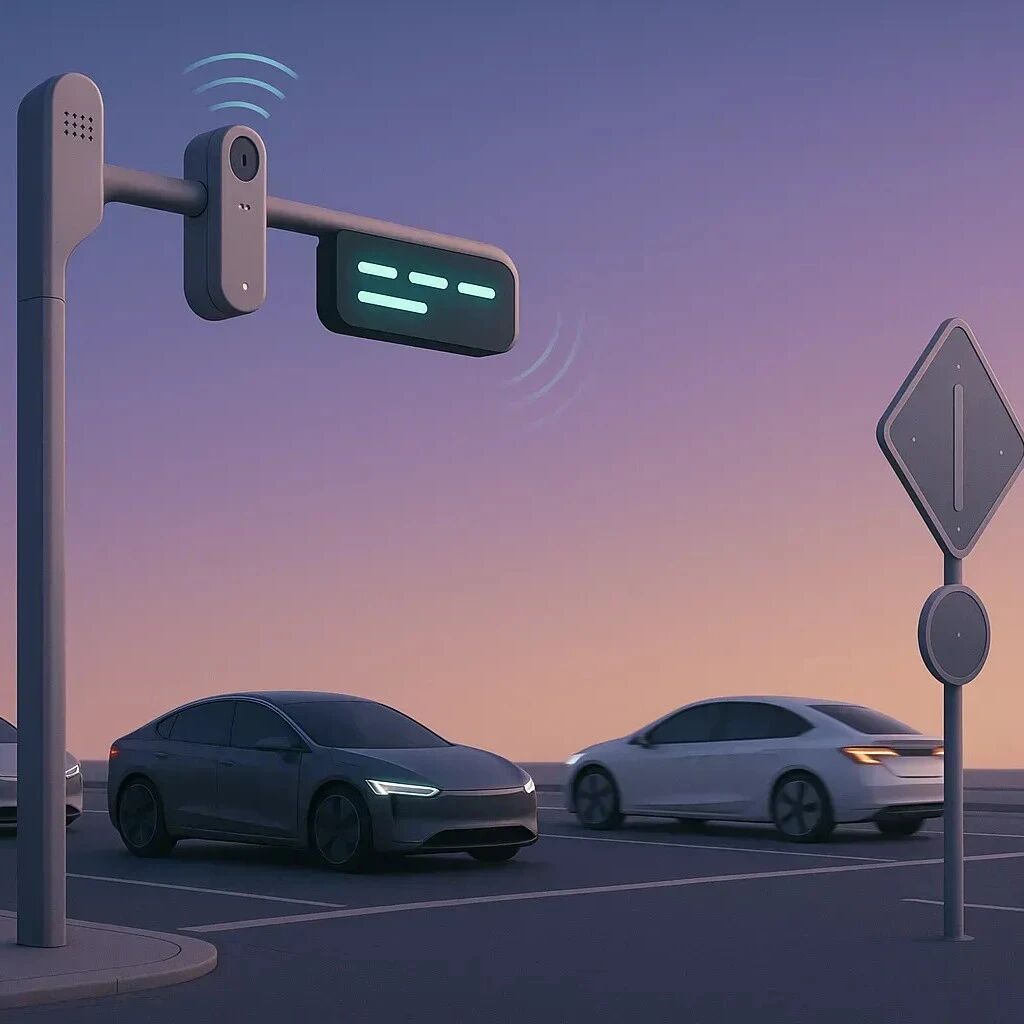
Market Overview - On November 21, US stock markets experienced significant volatility, with the Nasdaq initially rising over 2% due to Nvidia's strong earnings report, but ultimately closing down over 2% as valuation concerns resurfaced and interest rate cut expectations were further dampened [1][3] - The Dow Jones Industrial Average fell 0.84% to 45,752.26 points, the S&P 500 dropped 1.56% to 6,538.76 points, and the Nasdaq Composite decreased 2.15% to 22,078.05 points [3] Nvidia Performance - Nvidia's stock rose by 5% during the day but closed down 3%. CEO Jensen Huang emphasized strong demand for the Blackwell chip and denied the existence of an AI bubble, yet market concerns prevailed [3] - Analyst Jeff Kilburg from KKM Financial noted that Nvidia's momentum is being overshadowed by declining expectations for a December interest rate cut, which was previously anticipated [3] Employment Data Impact - The US non-farm payrolls report for September showed an increase of 119,000 jobs, significantly above the market estimate of 52,000, with an unemployment rate of 4.4%, slightly above the expected 4.3% [3] - This strong employment data has contributed to lowering expectations for interest rate cuts, with the probability of a December cut now below 40% [3] Retail Sector Highlights - Walmart was one of the few stocks to perform well, with its shares rising over 6% after reporting better-than-expected third-quarter sales and revenue, partly due to growth in its e-commerce business [3][4] Technology Sector Performance - Major tech stocks experienced declines, with Nvidia down 2.97%, Microsoft down 1.60%, Apple down 0.86%, Google down 1.15%, Amazon down 2.49%, Meta down 0.19%, Tesla down 2.21%, Broadcom down 2.14%, and Oracle down 6.58% [5] - Chinese stocks also fell, with the Nasdaq Golden Dragon China Index down 3.26%, Alibaba down 3.53%, JD.com down 1.68%, Pinduoduo down 4.31%, NIO down 6.09%, Xpeng down 5.10%, Li Auto down 2.32%, Bilibili down 4.54%, Baidu down 4.36%, NetEase up 0.40%, Tencent Music down 5.61%, and Pony.ai down 4.86% [5] Company News - Google launched a new image generation and editing model called NANO BANANA PRO, which is designed to produce clearer images and support more precise and readable text in multiple languages [5] - SoftBank plans to invest up to $3 billion to retrofit an electric vehicle factory in Lordstown, Ohio, to produce equipment for OpenAI's upcoming data center, making SoftBank one of OpenAI's largest investors [6] - Waymo, a subsidiary of Alphabet, announced the expansion of its autonomous ride-hailing service to Minneapolis, Tampa, and New Orleans [7] - Verizon announced it will lay off over 13,000 employees as part of a plan to streamline operations and reduce external labor costs, indicating that every department will undergo some level of change [8]

X @TechCrunch
TechCrunch· 2025-11-20 15:01
Waymo enters 3 more cities: Minneapolis, New Orleans and Tampa https://t.co/aPuKuc2R2T ...
Waymo to broaden US robotaxi footprint with moves into Minneapolis, Tampa, New Orleans
Reuters· 2025-11-20 14:03
Alphabet's Waymo will expand its robotaxi operations to Minneapolis, Tampa and New Orleans in the coming days, the ride-hailing service provider said on Thursday, as it accelerates the broad rollout o... ...
Waymo to begin manual drives in Minneapolis, Tampa and New Orleans, aims to open service in 2026
CNBC· 2025-11-20 14:00
Core Insights - Waymo is expanding its robotaxi services to Minneapolis, Tampa, and New Orleans with plans for manual driving tests before launching driverless services next year, potentially increasing its 2026 expansion list to 15 cities [1][2] - The company is also set to operate driverless vehicles in Dallas, Houston, San Antonio, Miami, and Orlando in the coming weeks, with public service expected next year [2] - Waymo's current operations include over 250,000 weekly paid trips across several markets, with more than 10 million paid rides since its launch in 2020 [4] Expansion Plans - Waymo aims to validate its technology in Minneapolis, Tampa, and New Orleans before committing to 2026 service launches, emphasizing a safety-first approach [3] - The company has previously announced plans to expand to cities like Detroit, Denver, Las Vegas, Nashville, San Diego, Washington, D.C., and London by 2026 [2] Operational Milestones - Waymo recently began offering freeway routes in San Francisco, Phoenix, and Los Angeles, marking a significant milestone for the robotaxi industry [4][5] - The company plans to operate in regions with harsh winter conditions, including Minneapolis, as part of its strategy to navigate challenging weather [5][6] - Waymo is currently capable of operating in freezing temperatures and is validating its system for harsher weather conditions [6]
‘Robotaxi has reached a tipping point': Baidu, Nvidia leaders see momentum as competition rises
CNBC· 2025-11-20 07:14
Core Insights - Baidu has announced the capability to sell robotaxi rides without human staff, indicating a significant advancement in autonomous driving technology [1] - Chinese robotaxi companies are expanding internationally at a faster pace than U.S. competitors, with industry leaders suggesting that autonomous driving is nearing a critical turning point [2] - Positive public feedback and increased exposure to driverless rides are expected to accelerate regulatory approvals for robotaxi services [3] Industry Growth Potential - The global robotaxi market is projected to exceed $25 billion by 2030, highlighting significant growth opportunities [4] - Chinese companies are aggressively pursuing international expansion, aiming to establish robotaxis as a viable business model rather than merely focusing on market share [6] Profitability and Operational Efficiency - Baidu's Apollo Go unit has achieved per-vehicle profitability in Wuhan, operating over 1,000 vehicles, which demonstrates the potential for profitability in other cities [8] - The cost of rides in Wuhan is approximately 30% lower than in major cities like Beijing and Shanghai, making it competitive against U.S. and European prices [9] - Partnerships with ride-hailing services like Uber are deemed critical for operational efficiency and quicker profitability [7] Fleet Size and Competitive Landscape - Companies like Baidu, Pony.ai, and WeRide are leading in fleet size, which is becoming a key competitive factor in the race for profitability [13] - Pony.ai plans to deploy 1,000 robotaxis in the Middle East by 2028, while WeRide aims for a similar fleet size by the end of next year [14] Safety and Regulatory Environment - No fatalities or major injuries have been reported by any of the six robotaxi operators, which is crucial for gaining regulatory approval [16] - The Chinese government is expected to increase support for robotaxi operations, which could further enhance market conditions [16][17]

