
南京银行

Search documents
国泰海通:负债管理能力或成业绩分化关键 26年银行净息差降幅预计在5bp
智通财经网· 2025-12-11 09:09
2)价格因素:一方面治理层对银行息差保持合理水平的重视度有所提高。25Q1货币政策报告在"推动社 会综合融资成本下降"前置"降低银行负债成本",今年5月利率调降,存款长端利率降幅大于贷款,预计 后续降息也将保持该组合。存贷款利率调降的组合效应对净息差没有负面的即期影响,净息差"政策 底"或已显现。 另一方面,长期限存款经过挂牌利率多次下调后再重新定价,成本的节约效果更为明显,预计三年期存 款最大降幅或在100bp以上。用定期存款存量成本与(存款挂牌利率+加点)差额比较各家银行存款成本改 善空间,如重庆、交行、江苏、南京等成本下的空间或较大。 资产端:收益率下降压力或明显好于2025年 1)贷款:重定价压力缓解(2025年5年期LPR降幅为10bp,较去年少降50bp),叠加新发放贷款利率降幅趋 缓、存量贷款利率与新发放利率价差持续收窄,贷款利率后续降幅预计有限。 2)化债:债务置换后法定债务利率将明显低于隐性债务利率,相关资产收益率预计有所下降,测算对上 市银行净息差的拖累约为4bp。 智通财经APP获悉,国泰海通发布研报称,2025年负债成本改善力度明显加大,上半年负债成本下降 28bp(上年同期仅下降4b ...

“产学研政金”联动!上海科创银行、上财浦发金融创新研究院共建科创金融研究中心
Guo Ji Jin Rong Bao· 2025-12-11 08:35
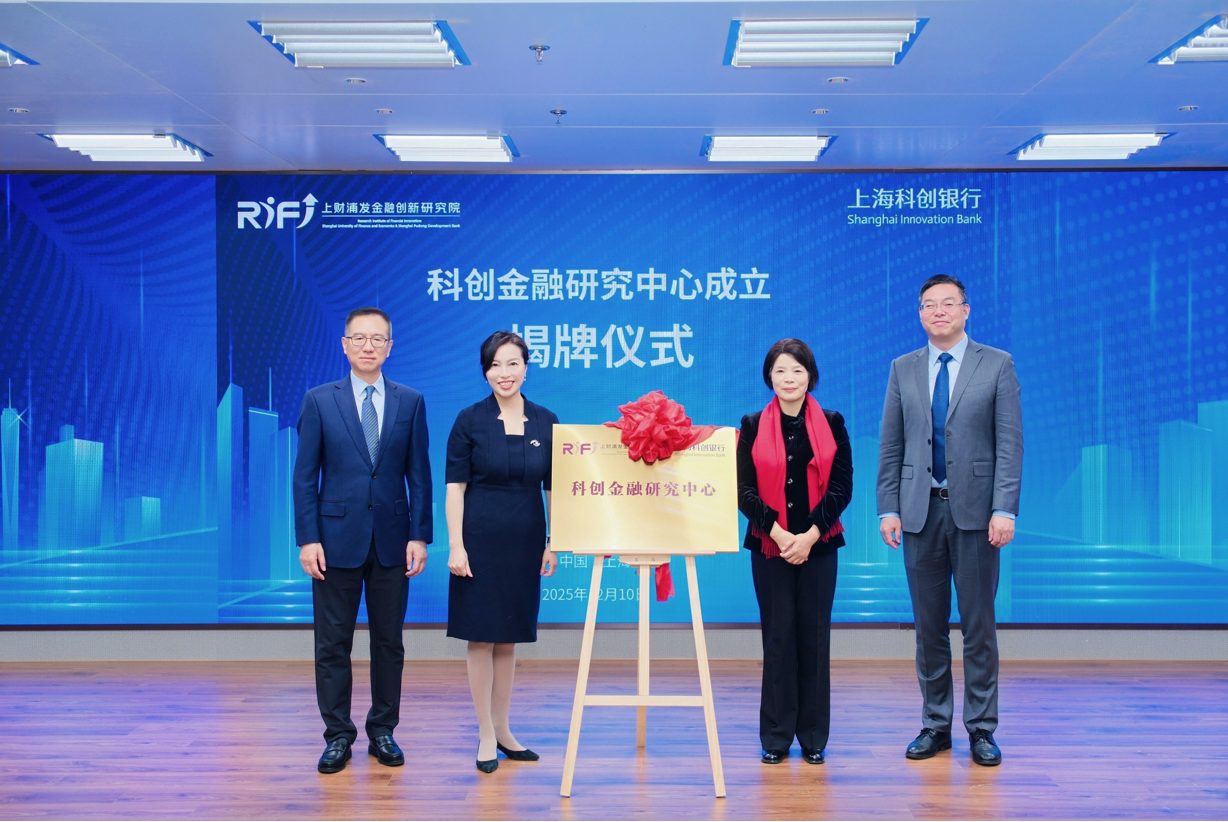
现如今,科技创新已成为推动经济高质量发展的核心动力,科创金融作为连接科技与金融的关键桥梁,对于加速科技成果向现实生产力转化、培育战略 性新兴产业、提升国家核心竞争力具有至关重要的作用。科创金融研究中心的成立,是上海科创银行与上财浦发金融创新研究院深化合作的重要成果,也 是"产学研政金"五维联动协同创新模式的有益探索。 12月10日,由上海科创银行与上财浦发金融创新研究院联合主办的"科创金融研究中心成立暨潮涌东方论坛"圆满落幕,来自科创领域和金融行业的近两 百位专家学者、企业及机构代表共同见证科创金融研究中心正式落成。 上海财经大学副校长、上财浦发金融创新研究院院长姚玲珍在致辞中表示,上财浦发金融创新研究院作为重要智库平台,始终聚焦金融改革与发展的前 沿问题,为金融行业创新与监管提供大量智力支持。上海科创银行是上海国际金融中心建设的重要参与者,在服务科技创新领域经验丰富。此次强强联合成 立科创金融研究中心,将充分整合上财浦发金融创新研究院的学术研究、人才培养优势,以及上海科创银行的产业实践、金融资源网络优势,共同搭建协 同、开放、创新的高水平研究平台,为我国科技创新与科创金融发展贡献力量。 未来,上海科创银行将 ...

银行净息差专题报告:负债管理能力成为业绩分化的关键
GUOTAI HAITONG SECURITIES· 2025-12-11 08:03
Investment Rating - The report assigns an "Overweight" rating for the banking sector [7]. Core Insights - The report emphasizes the significant improvement in the cost of liabilities for banks in 2025, with a notable decrease of 28 basis points (bp) in the first half of the year, compared to only 4 bp in the same period last year. This improvement is primarily driven by reductions in deposit and interbank liabilities costs, contributing 19 bp and 7 bp respectively [3][11]. - The net interest margin (NIM) is expected to decline by approximately 5 bp in 2026, with the downward pressure on margins continuing to ease marginally, suggesting that some banks may stabilize their NIMs [2][10]. Summary by Sections 1. Liability Cost Improvement in 2025 - The first half of 2025 saw a significant reduction in the cost of interest-bearing liabilities, with the cost rate dropping to 1.70%, a decrease of 28 bp from 2024. This was supported by improvements in both deposit and interbank liability costs [11]. 2. Liability Side: Deposit Maturity and Repricing Benefits 1) **Term Structure**: The proportion of long-term deposits entering the repricing cycle has increased, with the share of deposits with a remaining maturity of 1-5 years declining by 1.5 percentage points (pct) to 22.6% by the end of Q2 2025. Some banks, such as those in Ningbo and Chongqing, experienced declines exceeding 10 pct [4]. 2) **Price Factors**: Regulatory focus on maintaining reasonable NIM levels has increased, with expectations of further interest rate cuts. The maximum reduction for three-year deposits could exceed 100 bp, indicating substantial room for cost improvement [5]. 3. Asset Side: Yield Pressure Expected to be Better than 2025 1) **Loans**: The repricing pressure on loans is expected to ease, with the five-year Loan Prime Rate (LPR) declining by only 10 bp in 2025, significantly less than the 50 bp drop the previous year [6]. 2) **Debt Replacement**: The shift from high-interest to low-interest debt is anticipated to have a limited impact on net interest margins, estimated to drag down margins by about 4 bp [6]. 3) **Bond Maturity**: The widening gap between new bond issuance rates and existing bond yields is expected to exert downward pressure on investment yields, with an estimated drag of 6 bp on margins from the reallocation of bonds maturing within one year [6]. 4. NIM Projections - The report forecasts a 5 bp decline in NIM for 2026, with the downward trend continuing to converge. The asset yield is expected to decrease by 17 bp, while the cost of liabilities is projected to improve by 13 bp, with deposit costs improving by 17 bp [7][10].






红利低波ETF(512890)年内规模增长超百亿元,机构继续看好银行板块配置价值
Xin Lang Cai Jing· 2025-12-11 04:05
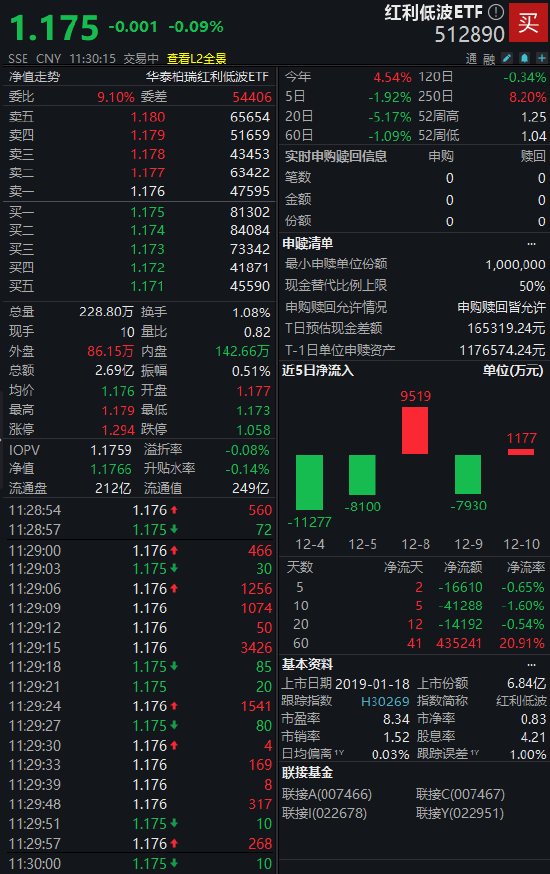
Core Viewpoint - The news highlights the performance and growth of the Hongli Low Volatility ETF (512890), which has shown significant increases in both share volume and total assets in 2025, indicating strong investor interest and market positioning. Group 1: ETF Performance - As of December 10, 2025, the Hongli Low Volatility ETF (512890) has a total share count of 21.163 billion and total assets of 24.901 billion yuan, reflecting a year-to-date increase of 72.59% in shares and 81.10% in assets compared to the previous year [3][7]. - The ETF's price slightly decreased by 0.09% to 1.175 yuan, with a trading volume of 2.69 billion yuan, making it the leading ETF in its category [1][5]. Group 2: Top Holdings - The latest report lists the top ten holdings of the Hongli Low Volatility ETF, which include major companies such as COFCO Sugar, Nanjing Bank, and Agricultural Bank of China, with significant weightings in the portfolio [3][9]. Group 3: Market Context - The banking sector's average dividend yield is currently at 3.94%, which is 2.08% higher than the ten-year government bond yield, reinforcing the attractiveness of bank stocks as high-dividend investments [4][9]. - The report emphasizes the importance of dividend value in the banking sector, suggesting that ongoing shareholder and executive buybacks will help stabilize market expectations and attract long-term capital [4][9].
小微贷 融资难易之变
Bei Jing Shang Bao· 2025-12-10 12:00
作为中国普惠金融体系的核心工具,普惠小微贷款正站在"保量、稳价、优结构"的高质量发展关口。回 望过去十数年,从政策启动到市场培育,再到如今的规范发展,普惠小微贷款不仅实现了规模的跨越式 增长,更成为衔接金融资源与实体经济的关键纽带。从"融资难"到"融资易",从"高成本"到"低成本", 从"广覆盖"到"高质量",普惠小微贷款的发展轨迹,正是中国金融体系向实体经济回归的缩影,在高质 量发展的道路上,普惠金融的故事仍在续写。 36万亿贷款余额 "这家企业三年前还是首贷客户,这次申请的续贷将全部用于新生产线采购。"在北京一国有银行普惠金 融部办公室内,一位客户经理正对着电脑屏幕梳理一家小微企业的续贷材料,类似的场景,每天都在全 国各地的银行网点中不断上演。 国家金融监督管理总局最新数据显示,截至2025年三季度末,银行业金融机构普惠型小微企业贷款余额 达36.5万亿元,同比增长12.1%。这一数字背后,是普惠小微贷款作为核心工具,破解小微企业融资困 境的生动实践。 亮眼的成果并非一蹴而就,将时间回拨至2010年,彼时,银行业普遍存在"重大轻小"的倾向,小微企业 因单体规模小、抗风险能力弱、财务信息不规范等问题,长期被 ...

探寻利率方向(4):从M2看2026年债市流动性
GF SECURITIES· 2025-12-10 11:48
Investment Rating - The report assigns a "Buy" rating for the banking sector, indicating an expectation that stock prices will outperform the market by more than 10% over the next 12 months [40]. Core Insights - The growth of M2 is primarily driven by government and corporate leverage, with government leverage's contribution increasing from 23.9% in 2015 to 45.5% in 2025, while corporate leverage is expected to contribute 63.6% to M2 growth in 2025 [5][14]. - The report highlights a divergence between the social financing (社融) and M2 growth rates, indicating a liquidity accumulation in the financial system when the demand for financing from the real economy is insufficient, which can lead to a decline in bond yields [5][19]. - The expected social financing-M2 differential for 2026 is projected to be 0.56%, with a quarter-on-quarter increase of 33 basis points [32]. Summary by Sections M2 and Liquidity Analysis - M2 includes cash, personal deposits, corporate deposits, non-bank deposits, and deposits from non-deposit financial institutions. The main contributors to M2 growth are government and corporate leverage [5][13]. - The report discusses the relationship between the social financing-M2 differential and bond market performance, noting a shift in correlation since the second half of 2022 [5][19]. Social Financing Projections - For 2026, the report forecasts a total of 16.3 trillion yuan in new loans under the social financing framework, with a growth rate of 8.11% [32][34]. - The report anticipates that the net issuance of government bonds will reach 14.8 trillion yuan in 2026, with a focus on maintaining a proactive fiscal policy [34]. M2 Growth Forecast - The M2 growth rate for 2026 is projected at 7.55%, influenced by factors such as net fiscal deposits, the strengthening of the equity market, and cross-border capital flows [32][36].
上市银行超2600亿元分红在途
2 1 Shi Ji Jing Ji Bao Dao· 2025-12-09 23:28
Core Viewpoint - The announcement of mid-term dividends by major state-owned banks indicates a robust financial performance and a commitment to returning value to shareholders, with a total cash dividend distribution of approximately 762 billion yuan planned for December 15, 2025 [1][2]. Group 1: Dividend Announcements - Industrial and Commercial Bank of China (ICBC) plans to distribute a cash dividend of 0.1414 yuan per share, totaling approximately 503.96 billion yuan, with A-shares accounting for about 381.23 billion yuan [1]. - Agricultural Bank of China (ABC) will distribute a cash dividend of 0.1195 yuan per share, amounting to approximately 418.23 billion yuan, with A-shares also around 381.50 billion yuan [1]. - As of now, 32 listed banks have announced mid-term dividends, an increase of 8 banks compared to 2024, with an average dividend payout ratio of 24.9% and a total dividend amount of 264.57 billion yuan, reflecting a 2.55% increase from last year [2][3]. Group 2: Market Trends and Analyst Insights - The mid-term dividend distribution by state-owned banks is occurring earlier this year, with four major banks having already announced their plans, compared to the previous year [2][3]. - Analysts indicate that the increase in the number of banks planning to distribute dividends and the stability of dividend rates reflect the banking sector's solid dividend value, which is expected to attract long-term capital [3]. - The average dividend yield for listed banks is currently 4.48%, with 12 banks yielding over 5% and 26 banks exceeding 4% [3]. Group 3: Shareholder and Executive Actions - There have been 15 instances of share buyback plans disclosed by 13 banks this year, indicating strong confidence from major shareholders and executives in the banks' strategic direction and long-term value [6][7]. - Notable buybacks include Nanjing Bank, which saw an increase of over 1.28 billion shares by foreign shareholder BNP Paribas, raising its stake to 18.06% [7]. - The banking sector has attracted significant buyback amounts, totaling approximately 90.30 billion yuan, ranking first among 31 industries [7][8].


2025年国家开发银行


Shang Hai Zheng Quan Bao· 2025-12-09 18:53
Core Insights - The awards for financial bond underwriting and market-making have been announced, recognizing various banks and securities firms for their outstanding performance in the industry [1][2][3][4][5][6][7] Group 1: Outstanding Underwriters - The title of "Outstanding Underwriter" was awarded to several banks, including CITIC Bank, Shanghai Pudong Development Bank, and Industrial and Commercial Bank of China [1][2] - A total of 10 banks were recognized as "Excellent Underwriters," highlighting their contributions to the financial bond market [1] Group 2: Excellent Market Makers - The "Excellent Market Maker" category included firms such as Huatai Securities and CITIC Securities, showcasing their role in enhancing market liquidity [2][4] - A diverse range of banks, including Ping An Bank and Industrial Bank, were acknowledged for their market-making capabilities [2][4] Group 3: Special Awards - Special awards were given for various categories, including "Debt Sea Rising Award" and "Green Low Carbon Award," recognizing banks like Agricultural Bank of China and Postal Savings Bank of China for their innovative approaches [3] - The "Technology Innovation Award" was awarded to banks that demonstrated significant advancements in financial technology [3] Group 4: Individual Recognitions - Individual awards were presented to key personnel from various banks, such as CITIC Bank's Sun Wei and China Everbright Bank's Liu Yan, acknowledging their leadership in driving financial bond initiatives [4][5] - The "Outstanding Underwriting Supervisor" category highlighted individuals from major banks, emphasizing the importance of leadership in underwriting processes [5]
12月8日晚间突袭!5家上市公司股东拟减持超2%,A股再现密集减持潮
Sou Hu Cai Jing· 2025-12-09 16:23
Core Viewpoint - The article highlights a significant trend in the A-share market where major shareholders are increasingly reducing their holdings, indicating a potential divergence between market optimism and insider sentiment regarding company valuations [2][10][22]. Group 1: Shareholder Reduction Trends - Since the second half of 2025, major shareholders in the A-share market have reduced their holdings by nearly 90 billion yuan, with a net reduction of approximately 66.2 billion yuan from July to September [2][4]. - In the first half of 2025, 428 companies experienced 1,315 reduction events, with a total reduction amount nearing 60 billion yuan, marking a doubling in both the number of events and the amount compared to the same period in 2024 [4][10]. - The trend accelerated in the latter half of the year, with 270 companies reporting 544 reduction events in July alone, followed by 224 companies with 435 events by August 25 [5][6]. Group 2: Sector and Company Specifics - The semiconductor and AI sectors are among those most affected, with significant reductions observed across various popular sectors, including new energy and biomedicine [4][10]. - The National Big Fund's reduction of shares in 12 companies, amounting to 4.662 billion yuan, has drawn particular attention, especially given the high average return of 7.38 times over an average holding period of 7.62 years [10][12]. - Individual shareholders are also reducing their stakes for personal financial needs, as seen in cases like Xiangfenghua and Tianji shares, where reductions were explicitly linked to personal funding requirements [12][14]. Group 3: Market Reactions and Implications - The reduction announcements have led to market volatility, with some companies experiencing significant stock price declines following shareholder announcements, as seen with Tonghuashun [14][17]. - The alternative reduction method of inquiry transfer has gained traction, with 147 companies engaging in 162 transactions, amounting to nearly 100 billion yuan, indicating a shift in how shareholders are exiting positions [17][19]. - The article suggests that the current reduction trend reflects a broader divergence between the long-term value creation focus of industrial capital and the short-term profit realization focus of financial capital [19][22].
旗下产品排名倒数第一,鑫元基金发力权益业务背后的“尴尬”
Feng Huang Wang Cai Jing· 2025-12-09 12:42
Core Viewpoint - The performance of public equity funds has been generally strong in 2025, but some funds, particularly the "Xinyuan Consumer Selection Mixed Fund," have experienced significant losses, highlighting issues in the fund's management and strategy [1][2][15]. Fund Performance - As of November 2025, the average net value growth rates for ordinary stock funds and mixed equity funds were 28.96% and 29.54%, respectively, while the Xinyuan Consumer Selection Mixed Fund saw declines of 20.93% and 21.24%, ranking last among 4,437 similar products [2][3]. - The fund's net value has halved since its inception, indicating poor long-term performance [2][3]. Fund Management and Strategy - The Xinyuan Consumer Selection Mixed Fund has shown a high turnover rate, increasing from 307.74% at the end of 2023 to 1116.15% in mid-2025, suggesting aggressive trading strategies [4][5]. - The fund has undergone frequent management changes, with three different fund managers in less than three years, which may contribute to its inconsistent performance [6][7]. Market Position and Challenges - Xinyuan Fund, established in 2013, has a significant focus on fixed-income products, with equity products accounting for less than 4% of its total assets as of September 2025 [9][11]. - Despite launching several new equity funds in 2025, many have struggled to attract external investment, raising concerns about the fund's market appeal and brand recognition [13][14]. Future Outlook - The Xinyuan Consumer Selection Mixed Fund faces potential liquidation risks if it does not achieve a minimum asset size of 200 million yuan within three years of its establishment [8][9]. - The management team is under pressure to improve equity performance and overcome the "specialization" issue in fixed-income products, which is critical for the fund's future success [15].
