雀巢

Search documents
新消费&创新药框架培训——宠物食品行业投资框架和发展趋势
2025-08-05 15:42
Summary of the Pet Food Industry Conference Call Industry Overview - The Chinese pet food industry is projected to reach approximately 53 billion yuan by 2024, with cat food accounting for 59% of the market, approximately 31.6 billion yuan, showing an 8% year-on-year growth, while dog food is around 21.6 billion yuan, remaining stable year-on-year. The penetration rate of pet food in China is significantly lower than that in the US and Japan, indicating substantial growth potential [1][7] Key Trends and Insights - The high-end cat food market has rapidly grown from 1.8 billion yuan in 2013 to 16.5 billion yuan, with a compound annual growth rate (CAGR) of 23%, driven by the rise of Generation Z pet owners and the formation of scientific feeding concepts. This segment is crucial for domestic brands to enhance profitability [1][8] - E-commerce has become a dominant channel, capturing 68% of the market share in 2023, significantly altering the competitive landscape and allowing domestic brands to rapidly gain market share against traditional overseas brands [1][9] - The market share of domestic brands like Guobao and Zhongchong has significantly increased, with the top ten pet food companies in China now predominantly consisting of domestic brands, reflecting a shift from foreign dominance [1][10] Competitive Landscape - The concentration ratio (CR10) of the Chinese pet food industry is approximately 32% in 2024, indicating a trend towards increased company-level concentration [1][9] - Domestic brands are expected to continue gaining market share, with Guobao's market share projected to exceed 20% in the future [4][12] Future Growth Potential - The pet food industry aligns with economic development trends and is closely related to demographic and family structure changes. Consumers show reduced price sensitivity post-pet ownership, indicating a stable market outlook [5] - The pet medical industry is anticipated to experience significant growth in the next 3-5 years, driven by an aging pet population and the rising demand for specialized products like senior and functional pet food [14] Investment Recommendations - Despite recent market corrections, leading domestic companies like Guobao and Zhongchong are expected to stabilize and maintain rapid growth post-half-year report. Therefore, the industry is recommended for investment [15]
150亿欧元 哈根达斯要被卖了
Bei Jing Shang Bao· 2025-08-05 14:33
Core Viewpoint - Goldman Sachs is reportedly preparing to acquire a stake in Froneri, the world's second-largest ice cream manufacturer, from French private equity firm PAI for €15 billion (approximately ¥120 billion) [2][3] Group 1: Acquisition Details - The acquisition deal is expected to be signed as early as September this year, but no official comments have been made by PAI, Goldman Sachs, Nestlé, or Froneri [3] - Froneri was established in 2016 as a joint venture between PAI and multinational giant Nestlé, with both parties holding equal stakes [3] - Froneri produces well-known ice cream brands such as Häagen-Dazs, Oreo, and Cadbury in the U.S. market, holding the second-largest market share in the $75 billion U.S. ice cream market, following Unilever's Magnum [3][4] Group 2: Häagen-Dazs Ownership History - Häagen-Dazs has undergone multiple ownership changes since the 1980s, starting with Pillsbury acquiring it for $70 million in 1983 [4] - In 2001, General Mills purchased Häagen-Dazs from Diageo for $650 million, and in 2002, Nestlé acquired the U.S. operational rights [4] - The joint venture Froneri was formed in 2016, and in 2019, General Mills transferred its European ice cream business, including Häagen-Dazs, to Froneri [4] Group 3: Market Challenges - General Mills is reportedly considering selling Häagen-Dazs' business in China, with potential transaction values between $500 million and $800 million [5] - Häagen-Dazs is facing declining sales in China, with a two-digit percentage drop in store foot traffic reported in recent years [5][6] - The brand currently operates 263 stores in mainland China, with significant closures reported in major cities [5][6] Group 4: Consumer Trends - Häagen-Dazs has attempted to attract consumers through promotions, including discounts and special offers, but faces challenges due to changing consumer preferences [7][8] - The average price acceptance for ice cream in China is between ¥3 and ¥10, with only 1.8% of consumers willing to pay over ¥20 [7] - The brand's positioning as a luxury product is being challenged by local competitors and changing consumer values, leading to a decline in demand for high-end ice cream [8]


1200亿,哈根达斯要卖了
盐财经· 2025-08-05 10:11
Core Viewpoint - Goldman Sachs is preparing to acquire the ice cream manufacturer Froneri for an estimated valuation of €15 billion (approximately ¥120 billion), which includes the iconic Häagen-Dazs brand as a significant asset [4][5]. Company History - Häagen-Dazs was founded in 1961 by Reuben Mattus, who aimed to create a premium ice cream brand free from additives, targeting high-end markets [7][9]. - The brand quickly gained popularity, opening its first store in Brooklyn in 1973, positioning itself as a luxury product priced five times higher than regular ice cream [9]. - Over the years, Häagen-Dazs underwent multiple ownership changes, including acquisitions by Pillsbury, Diageo, General Mills, and Nestlé, leading to its current operation under Froneri [10][11][12]. Current Market Situation - Häagen-Dazs is facing significant challenges in the Chinese market, with a reduction in store numbers from over 400 to 263 and a decline in customer traffic by double digits [15][17]. - The brand's high pricing strategy is being challenged by local competitors and changing consumer preferences, leading to a decrease in demand for premium ice cream [17][18]. - General Mills reported a 5% decline in net sales for the third quarter of fiscal 2025, with international markets, particularly China and Brazil, being major contributors to this downturn [17]. Strategic Moves - General Mills is considering selling its Häagen-Dazs business in China, with potential transaction values estimated between $500 million and $800 million, as part of a strategy to divest low-profit assets [14][18]. - The trend of divesting underperforming assets is not unique to Häagen-Dazs; other brands like Starbucks and Decathlon are also exploring similar strategies in response to intensified competition in the Chinese market [20][21]. Investment Opportunities - The current environment presents a unique opportunity for investors to acquire undervalued consumer brands, as many companies are looking to offload assets amid economic challenges [24][25]. - The consumer sector is traditionally viewed as resilient, making it an attractive area for investment during economic downturns, with significant interest from private equity firms in acquiring international brands' operations in China [25][26].

宠物行业基本面更新
2025-08-05 03:15
Summary of Pet Industry Conference Call Industry Overview - The pet food industry in China is experiencing a significant transformation, with online sales growth of approximately 7.4% in May and June 2025, indicating a pre-emptive sales performance due to extended promotional periods, while still maintaining overall growth [1][2] - The market is witnessing increased brand differentiation, particularly in the baked food segment, with brands like Guobao's Fuleijiate showing remarkable growth of 178% in June and a combined growth of 164% for May and June [1][3] - The concentration of the domestic pet food industry is rapidly increasing, with the top ten companies holding about 30% market share, compared to over 50% in Japan and over 70% in the U.S. [1][6] Consumer Trends - Young consumers, especially those born after 2000, are driving the premiumization of the cat food market, with higher penetration rates for cat food compared to dog food, reflecting a trend towards emotional consumption favoring high-end brands like Fuleijiate [1][4][5] - The overall pet food market saw an online growth rate of about 14% in the first half of 2025, despite a decline in major platforms like Tmall, JD, and Douyin in June [2] Competitive Landscape - Domestic pet companies are increasingly opting for self-built factories to enhance competitiveness through channel control and product quality, rather than pursuing large-scale mergers and acquisitions [1][7] - The number of registered pet companies in 2024 saw its first decline of 12%, indicating a phase of brand consolidation and excess capacity in the mid-to-low-end market [1][8] Future Trends - The implementation of stricter advertising tax policies in October 2025 is expected to benefit larger, financially sound companies while increasing pressure on smaller enterprises, leading to further market differentiation [1][13] - The next two to three years are anticipated to be a golden period for rapid concentration in the pet industry, with a focus on expanding market share and improving market position [1][10] Investment Outlook - There is optimism regarding the emergence of a leading domestic pet brand capable of achieving over 20% market share and 15% net profit margin, potentially reaching a market capitalization exceeding 100 billion [1][11] - Major domestic companies like Zhongtong and Guobao reported over 30% year-on-year growth in Q2 2025, indicating a shift towards more rational consumer behavior and reduced reliance on promotional activities [1][12] - The pet industry remains a long-term investment opportunity, with expectations of a leading company emerging within the next three to five years [1][14]
哈根达斯将易主?高盛据称拟接手世界第二大冰激凌生产商股权
Feng Huang Wang· 2025-08-05 02:56
Group 1 - Goldman Sachs is reportedly planning to acquire a stake in Froneri, the world's second-largest ice cream manufacturer, from French private equity firm PAI for €15 billion (approximately ¥125 billion) [1] - Froneri is a joint venture established in 2016 between PAI and Nestlé, with both parties holding equal shares, and it produces well-known ice cream brands such as Häagen-Dazs, Oreo, and Cadbury in the U.S. market [1] - The U.S. ice cream market is valued at approximately $75 billion (around ¥540 billion), with Froneri holding the second-largest market share, trailing only behind Unilever's Magnum brand [1] Group 2 - Häagen-Dazs has a complex history, having been acquired by Pillsbury in 1983, which was later bought by General Mills in 2001, leading to Nestlé acquiring the U.S. operations of Häagen-Dazs [2] - The brand entered the Chinese market in 1996, and by 2017, it contributed significantly to global sales, accounting for half of the brand's revenue [2] - Recently, Häagen-Dazs has faced challenges in China due to changing consumer behavior, leading to plans to potentially sell its over 250 stores in the country for several hundred million dollars [2]
哈根达斯,要被卖了
Zhong Guo Ji Jin Bao· 2025-08-04 14:17
Core Viewpoint - Goldman Sachs is preparing to acquire Froneri, a global ice cream manufacturer, for €15 billion (approximately ¥120 billion), with Häagen-Dazs being a significant asset in this deal [1] Group 1: Acquisition Details - The acquisition will be executed through a newly established continuation fund by French private equity giant PAI Partners, allowing original limited partners (LPs) to choose between cash exit or rolling investment [2] - The deal is expected to be signed as early as September this year [1] Group 2: Market and Operational Rights - If the agreement is finalized, Goldman Sachs will only gain regional operating rights for Häagen-Dazs in the US and Europe, excluding the Chinese market [3] - General Mills retains global brand ownership of Häagen-Dazs and is primarily responsible for operations outside North America, especially in China [8][9] Group 3: Historical Context - General Mills acquired Häagen-Dazs for $650 million from Diageo in 2001, and in 2002, Nestlé took over its US operations [4] - In 2016, Nestlé and PAI Partners established the ice cream joint venture Froneri, which later acquired Nestlé's US ice cream business for approximately $4 billion in 2019 [6] Group 4: Performance and Challenges in China - General Mills is reportedly considering selling its Häagen-Dazs stores in China for several hundred million dollars, with discussions still in preliminary stages [10] - The company reported a decline in store traffic for Häagen-Dazs in China, with a two-digit percentage drop noted [10] - Häagen-Dazs stores in China have decreased from over 400 to 247 in less than two years, reflecting a significant reduction in presence [11] Group 5: Market Trends - The Chinese ice cream market is experiencing a shift with the rise of local brands, leading to a new brand iteration phase [13] - The market for Gelato is projected to grow by 10% in 2024, surpassing ¥12 billion, while emerging tea and coffee brands are diverting market share from Häagen-Dazs [13]

哈根达斯,要被卖了!
Zhong Guo Ji Jin Bao· 2025-08-04 14:06
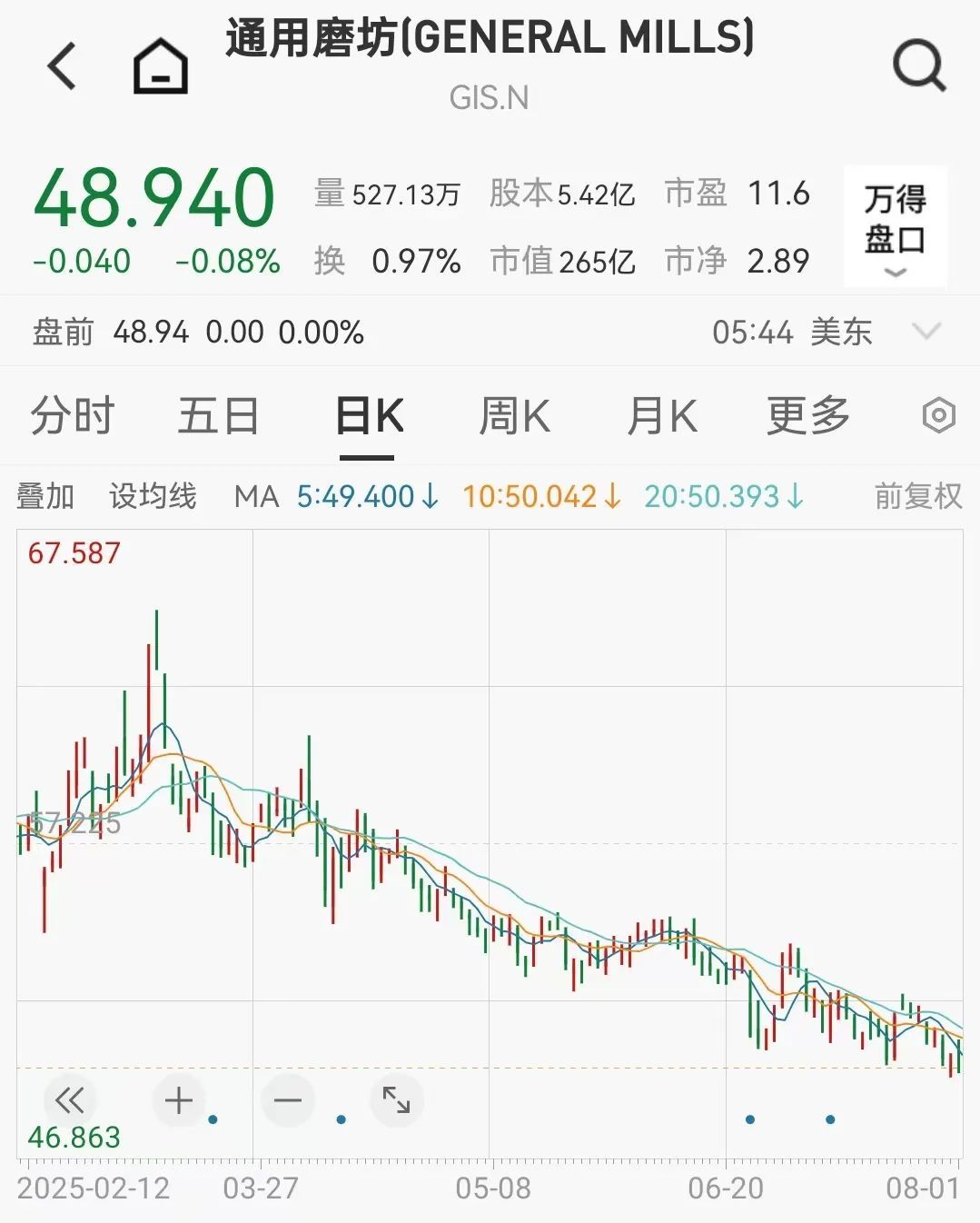
Core Viewpoint - Goldman Sachs is preparing to acquire global ice cream manufacturer Froneri for €15 billion (approximately ¥120 billion), with Häagen-Dazs being a significant asset in this deal [2][4]. Group 1: Acquisition Details - The acquisition will be executed through a newly established continuation fund by French private equity giant PAI Partners, allowing original limited partners (LPs) to choose between cash exit or rolling investment [4]. - If the agreement is finalized, Goldman Sachs will only gain regional operating rights for Häagen-Dazs in the US and Europe, excluding the Chinese market [4][5]. Group 2: Häagen-Dazs Historical Context - In 2001, General Mills acquired Häagen-Dazs from Diageo for $650 million. In 2002, Nestlé took over Häagen-Dazs' operations in the US from General Mills [4]. - In 2016, Nestlé and PAI Partners established the ice cream joint venture Froneri, and in 2019, Nestlé sold its entire US ice cream business to Froneri for approximately $4 billion, granting Froneri control over Häagen-Dazs and other core Nestlé brands [4][5]. Group 3: Current Market Situation - General Mills still retains global brand ownership of Häagen-Dazs and is responsible for operations outside North America, particularly in China [5]. - Reports indicate that General Mills is considering selling its Häagen-Dazs stores in China for several hundred million dollars, with discussions still in preliminary stages [5][6]. - Häagen-Dazs in China has seen a significant decline in store numbers, dropping from over 400 to 247 in less than two years [7]. Group 4: Financial Performance - General Mills reported net sales of $4.8 billion (approximately ¥34.8 billion) for Q3 of fiscal year 2025, a 5% year-over-year decline, with net profit down 7% [6]. - The international market, including China, saw a 3% decline in net sales, attributed to revenue drops in China and Brazil, contributing to a 15% decrease in General Mills' stock price this year [6]. Group 5: Competitive Landscape - The Chinese ice cream market is experiencing a shift with the rise of local brands, leading to a new brand iteration phase. Gelato is projected to grow by 10% in 2024, reaching a market size of over ¥12 billion [9]. - The emergence of new tea and coffee brands is diverting market share away from Häagen-Dazs, as consumers now have more leisure options beyond Häagen-Dazs stores [9].
哈根达斯,要被卖了!
中国基金报· 2025-08-04 13:59
Core Viewpoint - Goldman Sachs plans to acquire a majority stake in Froneri, the global ice cream manufacturer, for €15 billion (approximately ¥120 billion), with Häagen-Dazs being a significant asset in this deal [2][3]. Group 1: Acquisition Details - The acquisition is expected to be finalized as early as September this year, with Goldman Sachs using a newly established continuation fund managed by PAI Partners to purchase the majority stake in Froneri [5]. - The continuation fund allows original limited partners (LPs) to choose between cash exit or rolling investment, providing liquidity while enabling the manager to retain quality assets for value appreciation [5]. - If the agreement is completed, Goldman Sachs will only gain regional operating rights for Häagen-Dazs in the US and Europe, excluding the Chinese market [5][8]. Group 2: Historical Context - In 2001, General Mills acquired Häagen-Dazs for $650 million from Diageo, and in 2002, Nestlé took over Häagen-Dazs' operations in the US [5]. - In 2016, Nestlé and PAI Partners established the ice cream joint venture Froneri, and in 2019, Nestlé sold its US ice cream business to Froneri for approximately $4 billion, granting Froneri control over Häagen-Dazs and other core Nestlé brands [6]. - Froneri now operates Häagen-Dazs in over 20 countries, including the US, Australia, and Europe, while General Mills retains global brand ownership and operates outside North America, particularly in China [8]. Group 3: Market Dynamics in China - General Mills is reportedly considering selling its Häagen-Dazs stores in China for several hundred million dollars, with discussions still in preliminary stages [10]. - The company has acknowledged a double-digit decline in customer traffic for Häagen-Dazs stores in China, and its CEO has indicated a strategy to optimize the global investment portfolio [11]. - In the third quarter of fiscal 2025, General Mills reported net sales of $4.8 billion (approximately ¥34.8 billion), a 5% year-over-year decline, with international market sales, including China, down 3% [11]. Group 4: Competitive Landscape - Häagen-Dazs has seen a significant reduction in its store count in China, dropping from over 400 to 247 stores within two years [13]. - The rise of local ice cream brands and the emergence of new tea and coffee brands have diverted market share from Häagen-Dazs, with Gelato projected to grow at 10%, surpassing a market size of ¥12 billion in 2024 [16].

39%高关税,瑞士缘何成了特朗普“痛击对象”?
Hu Xiu· 2025-08-04 09:48
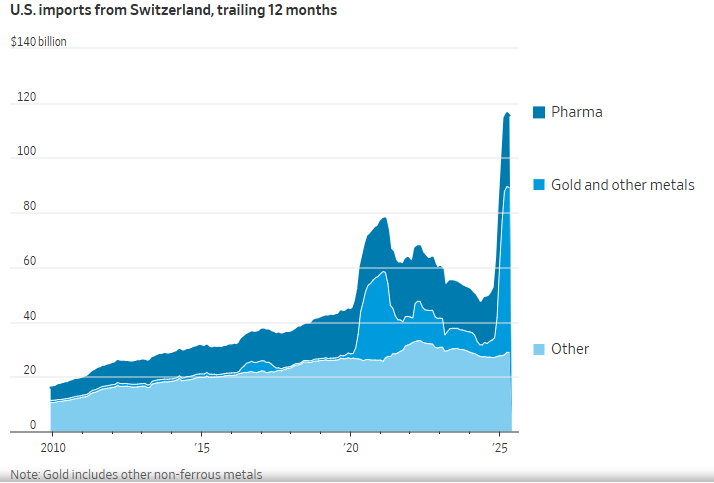
Core Viewpoint - The U.S. has imposed a 39% tariff on goods imported from Switzerland, marking a significant shift in trade relations and impacting Switzerland's economy, especially on its national holiday [1][2][4]. Group 1: Trade Relations - The U.S. trade deficit with Switzerland has surged, reaching nearly $50 billion in the first five months of the year, making Switzerland the fifth-largest trade partner for the U.S. [7] - Switzerland's exports to the U.S. account for approximately 19% of its total exports, highlighting the importance of the U.S. market for the Swiss economy [10]. - The U.S. Treasury has previously labeled Switzerland as a currency manipulator, indicating ongoing tensions regarding trade practices [12]. Group 2: Domestic Reactions in Switzerland - Following the tariff announcement, there has been significant criticism within Switzerland, particularly directed at Federal President Keller-Sutter for the perceived failure in negotiations [14][15]. - The pharmaceutical industry, which exports about 60% of its products to the U.S., has been blamed for straining U.S.-Swiss trade relations, with major companies like Novartis and Roche under scrutiny [17]. - There is a growing sentiment in Switzerland to reconsider its long-standing neutral stance and potentially strengthen ties with the EU, which has more favorable tariff rates with the U.S. [19]. Group 3: Economic Impact - If the tariffs remain unchanged, Switzerland's GDP could decline by approximately 0.6 percentage points, with more severe impacts if pharmaceuticals are excluded from tariff exemptions [21]. - The potential for tariffs on pharmaceuticals could reach as high as 200%, further exacerbating the economic challenges faced by the Swiss economy [21].
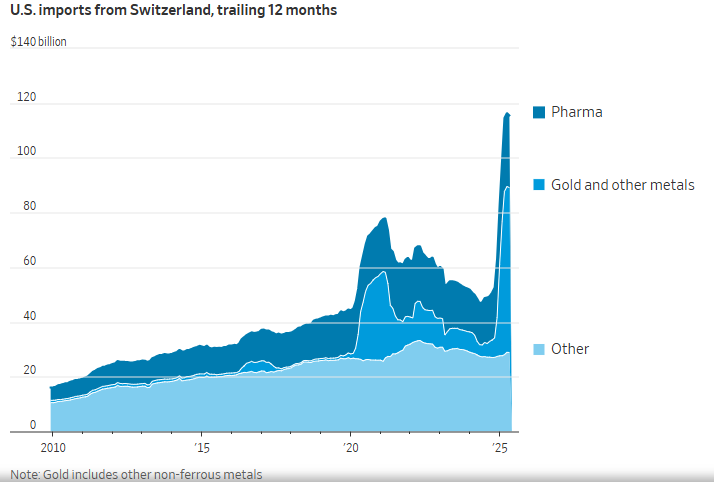
39%高关税,“中立国”瑞士缘何成特朗普贸易战痛击对象?
Feng Huang Wang· 2025-08-04 08:04
Group 1 - The U.S. will impose a 39% tariff on goods imported from Switzerland starting August 7, making Switzerland one of the few countries facing such high tariffs, second only to Brazil, Laos, Myanmar, and Syria [1][2] - The announcement coincided with Switzerland's National Day on August 1, which has been described as a significant humiliation for the country [2] - The trade deficit between the U.S. and Switzerland has surged, reaching nearly $50 billion in the first five months of the year, ranking Switzerland as the fifth largest trade deficit partner of the U.S. [5] Group 2 - Swiss officials were caught off guard by the high tariffs, as they believed negotiations with U.S. representatives were progressing well, with Switzerland expressing confidence in reaching a trade agreement [3][9] - The Swiss economy is heavily reliant on foreign trade, with approximately 19% of its exports going to the U.S., making it the largest export market for Switzerland [9] - The Swiss pharmaceutical industry, which exports about 60% of its products to the U.S., is under scrutiny, as it has been suggested that it may have hindered negotiations with the U.S. [12] Group 3 - The Swiss stock market is expected to open lower following the tariff announcement, with major companies like Novartis, Roche, and Nestlé listed on the Swiss exchange [12] - Analysts predict that if the tariffs remain unchanged, Switzerland's GDP could decline by approximately 0.6 percentage points, with more severe impacts if pharmaceuticals are excluded from tariff exemptions [13]