
华菱钢铁

Search documents
中国四大巨头,加起来比不过日本制铁,凭什么?
商业洞察· 2025-08-27 09:31
Core Viewpoint - China has maintained its position as the world's largest steel producer, with a crude steel output of 1.005 billion tons in 2024, accounting for 53.38% of global production, despite efforts to reduce excess capacity [3][20]. Group 1: China's Steel Industry - China's steel industry is characterized by high production but low profitability, with the net profits of its top four listed steel companies in 2024 not surpassing that of Japan's Nippon Steel [3][5]. - In 2024, China exported 11.07 million tons of steel, with an average price of $755.4 per ton, indicating a trend of increasing volume but decreasing total revenue [20][22]. - China's reliance on imported iron ore is significant, with imports reaching 1.237 billion tons in 2024 at an average price of $106.9 per ton, making the industry vulnerable to international price fluctuations [23][25]. Group 2: Japan's Steel Industry Recovery - Japan's Nippon Steel faced severe losses in 2019 but implemented a comprehensive reform strategy that included shutting down high-cost production facilities and focusing on high-value products, leading to a turnaround in profitability within a year [14][18]. - The company shifted its focus to producing high-margin products, such as special steel, which accounted for approximately 20.96% of its total crude steel output in 2020, compared to only 12.31% for China [17][20]. - Japan's steel industry has benefited from government policies aimed at eliminating outdated capacity and promoting industry upgrades, which could serve as a model for China's steel sector [12][26]. Group 3: Future Directions for China's Steel Companies - Chinese steel companies are encouraged to learn from Japan's past experiences and focus on producing high-value-added steel products to enhance profitability and competitiveness [26]. - The development of high-quality steel products, such as LNG ship steel and aircraft carrier deck steel, indicates progress in technology and product diversification within China's steel industry [26].


社保基金持仓动向:二季度新进72股
Zhong Guo Jing Ji Wang· 2025-08-27 06:26
Core Insights - The article highlights the recent movements of social security funds in the stock market, revealing that 72 new stocks were added to their portfolio in the second quarter [1][2]. Summary by Categories Social Security Fund Holdings - A total of 3,077 companies have disclosed their semi-annual reports, with social security funds appearing in 313 stocks. In Q2, they initiated positions in 72 stocks, increased holdings in 79 stocks, reduced holdings in 102 stocks, and maintained their positions in 60 stocks [1]. - The stock with the highest number of social security fund holders among new positions is Su Shiyan, with three funds listed among the top ten shareholders, holding a total of 14.86 million shares, accounting for 2.94% of the circulating shares [1]. New Stock Positions - The stock with the highest proportion of social security fund holdings among new positions is Bai Ao Intelligent, with a holding ratio of 7.23%. Other notable stocks include Zhong Chumei at 3.45%, and Bei Ding Co., Su Shiyan, and Stanley also having significant holdings [1]. - The stock with the largest number of shares held by social security funds among new positions is Hualing Steel, with 48.08 million shares held, followed by Huafa Shares and Stanley with 25.89 million shares and 21.99 million shares, respectively [1]. Performance Metrics - Among the new stocks, 44 companies reported year-on-year net profit growth, with the highest increase seen in Gao Lan Shares, which achieved a net profit of 22.93 million yuan, a staggering increase of 1,438.57% year-on-year. Other companies with significant profit growth include Shengnong Development and Xin Qiang Lian, with increases of 791.93% and 496.60%, respectively [2]. - Since July, the average increase for the new stocks held by social security funds is 20.22%, outperforming the Shanghai Composite Index. The best-performing stock is Dayuan Pump Industry, with a cumulative increase of 128.49%, followed by Guomai Culture and Gao Lan Shares, which increased by 87.48% and 79.78%, respectively. The stock with the largest decline is Dadi Ocean, down 6.41% [2].



华菱钢铁涨2.09%,成交额2.28亿元,主力资金净流出738.11万元
Xin Lang Cai Jing· 2025-08-27 03:15
Core Viewpoint - Hualing Steel has shown a significant stock price increase of 43.35% year-to-date, despite a recent decline in revenue and fluctuations in trading volume [1][2]. Financial Performance - For the first half of 2025, Hualing Steel reported a revenue of 630.92 billion yuan, a year-on-year decrease of 16.93%, while the net profit attributable to shareholders increased by 31.31% to 17.48 billion yuan [2]. - Cumulative cash dividends since the A-share listing amount to 104.36 billion yuan, with 39.34 billion yuan distributed over the last three years [3]. Stock Market Activity - As of August 27, Hualing Steel's stock price was 5.85 yuan per share, with a market capitalization of 404.16 billion yuan [1]. - The stock experienced a trading volume of 2.28 billion yuan, with a turnover rate of 0.57% [1]. - The stock has seen a net outflow of 738.11 million yuan in principal funds, with significant buying and selling activity from large orders [1]. Shareholder Information - As of June 30, 2025, the number of shareholders increased to 90,300, a rise of 19.94%, while the average circulating shares per person decreased by 16.63% to 76,500 shares [2]. - The top ten circulating shareholders include Hong Kong Central Clearing Limited and Southern CSI 500 ETF, with notable increases in their holdings [3].
每日报告精选-20250827



GUOTAI HAITONG SECURITIES· 2025-08-27 02:00
Market Performance - Global markets continued to rise last week, with MSCI Global up by 1.5%, MSCI Developed up by 1.5%, and MSCI Emerging up by 1.3%[3] - The US stock market's earnings expectations for 2025 were revised upward, with the S&P 500 EPS forecast increased from 268 to 269[4] Economic Expectations - Global economic expectations were adjusted upward, with the Citigroup Economic Surprise Index for the US rising due to dovish signals from the Fed[4] - The issuance of new special bonds by local governments reached 2392.7 billion CNY, a year-on-year increase of 76.7%[19] Industry Insights - In the home appliance sector, TCL Electronics reported a total revenue of 54.777 billion HKD for H1 2025, a year-on-year increase of 20.4%[15] - The gaming industry saw a record high of 166 domestic game approvals in August, with a total of 1050 approvals in the first eight months of 2025, significantly higher than the previous year's 850[31] Investment Recommendations - In the home appliance sector, recommended stocks include Stone Technology and Ecovacs for their strong performance and growth potential[14] - For the construction industry, low valuation high-dividend companies such as China State Construction and China Railway Construction are recommended due to their expected benefits from PPP policy catalysts[39]
华菱钢铁(000932):2025年半年报点评:高端产品持续放量,业绩同比增长
Shenwan Hongyuan Securities· 2025-08-27 01:48
Investment Rating - The investment rating for the company is "Buy" (maintained) [6] Core Views - The company reported better-than-expected performance in the first half of 2025, with total revenue of 63.09 billion yuan, a year-on-year decrease of 16.93%, and a net profit attributable to shareholders of 1.748 billion yuan, a year-on-year increase of 31.31% [6] - The decline in raw material costs has led to a recovery in gross profit per ton of steel, with a gross profit margin of approximately 9.9% in the first half of 2025, up from 6.8% in the previous year [6] - The company has continued to innovate, with 233 new patent authorizations in the first half of 2025, contributing to an increase in the sales proportion of high-end products [6] Financial Data and Profit Forecast - Total revenue forecast for 2025 is 141.486 billion yuan, with a projected net profit of 2.740 billion yuan, reflecting a year-on-year growth of 34.8% [2] - Earnings per share are expected to increase from 0.25 yuan in 2025H1 to 0.40 yuan in 2025E [2] - The company's return on equity (ROE) is projected to improve from 3.2% in 2025H1 to 4.9% in 2025E [2] Market Data - As of August 26, 2025, the closing price of the company's stock is 5.73 yuan, with a market capitalization of 39.586 billion yuan [3] - The company has a price-to-book ratio of 0.7 and a dividend yield of 1.75% [3] Investment Analysis - The company has adjusted its net profit forecasts for 2025-2027 to 2.740 billion, 3.556 billion, and 3.957 billion yuan respectively, reflecting an optimistic outlook due to ongoing industry improvements and product structure optimization [6]
中国钢铁:产量全世界第一,但挣钱能力与日企比,那就差远了
Sou Hu Cai Jing· 2025-08-27 00:07
Group 1 - In 2024, China's crude steel production is projected to reach 1.005 billion tons, accounting for over 50% of global output, solidifying its position as the world's largest producer [1] - Despite high production levels, Chinese steel companies lag significantly in profitability compared to Japanese firms, with the top four Chinese steel companies' net profits combined being less than that of Nippon Steel [3] - Nippon Steel, despite producing only 39.64 million tons of crude steel in 2024, has managed to achieve higher profits than Chinese counterparts, highlighting a stark contrast in profitability [3] Group 2 - Cost control is a critical factor, with iron ore accounting for 40% to 50% of steelmaking costs; Nippon Steel has secured long-term low-price contracts with major miners, while Chinese companies rely heavily on imported iron ore, leading to higher costs [5] - Japanese steel companies focus on high-value specialty steel, with over 20% of Nippon Steel's production being specialty steel, while Chinese companies have only 12.31% of their production in this category, primarily producing lower-margin ordinary steel [5] - Chinese steel companies are making efforts to innovate, with advancements in producing specialized steel products, supported by government initiatives aimed at improving the industry [7] Group 3 - The current situation of "large but weak" and low profits in the Chinese steel industry indicates a need for transformation, emphasizing the importance of profitability over sheer production volume [8] - To compete effectively in the global steel market, Chinese steel companies must learn from Nippon Steel and transition from being "large producers" to "profit-making experts" [8]
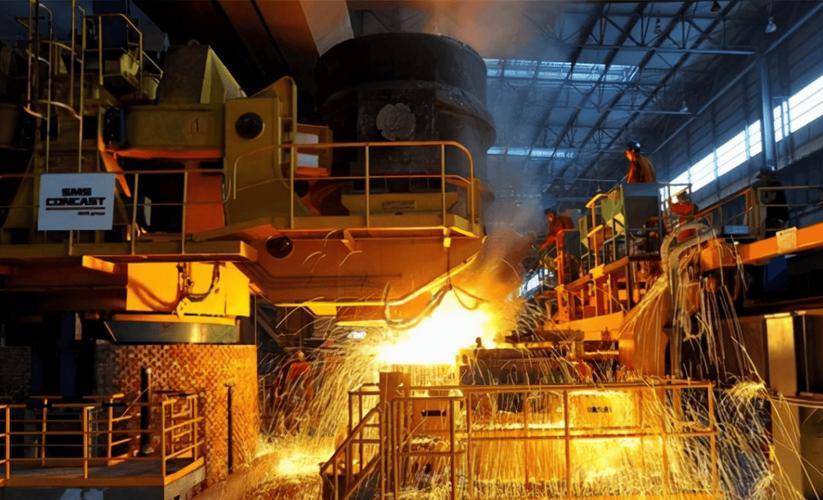
中国四大巨头,加起来比不过日本制铁,凭什么?|地球知识局
Sou Hu Cai Jing· 2025-08-26 13:49
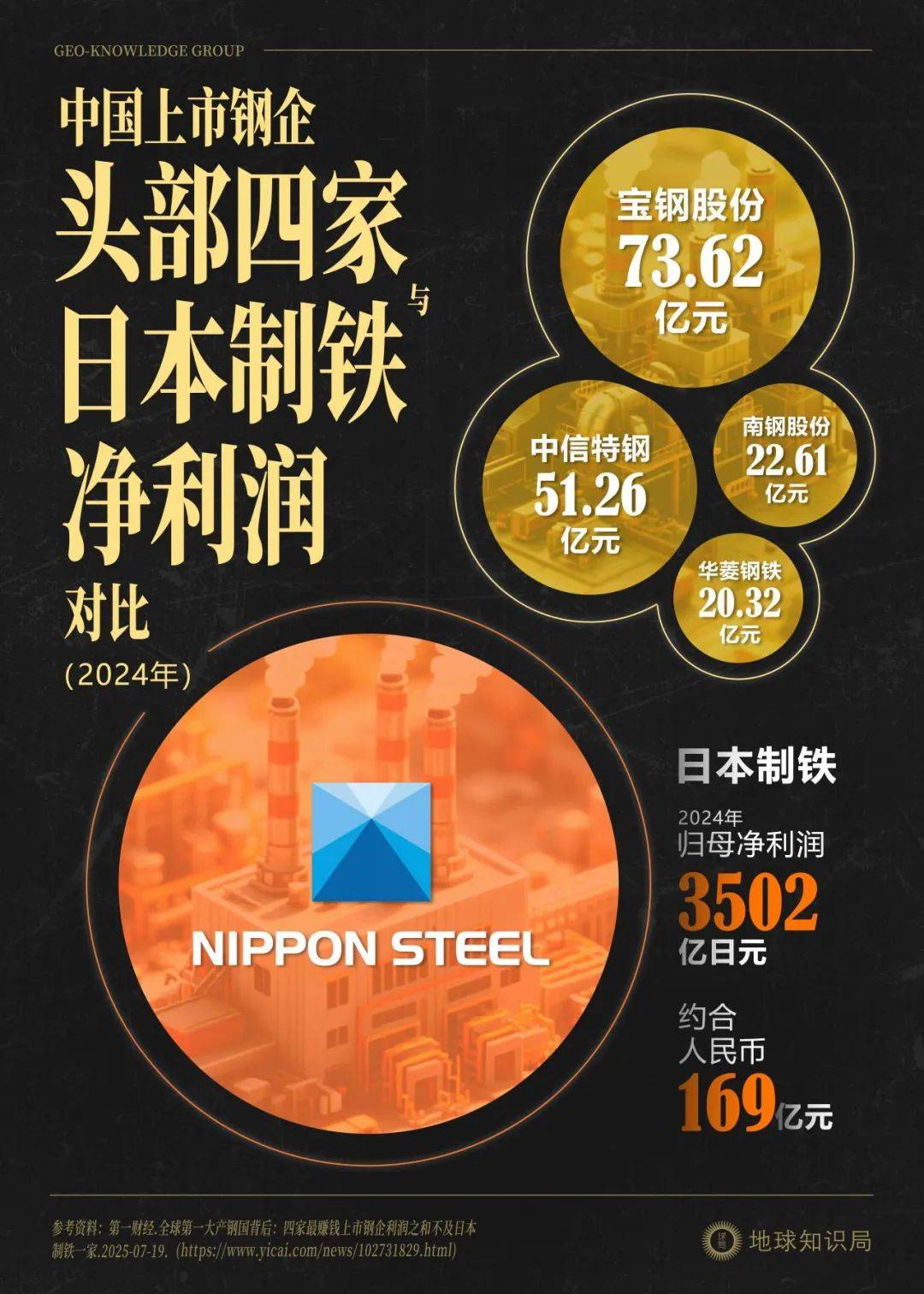
Group 1 - In 2024, China's crude steel production reached 1.005 billion tons, accounting for 53.38% of global output, marking five consecutive years as a billion-ton steel powerhouse [2] - Among the top 10 steel producers, six are Chinese companies, highlighting China's dominance in steel production despite efforts to curb excess capacity [2] - The most profitable four listed steel companies in China (Baowu, CITIC Special Steel, Nanjing Steel, and Huazhong Steel) combined net profits in 2024 were still lower than Japan's Nippon Steel, which indicates a disparity in profitability despite higher production [2][5] Group 2 - Japan's Nippon Steel faced overcapacity issues in the late 1990s and significant losses in 2018, but successfully turned around its fortunes by 2020, demonstrating effective management strategies [5][20] - Key strategies employed by Japanese steel companies included securing low-cost iron ore supplies, focusing on high-value steel products, and government support for industry upgrades [14][18] - In 2020, Japan's crude steel production was 83.19 million tons, with special steel accounting for approximately 20.96% of total production, compared to China's 12.31% for special steel in the same year [30] Group 3 - China's steel industry is heavily reliant on imported iron ore, with 1.237 billion tons imported in 2024 at an average price of $106.9 per ton, making it vulnerable to international price fluctuations [37] - The Chinese steel sector is undergoing supply-side reforms aimed at transitioning to higher-value production, with notable advancements in technology and product quality [38] - The establishment of projects like the Simandou iron ore project in Guinea aims to enhance China's self-sufficiency in high-grade iron ore, potentially increasing domestic supply by 3-5% [37][38]

中国四大巨头,加起来比不过日本制铁,凭什么?
Hu Xiu· 2025-08-26 13:16
Core Viewpoint - In 2024, China's crude steel production reached 1.005 billion tons, accounting for 53.38% of global output, maintaining its position as the world's largest steel producer for five consecutive years [1] Group 1: Production and Market Position - China dominates the global steel production landscape, with six out of the top ten steel companies being Chinese [1] - Despite the high production volume, Chinese steel companies face challenges such as overcapacity and low profitability [2] Group 2: Profitability Comparison - The combined net profit of China's four most profitable listed steel companies (Baosteel, CITIC Special Steel, Nanjing Steel, and Huazhong Steel) in 2024 is still lower than that of Japan's Nippon Steel [3][8] - Nippon Steel's net profit for 2024 is approximately 110.4 billion yen (around 5.61 billion RMB), significantly higher than the combined profits of the top Chinese steel firms [3][7] Group 3: Historical Context and Lessons - Japan's steel industry faced overcapacity issues in the late 20th century but successfully turned around by focusing on high-value products and strategic resource management [9][22] - Japan's Nippon Steel implemented significant reforms, including shutting down inefficient production lines and focusing on high-margin products, leading to a rapid recovery from losses [30][44] Group 4: Future Directions for Chinese Steel Companies - Chinese steel companies are encouraged to learn from Japan's experience, particularly in enhancing product quality and profitability [58] - The Chinese steel industry is making strides in producing high-value steel products, indicating potential for future growth and competitiveness [59]
华菱钢铁:接受易方达基金调研
Mei Ri Jing Ji Xin Wen· 2025-08-26 09:45
Group 1 - The core viewpoint of the article is that Hualing Steel (SZ 000932) has engaged with investors through a research meeting, providing insights into its revenue composition for the first half of 2025 [1] Group 2 - Hualing Steel's revenue composition for the first half of 2025 is as follows: Steel industry accounts for 74.5%, trading accounts for 15.63%, other businesses account for 4.76%, material sales account for 4.64%, and other operations account for 0.47% [1]
23.19亿元资金今日流出钢铁股
Zheng Quan Shi Bao Wang· 2025-08-26 09:45
Market Overview - The Shanghai Composite Index fell by 0.39% on August 26, with 17 industries rising, led by agriculture and beauty care, which increased by 2.62% and 2.04% respectively. Conversely, the pharmaceutical and non-bank financial sectors saw declines of 1.09% and 1.06% [1] Fund Flow Analysis - The main funds in the two markets experienced a net outflow of 68.855 billion yuan, with only two industries seeing net inflows: beauty care (net inflow of 276 million yuan) and agriculture (net inflow of 257 million yuan) [1] - The non-ferrous metals industry had the largest net outflow, totaling 10.712 billion yuan, followed by the pharmaceutical sector with an outflow of 8.254 billion yuan. Other industries with significant outflows included defense, non-bank financials, and electric equipment [1] Steel Industry Performance - The steel industry declined by 0.98% with a net outflow of 2.319 billion yuan. Among the 44 stocks in this sector, 18 rose while 23 fell. A total of 20 stocks had net inflows, with nine exceeding 10 million yuan in net inflow [2] - The top net inflow stock in the steel sector was Hangang Co., with an inflow of 297 million yuan, followed by Shagang Co. and Dazhong Mining with inflows of 49.539 million yuan and 44.108 million yuan respectively [2] - The stocks with the largest net outflows included Baogang Co. (-2.413 billion yuan), Hualing Steel (-123.842 million yuan), and Nanjing Steel (-38.269 million yuan) [2] Individual Stock Performance - The top performers in the steel sector included Hangang Co. (5.77% increase), Shagang Co. (2.49% increase), and Dazhong Mining (2.31% increase) [3] - Conversely, Baogang Co. had the largest decline at -7.36%, followed by Shougang Co. at -2.56% [3]


