火山引擎

Search documents
Agent时代,为什么多模态数据湖是必选项?
机器之心· 2026-01-15 00:53
Core Viewpoint - The year 2025 is anticipated to be remembered as the dawn of the AI industrial era, with many companies racing to invest in AI applications and agent development, but the true competition lies beyond just application-level advancements [1][4]. Group 1: AI Infrastructure and Data Management - The AI era emphasizes that the foundation for AI applications is robust data infrastructure, which is crucial for building true competitive advantages for companies [3][8]. - Companies need to develop capabilities to handle multimodal data, as the real benefits of the AI era lie not in merely possessing state-of-the-art models but in the ability to continuously manage and nurture them [9][18]. - The industry is entering the "second half" of AI, where the focus shifts to how AI should be utilized and how to measure real progress, necessitating a change in mindset to leverage AI thinking [4][5]. Group 2: Multimodal Data Lakes - The construction of multimodal data lakes is becoming essential for companies to participate in the agent competition, as it allows for the transformation of previously dormant unstructured data into usable competitive assets [14][21]. - IDC predicts that by 2025, over 80% of enterprise data will be unstructured, highlighting the need to awaken this data to build competitive strength in the agent era [16][19]. - The transition from traditional data lakes to multimodal data lakes is critical, as it enables companies to manage and utilize diverse data types effectively, driving business intelligence and operational efficiency [12][22]. Group 3: Data Infrastructure Evolution - The evolution of data infrastructure is outlined in three progressive stages: overcoming computing bottlenecks, integrating models into data pipelines, and implementing comprehensive data governance [30][31][33]. - The first stage focuses on breaking through computing limitations by adopting heterogeneous architectures that support both CPU and GPU, ensuring data can be processed quickly and efficiently [30]. - The second stage emphasizes the integration of pre-trained large models into data workflows, allowing for the automatic conversion of multimodal data into usable formats for AI applications [31][32]. - The final stage aims for unified data governance, enhancing the management and activation of data assets while ensuring compliance and security [33][34]. Group 4: Strategic Recommendations for Companies - Companies should prioritize transforming their data infrastructure from a "storage center" to a "value center," ensuring that data can be quickly accessed and understood by AI models [38][39]. - The focus should be on practical business applications, avoiding the pitfalls of excessive computational power that does not translate into business value [40][41]. - A modular and open data infrastructure is essential for adapting to future uncertainties, allowing companies to upgrade smoothly as technologies evolve [43][44][45]. Group 5: Industry Applications and Impact - The implementation of multimodal data lakes has shown significant improvements across various industries, such as a 20-fold performance increase in a smart driving company's model training and a 90% efficiency boost in content production for a leading media company [51][59]. - These examples illustrate the necessity of adopting multimodal data strategies to unlock the potential for intelligent transformation across diverse sectors [52][56].


机器人「组团」上春晚,总赞助金额达到 5 亿
3 6 Ke· 2026-01-14 07:13
Group 1 - The Spring Festival Gala has attracted competition among several embodied intelligence companies, with no single company securing exclusive sponsorship rights, leading to a collaboration of around five companies, each contributing approximately 100 million yuan [2] - The estimated cost for exclusive sponsorship rights is around 500 million yuan, which exceeds the financial capacity of any single embodied intelligence company [2] - Companies such as Yushu, Zhiyuan, Galaxy General, Songyan Power, and Yundongchu have shown significant interest in participating in the Spring Festival Gala [2] Group 2 - The investment in marketing for these companies is considered aggressive, especially for startups that have not yet established a mature business model, with some companies not having an annual marketing budget of 100 million yuan [2] - Some companies may opt for non-cash methods to cover the substantial marketing expenses associated with the event [2] - The Central Broadcasting Media Fund has been involved in recent funding rounds for several embodied intelligence companies, indicating a growing interest from investors [2][3] Group 3 - The competition among embodied intelligence companies for the Spring Festival Gala signifies a new development phase for the industry, with expectations of increased market penetration and competition by 2026 [5] - Since the third quarter of 2025, embodied intelligence companies have been receiving large orders, indicating a surge in market demand [5] - Companies are expected to transition from B2B to B2C models, with significant developments anticipated, such as Tesla's Optimus V3.0 expected to enter mass production by the end of 2026 [5] Group 4 - Companies face three main challenges in moving from technology validation to mass production and market validation: engineering capability, brand capability, and financing capability [6] - Participating in the Spring Festival Gala is seen as a shortcut for transforming "hard technology" into a "national brand," which could attract more investor attention and facilitate future listings or financing [6] - Besides embodied intelligence, Huoshan Engine will be the exclusive AI cloud partner for the 2026 Spring Festival Gala, although the full list of other sponsors has not yet been announced [6]


大模型中标TOP10里的黑马:中关村科金的应用攻坚之道
机器之心· 2026-01-13 02:33
Core Insights - The article highlights a significant shift in the Chinese large model industry, with application projects accounting for nearly 60% of the market, indicating a transition from technical competition to value validation in commercial scenarios [1][3][25] - In 2025, the number of large model-related bidding projects reached 7,539, with a disclosed amount of 29.52 billion yuan, marking a dramatic increase of 396% and 356% compared to 2024 [1][3] - The report emphasizes the importance of industry-specific knowledge and high-quality private data as key competitive advantages in the evolving market landscape [19][20] Market Trends - Application projects dominated the bidding landscape, comprising 58% of the total projects, with a peak of 63% in November 2025 [1][5] - The trend shows a quarterly increase in application project share from 44% in Q1 to 61% in Q3, stabilizing at 60.5% in Q4 [5] - The highest monetary share came from computing projects at 52.9%, but their quantity share was only 27%, indicating a preference for direct procurement of computing power and existing models for application development [5] Industry Distribution - The top five industries by project quantity were education, government, telecommunications, energy, and finance, with the government sector leading in monetary share at approximately 40% [5] - The financial sector showed a notable shift from computing investment to application deployment in the latter half of 2025 [5] Vendor Landscape - Major players in the bidding market included general large model vendors like iFlytek, Baidu, Volcano Engine, and Alibaba Cloud, alongside specialized vendors like Zhongguancun KJ, which focused on niche markets [6][11] - Zhongguancun KJ ranked fourth among financial industry large model vendors, showcasing its deep industry expertise and successful project implementations [13] Case Studies - Zhongguancun KJ's collaboration with China Shipbuilding Group led to the development of a large model for the shipbuilding industry, integrating a vast knowledge base and enhancing operational efficiency [11][12] - In the finance sector, Zhongguancun KJ has served over 500 leading financial institutions, creating a comprehensive financial intelligent agent matrix that integrates AI capabilities into core business processes [13][14] Future Outlook - The market is expected to enter a "deep water zone" in 2026, where return on investment (ROI) will become a critical metric for evaluating AI projects [18] - The relationship between specialized vendors and general platforms is anticipated to evolve from competition to collaboration, fostering a symbiotic ecosystem [22][23]

东方证券: AI应用不断催化有望迎来商业化拐点 电商产业链或将先行受益
智通财经网· 2026-01-12 02:56
Core Viewpoint - The report from Dongfang Securities indicates that by 2026, AI is expected to transition from technological innovation and business logic restructuring to industrial application and global rule-making, with significant growth anticipated in various retail sectors driven by AI, particularly in cross-border e-commerce and e-commerce services [1]. Group 1: AI Commercialization and Market Trends - Recent AI applications are catalyzing growth, with 2026 projected to be a commercial turning point [2] - Companies like Zhiyu Technology and MiniMax have recently gone public, with market capitalizations of 698 billion and 1,054 billion HKD respectively, and MiniMax saw a 109% increase on its first trading day [2] - WeChat announced an AI application and online tool growth plan, providing comprehensive support including cloud development resources and AI computing power [2] - Meta's acquisition of AI startup Manus for over 2 billion USD (approximately 140 billion RMB) is noted as its third-largest acquisition [2] - Upcoming AI events include the AIGC China Developer Conference and the involvement of Huoshan Engine as an exclusive AI cloud partner for the Spring Festival Gala [2] Group 2: AI in Cross-Border E-commerce - AI tools are enhancing efficiency in content creation, customer service, and translation, while also improving inventory management through data analysis [3] - Over 30,000 merchants in Xiaogoods City are utilizing AI tools, with over 1 billion uses of self-developed AI applications [3] - Jiao Dian Technology reported a membership penetration rate exceeding 50% for its AI services on the China Manufacturing Network [3] - Huakai Yibai is leveraging its "Yibai Cloud" platform for intelligent enterprise management [3] - Jihong Co. is using its "Giikin" system to implement AI algorithms for market analysis and user profiling [3] Group 3: AI in E-commerce Services - TP companies are using AI tools to analyze consumer shopping preferences, enhancing product visibility and purchase intent [4] - Qingmu Technology has developed various technical tools to support the accelerated application of AI in e-commerce operations [4] - Yiwan Yichuang, as an early partner with Alibaba, is building a GEO-related team to gain competitive advantages [4] - Kaichun Co. has established an "AI Intelligent Laboratory" to deepen strategic cooperation with Alibaba [4] Group 4: Investment Recommendations - Recommended investments in AI-driven cross-border e-commerce include Xiaogoods City and Jiao Dian Technology for B2B, and Huakai Yibai and Jihong Co. for B2C [5] - Brand companies like Anker Innovations, Ugreen Technology, and Zhiou Technology are also highlighted for their AI-enhanced business efficiency [5] - In the AI e-commerce services sector, recommended companies include Qingmu Technology, Yiwan Yichuang, Liren Lizhuang, and Kaichun Co. [5]

华林证券:公司正在持续深化与火山引擎、巨量引擎的精细化合作
Zheng Quan Ri Bao Wang· 2026-01-09 12:19
证券日报网讯 1月9日,华林证券(002945)在互动平台回答投资者提问时表示,公司正在持续深化与 火山引擎、巨量引擎的精细化合作,通过加快相关大模型引擎的本地部署,精准打通客户生命周期的全 程服务,稳步推进投资、投教以及其他服务的智能化运营。 ...

个股异动|与火山引擎深化合作、成为春晚合作伙伴 蓝色光标大涨超11%
Shang Hai Zheng Quan Bao· 2026-01-09 06:44
Core Viewpoint - BlueFocus has seen a significant stock price increase of 11.09%, reaching 16.73 CNY per share, following the announcement of a deepened collaboration with Volcano Engine to integrate AI and cloud computing technologies into its marketing services [1] Group 1: Company Overview - BlueFocus operates in various business segments including comprehensive promotion services (digital marketing, public relations, event management), comprehensive advertising agency (digital ad placement, overseas advertising for Chinese enterprises), and metaverse-related businesses (virtual humans, virtual objects, virtual spaces, and xR studios) [1] - The company's services cover the entire marketing communication industry chain and provide smart management services based on marketing technology, with a global market reach [1] Group 2: Recent Developments - BlueFocus has deepened its collaboration with Volcano Engine, aiming to reshape marketing content production and service models through the integration of AI, addressing the explosive demand for content in the marketing industry [1] - Volcano Engine has been announced as the exclusive AI cloud partner for the Central Radio and Television Station's 2026 Spring Festival Gala, further enhancing BlueFocus's strategic partnerships [1]

百年守护 因AI而“声”动
Xin Lang Cai Jing· 2026-01-08 03:31
Core Insights - The Palace Museum is celebrating its centenary in 2025, marking a century of safeguarding cultural heritage and evolving methods of cultural transmission in the digital age [2][3] - The launch of the "Listening to Treasures Speak" AI interactive podcast in collaboration with Volcano Engine represents a new approach to cultural preservation, allowing artifacts to "speak" through AI technology [2][4] Cultural Preservation - The history of the Palace Museum is centered around the protection of cultural artifacts, particularly during the tumultuous periods of the 1930s and 1940s when treasures were relocated to avoid destruction [3] - True cultural transmission goes beyond mere display; it involves engaging audiences in a way that resonates emotionally and intellectually [3][4] Technological Innovation - The "Listening to Treasures Speak" project utilizes advanced AI technology to create an interactive experience where users can narrate stories of selected artifacts, fostering a deeper connection with history [4][5] - The project represents a shift from passive learning to immersive interaction, allowing children to engage with history in a more personal and meaningful way [4][6] Collaboration and Challenges - The collaboration between AI technology and the Palace Museum presents challenges in balancing historical accuracy with engaging storytelling for children [5][6] - The AI models used in the project have evolved to include deep semantic understanding and emotional expression, enhancing the storytelling experience [6][8] Future of Cultural Engagement - The AI podcast project signifies a deeper commitment to integrating technology with cultural education, transforming how knowledge is disseminated to younger audiences [7][9] - This initiative aims to ensure that cultural heritage not only survives but thrives in contemporary society, fostering a sense of identity and connection among future generations [7][10] Broader Implications - The partnership between Volcano Engine and the Palace Museum exemplifies how technology can fulfill social responsibilities in cultural transmission, moving from mere preservation to creative transformation [9][10] - The evolution of cultural engagement through technology highlights the potential for interactive and collaborative experiences that redefine the relationship between artifacts and audiences [8][10]

生成式AI安全白皮书
火山引擎· 2026-01-06 07:51
1. Report Industry Investment Rating No relevant content provided. 2. Core Views of the Report - Generative AI is reshaping industries, but its security issues are becoming a key bottleneck for sustainable development. Future AI security will trend towards security left - shifting, system - and intelligence - based defense, and an open and shared - responsibility ecosystem [142][144] - Volcano Engine positions itself as a trusted and secure infrastructure provider for AI cloud - native, offering safe and compliant AI services and sharing security responsibilities with users [27][46] 3. Summary by Directory 3.1 Introduction - **Industrial Trajectory and Inflection Point**: The capabilities of foundational models are expanding rapidly, and enterprises are shifting from single - point trials to platform - based construction, requiring unified management of model services, data governance, etc. [16][17] - **Core Issues and Challenges in Generative AI Security**: There are risks in the model, data, and application layers, and governance and compliance need to be embedded in products [19][21][23][24] - **Volcano Engine's AI Security Proposition**: It aims to be a trusted and secure infrastructure provider for AI cloud - native, building AI security capabilities in technology, governance, and the ecosystem [27] 3.2 Generative AI Security Risks - **Regulatory and Compliance Risks**: Global regulatory bodies are strengthening laws and regulations for AI. Enterprises need to comply with relevant requirements in different regions [31][32][33] - **Data Privacy Risks**: There are risks in data collection, storage, training, and usage stages, and internal human factors can also cause risks [36][37][38] - **Generative AI Security Risks**: Risks exist in AI infrastructure, models, platforms, and intelligent agents, and along the "AI infrastructure → large model → intelligent agent" chain [40][41][42] 3.3 Volcano Engine's Generative AI Service Security Assurance System - **Security Responsibilities in the Generative AI Wave**: Security responsibilities in generative AI scenarios are shared between users and service providers, including compliance, privacy, and security responsibilities [46] - **Compliance Qualifications and Certifications**: Volcano Engine's large models have completed relevant filings and evaluations, and it participates in standard - setting to promote industry security [61][62] - **Data Security and Privacy Protection Design Concept**: The key challenges in large - model data and privacy security are addressed. The Ark TrustAI System provides a comprehensive protection plan [65][67][72] - **Generative AI Security Technology Assurance System** - **AI Infrastructure Security**: It combines platform - based and enhanced security solutions, covering governance, product protection, threat intelligence, and more [76][80][84] - **AI Model and Platform Security**: Volcano Ark ensures model and user information security. Model security has principles and lifecycle management, and the platform has a secure architecture [92][93][103] - **AI Intelligent Agent Security**: It includes identity and permission management, tool management and access control, and in - depth defense and reinforcement [114][120][124] 3.4 Summary - **Generative AI Industry Security Outlook**: Future AI security will trend towards security left - shifting, system - and intelligence - based defense, and an open and shared - responsibility ecosystem [142][144] - **Volcano Engine's Commitment to Generative AI Security**: Volcano Engine is committed to providing a trusted, controllable, and compliant AI cloud - native base and collaborating with partners to address security challenges [142]
国泰中证500ETF(561350)、港股通50ETF(159712)大涨点评
Sou Hu Cai Jing· 2026-01-05 11:34
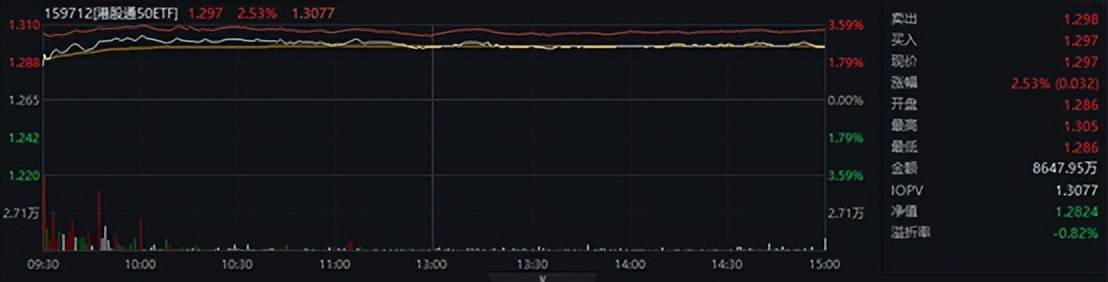
Market Performance - The A-share market saw all three major indices rise, with the Shanghai Composite Index up by 1.38%, the Shenzhen Component Index up by 2.24%, and the ChiNext Index up by 2.85% [1] - The total market turnover reached 2.57 trillion yuan, showing an increase compared to the pre-holiday period [1] Driving Factors for the Rise - The significant rise in the Hong Kong stock market during the New Year period catalyzed the positive opening of the A-share market [3] - Key drivers include: - Intensified global AI application [3] - Increased interest in innovative pharmaceuticals [3] - Strengthening of the Renminbi, with the offshore Renminbi breaking the 7 mark, enhancing the attractiveness of Hong Kong stocks to foreign capital [3] Future Outlook - Externally, the imminent announcement of the new Federal Reserve chairperson and ongoing pressure from Trump for significant interest rate cuts may reinforce expectations for a weaker dollar [4] - Internally, various policies are being implemented to stabilize expectations and stimulate activity, such as optimizing housing purchase restrictions and reducing the value-added tax on second-hand housing [4] - The Guotai CSI 500 ETF (561350) tracks the CSI 500 Index, which focuses on emerging manufacturing and growth sectors like electronics and biomedicine, reflecting China's economic transformation [4] - The Hong Kong Stock Connect 50 ETF (159712) tracks the Hong Kong Stock Connect 50 Index, which includes large-cap blue-chip stocks across various sectors, providing good market representation and industry distribution [4] Industry Developments - Meta has acquired Manus for over $2 billion to enhance its AI agent capabilities [6] - Volcano Engine will be the exclusive AI cloud partner for the 2026 Spring Festival Gala [6] - Deepseek has released a new architecture paper that balances model training performance and efficiency [6] - The brain-computer interface sector is gaining traction, with Elon Musk's Neuralink set to begin large-scale production of brain-computer interface devices in 2026 [6] - The first industry standard for medical devices using brain-computer interface technology will be implemented on January 1, 2026, laying the foundation for standardized development in the industry [6] - The small nucleic acid drug sector is heating up, with Rebio Biotechnology set to enter the Hong Kong market, further stimulating market sentiment [6]
“一人一团队”来了,企业预测2026年将成多智能体“上岗”元年
第一财经· 2026-01-05 11:07
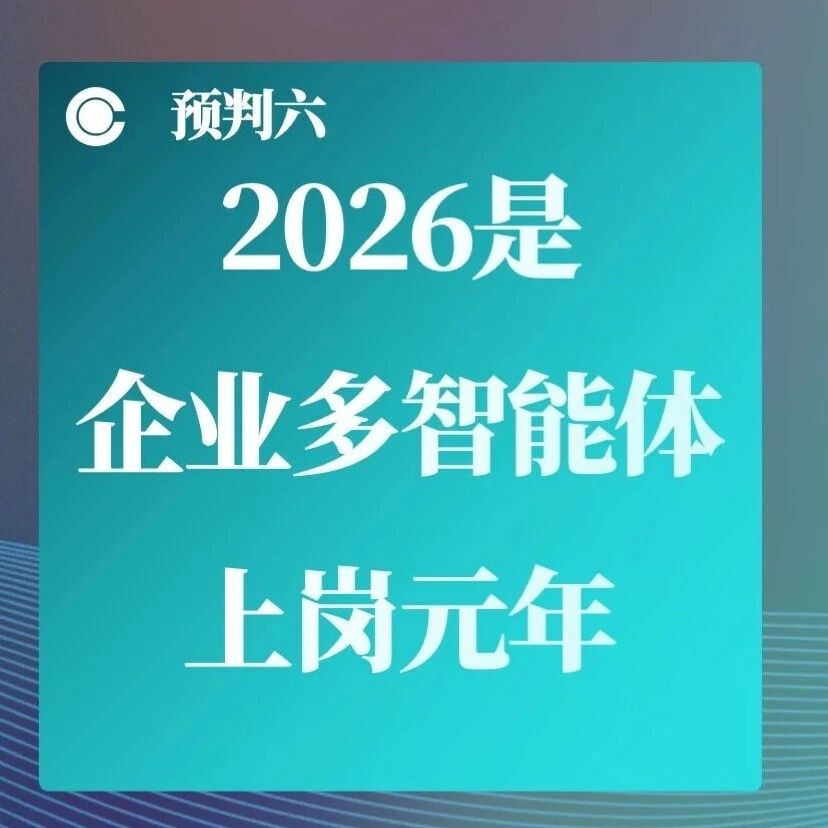
Core Insights - The article discusses the critical transformation period for enterprise-level AI, highlighting the shift from single-tool usage to multi-agent collaboration, with 2026 predicted to be the year of large-scale deployment of enterprise multi-agents [2] - It emphasizes that multi-agents must incorporate three key elements: Team Operations, Business Disruption, and Business Reconstruction (TAB), with China positioned as a global leader in this transition [2] - The article notes that companies are increasingly integrating AI capabilities closer to management levels, moving beyond frontline applications [2] Group 1 - The concept of multi-agents evolving from "one person, one tool" to "one person, one team" is outlined, indicating a significant shift in how AI is utilized within organizations [2] - The article mentions that the past year has seen practical implementations of AI across various industries, including energy, mining, manufacturing, aquaculture, and retail, indicating a growing acceptance and integration of AI technologies [2] - The article highlights the competitive landscape, with major players like Microsoft and Google making strides in multi-agent frameworks, while domestic companies like Volcano Engine are also making significant advancements [3] Group 2 - The article discusses the differences in approach between large companies and startups, noting that large firms often struggle with understanding customer needs, leading to delivery issues and mismatched expectations [3] - It points out that startups are more agile in exploring new models to reduce delivery costs and improve communication with clients, which can lead to more successful project outcomes [3] - The article raises the debate on whether "model equals product," suggesting that while large models may dominate, there will still be a distinction between models and applications in the short to medium term [4] Group 3 - The article asserts that agents possess capabilities such as memory, tool invocation, and multi-agent adversarial analysis, which single models typically lack, especially in enterprise contexts [4] - It suggests that while the ultimate goal may be to achieve a state where "model equals agent," the timeline for reaching this level of AGI remains uncertain [4]