
银河航天

Search documents
视频丨多个首次!本周,我国科技再迎密集突破
Yang Shi Xin Wen Ke Hu Duan· 2026-01-24 00:45
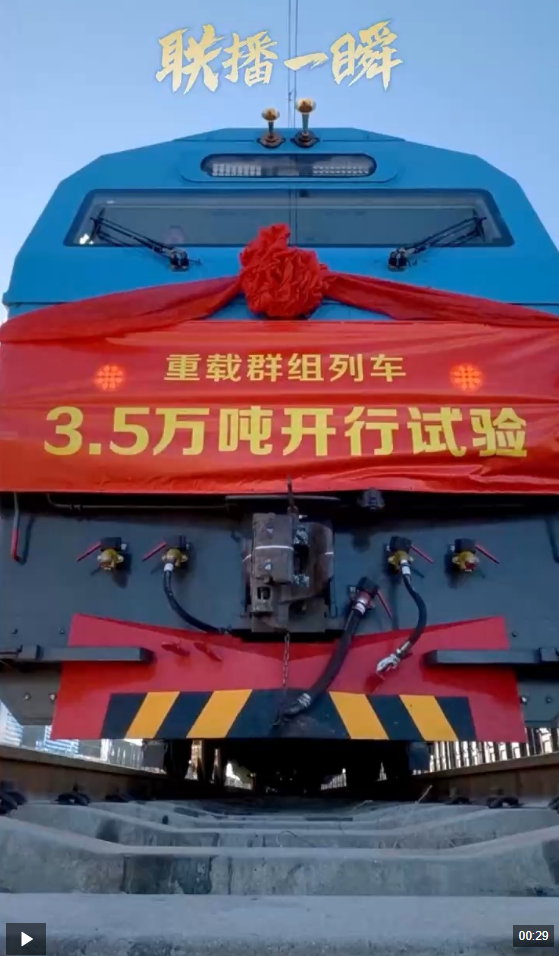
本周,我国科技再迎密集突破 轨道交通、能源电力、商业航天、 基础科学、航天制造等领域 成果接连涌现 多个首次 彰显中国科技自主创新的强劲动能 世界首次! 1月19日15时48分,我国在海南商业航天发射场使用长征十二号运载火箭,成功将卫星互联网低轨19组卫星发射升空,卫星顺利进入预定轨道,发射任务获 得圆满成功。此次发射的卫星用于低轨卫星互联网星座建设,由银河航天承担研制,搭载了多项核心技术产品。 相关负责人表示,此次卫星发射任务首次实现数字化全流程贯通,针对批量生产的特点进行了自动化测试、智能装配与检测、发射场流程优化等工作,大幅 提升了效率。 我国科学家首次呈现 纳米尺度黄金形成的动态过程 我国重载群组列车自动编队运行试验成功 1月21日,我国自主研发的万吨级重载列车完成世界首次自动编队驾驶试验,7列5000吨级的货运列车通过无线通信"对话",实现"随到随装、随编随走"的柔 性运输,像"搭积木"一样自由组合。 本次试验实现从"硬连接"到"虚拟连挂"的本质跨越,综合运能提升50%以上,打破了百年铁路货运的控制模式,未来将对我国铁路货运带来根本性的变革。 卫星互联网低轨19组卫星发射成功 首次实现数字化全流程贯 ...

干字当头,“能达”再出发
Xin Lang Cai Jing· 2026-01-23 21:55
Group 1 - The core viewpoint of the articles highlights the rapid development and strategic initiatives of Nantong Development Zone, aiming to become a leading economic hub in the Yangtze River Delta region, with a projected GDP exceeding 100 billion yuan by 2025 [1][2][8] - The successful launch of 19 low-orbit satellites by Galaxy Aerospace marks a significant milestone for the region's satellite internet capabilities, contributing to the establishment of Nantong as a key player in the aerospace industry [1] - Nantong Development Zone is focusing on creating specialized industrial parks in cutting-edge fields such as the metaverse, digital creativity, and artificial intelligence, which are expected to enhance its competitive edge in the regional economy [2][3] Group 2 - The development zone is undergoing a "second entrepreneurship" phase, with plans to establish a new era industrial park focusing on future industries like artificial intelligence and low-altitude economy, which will drive significant growth [3][5] - The region has seen a surge in innovation, with 36 national-level specialized "little giant" enterprises and 9 listed companies, indicating a strong emphasis on research and development [4] - Nantong Development Zone aims to form two trillion-yuan industrial clusters in high-end equipment and new energy by 2030, while also accelerating the layout of future industries [5][6] Group 3 - The successful listing of Rebo Biotech on the Hong Kong Stock Exchange represents a significant achievement for the local biotechnology sector, showcasing the region's potential for attracting investment [4] - The development zone is actively pursuing a strategy to enhance its infrastructure, including the construction of the Su-Tong Second Channel, which will improve connectivity and reduce travel time to southern Jiangsu [6] - Nantong Development Zone is committed to fostering a high-quality business environment and innovation ecosystem to support its transition from a follower to a leader in various industries [4][7][8]
订单饱满、链式协同 陕西商业航天集群加速成形
Shang Hai Zheng Quan Bao· 2026-01-23 18:10
Core Insights - Shaanxi Province is rapidly developing its commercial aerospace industry, aiming to create a leading innovation cluster with a target industry scale of over 500 billion yuan by 2027 and 1 trillion yuan by 2030 [1] - The province's aerospace sector is characterized by strong order fulfillment and collaboration among leading enterprises, enhancing competitiveness in the commercial aerospace era [1] Group 1: Industry Development - Shaanxi has proactively released an action plan to cultivate a 100 billion yuan commercial aerospace industry cluster by the end of 2024, with a focus on satellite and rocket manufacturing, constellation operations, and satellite applications [1] - The province aims to have over 100 large-scale enterprises by 2027 and 200 by 2030, with a significant increase in industry scale and leadership in various aerospace fields [1] Group 2: Company Performance - Shaanxi Huada, a key player in aerospace connectors, reported a continuous increase in the proportion of commercial aerospace business in its overall revenue, with a focus on expanding product categories to meet customer demands [2] - Xicet Testing has established a comprehensive testing capability system, providing one-stop services that significantly shorten development cycles and reduce management costs for commercial satellite manufacturers [3] Group 3: Material and Component Innovation - Sui Rui New Materials has successfully applied high-strength, high-conductivity copper alloys in liquid rocket engine thrust chambers, with revenue from these products expected to grow from 20.97 million yuan in 2022 to 30.16 million yuan in 2024 [3] - Tianli Composite has become a major supplier of transition joints for satellites, contributing to the domestic production of key aerospace materials [4] Group 4: Strategic Collaboration - Xicet Testing has formed strategic partnerships with Shaanxi Huada and Jizhi Co., focusing on expanding the aerospace testing market and enhancing quality collaboration across the entire design-manufacturing-testing-application chain [6] - The collaboration aims to leverage each company's strengths to support high-end manufacturing and ensure product quality stability in the commercial aerospace sector [6][7] Group 5: Ecosystem and Infrastructure - Shaanxi's aerospace industry is supported by national research institutions and a unique national economic and technological development zone focused on aerospace, fostering a complete innovation chain from basic research to technology transfer [7] - The Xi'an National Civil Aerospace Industry Base hosts over 60 commercial aerospace companies, establishing a comprehensive ecosystem that integrates rocket development, satellite payloads, and data applications [7]
未知机构:①为保持银行体系流动性充裕1月23日央行将以固定数量利率招标多重价位中标-20260123
未知机构· 2026-01-23 02:20
Summary of Key Points from Conference Call Records Industry Overview - The records indicate a focus on the banking sector, semiconductor industry, aerospace, and commercial space sectors, highlighting various trends and developments within these industries. Banking Sector - The central bank will conduct a 900 billion yuan MLF operation on January 23, with a one-year term to maintain liquidity in the banking system [1] - The central bank aims to ensure the stable operation of the financial market throughout the year [2][3] Semiconductor Industry - The semiconductor sector is experiencing significant developments, with a focus on advanced packaging as a key trend. Institutions suggest that price corrections present buying opportunities [5] - Advanced packaging prices are expected to rise by 5%-20%, exceeding previous expectations of 5%-10% [6] - Intel and AMD plan to increase server CPU prices by 10%-15% to address supply-demand imbalances [5] Aerospace Industry - The European Union Aviation Safety Agency (EASA) has begun flight evaluation tests for the C919 aircraft in Shanghai, indicating good performance and safety [7] - Successful flight tests could facilitate the C919's entry into European and other international markets, accelerating the global expansion of Chinese commercial aviation [8] Commercial Space Sector - The commercial space sector is poised for growth, with significant satellite deployment plans. Over 20,000 satellite constellation applications have been submitted, marking a new phase of large-scale deployment [10] - Beijing's commercial space industry is set to host a high-quality development conference, attracting over 300 domestic and international companies [6] Renewable Energy and Storage - The storage product production lines are operating at full capacity, with expectations of significant increases in overseas large storage orders by 2026 [5] - The development of space photovoltaics is anticipated to drive long-term demand, with a technological evolution from arsenide gallium to silicon-based HJT and eventually to perovskite tandem technologies [10] Other Notable Developments - Alibaba is reportedly planning to push for the listing of its AI chip subsidiary, which may become a core strategic focus for the group [5] - The successful integration of large-scale integrated circuits into flexible polymer fibers has been achieved, transforming the concept of "fiber chips" into reality [5] - The humanoid robot company Yuzhu Technology expects to exceed 5,500 units in actual shipments by 2025, with mass production surpassing 6,500 units [9] This summary encapsulates the key points and trends across various industries as discussed in the conference call records, providing insights into potential investment opportunities and risks.
政策引导资本赋能 商业航天迈向新阶段
Zhong Guo Zheng Quan Bao· 2026-01-22 21:52
Core Viewpoint - The Chinese commercial space industry is entering a new phase focused on large-scale launches and commercial closure, with significant breakthroughs expected in rocket capacity over the next 3 to 5 years [1] Group 1: Industry Developments - By 2025, China's commercial space sector is projected to complete 50 launches, accounting for 54% of total space launches, with 25 commercial rocket launches and 311 commercial satellites in orbit, representing 84% of all satellites [1] - The capitalization process of commercial space companies is accelerating, with Blue Arrow Aerospace's IPO application accepted by the end of 2025 and Zhongke Aerospace completing its listing guidance in January 2026 [1] - The rapid increase in rocket launches and reusable rocket tests aims to alleviate the "many satellites, few rockets" bottleneck in the industry [5] Group 2: Technological Advancements - The next generation of commercial rockets is expected to see intensive maiden flights or key tests in 2026 [3] - Blue Arrow Aerospace's reusable rocket "Zhuque-3" successfully completed its maiden flight by the end of 2025, while Star River Dynamics plans to conduct recovery tests for its "Zhishen-1" rocket in 2026 [4] - The manufacturing of satellites is shifting from customization to industrial mass production, with Galaxy Aerospace reporting an 80% reduction in satellite development cycles [6] Group 3: Application Expansion - The goal of frequent rocket launches is to support an unprecedented scale of satellite constellations, with over 200,000 satellites applied for frequency and orbital resources [6] - New business models such as in-orbit services are emerging as the number of satellites increases, driving value up the industry chain [7] Group 4: Capital and Policy Support - The healthy development of the commercial space sector requires a dual drive of technological breakthroughs and capital support [8] - The Shanghai Stock Exchange has provided clear pathways for commercial rocket companies to list on the Sci-Tech Innovation Board, which has accelerated the IPO processes of leading companies [5] - Industry participants are calling for more refined and forward-looking regulatory arrangements to address the challenges of large-scale and high-frequency operations [9]
政策引导资本赋能商业航天迈向新阶段
Zhong Guo Zheng Quan Bao· 2026-01-22 20:56
Core Viewpoint - The Chinese commercial space industry is entering a new phase focused on large-scale launches and commercial closure, with significant breakthroughs expected in rocket capacity over the next 3 to 5 years [1] Group 1: Industry Developments - By 2025, China's commercial space sector is projected to complete 50 launches, accounting for 54% of total space launches, with 25 of those being commercial rocket launches and 311 commercial satellites entering orbit, representing 84% of all satellites [1] - The rapid acceleration of capitalization in commercial space enterprises is evident, with Blue Arrow Aerospace's IPO application accepted by the end of 2025 and Zhongke Aerospace completing its listing guidance in January 2026 [1][2] - The launch of the Long March 12 rocket on January 19, 2026, marks a significant step in commercial rocket testing, with major models expected to undergo critical tests or first flights in 2026 [1] Group 2: Technological Advancements - Star River Dynamics plans to conduct recovery tests for its reusable rocket "Zhishen-1" in 2026, while other companies like Eastern Space and Tianbing Technology are also targeting 2026 for key flight tests [2] - The shift from customized to industrialized satellite manufacturing is highlighted by Galaxy Aerospace, which has reduced satellite production cycles by 80% and aims for an annual output of 100 satellites weighing 1000 kg each [3] - The successful suborbital flight test of Zhongke Aerospace's "Lihong-1" on January 12, 2026, demonstrates the potential for microgravity research applications in fields like biomedicine [3] Group 3: Market Dynamics - The increasing frequency of rocket launches and reusable rocket tests is expected to alleviate the "many satellites, few rockets" bottleneck in the industry [2] - The Shanghai Stock Exchange's guidelines for commercial rocket companies have clarified the path for IPOs, directly influencing the progress of leading enterprises [2] - The industry is anticipated to undergo a reshuffle in the coming years, with a greater emphasis on the performance and delivery capabilities of rocket companies [4] Group 4: Future Outlook - Significant advancements in reusable rocket technology and launch efficiency are expected by 2026, with ongoing improvements in commercial launch facilities and processes [4] - The industry is calling for more refined regulatory frameworks to address the challenges posed by large-scale and high-frequency operations [4] - Capital plays a crucial role in the high-risk, high-investment commercial space sector, with early-stage funding being essential for industry development [5]
从价值链到落地:新材料企业切入商业航天的低风险路径
材料汇· 2026-01-22 15:32
点击 最 下方 关注《材料汇》 , 点击"在看"和" "并分享 添加 小编微信 ,遇见 志同道合 的你 正文 引言 圜则九重,孰营度之? 惟兹何功,孰初作之? 斡维焉系,天极焉加? 八柱何当,东南何亏? 九天之际,安放安属? 隅隈多有,谁知其数? —屈原《天问》 两千多年前,屈原以汪洋恣肆的笔墨叩问天地万物,将人类对宇宙的敬畏与好奇镌刻进文明基因。 从"圜则九重,孰营度 之"的苍穹追问,到"日月安属?列星安陈"的星辰遐想,古人对宇宙的探索欲,在今日商业航天的浪潮中迎来了具象化的落 地。 曾经由国家主导的航天事业,如今已步入市场化、规模化爆发的新阶段, 低轨星座组网、可回收火箭、太空旅游 等赛道多 点开花,带动产业链上下游迎来千亿级市场增量。 但热潮之下,核心命题愈发凸显: 商业航天价值链的利润分布如何?新材料作为"性能基石与效率密钥",在各环节的赋能 逻辑与价值贡献是什么?跨界者、新进入者如何在同质化竞争中挖掘差异化机会? 这些问题,正是本文立足产业本质与材料特性,试图破解的核心议题——以新材料为锚点,拆解商业航天价值链,挖掘可 落地的价值机会,为产业链参与者提供决策参考。 一、商业航天价值链的核心逻辑与维度 ...
从世界体系聊到科幻想象,观察者网2026答案秀·思想者春晚火爆全网
Guan Cha Zhe Wang· 2026-01-22 09:54
Group 1 - The event "2026 Answers Show" aims to address critical global issues and explore new narratives in a changing world [1][2] - The first segment focuses on the reconstruction of the world system, featuring discussions on US-China relations and the role of emerging countries in shaping a new international order [2][21] - Key speakers include Wang Fan, who discusses the evolution of US-China relations, and Indian diplomat Saran Singh, who emphasizes the importance of viewing the world beyond a binary perspective [2][21] Group 2 - The second segment centers on AI and politics, with experts discussing the reconfiguration of power in the AI era and China's position in global AI competition [7][8] - Notable contributions include Jin Canrong's insights on the intersection of technological advancements and international relations, and suggestions for maintaining China's competitive edge in AI [7][8] - The dialogue also addresses the ethical implications of AI and the need for governance frameworks in a rapidly evolving technological landscape [8] Group 3 - The third segment, "Industrial Fantasia," analyzes China's manufacturing transformation and technological innovation during the 14th Five-Year Plan period [11][12] - Eric Solheim highlights the significance of China's rise in the renewable energy sector for global green transitions, criticizing the previously established international order [11][12] - Discussions include the shift from "Made in China" to "Empowered Globally," showcasing various industry leaders' perspectives on China's role in global markets [11][12] Group 4 - The fourth segment, "Narrative Wars," explores how cultural narratives shape perceptions and the importance of reclaiming narrative control in the film and media industries [17][18] - Notable speakers discuss the challenges faced by Chinese filmmakers and the need for a global expression of Eastern narratives [17][18] - The segment concludes with reflections on the historical context of international relations and the potential for a new era of peace led by China [18] Group 5 - The final segment features discussions among scholars from China, the US, and Russia on the evolving dynamics of international relations and the potential for a multipolar world order [21][22] - Key insights include the recognition of the diminishing effectiveness of traditional international order rules and the emergence of a "jungle law" in global affairs [21][22] - The dialogue emphasizes the need for reform in the international system, with a consensus on the necessity for a new, multipolar approach to global governance [21][22]

“十五五”深空科技行业深度研究及趋势前景预测报告
Xin Lang Cai Jing· 2026-01-21 13:49
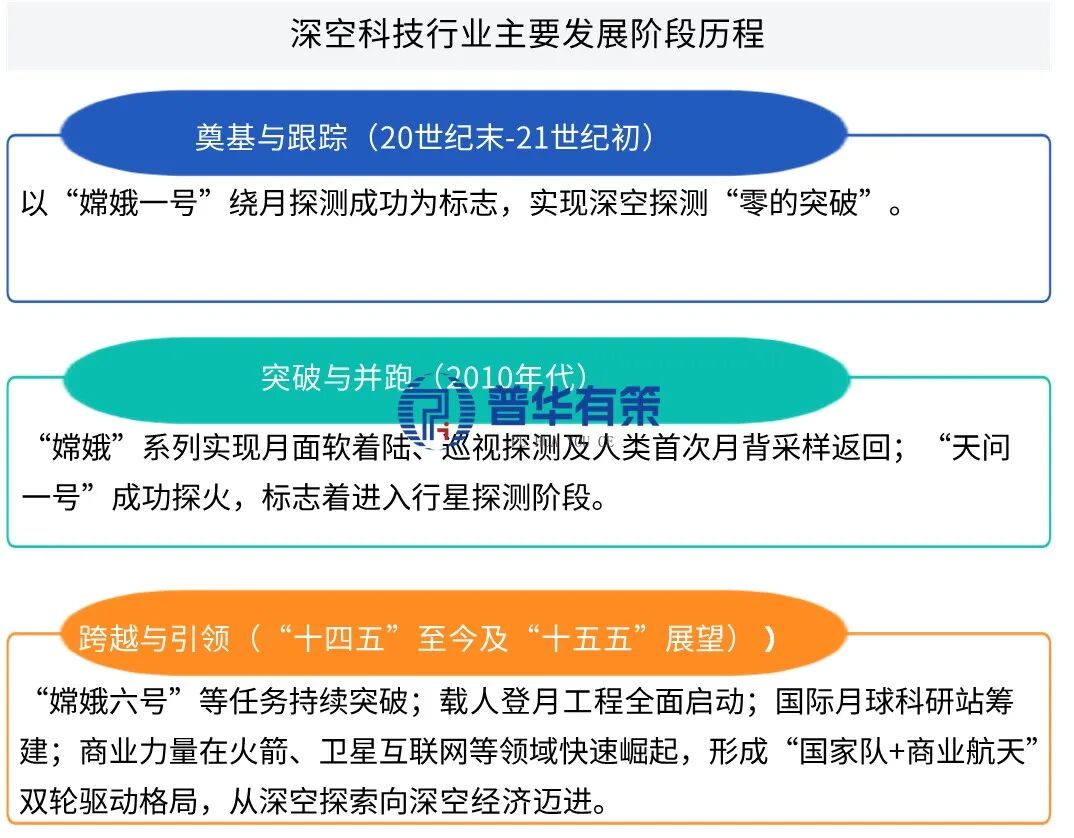
Core Insights - The deep space economy is entering a golden decade, driven by new productive forces that will stimulate future growth [1] - The deep space technology sector focuses on the exploration, development, and sustainable utilization of celestial bodies beyond the Moon, integrating advanced technologies such as AI and renewable energy [1][24] - China's deep space technology has evolved from lunar exploration to interplanetary missions, with significant achievements like the Tianwen-1 Mars mission and plans for human lunar landings by 2030 [4][24] Industry Overview - Deep space technology encompasses cutting-edge scientific research, disruptive technology development, and major equipment manufacturing aimed at sustainable utilization [1][24] - The industry has transitioned from a planned research model to a market-oriented and ecological model, characterized by collaboration between state-owned enterprises and private companies [25] Competitive Landscape - The competitive structure of China's deep space technology industry features a "national team" leading system innovation, commercial enterprises focusing on niche breakthroughs, and collaborative development among academia, industry, and research [25] - The first tier consists of state-owned enterprises like China Aerospace Science and Technology Corporation, which dominate design and integration for major national projects [25] - The second tier includes commercial companies making breakthroughs in key subsystems and emerging launch sectors, while the third tier comprises startups focused on new applications and data services [26] Key Drivers of Industry Development - National strategic goals, such as building a "strong aerospace nation," serve as a fundamental driving force for the industry [27] - The integration of disruptive technologies, particularly AI, is transforming deep space activities and enhancing mission success rates [28] - Strong market demand, particularly in satellite internet and resource utilization, is attracting global capital and driving sustainable growth expectations [29] Policy Environment - Since the 14th Five-Year Plan, policies have accelerated the transition of deep space technology from top-level planning to industry cultivation, emphasizing the importance of technological innovation [11] - The 2025 Central Economic Work Conference highlighted the need for technological innovation to lead the construction of a modern industrial system, providing clear directives for the deep space sector [11]
科技日报:卫星互联网低轨19组卫星成功发射
Ke Ji Ri Bao· 2026-01-21 08:53
Core Viewpoint - The successful launch of 19 low Earth orbit satellites for satellite internet by China using the Long March 12 rocket marks a significant advancement in China's commercial space capabilities [1] Group 1: Launch Details - The Long March 12 rocket was launched from the Hainan commercial space launch site at 15:48 on January 19 [1] - The mission was successful, with the satellites entering their designated orbits [1] Group 2: Rocket Specifications - The Long March 12 is a new generation of cryogenic liquid launch vehicle developed by the China Aerospace Science and Technology Corporation's Eighth Academy [1] - It is China's first 4-meter single-core launch vehicle, with a near-Earth orbit carrying capacity of no less than 12 tons and a 700-kilometer sun-synchronous orbit capacity of no less than 6 tons [1] - The rocket can adapt to different mission requirements with fairing configurations of 4.2 meters and 5.2 meters in diameter, supporting both single and multiple satellite launches [1] Group 3: Satellite Technology - The 19 low Earth orbit satellites were developed by Galaxy Space, which focuses on cost-effective technologies such as phased array, millimeter-wave antennas, and integrated electronics [1] - The company achieved a fully digital process for the first time during the development, enhancing efficiency through automated testing, intelligent assembly, and launch site process optimization [1]