Ansys

Search documents
手机芯片,大变局
半导体行业观察· 2025-06-07 02:08
Core Viewpoint - Leading smartphone manufacturers are facing challenges related to local generative AI, standard smartphone functionalities, and increasing data interactions between mobile devices and the cloud, which put pressure on computing and power consumption [1][3]. Group 1: Mobile SoC Design Challenges - High-end smartphones utilize heterogeneous architectures in their System on Chip (SoC) designs, where multiple modules perform different tasks collaboratively [3]. - The rapid evolution of AI networks and diverse AI model requirements complicate mobile SoC design, necessitating support for both large-scale cloud models and efficient local models [3][4]. - The integration of AI capabilities into chips is becoming less challenging due to advancements in tools and processes over the past five to ten years [6]. Group 2: AI Processing and Architecture - The design focus is shifting towards optimizing power consumption in parallel processing of graphics, general computing, and AI operations [5]. - AI accelerators in mobile SoCs may include GPUs, NPUs, or high-end ASICs, with NPU becoming central for low-power tasks [7][8]. - The rise of multimodal models and generative AI tools adds complexity to design, requiring flexible and efficient computing structures [10]. Group 3: Local vs. Cloud Processing - Local processing of AI applications, such as facial recognition and photo editing, is preferred to reduce latency and enhance data privacy [13]. - Despite the increase in local AI processing, some tasks still need to be executed in the cloud due to battery and power limitations [13]. - The balance between local and cloud processing will be an ongoing challenge as AI models become more efficient [13]. Group 4: Key Trends in Mobile SoC Design - Three key trends driving changes in mobile SoC design include rising analog demands, the proliferation of visual and AI applications, and the high-performance computing requirements of modern applications [15]. - Designers must consider both hardware and software perspectives to remain competitive, emphasizing the need for collaborative efforts across disciplines [15].


刚刚!新思科技高管亲述“断供”始末:详解美国EDA出口管制内情 (附全文翻译)
是说芯语· 2025-06-06 10:18
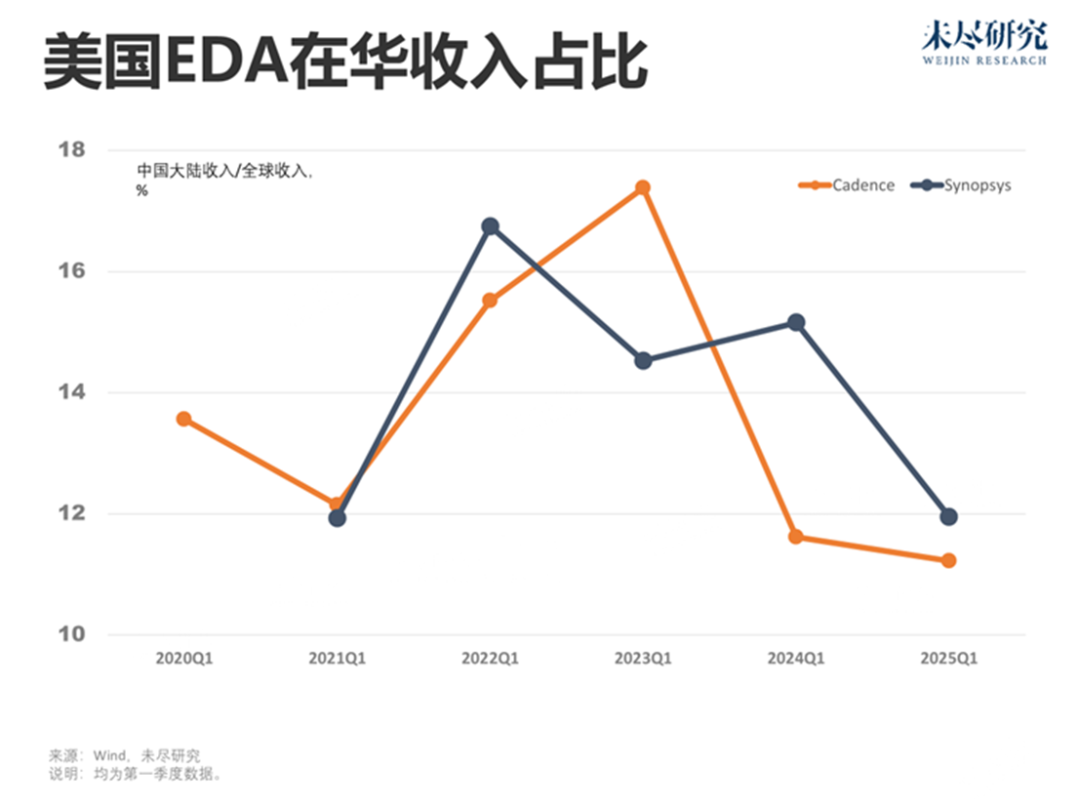
Core Viewpoint - The recent export controls imposed by the U.S. government on the EDA industry have significant implications for Synopsys Inc., particularly affecting its operations and revenue in China, which previously experienced a growth rate of approximately 25% but has now seen a decline of 28% in the most recent quarter [4][9]. Group 1: Impact of Export Controls - The U.S. Department of Commerce issued a "stop and notify" letter to Synopsys, requiring the company to cease sales and shipments of software, hardware, and chips to China, with existing customer software licenses expiring within 355 days [2][6]. - The export controls have been described as unusual due to the lack of a customary consultation period, which typically ranges from 4 to 12 weeks, leaving companies to react post-factum [3][4]. - The export restrictions have led to a significant operational challenge, as existing customers can use their software until their licenses expire, but will not receive any updates or support during that time [6][23]. Group 2: Industry Response and Collaboration - The EDA industry has shown rare unity in response to the government regulations, with legal and government relations teams from various companies collaborating to navigate the complexities of the new rules [3][4]. - The historical context of U.S. restrictions on technology exports has evolved from targeting specific companies to broader technology restrictions, impacting advanced nodes crucial for AI and high-performance computing [4][17]. Group 3: Financial Implications and Market Dynamics - The revenue structure of Synopsys is heavily reliant on advanced nodes, which are more profitable compared to older technology nodes, making the impact of the export controls particularly severe [4][5]. - Despite the challenges, the company is exploring opportunities in automotive, IoT, and industrial applications, although these markets do not match the revenue potential of the AI sector [5][6]. - The uncertainty surrounding the export controls has raised questions about the future of Synopsys's planned acquisition of Ansys, as the company aims to maintain access to the Chinese market, which is critical for growth [9][20]. Group 4: Operational Challenges - The company faces difficulties in adjusting operational expenditures in response to declining revenues, as fixed costs related to R&D and core tool development remain unchanged despite reduced sales [6][22]. - The ambiguity of the export controls has led to numerous unresolved questions regarding their scope and applicability, complicating compliance efforts [6][25]. Group 5: Future Outlook - The company is actively seeking clarification from the U.S. government regarding the specifics of the export controls, including whether they apply to subsidiaries of Chinese companies located in other countries [6][25]. - The potential for a resolution through trade negotiations remains a possibility, with the company expressing a desire to retain access to the growing Chinese market [9][20].


美国要求芯片EDA巨头“断供”中国市场,将如何冲击国内产业链?
Tai Mei Ti A P P· 2025-05-30 03:25
Core Viewpoint - The U.S. Department of Commerce's Bureau of Industry and Security (BIS) has mandated that major American EDA companies, Synopsys and Cadence, cease supplying EDA software tools to Chinese companies, particularly those identified as "military end users" [2][4][7]. Group 1: Company Responses - Synopsys announced it received a notification from BIS regarding new export restrictions and is currently assessing the potential impact on its business and financial performance [2]. - Cadence confirmed it must obtain licenses for exporting EDA software to Chinese entities, especially those linked to military applications, as per BIS guidelines [4]. - Siemens EDA has also reportedly received similar notifications and is verifying EDA software needs with its Chinese clients [4]. Group 2: Market Impact - The new restrictions affect the three major EDA companies, which collectively hold over 80% of the Chinese market share, leading to a significant supply disruption for new products [5]. - Following the announcements, shares of U.S. EDA firms like Cadence and Synopsys fell by over 10%, while domestic EDA companies in China, such as Huada Empyrean and GY Electronics, saw stock increases of 15% and 20%, respectively [5]. Group 3: Industry Context - The global EDA software market was valued at approximately $13.437 billion in 2022, with a projected growth to $14.526 billion in 2023. In China, the EDA market was about 11.56 billion yuan in 2022, expected to reach 13.05 billion yuan in 2023 [6]. - Synopsys and Cadence hold 32% and 29% of the global EDA market, respectively, while their combined revenue from the Chinese market is projected to exceed 10 billion yuan in the 2024 fiscal year [6]. Group 4: Domestic EDA Development - The Chinese EDA ecosystem is still developing, with the number of domestic EDA companies increasing from 10 to over 120 in the past five years. The domestic EDA market is expected to grow at a compound annual growth rate of over 14% from 2021 to 2025 [12][16]. - Domestic EDA firms are actively pursuing mergers and acquisitions to enhance their capabilities and market presence, with notable transactions announced by Huada Empyrean and GY Electronics [12][16]. Group 5: Government and Regulatory Actions - The U.S. government has intensified export controls on EDA software, particularly targeting companies like Huawei and SMIC, which are on the entity list, thereby pushing China to accelerate the development of its own EDA tools [11][17]. - The Chinese government has expressed concerns over the U.S. export restrictions, stating that such actions threaten the stability of the global semiconductor supply chain and could ultimately harm U.S. industry competitiveness [17].




中国本土EDA并购,抢在美国断供前
Hu Xiu· 2025-05-30 02:16
美国几乎要把芯片战的工具箱用尽了。这回传言祭出的是有"芯片之母"之称的EDA软件禁令。没有EDA,也不会有芯片的设计、制造、封装。一周前,小 米设计出的3纳米SoC玄戒o1问世。 但禁令仍然只是尚未证实的传言。FT援引几位知情人士的话称,美国商务部主管出口管制的工业和安全局(BIS)以信函(letters)的形式,要求 Cadence、Synopsys和Siemens ED停止向中国提供技术。路透社则援引两位知情人士的话称,上周五,多家EDA公司收到信函,仅在获得许可证后,才能 向中国客户服务。有关禁令的更多细节阙如。暂不清楚信函发往了个别企业,还将是整个行业都必须遵守的;也暂不清楚遭到禁止的究竟涉及到哪些芯片 类型或技术路线。两家媒体都在一定程度上怀疑,这是美国在对华暂缓对等关税的谈判期的筹码。目前,相关公司的中国业务仍在正常进行,各公司仍在 等待更多明确信息。 不管怎么说,这些都不再是空穴来风。中国的EDA龙头企业,正在加快并购,谋求平台化,构建更完整的解决方案。 整个EDA行业的股价"东升西降"又上演一回。Cadence、Synopsys等美国EDA巨头股价跌去了10%左右;华大九天、概伦电子这两家中国 ...
【太平洋科技-每日观点&资讯】(2025-05-30)
远峰电子· 2025-05-29 12:31
Market Overview - The main board saw significant gains with notable stocks such as Derun Electronics (+10.09%), Hengbao Co. (+10.05%), and Times Publishing (+10.04%) leading the charge [1] - The ChiNext board also performed well, with Guangliwei (+20.01%) and Xiongdi Technology (+20.00%) among the top gainers [1] - The Sci-Tech Innovation board was led by Galun Electronics (+20.01%) and Xinan Century (+11.17%) [1] - Active sub-industries included SW Vertical Application Software (+4.77%) and SW Marketing Agency (+3.67%) [1] Domestic News - Aibang Semiconductor signed a contract for a 5 billion SiC-related project in Ezhou, which will be built in three phases, with the first phase aiming to produce 40,000 semiconductor etching process components annually [1] - JBD announced a breakthrough in MicroLED micro-display technology, reducing the number of defective pixels from ≤100 to ≤3 per screen, setting a new quality benchmark for the industry [1] - Shengbang Microelectronics launched a 60nA static current buck DC/DC converter SGM6040, suitable for IoT devices and battery-powered applications [1] - SEMI reported that China's semiconductor equipment spending is projected to reach $49.55 billion in 2024, a 35% increase year-on-year, making it the largest spender globally [1] Company Announcements - Guangting Information announced receipt of government subsidies amounting to 13.5878 million yuan, representing 45.55% of the company's latest audited net profit attributable to shareholders [2] - Zhizhen Technology declared a cash dividend of 0.6487 yuan per 10 shares based on a total share capital of 101,820,000 shares after excluding repurchased shares [2] - Hengsheng Electronics announced a cash dividend of 0.1 yuan per share, with a total payout of 189 million yuan, based on a participating share capital of 1.889 billion shares [2] - Wavelength Optoelectronics provided a guarantee for its wholly-owned subsidiary Jiangsu Wavelength for a fixed asset loan of 78 million yuan from China Merchants Bank [2] Semiconductor Industry Insights - HP plans to increase prices on certain products and accelerate the relocation of production lines from China due to rising tariff pressures, leading to a downward revision of its fiscal year performance expectations [3] - The Japanese government is set to provide subsidies to domestic companies purchasing American chips from Nvidia, with potential imports reaching 1 trillion yen, aimed at reducing a trade deficit with the U.S. [3] - EdgeCortix secured a contract with the U.S. Department of Defense and received approximately $21 million in subsidies from the Japanese government to develop energy-efficient AI chips, targeting commercial production by 2027 [3] - The FTC is requiring Synopsys and Ansys to divest certain assets to facilitate a $34 billion acquisition of Ansys by Synopsys, with plans for New Thinking Technology to sell optical and photonic software tools to Keysight [3]

商务部敦促美方停止对华歧视性限制措施,中国EDA股票市场大涨
Di Yi Cai Jing· 2025-05-29 09:38
Group 1 - EDA-related stocks showed strong performance on the 29th, with significant price increases for several companies [1] - Companies like GeLun Electronics saw a 20% increase, closing at 27.77 CNY per share, while Broadcom Micro closed at 56.74 CNY per share [1] - The U.S. government has effectively cut off some American companies' channels to sell semiconductor design software to China, prompting a response from China's Ministry of Commerce [1] Group 2 - The EDA industry is primarily dominated by Synopsys, Cadence, and Siemens EDA, with ongoing active mergers and acquisitions [2] - Synopsys announced the acquisition of EDA leader Ansys, receiving conditional approval from the U.S. Federal Trade Commission, while Siemens is set to complete its acquisition of Altair in March 2025 [2] - Domestic wafer fabs are expanding, driving demand for EDA tools, and local EDA companies are actively pursuing mergers [2] Group 3 - Huada Jiutian has focused on the development of EDA software tools and is involved in several national major projects [3] - The company plans to acquire 100% of Chip and Semiconductor through a combination of stock issuance and cash payment, enhancing its EDA capabilities [3] - The semiconductor design companies and wafer fabs are closely collaborating with EDA firms to accelerate the application of domestic tools [3]
突然!一则传闻,彻底引爆!
券商中国· 2025-05-29 03:31
国产EDA迎来大爆发! 据FT报道,特朗普政府已要求提供用于设计半导体的软件的美国公司停止向中国企业出售其服务,这是 最新举措,旨在加大中国开发先进芯片的难度。 北京时间周三(5月28日)晚间,新思科技(Synopsys)股价下跌9.6%,Cadence股价下跌 10.7%。 然而,这也给了A股做多EDA概念股的机会。今天早上,该板块集体暴涨。概伦电子20%涨停,广立微、 华大九天皆一度大涨超15%,其余概念股也有不同程度爆发。 那么,上述禁令影响究竟又有多大呢? 一则传闻 据报道,几位知情人士表示,美国商务部已要求所谓的电子设计自动化集团(包括Cadence、Synopsys 和 Siemens EDA)停止向中国供应技术。 据知情人士透露,美国商务部负责监管出口管制的机构——工业和安全 局 (BIS) 已通过信函向这些公司发出了这项指令。目前尚不清楚是否每家美国EDA公司都收到了信函。 此举标志着美国政府为遏制中国开发尖端人工智能芯片的能力而采取的重大新举措。今年4月,华盛顿限制了 英伟达专为中国市场设计的人工智能芯片的出口。 新思科技首席执行官萨辛·加齐(Sassine Ghazi)在周三(5月28日) ...

IonQ(IONQ.US)股价狂飙35%!CEO豪言欲成“量子计算界英伟达”
智通财经网· 2025-05-23 01:00
智 通 财 经 APP 获 悉 , 周 四 , 美 股 量 子 计 算 概 念 股 再 度 大 涨 , IonQ Inc(IONQ.US) 大 涨 超 35% , D-Wave Quantum(QBTS.US) 涨 近 24% , Rigetti Computing(RGTI.US)涨超26%,SEALSQ Corp(LAES.US)涨超7%。 尽管竞争者众多,但在分析人士看来,作为量子计算行业领导者的IonQ是希望投资量子计算领域的投资者应当重点关注的标的之一。数据显示,IonQ股价5 月迄今已上涨近67%。 IonQ的新任首席执行官Niccolo de Masi在周四接受采访时表示,该公司希望成为量子计算领域的英伟达(NVDA.US)。Niccolo de Masi表示:"我们从事量子计 算业务,就像英伟达和博通从事传统GPU业务一样。我相信IonQ将成为类似英伟达的领军者,会有人模仿我们、追随我们。"他补充称:"我们对自身的竞争 地位感到满意,因为归根结底,我们致力于推动整个生态系统的发展。" 本月初公布的财报显示,IonQ第一季度营收为760万美元,同比持平、环比下滑35%,不及分析师预期;净亏损32 ...


Synopsys: It Wouldn't Surprise Me If The FY2025 Guidance Was Lowered
Seeking Alpha· 2025-05-16 15:55
Group 1 - Synopsys, Inc. is currently in a notable situation due to an upcoming merger with Ansys [1] - The focus is on identifying high-quality companies with a market capitalization of less than $10 billion, which present significant growth opportunities [1] - The ideal companies should demonstrate a long-term capability of capital compounding with a high compound annual growth rate, potentially delivering tenfold returns or more [1] Group 2 - A conservative investment strategy is primarily adopted, with occasional pursuits of favorable risk-reward opportunities [1] - The approach emphasizes maintaining a long-term perspective to generate higher returns compared to market indices in a rapidly evolving investment landscape [1]

Is IONQ Stock the Next NVIDIA and Worth Buying Now?
ZACKS· 2025-03-28 20:05
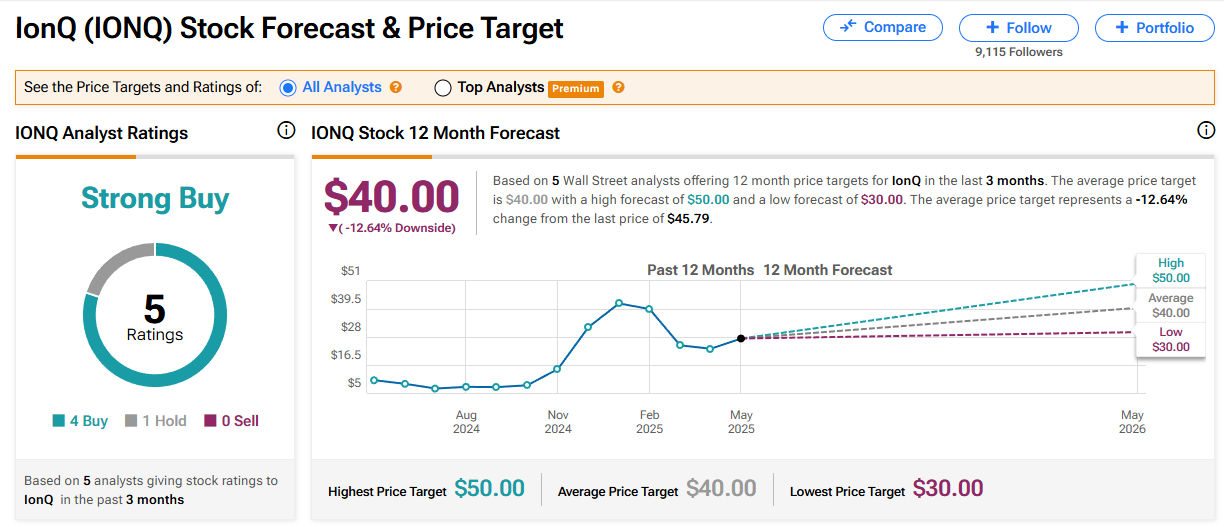
Core Viewpoint - The article discusses the potential of IonQ, Inc. (IONQ) in the quantum computing market, comparing it to NVIDIA Corporation (NVDA) and highlighting its growth prospects and investment potential. Group 1: Market Potential - The quantum computing market is projected to reach $2 trillion by 2035, indicating significant growth opportunities for IonQ [1] - IonQ's quantum computing system supports major companies like Microsoft and Amazon, enhancing its relevance in the market [1] Group 2: Company Performance - IonQ achieved revenues of $43.1 million last year, reflecting a 95% increase from the previous year, surpassing its earlier guidance [2] - The company has a strong cash balance, with over $700 million available for research and development after raising approximately $360 million from an equity offering [5] Group 3: Technological Advancements - IonQ's linear ion chains can exceed 100 qubits, resulting in fewer errors compared to competitors, showcasing its technological edge [2] - Recent developments indicate that IonQ's quantum computing is 12% faster than classical computing, suggesting imminent commercial viability [4] Group 4: Analyst Sentiment - Brokers have increased IonQ's average short-term price target by 70% to $42.17, with the highest target set at $54, representing a potential upside of 117.7% [6] - IonQ currently holds a Zacks Rank 2 (Buy), indicating positive analyst sentiment [9] Group 5: Challenges and Comparisons - Despite its potential, IonQ is not yet comparable to NVIDIA, which benefits from strong financials and high demand for chips [8] - IonQ's high price-to-sales ratio of 119.7 suggests that the stock may be overvalued, and the company is projected to incur a net loss of $331.6 million in 2024, which could hinder long-term growth [8]