
Dior

Search documents
农夫山泉进军冰茶;Lululemon下调全年业绩指引;钟薛高子公司被申请破产 | 品牌周报
36氪未来消费· 2025-06-08 12:09
Group 1: Nongfu Spring's New Product Launch - Nongfu Spring has launched a new carbonated tea drink named "Ice Tea," featuring 100% real tea extract, sufficient carbonation, and lemon flavor, priced at 19.9 yuan for 4 bottles [2] - In the past year, Nongfu Spring's tea beverage sales increased by 4 billion yuan, primarily driven by the brand Dongfang Shuyue, which saw a year-on-year growth rate exceeding 100% in 2023 [2][3] - The competition in the sugar-free tea segment is intense, with 489 new products launched by June 2024, while sugary tea still holds nearly 70% of the ready-to-drink tea market [3] Group 2: Lululemon's Financial Performance - Lululemon reported a 7% year-on-year increase in global net revenue to 2.4 billion USD for Q1 of FY2025, with international business revenue growing by 19% [4] - The company has lowered its full-year performance guidance due to increased operational costs from new tariffs, expecting a decline in gross margin by approximately 110 basis points [5][6] - Lululemon anticipates FY2025 net revenue between 11.15 billion and 11.3 billion USD, with diluted earnings per share revised to between 14.58 and 14.78 USD [6] Group 3: Zhang Xue Gao's Bankruptcy Filing - Zhang Xue Gao's subsidiary, Zhongmao (Shanghai) Food Technology Co., Ltd., is facing bankruptcy examination due to inability to repay debts [7][8] - The company, once valued at nearly 4 billion yuan, has encountered financial difficulties since 2022, leading to cash flow issues and reports of unpaid salaries [8] Group 4: Bawang Tea Ji's First Financial Report Post-IPO - Bawang Tea Ji reported a total GMV of 8.23 billion yuan for Q1 2025, with a net income of 3.39 billion yuan, reflecting a 35.4% year-on-year increase [11] - The company's net profit margin decreased from 23.7% in Q1 2024 to 20.0% in Q1 2025, attributed to ongoing brand building and marketing investments [12] Group 5: Market Trends and Collaborations - Gu Ming launched a new low-fat coffee product, "Good Light Coconut Latte," aiming to establish a second product line in coffee, with a price point of 18 yuan [15] - Samyang collaborated with Yanjin Puzhi to launch a new product, expanding its spicy flavor ecosystem into the snack sector, targeting young consumers [16] Group 6: Other Industry Updates - White Elephant announced a rebranding of its "Duoban" product line, changing names and ceasing production of the original packaging [18] - The price of Feitian Moutai has dropped below 2000 yuan per bottle in some regions, with retail prices around 2100 yuan [20] - Procter & Gamble plans to cut 7000 white-collar jobs, representing a 15% reduction in non-manufacturing positions, as part of a restructuring plan [21] - Pang Donglai Group reported sales exceeding 10.176 billion yuan as of June 2, 2025, with supermarket sales being the highest at approximately 5.566 billion yuan [22]

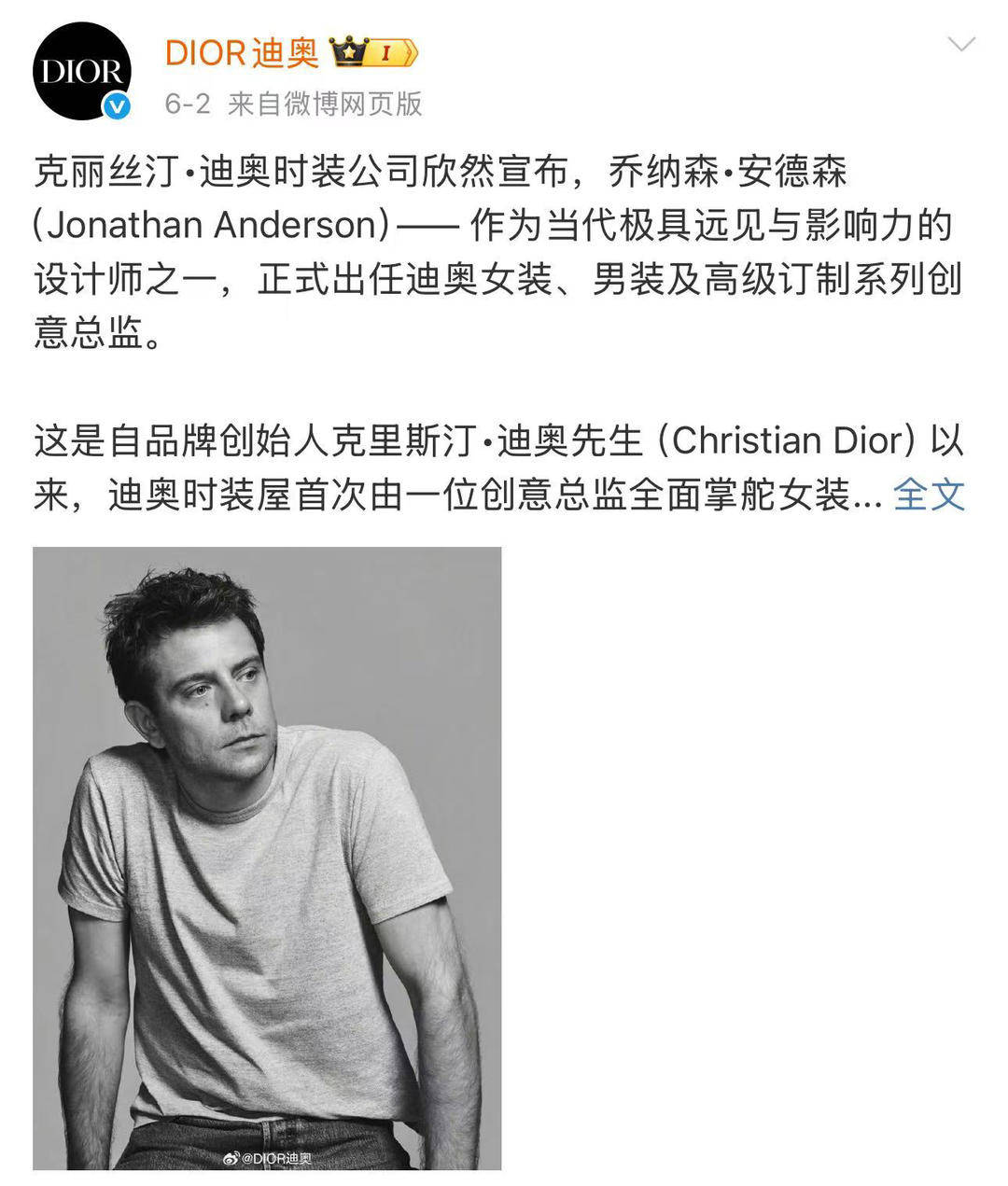
Chanel、Dior相继换帅,是行业面对新消费时代的一次集体转向?
Sou Hu Cai Jing· 2025-06-05 06:50
Core Insights - The appointment of Jonathan Anderson as the creative director for both women's and men's collections at Dior marks a significant shift in the luxury fashion industry, reflecting deep changes within the sector [1][3] - The challenges faced by modern creative directors extend beyond design, requiring them to effectively narrate brand stories and engage in cultural projects [3][5] - The luxury industry is experiencing "bestseller anxiety," with brands like Dior and Chanel needing to innovate to maintain relevance among younger consumers [8][12] Company-Specific Developments - Jonathan Anderson's role at Dior is unprecedented since the brand's founder, Christian Dior, and he is tasked with overseeing 18 collections annually, surpassing the workload of previous industry icons [1][3] - Matthieu Blazy, the new creative director at Chanel, is expected to leverage his experience from Bottega Veneta to create impactful designs that resonate with contemporary audiences [1][5] - The departure of Virginie Viard from Chanel has been interpreted as a response to both aesthetic fatigue and economic challenges, prompting the brand to quickly assemble a new team around Blazy [12] Industry Trends - The luxury sector is witnessing a strategic divergence between cultural integration and technological innovation, as brands seek to balance heritage with modern consumer engagement [14] - Successful brands in the future are likely to find equilibrium between maintaining exclusivity and generating fresh, engaging content [14] - The emphasis on creating social conversations around products is becoming increasingly critical, as fleeting attention spans challenge traditional marketing approaches [14]
家居奢品白皮书
天猫奢品×NewLife· 2025-05-28 00:50
Investment Rating - The report positions the Home & Lifestyle Luxury sector in China as a transformative opportunity, indicating a positive investment outlook for this category. Core Insights - The evolution of luxury is shifting from status symbols to enhancing daily life, with consumers prioritizing comfort, aesthetics, and emotional connection over traditional craftsmanship and heritage [11][12][34]. - The pandemic has accelerated the desire for homes to become sanctuaries, leading to increased investment in home design and luxury furnishings [31][34]. - China's digital ecosystem provides a unique advantage for luxury brands to build awareness and reach consumers effectively, with over 50% of luxury transactions occurring online [76][77]. Summary by Sections Home Luxury: The Next Wave - The report highlights the transition of luxury consumption in China from logo-driven items to home and lifestyle luxury, reflecting a significant change in consumer values [19][27]. - Home Luxury is identified as the next natural evolution of luxury, driven by a more mature consumer base seeking emotional resonance and personal expression [11][35]. China's Home Luxury Landscape & Consumer Insights - The home décor market in China is projected to reach approximately US$20.23 billion in 2023, with a CAGR of 9.26% from 2023 to 2027 [32]. - Affluent consumers are increasingly prioritizing home aesthetics and quality of living, with over 70% indicating a shift from public display to private comfort [33]. - Categories such as luxury home fragrances and designer furniture are experiencing double-digit growth, confirming that Home Luxury is a fundamental change in wealth expression [34]. Emerging Consumer Trends - The report identifies five emerging consumer segments driving the luxury market: Elegant Homemakers, Urban Chic Aestheticians, Affluent Gen Z, Niche Collectors, and Luxury Enthusiasts [149][155]. - Younger consumers, particularly those aged 25-29, are investing in their first luxury home pieces, while high-net-worth families view home décor as part of asset allocation [92][96]. - The demand for premium home products is rising, with consumers willing to pay more for comfort and style, indicating a shift towards emotional and experiential luxury [102][142]. Moving Forward: Challenges & Solutions - The report acknowledges challenges such as logistics and perception shifts but emphasizes that aligning with consumer desires can overcome these barriers [13]. - It encourages brands to co-create and experiment within the Home Luxury space, inviting collaboration to drive the sector forward [14][66]. Conclusion - Home Luxury is positioned as a lasting trend, with significant growth potential as consumer preferences continue to evolve towards lifestyle-oriented luxury [5][12].
520,男性开始给自己花钱
3 6 Ke· 2025-05-20 12:01
Group 1: Market Trends - The traditional couple economy is cooling down, with a notable shift towards male consumers focusing on self-investment and personal interests [1][3][14] - Data shows that 30% of men plan to not give gifts during the 2024 "520" period, indicating a significant change in spending behavior [1] - The sales of the domestic game "Black Myth: Wukong" reached 9 billion yuan, primarily driven by male players, reflecting the rise of "self-consumption" among men [1] Group 2: Changing Consumer Behavior - The willingness to engage in romantic relationships among young people is declining, with both genders scoring around 5 out of 10 on their desire for romance [2][3] - The sales of DR diamond rings, once a symbol of true love, have seen a significant decline, with a 36.19% drop in revenue year-on-year [2] - The cinema attendance for romantic films is decreasing, replaced by a demand for family and solo viewing experiences [3] Group 3: Male Consumption Dynamics - Male consumers are increasingly spending on personal grooming and beauty products, with sales in categories like skincare and cosmetics for men reaching 1.86 billion yuan, a 65% increase year-on-year [5] - The male medical beauty market is also growing, with 45% of surveyed men planning to increase their spending on medical aesthetics in 2024 [7] - The average spending of male consumers online has surpassed that of females, reaching 10,025 yuan, with the male consumption market expected to exceed 6 trillion yuan by 2025, growing at a compound annual growth rate of 9.8% [4] Group 4: Marketing and Brand Strategy - Brands need to adapt to the shift from relationship-based consumption to individual needs, focusing on "solitary consumption" [9][10] - Marketing strategies are evolving from emphasizing product functionality to highlighting emotional value and identity recognition [12][13] - The rise of interest-based consumption is evident, with products becoming symbols of social identity, such as the "middle-class three-piece set" [8][12] Group 5: Future Outlook - The transformation in male consumer behavior is indicative of a broader market restructuring, where consumption is increasingly tied to personal meaning rather than mere transactions [14] - The emergence of new markets driven by single economy, technological empowerment, and evolving values is expected to create significant opportunities for brands [14]
步入“精耕慢作”的中国香水市场
2 1 Shi Ji Jing Ji Bao Dao· 2025-05-16 17:04
Group 1 - LVMH's Maison Francis Kurkdjian and L'Oréal's Aesop have closed their first stores in China, highlighting challenges faced by some high-end fragrance brands in the market [1][2] - The closure of these flagship stores, which were established with high expectations in 2022, raises questions about the brands' adaptability to the Chinese market and potential missteps in their commercial strategies [2][3] - Other high-end brands like Estée Lauder's Frederic Malle and Byredo are thriving in China by employing diversified channel strategies and building emotional connections with consumers [2][7] Group 2 - Maison Francis Kurkdjian, founded in 2009 by renowned perfumer Francis Kurkdjian, initially gained traction but struggled to maintain its presence in China due to high pricing and limited marketing engagement [3][4] - The brand's flagship product, "Baccarat Rouge 540," priced at nearly 2000 yuan for 35ml, may deter price-sensitive consumers who opt for cheaper alternatives [4][5] - Experts suggest that the brand needs to redefine its strategy in China to foster deeper emotional ties and enhance consumer loyalty [5][8] Group 3 - The Chinese fragrance market is experiencing significant growth, with a market size of 20.7 billion yuan in 2023, reflecting a 22.5% year-on-year increase, and is projected to reach 51.5 billion yuan by 2029 [7][8] - International brands like Chanel and Dior dominate the high-end market, while local brands such as To Summer and Documents are carving out niches through cultural relevance and innovative marketing [7][8] - The success of fragrance brands now hinges on their ability to create unique consumer experiences and emotional connections rather than merely relying on product quality [9]
通关更快更便利!上海打造首发消费品进口极速通道
Guo Ji Jin Rong Bao· 2025-05-16 14:58
Core Viewpoint - Shanghai has launched a pilot program for the facilitation of inspection for imported consumer goods, introducing an innovative model of "whitelist + differentiated qualification assessment" to enhance efficiency for first-time launches of imported products [1][2][3] Group 1: Policy Innovations - The new facilitation measures aim to address the pain points in customs clearance by expanding the scope of applicable products to include all categories such as clothing, toys, tableware, and electronics [3] - The measures include a flexible regulatory mechanism for small batch imports and a collaborative service model involving multiple departments to ensure quality and safety while facilitating rapid clearance [3][6] - The "Shanghai 3.0" support policy includes three new initiatives and seven extended measures, focusing on simplifying customs processes for newly launched imported products [2][3] Group 2: Economic Impact - In the first four months of this year, Shanghai has seen the establishment of 301 new stores, including 7 global and Asian first stores, indicating its growing status as a preferred location for brand launches [2][5] - The new policies are expected to improve average customs clearance efficiency by over 80%, significantly reducing the time required for products with long testing cycles [6][8] - The measures have attracted 14 multinational brands to apply for inclusion in the whitelist, covering over 20 consumer product brands and more than 20,000 global or regional first launches [6][8] Group 3: Brand Participation - Notable brands such as LV, Dior, and Prada have applied to become whitelist enterprises, reflecting the positive reception of the new facilitation policies [7] - The introduction of the new measures has led to the successful importation of products by companies like Jellycat, which reported efficient customs processes and significant time savings [8] - The policies are designed to enhance Shanghai's reputation as a global launch hub, supporting the city's goal of becoming a leading international consumption center [8]
为什么说当下的奢侈品下滑,不是历史的终结,而是反弹的前奏?
3 6 Ke· 2025-05-16 02:13
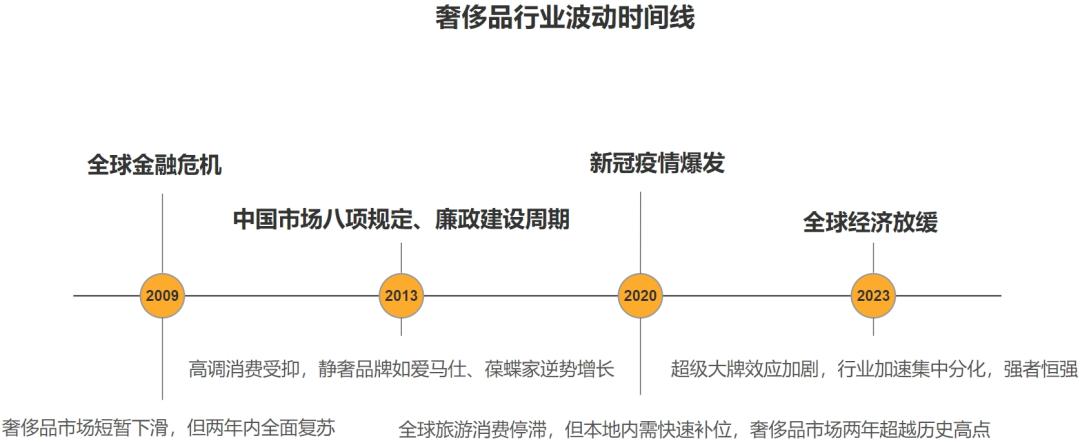
Core Viewpoint - The luxury goods industry is experiencing a temporary cooling period, but this is seen as a market adjustment rather than a long-term trend. The demand for luxury goods is deeply rooted in human nature and transcends economic conditions [1][2][15]. Group 1: Market Resilience - Historical data shows that the luxury goods market has consistently demonstrated strong recovery after crises, such as the 2009 financial crisis and the 2020 pandemic, with a compound annual growth rate of over 5% since 2000 [3][15]. - The luxury goods sector is characterized by a unique ability to rebound, as evidenced by brands like Hermès and Bottega Veneta, which have thrived even during downturns by maintaining exclusivity and quality [3][12][13]. Group 2: Consumer Demographics - The primary consumers of luxury goods include ultra-high-net-worth individuals, stable high-net-worth individuals, and culturally aware middle-class consumers, who are less affected by economic downturns [6][8]. - Emerging markets, particularly in Asia, are seeing a rise in affluent consumers, while the "Henry" group in the U.S. represents a significant target demographic for luxury brands [8][21]. Group 3: Brand Dynamics - Luxury brands possess a strong competitive advantage through their historical narratives and cultural significance, which create a protective moat against market fluctuations [9][12]. - The luxury sector benefits from absolute pricing power and supply control, allowing brands to maintain exclusivity and resist deflationary pressures [12][13]. Group 4: Current Market Trends - The current downturn in the luxury market is viewed as a necessary cleansing process, eliminating unsustainable growth patterns and allowing for a focus on high-quality brands [15][16]. - The luxury industry is entering an era dominated by "super brands," which are outperforming the market average due to their scale, brand equity, and emotional connection with consumers [20]. Group 5: Future Opportunities - New growth drivers are emerging in the luxury market, particularly in regions like China, Southeast Asia, and the Middle East, as well as among younger generations who prioritize sustainability and personalization [21]. - The luxury goods sector is adapting its value system and growth logic to align with evolving consumer demands, indicating a robust long-term outlook despite short-term fluctuations [21].

新的奢华浪潮-家居与生活方式-从宣言到生活体验重新定义奢华(英文)
Sou Hu Cai Jing· 2025-05-15 22:34
Core Insights - The luxury market in China is undergoing a structural transformation, with home and lifestyle becoming key growth areas as consumers shift their definition of luxury from external status symbols to internal living experiences [1][4]. Group 1: Evolution of Consumer Mindset - The luxury consumption in China has evolved through four key phases over the past 30 years, transitioning from status-driven consumption (1990-2005) to lifestyle-oriented luxury (2020-present) [2][4]. - The current phase emphasizes home as a canvas for identity, with consumers investing in home design and experiential luxury [4][24]. Group 2: Market Growth Drivers - Government policies are stimulating the housing market, leading to a significant increase in furniture retail sales, which grew by 6.8% in the first half of the year [5]. - The digital ecosystem in China supports luxury brands, with over 50% online penetration and a 20% growth in online sales of luxury home goods in 2023 [5]. - The number of high-net-worth households has reached 2.06 million, with younger consumers in lower-tier cities showing a strong demand for luxury home products [5]. Group 3: Product Innovation and Consumer Segmentation - High-growth categories include lighting, which saw over 300% growth in 2023, and luxury tableware and fragrances, which grew by 13% and 5% respectively [6]. - Core consumer segments include luxury enthusiasts aged 40-60, urban women aged 30-45, and Gen Z consumers aged 18-29, each with distinct preferences for home luxury [7][9]. Group 4: Future Trends - The competition in the home luxury market is increasingly centered around emotional value, with consumers seeking homes that serve as sanctuaries [10]. - Brands are encouraged to innovate through modular design, smart technology, and cultural storytelling to create a "growing lifestyle ecosystem" [10][24]. - The luxury home market is projected to grow significantly, with the home décor market expected to reach $20.23 billion by 2023, growing at a CAGR of 9.26% from 2023 to 2027 [45].

消费参考丨腾讯音乐变现为重:付费用户增长,整体月活下滑
2 1 Shi Ji Jing Ji Bao Dao· 2025-05-15 01:33
Group 1 - Tencent Music reported a revenue of 7.356 billion yuan in Q1, representing a year-on-year growth of 8.7% and an adjusted net profit of 2.226 billion yuan, up 22.8% year-on-year [1] - The growth in revenue is primarily driven by the rapid expansion of the paid membership business, with online music revenue increasing by 15.9% to 5.8 billion yuan and subscription revenue rising by 16.6% to 4.22 billion yuan [1] - The number of online paid users grew by 8.3% to 122.9 million, with the average revenue per paid user (ARPPU) increasing by 0.3 yuan to 11.4 yuan [1] Group 2 - Despite the revenue growth, Tencent Music's monthly active users for online music services declined by 4.0% year-on-year to 555 million [2] - The focus on paid users has become a common strategy among Tencent's enterprises, as seen with the decline in monthly active users for Tencent's reading platform [2] Group 3 - Tencent Music's social entertainment revenue decreased by 11.9% year-on-year to 1.55 billion yuan, as the company shifts its strategic focus to core music business [3] - The company will no longer separately disclose operational metrics for the social entertainment segment [3] Group 4 - To sustain growth, Tencent Music must continue to promote music paid users, a strategy also mirrored by NetEase Cloud Music [4] - The overall music market is moving towards a stable yet unexciting monetization model, making free music access increasingly difficult [5] Group 5 - On May 14, Tencent Music's stock closed at 61.5 HKD per share, with a gain of 12.84% [6]
天猫奢品× New Life家居奢品白皮书
Sou Hu Cai Jing· 2025-05-13 10:16
Core Insights - The report highlights the significant potential and vitality of the luxury home goods market in China, driven by evolving consumer preferences and market dynamics [1][6][41] Industry Trends - The Chinese luxury market has undergone multiple transformations, with home luxury emerging as a new growth direction, particularly post-pandemic, as consumers prioritize comfort and aesthetics in their living spaces [1][16][35] - The home décor market in China is projected to reach approximately $20.23 billion in 2023, with a compound annual growth rate (CAGR) of 9.26% from 2023 to 2027, while the luxury furniture market is expected to grow at a CAGR of 4.8% from 2024 to 2032 [37][38] Market Opportunities - China dominates global luxury consumption, with a growing number of high-net-worth families providing a solid consumer base for luxury home goods. Government policies aimed at stimulating housing demand further support market growth [1][38] - The digital ecosystem in China offers luxury brands unique advantages in building awareness and reaching consumers, facilitating innovative marketing and sales channels [6][7] Consumer Insights - Consumer demand for luxury home goods is diversifying, with younger consumers increasingly seeking personalized and unique designs. There is a shift from large-scale renovations to frequent "micro-upgrades" focused on comfort and emotional value [2][16] - Emerging categories such as lighting, tableware, home fragrances, and residential furniture are gaining popularity, with double-digit growth observed in luxury home categories [2][39] Brand Strategies - Brands are encouraged to develop differentiated strategies targeting various consumer segments, leveraging digital marketing to reach specific audiences. Emphasis on product design innovation is crucial for maintaining a competitive edge in the market [2][19]