
平安银行

Search documents
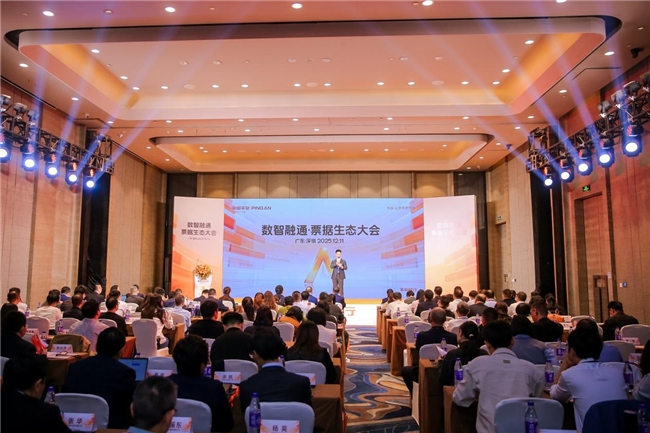
平安银行举办“数智融通·票据生态大会”,携手各方共绘票据生态数智化新蓝图
Cai Fu Zai Xian· 2025-12-19 06:10
Core Insights - The conference hosted by Ping An Bank focused on leveraging technology to empower enterprises for high-quality development through cost reduction, quality improvement, and efficiency enhancement [1][4][8] Group 1: Digital Transformation and Economic Trends - Digital economy is identified as a core engine for social development, with digital transformation becoming a necessity for enterprises [3] - Experts provided a forward-looking analysis of the global macroeconomic situation, highlighting a new landscape of opportunities and risks for 2026 [4] Group 2: Empowering Enterprises through Smart Services - Ping An Bank is committed to empowering enterprises' digital transformation by focusing on three main areas: smart treasury, smart supply chain, and smart management [5] - The bank's digital asset management solutions aim to enhance financial control and efficiency for enterprises [5] Group 3: Practical Experiences and Innovations - Several benchmark enterprises shared their experiences in building a bill ecosystem and digital practices, showcasing successful collaborations with Ping An Bank [7] - The integration of advanced technologies such as AI, big data, and blockchain is emphasized as a means to enhance enterprise treasury management [8] Group 4: Future of Bill Business and Financial Management - The future of bill business and enterprise financial management is expected to evolve towards ecological, digital, and intelligent integration [8] - Ping An Bank aims to create an open, collaborative, and win-win new ecosystem for bills, supporting enterprise transformation and enhancing industry chain efficiency [8]


利率1.65%-2.07%!银行科创债破3000亿元,城商行成新主力
Xin Lang Cai Jing· 2025-12-19 05:29
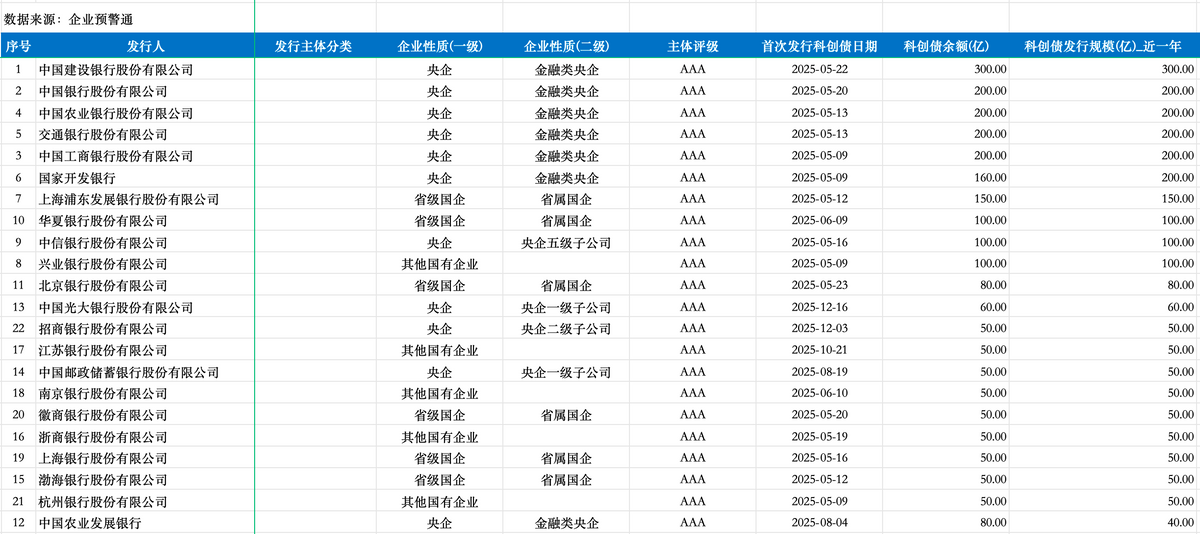
Core Viewpoint - The issuance of technology innovation bonds (科创债) by banks has significantly increased, with a total issuance scale reaching 301.4 billion yuan as of December 18, indicating a strong market response to the regulatory support initiated in May 2023 [3][14]. Issuance Scale - A total of 67 banks have issued 75 technology innovation bonds, with the largest share coming from state-owned banks, which account for 38.16% of the total issuance [3][15]. - The six major state-owned banks have collectively issued bonds worth 115 billion yuan, while city commercial banks and rural commercial banks have also become significant players, with issuance scales of 74.9 billion yuan and 15 billion yuan respectively [4][17]. Interest Rates - The interest rates for technology innovation bonds vary, with state-owned banks offering rates between 1.65% and 1.81%, while city and rural commercial banks have higher rates ranging from 1.67% to 2.07% [7][21]. - Notably, some city and rural commercial banks have rates exceeding 1.8%, indicating a competitive pricing environment [3][18]. Maturity Periods - The majority of the issued bonds have a maturity period concentrated around 5 years, which accounts for over 70% of the total, followed by 3-year bonds at over 20% [11][22]. - This maturity structure is designed to meet the medium to long-term funding needs of technology enterprises for research and development, as well as for project implementation [22]. Funding Allocation - The funds raised through these bonds are primarily directed towards technology innovation sectors, including the issuance of loans for technology projects and investments in innovative enterprises [6][17].
浙江金融监管局核准颜恒平安银行温州分行行长任职资格
Jin Tou Wang· 2025-12-19 03:37
二、平安银行应要求上述核准任职资格人员严格遵守金融监管总局有关监管规定,自平安银行政许可决 定作出之日起3个月内到任,并按要求及时报告到任情况。未在上述规定期限内到任的,本批复文件失 效,浙江金融监管局将办理行政许可注销手续。 三、平安银行应督促上述核准任职资格人员持续学习和掌握经济金融相关法律法规,牢固树立风险合规 意识,熟悉任职岗位职责,忠实勤勉履职。 2025年12月17日,浙江金融监管局发布批复称,《平安银行股份有限公司关于颜恒任职资格核准的请 示》(平银发〔2025〕317号)及相关说明解释材料收悉。经审核,现批复如下: 一、核准颜恒平安银行温州分行行长的任职资格。 ...
中国银行 2026 展望:重新评估房地产对银行的影响-China Banks_ 2026 Outlook_ Re-evaluating property impact on banks
2025-12-19 03:13
Summary of Key Points from the Conference Call on China Banks Industry Overview - The focus is on the **Chinese banking sector**, particularly its exposure to the **property market** and the implications of projected property price declines on bank earnings and capital adequacy [1][2][3]. Core Insights and Arguments 1. **Property Price Forecast**: - The **GS China Property team** has revised its property price forecast, predicting a **15% decline** over the next two years, with a stress scenario of a **30% drop** [1][7][16]. - This decline is expected to impact mortgage and property non-performing loans (NPLs), with total mortgage and property NPLs estimated at **Rmb 2.3 trillion** under the base case and **Rmb 4.0 trillion** under the stress test [7][12]. 2. **Mortgage Exposure and Risk Profile**: - The total mortgage exposure in the banking system is **16%** of the loan book, with a healthy risk profile due to well-collateralized loans [1]. - The mortgage NPL ratio is projected to rise to **2.4%** by 2027, with covered banks at **2.1%** and non-covered banks at **3.4%** [8][12]. 3. **Earnings and Capital Risks**: - Earnings risks are anticipated, with a potential **6-22% haircut** on covered bank earnings through 2027, but banks are expected to remain profitable [2]. - In a severe scenario, risks of dividend cuts or capital calls may arise, particularly for smaller banks [2][43]. 4. **Dividend Outlook**: - Dividend yields are projected at **4-5%**, providing valuation support, with payouts expected to remain at **20-35%** for 2026 [3]. - Larger banks like **BOC** and **CCB** are favored for their robust balance sheets and total return potential [3]. 5. **Capital Buffers and Provisions**: - The banking sector has raised **Rmb 880 billion** in capital over the past three years, leading to a comfortable average Texas ratio of **18%** for covered banks [2][43]. - Under the base case, banks can absorb potential losses without creating a capital shortfall, but under the stress test, a cumulative capital shortfall of **Rmb 241 billion** is projected by 2027 [46][66]. 6. **Risk Management Strategies**: - Banks are advised to optimize balance sheets, reduce risk-weighted asset (RWA) density, and seek external capital replenishment to maintain stability [43][72]. - The full recourse nature of mortgages in China is expected to mitigate actual loss rates compared to potential NPL ratios [8][24]. Additional Important Insights - The decline in high-risk property credit exposures, such as property bonds and shadow banking, has improved the overall risk profile of banks [26]. - The number of city and rural banks in China has decreased, indicating a potential reduction in asset quality tail risks for small and medium-sized banks [78]. - The banking system's ability to maintain adequate NPL coverage and CET-1 ratios is crucial for navigating the anticipated property downturn [46][51]. This summary encapsulates the critical aspects of the conference call regarding the Chinese banking sector's outlook amidst property market challenges, highlighting both risks and strategies for resilience.


银行科创债破3000亿元,六大国有行占比超 38%,部分城农商行利率破2%
Tai Mei Ti A P P· 2025-12-19 01:13
Core Viewpoint - The issuance of technology innovation bonds by banks has significantly increased since the announcement by the central bank and the China Securities Regulatory Commission on May 7, with a total issuance scale reaching 301.4 billion yuan by December 18, 2023 [1][2]. Issuance Scale - A total of 67 banks have issued 75 technology innovation bonds, with state-owned banks being the primary issuers, accounting for 38.16% of the total issuance [1][3]. - The six major state-owned banks have collectively issued bonds worth 115 billion yuan, while city commercial banks and rural commercial banks have issued 74.9 billion yuan and 15 billion yuan, respectively [1][5]. - The issuance period is mainly concentrated in 5-year bonds, followed by 3-year bonds, with a small number of 6-month and 7-year bonds [1][9]. Interest Rates - The interest rates for the issued bonds range from 1.67% to 2.07%, with state-owned banks having slightly lower rates between 1.65% and 1.81% [1][7]. - City commercial banks and rural commercial banks have higher rates, with many exceeding 1.8% [1][9]. - The policy banks have rates of 1.4% for the National Development Bank and 1.65% for the Agricultural Development Bank [1][7]. Fund Allocation - The funds raised from technology innovation bonds are directed towards technology innovation sectors, including issuing loans for technology and investing in technology innovation enterprises [6].

11月份证券类App月活环比增长2.06%
Zheng Quan Ri Bao Zhi Sheng· 2025-12-18 15:38
Core Insights - The securities industry is experiencing a significant increase in monthly active users (MAU) for trading apps, reaching 172 million in November, a month-on-month growth of 2.06% [1] - Brokerages are leveraging AI tools to enhance service models and improve user experience amid a competitive landscape for customer acquisition [4][5] Group 1: Monthly Active Users and Account Growth - In November, the total number of new accounts opened in the market was 2.5506 million, reflecting a month-on-month increase of 3.38% [2] - Eleven brokerage apps had monthly active users exceeding 6 million, with Huatai Securities and Guotai Junan leading at 11.8149 million and 10.1848 million respectively, both showing month-on-month growth of over 2% [2] - Smaller brokerages like Guojin Securities and Chengtong Securities achieved significant month-on-month growth rates of 9.58% and 4.61% respectively, despite having lower user volumes [3] Group 2: Competitive Landscape and AI Integration - The competition among brokerages is intensifying, with a focus on mobile app functionality and service innovation, particularly through the integration of AI [4] - AI has become a central element in app updates, with features like "AI Dashboard" and AI-driven investment assistants being introduced to enhance user engagement and provide real-time market insights [4][5] - The application of intelligent technology is expected to improve response efficiency and personalized service levels, aiding brokerages in transitioning to comprehensive wealth management service providers [5][6] Group 3: Future Outlook and Strategic Directions - The ongoing evolution of financial technology positions intelligent solutions as a standard in the securities industry, with a focus on enhancing professional service levels and creating value for investors [6] - Large institutions are expected to leverage their resources to build comprehensive intelligent wealth management platforms, while smaller brokerages can focus on niche markets to establish competitive advantages [6]





海南自贸港全岛正式封关,多类金融机构抢滩落子
Feng Huang Wang· 2025-12-18 13:47
Core Insights - The establishment of the Hainan Free Trade Port is expected to significantly enhance cross-border payment and settlement processes, reducing fees by up to 50% for traders and cross-border e-commerce businesses [1][3] - The EF account system has been implemented, facilitating cross-border transactions and is projected to see a substantial increase in foreign loans, with a year-on-year growth of 248.53% by October 2025 [1][6] - Financial institutions are rapidly entering Hainan, with banks and non-bank financial entities expanding their operations in anticipation of the benefits from the free trade port [1][5][7] Financial Infrastructure Development - The EF account and cross-border fund concentration center are transforming the perception of Hainan as a financial hub for trade [4] - Hainan's financial landscape allows for dual licensing of financial enterprises, enhancing flexibility in cross-border payments and small currency settlements [3] - The integration of international payment solutions and digital applications is expected to improve cross-border consumption and personnel exchanges in Hainan [4] Banking Sector Dynamics - Major banks are intensifying their presence in Hainan, with state-owned and joint-stock banks enhancing their resources and institutional frameworks [5] - The establishment of cross-border financial centers and strategic partnerships with local financial institutions indicates a robust commitment to developing Hainan's financial ecosystem [5] - The anticipated increase in cross-border fund flow efficiency and innovative account systems may create new business opportunities for banks [5] Non-Bank Financial Institutions - Non-bank financial institutions are emerging as a significant force in Hainan's financial system, with leasing companies entering the market to explore new business models [7] - The establishment of a gold trading infrastructure in Hainan marks a significant development, enabling a closed-loop for gold-related financial services [7] - Continuous entry of insurance, reinsurance, and specialized financial service providers is expected to further diversify Hainan's financial offerings [7]
ETF日报|“春季躁动”值得期待吗?商业航天再爆发,国防军工ETF盘中涨逾2.1%!创业板人工智能ETF获2亿份净申购
Sou Hu Cai Jing· 2025-12-18 11:57
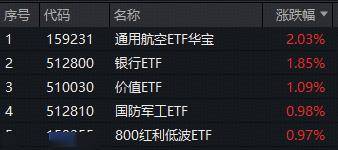
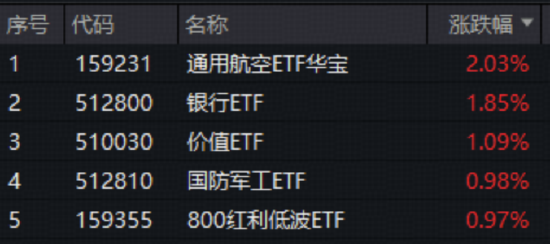
Market Overview - A-shares showed mixed performance on December 18, with the Shanghai Composite Index slightly up by 0.16%, while the Shenzhen Component and ChiNext fell by 1.29% and 2.17% respectively. The total trading volume exceeded 1.6 trillion yuan, a decrease of over 150 billion yuan compared to the previous day [1] Banking Sector - The banking sector led the market, with the largest bank ETF (512800) rising by 1.85%. Major banks such as Agricultural Bank of China and Industrial and Commercial Bank of China saw gains exceeding 2% [3][5] - The banking sector's price-to-book (PB) ratio has increased from 0.5 times at the 2022 low to 0.7 times, indicating potential for further valuation recovery [5] - Institutions are optimistic about the banking sector's performance in 2026, driven by macro policies and strategic capital inflows [6][7] Defense and Aerospace Sector - The defense and aerospace sector experienced significant inflows, with a net capital inflow of 95.6 billion yuan, leading all industries. The corresponding ETF (512810) reached a three-month high, closing up by 0.98% [9][10] - The commercial aerospace industry is expected to enter a new era, supported by national policies and technological breakthroughs, creating new growth opportunities for the defense sector [9][10] Artificial Intelligence Sector - The AI sector is seeing increased capital inflow, particularly in light of the ongoing demand for AI computing power. The leading AI ETF (159363) experienced a net subscription of 200 million units, indicating strong investor interest [11][13] - Despite a recent pullback in AI stocks, the overall trend remains positive, with institutions suggesting that the AI computing supply chain is still in a high-growth phase [13][14] Investment Recommendations - Investment strategies should focus on four key areas: growth sectors like AI, dividend assets in low-interest environments, traditional industries benefiting from supply chain restructuring, and strategic assets such as gold and rare earths [2]

“春季躁动”值得期待吗?商业航天再爆发,国防军工ETF盘中涨逾2.1%!创业板人工智能ETF获2亿份净申购
Xin Lang Cai Jing· 2025-12-18 11:44
Market Overview - A-shares showed mixed performance on December 18, with the Shanghai Composite Index slightly up by 0.16%, while the Shenzhen Component and ChiNext Index fell by 1.29% and 2.17% respectively. The total trading volume exceeded 1.6 trillion yuan, a decrease of over 150 billion yuan compared to the previous day [1][18]. Banking Sector - The banking sector led the market with significant gains, as 36 out of 42 listed banks saw their stocks rise by over 1%. Major banks like Shanghai Bank and Chongqing Rural Commercial Bank surged over 3%, while the largest bank ETF (512800) increased by 1.85%, recovering three key moving averages [4][21]. - The banking sector's price-to-book (PB) ratio has improved from 0.5 to 0.7 since the low in 2022, indicating potential for further valuation recovery. Despite this, most banks remain below their net asset value [6][23]. - Institutions are optimistic about the banking sector's performance in 2026, driven by favorable macro policies and increased strategic investments from insurance and asset management companies [7][24][25]. Defense and Aerospace Sector - The defense and aerospace sector experienced a significant boost, with the defense ETF (512810) reaching a three-month high, driven by strong inflows of 95.6 billion yuan, the highest among all sectors [10][28]. - Key stocks in the commercial aerospace segment, such as Aopu Optoelectronics and Platinum Power, achieved historical highs, reflecting strong market sentiment and institutional support [26][30]. - Analysts suggest that the upcoming "14th Five-Year Plan" will provide a solid foundation for the defense sector, with expectations of increased demand and investment opportunities [30]. Artificial Intelligence Sector - The AI sector is seeing increased capital inflow, particularly in light of the ongoing demand for AI computing power. The leading AI ETF (159363) experienced a net subscription of 200 million yuan, indicating strong investor interest [1][31]. - Despite a recent pullback in AI stocks, the overall sentiment remains positive, with institutions highlighting the ongoing supply-demand imbalance in AI computing resources [14][35]. - The AI industry is expected to continue its growth trajectory, with significant investments anticipated in the coming years, particularly in light of advancements in AI capabilities and applications [35].
银行信用卡调整进入深水区!停发潮蔓延,渠道收缩与业绩承压并行
券商中国· 2025-12-18 11:19
Core Viewpoint - The article discusses the recent trend of banks, particularly in Zhejiang, ceasing the issuance of co-branded credit cards, indicating a shift in the credit card business from expansion to cost reduction and structural optimization [2][3][4]. Group 1: Recent Developments - Zhejiang Rural Commercial Bank announced the discontinuation of the "Harvest JD Co-branded Card" across multiple rural banks [1][3]. - A wave of credit card discontinuations has been observed, with various banks, including state-owned and joint-stock banks, halting the issuance of several co-branded credit cards [4][5]. - The trend of ceasing co-branded cards has been ongoing, with major banks like Agricultural Bank and Ping An Bank previously stopping numerous themed cards [4][5]. Group 2: Market Dynamics - The adjustments in credit card offerings are driven by economic slowdown and weak consumer expectations, leading to underperformance in card issuance and stagnant consumption growth [5]. - Banks are now focusing on high-value, high-loyalty consumption scenarios rather than blindly expanding their partnership networks [5]. Group 3: Channel and Product Adjustments - Banks are undergoing a "decluttering" process in both product offerings and distribution channels, with a focus on integrating online and offline services [6][8]. - Many banks are closing down offline credit card centers and merging credit card operations into retail banking departments to reduce management costs and enhance efficiency [6][7]. Group 4: Performance Metrics - The credit card industry is experiencing a decline, with the total number of credit cards in circulation dropping to 707 million, a decrease of 20 million from the previous year, marking the third consecutive year of decline [9][10]. - Over 70% of listed banks reported a reduction in credit card loan balances by mid-2025, indicating a significant contraction in the credit card business [10]. - For instance, China Merchants Bank reported a credit card transaction volume of 2.02 trillion yuan in the first half of 2025, down 8.54% year-on-year [10].
