恒瑞医药

Search documents
城数Lab. | 港股IPO狂飙,哪些城市赢了?
Mei Ri Jing Ji Xin Wen· 2026-01-18 12:44
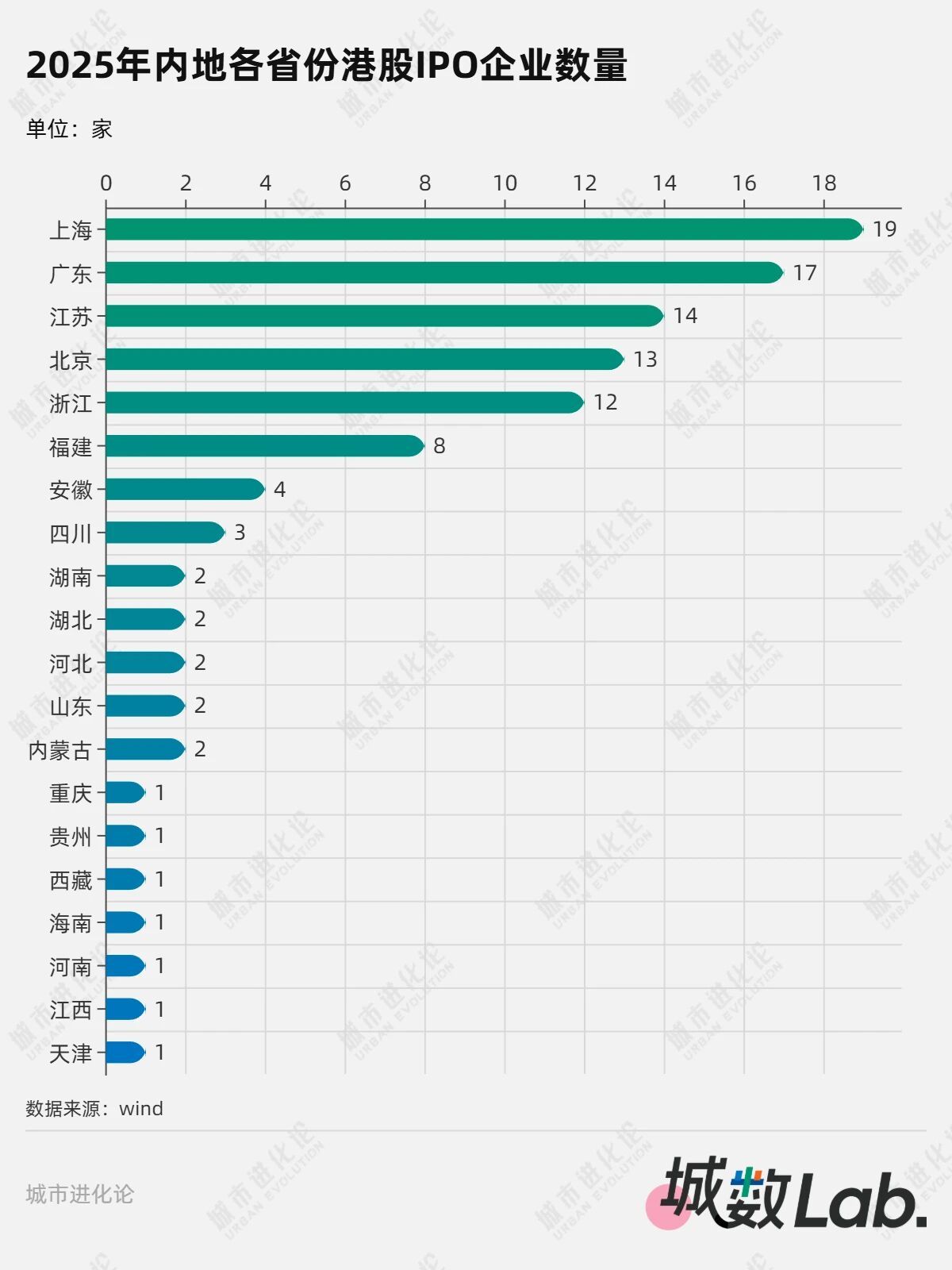
Group 1 - In 2025, the Hong Kong stock market experienced a significant IPO boom with 117 companies listed, raising a total of 285.8 billion HKD, representing a year-on-year increase of over 200%, reclaiming the top position globally in IPO fundraising [1] - The active IPO market in Hong Kong is attributed to a combination of policy support, industrial accumulation, and capital awareness, further solidifying Hong Kong's status as an international financial center and accelerating the "going out" of Chinese enterprises [1] - A total of 20 provinces in mainland China had companies that went public in Hong Kong, with Shanghai leading at 19 listings, followed by Guangdong with 17, and other provinces contributing significantly to the overall IPO count [1] Group 2 - The "Matthew Effect" is increasingly evident, with the top five provinces being economically advanced, while other provinces like Fujian, Anhui, and Sichuan formed a "second tier" in terms of IPO activity [2] - Major cities such as Shanghai, Beijing, and Shenzhen dominated the IPO landscape, while cities like Ningde and Lianyungang achieved high fundraising amounts despite fewer listings, showcasing the impact of industry leaders [7] - The IPO landscape in Hong Kong in 2025 highlighted a focus on "new economy" and "hard technology," with the pharmaceutical and biotechnology sector leading with 20 listings, followed by software services and other industries [12] Group 3 - The concentration of pharmaceutical and biotechnology companies is particularly notable in the Yangtze River Delta region, with a significant portion of fundraising coming from this area, indicating a strong industrial foundation [14] - Currently, there are over 300 companies waiting to be listed on the Hong Kong Stock Exchange, and the market is expected to maintain its momentum into 2026, emphasizing the importance of leveraging local industrial advantages [14]

2026年港股IPO的四大新趋势
券商中国· 2026-01-18 12:28
Core Viewpoint - The Hong Kong IPO market is experiencing a surge in new listings, particularly in the semiconductor and biopharmaceutical sectors, with expectations for continued strong performance in 2026 [1][2]. Group 1: Trends in the IPO Market - In January 2026, 12 new stocks have been listed on the Hong Kong market, including several semiconductor companies and biopharmaceutical firms, indicating a trend of concentrated listings in these sectors [1]. - The 2025 Hong Kong market saw 117 new stocks listed, raising a total of 285.99 billion HKD, surpassing the expected fundraising amount of 23.31 billion HKD, with an average oversubscription of approximately 200 million HKD per stock [1]. - A significant portion of the fundraising in 2025 was dominated by A+H shares, with eight companies alone accounting for 49.82% of the total IPO fundraising [1]. Group 2: Specific Sector Insights - The surge in semiconductor and AI-related companies is attributed to their high capital expenditures and R&D costs, necessitating financing from the capital markets [2]. - The Hong Kong IPO rules, particularly the 18C and 18A regulations, are tailored to accommodate technology and biopharmaceutical companies, with at least 31 companies aiming to list under the 18A rules and 16 under the 18C rules [2]. Group 3: Market Dynamics - The trend of A+H shares is expected to continue but with a reduced proportion compared to 2025, as the concentration of fundraising is anticipated to decrease [2]. - Some H shares are expected to return to A shares as the A-share listing process normalizes and reforms are implemented [3]. - The influx of international capital into the Hong Kong IPO market is driven by a broader search for diversification beyond US dollar assets, with over half of the cornerstone investors in 2025 being international [3].

国泰海通医药 2026年1月第三周周报:JPM 大会落幕,推荐创新药械产业链-20260118
GUOTAI HAITONG SECURITIES· 2026-01-18 12:07
Investment Rating - The report maintains an "Overweight" rating for the pharmaceutical sector [6][26]. Core Insights - The report emphasizes the continuous recommendation of innovative pharmaceuticals and medical devices, highlighting the high growth potential in the sector. It maintains "Overweight" ratings for companies such as Heng Rui Medicine, Hansoh Pharmaceutical, Sanofi, Kelun Pharmaceutical, and Enhua Pharmaceutical. It also recommends Biopharma/Biotech companies like Kelun Biotech, BeiGene, and others, as well as CXO and upstream pharmaceutical companies [6][3]. Summary by Sections 1. Continuous Recommendation of Innovative Pharmaceuticals and Medical Devices - The report highlights the high growth potential of innovative drugs and recommends several companies for investment, including Heng Rui Medicine, Hansoh Pharmaceutical, Sanofi, Kelun Pharmaceutical, and Enhua Pharmaceutical. It also suggests Biopharma/Biotech companies like Kelun Biotech, BeiGene, and others, as well as CXO and upstream pharmaceutical companies [6][7]. 2. A-share Pharmaceutical Sector Performance - In the third week of January 2026, the A-share pharmaceutical sector underperformed the broader market, with the Shanghai Composite Index declining by 0.4% and the SW Pharmaceutical and Biotech index falling by 0.7% [8][11]. 3. Hong Kong and US Market Performance - The Hong Kong pharmaceutical sector performed in line with the market, while the US pharmaceutical sector underperformed. In the same week, the Hang Seng Healthcare index rose by 2.4%, and the S&P 500 healthcare sector fell by 1.1% [19][20].





A股投资策略周报:近期资本市场资金面异动分析-20260118
CMS· 2026-01-18 11:33
Core Insights - The report indicates that the recent acceleration in net financing inflow has provided incremental capital to the market, driving individual stock performance while significantly increasing overall market leverage and potential volatility risks [5][30]. - To mitigate the rapid rise in leverage, regulatory measures have been intensified, including raising the margin requirement for financing from 80% to 100%, which aims to control new leverage without impacting existing contracts [7][17]. - The report anticipates that the A-share market is likely to shift to a volatile trend after reaching previous highs, with a focus on performance disclosures expected to intensify as the earnings forecast disclosure peak approaches on January 15 [2][30]. Market Analysis - The report highlights that the A-share market experienced a high trading volume, with total market turnover exceeding 3.9 trillion yuan in the first half of the week, followed by a drop below 3 trillion yuan after the margin policy announcement [32]. - The technology sector, particularly AI computing and semiconductor equipment, is identified as a key battleground for January, alongside resource products represented by industrial metals [5][30]. - The report notes that the net outflow from ETFs, amounting to 129.6 billion yuan, has contributed to cooling market enthusiasm, with significant withdrawals from major ETFs such as the CSI 300 ETF [12][15]. Sector Performance - The report indicates that sectors such as computing, electronics, and non-ferrous metals have seen positive valuation trends, while sectors like defense, real estate, and steel have experienced declines [30][33]. - The report emphasizes the importance of cyclical and technology sectors for investment strategies, recommending a focus on industries such as electric equipment, machinery, non-bank financials, electronics, and basic chemicals [6][31]. - The report also highlights the improvement in the semiconductor industry, with December exports of integrated circuits showing a year-on-year increase of 47.72%, indicating a positive trend in the tech sector [38][41]. Investment Strategy - The report suggests a preference for large-cap growth stocks in the current market environment, recommending index combinations including CSI 300, STAR Market 50, and quality indices [6][31]. - It advises that industry allocation should focus on spring market dynamics and forward-looking clues from annual reports, particularly in cyclical and technology sectors [6][31]. - The report underscores the significance of monitoring performance disclosures, especially for small-cap and thematic stocks, as they may face pressure from earnings forecasts [5][30].
在一场座谈会中感受国产药械“出海风”
Bei Jing Ri Bao Ke Hu Duan· 2026-01-18 10:25
Core Viewpoint - The Chinese pharmaceutical and medical device industry is experiencing a significant wave of innovation and international expansion, supported by various government policies and platforms aimed at facilitating cross-border trade and enhancing global competitiveness [1][2][3][4]. Group 1: Export Growth and Market Expansion - In the first 11 months of 2025, China's pharmaceutical exports reached $100.895 billion, with a continuous optimization of product structure [1]. - Exports to the "Belt and Road" markets amounted to $34.43 billion, indicating that domestic medical devices and rehabilitation equipment are becoming vital resources in these regions [2]. - The establishment of the China-ASEAN (Procurement) Trading Platform has successfully completed its first cross-border transaction, with over 10 million yuan in sales, attracting 224 domestic pharmaceutical companies [2]. Group 2: Policy Support and Infrastructure Development - Multiple government departments are collaborating to create a comprehensive service platform for enterprises looking to expand internationally, including investment guides and risk assessment reports for over 170 countries [1]. - The National Medical Products Administration is emphasizing the importance of experienced professional teams and tailored export strategies for companies, alongside leveraging foreign aid projects to enhance international presence [3]. - In 2025, China approved 76 innovative drugs and 76 innovative medical devices, leading the world in these approvals [3]. Group 3: Financial and Strategic Investments - China's overseas pharmaceutical licensing exceeded 150 agreements in 2025, with a total value surpassing $130 billion [4]. - Companies are increasing R&D investments, with Heng Rui Medicine reportedly investing over 50 billion yuan in total R&D, including more than 20 billion yuan in the last three years [3].
记者来信:在一场座谈会中感受国产药械“出海风”
Xin Hua Wang· 2026-01-18 09:02
Core Insights - The article highlights the growing trend of Chinese pharmaceutical and medical device exports, emphasizing the importance of innovation and international collaboration in this sector [1][2][3][4] Group 1: Export Growth and Market Opportunities - China's pharmaceutical exports reached $100.895 billion in the first 11 months of 2025, with a focus on optimizing product structure and increasing the share of innovative drugs and high-performance medical devices [1] - Exports to the Belt and Road Initiative (BRI) markets amounted to $34.43 billion, indicating significant market potential in these regions [2] - The establishment of cross-border procurement platforms, such as the China-ASEAN procurement platform, has facilitated over $10 million in transactions, attracting 224 domestic pharmaceutical companies [2] Group 2: Policy Support and Infrastructure Development - Multiple government departments are collaborating to create a comprehensive service platform for companies looking to expand internationally, including investment guides and risk assessment reports for over 170 countries [1] - The National Medical Products Administration has approved 76 innovative drugs and 76 innovative medical devices in 2025, leading the world in approvals [3] - The establishment of specialized platforms for regions like Central Asia and Eastern Europe is underway, with significant export sales already achieved [2] Group 3: Strategic Approaches and Investment - Companies are encouraged to develop experienced professional teams and tailored strategies for international expansion, leveraging foreign aid projects to provide comprehensive health solutions [3] - Investment in core technology research and development is critical, as exemplified by Heng Rui Medicine's cumulative R&D investment exceeding $50 billion, with over $20 billion in the last three years alone [3] - The total value of overseas licensing agreements for Chinese pharmaceuticals surpassed $130 billion in 2025, reflecting a strong focus on meeting real health needs and aligning with international standards [4]
跨境出海周度市场观察-20260118
Ai Rui Zi Xun· 2026-01-18 05:06
Industry Trends - Goldman Sachs' "2025 Global E-commerce Handbook" suggests Chinese sellers focus on ASEAN, Latin America, and the EU, as global e-commerce growth slows[1] - China's direct investment in South Africa is projected to reach $13.21 billion in 2024, shifting from traditional infrastructure to consumer goods and renewable energy[1] - Chinese automotive global market share is expected to reach 38%, with overseas sales potentially hitting 15%-20% by 2030[1] - By 2025, China's outbound model is expected to shift from single-point sales to systematic capability output, enhancing user shopping experiences[1] Top Brand News - Genki Forest has entered over 40 countries, emphasizing brand value and cultural attitudes rather than low prices[10] - Sweet Tea has opened over 200 overseas stores in two years, focusing on balancing global standards with local operations[11] - INTO YOU's overseas sales have surpassed 150 million yuan, marking a shift from product output to brand output in the beauty sector[12] - Xiangpiaopiao plans to invest $38 million in Thailand to expand in Southeast Asia amid declining domestic revenue[14]
FIC/BIC管线突围、BD丰收、港股上市!2026,恒瑞医药站上“爆发点”
智通财经网· 2026-01-18 04:15
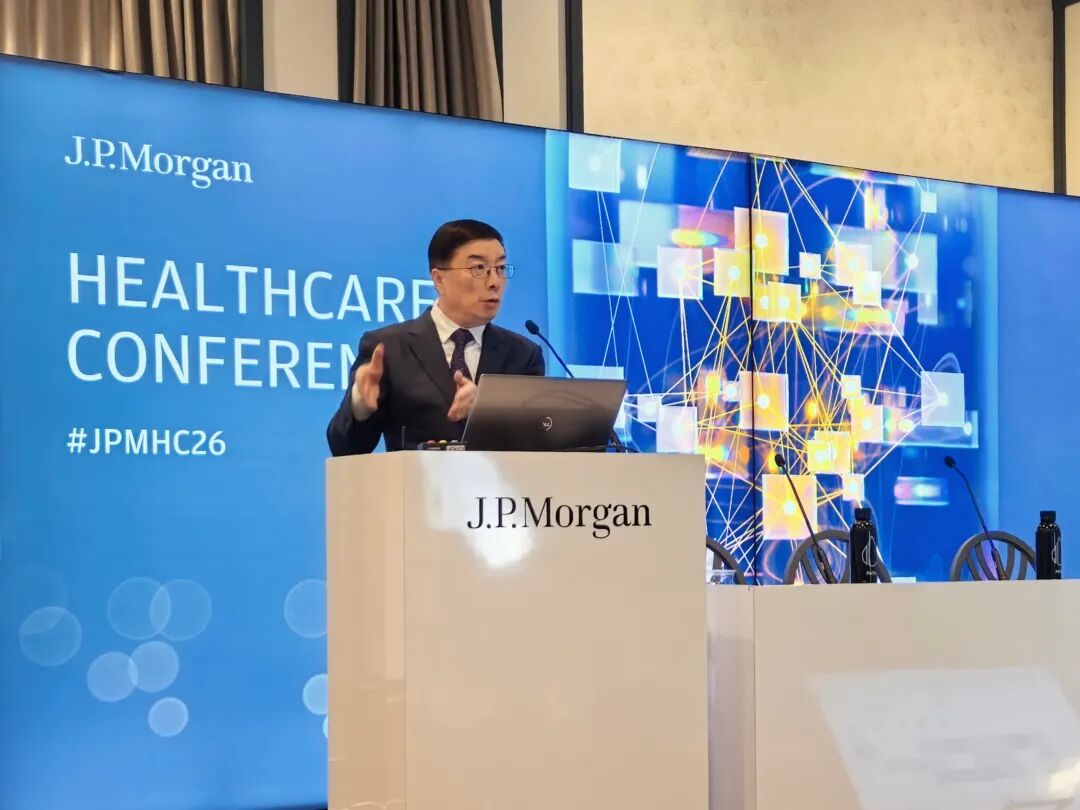
Core Insights - The 44th J.P. Morgan Healthcare Conference highlighted the global pharmaceutical industry's focus on innovation and the search for next-generation pipelines, with HengRui Pharma presenting its global strategy and capabilities [1][2]. Group 1: Company Strategy and Development - HengRui Pharma has established a "dual-engine" model, investing over 25% of its annual revenue in R&D, which supports its position as the second-largest in global original drug pipelines [2]. - The company is advancing its internationalization through flexible BD collaborations and a solid overseas team, aiming to accelerate the realization of innovative value [2][3]. - HengRui's R&D framework includes over 100 new molecular entities (NMEs) and more than 400 clinical trials across key therapeutic areas such as oncology, cardiovascular, metabolism, immunology, and neuroscience [3][7]. Group 2: Innovation and Pipeline - HengRui's pipeline is structured to provide comprehensive solutions in critical disease areas, focusing on synergy, iterative innovation, and addressing unmet medical needs [7]. - The company has demonstrated breakthrough capabilities in challenging targets, such as the KRAS G12D inhibitor HRS-4642, which has shown a 63.3% objective response rate in clinical trials [8]. - In the metabolic disease sector, HengRui is targeting the $100 billion obesity market with its GLP-1 asset portfolio, including the dual agonist HRS9531, which has shown significant weight loss results in clinical trials [8]. Group 3: Business Development and Internationalization - Since 2023, HengRui has completed 12 licensing deals worth over $27 billion, securing $1.3 billion in cash and equity investments, showcasing its R&D strength and innovation quality [12]. - The company aims to push approximately 20 new molecular entities into clinical trials annually, indicating a robust and efficient R&D pipeline [9][12]. - HengRui's internationalization strategy includes establishing a global capability system, with 15 R&D centers and a team of over 5,600, enhancing its global presence and operational capacity [13]. Group 4: Future Outlook - In 2026, HengRui is expected to achieve significant milestones, including over 10 new drug approvals and more than 20 NDA/BLA submissions, with key data from its pipeline assets anticipated [14]. - The company projects a revenue growth of over 25% year-on-year from its innovative drugs, supported by new products entering the national medical insurance directory [15]. - HengRui is committed to becoming a global leader in pharmaceuticals, focusing on delivering innovative drugs to patients worldwide, reflecting the broader trend of Chinese innovation in the pharmaceutical industry [16].
2025年股权融资规模暴增251%!2026港股IPO热潮延续
Zheng Quan Shi Bao· 2026-01-18 02:46
Group 1 - The Hong Kong stock market experienced a significant surge in equity financing in 2025, with a total financing amount of HKD 612.2 billion, representing a year-on-year increase of 250.91% [2] - The IPO market in Hong Kong regained its position as the global leader, with 117 companies raising a total of HKD 285.8 billion, a year-on-year growth of 224.24% [2] - The outlook for 2026 remains positive, with expectations that the IPO fundraising scale will exceed HKD 300 billion, driven by favorable policies from the Hong Kong Stock Exchange and the return of Chinese concept stocks [2][3] Group 2 - As of January 15, 2026, there are 327 companies waiting to go public in Hong Kong, with nearly half being A-share listed companies, indicating strong future market activity [3] - The influx of quality IPOs is expected to attract more international capital, enhancing market liquidity rather than detracting from it [4][6] - The performance of IPOs post-listing reflects the effectiveness of the pricing mechanism in mature markets, influenced by factors such as IPO pricing and investor composition [5] Group 3 - International long-term capital has significantly returned to the Hong Kong market, with participation rates in IPO projects rising from approximately 10%-15% in early 2024 to 85%-90% by early 2026 [6] - The types of companies attracting international investors include those with clear business models, predictable profitability, and reasonable valuations, particularly in sectors like AI and consumer goods [6][7] - The biotechnology sector in Hong Kong is expected to continue its growth trajectory, with international investors likely to remain engaged due to the unique market opportunities [7]
2025,股权融资规模暴增251%!2026,港股IPO热潮延续!
券商中国· 2026-01-18 01:46
Core Viewpoint - The Hong Kong stock market experienced a significant surge in equity financing in 2025, with a 251% increase, and is expected to maintain a strong performance into 2026, albeit at a potentially lower growth rate [1][2]. Group 1: Market Performance and Projections - In 2025, the total equity financing in the Hong Kong market reached HKD 612.2 billion, marking a year-on-year increase of 250.91% [2]. - The IPO market regained its global leading position, with 117 companies raising a total of HKD 285.8 billion, reflecting a year-on-year growth of 224.24% [2]. - Projections for 2026 suggest that the IPO fundraising scale may exceed HKD 300 billion, driven by favorable policies from the Hong Kong Stock Exchange, the return of Chinese concept stocks, and increasing demand for international expansion [2][3]. Group 2: IPO Dynamics and International Capital - The influx of A-share companies into the Hong Kong IPO market was significant in 2025, but this trend may shift in 2026 towards more first-time listings [3]. - As of January 15, 2026, there are 327 companies waiting to list on the Hong Kong stock exchange, with nearly half being A-share companies [3]. - International long-term capital has significantly returned to the Hong Kong market, with participation rates in IPO projects rising from approximately 10%-15% in early 2024 to 85%-90% by early 2026 [7]. Group 3: Quality of IPOs and Market Impact - High-quality IPOs are expected to attract more international capital, enhancing market liquidity rather than detracting from it [4][5]. - The phenomenon of IPOs leading to market corrections, such as instances of new stocks breaking below their issue prices, is viewed as a normal market adjustment rather than a sign of a bearish trend [5][6]. - The performance of stocks post-IPO, particularly during the six-month lock-up period for cornerstone investors, is crucial for understanding the long-term impact on the market [5][6]. Group 4: Sector Focus and Future Trends - The Hong Kong IPO market is anticipated to see an influx of companies from the AI and related sectors, including communications, data centers, and semiconductors [3]. - The biotechnology sector is expected to maintain its high growth trajectory, with international investors likely to remain engaged due to the unique opportunities presented in the Hong Kong market [8]. - Key sectors driving the IPO market in 2026 include biotechnology, specialized technology (AI, new energy, semiconductors), traditional industry upgrades, and new consumer brands from mainland China [8].