
韵达股份

Search documents
再无“8毛包邮全国”,小商家月增万元成本
Hu Xiu· 2025-08-26 11:50
Core Viewpoint - The recent increase in express delivery fees in key e-commerce regions like Guangdong and Zhejiang is causing significant anxiety among small e-commerce businesses, as it directly impacts their profit margins and pricing strategies [1][2][3]. Summary by Sections Impact on Small E-commerce Businesses - Many small e-commerce merchants are feeling the pressure from the increase in delivery fees, with some reporting that even a small increase of 0.1 yuan can significantly erode their profits [3][5]. - For instance, a small business owner in Guangzhou noted that a 0.4 yuan increase in delivery fees has led to a 3% drop in profit margins, which is critical for low-margin products priced around 9.99 yuan [6][8]. - Another seller in Dongguan reported a more severe increase of 0.7 yuan per order, resulting in an additional monthly cost exceeding 12,000 yuan, effectively halving her monthly profit [8][9]. Cost Management Strategies - In response to rising costs, small merchants are seeking ways to cut expenses, such as switching to generic packaging and eliminating promotional discounts [9][10]. - The inability to pass on costs to consumers due to price sensitivity in the low-cost product segment is forcing these businesses to absorb the increased delivery fees [4][9]. Industry Context and Trends - The express delivery industry in Guangdong handled 42.5 billion packages last year, accounting for 24% of the national total, with a revenue of 304 billion yuan [12]. - Despite the increase in delivery fees, many express delivery workers have not seen a corresponding rise in their compensation, as their income remains tied to the volume of deliveries and service commissions [19]. - The current trend of rising delivery fees is seen as a response to the long-standing issue of "internal competition" within the industry, which has led to unsustainable pricing practices [20][24]. Future Outlook - Experts suggest that the recent price adjustments may signal a shift from a low-price competition model to one focused on service quality, potentially leading to further price increases in the future [24]. - The industry may undergo consolidation, with weaker players exiting the market, which could enhance overall market stability and profitability [24].


再无“8毛包邮全国”,小商家月增万元成本,快递员收入暂未上涨
3 6 Ke· 2025-08-26 11:41
Core Insights - Recent price increases in express delivery fees have caused significant concern among e-commerce operators, particularly small businesses that rely on low-cost shipping to maintain profitability [1][2][3] - The price adjustments, particularly in Guangdong and Zhejiang, range from 0.3 to 0.7 yuan per package, which can severely impact the already thin profit margins of small e-commerce vendors [1][2] - The rise in delivery costs is forcing small merchants to reconsider their pricing strategies and operational costs, with some opting to cut expenses in packaging and promotions rather than passing costs onto consumers [3][8] Delivery Fee Increases - In Guangdong, the average increase in delivery fees is reported at 0.4 yuan, which translates to a profit reduction of approximately 3% for small businesses selling low-cost items [2] - For example, a small business selling handmade products at 9.99 yuan experiences a significant profit squeeze due to the increased shipping costs, which now average around 2 yuan per package [2] - Another e-commerce operator in Dongguan reported a 0.7 yuan increase, leading to an additional monthly cost exceeding 12,000 yuan, effectively halving her monthly profit [3] Market Dynamics - The express delivery sector in Guangdong accounted for 425 billion packages last year, representing 24% of the national total, with revenues of 304 billion yuan [5] - Despite the price hikes, many delivery personnel have not seen an increase in their compensation, as their earnings are still tied to the volume of packages delivered and service commissions [9][8] - The current trend of rising delivery fees is seen as a response to the long-standing issue of "internal competition" within the industry, which has led to unsustainable pricing practices [11][13] Industry Response - Major express delivery companies are responding to regulatory calls to combat "internal competition" by raising prices, aiming to improve service quality and profitability [11][14] - Experts suggest that the industry is experiencing a "volume-price inversion," where low prices are leading to operational inefficiencies and increased pressure on delivery networks [14] - The anticipated shift from a low-price competition model to a quality-focused approach may lead to further price increases and industry consolidation in the future [14]



电商洗牌,1元运费成历史?
Hu Xiu· 2025-08-26 08:58
Core Viewpoint - Recent price increases in express delivery services in Guangdong and Zhejiang are primarily targeting e-commerce clients with low shipping costs, with adjustments ranging from 0.3 to 0.7 yuan per order and a minimum price set at 1.4 yuan per order [1][4]. Group 1: Price Increase Details - Multiple express delivery companies in Guangdong and Zhejiang have raised prices for e-commerce clients, with Guangdong being a key area for these adjustments [4]. - The price increase has been in effect since early August, with variations depending on the individual company's circumstances [4]. - Affected e-commerce businesses are those with previously low shipping costs, particularly in regions like Guangzhou, Shenzhen, and Dongguan [2][4]. Group 2: Industry Reactions and Implications - Industry experts predict that more regions will follow suit in adjusting e-commerce delivery prices, which may improve the performance of express delivery companies in the short term [3][8]. - However, there is skepticism among industry insiders regarding whether the price increase will lead to a corresponding rise in courier wages, with many calling for a minimum wage for couriers instead [5][6]. Group 3: Long-term Industry Trends - The ongoing price war in the express delivery sector has led to significant pressure on companies, particularly those operating under a franchise model, resulting in declining revenue per shipment [7]. - Experts foresee potential mergers and acquisitions in the industry as a response to the current challenges, with a shift towards a more concentrated market [8][9]. - The recent price adjustments are viewed as a potential starting point for broader improvements in the industry, including better capital expenditure, technology development, and labor conditions [9].


广东浙江快递费涨价,商家月增3万成本
Mei Ri Jing Ji Xin Wen· 2025-08-26 07:27
Core Insights - The article highlights the recent price increases in express delivery services affecting e-commerce businesses in key regions like Guangdong and Zhejiang, with price hikes ranging from 0.3 to 0.7 yuan per package [1] - Affected e-commerce merchants report an increase in monthly expenses by at least 30,000 yuan due to these delivery cost adjustments, which are challenging to offset through product price increases [1] - The price adjustments are seen as a response to the prolonged price war in the express delivery industry, particularly among franchise-based companies like the Tongda system [1] Industry Impact - The express delivery sector is experiencing a shift in pricing strategy, moving away from aggressive price competition that has characterized the market for years [1] - The price war is linked to the current economic environment and the performance assessment systems used by franchise-based delivery companies, which emphasize package volume [1]
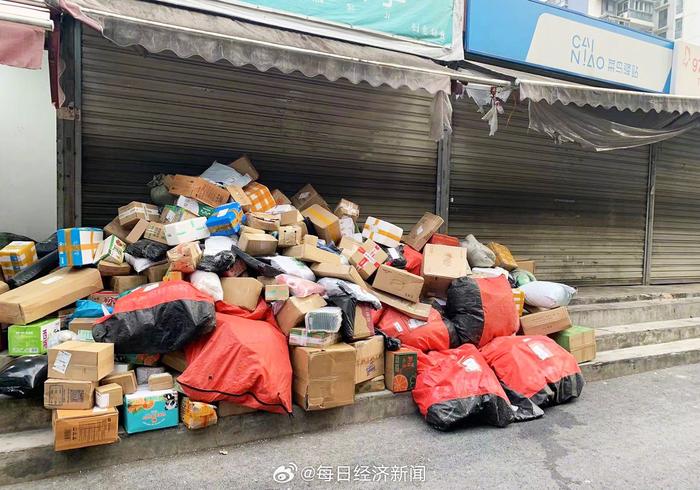
多地快递费涨价!有商家一天增加几千元成本?快递公司回应
Bei Jing Shang Bao· 2025-08-26 05:20
Core Viewpoint - The recent increase in express delivery fees in key e-commerce regions like Guangdong and Zhejiang is attributed to a response to "internal competition," leading to higher costs for businesses, particularly those with high shipping volumes [3][5][7]. Group 1: Price Increases and Impact on Businesses - Many express delivery companies have raised prices for e-commerce clients, with increases ranging from 0.3 to 0.7 yuan per package in Guangdong, which is a significant area for e-commerce logistics [3][5]. - For businesses like Mr. Su's, which ships over 100,000 packages monthly, a 0.3 yuan increase translates to an additional cost of 30,000 yuan per month [3][5]. - Smaller businesses may not feel the impact of a few cents per package, but for larger shippers, even a one-cent increase can lead to substantial cost increases [7]. Group 2: Industry Trends and Historical Context - The express delivery industry has been experiencing "internal competition" for years, with major companies like "Three Links and One Reach" (YTO, Shentong, Zhongtong, and Yunda) engaging in price wars to attract customers [7]. - The average price per package in the express delivery industry has decreased from 13.40 yuan in 2015 to 8.02 yuan in 2024, indicating a significant decline in revenue per package [7]. - In July, the average revenue per package for Shentong, YTO, and Yunda was reported at 1.97 yuan, 2.08 yuan, and 1.91 yuan respectively, showing year-on-year declines of 1.50%, 7.20%, and 3.54% [7]. Group 3: Regulatory Responses - The National Development and Reform Commission and the State Administration for Market Regulation have proposed amendments to the Price Law to address unfair pricing practices and regulate "internal competition" in the market [8]. - A meeting held by the State Post Bureau aimed to discuss the legal governance of "internal competition," which is expected to stabilize the market and protect the rights of delivery personnel, potentially benefiting company profits [9].

港股概念追踪|快递行业在反内卷背景下 业绩有望修复(附概念股)
智通财经网· 2025-08-26 01:22
Group 1 - The core viewpoint indicates that the express delivery industry in China is experiencing significant growth, with a total volume of 164.0 billion parcels in July 2025, representing a year-on-year increase of 15.1% [1] - For the first seven months of 2025, the total parcel volume reached 1,120.5 billion, showing a year-on-year growth of 18.7%, surpassing the postal administration's forecast of over 8% for the entire year [1] - The growth is driven by the trend of smaller packages, e-commerce promotions, and convenient return policies [1] Group 2 - In the e-commerce express segment, major players such as YTO Express, Yunda Express, and Shentong Express reported year-on-year growth rates of 20.8%, 7.6%, and 11.9% respectively in July 2025 [1] - For the first seven months of 2025, their respective growth rates were 21.6%, 15.1%, and 19.3% [1] - SF Express achieved a year-on-year growth of 33.7% in July 2025 and 26.9% for the first seven months, attributed to the implementation of operational activation strategies and increased incentives for frontline operations [1] Group 3 - The Ministry of Finance and the State Taxation Administration announced new VAT policies for express delivery services, effective immediately, stating that express companies will pay VAT based on "collection and delivery services" [1] - According to Guohai Securities, the industry average revenue per parcel in July 2025 was 7.36 yuan, reflecting a year-on-year decline of 5.33% and a month-on-month decline of 1.76% [2] - The ongoing trend of smaller packages and price wars are impacting revenue per parcel, although there are indications of potential price recovery in August due to a shift away from intense competition [2] Group 4 - The report highlights the potential for recovery in performance for franchise express companies amid the backdrop of reduced competition [2] - The express delivery sector is seeing a narrowing of price declines, with expectations of a slowdown in competitive pressure [2] - The focus remains on the performance growth of time-sensitive express delivery leaders and the valuation recovery opportunities in the e-commerce express segment [2] Group 5 - Related Hong Kong-listed express delivery companies include ZTO Express (02057), SF Holding (06936), SF Express City (09699), JD Logistics (02618), and YTO International Express (06123) [3]
快递业的“反内卷”变革能成功吗
Mei Ri Shang Bao· 2025-08-25 22:14
Core Viewpoint - The express delivery industry in China is undergoing a "de-involution" reform, marked by collective price increases among major companies to combat severe price competition that has led to unsustainable business practices [1][2]. Group 1: Price Increases and Regulations - Multiple express delivery companies have announced price hikes, starting from a meeting in Yiwu, where the minimum price per package was raised by 0.1 yuan to 1.2 yuan [1]. - The State Post Bureau's meeting on July 29 became a turning point, leading to Guangdong's implementation of a new regulation that raised the minimum price by 0.4 yuan per package, setting a floor of 1.4 yuan [1]. - The express delivery industry has seen extreme price competition, with rates as low as 0.8 yuan for nationwide delivery, which is below the cost price [1]. Group 2: Historical Context and Challenges - The price war in the express delivery sector began around 2019, with previous attempts to raise prices in 2020 failing due to intense competition and new entrants [2]. - The success of the current "de-involution" reform is complicated by the need for government regulations to prevent companies from undercutting each other [2]. Group 3: Service Quality and Employee Welfare - The increase in prices must be accompanied by improvements in service quality, as low-price competition has led to issues such as package damage and delays [2]. - A successful reform should create a positive cycle of service quality, reasonable profits, and employee welfare, ensuring that frontline workers benefit from price increases [3]. - As of July 9, the express delivery volume in China surpassed 1 trillion packages, indicating strong economic resilience and the need for high-quality development in the industry [3].
韵达股份: 关于2023年股票期权激励计划首次授予及预留授予第一个行权期采用自主行权模式的提示性公告
Zheng Quan Zhi Xing· 2025-08-25 17:05
Core Points - The company has initiated its 2023 stock option incentive plan, with the first grant and reserved grant details disclosed [1][2][3] - A total of 338 eligible participants can exercise 15,946,000 stock options, representing 0.55% of the total share capital, at an exercise price of 9.36 yuan per share [1][6] - The reserved grant allows 9 eligible participants to exercise 302,500 stock options, accounting for 0.01% of the total share capital, also at an exercise price of 9.36 yuan per share [1][6] Approval Process - The stock option incentive plan underwent several board meetings for approval, including the review of the plan draft and management methods [2][3] - Independent directors and the supervisory board provided their consent and verification for the plan [2][3] Adjustments and Cancellations - The exercise price was adjusted from 9.73 yuan to 9.36 yuan due to the company's profit distribution plans [5] - A total of 2,200,000 stock options were canceled due to 19 participants leaving the company and 239,000 options due to performance assessment failures [5][6] Performance Conditions - The first exercise period is defined as starting from the first trading day after 20 months from the grant date until the last trading day within 32 months [6] - The performance conditions for exercising options include no adverse audit opinions and meeting specific financial performance metrics [6][8] Impact on Company - The exercise of these options is not expected to significantly impact the company's shareholding structure [16] - If all options are exercised, the total share capital will increase by 1,624,850 shares, with minimal effect on earnings per share and return on equity [16] Reporting and Compliance - The company will disclose changes in incentive participants, adjustments to stock option parameters, and exercise situations in regular or temporary reports [17]
广东快递“反内卷”:每单涨价4毛起
2 1 Shi Ji Jing Ji Bao Dao· 2025-08-25 14:42
快递行业苦"内卷"久矣。"三通一达"(圆通、申通、中通、韵达)等主要快递企业为加盟制,电商发展 起来后,各大快递公司和网点为了争抢客户,不断压低单价。根据多个网点负责人透露,在广东,此前 快递单票价格能低至几毛。 一家快递企业人士告诉南方财经记者,今年上半年快递行业价格竞争压力较大,从稳定的行业发展角度 而言,本次价格上调趋势有望持续,行业会趋向服务品质代替价格作为市场的决定因素。"从长期发展 的角度来看,从'价格战'到'价值战'的转型已经是整个快递行业共识,也能为企业利润增长带来利好。" 广东和浙江义乌的快递费涨价了。消费者不一定能察觉到,但商家对此很清楚:单票贵了几毛钱,积少 成多,成本不可避免地被抬高。 7月29日,国家邮政局召开快递企业座谈会,就依法依规治理行业"内卷式"竞争,强化农村地区领取快 件违规收费等突出问题整治,促进行业高质量发展进行座谈交流。 随后,浙江和广东等地快递行业相继启动"反内卷"行动。 近期,多个快递公司内部发布公告,提出上调快递底价,广东省快递底价整体上调0.4元/票,均价涨至 1.4元/票以上,基层网点派费增加0.1元/票。 8月4日,多位广东的电商卖家收到了来自"三通一达" ...
第二批科创债ETF上报,关注指数成份券机会
HTSC· 2025-08-25 14:00
1. Report Industry Investment Rating No specific industry investment rating is mentioned in the report. 2. Core Viewpoints of the Report - The second batch of 14 Science - and - Technology Innovation Bond ETFs were submitted on August 20, 2025. With policy support, the second batch is expected to be launched soon. The Science - and - Technology Innovation Bond ETFs have shown rapid scale growth and good liquidity since their listing, and are expected to thrive in the future [1][10]. - The second batch of Science - and - Technology Innovation Bond ETFs will introduce incremental funds to the market, enhancing the liquidity of the underlying bonds and potentially lowering their yields. However, the short - term decline may be limited due to various disturbances. It is recommended to focus on the post - adjustment allocation opportunities of 1 - 3 - year medium - to - high - grade Science - and - Technology Innovation Bond index underlying bonds [1][29]. - The stock market was strong last week, suppressing the bond market. Credit bond yields increased across the board, and the net issuance of corporate - type credit bonds decreased, while that of financial - type credit bonds increased significantly [2][3]. - In the secondary market, trading of medium - and - short - duration bonds was active, and the proportion of long - duration bond trading increased slightly [4]. 3. Summary by Relevant Catalogs Credit Hotspots - On August 20, 2025, the second batch of 14 Science - and - Technology Innovation Bond ETFs were submitted, with 10 tracking the CSI AAA Science - and - Technology Innovation Corporate Bond Index, 3 tracking the Shanghai Stock Exchange AAA Science - and - Technology Innovation Corporate Bond Index, and 1 tracking the Shenzhen Stock Exchange AAA Science - and - Technology Innovation Corporate Bond Index. Referring to the approval process of the first batch, the second batch is likely to be launched soon [10]. - Since the first batch of Science - and - Technology Innovation Bond ETFs were listed, they have become the second - largest type of credit bond ETFs. As of August 22, 2025, the scale of credit bond ETFs was 348.3 billion yuan, and the Science - and - Technology Innovation Bond ETFs accounted for 34.6% with a scale of 120.4 billion yuan [11]. - The Science - and - Technology Innovation Bond ETFs have shown good liquidity since their listing. From July 17 to August 22, the average daily trading volume fluctuated between 18 - 106 billion yuan, and the average daily turnover rate was 46.48% [15]. - The net value of Science - and - Technology Innovation Bond ETFs has experienced two rounds of adjustments. As of August 22, compared with the listing date on July 17, the average decline of the net value of 10 Science - and - Technology Innovation Bond ETFs was 0.43% [19]. - With policy support, increased supply of Science - and - Technology Innovation Bonds, and the launch of the repurchase business, the Science - and - Technology Innovation Bond ETFs are expected to develop well. The second batch of ETFs will enhance the liquidity of the underlying bonds and lower their yields, but the short - term decline may be limited [27][29]. Market Review - From August 15 to August 22, 2025, the stock market was strong, suppressing the bond market. Credit bond yields increased across the board, with most medium - and long - term yields rising by more than 6BP, and medium - and short - term credit bonds being relatively resilient. The yields of Tier 2 and perpetual bonds also increased by 4 - 8BP [2][34]. - Last week, bond funds were redeemed, with net sales of 13.3 billion yuan, while wealth management products had net purchases of 19.3 billion yuan. The scale of credit bond ETFs was 348.3 billion yuan, up 1.7% from the previous week [2]. - The median spreads of public bonds of AAA - rated entities in various industries generally increased by 2 - 6BP, and the median spreads of urban investment bonds in each province increased across the board, with Inner Mongolia, Chongqing, and Liaoning seeing increases of more than 6BP [2][34]. Primary Issuance - From August 18 to August 22, 2025, the total issuance of corporate - type credit bonds was 235 billion yuan, a 21% decrease from the previous period, with a net repayment of 64.1 billion yuan. The total issuance of financial - type credit bonds was 120.4 billion yuan, a 142% increase from the previous period, with a net financing of 61.9 billion yuan [3][60]. - Among corporate - type credit bonds, urban investment bonds issued 101.8 billion yuan with a net repayment of 21.6 billion yuan, and industrial bonds issued 126.6 billion yuan with a net repayment of 37 billion yuan [3][60]. - The average issuance rates of medium - and short - term notes and corporate bonds mostly showed an upward trend [3][60]. Secondary Trading - Active trading entities are mainly medium - to - high - grade, medium - and short - term, and central and state - owned enterprises [4][71]. - For urban investment bonds, active trading entities are from strong economic and financial provinces like Jiangsu and Guangdong, and high - spread areas in large economic provinces. For real - estate bonds and private - enterprise bonds, active trading entities are mostly AAA - rated, with trading terms mostly in the medium - and short - term [4][71]. - Among actively traded urban investment bonds, the proportion of bonds with a maturity of more than 5 years increased slightly from 0% to 4% compared with the previous week [4][71].