OPPO

Search documents
珠三角观察丨布局“十五五”,九城市委全会划重点
Xin Lang Cai Jing· 2025-12-20 13:55
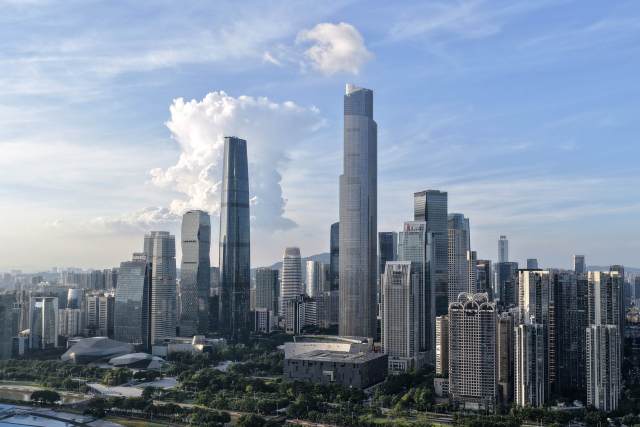
Core Insights - The Pearl River Delta (PRD) region is entering a new phase of development, focusing on innovation-driven and collaborative growth as part of the "14th Five-Year Plan" and the upcoming "15th Five-Year Plan" [1] - The region aims to transform its industrial structure from factor-driven to innovation-driven, enhancing regional cooperation and urban development quality [1] Group 1: Industrial Development - The PRD cities are prioritizing the development of new productive forces, with a strategic focus on technological innovation to lead the modernization of the industrial system [1] - Guangzhou is constructing a "12218" modern industrial system, emphasizing the consolidation of existing industries while exploring new sectors like low-altitude economy and artificial intelligence [2] - Shenzhen is focusing on the integration of digital, network, platform, and financial services to upgrade its manufacturing sector, with a strong emphasis on artificial intelligence and green technologies [5] - Foshan is targeting a transformation from a manufacturing hub to an intelligent manufacturing city, particularly in the fields of artificial intelligence and robotics [5] - Dongguan is building an "8+8+4" key industrial system, enhancing traditional manufacturing through digitalization while expanding into semiconductor and new energy sectors [7] - Huizhou aims to achieve a "trillion GDP" target by strengthening industrial collaboration with neighboring cities and developing an AI and robotics industrial belt [9][10] Group 2: Regional Cooperation - The "14th Five-Year Plan" has accelerated the integration of the Guangdong-Hong Kong-Macao Greater Bay Area, with a focus on both hard and soft connectivity to optimize regional development [12] - Guangzhou and Shenzhen are leading the creation of a world-class urban agglomeration, with initiatives to enhance international competitiveness and cooperation with Hong Kong and Macau [12][14] - The construction of urban circles and the promotion of "same city" development are becoming increasingly important, with cities like Huizhou and Zhuhai actively participating in these efforts [14][16] Group 3: Urban Development and Quality of Life - The PRD cities are shifting their focus from scale expansion to high-quality, efficient, and livable urban development, aiming to create modern, resilient, and civilized cities [17] - Guangzhou is emphasizing urban renewal and village renovation, with a focus on enhancing urban quality and functionality [22] - Dongguan is pursuing a strategy of "intelligent creation and livability," aiming to improve governance and urban experience [18] - Each city is developing unique urban brands and characteristics, with a focus on creating high-quality living environments [20][22]

段永平到底有多少钱?他是不是中国的隐形首富?
Sou Hu Cai Jing· 2025-12-20 06:05
Core Viewpoint - Duan Yongping is considered a hidden billionaire in China, with a significant wealth gap compared to other wealthy individuals like Wang Shi, primarily due to his successful investment strategies and diversified asset portfolio [1][3]. Investment Portfolio - Duan's wealth is largely derived from successful investments, including over 50 times profit from his investment in NetEase and substantial gains from Apple stocks, with current holdings valued at approximately 70 billion RMB [4]. - He holds 3,483 million shares of Apple and 338 million shares of Berkshire Hathaway, which together account for about 77% of his U.S. stock holdings, valued at around 200 billion RMB [4][6]. - In addition to these, Duan has investments in Pinduoduo, Occidental Petroleum, Alibaba, and Google, with an estimated total market value of around 1200 billion RMB [4]. A-Share Holdings - Duan also holds shares in Kweichow Moutai, valued at approximately 28 billion RMB, and has maintained profitability despite market fluctuations [6]. - His investment in Tencent is valued at around 4 billion RMB, with successful buy-ins during market dips [6]. Private Companies - Duan is the founder of BBK Electronics, which has successfully launched brands like OPPO and VIVO. His estimated holdings in these companies are significant, with OPPO valued at 150-200 billion RMB and VIVO at around 300 billion RMB [8]. - His total estimated assets, including stocks and private company holdings, exceed 2000 billion RMB, along with unquantified cash assets [8]. Investment Philosophy - Duan's investment journey began with a strategic investment in NetEase, where he recognized the potential of the gaming market, leading to substantial profits [10]. - He emphasizes a simple investment philosophy, reflecting a straightforward approach to wealth accumulation and investment strategies [10].




别让vision拖累VLA中的action!
具身智能之心· 2025-12-20 01:02
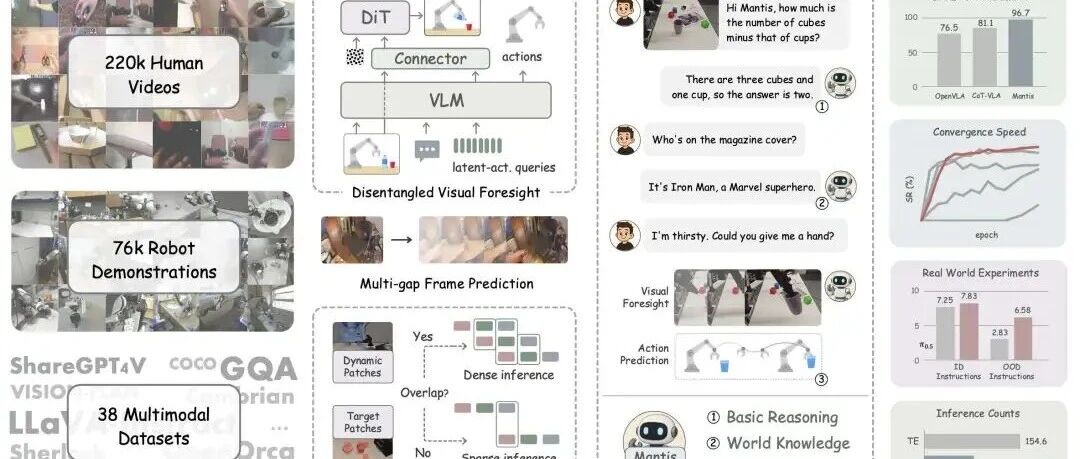
Core Insights - The article discusses the challenges and advancements in Visual-Language-Action (VLA) models used in robotics, particularly focusing on the limitations of existing models that rely on low-dimensional sparse action signals to supervise high-dimensional dense visual inputs, which restricts overall performance [6][9]. Research Background - VLA models have shown significant progress but still face issues due to the mismatch between action supervision signals and visual inputs, leading to underutilization of the model's representation capabilities [6]. - The introduction of a visual prediction mechanism is proposed to enhance action generation by predicting future visual states, although high-dimensional visual states often contain redundant information that complicates the training process [8]. Proposed Solutions - Decoupled Visual Forecasting (DVF) is introduced to alleviate the burden on the backbone network by automatically capturing implicit actions and enhancing explicit action generation [7]. - A progressive pre-training approach is suggested to gradually integrate different modalities, introducing language supervision to retain the understanding and reasoning capabilities of the VLA backbone [7]. - Adaptive Temporal Ensemble (ATE) is proposed to dynamically adjust the integration strength during inference, reducing computational costs while maintaining action stability [14]. Architecture Design - The DVF method incorporates implicit action queries and a separate diffusion DVF head, allowing the model to focus on frame-to-frame differences rather than predicting complete future frames [10]. - A progressive training scheme is designed to introduce visual, language, and action information in phases to avoid competition between modalities and achieve stable optimization [10]. Experimental Analysis - Mantis, the proposed model, outperforms existing baseline methods in three out of four tasks on the LIBERO benchmark, achieving the highest average success rate of 96.7% [16][18]. - The convergence speed of Mantis is significantly faster compared to traditional visual prediction methods like UnifiedVLA [20]. - Experiments demonstrate the effectiveness of language supervision in retaining the backbone's capabilities, with Mantis outperforming in both in-domain and out-of-domain instruction tasks [20]. Team Introduction - The research team, SJTU Deng Lab, focuses on generative models and large language models, collaborating with renowned institutions and maintaining a strong research output in top-tier journals and conferences [23].
当豆包AI手机发起“硬件联盟”:一场向超级App宣战的“系统级革命”全面爆发
Mei Ri Jing Ji Xin Wen· 2025-12-19 14:20
Core Insights - ByteDance is collaborating with Lenovo to integrate AI capabilities into smartphones, aiming to gain user access and reshape the AI landscape in mobile technology [1][2] - The launch of the Doubao AI phone assistant has prompted major apps like WeChat and Taobao to defend their market positions, indicating a significant shift in the competitive landscape [1][4] - The strategy involves creating new revenue streams through partnerships with hardware manufacturers, positioning them as channel partners in ByteDance's AI ecosystem [2][3] Group 1: Collaboration and Strategy - ByteDance is working with various hardware manufacturers, including Lenovo, Vivo, and Transsion, to pre-install AI plugins on smartphones, aiming to capture the next generation of human-computer interaction [1][2] - The collaboration model discussed includes revenue sharing from traffic distribution and subscription services, with no upfront fees for customized development [2][3] - The goal is to transform smartphone manufacturers from mere device makers into integral partners within ByteDance's AI ecosystem [2][3] Group 2: Market Dynamics and Challenges - The Doubao AI phone has faced operational challenges with major apps, leading to adjustments in its AI capabilities to comply with existing app restrictions [4][5] - The strategy to target mid-range smartphones priced above 2000 yuan aims to build a substantial user base, with plans to expand to 150 million to 200 million devices [6][7] - The overseas market is seen as a more favorable environment for innovation, allowing for lower risk and better user education before entering the more competitive domestic market [7][8] Group 3: Future Prospects and Uncertainties - The potential for a hardware alliance could shift the balance of power against super apps, but the success of this strategy remains uncertain [3][8] - The sustainability of new business models, including revenue generation from AI services, is still unproven, posing a significant challenge for all players involved [8] - ByteDance's approach to leveraging AI in smartphones could reshape the mobile ecosystem, but it faces hurdles from super apps and the need for a clear commercial path [8]
激发消费活力 青岛市北交出硬核答卷
Sou Hu Cai Jing· 2025-12-19 13:55
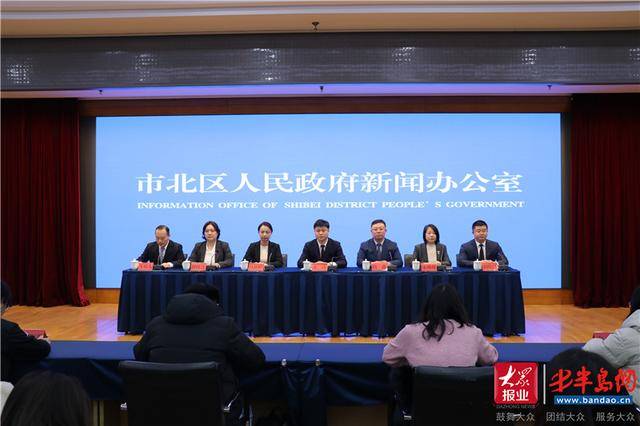
Core Viewpoint - The government of Shibei District is actively promoting consumption vitality as a key driver for high-quality development and adapting to the trend of consumption upgrades since the 14th Five-Year Plan [1] Group 1: Major Projects and Developments - The construction of the Sam's Club in Qingdao is progressing rapidly, with the main structure completed four months ahead of schedule and expected to open in the first half of 2026, significantly boosting the northern business district [3] - The completion of the land auction for COFCO Joy City aims to create a new cultural and leisure business area centered around Qingdao beer, serving as a core engine for revitalizing the Taidong business district [3] - The opening of the first JD Mall in Shandong is contributing to the formation of a "one super many stores" model, positioning it as the largest home appliance and digital retail enterprise in the province [3] - The opening of the city store by China Duty Free Group is part of a new "port + city" duty-free system, enhancing the duty-free economy [3] Group 2: Consumption Activities and Events - Over 100 promotional events have been held, including cultural festivals and trade-in programs, which have effectively stimulated consumer spending in various sectors [5] - The "Laozi Seeking Flavor" dining brand and other initiatives have contributed to a significant increase in tourism and cultural consumption, with over 1,037 million visitors and sales exceeding 500 million yuan during the Qingdao Lantern Festival [5] - Sports events have been integrated into commercial areas, with over 500 community sports events held, converting event traffic into economic growth [5] Group 3: Emerging Consumption Trends - The "Beer+" consumption model has gained national attention, with innovative initiatives like the Qingdao Beer trading machine achieving daily sales of 120,000 milliliters during summer [6] - The integration of cultural, tourism, and entertainment sectors has led to the development of unique tourism products and themed travel routes, enhancing consumer engagement [6] - The Taidong pedestrian street has been recognized as a national-level demonstration area, attracting over 100 million visitors and achieving sales exceeding 10 billion yuan [6] Group 4: Future Plans and Strategies - The Shibei District government plans to focus on six key industries, enhancing the economy of business districts, launch events, and experiential economies [7] - Future efforts will include the completion of landmark projects like Sam's Club and COFCO Joy City, as well as the continued innovation in diverse consumption scenarios such as "Beer+", cultural tourism, and night economy [7]

豆包手机大家族:字节跳动被曝正推进与 vivo、联想、传音等多家硬件厂商开展 AI 手机合作
Xin Lang Cai Jing· 2025-12-19 12:48
Group 1 - ByteDance is advancing AI phone collaboration plans with hardware manufacturers such as Vivo, Lenovo, and Transsion, aiming to pre-install AIGC plugins to gain user access [1][4] - Vivo employees confirmed that ByteDance has established a cooperation intention with Vivo, while specific plans are still under discussion [1][4] - The collaboration aims to create a new traffic monetization channel by sharing traffic distribution and subscription revenue with phone manufacturers, exploring a model that does not charge for custom development fees or token sales [3][6] Group 2 - The cooperation plan will initially target mid-range models priced above 2000 yuan, with the first batch implemented through new device pre-installation and later expanded to existing models via OTA upgrades [3][6] - ByteDance has set an internal target of 150-200 million devices for this AI phone project, with a focus on leveraging its overseas channel advantages [3][6] - The AI phone project team at ByteDance has grown to over a thousand members, and while discussions with OPPO did not result in a partnership, ZTE is currently the only officially disclosed partner [3][6]
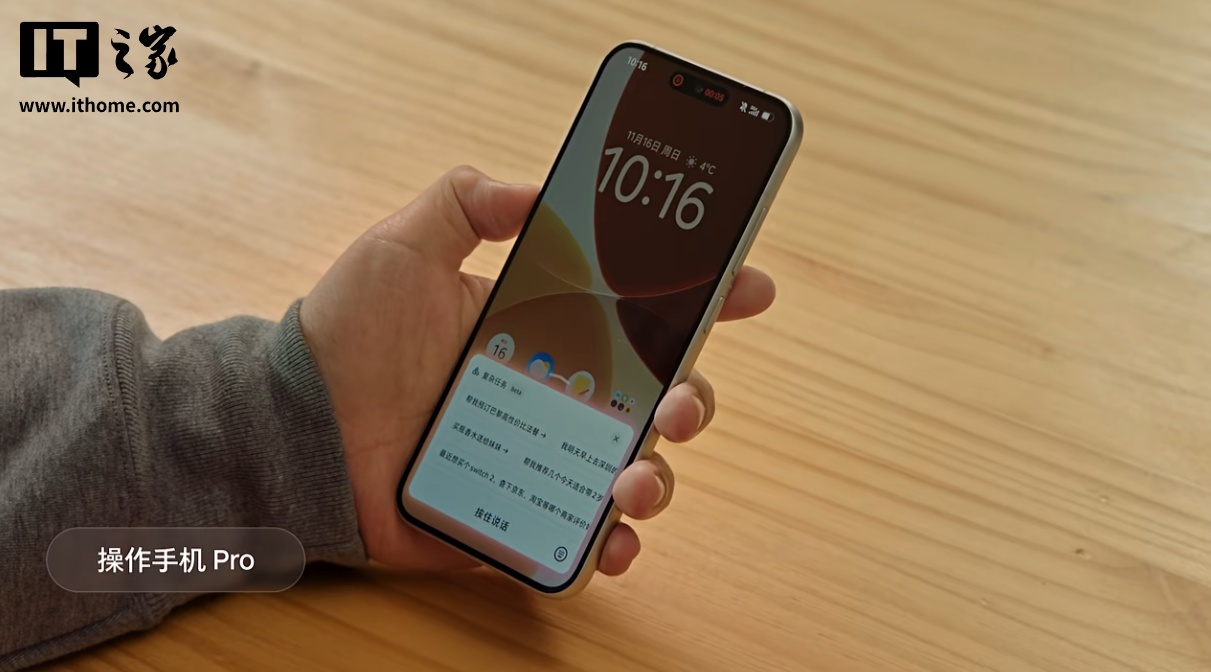
豆包手机扩充合作厂商 vivo、联想、传音在列
Xin Lang Cai Jing· 2025-12-19 12:42
Group 1 - ByteDance is advancing AI phone collaboration plans with hardware manufacturers such as Vivo, Lenovo, and Transsion, aiming to gain user access through pre-installed AIGC plugins [1][7] - The collaboration intends to create a new traffic monetization channel by sharing traffic distribution and subscription revenue with phone manufacturers, while exploring a model that does not charge for custom development fees or token sales [3][9] - The initial focus of the collaboration will be on mid-range models priced above 2000 yuan, with plans to implement pre-installation on new devices and later expand to existing models via OTA upgrades [4][11] Group 2 - ByteDance's AI phone project team has grown to over 1,000 members, with ZTE being the only officially disclosed partner, while Meizu has expressed interest in collaboration [7][13] - The internal target for ByteDance is to reach a scale of 150-200 million devices, with overseas channels likely being a key focus for deployment [4][11]

我们准备好让AI“看”世界了吗?
Xin Lang Cai Jing· 2025-12-19 12:14
Core Insights - In 2025, AI glasses have emerged as a significant trend in the tech industry, with major companies like Meta, Google, and Apple making substantial advancements and product launches in this space [1][3] - Domestic companies in China, including Huawei, Xiaomi, Alibaba, and ByteDance, are also actively developing AI glasses, with notable products like Alibaba's Quark AI glasses experiencing high demand [1][3] - The competition landscape is diverse, with various types of AI glasses categorized into AI audio glasses, AI photography glasses, and AI+AR glasses, each with distinct functionalities [3][7] Industry Overview - The AI glasses market is driven by advancements in large model technology, with companies recognizing the necessity to invest in AI glasses to avoid falling behind in the AI race [3][21] - Meta's Ray-Ban smart glasses have set a successful precedent, selling over 1 million units and demonstrating the feasibility of integrating AI capabilities into eyewear [3][21] - The market is expected to see significant sales growth, with projections indicating that AI glasses could reach 7 million units sold, with Meta accounting for 5 million of that total [9] Competitive Landscape - Major competitors in the AI glasses market include: - Internet platform companies like Alibaba, Baidu, and ByteDance, leveraging their ecosystem advantages [8] - Hardware manufacturers such as Xiaomi and Huawei, utilizing their supply chain and user base [9] - New automotive entrants like Li Auto, which are creating niche products tailored to specific use cases [9] - Specialized XR/AR companies like Rokid and Thunderbird, focusing on optical display technology and lightweight designs [9] Market Dynamics - The pricing of AI glasses varies widely, from hundreds to thousands of yuan, reflecting the differentiation in product features and target markets [12] - The current market is characterized by a mix of established tech giants and agile startups, each pursuing different strategies to capture market share [10][20] - The demand for AI glasses is still being evaluated, with concerns about whether consumers truly need such devices compared to existing technologies like smartphones [13][19] Future Outlook - The AI glasses market is anticipated to evolve, with companies needing to address privacy concerns and enhance user experience to transition from novelty items to essential tools [17][24] - The exploration of AI glasses is seen as a stepping stone towards more advanced human-machine interactions, potentially leading to future innovations like implantable devices or brain-computer interfaces [24][22] - As the market matures, companies are expected to focus on validating the value of AI glasses in B2B applications while nurturing consumer interest in C2C scenarios [20][22]





【招银研究|行业深度】AI系列研究——端侧AI将重塑全球智能终端产业格局
招商银行研究· 2025-12-19 08:58
Core Insights - Edge AI is leading a technological paradigm shift, reshaping the new landscape of the smart terminal industry by enabling local execution of AI models, resulting in low latency, high energy efficiency, and privacy protection [4][9][10] - The development of Edge AI is driven by innovations in AI computing architecture, multimodal perception and interaction, and system-level AI integration, transitioning smart devices from mere "computing nodes" to "local reasoning and autonomous decision-making" [4][6][10] Application Ecosystem - Multiscenario integration is accelerating the growth of the Edge AI terminal market, with AI PCs expected to achieve a penetration rate of 64% by 2028, and AI smartphones projected to exceed 900 million units in shipments by the same year [5][6] - AI wearables are anticipated to reach a market size of $153.8 billion by 2030, while AI smart homes are expected to grow to $537.2 billion, highlighting Edge AI as the core growth engine of smart hardware [5][6] Upstream Ecosystem - Breakthroughs in advanced process technology and Chiplet architecture are driving significant performance improvements in Edge AI, with NPU computing power increasing to 50-100 TOPS to meet local model operation demands [6][10] - The global Edge AI processor market is projected to grow from $31 billion in 2022 to $60.2 billion by 2028, with major players like Qualcomm, Apple, and NVIDIA dominating the high-end market [6][10] Business Recommendations - Companies should prioritize Edge AI as a key strategic focus, developing differentiated strategies around terminals, supply chains, and application scenarios to capitalize on this emerging trend [6]

iPhone Air成苹果“滑铁卢” 库克未来要如何找回场子?
Sou Hu Cai Jing· 2025-12-19 07:55
Core Insights - Apple's iPhone Air, launched in 2025, faced significant market challenges due to a lack of innovation, high pricing, and technical issues, leading to poor sales performance [1][3][18] Product Performance - The iPhone Air's first-week activation was less than one-tenth of the iPhone 17 Pro Max, with pre-order sales accounting for only 6% of total orders, prompting a price cut within five days of launch [3][7] - The device's ultra-thin design resulted in compromises on key features, including a single 48MP camera, reduced battery capacity, and limited audio capabilities, which negatively impacted user experience [9][11] Market Reaction - The failure of iPhone Air has caused a ripple effect in the smartphone industry, leading competitors like Xiaomi, OPPO, and vivo to cancel similar lightweight models and refocus on other market segments [8] - Samsung's Galaxy S25 Edge also underperformed, resulting in the cancellation of its successor, indicating a shift in consumer preference towards comprehensive user experience rather than just thinness [8] Future Strategies - Apple is planning to launch iPhone Air 2, aiming to enhance its features and adjust pricing to improve competitiveness, including the addition of a dual-camera system to address previous shortcomings [12][15] - The potential new pricing strategy for iPhone Air 2 may lower the starting price to around 6000 yuan, significantly improving its value proposition [15][17] - The release of iPhone Air 2 has been postponed to spring 2027 to avoid internal competition with the iPhone 17 series and to allow more time for product optimization [17] Lessons Learned - The iPhone Air's failure highlights Apple's need for better market research and product definition, emphasizing that sacrificing core user experiences for design aesthetics can alienate consumers [11][20] - The smartphone market's competitive landscape has shifted towards optimizing overall user experience rather than focusing solely on individual features, necessitating a balanced approach in future product development [20]