
国盾量子

Search documents
诺奖燃爆激情 量子计算商业化的资本萌动
2 1 Shi Ji Jing Ji Bao Dao· 2025-10-14 23:20
Group 1: Nobel Prize in Physics - The Nobel Prize in Physics was awarded to John Clarke, Michel H. Devoret, and John M. Martinis for their discovery of "macroscopic quantum tunneling and energy quantization in circuits" [1] - This achievement opens the door to studying quantum mechanics on a larger scale, providing new possibilities for experimental research [1] Group 2: Quantum Computing Breakthrough - The core device used by the laureates is the Josephson junction, which allows electrons to form "Cooper pairs" and move collectively at low temperatures [2] - The system can switch states due to quantum tunneling, demonstrating that the behavior of this macroscopic circuit is governed by quantum mechanics [2] - This research provides new opportunities to simulate other quantum systems, enhancing the understanding of their characteristics [2] Group 3: Quantum Computing Market and Investment - Quantum computing is gaining significant attention, with the concept introduced by Richard Feynman in 1982, but it has only recently started to appear in mainstream media [3] - Google is set to launch a new quantum chip, Willow, with 105 qubits in December 2024, causing a surge in quantum-related stocks [3] - The potential speed of quantum computing could surpass traditional computers by billions of times for certain calculations [3] Group 4: Global Quantum Computing Development - Many countries and tech giants are investing in quantum computing, with the U.S. and Japan establishing national development plans [4] - Companies like IBM, Google, and Nvidia are actively advancing research in this field [4] Group 5: Challenges in Quantum Computing Commercialization - Companies in China, such as Guoshun Quantum and Boson Quantum, are also working in the quantum computing sector [5] - Key challenges for commercialization include stabilizing qubits, scaling hardware, and finding verifiable quantum advantage scenarios [5] - Maintaining qubit coherence is critical, as any disturbance can lead to decoherence, jeopardizing quantum information [5] Group 6: Technical Routes in Quantum Computing - Various technical routes for quantum computing include superconducting, ion trap, photonic, and topological quantum computing [6] - Superconducting quantum computers are the mainstream route but face challenges like the need for extremely low temperatures and short coherence times [6] Group 7: Topological Quantum Computing - Microsoft announced a breakthrough in topological quantum computing, creating the world's first "topological conductor" [7] - This type of quantum computer is theoretically highly resistant to interference, but the materials are still difficult to produce [7] Group 8: Investment Sentiment in Quantum Computing - Despite the potential of quantum mechanics and ongoing investments from tech giants, the quantum sector remains in a high-cost, long-cycle phase [9] - Analysts predict that global public investment in quantum computing could reach $45 billion by 2025 [9] Group 9: Stock Performance in Quantum Computing - Quantum computing stocks have seen significant price increases, with Quantum Computing rising 304.41% from March to July 2023 [10] - Other companies in the sector, such as IonQ and D-Wave Quantum, have also experienced substantial stock price increases [10] Group 10: Domestic Quantum Technology Landscape - In China, the number of publicly listed quantum technology companies is limited, with Guoshun Quantum being one of the few [11] - The domestic quantum computing sector has seen active investment, with 14 companies completing 16 rounds of financing by the end of Q3 2023 [12]





上海市发文推动量子计算等前沿技术产业布局,龙头公司望享受量子技术加速突破红利
Xuan Gu Bao· 2025-10-14 15:13
Industry Insights - Shanghai Municipal Economic and Information Technology Commission has issued the "Shanghai Intelligent Terminal Industry High-Quality Development Action Plan (2026-2027)" to accelerate future terminal research and development, focusing on next-generation mobile communication, quantum computing, and photonic computing [1] - The plan includes advanced wireless communication, new network architecture, and integrated space-ground technology research, aiming for breakthroughs in quantum computing algorithms and applications in vertical industries [1] - Quantum computing is positioned as a key driver of future global technological transformation, with domestic companies having a relatively leading position in technology, products, and market layout in the quantum frontier technology field [1] Company Developments - Keda Guokuan has strategically invested in high-quality quantum technology enterprises and is actively promoting collaboration in quantum software, leveraging its advantages in industry-academia-research integration [2] - GuoDun Quantum is recognized as a domestic leader in quantum technology, covering quantum communication, quantum computing, and quantum precision measurement. It is the first publicly listed quantum technology company in China, with a significant revenue increase of 283.92% in quantum computing business due to breakthroughs in sales of quantum computing systems in the first half of 2025 [2]
再Call核聚变、量子计算
2025-10-14 14:44
Summary of Conference Call on Nuclear Fusion and Quantum Computing Industry Overview - The conference call focused on the nuclear fusion and quantum computing sectors, highlighting significant market movements and investment opportunities in the context of US-China trade relations [1][2]. Key Points on Nuclear Fusion - **Core Components**: The nuclear fusion sector's core components include magnets, vacuum chambers, and cooling systems, with superconducting technology being a high-value area. Companies like Hangyang and Yongding are highlighted for their advantages in cooling systems and superconducting materials, respectively [1][3]. - **Market Dynamics**: There is an expectation of increased high-frequency, large-value order tenders in the coming months, particularly for the BEST project, indicating a growth trajectory for the nuclear fusion sector [1][6]. - **Investment Opportunities**: The demand for superconducting magnets and materials is significant, with high-temperature superconducting materials being particularly important. The overall capital expenditure in nuclear fusion projects is accelerating, suggesting sustained growth in the coming years [1][8]. Key Points on Quantum Computing - **Core Components**: The quantum computing sector includes dilution refrigerants and automated systems. The positive sentiment from US companies like Nvidia has raised the valuation of related firms in the A-share market [1][5]. - **Market Expansion**: The IPO guidance and upcoming listings of companies such as ZTE and Benyuan Quantum are expected to expand the market. The sector is projected to exceed a market value of 200 billion by the second or third quarter of 2026 [1][6]. - **Investment Growth**: Companies like GuoDun Quantum have seen revenue growth of over 200% in the first half of the year, indicating strong demand and order increases, which are crucial for the sector's development [1][15]. Competitive Landscape - **US-China Competition**: The quantum computing field is characterized by intense competition between the US and China, with significant investments from US entities, including a $5.7 million order from the US Air Force and a $10 billion investment plan from Morgan [1][9][10]. - **Domestic Developments**: In China, policy advancements and technological improvements are accelerating the development of quantum computing, with leading companies experiencing substantial revenue growth and increased orders [1][10][11]. Future Outlook - **Market Projections**: Both nuclear fusion and quantum computing are expected to have broad development prospects due to their high technical barriers and strategic importance. The current period is seen as a favorable investment window [1][6]. - **Technological Advancements**: The main technological route in quantum computing is superconducting quantum computers, with key hardware components including chips, dilution refrigerants, and measurement control systems. Companies involved in these areas are recommended for investment [1][16]. Additional Insights - **Funding and Investment Trends**: The entry of Nvidia into quantum computing has shifted global investor perceptions, highlighting the sector's high growth potential and its ability to meet the demands of traditional computing needs [1][14]. - **Order and Revenue Performance**: Domestic companies like GuoDun and GuoYi have shown remarkable performance, with significant revenue increases reflecting the positive changes in the industry [1][15]. This summary encapsulates the critical insights from the conference call, providing a comprehensive overview of the nuclear fusion and quantum computing sectors, their market dynamics, and future growth potential.
诺奖燃爆激情,量子计算商业化的资本萌动
2 1 Shi Ji Jing Ji Bao Dao· 2025-10-14 11:52
Group 1: Nobel Prize in Physics - The Nobel Prize in Physics was awarded to John Clarke, Michel H. Devoret, and John M. Martinis for their discovery of "macroscopic quantum tunneling and energy quantization in circuits" [1] - This achievement opens the door to studying quantum mechanics on a larger scale, providing new possibilities for experimental research in the quantum realm [2] Group 2: Quantum Computing Breakthroughs - The core device used by the laureates is the Josephson junction, which allows for the observation of macroscopic quantum states and their behavior governed by quantum mechanics [2] - Quantum computing has gained significant attention, with the potential to revolutionize various fields, including communication, finance, and artificial intelligence [6] Group 3: Market Dynamics and Investment Trends - The quantum computing sector is currently in a high-investment, long-cycle phase, with significant capital inflow expected, potentially reaching $45 billion in public investment by 2025 [14] - Despite the excitement, many quantum computing companies remain unprofitable, with IonQ's projected sales for 2024 being only $43.1 million [14] - The stock prices of quantum computing companies have seen dramatic increases, with Quantum Computing's stock rising over 304% from March to July [15] Group 4: Challenges in Quantum Computing Commercialization - Quantum computing faces several challenges in scaling and commercializing technology, including maintaining qubit stability and developing practical applications [7] - The industry is characterized by a variety of competing technical routes, including superconducting, ion trap, and topological quantum computing [8][9] - The uncertainty in technology direction and business models continues to pose risks, but there is a growing interest and investment in the sector [14][17]

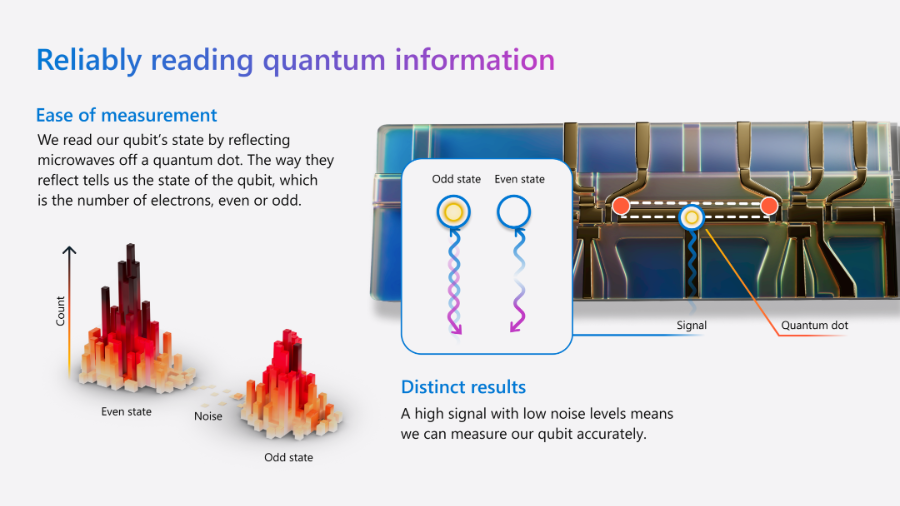
中航证券:国内量子计算呈现多元发展良好态势 把握量子前沿科技领域机会
Zhi Tong Cai Jing· 2025-10-14 06:29
Core Insights - The synergy between quantum computing and AI is expected to inject new momentum into the quantum computing industry and open new pathways for AI development [1][2] - The quantum computing industry is currently at a critical stage of technological breakthroughs, application exploration, and industry cultivation [2] - Domestic companies in the quantum frontier technology field are relatively advanced and comprehensive, likely to benefit from the rapid growth of this emerging industry [1] Quantum Information - Quantum information encompasses three main application areas: quantum computing, quantum communication, and quantum measurement, which have the potential to break through the limitations of classical information technology [1][2] - The global quantum computing technology market was valued at $1.1 billion in 2022 and is projected to grow to approximately $7.6 billion by 2027, with a compound annual growth rate (CAGR) of 79.72% from 2022 to 2030 [2] Quantum Communication and Measurement - Quantum communication is currently the only communication method proven to be unconditionally secure, with practical applications advancing rapidly [3] - The global quantum communication industry is expected to reach $7.85 billion by 2030, while the quantum precision measurement market is projected to grow to $2.527 billion by the same year [3] Investment Opportunities - Companies to watch in the quantum industry include Guodun Quantum (688027.SH), Hexin Instruments (688622.SH), Keda Guochuang (300520.SZ), Shenzhou Information (000555.SZ), Electric Science Cybersecurity (002268.SZ), and Jida Zhengyuan (003029.SZ) [4]



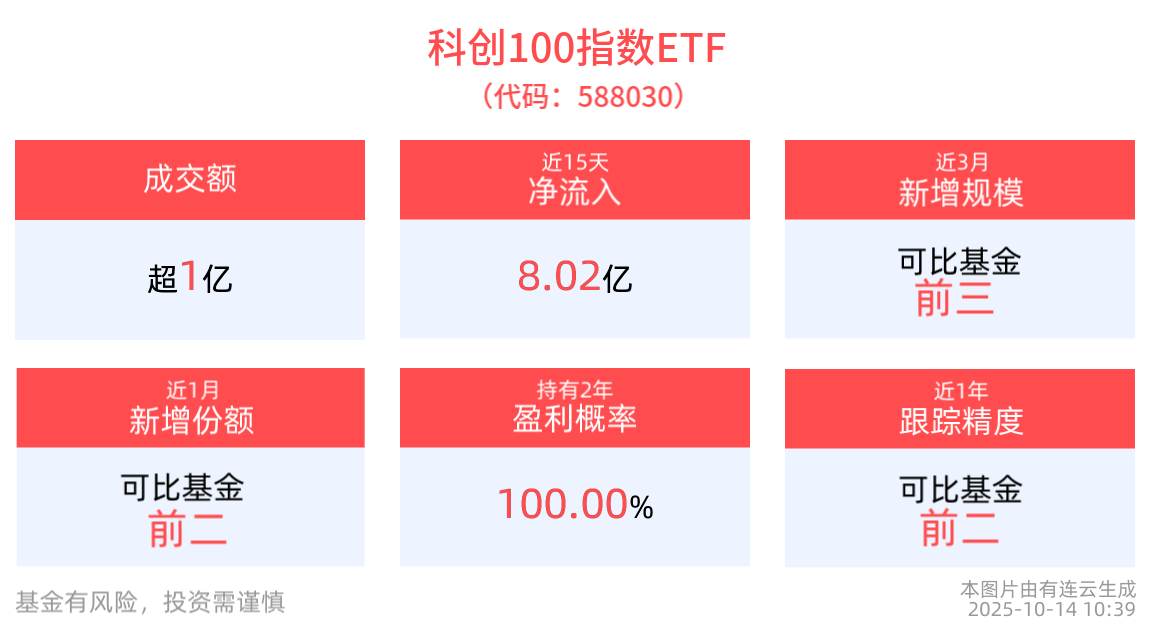
先进制程设备国产化持续提速,科创100指数ETF(588030)近15日“吸金”合计超8亿元
Sou Hu Cai Jing· 2025-10-14 03:12
Core Viewpoint - The semiconductor equipment localization process in China is expected to accelerate, driven by rising demands for self-sufficiency amid changing external environments [4]. Group 1: Market Performance - The Shanghai Stock Exchange Sci-Tech Innovation Board 100 Index fell by 1.14% as of October 14, 2025, with mixed performance among constituent stocks [3]. - The top gainers included Guandun Quantum (+4.98%), Hemai Co. (+4.61%), and Zhuhai Guanyu (+4.34%), while the biggest losers were Yandong Micro (-7.26%), Yuanjie Technology (-6.33%), and Xinyuan Micro (-6.33%) [3]. - The Sci-Tech 100 Index ETF (588030) decreased by 1.23%, with a latest price of 1.36 yuan, but saw a 4.31% increase over the past month [3]. Group 2: Liquidity and Fund Flow - The Sci-Tech 100 Index ETF had a turnover rate of 2.91% and a trading volume of 200 million yuan, with an average daily trading volume of 408 million yuan over the past year, ranking first among comparable funds [3][4]. - The ETF experienced a net outflow of 171 million yuan recently, but over the past 15 trading days, there were net inflows on 9 days, totaling 802 million yuan, with an average daily net inflow of 53.44 million yuan [4]. Group 3: Industry Developments - The domestic localization of semiconductor equipment is progressing, particularly in etching and thin film deposition, although the localization rate for photolithography machines remains at zero [4]. - The upcoming Bay Area Semiconductor Industry Ecological Expo in 2025 is expected to showcase advancements in key equipment or technology breakthroughs related to advanced processes [3]. - The recent Nobel Prize in Physics awarded for contributions to quantum mechanics marks a significant milestone for the quantum technology field, enhancing its international recognition [3]. Group 4: Fund Size and Share Growth - The Sci-Tech 100 Index ETF saw a significant growth of 510 million yuan in size over the past three months, ranking third among comparable funds [4]. - The ETF's share count increased by 594 million shares in the last month, placing it second among comparable funds [4]. Group 5: Index Composition - As of September 30, 2025, the top ten weighted stocks in the Sci-Tech 100 Index accounted for 24.32% of the index, including Huahong Semiconductor, BeiGene, and Dongxin Technology [5].
17只科创板股获融资净买入额超3000万元
Zheng Quan Shi Bao Wang· 2025-10-14 01:49
Core Viewpoint - The total margin balance of the STAR Market on October 13 was 250.87 billion yuan, showing a decrease of 4.61 million yuan from the previous trading day [1] Group 1: Margin Balance - The financing balance amounted to 249.197 billion yuan, down by 4.96 million yuan compared to the previous trading day [1] - The margin trading balance increased by 0.35 million yuan, reaching 8.9 million yuan [1] Group 2: Stock Performance - On October 13, 241 stocks in the STAR Market experienced net financing inflows, with 17 stocks having net inflows exceeding 30 million yuan [1] - Huahong Semiconductor topped the list with a net financing inflow of 594 million yuan, followed by companies like SMIC, Haiguang Information, Kingsoft Office, Guodun Quantum, Jucheng Technology, and Zhengfan Technology [1]



单光子探测器量产落地 服务于国内科研单位
Zheng Quan Ri Bao Wang· 2025-10-13 13:13
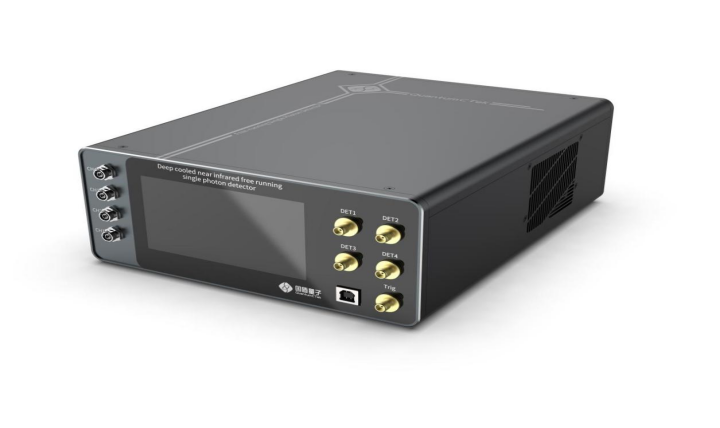
Core Insights - China has achieved the mass production of the world's first four-channel ultra-low noise semiconductor single-photon detector, marking a leading position in single-photon detection technology, which is crucial for applications in quantum communication, single-photon radar, biological fluorescence imaging, deep space laser ranging, and single-photon imaging [1][2] Group 1: Technology and Innovation - The single-photon detector is likened to an "eye" with extraordinary vision, capable of precisely capturing and identifying individual photons, serving as a core component in systems like quantum key distribution and laser radar [1] - The technology's challenges included achieving low temperature, low noise, and multi-channel capabilities within a compact refrigeration unit, with the lowest working temperature reduced from -50°C to -120°C, and dark noise levels decreased by approximately 90% to about 100Hz [1][2] Group 2: Product Features and Performance - The innovative four-channel integrated architecture allows the single-photon detector to be one-ninth the size of international single-channel products, enabling complex detection tasks that previously required multiple detectors [2] - The product's maximum detection efficiency has improved from 25% to 35%, enhancing sensitivity to extremely weak light [2] Group 3: Strategic Implications - The advancements in the single-photon detector enhance China's self-sufficiency in core components and devices in quantum information technology, as stated by the director of the Anhui Quantum Information Engineering Technology Research Center [2] - The product is already serving domestic research institutions and has the capability for mass production and delivery, with future developments focusing on miniaturization, chip integration, and scaling applications for major projects like next-generation quantum communication networks and high-precision laser radar [2]
全球首款四通道超低噪声半导体“单光子探测器”量产
Shang Hai Zheng Quan Bao· 2025-10-13 03:51
Core Viewpoint - The world's first four-channel ultra-low noise semiconductor single-photon detector has been mass-produced in Hefei, marking a significant advancement in quantum information technology and positioning China as a leader in this field [1][3][6]. Group 1: Product Development - The single-photon detector is likened to an "eye" with extraordinary vision, capable of accurately capturing and identifying individual photons, essential for quantum key distribution, fluorescence lifetime imaging, and laser radar systems [1][3]. - The device has set world records in detection efficiency, dark noise levels, and integration, indicating a leap in China's single-photon detection technology [3][6]. - The development team, including the leading quantum technology company GuoDun Quantum, overcame significant technical challenges over three years, achieving a minimum operating temperature of -120°C and reducing dark noise levels by approximately 90% to about 100Hz [4][5]. Group 2: Technical Innovations - The innovative four-channel integrated architecture allows the new detector to be one-ninth the size of international single-channel products, enabling complex detection tasks previously requiring multiple devices to be performed by a single unit [5][6]. - The maximum detection efficiency has been increased from 25% to 35%, enhancing sensitivity to extremely weak light [5]. Group 3: Market Impact and Future Prospects - The new product has already been adopted by top domestic research institutions and is ready for mass production and delivery [6]. - GuoDun Quantum plans to continue developing products along the lines of miniaturization, chip integration, and scalability for applications in next-generation quantum communication networks, high-precision laser radar, and deep space exploration [6]. - Following the announcement of the 2025 Nobel Prize in Physics for contributions to quantum mechanics, quantum technology stocks have seen significant market activity, with GuoDun Quantum's shares rising by as much as 17.91% [7][8].
国海证券:量子计算行业奇点将至 硬件端重点关注稀释制冷机/测控系统
智通财经网· 2025-10-13 02:21
Core Insights - The quantum computing industry is accelerating towards commercialization, with a focus on "scalability" and "fidelity" as key indicators [1] - Hardware components such as dilution refrigerators and measurement control systems are expected to account for 52.66% and 66.51% of the quantum computing hardware value by 2030 and 2035, respectively [1] Group 1: Quantum Computing Principles and Advantages - Traditional computing faces challenges due to the limitations of process miniaturization, while quantum computing offers superior efficiency for specific problems through the properties of quantum bits [1] - Quantum tunneling allows quantum bits to utilize tunneling phenomena to perform calculations, overcoming issues like leakage that affect traditional computing [1] - The reversible nature of quantum information processing addresses thermal dissipation effects, which are problematic in traditional high-density chips [1] Group 2: Quantum Computing Pathways - Three main pathways for quantum computing have been identified based on scalability and fidelity: superconducting, ion trap, and neutral atom technologies, with superconducting technology progressing the fastest [2] Group 3: Industry Readiness for Large-Scale Application - The quantum computing sector is on the brink of large-scale application, with significant developments expected between 2027 and 2029 [3] - Major global players are formulating strategies and investments in quantum computing, with the U.S. government highlighting the transition from laboratory to industrial application as a critical turning point [3] - Companies like Microsoft and Bluefors are making substantial commitments to quantum computing, with long-term investment strategies and large orders for critical components [3] Group 4: Key Hardware Components and Market Analysis - The three core hardware components of quantum computing are Quantum Processing Units (QPU), dilution refrigerators, and measurement control systems [4] - The market potential for dilution refrigerators is significant, with domestic performance on par with international leaders, and the measurement control systems market is also analyzed for growth opportunities [4]
