
罗氏

Search documents
AI制药行业动态点评:晶泰控股收到5100万美金首付款,AI制药商业模式得到验证
Shanxi Securities· 2025-08-12 07:52
Investment Rating - The report maintains an investment rating of "Leading the Market-A" for the pharmaceutical AI drug development industry [1]. Core Insights - The collaboration between CrystalTech Holdings and DoveTree, which includes a $51 million upfront payment, validates the AI drug development business model and reflects the accelerating commercialization of AI pharmaceutical companies [1][4]. - The AI pharmaceutical sector is on the brink of an explosive growth phase, characterized by three major trends: deepening technological integration, diversification of collaboration models, and the gradual establishment of regulatory frameworks [5]. Summary by Sections Industry Performance - The pharmaceutical sector has shown significant market performance over the past year, with a notable increase in high-value collaborations in the AI drug development space [1]. Key Developments - CrystalTech Holdings signed a strategic cooperation agreement with DoveTree to develop drug candidates in oncology and immune inflammation, receiving a $51 million upfront payment and potential future payments totaling up to $5.89 billion [1][4]. - The report highlights several high-value collaborations in the AI pharmaceutical field, indicating a strong demand from traditional pharmaceutical companies for AI technologies [4]. Future Outlook - The report anticipates that AI pharmaceutical companies will increasingly engage in downstream clinical development to share higher profits, moving beyond traditional licensing agreements [5]. - The FDA and other regulatory bodies are beginning to establish guidelines for the evaluation of AI in drug development, which will accelerate the standardization process within the industry [5].
跨国药企半年报:冰火两重天,创新突围战打响
2 1 Shi Ji Jing Ji Bao Dao· 2025-08-12 06:12
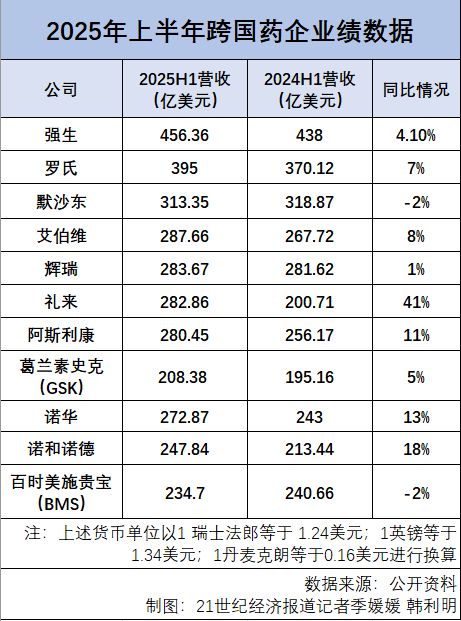
Core Insights - The global pharmaceutical industry is experiencing a bifurcation in performance, with some companies achieving strong results while others face declines due to patent expirations, increased competition, and regulatory pressures [1][4][20] - Major pharmaceutical companies are transitioning from a high-growth phase to a new competitive stage focused on innovation and strategic focus [1][4] Financial Performance - Johnson & Johnson leads with a revenue of $45.636 billion in H1 2025, the only company to surpass $40 billion [2] - Eli Lilly and Novo Nordisk show significant growth, with Eli Lilly's revenue increasing by 41% to $28.286 billion and Novo Nordisk's by 18% to $24.784 billion, driven by GLP-1 drugs [2][15] - Merck and Bristol-Myers Squibb (BMS) report declines, with BMS's revenue down 2% to $23.470 billion, primarily due to a 17% drop in legacy products [2][6] Strategic Adjustments - Companies are optimizing product structures and adjusting strategies to regain growth, with BMS increasing its revenue guidance to $46-47.5 billion for 2025 [6][8] - Merck has initiated a multi-year optimization plan aiming for $3 billion in annual savings by 2027, including workforce reductions and real estate optimization [8][10] - The industry is witnessing a trend of mergers and acquisitions as companies seek to bolster their pipelines amid patent expirations [21][22] Innovation and Product Focus - The GLP-1 class of drugs is emerging as a key growth driver, with sales expected to exceed $17 billion by 2031, reflecting a compound annual growth rate of 15.6% [14][15] - BMS and other companies are focusing on high-potential products, with BMS's growth products generating $12.159 billion, a 17% increase [6][7] - Companies are increasingly prioritizing high-return investment areas and optimizing their R&D pipelines to enhance operational efficiency [4][9][10] Market Dynamics - The impending "patent cliff" is expected to impact over 133 drugs, with a potential revenue loss of $350 billion for major pharmaceutical companies [20] - The competitive landscape is shifting, with companies needing to adapt to local market conditions and consumer demands to maintain their positions [5][13] - The focus on core products and strategic partnerships is becoming essential for sustaining growth in a challenging market environment [19][22]

特稿 | 药盒里的潮汐进退:进口原研药高溢价神话崩塌与国产药逆袭
Hua Xia Shi Bao· 2025-08-12 04:19
Core Viewpoint - The article highlights a significant shift in the pharmaceutical market in China, where the market share of imported original research cancer drugs in top-tier hospitals is projected to drop from 68% in 2021 to 34% in 2024, while the combined share of domestic generic and innovative drugs is expected to rise to 66% [5][10]. Group 1: Market Dynamics - The transition from imported original drugs to domestic alternatives reflects deeper changes in the pharmaceutical market, driven by cost advantages of domestic generics and innovations [1][6]. - In the first half of 2025, over 30 original research drugs from multinational companies are expected to withdraw from the market, including those from Takeda, Pfizer, and GlaxoSmithKline [1]. - The declining market share of imported drugs is attributed to multinational companies' pricing strategies and the competitive pricing of domestic generics [6][10]. Group 2: Patient Perspectives - Many patients are initially hesitant to switch from imported to domestic drugs due to concerns about efficacy and safety, as illustrated by the experiences of patients like Ms. Zhou and an elderly male patient [3][4]. - However, some patients have reported positive outcomes after switching to domestic drugs, noting both cost savings and effective treatment [4][12]. Group 3: Policy and Regulatory Environment - The article discusses the impact of national drug procurement policies, which have significantly reduced the market presence of imported original drugs, with a low winning rate of 3.7% in recent procurement rounds [6][10]. - The ongoing reforms in the healthcare payment system, including DRG and DIP models, are pushing hospitals to prioritize lower-cost drugs, further squeezing the space for imported original drugs [10][12]. Group 4: Industry Adjustments - Multinational pharmaceutical companies are adapting by localizing their operations, including expanding production bases and upgrading research centers in China [13][14]. - Companies like Sanofi and Roche are shifting their focus towards innovative drugs and adjusting their product portfolios in response to market changes [8][14]. Group 5: Future Outlook - The article emphasizes the need for a transparent and competitive market environment to foster the development of high-quality, reasonably priced drugs, whether domestic or imported [16]. - The ongoing evolution in the pharmaceutical landscape suggests that both multinational and domestic companies will continue to adapt their strategies to meet changing patient needs and regulatory requirements [9][16].
瑞士这回知道自己的地位了吧
虎嗅APP· 2025-08-12 00:08
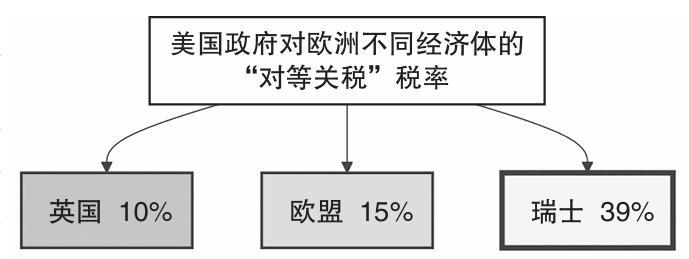
Core Viewpoint - The article discusses the impact of the 39% tariffs imposed by the Trump administration on Switzerland, highlighting the potential economic repercussions for the Swiss economy, particularly in its export sectors [4][5]. Group 1: Economic Impact on Switzerland - Switzerland's economy is heavily reliant on trade, with exports projected to reach 283 billion Swiss francs in 2024, a 3% increase from 2023 [6]. - The U.S. is Switzerland's most significant trading partner, accounting for 19% of its total exports, despite a trade deficit of nearly 40 billion francs [6][7]. - The pharmaceutical sector is a major contributor to Swiss exports, with expected exports to the U.S. reaching 35 billion dollars in 2024 [8]. - The high tariffs create a significant disadvantage for Swiss exporters, especially when compared to the 15% tariffs imposed on EU products [7][8]. Group 2: Response to Tariffs - The Swiss government is actively seeking to negotiate with the U.S. to mitigate the impact of the tariffs, with proposals likely to include increased investments in the U.S. as leverage [9][11]. - The Swiss Federal Council has introduced a "partial unemployment" scheme to help businesses cope with reduced demand due to tariffs, allowing for reduced working hours while retaining employees [12][13]. Group 3: Consumer Behavior and Local Products - Despite the tariffs, Swiss consumers remain loyal to local products, often preferring them over imported goods, which may be affected by the tariffs [17][20]. - The cultural inclination towards local products is reinforced by strict Swiss production standards and a strong sense of community support for local agriculture [20][22].

美加征关税持续冲击瑞士药企
Jing Ji Ri Bao· 2025-08-11 22:05
最近,瑞士药企正遭遇美国加征关税举措的连续冲击。 7月31日,美国政府宣布对从瑞士进口的商品征收39%关税。近日,美国又向全球主要制药企业发出"最 后通牒",要求其降低在美药品价格,并将更多生产环节转移至美国。其中就包括瑞士知名药企罗氏和 诺华。 长期以来,全球医药行业普遍采用"全球分工、区域协作"的供应链模式:从发展中国家采购原料药,在 欧洲进行生产加工,最终出口至美国市场。美国大幅提高进口关税,势必推高企业生产成本,打乱原有 分工格局,迫使企业重新布局产能与供应链。这种人为推动的"回流"政策,违背了市场经济基本规律, 将会扭曲产业链结构,提升成本、压低效率,不利于全球医药行业的可持续发展。 更现实的问题在于,医药产业链建设极为复杂,涉及选址、设备、质量控制、人员招聘、环保审批等多 个环节,绝非短期内可以完成的。在多变的政策环境下,企业虽有投资承诺,但最终能否落地,仍存在 较大不确定性。 美国是全球最大的医药市场,也是绝大部分国际医药企业最大的营收来源地。当这一巨大市场迎来充满 不确定性的关税冲击,企业的经营风险就被空前放大。因此,对于包括瑞士药企在内的全球医药企业来 说,进行更多元化的市场布局,让营收结构 ...
瑞士这回知道自己的地位了吧
Hu Xiu· 2025-08-11 11:05
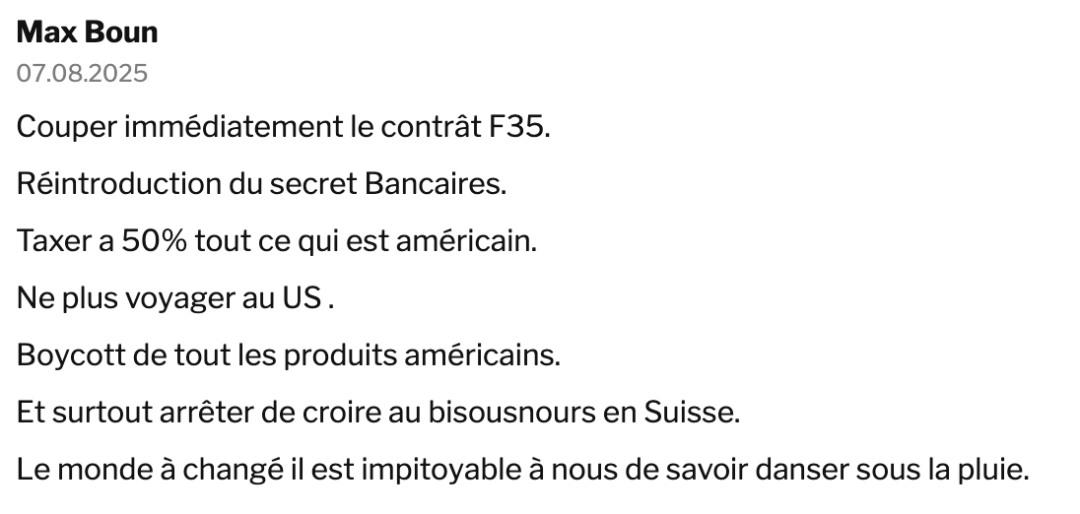
Core Points - The introduction of a 39% tariff by the Trump administration has significantly impacted Switzerland, a long-time ally of the United States [1][2] - Despite urgent talks between Swiss officials and the U.S., the tariffs took effect on August 7, 2024, leading to concerns about the Swiss economy [2][3] Economic Impact on Switzerland - Switzerland's economy, heavily reliant on trade, is projected to see a total export of 283 billion Swiss francs in 2024, a 3% increase from 2023 [3] - The U.S. is Switzerland's most important trading partner, with exports to the U.S. accounting for 19% of total Swiss exports in 2024 [4] - Swiss investments in the U.S. total approximately $307 billion, surpassing investments in Germany, France, Italy, and the UK combined [5] - The pharmaceutical sector, a major contributor to Swiss exports, is currently not affected by the tariffs, but future tariffs on this sector are a possibility [6] Sector-Specific Effects - The Swiss watch industry, which exported about $7.6 billion to the U.S. in 2024, is expected to face challenges due to the new tariffs and a stronger Swiss franc [7] - High-end watch brands may be less sensitive to price changes, but mid-range brands could suffer more due to price sensitivity [7][8] Government Response and Public Sentiment - The Swiss government is exploring negotiation strategies, including increasing investments in the U.S. as leverage [8][9] - Public sentiment is mixed, with calls for boycotting U.S. products and terminating defense contracts, reflecting frustration over the tariffs [10][12] - The Swiss government is implementing measures like partial unemployment to mitigate the economic impact on businesses and protect jobs [16][18] Neutrality and International Relations - Switzerland's long-standing neutrality is being questioned due to its involvement in sanctions against Russia and cooperation with NATO [13][14] - Nationalist sentiments are rising, advocating for a return to strict neutrality in foreign policy [14][16]
十年长跑,小核酸药物迎来“中国时刻”
Xin Hua Ri Bao· 2025-08-11 01:35
Core Viewpoint - The article emphasizes the importance of transforming scientific research into practical applications, highlighting the journey of scientists who become entrepreneurs in the field of technology innovation, particularly in Jiangsu province [1]. Group 1: Scientific Breakthroughs - Zhang Chenyu's discovery of "extracellular small RNA" has opened a new research field in life sciences, recognized as a paradigm shift in biological research by Nature magazine [2]. - The ER2001 drug represents a significant advancement in gene therapy, being the first small nucleic acid drug to deliver to the central nervous system via intravenous injection [4][5]. Group 2: Clinical Trials and Innovations - The ER2001 clinical trial for Huntington's disease is notable for being the first of its kind conducted outside Europe and the U.S., utilizing innovative methods to overcome the blood-brain barrier [3]. - Initial results from the ER2001 trial show significant improvements in patients' motor functions and cognitive abilities, indicating a potential breakthrough in treatment [9][10]. Group 3: Commercialization and Investment - The establishment of Aima Biotechnology (Nanjing) Co., Ltd. was a pivotal moment, with the company securing 162.6 million yuan in contracts for patent transfers from Nanjing University [6]. - The collaboration with Dinghui Investment was crucial for funding, driven by the publication of key research papers that attracted investor interest [11]. Group 4: Strategic Partnerships - The partnership with top medical institutions facilitated the rapid progression of ER2001 into clinical trials, showcasing the importance of building a clinical resource network [12]. - The combination of scientific expertise and management experience within the team has been essential for navigating the complexities of drug development and commercialization [8].
财经观察:瑞士如何招架“发达国家最高关税”?
Huan Qiu Shi Bao· 2025-08-10 22:56
Group 1: Tariff Impact on Switzerland - The U.S. has imposed a 39% tariff on Swiss goods, the highest among developed countries, leading to significant shock and confusion in Switzerland [1][3] - The trade deficit between the U.S. and Switzerland exceeded $38 billion last year and approached $48 billion in the first half of this year, prompting U.S. dissatisfaction with Switzerland's trade balance [3] - Swiss exports to the U.S. are heavily reliant on gold, which accounted for two-thirds of exports recently, alongside strong performances in pharmaceuticals, precision machinery, watches, chocolate, and cheese [3] Group 2: Economic Consequences - Economists estimate that the U.S. tariffs could result in the loss of 7,500 to 15,000 jobs in Switzerland and potentially decrease the country's GDP by up to 1% [6] - The high tariffs, combined with the strong Swiss franc, are expected to severely impact Swiss exporters, particularly in the machinery and electrical engineering sectors [7] Group 3: Industry Responses - Swiss companies are preparing for the tariff impact by increasing exports to the U.S. before the tariffs take full effect, but the long-term effects will become apparent as inventories deplete [9] - The luxury watch industry may see prices rise by 65% in the U.S. due to tariffs, while chocolate prices could increase by nearly 55%, risking market share loss [9] Group 4: Negotiation Challenges - Swiss authorities are in ongoing discussions with the U.S. to lower tariffs, but the negotiation leverage appears limited due to Switzerland's already high level of trade liberalization with the U.S. [10] - The potential for Swiss companies to relocate production to Germany is being considered, but this process is complex and time-consuming [10] Group 5: Broader Trade Dynamics - The current trade negotiations between Switzerland and the U.S. are characterized by pressure and threats rather than traditional cooperative discussions, complicating the resolution process [11]


Science重磅:破解阿尔茨海默病抗体药的脑出血副作用——突破血脑屏障,靶向递送抗Aβ抗体
生物世界· 2025-08-09 04:06
Core Viewpoint - Alzheimer's disease (AD) is a severe neurodegenerative disorder with significant impacts on individuals and society, yet drug development has faced numerous failures despite substantial investments from major pharmaceutical companies [2][3]. Drug Development and FDA Approvals - In June 2021, the FDA accelerated the approval of Aducanumab, developed by Eisai and Biogen, marking the first new drug for Alzheimer's since 2003, although its approval was controversial due to associated risks like ARIA (Amyloid-related Imaging Abnormalities) [3][6]. - Following Aducanumab, the FDA approved two additional antibody drugs targeting Aβ: Donanemab by Eli Lilly and Lecanemab by Eisai and Biogen, both of which also present ARIA-related side effects [3][6]. Denali Therapeutics' Research - Denali Therapeutics published a study in August 2025 on a new antibody transport carrier, ATV cisLALA, which utilizes transferrin receptor (TfR) to enhance brain delivery of anti-Aβ antibodies while mitigating ARIA risks [4][9]. - The ATV cisLALA carrier shows improved distribution in brain tissue compared to traditional Aβ antibodies, which tend to accumulate around blood vessels, potentially triggering inflammatory responses and ARIA [9][11]. Mechanism of Action - Traditional Aβ antibodies enter the brain through cerebrospinal fluid and perivascular spaces, where amyloid deposits are located, leading to inflammation and ARIA. In contrast, the ATV carrier enhances delivery through capillaries, reducing ARIA side effects [11][12]. - Denali's TfR-based approach is not limited to Aβ; the company is also developing therapies targeting tau protein using the same delivery mechanism, aiming to address two key toxic proteins in Alzheimer's simultaneously [11].


Genmab(GMAB) - 2025 Q2 - Earnings Call Presentation
2025-08-07 16:00
Financial Performance - Total revenue increased by 19% from USD 1382 million to USD 1640 million[39] - Operating profit increased by 56% from USD 352 million to USD 548 million[39] - Recurring revenue grew by 27%[38] - Combined commercialized medicines sales increased by 60% from USD 181 million to USD 289 million[23] - Cash reserves stand at USD 29 billion[12] Product Performance - EPKINLY net sales increased by 74% to USD 211 million[27] - TIVDAK net sales increased by 30% to USD 78 million[32] - Rina-S® showed a confirmed ORR of 500% in endometrial cancer patients[17] Pipeline Development - EPCORE® FL-1 clinical trial met dual primary endpoints of ORR and PFS, reducing the risk of disease progression or death by 79%[14] - sBLA for EPKINLY® in 2L FL accepted with a PDUFA date of November 30, 2025[13] Guidance - Revenue guidance improved to USD 3500-3700 million, representing a 15% year-over-year growth[41] - Operating profit guidance improved to USD 1055-1405 million, representing a 26% year-over-year growth[41]
