世界银行

Search documents
联合国贸发会议报告呼吁 加强气候融资对接发展中国家需求
Sou Hu Cai Jing· 2025-11-11 22:44
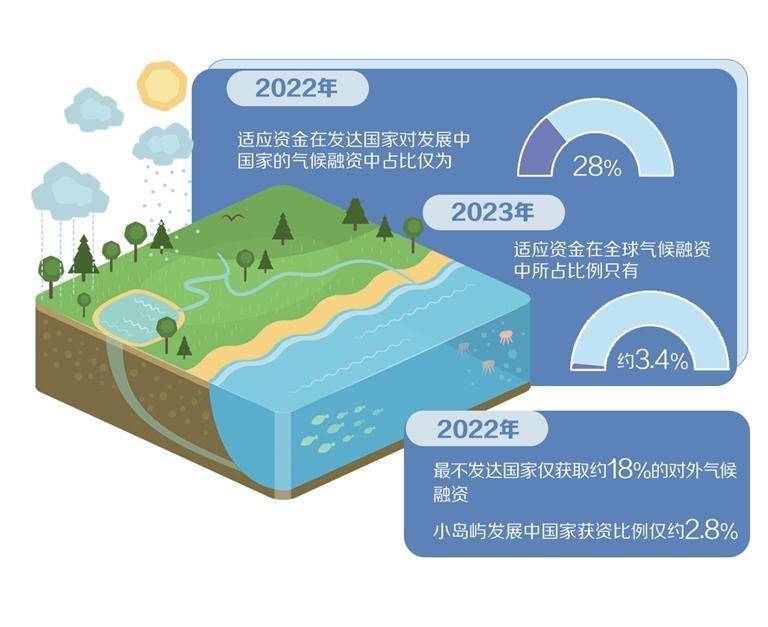
Core Insights - The report by the United Nations Conference on Trade and Development emphasizes the need for systemic reform of the international financial system to mobilize $1.3 trillion annually for climate financing, particularly for developing countries [2][4] Financing Needs and Current Gaps - Despite achieving the $100 billion climate financing commitment in 2022, there remains a significant gap compared to the $1.3 trillion target set for 2024, indicating that the current financing is insufficient to meet the needs of developing countries [2][3] - Adaptation funding, a crucial component of climate financing, constituted only 28% of climate financing from developed to developing countries in 2022, and dropped to approximately 3.4% in 2023, highlighting the challenges in attracting private capital for adaptation efforts [2][3] Structural Issues in Financial Architecture - The report identifies structural limitations in the international financial architecture as a barrier to developing countries accessing necessary funds for climate action, including high capital costs, unsustainable debt, and complex financing procedures [3][4] - Developing countries often lack central bank swap lines and rely on institutions like the International Monetary Fund, which come with stringent macroeconomic conditions, exacerbating their financial vulnerabilities [3][4] Recommendations for Reform - To achieve the $1.3 trillion climate financing goal by 2035, the report advocates for comprehensive reforms in the international financial architecture, focusing on enhancing financial stability, expanding climate and development financing, and improving global financial governance equity [4][5] - The report suggests increasing public international financing, promoting non-debt financing options, and reforming multilateral development banks to better support climate and green structural transitions [5] - It also calls for a more equitable governance structure in institutions like the IMF and World Bank, enhancing the representation of developing countries in decision-making processes [4][5]

世行预测2025-2027年阿塞拜疆年均经济增长1.7%
Shang Wu Bu Wang Zhan· 2025-11-11 03:14
Core Insights - The World Bank forecasts an average economic growth rate of approximately 1.7% for Azerbaijan from 2025 to 2027, with inflation expected to remain within the central bank's target range [1] Economic Outlook - Azerbaijan's economy is projected to experience long-term low growth and significant risks associated with a sharp decline in energy prices [1] - Short-term risks appear minimal, but the long-term sustainability of the economy will depend on the effectiveness of economic diversification reforms [1]
波黑外债占GDP比重回落至22%
Shang Wu Bu Wang Zhan· 2025-11-05 16:54
(原标题:波黑外债占GDP比重回落至22%) 波黑外债的最大债权方为欧洲投资银行(24.9亿马克),其次是世界银行(13.8亿 马克)、国际开发协会(8.98亿马克)以及国际复兴开发银行(8.77亿马克)。其中约 有70亿马克的债务以欧元计价。 波黑《独立报》11月3日报道。根据波黑财政部的文件,今年第一季度两实体的外 债相比去年第四季度均有所下降。 东萨拉热窝大学经济学院教授普雷德拉格·姆利纳列维奇表示,评估公共债务的可 持续性应以债务占GDP比例为依据,而非债务的绝对数额,因为这一比例更能反映一 个国家偿债能力和经济潜力。他指出,如果债务用于推动经济增长,国家可以在绝对 债务上升的同时实现相对债务下降。他强调,波黑当前应将关注重点放在"为何借 债"上,而非"是否借债",并通过完善发展战略,使举债服务于经济结构优化与长期发 展目标。(驻波黑使馆经商处) 今年一季度,波黑的外债总额约为89.5亿马克,占GDP的22%。波黑外债最高峰出 现在2022年,当时达到98.1亿马克,占GDP的28%。此后,2023年降至89.2亿马克 (22% GDP),但在去年年底又回升至92.3亿马克(24% GDP)。 具体来 ...
专访欧洲经济学家乌赞:世界正处于转折点 全球南方力量正在崛起
2 1 Shi Ji Jing Ji Bao Dao· 2025-11-03 15:31
Core Insights - The global South, particularly countries like China and India, is increasingly becoming a growth engine for the world economy, with China advocating for reforms in global governance through initiatives like the Global Governance Initiative presented at the Shanghai Cooperation Organization summit [1][9]. Group 1: Global Governance Reform - The Bretton Woods system is facing significant challenges, including outdated quota distributions that do not reflect the economic weight of emerging markets, monopolistic practices in leadership selection, and a disconnect between the institutions' missions and the realities of capital mobility [2][9]. - The establishment of new institutions by China, such as the New Development Bank (NDB) and the Asian Infrastructure Investment Bank (AIIB), signifies a push for inclusive reforms in the global governance framework [6][13]. Group 2: Dollar Dominance and Currency Dynamics - While the U.S. dollar remains the dominant reserve currency, its supremacy is being challenged by factors such as the weaponization of the dollar through sanctions, increasing domestic policy uncertainty in the U.S., the growing use of the renminbi in international trade, and innovations in digital currencies [7][8]. - The rise of stablecoins, projected to grow from approximately $300 billion to $4 trillion by 2030, could significantly alter the landscape of reserve currencies, potentially reinforcing the dollar's position or complicating monetary policy in emerging markets [8]. Group 3: Role of BRICS and Emerging Economies - The expansion of the BRICS group reflects the increasing influence of emerging economies and their collective desire to reduce dependence on the dollar [11][12]. - The BRICS nations are seen as key players in advocating for global governance reforms, with initiatives like the New Development Bank serving as evidence of their commitment to multilateralism [11][12]. Group 4: China's Position in Global Finance - China is positioned as a crucial participant in the global financial architecture, promoting a model of inclusivity rather than seeking hegemony, as evidenced by its various global governance initiatives and participation in existing institutions like the IMF and World Bank [13]. - The ongoing development of infrastructure investments under initiatives like the Belt and Road Initiative is reshaping global trade dynamics, particularly in Central Asia and the Middle East [11].
专访欧洲经济学家乌赞:世界正处于转折点,全球南方力量正在崛起
2 1 Shi Ji Jing Ji Bao Dao· 2025-11-03 12:36
Core Insights - The global South, including countries like China and India, is increasingly becoming a growth engine for the world economy, with China advocating for reforms in global governance through initiatives like the Global Governance Initiative presented at the Shanghai Cooperation Organization summit [1][9]. Group 1: Global Governance and Financial Institutions - The Bretton Woods system is facing significant challenges, including outdated quota distributions and a lack of representation for emerging economies, which necessitates reform [2][9]. - The International Monetary Fund (IMF) and World Bank are struggling to adapt to the current economic landscape, which has shifted significantly since their inception nearly 80 years ago [6][9]. - China is actively promoting inclusive reforms through initiatives such as the New Development Bank and the Asian Infrastructure Investment Bank, aiming to complement rather than replace existing institutions [6][13]. Group 2: Dollar Dominance and Currency Dynamics - While the US dollar remains the dominant reserve currency, its supremacy is being challenged by factors such as the weaponization of the dollar, increased use of the renminbi, and innovations in digital currencies [2][7]. - The rise of stablecoins, projected to grow from $300 billion to $4 trillion by 2030, could significantly alter the landscape of reserve currencies, potentially reinforcing or undermining the dollar's position [8][7]. - The ongoing expansion of BRICS reflects a collective desire among emerging economies to reduce reliance on the dollar and challenge Western-dominated financial structures [10][11]. Group 3: Future of Global Economic Governance - The current geopolitical tensions and economic fragmentation pose a fundamental challenge to the cooperation and integration that have characterized the past four decades [4][12]. - The need for a new global economic framework is evident, as existing institutions struggle to meet the demands of a rapidly changing world [5][4]. - The emphasis on multilateralism and shared development opportunities is crucial for the future of global governance, with China positioning itself as a key player in this transition [13][12].
智昇黄金原油分析:降息如期进行 黄金目标上移
Sou Hu Cai Jing· 2025-10-31 09:42
Gold Sector - The Federal Reserve lowered interest rates by 25 basis points to a range of 3.75%-4.0%, but uncertainty remains regarding future rate cuts, particularly in December [1] - The World Bank forecasts an average gold price of $3,575 next year, with a potential increase of 5%, reaching double the average from 2015-2019 [1] - Analyst Owen from Zhisheng believes that the second rate cut this year is already priced in, leading to weak gold performance [1] - Technically, gold has shown weak performance after a decline, with potential resistance at $4,070 [1] Oil Sector - The OPEC+ meeting on November 2 is expected to result in a production increase of 137,000 barrels per day in December to gradually regain market share [2] - The International Energy Agency reported a significant drop in oil inventories by 6.86 million barrels, exceeding market expectations, which is bullish for oil prices [2] - Despite the inventory drop, U.S. oil production increased by 15,000 barrels to a record 1,364.4 million barrels per day, failing to support a price increase [2] - Technically, oil is forming a double bottom structure, with support at $55 and resistance at $62.50 [2] Dollar Index - The European Central Bank maintained its key deposit rate at 2%, citing uncertainty in the eurozone due to global trade and geopolitical tensions [3] - Following the Fed's meeting, the probability of a 25 basis point rate cut in December is at 74.7%, with a 57.7% chance of maintaining the current rate [3] - The dollar is showing signs of a bottoming pattern, with potential resistance at 100.20 and support at 99.32 [3] Nikkei 225 - The Nikkei 225 index is in a strong bullish trend with no signs of a peak, showing accelerated upward movement [4] - The focus is on the 51,500 level as a key support and resistance line [4] Copper Sector - Copper prices have been fluctuating within a wide range, with a key support level at $4.94; a drop below this level may indicate a trend reversal [5] - Recent price action shows a pullback after reaching highs, with resistance at $5.11 [5] Market Overview - Trump indicated a potentially large agreement involving oil and gas purchases from Alaska [7] - U.S. Treasury Secretary expressed appreciation for the Fed's rate cut but dissatisfaction with the wording, highlighting the need for significant reforms [7] - The World Gold Council reported that global gold demand reached a record high in the third quarter of this year [7]

世界银行:料明年金价再升5%,2027年升浪结束
Ge Long Hui· 2025-10-31 06:33
Core Viewpoint - The World Bank projects that gold prices will average $3,400 per ounce in 2025, with a 5% increase expected next year to an average of $3,575 per ounce, but anticipates a potential decline to $3,375 per ounce by 2027, representing a 5% drop [1] Price Projections - Gold prices are expected to rise approximately 42% this year, with a slower increase anticipated for next year, yet still remaining over 1.8 times higher than the average levels from 2015 to 2019 [1] Market Influences - The report highlights that easing geopolitical tensions and hawkish monetary policies may exert pressure on the safe-haven demand and investment demand for gold and silver [1]
世界银行拟扩大对肯尼亚的支持领域
Shang Wu Bu Wang Zhan· 2025-10-29 16:03
Core Insights - The World Bank plans to expand its aid projects in Kenya, focusing on key sectors such as minerals, pharmaceuticals, digital economy, and energy transition [1] - The new initiative aims to enhance local pharmaceutical production capacity, develop critical mineral resources, and promote green energy and digital projects [1] - The Kenyan delegation indicated that this collaboration would help localize supply chains and boost employment growth [1] - This meeting is part of Kenya's efforts to broaden international financing channels and deepen partnerships for development [1]
阿联酋在人类发展与妇女青年赋权方面树立典范
Shang Wu Bu Wang Zhan· 2025-10-29 16:03
阿通社10月27日报道,世界银行中东及北非地区人力发展部主任法迪娅·萨阿达称,阿联酋通过劳 动法改革及早期教育投资,成为促进人类发展、赋权妇女和青年的典范。她指出,劳动法新规推动灵活 就业与父母假制度,提升女性与青年工作机会。阿联酋的黄金签证、绿色签证等政策促进劳动力流动, 并通过失业保险与工资保护制度强化劳动权益。萨阿达表示,这些经验对地区经济多元化与创新具有重 要意义。 (原标题:阿联酋在人类发展与妇女青年赋权方面树立典范) ...
3天变10分钟!中国学者帮中亚打通钱袋子,西方专家看呆了
Sou Hu Cai Jing· 2025-10-28 02:36
Core Insights - The article highlights a significant technological revolution in cross-border remittances facilitated by blockchain technology, which has drastically reduced transaction times and fees in Kyrgyzstan [1][4][10] - The success of Xiang Lingyun's team in implementing a blockchain-based remittance system demonstrates a shift from traditional academic achievements to practical problem-solving in developing economies [6][9][12] Group 1: Economic Impact - In Kyrgyzstan, remittances accounted for 31% of GDP in 2024, indicating a heavy reliance on funds sent by overseas workers [4] - The traditional remittance process involved multiple intermediaries, taking an average of 3 days and incurring fees as high as 15%, while the new system reduces this to 10 minutes and fees below 4% [4][10] - The World Bank reported that the average global remittance cost is 6.3%, with Central Asia being the most expensive region for remittances due to weak financial infrastructure [4][8] Group 2: Shift in Academic Evaluation - Xiang Lingyun's recognition as a lifelong academician reflects a growing trend where practical solutions are valued over traditional academic metrics like publication counts [9][12] - The collaboration model emphasizes problem-solving capabilities rather than theoretical knowledge, reshaping the academic evaluation landscape [6][9] - The demand for "applied scholars" has surged by 217% globally, indicating a shift towards valuing practical applications of research [12] Group 3: Technological Soft Power - China's experience in digital economy practices has positioned its scholars as leaders in providing practical solutions to developing countries [8][11] - The modular approach of the blockchain solution allows for targeted interventions in local financial systems, enhancing the effectiveness of technology transfer [8][10] - The collaboration with Chinese teams is seen as a "safe option" for developing countries, focusing on technical parameters rather than political conditions [11] Group 4: Future of Academic Competition - The article suggests that the future of academic competition will hinge on the ability to translate laboratory breakthroughs into real-world applications [12] - The integration of AI and blockchain technologies aims to address practical issues faced by workers in Central Asia, showcasing a grounded approach to technological development [12][13] - The emphasis on solving real problems rather than theoretical discussions is becoming a new standard for academic value [13]