
中国巨石

Search documents
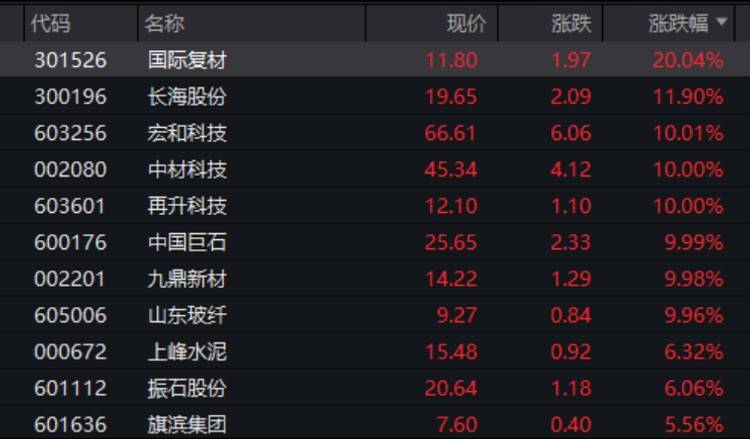
PCB概念股持续拉升,中材科技等多股创新高
Xin Lang Cai Jing· 2026-02-24 01:53
Group 1 - PCB concept stocks continue to rise, with companies such as Zhongcai Technology, Jiangnan New Materials, International Composites, Honghe Technology, China Jushi, and Tongguan Copper Foil reaching new highs during trading [1] - Shandong Glass Fiber and Tiantong Co., Ltd. hit the daily limit, while Mingyang Circuit and Delong Laser increased by over 10% [1] - Other companies like Yihau New Materials, Feilihua, and Shenzhen South Circuit also experienced gains [1]




趋势研判!2026年中国高频高速覆铜板行业发展历程、供需情况、市场规模、竞争格局及未来趋势:国产替代进程加快,高频高速覆铜板市场规模达370.6亿元[图]
Chan Ye Xin Xi Wang· 2026-02-20 01:04
Core Viewpoint - The high-frequency and high-speed copper-clad laminate market is experiencing robust growth driven by the large-scale construction of 5G base stations, rapid bandwidth demand in data centers, and the proliferation of electric vehicles and intelligent driving technologies. The market is projected to grow from 4.8 billion yuan in 2016 to 37.06 billion yuan by 2025, with a compound annual growth rate (CAGR) of 25% [1][7]. Industry Overview - High-frequency and high-speed copper-clad laminates are essential materials for the electronic information industry, primarily used in 5G communication devices, high-speed data centers, automotive electronics, satellite communications, and artificial intelligence hardware [1][6]. - These laminates exhibit significant advantages over traditional copper-clad laminates in terms of dielectric constant, dielectric loss, and signal transmission speed, making them suitable for high-frequency and high-speed signal transmission [1][6]. Market Size and Growth - The market size of China's high-frequency and high-speed copper-clad laminate industry is expected to grow from 4.8 billion yuan in 2016 to 37.06 billion yuan by 2025, reflecting a CAGR of 25% [1][7]. - By 2025, the demand for high-frequency and high-speed copper-clad laminates is projected to reach 13,168.8 million square meters, a year-on-year increase of 28% [5][6]. Industry Development History - The development of China's high-frequency and high-speed copper-clad laminate industry can be divided into several stages: initial stage, technology introduction and development, independent innovation and growth, vigorous industry development, and technological upgrades with international competition [3]. Industry Supply Chain - The supply chain for high-frequency and high-speed copper-clad laminates includes upstream raw materials such as copper foil, glass fiber cloth, resin materials, fillers, and processing equipment. The midstream involves the production and manufacturing of the laminates, while the downstream applications span communication equipment, consumer electronics, automotive electronics, and more [4]. Competitive Landscape - The industry has a clear tiered competitive structure, with the first tier dominated by Taiwanese, Japanese, and Korean companies, including well-known firms like Taiyo Yuden and Nanya Technology. The second tier consists of leading domestic manufacturers such as Shengyi Technology and Jin'an Guoji, while the third tier comprises smaller companies competing in niche markets [8]. Key Companies - Shengyi Technology Co., Ltd. is a major player in the industry, focusing on high-quality copper-clad laminates and achieving a global market share of 13.7% by 2024. The company emphasizes innovation and has filed numerous patents to enhance its competitive edge [8]. - Nanya New Material Technology Co., Ltd. specializes in copper-clad laminates and has reported a revenue increase of 41.83% in the first half of 2025, highlighting its strong market position [9][10]. Industry Trends - The industry is expected to focus on low-loss materials with low dielectric loss (Df) and low dielectric constant (Dk) through innovative resin systems and advanced manufacturing techniques [11]. - There is a trend towards higher integration in electronic products, with developments in high-density interconnect (HDI) and system-in-package (SiP) technologies to meet the demands for compact and multifunctional devices [12]. - The industry is also moving towards sustainable practices, promoting the use of green materials and clean production processes to reduce environmental impact [12].


板块异动喧嚣,看穿资金才是关键
Sou Hu Cai Jing· 2026-02-18 13:01
Core Viewpoint - Recent market fluctuations have led to significant price movements in certain sectors, while others have shown weaker performance. The underlying behavior of institutional investors is crucial for understanding these market dynamics, but ordinary investors often lack access to this information [1]. Group 1: Market Movements - Various sectors have displayed notable performance, with specific stocks experiencing significant price volatility [1]. - New stock listings have also shown marked changes in market performance, particularly in the Hong Kong stock market where certain stocks surged due to positive news [1]. Group 2: Institutional Inventory - "Institutional inventory" serves as a key indicator of institutional investor activity, similar to health metrics that reflect overall vitality rather than just food intake [2][3]. - The concept of institutional inventory is derived from analyzing long-term trading data to identify unique patterns in institutional trading behavior, visualized as active orange bars [3]. Group 3: Importance of Institutional Participation - Price increases without corresponding activity in institutional inventory should be approached with caution, as this may indicate a lack of genuine support for the price movement [5]. - Active institutional inventory during price adjustments suggests that institutional investors remain engaged, providing a more reliable basis for market stability [11]. Group 4: Data-Driven Investment Decisions - Monitoring institutional inventory can help investors avoid emotional decision-making based on market fluctuations, allowing for more rational investment strategies [13]. - The use of quantitative data, represented by the active institutional inventory, can guide investors in understanding the true sentiment of institutional capital without needing extensive financial knowledge [13].
寒冬渐退春不远,劲草迎风气象新:建筑建材 2026 年策略报告:-20260213
Huafu Securities· 2026-02-13 13:48
Investment Highlights - The construction sector faced pressure in 2025, with the building materials sector showing signs of bottom recovery, as the building materials sector increased by 22.1%, outperforming the construction decoration sector which only rose by 6.7% [2][15][22]. Construction Sector Analysis - The construction sector is under significant fundamental pressure, with a focus on three main investment directions: overseas expansion through the "Belt and Road" initiative, resource value reassessment, and state-owned enterprise reform [3][5]. - The domestic traditional infrastructure investment growth rate is slowing, and real estate construction continues to weaken, limiting the improvement space for the sector [3][5]. - Companies with business transformation capabilities and those positioned in high-growth niche markets performed well, while engineering consulting firms faced pressure due to local government financial constraints [3][5]. Building Materials Sector Analysis - The building materials sector is experiencing structural differentiation, with some segments expected to reach a turning point, particularly consumer building materials [4][5]. - Despite weak real estate data, the marginal negative impact on the building materials sector has significantly decreased, with supply-side improvements expected to precede demand-side recovery [4][5]. - The cement industry is recovering from price bottoming, while the glass industry remains under pressure, and the fiberglass sector is seeing significant improvements due to structural demand [4][5][41][46]. Investment Recommendations - In the construction sector, focus on leading infrastructure companies benefiting from overseas projects and major engineering, such as China Communications Construction Company, China State Construction Engineering, and China Railway Construction Corporation [5]. - In the building materials sector, attention should be given to leading consumer building material companies like Sangke Tree, Oriental Yuhong, and Beixin Building Materials, as well as cyclical building material leaders like Huaxin Cement and China National Building Material [5]. Belt and Road Initiative - The "Belt and Road" initiative has created significant opportunities for the construction sector, with a notable increase in overseas orders and contracts signed in 2025, amounting to $257.98 billion, a 10.8% increase year-on-year [77][79]. - The demand for infrastructure in countries participating in the initiative is expected to grow rapidly, providing a substantial project pool for construction companies [77][79]. Resource Value Reassessment - The expectation of rising prices for non-ferrous metals is anticipated to benefit state-owned construction companies that have acquired valuable mineral resources through past projects [3][5]. State-Owned Enterprise Reform - Policies promoting the securitization of state-owned assets and mergers and acquisitions are expected to create value reassessment opportunities for state-owned construction companies with quality assets [3][5].
建材行业双周报(2026/01/30-2026/02/12):“防内卷”带来建材供需格局优化,电子布价格提升预期增强-20260213
Dongguan Securities· 2026-02-13 08:48
Investment Rating - The report maintains a "Market Weight" rating for the building materials industry, indicating that the industry index is expected to perform within ±10% of the market index over the next six months [46]. Core Insights - The building materials industry is experiencing an optimization in supply and demand dynamics due to the "anti-involution" policies, with expectations for price increases in electronic fabrics [2][4]. - The cement sector is anticipated to see a further contraction in total production capacity in 2026, driven by regulatory measures and a potential recovery in real estate sales in key cities [4][39]. - The flat glass market is showing signs of recovery with a slight increase in production and prices, although short-term demand remains weak due to seasonal factors [4][40]. - The photovoltaic glass market is facing challenges with excess supply and ongoing losses, but long-term demand is expected to be supported by the development of new energy bases [4][40]. - The glass fiber industry is in a structural recovery phase, with increasing demand for high-end products driven by advancements in AI and 5G technologies [4][40]. Summary by Sections Cement - The Ministry of Industry and Information Technology has implemented measures to control cement production capacity, leading to an expected reduction in total capacity in 2026 [4][39]. - Recent data indicates a recovery in real estate sales, which, combined with major infrastructure projects, may improve the supply-demand balance in the cement industry [4][39]. - Recommended stocks include Shangfeng Cement, Taipai Group, and Huaxin Cement, which have favorable fundamentals and high dividend yields [4][39]. Glass and Fiberglass - The flat glass production in 2025 is projected to be 97,591 million weight boxes, a 3% decrease year-on-year, but December 2025 saw a 3.4% increase compared to the previous year [4][40]. - The price of float glass has shown a slight recovery, with expectations for price stabilization due to supply-side adjustments [4][40]. - The fiberglass market is benefiting from increased demand for low-DK glass fabrics, with Taiwanese manufacturers shifting production to meet this demand [4][40]. - Recommended stocks in the fiberglass sector include China Jushi, which is expected to benefit from the structural recovery in the industry [6][40]. Consumer Building Materials - Leading companies like Keshun and Sankeshu have announced price increases due to rising raw material costs, indicating a trend of price stabilization in the industry [6][42]. - The demand for new construction is weakening, but renovation and urban renewal projects are expected to drive growth [6][42]. - Recommended stocks include Beixin Building Materials, Tubaobao, and Sankeshu, which are well-positioned to recover ahead of their peers [6][42].


未知机构:电子布供给再释放积极信号看好后续提价根据卓创资讯近期电子-20260213
未知机构· 2026-02-13 02:25
Summary of Conference Call Notes Industry Overview - The electronic fabric market is experiencing a strong price increase, with notable price points for various products. For instance, the mainstream price for electronic yarn G75 is reported to be between 10,400-10,700 RMB/ton, while the prices for different types of electronic fabric are as follows: 7628 electronic fabric at 5.3-5.5 RMB/m, 2116 electronic fabric at 6.1 RMB/m, and 1080 electronic fabric at 6.3 RMB/m [1][3]. Key Insights - The price of 7628 electronic fabric has increased by 0.75 RMB/m compared to the end of last year, driven by several factors: 1. Slow expansion of weaving machine production capacity, with some companies switching equipment to produce low-dielectric products required for AI, thereby reducing the production of ordinary 7628 electronic fabric. 2. Production of ultra-fine and ultra-thin electronic fabric by a single weaving machine may result in a loss of over 50% of capacity due to production difficulties and differences in yarn density [1][3]. - There is an expectation that the price increase trend for electronic fabric may continue in the short term [2]. - By 2026, the supply and demand for ordinary electronic yarn may reach a balance, but the ordinary electronic fabric may still face supply constraints due to a shortage of weaving machines, which provides a basis for potential price increases [3]. Additional Important Points - The new production capacity for electronic yarn by 2026 includes: 1. A 100,000-ton production line by China Jushi in Huai'an, expected to start in March-April. 2. A 70,000-ton electronic yarn project by Jiantao Chemical. 3. An 85,000-ton ordinary electronic yarn project by International Composite Materials, which was launched at the end of December 2025, with plans for potential upgrades to older lines [3]. - Leading companies may optimize their product structures, with significant profit elasticity for ordinary electronic fabric. In Q3 2021, the average price of 7628 electronic fabric was 8.8 RMB/m, while China Jushi's non-tax selling price for electronic fabric was 6.7 RMB/m, yielding a net profit of 2.8 RMB/m, indicating substantial profit potential at current price levels [4]. - If the price of electronic fabric increases by 1 RMB/m, it could lead to a profit increase of 1 billion RMB for companies with an effective production capacity of 1.1-1.2 billion meters of electronic fabric [4].
大宗-强供给逻辑下的底部反转机会
2026-02-13 02:17
Summary of Key Points from Conference Call Industry Overview - **Electronic Fabric Market**: The electronic fabric market is experiencing a supply-demand imbalance due to a shortage of weaving machines, leading to price increases for LCT and second-generation fabrics expected in 2025-2026. Ordinary electronic fabrics also face supply constraints, with a projected shortage lasting until 2027, potentially driving prices significantly higher. China National Glass's market value could reach 140 billion [2][4]. - **Consumer Building Materials**: The consumer building materials sector has seen a decline since 2021, but leading companies like Oriental Yuhong and Sankeshu have significantly increased their market share, indicating a potential turning point. With supportive real estate policies, it is recommended to increase allocations to quality leading companies such as Sankeshu, Henkel Group, Yuhong, and Tubao [2][4]. - **Electricity Market Reform**: The reform in the electricity market is promoting green electricity consumption, with the State Council emphasizing the green certificate system. High-energy-consuming industries may face mandatory assessments of green certificate ratios. Clean energy operators like Longyuan Power and New天绿色能源 are worth monitoring [2][6]. - **Global Metal Resource Pricing**: The pricing model for global metal resources has shifted from a just-in-time supply chain to a stockpiling approach, leading to a tighter supply of strategic metals and increased price volatility. Copper inventories are moving from Asia to North America, complicating price stability due to geopolitical tensions [2][7]. Core Insights and Arguments - **Supply Situation in 2026**: The supply situation in the building materials industry, particularly in electronic fabrics and consumer building materials, is expected to be tight. The electronic fabric sector, especially AI electronic fabrics, is facing significant shortages due to machine supply constraints. Even with new capacities from China National Glass and Jianfa, the existing gap is unlikely to be filled [3][4]. - **Chemical Industry Pricing Logic**: Future price increases in the chemical industry are expected to be driven by changes in competitive dynamics and carbon emission restrictions. Products in the textile chain, such as nylon and organic silicon, are likely to see price increases through self-regulation [3][17]. - **Coal Industry Trends**: After four years of decline, the coal industry is expected to see a supply contraction due to policy shifts towards price stabilization and external factors like the U.S. coal revival plan. Companies with stable earnings, such as Yancoal and Power Development, are recommended for investment [3][25]. Additional Important Insights - **Investment Strategies in Power Sources**: Different power sources exhibit significant differences in stability and cleanliness, which will influence future investment strategies. The emphasis on green energy and carbon reduction will be crucial [5][6]. - **Impact of U.S. Midterm Elections**: The U.S. midterm elections are expected to significantly impact economic data, which in turn will affect metal prices. Key economic indicators will be closely monitored during this period [12]. - **Challenges for China's Export and Domestic Demand**: In 2026, China's export and domestic demand chains may face challenges due to rising raw material prices and currency appreciation, potentially leading to a shift back to domestic demand chains [13]. - **Future of the Dye Industry**: The dye industry is seeing a shift towards self-regulation among leading companies to avoid destructive competition, with expectations of price increases continuing into peak seasons [18]. - **PVC Industry Changes**: Recent price increases in the PVC market are attributed to the cancellation of export tax rebates, with long-term supply constraints expected due to environmental regulations [20][21]. - **Outlook for Refrigerants and Potash Fertilizers**: The refrigerant market is expected to see price increases due to seasonal demand, while potash fertilizers are projected to remain stable with growth potential [22]. - **Opportunities in Petrochemical and Oil & Gas Sectors**: The petrochemical sector is poised for growth due to reduced competition and favorable market conditions, while the oil and gas sector is expected to benefit from rising oil prices [23][24]. - **Coal Supply and Price Expectations**: Domestic coal supply is expected to decrease in 2026, leading to potential price increases due to reduced imports from Indonesia and domestic production cuts [26][27]. - **Geopolitical Impact on Oil Transportation**: U.S. geopolitical actions may boost oil transportation demand, particularly in light of sanctions against countries like Venezuela and Iran [16]. - **Investment Recommendations**: Companies with stable earnings and growth potential in the coal sector are recommended for investment, particularly those with reasonable valuations at higher price levels [30].
上证180指数上涨0.20%,上证180ETF指数基金(530280)交投活跃
Sou Hu Cai Jing· 2026-02-13 01:47
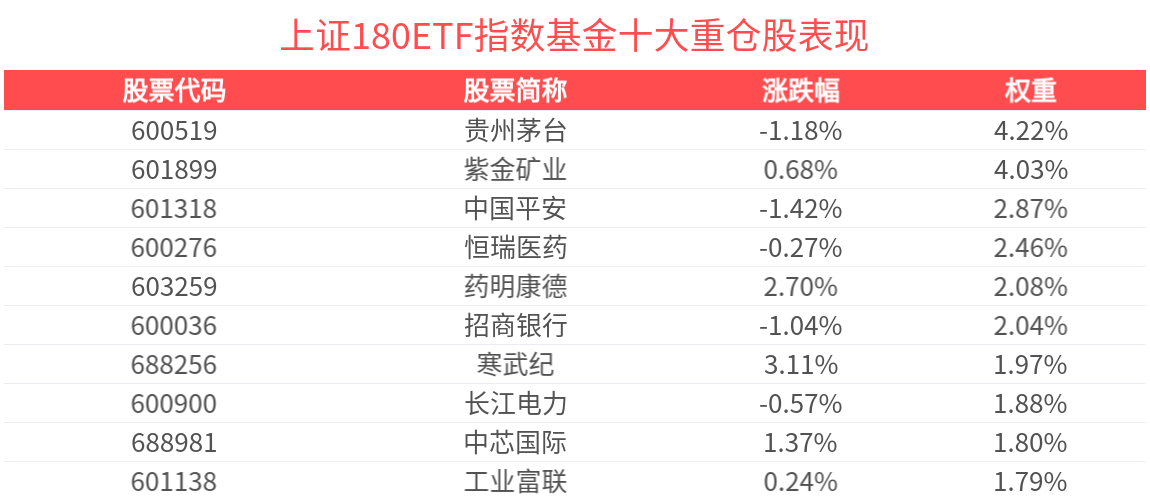
Core Insights - The Shanghai 180 Index (000010) has shown a slight increase of 0.20% as of February 12, 2026, with notable gains from stocks such as Dongfang Electric (+10.00%) and China National Offshore Oil Corporation (+9.98%) [1] - The Shanghai 180 ETF (530280) has experienced a minor decline of 0.16%, currently priced at 1.26 yuan, but has seen a cumulative increase of 1.04% over the past week [1] - The ETF has a Sharpe ratio of 1.91 since its inception, indicating a favorable risk-adjusted return [1] Performance Metrics - The Shanghai 180 ETF has a maximum drawdown of 4.28% year-to-date, with a relative benchmark drawdown of 0.06% [1] - The management fee for the ETF is set at 0.15%, while the custody fee is 0.05% [1] - The tracking error for the ETF over the past three months is 0.019%, reflecting its close alignment with the underlying index [1] Index Composition - The Shanghai 180 Index comprises 180 securities selected for their large market capitalization and liquidity, representing the core performance of Shanghai's listed companies [2] - As of January 30, 2026, the top ten weighted stocks in the index account for 24.85% of the total index weight, including major companies like Zijin Mining and Kweichow Moutai [2] - The top ten stocks by weight include: - Zijin Mining (4.03%) - Kweichow Moutai (4.22%) - China Ping An (2.87%) - Others include Hengrui Medicine, WuXi AppTec, and China Merchants Bank [3]
中国巨石股份有限公司关于股票交易异常波动的公告
Shang Hai Zheng Quan Bao· 2026-02-12 18:53
Core Viewpoint - China Jushi Co., Ltd. experienced a significant stock price fluctuation, with a cumulative closing price increase exceeding 20% over three consecutive trading days from February 10 to February 12, 2026, which is classified as an abnormal trading situation according to the Shanghai Stock Exchange regulations [2][3]. Group 1: Stock Trading Abnormality - The company's stock price increased by more than 20% cumulatively over three trading days, indicating abnormal trading activity [2][3]. - The company confirmed that there are no undisclosed significant matters or important information as of the announcement date [2][5]. Group 2: Company Operations and Major Events - The company conducted a self-inspection and confirmed that its production and operations are normal, with no significant changes in the market environment or industry policies [4]. - There are no undisclosed major events or significant matters, such as major asset restructuring or share issuance, that could impact the company [5]. - The company did not find any media reports or market rumors that could significantly affect its stock price [6]. Group 3: Shareholder Activity - As of February 10, 2026, a major shareholder, Zhenstone Holding Group Co., Ltd., increased its stake by acquiring 31.459813 million shares, bringing its total holdings to approximately 17.67% of the company's total shares [7]. - During the period of stock price fluctuation, there were no stock trading activities by the company's directors, senior management, or major shareholders [7]. Group 4: Board Statement - The board of directors confirmed that there are no undisclosed matters that should be reported according to the Shanghai Stock Exchange regulations, and previous disclosures do not require correction or supplementation [8].
中国巨石:关于股票交易异常波动的公告
Zheng Quan Ri Bao Zhi Sheng· 2026-02-12 13:20
Core Viewpoint - China Jushi announced that its stock price had deviated significantly, with a cumulative increase of over 20% in closing prices over three consecutive trading days from February 10 to February 12, 2026, indicating abnormal trading fluctuations [1] Company Summary - The company conducted a self-inspection and confirmed that its production and operations are normal [1] - There have been no significant changes in the market environment or industry policies affecting the company [1] - The company's production, sales, and internal operational order remain stable [1]