7628电子布

Search documents
短期成本扰动增加,关注持续涨价传导成本压力的板块
East Money Securities· 2026-03-15 09:12
Investment Rating - The report maintains an "Outperform" rating for the construction materials sector [2] Core Views - The construction materials sector is experiencing increased cost pressures, with a focus on companies that can effectively pass on price increases to consumers [7][8] - The report highlights the potential for price increases in various segments, particularly waterproofing and coatings, as companies respond to rising raw material costs [7][8] - The overall market sentiment is cautiously optimistic, with expectations for demand recovery in the cement and glass sectors as construction activities resume [35][51] Summary by Sections Market Overview - The construction materials sector declined by 1.58% this week, underperforming the CSI 300 index by 1.8 percentage points [18] - Year-to-date, the sector has increased by 7.4%, outperforming the CSI 300 index by approximately 6.6 percentage points [18] Cement Sector - Cement demand is gradually recovering, with a national average shipment rate of approximately 25%, up 9.5 percentage points from the previous period [27] - The average price of cement is around 343 RMB/ton, with regional variations in price movements [25] - The report anticipates price increases in late March as construction activities ramp up, recommending companies like Huaxin Cement and Conch Cement [35] Glass Sector - Float glass supply continues to contract, with inventory decreasing by 3% to approximately 6.763 million weight boxes [51] - The average price of float glass has increased slightly to 1,177 RMB/ton, with an average industry profit of -44 RMB/ton [37] - The report suggests that the glass sector may see price stabilization as supply tightens, recommending companies like Xinyi Glass and Qibin Group [51] Fiberglass Sector - Fiberglass prices have stabilized after recent increases, with domestic prices for non-alkali fiberglass around 3,650 RMB/ton [52] - Demand remains strong for electronic fabrics, with expectations for further price increases due to supply constraints [52] - The report recommends companies such as China Jushi and suggests monitoring International Composite and Changhai Co. [11] Carbon Fiber Sector - Carbon fiber prices have shown a slight recovery, driven by increasing demand from commercial aerospace and other high-end applications [8] - The report highlights the introduction of new carbon fiber products by Zhongfu Shenying, which may enhance competitive positioning in high-end markets [8] - Companies like Zhongfu Shenying and Guangwei Composites are recommended for investment [11]
玻纤粗、细纱+防水集中提价,聚焦高景气板块
East Money Securities· 2026-03-08 09:08
Investment Rating - The report maintains an "Outperform" rating for the construction materials sector [2] Core Views - The construction materials sector is experiencing price increases in fiberglass and waterproof materials, indicating a focus on high-growth segments [1] - The report highlights a positive outlook for the fiberglass sector in 2026, driven by stable demand in wind power and thermoplastics, and limited new supply [6][9] - The report emphasizes the concentration of market share among leading companies in the waterproof materials segment, supported by recent price hikes and government policies aimed at stabilizing the real estate market [6][9] Summary by Sections Market Overview - The construction materials sector declined by 2.70% this week, underperforming the CSI 300 index by 1.6 percentage points [16] - Year-to-date, the sector has increased by 9.2%, outperforming the CSI 300 index by approximately 8.5 percentage points [16] Cement - Current demand for cement remains slow, with an average shipment rate of only 15% in key regions [30] - The average price of cement is approximately 344 RMB/ton, showing a slight decrease of 0.5 RMB/ton [23] - The report anticipates a price increase in late March as demand gradually recovers, supported by government investment in infrastructure [30] Glass - The inventory of float glass has risen to approximately 6,972 million weight boxes, with a 3.6% week-on-week increase [32] - The average price of float glass is 1,175 RMB/ton, reflecting a week-on-week increase of 10 RMB/ton [32] - The report suggests that the glass sector may see a price stabilization as supply contracts and demand recovers [32] Fiberglass - Prices for both coarse and fine fiberglass have increased, with coarse fiberglass rising by 100-200 RMB/ton and electronic yarn by 500-1,000 RMB/ton [6][9] - The report predicts continued price increases in the fiberglass sector due to stable demand and limited new supply [6][9] Waterproof Materials - Companies like Oriental Yuhong and Keshun have raised prices for waterproof materials by 5-10%, indicating a shift towards a new supply-demand balance [6][9] - The report highlights the resilience of leading companies in the waterproof materials sector amid a challenging real estate market [6][9] Carbon Fiber - Carbon fiber prices remain stable, with potential demand growth driven by the rapid development of commercial aerospace [6][9] - The report notes that the carbon fiber market is under pressure but may benefit from increased applications in high-end sectors [6][9]


晚报 | 2月26日主题前瞻
Xuan Gu Bao· 2026-02-25 14:48
Group 1: AI Glasses - AI glasses sales surged by 70% to 80% during the 2026 Spring Festival, with technology products revenue increasing by 35% year-on-year, making AI glasses one of the hottest tech gifts [1] - The industry is experiencing a pivotal shift in 2023 due to breakthroughs in core technologies, including the maturity of multimodal large models and the introduction of low-power dedicated chips [1] - AI glasses are evolving from smartphone accessories to independent smart devices capable of providing value in multiple scenarios, laying the groundwork for potentially replacing smartphones as the new terminal [1] Group 2: Electronic Fabrics - The supply of special electronic fabrics remains tight, with companies motivated to shift production to special fabrics, leading to a continuous compression of weaving machine capacity for 7628 electronic fabrics [2] - The price of 7628 electronic fabrics is expected to rise by up to 8 yuan per meter due to strong demand driven by AI [2] - The demand for special fabrics is projected to increase by 100% by 2026, primarily fueled by AI requirements [2] Group 3: AI Chips - A research team from Peking University has developed the smallest and lowest power-consuming ferroelectric transistor, which could significantly enhance the computing power and energy efficiency of AI chips [3] - The transistor's "storage-computation integration" feature aligns with the evolution direction of AI chips, potentially breaking efficiency bottlenecks in traditional computing architectures [3] - This breakthrough fills a gap in the domestic market for atomic-scale ferroelectric transistors and challenges the monopoly of international giants in the core device field of AI chips [3] Group 4: Precision Medicine - A research team from the Chinese Academy of Sciences has developed a "histidine scanning method" to quickly locate key sites on T-cell receptors (TCRs) that recognize cancer cells [4] - Modifying these key sites enhances TCRs' ability to eliminate cancer cells, significantly improving their effectiveness [4] - The method does not rely on the three-dimensional structure of TCRs, allowing for simultaneous modifications to boost their cancer-targeting capabilities [4] Group 5: Lithium Market - Zimbabwe's mining department has announced an immediate suspension of all raw and lithium concentrate exports to strengthen mineral regulation and accountability [5] - Zimbabwe is the fifth-largest lithium producer globally, accounting for approximately 12% of the world's total supply, with over 90% of its lithium concentrate exported to China [5] - This move is expected to reduce global lithium production and exacerbate concentrate shortages, leading to increased price volatility [5]

房地产、建材板块迎来政策托底与供需改善,相关ETF怎么选?
市值风云· 2026-02-25 10:10
Core Viewpoint - The article highlights a structural improvement in the real estate and building materials sectors, indicating a potential recovery after a prolonged adjustment period [3]. Policy Changes - The policy stance has shifted significantly since the beginning of 2026, with clear signals from the government aimed at stabilizing the real estate market. Key measures include a reduction in interest rates for various loans and adjustments to down payment requirements for commercial properties [4][5]. - The government recognizes real estate as a core asset for household wealth and emphasizes the need for substantial policy support rather than incremental measures [4]. Market Fundamentals - Despite a challenging 2025, where real estate investment dropped by 17% and new construction fell by 20.4%, early 2026 data shows signs of recovery, particularly in core cities where second-hand housing transactions have increased significantly [6]. - In January 2026, key cities reported a 16% month-on-month increase in second-hand housing transaction volume, with year-on-year growth of 33% [6]. Building Materials Sector - The building materials sector is experiencing a price increase driven by supply-side improvements, despite weak new construction data. The competitive landscape has improved due to industry consolidation [7]. - Leading companies in the building materials sector have begun to raise prices, reflecting a recovery in supply dynamics and a shift towards quality over quantity [7]. Market Performance - Notable companies in the building materials sector, such as Oriental Yuhong and Beixin Building Materials, have shown a positive upward trend in the secondary market [8]. - The real estate ETF (512200.SH) has a significant scale of 7.39 billion yuan, while the building materials ETF (159745.SZ) has a scale of 2.24 billion yuan, both showing strong performance in recent months [10][12][13]. Investment Trends - The building materials ETF has seen a rapid increase in shares, indicating a strong influx of market capital since mid-January 2026 [17].
CCL视角解读电子布涨价电话会议
2026-02-25 04:13
Summary of Conference Call on Electronic Fabric and CCL Industry Industry Overview - The conference focused on the electronic fabric and copper-clad laminate (CCL) industry, particularly the performance of electronic fabrics like 7628 and their pricing trends in early 2023 [1][2][3]. Key Points and Arguments Price Trends and Market Dynamics - Electronic fabrics, especially 7628, have seen multiple price increases, with a notable rise of 0.5-0.6 yuan in February 2023, indicating a strong demand and supply imbalance [3][4][6]. - The supply of ordinary electronic fabrics is tightening due to increased competition for production capacity, as manufacturers shift focus to higher-margin AI-related fabrics [4][5][6]. - The expectation for price increases in March and April 2023 is based on ongoing supply constraints and rising demand [6][7]. Supply Chain Insights - The supply of various electronic fabrics, including thinner types like 1027 and 1078, is currently insufficient to meet demand, leading to a competitive market environment [4][5]. - The CCL expert indicated that while some products may not see significant price changes, others could experience increases of 5-8% due to supply constraints [7][8]. Product-Specific Insights - The demand for second-generation fabrics is currently low, with no significant price changes observed, as production remains limited [9][10][14]. - The expert highlighted that the OCT fabric is facing supply issues due to production constraints in Korea, which could lead to price increases in the future [12][13]. - The Q fabric is not yet widely adopted due to unresolved manufacturing issues, but there is potential for future demand if certain projects are confirmed [13][14]. Demand Forecasts - Monthly demand estimates for various fabrics were provided: approximately 200-250 million meters for first-generation fabrics and 10-15 million meters for second-generation fabrics, with potential increases if new projects are secured [27][31]. - The overall market is expected to see a doubling in output, driven by new customer projects and increased demand for high-end products [31][32]. Pricing and Cost Structure - Current pricing for first-generation fabrics is around 50 yuan per meter, while second-generation fabrics range from 80-100 yuan per meter, indicating a significant price premium for advanced materials [36][38]. - The cost structure for CCL products is balanced among resin, glass fiber, and copper foil, with each component contributing equally to overall costs [58]. Inventory and Production Capacity - The company maintains a three-month inventory for regular operations, with increased stock for major clients like NV to ensure supply continuity [45][46]. - Current production capacity is under pressure, with demand exceeding capacity by 1.5 times, prompting plans for expansion in both Korea and China [62][63]. Other Important Insights - The competitive landscape for mid-to-low-end CCL products remains challenging, with excess supply and limited demand growth expected [54][55]. - The expert noted that while high-end products are experiencing growth, the mid-range market is struggling, which could impact pricing strategies moving forward [53][54]. This summary encapsulates the key discussions and insights from the conference call, highlighting the dynamics of the electronic fabric and CCL industry, pricing trends, supply chain challenges, and future demand forecasts.
午评:三大指数均涨超1% 磷化工板块延续涨势
Zhong Guo Jin Rong Xin Xi Wang· 2026-02-25 04:06
Market Performance - The A-share market opened higher on February 25, with all three major indices rising over 1% [1] - The Shanghai Composite Index closed at 4166.72 points, up 1.20%, with a trading volume of 657.7 billion [1] - The Shenzhen Component Index closed at 14501.50 points, up 1.47%, with a trading volume of 863 billion [1] - The ChiNext Index closed at 3355.66 points, up 1.43%, with a trading volume of 389.8 billion [1] Sector Performance - The phosphorous chemical sector continued its upward trend, with companies like Chengxing Co. and Liuguo Chemical hitting consecutive limits [1] - The lithium mining concept surged, with Dazhong Mining reaching the daily limit [1] - The rare earth permanent magnet sector was active, with Northern Rare Earth and Baogang Co. also hitting the daily limit [1] - The film and cinema sector saw a decline, with Hengdian Film experiencing a consecutive drop limit [2] Institutional Insights - CITIC Securities highlighted that the current storage cycle is driven by supply optimization and AI demand, predicting a significant price increase for electronic fabrics due to AI [3] - Huatai Securities noted strong performance in the intelligent driving and robotics sectors, driven by increased orders and capital interest following exposure during the Spring Festival [3] - CITIC Jiantou emphasized the robust demand for computing power driven by advancements in AI models, predicting a shift towards monetization in the AI industry [4] Upcoming Events - The 2026 Zhongguancun Forum will be held from March 25 to 29 in Beijing, focusing on the theme of "Deep Integration of Technological Innovation and Industrial Innovation" [5] Regional Initiatives - Henan Province announced a plan to promote large-scale equipment updates and consumer goods replacement by 2026, aiming to replace around 500,000 vehicles and 5 million home appliances [6][7]
中信证券:从特种布视角看7628电子布价格上涨空间
智通财经网· 2026-02-25 00:37
Core Viewpoint - The report from CITIC Securities indicates that the supply and demand for special electronic fabrics, particularly 7628 electronic fabric, is currently tight, similar to the storage supercycle, leading to a strong incentive for companies to continue transitioning to special fabrics, which compresses the marginal capacity of weaving machines [1][10]. Group 1: Price Trends and Investment Returns - As of February 9, 2026, the average price of 7628 electronic fabric is 5.11 yuan/meter, having increased by 0.4 yuan/meter, validating the price increase logic [2]. - CITIC Securities estimates that the price of 7628 electronic fabric could rise to 8 yuan/meter based on investment return comparisons [2]. - The investment returns for weaving machines and production lines for low dielectric fabrics are significantly high, with returns of 300% for 7628 electronic fabric at 8 yuan/meter [2][4]. Group 2: Supply and Demand Dynamics - The demand for special fabrics is expected to increase by 100% in 2026 due to rapid growth in AI demand, leading to a continued supply shortage [10]. - Major glass fabric manufacturers in Taiwan are transitioning from E-glass to Low-Dk glass fabric, confirming the tight supply and demand for special electronic fabrics [10]. - The current electronic fabric demand cycle is primarily driven by AI, which is expected to have stronger growth and sustainability compared to previous cycles [5]. Group 3: Market Projections - The overall demand for low dielectric materials in the GPU and switch markets is projected to grow significantly, with total demand reaching 27,333 million meters by 2027 [11]. - The demand for LowDK-1 and LowDK-2 fabrics is expected to evolve, with LowDK-1 demand peaking at 9,967 million meters in 2026 [11]. - The market for low dielectric materials is anticipated to see substantial growth, driven by both GPU and switch markets [11].

未知机构:电子布供给再释放积极信号看好后续提价根据卓创资讯近期电子-20260213
未知机构· 2026-02-13 02:25
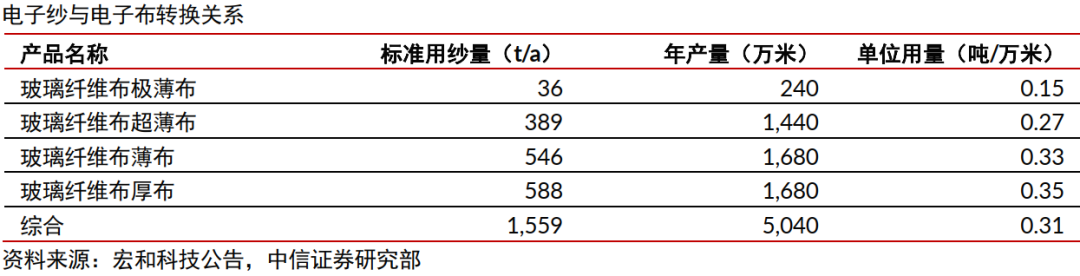
Summary of Conference Call Notes Industry Overview - The electronic fabric market is experiencing a strong price increase, with notable price points for various products. For instance, the mainstream price for electronic yarn G75 is reported to be between 10,400-10,700 RMB/ton, while the prices for different types of electronic fabric are as follows: 7628 electronic fabric at 5.3-5.5 RMB/m, 2116 electronic fabric at 6.1 RMB/m, and 1080 electronic fabric at 6.3 RMB/m [1][3]. Key Insights - The price of 7628 electronic fabric has increased by 0.75 RMB/m compared to the end of last year, driven by several factors: 1. Slow expansion of weaving machine production capacity, with some companies switching equipment to produce low-dielectric products required for AI, thereby reducing the production of ordinary 7628 electronic fabric. 2. Production of ultra-fine and ultra-thin electronic fabric by a single weaving machine may result in a loss of over 50% of capacity due to production difficulties and differences in yarn density [1][3]. - There is an expectation that the price increase trend for electronic fabric may continue in the short term [2]. - By 2026, the supply and demand for ordinary electronic yarn may reach a balance, but the ordinary electronic fabric may still face supply constraints due to a shortage of weaving machines, which provides a basis for potential price increases [3]. Additional Important Points - The new production capacity for electronic yarn by 2026 includes: 1. A 100,000-ton production line by China Jushi in Huai'an, expected to start in March-April. 2. A 70,000-ton electronic yarn project by Jiantao Chemical. 3. An 85,000-ton ordinary electronic yarn project by International Composite Materials, which was launched at the end of December 2025, with plans for potential upgrades to older lines [3]. - Leading companies may optimize their product structures, with significant profit elasticity for ordinary electronic fabric. In Q3 2021, the average price of 7628 electronic fabric was 8.8 RMB/m, while China Jushi's non-tax selling price for electronic fabric was 6.7 RMB/m, yielding a net profit of 2.8 RMB/m, indicating substantial profit potential at current price levels [4]. - If the price of electronic fabric increases by 1 RMB/m, it could lead to a profit increase of 1 billion RMB for companies with an effective production capacity of 1.1-1.2 billion meters of electronic fabric [4].
中金:电子布供给再释放积极信号 看好后续提价
智通财经网· 2026-02-12 02:53
Industry Overview - The recent price trend in the electronic yarn market has shown strong upward momentum, with mainstream quotes for electronic yarn G75 reaching 10,400-10,700 RMB/ton [1][2] - The mainstream price for 7628 electronic fabric is currently 5.3-5.5 RMB/m, with a year-end increase of 0.75 RMB/m [2] Price Dynamics - The price of ordinary electronic fabric is expected to experience marginal increases due to supply constraints from weaving machine shortages, which may lead to a phase of price hikes [2] - The demand for AI specialty yarns is increasing, causing some manufacturers to shift production capacity towards AI products, thereby reducing the supply of ordinary 7628 [2] Profitability and Capacity - Leading companies are likely to optimize their product structures, resulting in significant profit elasticity for ordinary electronic fabric [2] - In 3Q2021, the average price of 7628 electronic fabric reached 8.8 RMB/m, with a net profit of 2.8 RMB/m for China Jushi, indicating substantial room for profitability at current price levels [2]
未知机构:科顺股份电子布再提价推升业绩弹性消费建材小阳春可期本周76-20260210
未知机构· 2026-02-10 02:10
Summary of Conference Call Notes Industry and Company Involved - The notes primarily focus on the **electronic fabric** industry and **real estate** market, with specific mentions of companies such as **China Jushi**, **Keshun Co., Ltd.**, **Sankeshu**, **Rabbit Baby**, **Hankao Group**, **Beixin Building Materials**, **Weixing New Materials**, **Oriental Yuhong**, **Qingniao Fire Protection**, **Qiba Group**, and **Xinyi Glass**. Key Points and Arguments 1. **Price Increase in Electronic Fabric** The price of 7628 electronic fabric has increased again, with international composite materials rising by **0.5-0.6 yuan/meter**. The supply-demand dynamics in the industry continue to improve, leading to a tight supply of traditional electronic yarn and fabric, alongside a strong demand for mid-to-high-end products. This trend supports a continued price increase, and the outlook for the fiberglass sector is positive for **2026** [1][1][1]. 2. **Stable Demand in Fiberglass Sector** The demand in sectors such as wind power and thermoplastics remains stable, and the expected impact of new supply in **2026** is limited. The supply-demand balance is anticipated to improve marginally, with a strong recommendation for **China Jushi** and suggestions to pay attention to **International Composite Materials**, **Changhai Co.**, and **China National Materials Technology** [1][1][1]. 3. **Real Estate Market Recovery** In January **2026**, the transaction volume of second-hand houses in major cities (Beijing, Shanghai, Guangzhou, Shenzhen) has collectively rebounded, with a **16% month-on-month increase** and a **33% year-on-year increase** in transaction area. The growth in first-tier cities exceeds **20%** year-on-year, supported by ongoing real estate policy adjustments that help stabilize the market [2][2][2]. 4. **Price Recovery in Construction Materials** The real estate downturn has accelerated the clearing of supply in the construction materials industry, leading to a rebound in prices for certain products. Several leading companies have begun to report profit recovery after strategic adjustments over the past 2-3 years. Recommended companies for stable growth include **Sankeshu** and **Rabbit Baby**, with additional attention to **Hankao Group**, **Beixin Building Materials**, **Weixing New Materials**, **Oriental Yuhong**, **Keshun Co.**, and **Qingniao Fire Protection** [2][2][2]. 5. **Opportunities in Float Glass Industry** The float glass industry is facing challenges, with two new cold repair lines added this week, reducing production capacity to approximately **14.9 million tons/day**. The industry is currently experiencing losses, and the pressure from inventory accumulation during the traditional Chinese New Year may accelerate the exit of production capacity. The glass sector is expected to stabilize, with recommendations to focus on **Qiba Group** and **Xinyi Glass** [2][2][2]. Other Important but Potentially Overlooked Content - The overall sentiment in the electronic fabric and construction materials sectors indicates a positive outlook for **2026**, with price increases and demand stability being key themes. - The recovery in the real estate market is seen as a potential catalyst for related industries, suggesting a broader economic recovery may be on the horizon. - The mention of specific companies provides actionable insights for investors looking to capitalize on emerging trends in these sectors [1][2][2].