
强生

Search documents
进博观察:AI与脑机接口齐飞,“最卷展区”上演未来照进现实
Xin Jing Bao· 2025-11-08 06:55
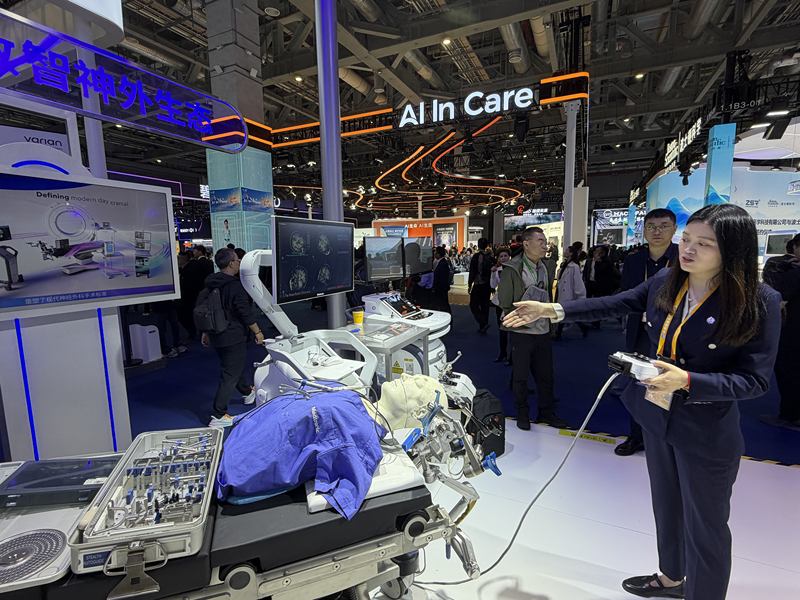
Core Insights - The integration of AI in the medical and pharmaceutical sectors is becoming increasingly prominent, with numerous innovative products showcased at the China International Import Expo, highlighting AI's role in drug development, clinical efficiency, and decision-making [1][2][6]. Group 1: AI Empowerment in Medical Research and Drug Development - The Chinese government has implemented policies to promote AI in the pharmaceutical industry, emphasizing the use of new information technologies in drug research [2]. - Major multinational companies like Roche, AstraZeneca, Johnson & Johnson, and Siemens Healthineers are collaborating with AI firms to advance various projects [2][3]. - Roche's AI-driven solutions, such as the "MDT Intelligent Body" and "Little Roche Smart Star," aim to enhance clinical practice efficiency and support the entire research process, having already assisted over 4,000 doctors in completing more than 600 research projects [3]. Group 2: AI in Medical Devices and Diagnostics - The introduction of AI-powered medical devices is transforming traditional healthcare practices, with companies like Medtronic showcasing their AiBLE smart ecosystem that integrates surgical robots and imaging systems [6]. - Siemens Healthineers presented its AI-driven innovations, including a prostate cancer diagnostic software that enhances detection accuracy and reduces misdiagnosis risks [7]. - Boston Scientific debuted several AI-enabled cardiac health innovations, including the FDA-approved HeartLogic heart failure monitoring system, which can predict heart failure risks [7]. Group 3: Brain-Computer Interface Technology - Brain-computer interface (BCI) technology is emerging as a revolutionary treatment paradigm, enabling patients with severe disabilities to control devices through thought [11][12]. - Siemens Healthineers introduced a comprehensive BCI solution that covers preoperative planning, intraoperative navigation, and postoperative evaluation, facilitating the clinical application of BCI technology [12]. - Medtronic showcased a rechargeable, perceptive closed-loop brain stimulator that offers personalized treatment for conditions like Parkinson's disease, enhancing patient care [12].

研判2025!中国TNF-a抑制剂行业发展历程、发展现状、竞争格局及发展趋势分析:行业渗透率不断提升,市场规模达到163亿元[图]
Chan Ye Xin Xi Wang· 2025-10-28 01:12
Core Insights - The TNF-α inhibitor market is experiencing rapid growth due to the increasing prevalence of autoimmune diseases and the urgent treatment needs of a large patient population [1][5][12] - In China, the market penetration rate of TNF-α inhibitors was only 0.31% in 2018, compared to 13.36% in the U.S., indicating significant growth potential for the industry [1][5] - The market size for TNF-α inhibitors in China is projected to reach 16.3 billion yuan in 2024, representing a year-on-year increase of 25.4% [1][5] TNF-α Inhibitor Industry Overview - TNF-α inhibitors are targeted biological agents that reduce inflammation and immune activation, primarily used for various autoimmune diseases [4][5] - The development of TNF-α inhibitors began in the 1990s, with the first drug, Infliximab, approved in 1998, marking the start of a new era in treating autoimmune diseases [4][5] Current Market Status - The TNF-α inhibitor market is expanding rapidly, attracting numerous domestic pharmaceutical companies, which has led to increased market penetration and growth [1][5] - The leading TNF-α inhibitors in the market include Adalimumab, Etanercept, and Infliximab, with Adalimumab holding a market share of 48.83% [6][7] Competitive Landscape - The TNF-α inhibitor industry is characterized by a dominance of foreign pharmaceutical companies, with local companies like Innovent Biologics and Junshi Biosciences rapidly gaining market share [7][9] - The competition is intensifying as more companies enter the market, leading to price reductions and increased pressure on profit margins [12] Future Trends - Future developments in the TNF-α inhibitor market will focus on improving therapeutic efficacy and reducing side effects through structural modifications and personalized treatment approaches [10][11] - The industry is expected to see increased competition, with many companies entering the market, leading to potential market consolidation as some may exit due to pricing pressures [12] - There is a growing opportunity for domestic companies to expand into international markets, particularly in North America and Europe, where demand for TNF-α inhibitors is rising [13]


中金 | 全球医疗器械:哪些增长点值得关注?
中金点睛· 2025-10-24 00:48
Core Viewpoint - The global medical device market is experiencing steady growth, driven by factors such as aging population, rising chronic disease prevalence, technological advancements, policy support, and improvements in healthcare systems. The market size is projected to reach $862.6 billion by 2030, with a CAGR of 5% from 2025 to 2030 [2][6]. Market Overview - The global medical device market is expected to reach $675.4 billion by 2025, with North America and Europe accounting for 32% and 25% of the market share, respectively. Emerging markets like Asia-Pacific, Latin America, and the Middle East are expected to grow at faster rates of 8.6%, 7.5%, and 7.4% from 2021 to 2025 [6][10]. - High-value consumables represent the largest segment of the market, accounting for 32% of the total market size in 2025, followed by other categories such as low-value consumables, medical imaging, and in vitro diagnostics [9][10]. Valuation System - A review of 15 leading global medical device companies reveals a significant valuation differentiation based on growth quality. High-growth leaders can enjoy P/E ratios ranging from 31x to 57x for 2025E, while mature platform companies typically see valuations between 13x and 18x [2][3]. Innovation and Growth Drivers - Eight key segments are identified for future growth, including electrophysiology, renal denervation (RDN), complex vascular interventions, structural heart, neuroscience, surgical robotics, endoscopy, and glucose management. These areas are expected to see product iterations and technological advancements that could lead to significant market opportunities [3][21]. - The aging population is a major driver of demand for medical devices, as older adults are more susceptible to chronic diseases, leading to increased needs for monitoring and management solutions [11][13]. Supply-Side Dynamics - Technological innovation is a core engine driving the evolution of the medical device industry. The transition from invasive surgeries to minimally invasive techniques is evident across various fields, enhancing treatment precision and patient outcomes [13][16]. - The development of new technologies, such as artificial intelligence in diagnostics and robotic-assisted surgeries, is expected to further enhance the capabilities and market reach of medical devices [21][23]. Competitive Landscape - Major players in the medical device industry include Medtronic, Johnson & Johnson, and Siemens Healthineers, with significant revenues projected for 2024. The competitive landscape is characterized by a focus on cardiovascular, imaging, surgical, orthopedic, and diabetes management segments [10][21]. Future Growth Points - The growth of the medical device market will be driven by continuous iteration of existing technologies, disruptive new products, and the integration of smart technologies. Key areas of focus include electrophysiology, structural heart interventions, and the application of AI in various medical contexts [21][22][23].

频现亿元级融资,这一眼科重磅设备已到国产爆发前夜
3 6 Ke· 2025-10-21 03:24
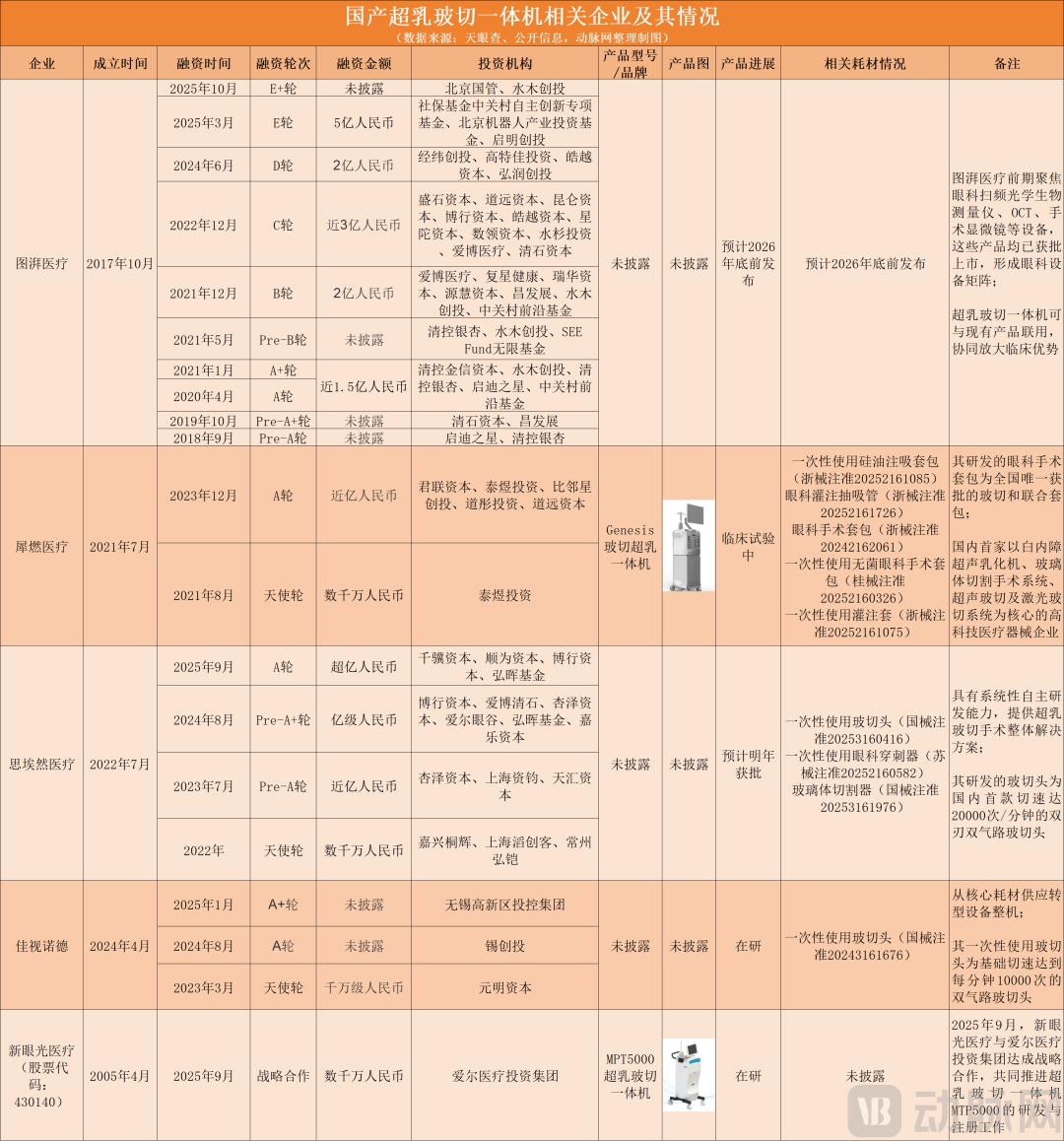
Core Insights - The Chinese medical device market, particularly in ophthalmology, has long been dominated by international giants, with Alcon holding nearly half of the market share [1][2] - Recent developments indicate a surge in domestic companies focusing on the development of phacoemulsification and vitrectomy integrated machines, despite the absence of approved domestic products [2][3] - The integrated phaco-vitrectomy machine is crucial as it addresses the increasing complexity of eye surgeries, allowing simultaneous treatment of cataracts and vitreous diseases [4][5] Industry Developments - Domestic companies have recently secured significant funding for the development of phaco-vitrectomy machines, indicating a shift in the market landscape [2][3] - The emergence of multiple financing events within a short period highlights a collective effort among domestic firms to enter this high-tech segment [2][3] - The integrated machine is seen as a solution to improve surgical efficiency and patient outcomes by reducing the need for multiple devices during surgery [5][6] Technical Challenges - The development of the phaco-vitrectomy machine is technically complex, particularly the vitrectomy component, which requires advanced control systems and stability [6][7] - Companies must integrate various technologies, including fluid control and energy systems, to ensure the machine's reliability and performance [6][7] - The regulatory environment poses additional challenges, as these devices are classified as Class III medical devices, requiring lengthy approval processes [7] Market Dynamics - The market for phaco-vitrectomy machines is poised for growth due to increasing demand from secondary and tertiary hospitals for updated equipment [8] - The domestic market is experiencing a "critical point" where technological advancements and policy support are aligning to favor local manufacturers [8][11] - The competition is not just about product features but also about the overall system performance and user experience in clinical settings [22][23] Future Outlook - The next few years are expected to see a concentration of product approvals, with several companies nearing the completion of their development processes [10][21] - The transition from having products to achieving market penetration will be gradual, influenced by clinical acceptance and policy support for domestic products [11][23] - The long-term trend indicates a clear shift towards domestic alternatives in the ophthalmic device market, driven by both technological advancements and regulatory changes favoring local production [11][12]
成都先导(688222):DEL技术全球领先,核心技术平台助力新药研发
Tianfeng Securities· 2025-10-18 07:50
Investment Rating - The report initiates coverage with a "Buy" rating for Chengdu XianDao (688222) [7] Core Insights - Chengdu XianDao focuses on the discovery and optimization of small molecule and nucleic acid new drugs, leveraging four core technology platforms: DEL, FBDD/SBDD, OBT, and TPD, to establish an internationally leading R&D system for new drug discovery and optimization [1][16] - The company is a leader in DEL technology, possessing the largest known library of small molecule compounds globally, and has formed a DEL alliance with major international pharmaceutical companies, enhancing its technical leadership [2][4] - The integration of DEL and AI technologies, along with the completion of high-throughput infrastructure, positions the HAILO platform to significantly expand the chemical space for molecule screening [3][4] Summary by Sections 1. Diversified Platform Development - Chengdu XianDao is an international high-tech innovative drug R&D company with subsidiaries in Cambridge, UK, and Houston, USA, focusing on small molecule and nucleic acid drug discovery [16] - The company achieved a revenue of 227.01 million yuan in the first half of 2025, representing a year-on-year growth of 16.58%, with a net profit of 50.04 million yuan, up 390.72% [20][22] 2. New Drug Development Trends - The report highlights a resurgence in new drug development, with a significant increase in the number of new chemical entities approved by the FDA, indicating a recovery in both global and domestic new drug R&D [30][34] - In the first half of 2025, the company’s DEL segment generated revenue of 102.19 million yuan, a 40.45% increase year-on-year, driven by flexible and diversified custom library and screening services [22] 3. Financial Forecast - The company is projected to achieve revenues of 504 million yuan, 608 million yuan, and 739 million yuan for the years 2025, 2026, and 2027, respectively, with year-on-year growth rates of 17.95%, 20.70%, and 21.57% [5] - The net profit attributable to shareholders is expected to be 81 million yuan, 122 million yuan, and 156 million yuan for the same years [5]

医疗器械CDMO赛道获青睐 企业加速入场
Zhong Guo Zheng Quan Bao· 2025-10-17 20:15
Core Insights - The medical device CDMO sector in China is experiencing significant growth driven by policy support and surging demand, with expectations to replicate the successful trajectory of the pharmaceutical CXO model over the next five years [1][7]. Policy Support - The Chinese medical device market is projected to reach 1.2 trillion yuan by 2024, indicating robust growth potential [2]. - Global leaders in the medical device industry have long outsourced production to specialized CDMO providers to enhance R&D efficiency and reduce time-to-market for new products [2]. - The implementation of the MAH system allows R&D companies to outsource production, providing a significant policy boost to the industry [3]. Industry Demand - There is a growing demand for CDMO services in high-end medical equipment sectors, particularly in surgical robotics, where innovative companies require robust support for product commercialization [5]. - The medical device CDMO market is expected to grow rapidly, with a projected annual compound growth rate of 16.3% from 2020 to 2025, significantly outpacing the overall medical device industry growth [2]. Company Developments - Companies like Meihua Medical are actively expanding their CDMO capabilities, offering comprehensive services from product development to mass delivery across various medical device segments [4]. - The establishment of high-end medical device CDMO platforms, such as Shuimu Dongfang, is facilitating the acceleration of product development and market entry for innovative projects [5]. Market Trends - The Chinese medical device CDMO sector is transitioning from a focus on specific segments like IVD to a broader range of product lines and full-service capabilities [7]. - The industry is characterized by a fragmented landscape with a focus on specialized, high-quality services rather than large-scale operations [6]. Future Outlook - The next 3-5 years are critical for the industry, with expectations for the emergence of 1-2 leading companies capable of providing integrated services from R&D to mass production [9]. - Key growth areas include high-value consumables, automated filling and sterilization platforms, and the development of accelerators for prototype registration and small batch production [7].
海外医药:关注2025 ESMO港股医药临床数据更新:——海外消费周报(20251010-20251016)-20251017
Shenwan Hongyuan Securities· 2025-10-17 13:03
Investment Rating - The report indicates a positive outlook for the overseas pharmaceutical industry, particularly focusing on innovative drugs and clinical trial advancements [11]. Core Insights - The report highlights significant clinical trial updates from various companies, including Innovent Biologics, CanSino Biologics, and Kelun-Biotech, with a focus on their ongoing studies for advanced cancer treatments [6][7][8]. - The report emphasizes the successful third-phase clinical trials for several drugs, including TUKYSA for HER2+ metastatic breast cancer, and the acquisition of Orbital Therapeutics by BMS for $1.5 billion, indicating strong market activity and investment in innovative therapies [9][10]. Summary by Sections 1. Overseas Pharmaceuticals - The report discusses the recent updates from the 2025 ESMO conference, including multiple clinical trials for drugs targeting advanced kidney cancer and non-small cell lung cancer [6][7]. - Notable companies mentioned include Innovent Biologics with its study on IBI363 for sq-NSCLC, and Kelun-Biotech's TROP2 ADC for EGFR mutation-positive NSCLC [8][9]. 2. Market Performance - The Hang Seng Healthcare Index experienced a decline of 5.01%, underperforming the Hang Seng Index by 1.78 percentage points [6]. - The report notes the overall positive growth in the pharmaceutical sector, driven by innovative drug commercialization and active mergers and acquisitions [11]. 3. Company Updates - BMS's acquisition of Orbital Therapeutics for $1.5 billion is highlighted, showcasing the trend of consolidation in the pharmaceutical industry [9]. - Strong quarterly performance from Johnson & Johnson and Pfizer is reported, with J&J achieving $23.993 billion in revenue, a 6.8% year-over-year increase [10]. 4. Recommendations - The report suggests focusing on innovative drug companies with active clinical pipelines, including Innovent Biologics, CanSino Biologics, and Kelun-Biotech, as potential investment opportunities [11].
海外消费周报:海外医药:关注2025ESMO港股医药临床数据更新-20251017
Shenwan Hongyuan Securities· 2025-10-17 12:41
Investment Rating - The report maintains an "Overweight" rating for the overseas pharmaceutical industry, indicating a positive outlook for the sector [1]. Core Insights - The report highlights key clinical data updates from the 2025 ESMO conference, focusing on several companies including Innovent Biologics, CanSino Biologics, and Kelun-Biotech, which are conducting pivotal clinical trials for various cancer treatments [1][7]. - Notable advancements include the registration studies for IBI363 by Innovent Biologics and the approval of a third indication for TROP2 ADC by Kelun-Biotech, showcasing the ongoing innovation in the sector [8][9]. - The report emphasizes the strong performance of companies like BMS and Pfizer, with BMS acquiring Orbital Therapeutics for $1.5 billion and Pfizer reporting positive results from its HER2 inhibitor trial [9][10]. Summary by Sections 1. Overseas Pharmaceuticals - The Hang Seng Healthcare Index fell by 5.01%, underperforming the Hang Seng Index by 1.78 percentage points [6]. - Key events include multiple clinical trials presented at the 2025 ESMO, such as Innovent's study on the combination of sintilimab and lenvatinib for advanced renal cell carcinoma [7]. - The report suggests continued monitoring of innovative drugs and clinical progress from companies like BeiGene, Innovent, and CanSino [11]. 2. Company Updates - BMS announced a $1.5 billion acquisition of Orbital Therapeutics, which includes the OTX-201 therapy [9]. - Strong performance reported by Johnson & Johnson with Q3 2025 revenue of $23.993 billion, a 6.8% year-over-year increase [9]. - Pfizer's TUKYSA trial for HER2+ metastatic breast cancer yielded positive top-line results, indicating a successful phase in their drug development [10]. 3. Market Trends - The report notes a significant increase in inbound tourism to Macau during the National Day holiday, with a total of approximately 1.14 million visitors, marking a 1.9% year-over-year growth [13]. - The average daily visitor count reached a record high of 143,000, reflecting a recovery in the tourism sector [13].
又有一款国产抗癌药成为“十亿美元分子”,今年销售额已超13亿美元
第一财经· 2025-10-16 08:55
Core Insights - The article highlights the success of Carvykti (siltuximab), a CAR-T cell therapy developed by Legend Biotech, which has achieved over $1 billion in sales, marking it as a "blockbuster" drug in the biopharmaceutical industry [3][4]. Sales Performance - Carvykti's sales for Q3 reached $524 million, with cumulative sales for the year amounting to $1.332 billion, including $369 million in Q1 and $439 million in Q2 [3][4]. - The drug was first approved in the U.S. on February 28, 2022, and has since been approved in Japan, the EU, and China, although it has not yet been marketed in China [4]. Market Dynamics - In the Chinese market, there are currently seven CAR-T cell therapies approved, but high prices limit accessibility, with Carvykti priced at $555,300 in the U.S., significantly higher than the domestic CAR-T therapies priced over 1 million [4]. - The global sales of Carvykti are showing a stable growth trend, primarily in the multiple myeloma indication, where it has demonstrated significant efficacy [4][5]. Clinical Data - Recent long-term follow-up data from the CARTITUDE-1 study indicated that 33% of patients with relapsed or refractory multiple myeloma experienced no disease progression for five years after a single infusion of Carvykti, marking a significant advancement in treatment outcomes [5]. Financial Outlook - Legend Biotech is on track to turn a profit by 2026, following a net loss of approximately $101 million in Q1 2025, driven by the increasing sales of Carvykti [6][8].


轩竹生物上市首日涨幅近127%;强生前三季度营收约696亿美元|医药早参
Mei Ri Jing Ji Xin Wen· 2025-10-15 23:27
Group 1 - XuanZhu Biotech officially listed on the Hong Kong Stock Exchange on October 15, raising a total of HKD 780 million by issuing 67.33 million shares at an offering price of HKD 11.60 per share [1] - On its first trading day, XuanZhu Biotech's stock price surged to HKD 26.30 per share, marking a daily increase of 126.72% [1] - The strong market reception indicates investor confidence in high-quality innovative pharmaceutical companies, with XuanZhu Biotech poised to benefit from ongoing industry trends through accelerated R&D funded by the raised capital [1] Group 2 - GlaxoSmithKline's recombinant shingles vaccine, Shingrix, received approval for a new indication from the National Medical Products Administration in China [2] - The new indication allows the vaccine to be used for adults aged 18 and older who are at increased risk of shingles due to known diseases or treatments that cause immunodeficiency or immunosuppression [2] - This approval addresses the vaccine needs of high-risk groups and further solidifies GlaxoSmithKline's competitive position in the shingles vaccine market [2] Group 3 - Johnson & Johnson reported third-quarter revenue of USD 23.993 billion, reflecting a year-over-year growth of 6.8% [3] - For the first nine months of the year, Johnson & Johnson's total revenue reached approximately USD 69.6 billion, driven by growth in both its innovative pharmaceuticals and medical technology segments, which generated revenues of USD 44.638 billion and USD 23.669 billion, respectively [3] - The revenue growth demonstrates the company's operational resilience, supported by strong performance in both business segments [3]