普洛斯

Search documents
黄奇帆:大A市值要涨4倍,到400万亿!
Sou Hu Cai Jing· 2025-10-13 01:23
Core Viewpoint - The Chinese capital market is expected to experience significant growth, with the total market value of A-shares projected to reach 400 trillion yuan by 2040, quadrupling from the current level, driven by economic fundamentals and institutional reforms [6][10]. Group 1: Securities Market Development - The concept of "securitization rate" is crucial for understanding the growth potential of the capital market, with China's current rate at approximately 70%, indicating substantial room for growth compared to the mature market standard of 100%-120% [8][10]. - The A-share market has seen a notable increase in total market value, growing by 36 trillion yuan over the past year, with the number of companies valued at over 100 billion yuan rising from 114 to 169 [14][30]. Group 2: Economic and Institutional Support - The prediction of reaching 400 trillion yuan is based on expected GDP growth from approximately 140 trillion yuan to around 280 trillion yuan by 2040, with a potential increase in the securitization rate to match mature markets [10][12]. - Historical precedents, such as the U.S. stock market's growth over the past two decades, support the feasibility of this projection, with a similar annual growth rate anticipated for China [11][12]. Group 3: Investment Direction and Opportunities - Venture capital and private equity play a vital role in capital market development, with current industry funds totaling nearly 30 trillion yuan, of which 40% is still directed towards fixed income rather than equity markets [18][29]. - The focus on early-stage investments in hard technology is encouraged by recent government policies, aiming to align investment strategies with long-term growth potential [20][29]. Group 4: Productive Service Industry - The productive service industry is identified as a key growth area, with significant potential for GDP contribution and market capitalization increase, as evidenced by its rapid growth compared to overall GDP growth [22][30]. - The U.S. experience shows that productive service industries have become a major component of GDP, indicating a similar trajectory for China, where this sector is expected to drive innovation and high-value enterprise development [22][30]. Group 5: Future Unicorns and Investment Focus - Five categories of enterprises within the productive service industry are highlighted as future unicorns, particularly specialized small and medium-sized enterprises that contribute to innovation and market growth [25][27]. - The integration of manufacturing with productive services through digital platforms is seen as a transformative approach, with leading companies in this space expected to drive significant market value growth [27][30].


规模超670亿,2025年9月这些基金完成募集
母基金研究中心· 2025-10-12 09:18
Summary of Key Points Core Viewpoint The article highlights the recent fundraising activities involving various investment funds, showcasing significant capital mobilization across different sectors, particularly in advanced manufacturing, healthcare, and technology. The total fundraising amount exceeds 670 billion RMB, indicating a robust investment climate and strategic focus on innovation and industrial upgrades. Group 1: Fund Establishments and Fundraising - The Jiangtou Airport Mother Fund successfully established its first subsidiary fund, marking a significant milestone for Hubei Jiangtou Group [5] - The Zengcheng Industrial Investment Group, in collaboration with Guangzhou Industrial Investment and ICBC Investment, set up a 1 billion RMB AIC investment fund targeting key industries [6] - The Shenyang Automotive Group initiated an automotive industry investment fund with a first phase of 800 million RMB, focusing on smart and low-carbon automotive solutions [7][8] - A total of multiple new funds were launched in Shenzhen, with signed amounts exceeding 500 billion RMB, promoting high-level financial circulation [11][12] - The Suzhou Jialin Fund was officially established with a target size of 600 million RMB, focusing on technology and healthcare sectors [13] Group 2: Specific Fund Details - The Kangqiao Medical Health Infrastructure Platform established its first RMB medical health real estate infrastructure fund with a total scale of 925 million RMB [10] - The AIC investment fund aims to invest in emerging technologies and industries, including new energy and intelligent manufacturing [6] - The Shanghai Future Industry Fund completed an expansion, increasing its scale from 10 billion RMB to 15 billion RMB, focusing on disruptive innovations and early-stage technologies [27] Group 3: International Collaborations and Investments - Zhonglian Investment and Al-Ajlan International Group signed a cooperation agreement for a 300 million USD equity investment fund, focusing on AI and new energy sectors [16][17] - The Haiyuan Angel Fund in Dongguan completed its registration and initiated investments, targeting hard technology sectors [18] - The Bridge Capital's fifth advanced manufacturing fund successfully raised capital, with a high re-investment rate from existing LPs at 66% [19] Group 4: Sector-Specific Focus - The Danlu Medical Seed Fund, with a total scale of 80 million RMB, focuses on early-stage medical innovations and research commercialization [24][25] - The Dongjiu Xinyi Fund raised approximately 3.5 billion RMB, targeting new economic infrastructure assets across China [26] - The Zhongchuang Hongxing Venture Capital's dual 500 million RMB mother funds focus on industrial upgrades in Jiaxing Pinghu, emphasizing new materials and high-end manufacturing [22][23]

黄奇帆:投早、投小、投长期、投硬科技,还应投生产性服务业
Sou Hu Cai Jing· 2025-10-01 02:12
Core Viewpoint - The capital market in China has significant growth potential, with the current market value only at 70% of GDP, indicating room for development towards a more mature financial system [3][4]. Group 1: Capital Market Development - The ratio of total market value to GDP is a key indicator of capital market maturity, with an ideal range of 1:1 to 1:1.2. China's current ratio is only 70% [3][4]. - China's capital market has grown from over 70 trillion RMB to 100 trillion RMB this year, while GDP is projected to reach 140 trillion RMB [3][4]. - By 2040, China's GDP is expected to double, potentially leading to a capital market value of around 400 trillion RMB if it reaches 100%-120% of GDP [3][4]. Group 2: Role of Production Services Industry - The production services industry is crucial for the innovation and development of manufacturing, contributing to higher productivity and economic growth [7][9]. - This sector is not only a service provider for manufacturing but also a significant contributor to GDP, accounting for 30% of China's GDP as of last year [8][9]. - The production services industry has seen an annual growth rate of 12.1% from 2021 to 2023, significantly outpacing other sectors [8]. Group 3: Investment Strategies - Investment strategies should focus on early-stage, small-scale, and long-term investments in hard technology, particularly within the production services sector [5][6]. - Various categories of production services enterprises, including small specialized firms and large established companies, should be targeted for investment [12][13]. - The integration of production services with manufacturing through platforms like industrial internet is seen as a key growth area for future investments [13].




特锐德:公司目前没有针对人形机器人的充电产品
Mei Ri Jing Ji Xin Wen· 2025-09-30 09:49
Core Viewpoint - The company currently does not have charging products for humanoid robots and focuses on innovative power modules for data centers to meet specific demands in the computing infrastructure sector [1][3]. Group 1: Company Products and Innovations - The company has developed innovative power modules specifically for data centers, utilizing prefabricated solutions to standardize deployment [1]. - The integration of transformers, UPS, and distribution cabinets in their products significantly shortens construction cycles, reduces costs, and enhances delivery efficiency [1]. Group 2: Partnerships and Market Position - The company has established strong partnerships with leading domestic data centers, including major firms such as China Mobile, China Telecom, Alibaba, ProLogis, and ByteDance [1]. - The company's technological strength and quality service have contributed to its positive relationships with these prominent enterprises [1].

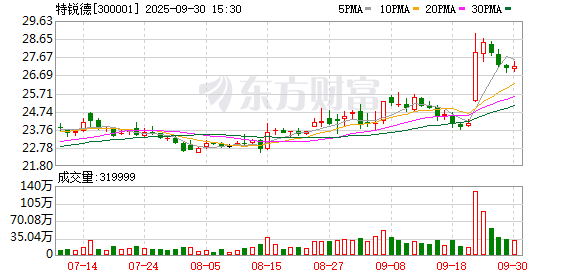
特锐德(300001.SZ):目前没有针对人形机器人的充电产品
Ge Long Hui· 2025-09-30 09:23
Core Viewpoint - The company, Teruid (300001.SZ), currently does not have charging products for humanoid robots, focusing instead on power modules for data centers [1] Group 1: Company Developments - The company has innovatively developed power modules tailored for data centers, addressing specific demands and characteristics of this sector [1] - The company employs a prefabricated approach to promote standardized deployment of its products, which significantly shortens construction cycles and reduces costs [1] - The company has established strong partnerships with leading domestic data centers, including major firms such as China Mobile, China Telecom, Alibaba, ProLogis, and ByteDance, due to its superior technology and quality service [1]
谁又募到钱了
投资界· 2025-09-29 08:07
Fundraising Activities - Carlyle Group announced the successful fundraising of its global S fund, reaching $20 billion (approximately 140 billion RMB), making it one of the largest S funds in history [5] - Blackstone completed fundraising for its Strategic Partners Infrastructure IV L.P. fund, totaling $5.5 billion, marking it as the largest secondary infrastructure fund globally [6][7] - Prologis announced the completion of its 14th China Income Fund, with an investment scale of nearly 2 billion RMB, focusing on logistics and high-end manufacturing infrastructure [8] - Shanghai Future Industry Fund expanded its scale from 10 billion RMB to 15 billion RMB, with a focus on early-stage innovative enterprises in cutting-edge fields [10] - Bridge Capital successfully closed its fifth advanced manufacturing fund, with a high repurchase rate of 66% from existing limited partners [11] New Fund Establishments - Kangqiao established its first RMB healthcare real estate infrastructure fund, totaling 925 million RMB, focusing on high-quality life science industry infrastructure [14] - Zhonglian Investment and Al-Ajlan Global signed an agreement to establish a $300 million equity investment fund, targeting AI, new energy, and semiconductor projects [16] - Multiple funds were launched in Shenzhen, including a 300 billion RMB private equity fund by Ping An Asset Management and a 20 billion RMB innovation fund by Junlian Capital [18] - Dongguan Haiyuan Angel Fund, with a scale of 150 million RMB, focuses on AI, new materials, and biomedicine [20] - The first sub-fund of the Hubei Jiaotou Group, the Zhongjin Schaeffler Industry Fund, was established, focusing on advanced manufacturing and carbon neutrality projects [22] Sector Focus - The funds are increasingly targeting sectors such as advanced manufacturing, healthcare, AI, new energy, and infrastructure, reflecting a shift towards supporting innovative and sustainable industries [10][14][16][22] - The establishment of funds in regions like Dongguan and Shenzhen indicates a strategic focus on local economic development and technological advancement [20][18] - The emphasis on collaboration between public and private sectors in fund establishment highlights a trend towards leveraging government support for innovation and investment [10][18]


黄奇帆:投早投小投长投硬科技,不从生产性服务业切入基本上是南辕北辙
和讯· 2025-09-28 08:31
Core Viewpoint - The core viewpoint emphasizes the importance of investing in productive service industries, particularly in hard technology, as a means to foster high-tech enterprises and drive economic growth [2][3][4]. Summary by Sections Productive Service Industry - The productive service industry provides intermediate services to other sectors, indirectly promoting economic growth by enhancing production efficiency and resource allocation [2][3]. - This industry includes logistics, ICT services, financial services, R&D, human resources, and legal services, among others [2]. Economic Impact - The productive service industry is a key driver of innovation and profit in manufacturing, contributing significantly to GDP growth [3][4]. - In the U.S., the share of productive service industries in GDP increased from 10% in 1950 to 48% in 2023, while in China, it rose from 10% in 1980 to approximately 30% in 2024 [3][4]. Growth Rates - The average annual growth rate of the productive service industry from 2021 to 2023 was 12.1%, significantly outpacing the overall GDP growth rate of around 5% during the same period [4]. - This sector has been identified as crucial for local GDP growth, with a focus on high-tech industry development [4]. Unicorn Companies - Many unicorn companies are formed within the productive service industry, which is a major growth driver in the U.S. stock market, accounting for 30% of its total market value [5][6]. - Major tech companies like Apple and Microsoft are seen as chain-head enterprises in the productive service industry, leveraging their services to generate substantial profits [5][6]. Investment Recommendations - Investment funds should focus on five types of productive service enterprises: small and specialized firms, leading companies in the sector, hybrid firms like Haier, industrial internet platforms, and chain-head enterprises [8][9][10]. - Early, small, and long-term investments in these companies are recommended to foster the emergence of new trillion-dollar market cap companies in China [10].
高瓴、厚朴等加持,普洛斯中国准备IPO了
Xin Lang Cai Jing· 2025-09-24 15:01
Core Viewpoint - GLP, a global logistics and industrial infrastructure operator, is planning an IPO for its China business, potentially in 2026, as confirmed by a board member at a recent conference [3][4]. Group 1: IPO Plans - The IPO is not GLP's first venture into the capital markets; it was previously listed in Singapore in 2010 after being sold by ProLogis during the 2008 financial crisis for $1.3 billion [3]. - In 2017, a consortium of Chinese investors, including Hillhouse Capital and Vanke, privatized GLP for $11.6 billion, marking one of Asia's largest private equity transactions [3][4]. - The IPO plan aligns with GLP's global strategic adjustments, following the sale of its non-China fund management business to Ares Management for $5.2 billion in early 2025 [4]. Group 2: Business Operations - As of the end of 2024, GLP operates in 70 markets across China, managing over 450 logistics and manufacturing facilities, with an asset management scale of approximately $79 billion [4]. - GLP runs over 30 private equity funds both domestically and internationally, showcasing its extensive operational footprint [4]. Group 3: Market Context - Although the specific IPO location has not been officially disclosed, Hong Kong is considered the most likely venue due to the recent recovery of its IPO market, with 43 new listings in the first half of 2025 raising a total of HKD 106.7 billion, a 688% increase from the same period in 2024 [5]. - The company has been rumored to be considering an IPO for several years, with earlier reports in 2022 suggesting a potential US IPO targeting $2 billion, but these were not confirmed [5].

北京CBD新地标Z3首摘面纱 打造未来总部资产样本
Zhong Guo Jing Ji Wang· 2025-09-24 13:58
中国经济网北京9月24日讯(记者 李方) 北京CBD核心区备受瞩目的Z3超甲级写字楼项目今日正式揭 开面纱。据悉,该项目由北京金通港房地产开发有限公司开发建设,其股东为普洛斯、中金公司 (601995)、香港置地。三家联袂共同投资Z3项目,携手国际设计团队Foster + Partners,以稳健资本与 长期运营为原则,致力于打造面向未来的总部资产样本,以人本、绿色与智慧为核心,构建国际水准的 总部体验。 据悉,普洛斯GLP是全球领先的专注于供应链、大数据及新能源领域新型基础设施的产业服务与投资公 司,深耕产业,长于运营。中国国际金融股份有限公司作为中国领先的国际化投资银行,植根中国,融 通世界,通过优质金融服务推动经济发展。香港置地为大型上市的物业投资、管理及发展集团,专注于 开发、持有或管理位于亚洲主要城市的尊尚综合物业,一直肩承市场领先者角色。 据介绍,Z3项目总建筑面积约17.5万平米,涵盖一栋140米高的超甲级办公楼及45米高的连体配套裙 楼。项目位于东三环首排,占位CBD正心,对望国贸,北邻CCTV。 其次,绿色健康与低碳方面,项目按LEED-CS铂金、WELL铂金、绿建三星标准打造,从建筑到机电 ...

仓库里的赌局:IPO是不是普洛斯的“救命钱”
Sou Hu Cai Jing· 2025-09-23 11:47
Core Viewpoint - Prologis is preparing for an IPO in 2026 as a necessary step to address capital circulation issues, despite stable rental income from its warehouses [7][11][25]. Group 1: Company Background - Prologis, a major operator of logistics warehouses in China, manages 450 facilities across 70 markets, serving as a backbone for e-commerce and fast-moving consumer goods [7][8]. - The company was privatized in 2017 at a valuation of 16 billion Singapore dollars (approximately 79 billion RMB), marking one of the largest privatization deals in Asia [9]. Group 2: Capital Circulation Challenges - Prologis faces difficulties in capital circulation as the enthusiasm of dollar funds for investing in Chinese logistics assets has decreased, leading to tighter funding pools [12]. - The Chinese public REITs market is too small to absorb Prologis's substantial asset pool, with individual REITs only reaching tens of billions of RMB [13]. - Major shareholders, including Hillhouse and Vanke, have held their investments for eight years and are increasingly seeking liquidity through an IPO [13]. Group 3: IPO as a Necessity - The IPO has shifted from being a choice to a necessity due to the combined pressures of reduced fundraising options and shareholder exit strategies [14]. - Prologis must present a compelling narrative beyond just owning warehouses, positioning itself as a "new infrastructure platform" that includes logistics, data centers, and renewable energy initiatives [15]. Group 4: Market Timing and Competition - The Hong Kong IPO market has recently improved, providing a favorable window for Prologis to launch its IPO [16]. - Prologis faces competition from potential IPO candidates like Wanwei Logistics and other foreign investors looking to enter the Chinese market [19][21]. Group 5: Risks and Uncertainties - The company is exposed to risks such as slowing rental growth in first-tier cities, rising vacancy rates in second-tier markets, and potential skepticism from investors regarding its new narrative [22][24].