
毕马威

Search documents
2025 REBCAI 新智实践案例:毕马威中国领先不动产科技50
KPMG· 2025-12-18 00:46
1. Report Industry Investment Rating - No relevant content provided. 2. Core Views of the Report - China's real estate and construction industry is in a critical stage of transformation from scale expansion to quality and efficiency improvement, with AI and real - estate technology integration becoming a key driving force [12][17][24]. - The real - estate technology field is moving towards an AI - centered era, and data has become the core asset for the industry's digital transformation [31][110]. - The future of the real - estate industry will focus on asset activation, value reshaping, and ecological co - construction, with competition shifting from resource scale to algorithm density [24][76]. 3. Summary According to the Directory 3.1. KPMG China's "Future 50" Series of Industry Lists - KPMG China has launched the "Future 50" series of industry lists covering multiple sectors, aiming to guide enterprises in strategic choices and help the industry and capital select promising companies. The lists are characterized by professionalism, fairness, and platform - building [30]. 3.2. Overall Overview of the 2025 REBCAI New - Intelligence Practice Case Selection - Since 2021, KPMG China has been involved in real - estate technology selection and research. In 2025, with the development of AI, the industry has entered a new stage. The selection focuses on AI - driven new applications and practices [31]. - The selection process includes case collection and preliminary screening, material review and on - site visits, comprehensive evaluation by the review committee, and result announcement. The core evaluation dimensions are innovation, forward - looking, and growth [40][41][42]. 3.3. Real - Estate Technology Trends and Outlook 3.3.1. Current Situation - AI and large - model development are moving from technological breakthroughs to large - scale applications and ecological co - construction. The real - estate and construction industry has a clearer understanding of the need for AI, but faces challenges in innovation investment due to short - term return and long - term value trade - offs [47]. - Traditional real - estate technology, construction technology, and real - estate asset management technology all face difficulties in transformation, such as data isolation, lack of unified standards, and slow data governance [48][49][50]. 3.3.2. Solutions - Enterprises should focus on user - driven innovation, build a "credible data base", and create a "human - machine collaborative agile organization" [52][57]. - They should also use the method of "trial and error, small - step iteration" to explore effective paths [53]. 3.4. AI Base Capability Improvement from "Traditional Real Estate" to "Corporate Real Estate" and "Pan - Real Estate" 3.4.1. Industry Evolution - The real - estate industry is evolving from "traditional real estate" to "corporate real estate" and then to "pan - real estate", with a shift in value focus and investment logic [72]. 3.4.2. Trends - The AI base is evolving from "tool empowerment" to "ecological reconstruction", becoming a new "operating system" for the industry [73]. - Business value is shifting from "operational efficiency improvement" to "model innovation", with the emergence of new business models and evaluation dimensions [75]. - The core of competition is moving from "resource scale" to "algorithm density", with data quality and algorithm efficiency becoming key competitiveness indicators [76]. 3.5. Starting from First - Party Data 3.5.1. Industry Background - The real - estate industry is in a period of digital transformation, and first - party data has become the cornerstone of this transformation [110]. 3.5.2. Data Trends - Data collection is moving from isolated and fragmented to globally integrated, enabling comprehensive perception [111]. - Data analysis is shifting from descriptive statistics to predictive intelligence, enabling proactive decision - making [112]. - Data application is moving from general solutions to scenario - specific precision, addressing industry - specific problems [114]. - Data - driven goals are expanding from efficiency improvement to value creation, covering multiple dimensions such as asset value and user experience [115]. 3.6. How Today's CRM Moves towards the Future with Users 3.6.1. Challenges of Traditional CRM - Traditional CRM is difficult to meet the full - scenario and full - link service requirements of the real - estate industry, and has limitations in understanding customer needs and linking with other business processes [59][160][161]. 3.6.2. Future Trends - New - type CRM will integrate and analyze customer behavior data to build dynamic user profiles and better understand customers [161]. - It will enhance information collaboration across the entire chain, serving as a core hub for different business stages and providing more convenient services for customers [164]. - It will focus on emotional connection and long - term operation, enhancing customer trust through emotional computing [165]. 3.7. How Future "Good Houses" and "Good Communities" are Cultivated 3.7.1. Industry Trends - The housing construction industry is undergoing a transformation, and real - estate technology is showing three key trends: intelligent construction technology innovation, full - chain digital management, and intelligent operation and human - centered services [194][195][196]. 3.7.2. Leading Practices - In intelligent construction, technologies such as robots and laser scanning are used to improve construction efficiency and quality [201]. - In full - chain solutions, AI digital platforms are built to integrate various processes and promote industry transformation [201]. - In project management, data - driven systems are established to solve traditional management pain points [201]. 3.8. Asset Management Capability in the Era of Stock Assets Empowered by AI 3.8.1. Industry Background - The operation of stock assets has become more important, and the industry needs to balance risk management and asset value enhancement [252][253]. 3.8.2. Trends - Risk tracking management and early - warning granularity are the basis for risk bottom - line management, and data governance is crucial [254]. - KRI (Key Risk Indicator) sorting is a key to balancing the interests of all parties, and asset managers are using digital methods to improve risk control capabilities [255]. - The exploration of full - life - cycle asset value enhancement scenarios is necessary to balance short - term benefits and long - term capabilities, and AI can be used to drive asset management transformation [256]. 3.9. 2025 REBCAI New - Intelligence Practice Case List - The list includes the AI Breakthrough Award cases and AI Momentum Award cases, with details of the enterprises, case names, and corresponding pages [302][304]. 3.10. Annex - The annex includes information on the interview team, report - writing personnel, KPMG's real - estate technology industry insights, and contact information [309][310][317].
海南自贸港封关在即 国际商界看好中国市场新引力
Xin Hua She· 2025-12-17 14:10
总部设在阿联酋迪拜、成员涵盖140多个国家和地区1600多家机构的世界自由区组织主席穆罕默德· 阿扎鲁尼认为,海南自贸港的成功实践向世界展示了制度创新、绿色经济、数字化转型以及全球合作的 重要性,充分展现了其发展潜力。 《金融时报》旗下专业媒体《外国直接投资情报杂志》刊发分析文章指出,海南自贸港将成为"试 点推动进出口、投资、人才、数据自由化的桥梁和试验区",其目标是成为外资公司进入中国、拓展中 国市场的桥梁。 新华社贝尔格莱德12月17日电 综述:海南自贸港封关在即 国际商界看好中国市场新引力 新华社记者 金丹依 海南自由贸易港启动全岛封关运作在即,这一中国扩大高水平对外开放的标志性举措正引发全球商 界广泛关注。近日,多家国际行业组织、商业和金融机构分别从市场与行业等不同维度,热议海南自贸 港封关带来的机遇。 塞尔维亚工商会主席查代日近日接受新华社记者采访时表示,海南自贸港通过明确的政策支持和长 期的税收激励,致力于推动消费、服务和创新发展,以吸引更多国内外资源。海南自贸港全岛封关运 作,积极影响是全方位的。 查代日认为,对已与中国签订中塞自贸协定的塞尔维亚而言,海南自贸港全面封关运作是接触中国 消费者的新 ...
毕马威:AI与不动产融合向高阶迈进
Xin Jing Bao· 2025-12-17 11:08
Core Insights - The effective implementation of new technology in the real estate sector hinges on addressing core industry challenges, enhancing governance and operational efficiency, and undergoing continuous market validation [1] - The integration of AI into real estate is advancing towards a higher level, presenting a dual reality of a "clear future" and a "fuzzy present," with practical application being the only pathway [1] Group 1: Industry Challenges - The traditional real estate industry faces issues such as data silos and high complexity in system integration, making the transition from "experience-driven" to "intelligent decision-making" difficult [1] - The lack of unified standards in the construction industry, complex system integration, long investment cycles, and a shortage of multidisciplinary talent necessitate a systemic transformation from "passive" to "active" [1] - Establishing competitive advantages in real estate asset management requires balancing short-term returns with the long-term development of management capabilities [1] Group 2: Innovation Practices - Five key innovative practice directions have been identified: 1. Evolution of AI foundational capabilities from "tool empowerment" to "ecosystem reconstruction" 2. Data-driven core with first-party data becoming the engine of value creation 3. Restructuring customer relationships where CRM shifts from a "management tool" to a "value co-creation partner" 4. Future space construction driven by both "technology empowerment" and "human-centered care" 5. Advancement in real estate asset management through AI-enabled refined operations of existing assets [2] Group 3: Future Outlook - The clear expectations in AI-enabled real estate depict a future worth striving for, while the fuzzy reality represents a necessary phase of trial and learning during industry upgrades [3] - The industry must break free from conventional thinking, leveraging AI models to empower both internal and external users, leading to a transformative change in business processes and enhancing core competencies in data assets, algorithm capabilities, and organizational agility [3]
毕马威发布2025“领先不动产科技50”榜单
Zheng Quan Ri Bao Wang· 2025-12-17 10:49
本报讯 (记者李雯珊)12月17日,毕马威在深圳成功举办"领先不动产科技50"新智实践案例榜单发布 暨颁奖礼。本次活动以"集新思,蓄新势"为主题,汇聚行业研究者、企业领军者及科技先锋代表,通过 多轮"未来 拓思"圆桌分享,共同思考AI为不动产行业带来的"次方级"改变,为实现效率跃升、体验创 新、模式重构蓄积前瞻参考。 活动现场,毕马威发布了《领先不动产科技50新智实践案例》报告(以下简称《报告》)。该《报告》 基于对企业申报案例的调研与研究梳理AI技术在不动产领域应用的阶段性特征与未来方向。 毕马威中国客户及业务发展主管合伙人江立勤表示,新一代科技创新在行业中的有效落地,不在于技术 本身的华丽,而在于能否切中行业核心挑战、提升治理与运营效率、并被市场与用户持续检验。不动产 科技的价值体现在既解决短期问题,更为行业注入长期的结构性动力。毕马威希望通过客观、审慎的视 角推动行业交流与合作,凝聚产业界、技术界与资本市场的力量,推动形成更加开放、健康与可持续的 行业生态。 《报告》认为,行业虽对智能化未来形成共识,但由于技术突破的速度,远远超过了企业组织能力、数 据基础与战略协同的进化速度,目前AI在不动产与建筑领域 ...
英国失业率进一步高企 劳动力市场疲软
Zhong Guo Xin Wen Wang· 2025-12-16 15:10
Group 1 - The unemployment rate in the UK has risen to 5.1% as of October 2025, indicating a further deterioration in the labor market [1] - The number of registered employees in the UK decreased by 149,000, a year-on-year decline of 0.5%, reflecting a slowdown in recruitment activities [1] - The employment rate remains at 74.9%, which is stable compared to the previous year but lower than the previous quarter [1] Group 2 - Average wages in the UK, excluding bonuses, increased by 4.6% year-on-year from August to October, outpacing the inflation rate during the same period [1] - Private sector wage growth slowed from 4.2% to 3.9%, while public sector wage growth accelerated from 6.6% to 7.6% [1] - Young workers, particularly those aged 18 to 24, have been significantly impacted by the rising unemployment, with youth unemployment increasing by 85,000 and the youth unemployment rate reaching 13.4% [1] Group 3 - Analysts suggest that the weak employment data strengthens the case for the Bank of England to cut interest rates, with expectations of a 25 basis point cut in the upcoming announcement [1] - The potential for future monetary easing is limited due to the current interest rates being close to neutral levels [1] - The slowdown in private sector wage growth reflects a significant contraction in corporate hiring activities, indicating a bleak outlook for young workers in the job market [2]
“石油王国”经济版图重塑
第一财经· 2025-12-13 04:01
Core Viewpoint - Saudi Arabia's economy has undergone significant transformation over the past decade, with the non-oil sector's contribution to GDP rising from 45.4% to 55.6%, driven by the "Vision 2030" initiative aimed at economic diversification [3][4]. Economic Growth and Diversification - The non-oil economy's growth rate for the first three quarters of the year reached 4.7%, with an expected annual growth of 5%, making it a key driver of overall economic growth [5]. - The Saudi Ministry of Finance projects a GDP growth acceleration to 4.4% in 2025, with non-oil sector growth anticipated at 5% [3][5]. - Despite a decline in total fiscal revenue due to falling oil prices, non-oil revenue has exceeded expectations, confirming the effectiveness of the economic diversification process [5][6]. Key Sectors Supporting Growth - The growth of the non-oil sector is supported by various fields, including increased local content in public procurement, which stimulates domestic manufacturing [6]. - Wholesale and retail trade have become significant contributors to non-oil growth, closely linked to strong private consumption trends [6]. - Government measures, such as capping gasoline prices and providing direct financial support, have stabilized residents' real income and boosted consumption [6][7]. Role of National Development Fund (NDF) - The NDF plays a crucial role in the economic transformation by ensuring that all its funds align with the national vision [7][8]. - NDF acts as a catalyst to attract both domestic and international investors by providing funding support and capacity building [8]. - The NDF is adjusting its business model to facilitate the government's shift from public spending to capital-driven investment [8]. Investment Opportunities and International Cooperation - Saudi Arabia has become a major player in green investment, with $12 billion in green financing issued this year, capturing two-thirds of the Middle East's green finance market [8]. - The NDF is actively fostering cross-national partnerships, particularly with China, which is Saudi Arabia's largest trading partner [10][11]. - Infrastructure remains a primary area of interest for Chinese investors, with ongoing discussions and agreements to enhance cooperation in this sector [11].


“石油王国”经济版图重塑,沙特非石油经济是怎样撬动的
Di Yi Cai Jing· 2025-12-12 11:12
Economic Growth and Diversification - Saudi Arabia's actual GDP growth is expected to accelerate to 4.4% by 2025, with the non-oil sector projected to grow by 5% [1] - The share of the non-oil sector in Saudi Arabia's GDP has increased from 45.4% a decade ago to 55.6% today, driven by the "Vision 2030" economic diversification initiative [1] - The non-oil economy's growth rate for the first three quarters of this year was 4.7%, with an expected annual growth of 5%, making it a key driver of overall economic growth [3] Vision 2030 and National Development Fund (NDF) - The NDF has played a crucial role in aligning its strategies with the national "Vision 2030" goals, acting as a catalyst for local and international investments [5][6] - As of this year, 93% of the key performance indicators (KPIs) related to the Vision 2030 goals have been on track, with 257 indicators exceeding their targets [3] - The NDF is focusing on unlocking capital and ensuring that every Riyal spent generates a multiplier effect, particularly in projects like green hydrogen [6] Investment and Economic Sectors - The Saudi government is promoting local content in public procurement, which has stimulated the growth of the domestic non-oil manufacturing sector [3] - The tourism sector is being actively developed, supported by the establishment of the Tourism Development Fund (TDF) [4] - Saudi Arabia's green investment and sustainable finance issuance has reached $12 billion this year, capturing two-thirds of the Middle East's green finance market [6] China-Saudi Cooperation - China is Saudi Arabia's largest trading partner, with trade volume expected to reach $107.5 billion in 2024, a significant increase from $5 billion at the time of diplomatic relations [7] - The NDF is facilitating partnerships between Saudi Arabia and China, focusing on sectors such as infrastructure, digital economy, and green development [8][9] - Many Chinese investors are particularly interested in the infrastructure sector, indicating strong bilateral cooperation potential [9]

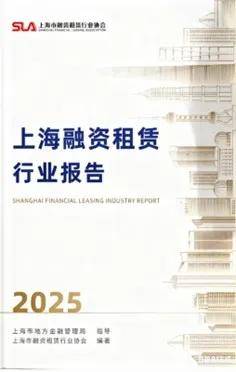
毕马威助力《2025上海融资租赁行业报告》成功发布
Sou Hu Cai Jing· 2025-12-12 02:26
Core Insights - The "2025 Shanghai Financing Leasing Industry Report" was officially released during a conference held by the Shanghai Financing Leasing Industry Association, showcasing the industry's development status, innovative practices, and transformation paths [1] - The report highlights the positive outcomes of the Shanghai financing leasing industry in implementing financial policies, enhancing financial openness, serving the real economy, and promoting high-quality development [1] - The industry has shown a steady recovery in growth, with a compound annual growth rate of 7% in total assets from 2019 to 2024, reaching a total asset scale of 3.07 trillion yuan by the end of 2024, accounting for approximately 40% of the national total [1] Group 1 - The report is a collaborative effort involving 220 financing leasing companies and 6 financial leasing companies, providing a comprehensive analysis of operational changes and future trends in the industry [3] - KPMG has been involved in the report's preparation for six consecutive years, ensuring a high level of depth and richness in data presentation, making it a leading publication in the domestic leasing industry [3] - KPMG's dedicated leasing service team offers expertise across various management dimensions, including financial management, strategic consulting, and risk management, to support industry professionals [3]
毕马威质疑美联储降息纸黄金走强
Jin Tou Wang· 2025-12-11 03:08
Group 1 - The price of paper gold is currently trading around 965 CNY per gram, with a slight increase of 0.85% and a daily high of 965.00 CNY per gram and a low of 950.38 CNY per gram, indicating a short-term bullish trend [1] - Geopolitical uncertainties and weak U.S. economic data are providing safe-haven support for gold, with ongoing conflicts such as the Russia-Ukraine situation and rising tensions in the Middle East contributing to market concerns [3] - Global central banks continue to purchase gold, reinforcing a long-term price floor for gold [3] Group 2 - The Chinese gold price has broken through the key resistance level of 950 CNY per gram, forming an upward channel on the daily chart, with short-term moving averages in a bullish arrangement [4] - The expectation of interest rate cuts by the Federal Reserve, combined with geopolitical risk aversion, suggests a medium-term bullish trend for gold, with recommendations to buy on dips while being cautious of short-term pullback risks [4] - The recent increase in the RMB exchange rate supports gold demand priced in CNY, as the central parity has been adjusted upward for three consecutive days [4]
毕马威料香港2025年IPO集资额居全球首位
Zhong Guo Xin Wen Wang· 2025-12-10 15:14
Core Insights - The report by KPMG forecasts that Hong Kong's IPO fundraising will reach HKD 272.1 billion in 2025, representing a 210% year-on-year increase, making it the largest globally [1] - Hong Kong has completed 17 "A+H" listings this year, the highest ever, accounting for half of the total fundraising for the year, reinforcing its role as a bridge between mainland China and international capital markets [1] - The number of IPO applications in Hong Kong surged to 316 as of December 7, 2024, a 267% increase compared to the end of 2024, with 92 applications being "A+H" listings [1] Industry Trends - There is a notable increase in the number of unprofitable biotech companies going public in Hong Kong, with 14 listings this year compared to 4 last year, indicating a growing interest in the biotech sector [1] - The report anticipates that 2026 will be a pivotal year for high-tech companies going public, driven by local supportive policies and a robust regulatory environment [2] - KPMG predicts that Hong Kong will see between 180 to 200 new stock listings in 2026, with a total fundraising amount of HKD 350 billion [1]