罗氏

Search documents
特朗普宣布大幅提高对印度关税 后者去年对美出口额达870亿美元
智通财经网· 2025-08-04 22:24
Group 1 - The U.S. government, led by President Trump, announced a significant increase in tariffs on imports from India, with a new rate of 25% effective from August 7, 2024, and potential further increases to be announced later [1] - India is a crucial trade partner for the U.S., with exports to the U.S. projected at $87 billion in 2024 and a trade surplus of approximately $46 billion [1] - The U.S. administration criticized India for its stance during the Russia-Ukraine conflict, particularly regarding India's purchase and resale of Russian oil for profit [1] Group 2 - Switzerland is actively responding to the U.S. tariff changes by extending negotiation deadlines to reach an agreement on tariffs, currently facing a 39% tariff on exports to the U.S. [2] - Swiss companies, including Swatch Group and Roche, experienced stock price declines locally, while their American Depositary Receipts saw slight increases [2] - UBS forecasts that Switzerland will likely reach an agreement with the U.S. to reduce tariffs to 15%, but warns that sustained high tariffs could lead to significant economic impacts and prompt further monetary easing by the Swiss National Bank [2]
Trade War: Swiss want to make a new deal with US
Bloomberg Television· 2025-08-04 17:18
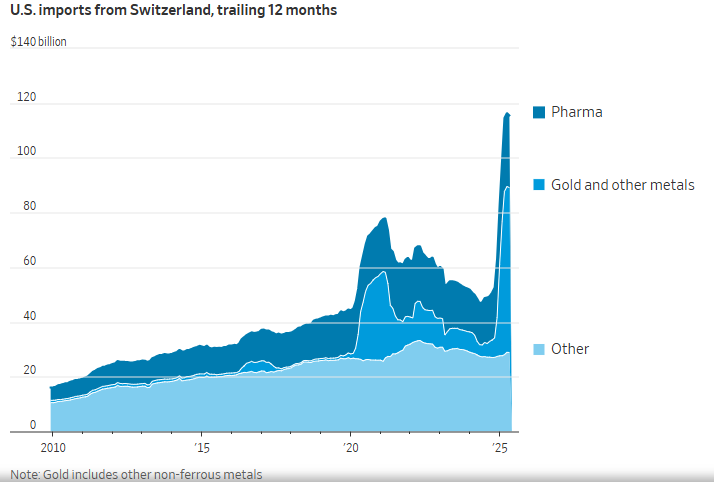
US-Swiss Trade Relations & Tariffs - The US has imposed a 39% tariff on Switzerland, raising questions about the reasons behind it [1] - The 39% tariff does exempt pharmaceuticals [4] - The tariffs may be related to the Swiss franc being a haven currency as the dollar weakens [4] Pharmaceutical Industry Impact - Switzerland has a large pharmaceutical industry that exports significantly to the US [2] - The US is targeting pharmaceutical companies, including those based in Zurich like Novartis and Roche, to lower drug prices [3] - Trade tensions and potential tariffs could affect pharmaceutical companies with subsidiaries and businesses in the US [9] - Roche, a Swiss company, has a large American business called Genentech and is dealing with letters from the US government [9] - Novo Nordisk, a Danish company, is also at risk, as 60% of its revenue comes from the US [11] - Potential changes in Medicaid coverage and tariffs on drugs like Ozempic could significantly impact Novo Nordisk's revenue [12] Tourism & Economic Factors - A weaker dollar could make travel to Europe more expensive for Americans [6] - Business travel between the US and Europe has seen a slight decline [7]


全国生物药联盟集采启幕,8个品种纳入,市场规模超280亿元
Xin Jing Bao· 2025-08-04 14:25
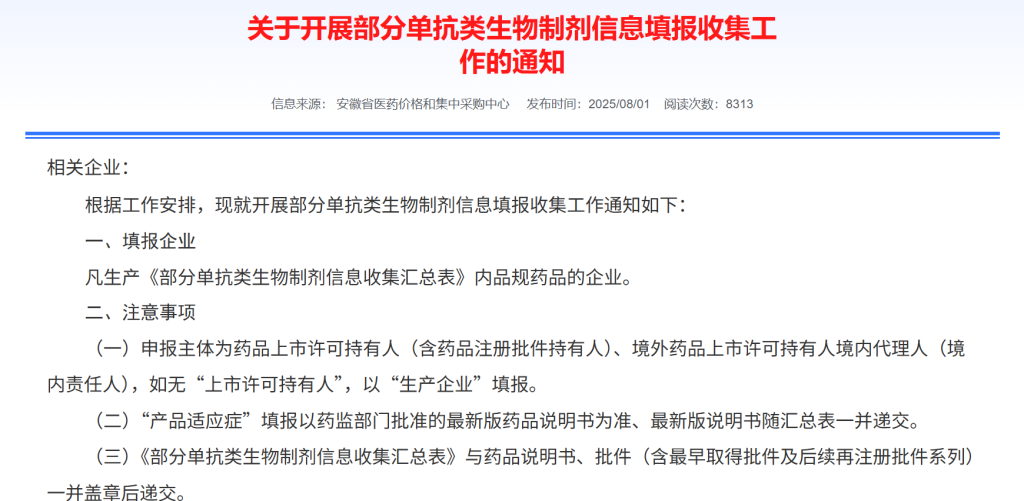
Core Viewpoint - The Anhui Provincial Medical Price and Centralized Procurement Center has initiated information collection for eight monoclonal antibody biological agents, indicating the commencement of a national centralized procurement alliance for biological drugs in China [1][5]. Group 1: Market Overview - The eight biological drugs targeted for information collection have a combined market sales exceeding 28 billion yuan [2]. - The original manufacturers of these drugs include AbbVie, Amgen, and Johnson & Johnson, with Roche holding the original drugs for several others [2]. - The competitive landscape is intense, particularly for Bevacizumab, which has 13 approved products in the domestic market, with sales reaching 10.576 billion yuan in 2023 [2]. Group 2: Sales Trends - Sales of Adalimumab in sample hospitals increased from 1.257 billion yuan in 2022 to 1.488 billion yuan in 2024, while sales in urban pharmacies rose from 743 million yuan to 931 million yuan [3]. - The market share of original drugs is declining due to the introduction of biosimilars, with the original Adalimumab being surpassed in market share by a biosimilar in 2023 [3]. Group 3: Impact of Centralized Procurement - Centralized procurement is expected to intensify market competition, leading to a redistribution of market shares, with original drugs facing greater pressure from price competition [3][7]. - The procurement process is anticipated to enhance drug accessibility for patients, potentially lowering prices and ensuring quality [4]. - Companies must improve production capacity and flexibility to meet the demands of centralized procurement [4]. Group 4: Regulatory Environment - The development of biosimilars in China has accelerated, with a record 104 registration applications for therapeutic biological products submitted in 2024 [5]. - The centralized procurement of biological drugs is not prohibited, and the National Healthcare Security Administration has indicated that it will consider various factors before implementing such measures [5][6]. Group 5: Future Industry Trends - The initiation of national centralized procurement for biological drugs may shorten the profit period for low-quality products, prompting companies to focus on enhancing product quality and R&D capabilities [7]. - Companies may also shift their R&D focus towards more valuable innovative fields and increase investments in overseas markets to mitigate the impact of localized procurement [7].
Sonnet BioTherapeutics Expands Clinical Evaluation of SON-1010 Dose Escalation with Atezolizumab in Ovarian Cancer
GlobeNewswire News Room· 2025-08-04 12:40
Core Insights - Sonnet BioTherapeutics is expanding its clinical study of SON-1010 in combination with atezolizumab for patients with advanced platinum-resistant ovarian cancer, showing promising early results with a 66% tumor response rate at the highest dose [1][2] - The company is also exploring a higher maintenance dose of SON-1010 to assess its safety and efficacy before moving to a randomized Phase 2a trial [1][2] - SON-1010 is designed to enhance immune response in tumors by delivering IL-12 directly to the tumor microenvironment, potentially improving treatment outcomes for various cancers [3][4] Company Overview - Sonnet BioTherapeutics focuses on developing targeted biologic drugs using its Fully Human Albumin-Binding (FHAB) platform, which aims to optimize the safety and efficacy of immune-modulating therapies [6][7] - The company is currently evaluating SON-1210, another candidate using the FHAB platform, for the treatment of pancreatic cancer in collaboration with the Sarcoma Oncology Center [7] Clinical Trial Details - The SB221 trial is a Phase 1b/2a multicenter study assessing the safety, tolerability, pharmacokinetics, pharmacodynamics, and efficacy of SON-1010, both alone and in combination with atezolizumab [5] - The trial aims to establish the maximum tolerated dose (MTD) and evaluate the potential for improved efficacy in patients with platinum-resistant ovarian cancer [5]


全国生物类似药集采启动:8个品种涉及300亿市场,影响有多大?
Xin Lang Cai Jing· 2025-08-04 11:08
Core Viewpoint - The announcement by Anhui Province regarding the collection of information for the centralized procurement of eight monoclonal antibody biosimilars indicates a significant shift towards nationwide biosimilar drug procurement, which could impact the market dynamics and competition in the pharmaceutical industry [1][3][4]. Group 1: Centralized Procurement Overview - The centralized procurement initiative is not limited to Anhui Province but is a nationwide effort led by Anhui, aiming to enhance the procurement of biosimilars [3]. - The collection of information from manufacturers includes sales data, production capacity, approved indications, and pricing information, which is expected to take 1-2 months before formal bidding begins [3][4]. - The first batch of biosimilar procurement is anticipated to have a substantial market impact, with an estimated market size of nearly 300 billion yuan involved in the procurement of the eight selected monoclonal antibodies [4][6]. Group 2: Market Dynamics and Competition - The competition for the selected biosimilars is expected to be intense, with major players like Innovent Biologics, China National Pharmaceutical Group, and Hengrui Medicine having multiple products included in the procurement list [4][6]. - The sales figures for key biosimilars indicate significant market potential, with Rituximab projected to generate sales of 5.2 billion yuan in 2024, while Bevacizumab is expected to exceed 10 billion yuan [6][7]. - The procurement process is likely to lead to price reductions, although the extent of these reductions may be less severe compared to previous chemical drug procurements, reflecting a more moderate pricing strategy [7][8]. Group 3: Industry Response and Future Outlook - Companies are proactively adjusting their strategies in anticipation of the procurement, with some focusing on domestic sales and others exploring international markets to enhance their competitive positioning [8]. - The regulatory environment is evolving, with indications that future procurement rules may prioritize sustainability and reasonable pricing, which could influence how companies approach their pricing strategies [7][8]. - The overall sentiment in the industry suggests a cautious optimism regarding the balance between price reductions and the need for sustainable growth in the biosimilar sector [7][8].
39%高关税,瑞士缘何成了特朗普“痛击对象”?
Hu Xiu· 2025-08-04 09:48
Core Viewpoint - The U.S. has imposed a 39% tariff on goods imported from Switzerland, marking a significant shift in trade relations and impacting Switzerland's economy, especially on its national holiday [1][2][4]. Group 1: Trade Relations - The U.S. trade deficit with Switzerland has surged, reaching nearly $50 billion in the first five months of the year, making Switzerland the fifth-largest trade partner for the U.S. [7] - Switzerland's exports to the U.S. account for approximately 19% of its total exports, highlighting the importance of the U.S. market for the Swiss economy [10]. - The U.S. Treasury has previously labeled Switzerland as a currency manipulator, indicating ongoing tensions regarding trade practices [12]. Group 2: Domestic Reactions in Switzerland - Following the tariff announcement, there has been significant criticism within Switzerland, particularly directed at Federal President Keller-Sutter for the perceived failure in negotiations [14][15]. - The pharmaceutical industry, which exports about 60% of its products to the U.S., has been blamed for straining U.S.-Swiss trade relations, with major companies like Novartis and Roche under scrutiny [17]. - There is a growing sentiment in Switzerland to reconsider its long-standing neutral stance and potentially strengthen ties with the EU, which has more favorable tariff rates with the U.S. [19]. Group 3: Economic Impact - If the tariffs remain unchanged, Switzerland's GDP could decline by approximately 0.6 percentage points, with more severe impacts if pharmaceuticals are excluded from tariff exemptions [21]. - The potential for tariffs on pharmaceuticals could reach as high as 200%, further exacerbating the economic challenges faced by the Swiss economy [21].
39%高关税,“中立国”瑞士缘何成特朗普贸易战痛击对象?
Feng Huang Wang· 2025-08-04 08:04
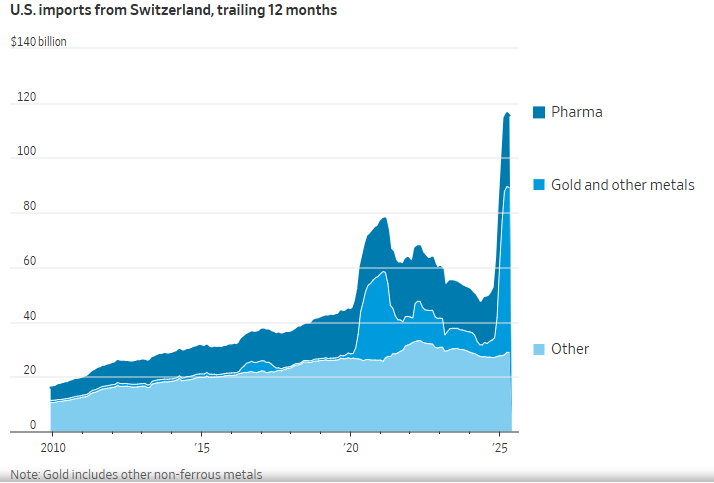
Group 1 - The U.S. will impose a 39% tariff on goods imported from Switzerland starting August 7, making Switzerland one of the few countries facing such high tariffs, second only to Brazil, Laos, Myanmar, and Syria [1][2] - The announcement coincided with Switzerland's National Day on August 1, which has been described as a significant humiliation for the country [2] - The trade deficit between the U.S. and Switzerland has surged, reaching nearly $50 billion in the first five months of the year, ranking Switzerland as the fifth largest trade deficit partner of the U.S. [5] Group 2 - Swiss officials were caught off guard by the high tariffs, as they believed negotiations with U.S. representatives were progressing well, with Switzerland expressing confidence in reaching a trade agreement [3][9] - The Swiss economy is heavily reliant on foreign trade, with approximately 19% of its exports going to the U.S., making it the largest export market for Switzerland [9] - The Swiss pharmaceutical industry, which exports about 60% of its products to the U.S., is under scrutiny, as it has been suggested that it may have hindered negotiations with the U.S. [12] Group 3 - The Swiss stock market is expected to open lower following the tariff announcement, with major companies like Novartis, Roche, and Nestlé listed on the Swiss exchange [12] - Analysts predict that if the tariffs remain unchanged, Switzerland's GDP could decline by approximately 0.6 percentage points, with more severe impacts if pharmaceuticals are excluded from tariff exemptions [13]


美国关税飙至39%,瑞士国内互相指责:总统、制药业,谁的锅?
Guan Cha Zhe Wang· 2025-08-04 07:54
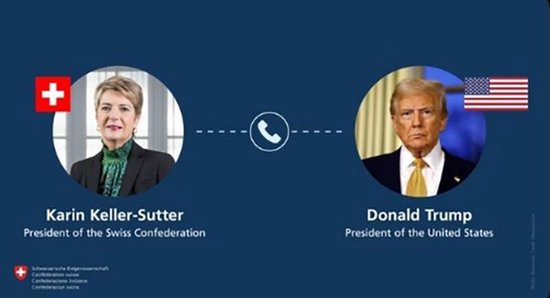
炒股就看金麒麟分析师研报,权威,专业,及时,全面,助您挖掘潜力主题机会! 【文/观察者网 王一】据央视新闻报道,美国总统特朗普日前签署行政令,确定了对多个国家和地区征 收的"对等关税"税率,其中对瑞士征收的关税高达39%,冲击该国制表等多个行业。 几天过去了,仍处于举国震惊中的瑞士开始"内部追责",从瑞士联邦主席凯勒-祖特尔到制药业,他们 想找出到底是谁惹怒了特朗普,导致谈判破裂,让瑞士最终"背上"39%的关税。凯勒-祖特尔被批严重 高估了她与特朗普政府达成协议的可能性,其他批评者则指责是瑞士制药业引发了特朗普的愤怒。 知情人士称,瑞士官员误认为他们与美方的谈判进展顺利,有望达成一项与英国类似、关税为10%的协 议。今年4月,瑞士还宣布将对美投资近1500亿美元,以争取率先达成协议。凯勒-祖特尔7月还自信地 对外公开表示,她成功打通了与特朗普接触的通道。两名消息人士表示,自信满满的瑞士已做好准备接 受10%的税率,联邦政府7月4日还批准以10%的关税为底线进行谈判。 一位前瑞士外交官形容当前瑞士的内讧局面可谓是"刀光剑影"(knives out)。 退休前经常与美国客户打交道的瑞士人卡尔·格施文德(Karl ...
美国关税措施后,瑞士股市开盘补跌1.8%
news flash· 2025-08-04 07:40
美国关税措施后,瑞士股市开盘补跌1.8% 金十数据8月4日讯,由于美国对瑞士征收39%的关税,瑞士股市在早盘交易中大幅下跌。SMI指数下挫 1.8%,跌至4月以来的最低水平,这是瑞士市场在上周五因本地假期休市后首次对该关税消息作出反 应。苏黎世保险、瑞银(UBS)和罗氏(Roche)成为跌幅最大的几家公司。特朗普上周决定对瑞士实 施39%的关税,接近全球最高水平,甚至高于4月份曾讨论的31%税率,新关税税率将于本周四生效。 投行Vontobel分析师Mark Diethelm在一份报告中表示:"这使得瑞士出口商相比欧盟、日本或韩国的企 业处于明显劣势,因为这些地区的基准关税仅为15%。" ...

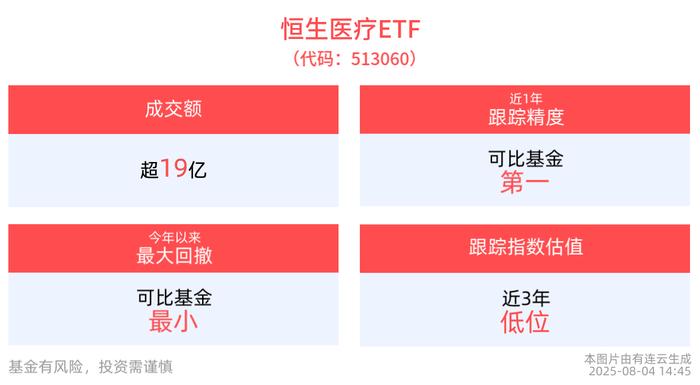
国内创新药龙头企业基本面持续改善,恒生医疗ETF(513060)回调蓄势,盘中交投活跃,近1周日均成交额同类居首
Xin Lang Cai Jing· 2025-08-04 07:36
Group 1 - The Hang Seng Healthcare Index (HSHCI) increased by 0.37% as of August 4, 2025, with notable gains from companies such as Cloudmed (01952) up 8.70% and Crystal Technology (02228) up 7.19% [3] - The Hang Seng Healthcare ETF (513060) experienced a decline of 0.59%, with a latest price of 0.67 yuan, but showed a 3.36% increase over the past week as of August 1, 2025 [3] - The liquidity of the Hang Seng Healthcare ETF was active, with a turnover rate of 25.84% and a trading volume of 1.911 billion yuan [3] Group 2 - Global advancements in the weight loss sector are gaining attention, with multinational pharmaceutical companies like AbbVie, Roche, and Eli Lilly accelerating their amylin-related pipelines [4] - Eli Lilly's Eloralintide showed promising weight loss results in Phase 1 clinical trials, achieving a maximum weight loss of 11.3% over 12 weeks with a low incidence of gastrointestinal adverse effects [4] - The amylin molecules in development have half-lives ranging from 10 to 18 days, potentially allowing for monthly dosing and improving patient compliance [4] Group 3 - The latest financing buy-in amount for the Hang Seng Healthcare ETF reached 164 million yuan, with a financing balance of 209 million yuan [5] - Over the past two years, the net value of the Hang Seng Healthcare ETF has increased by 28.35%, with a maximum single-month return of 28.34% since inception [5] - The ETF has a Sharpe ratio of 2.39 for the past year, indicating strong risk-adjusted returns [5] Group 4 - The management fee for the Hang Seng Healthcare ETF is 0.50%, and the custody fee is 0.15% [6] - The ETF's tracking error over the past year is 0.060%, the highest tracking precision among comparable funds [6] - The latest P/E ratio for the Hang Seng Healthcare Index is 31.37, indicating it is at a historical low compared to the past three years [6] Group 5 - The top ten weighted stocks in the Hang Seng Healthcare Index account for 62.03% of the index, including companies like BeiGene (06160) and WuXi Biologics (02269) [6]