英伟达

Search documents
OKX Launches Perpetual Futures for Nine Tech Giants and U.S. Stock Indices
FinanceFeeds· 2026-03-05 07:18
OKX Launches Perpetual Futures for Nine Tech Giants and U.S. Stock Indices \In a landmark move for the convergence of traditional and digital finance, OKX officially launched USDT-settled perpetual futures for nine high-profile U.S. equities and ETFs on March 4, 2026. The new instruments include mega-cap tech names such as Nvidia (NVDA), Microsoft (MSFT), Apple (AAPL), and Meta (META), alongside semiconductor leaders Micron (MU) and SanDisk (SNDK). Most significantly, the launch includes “Perp” versions of ...


全市场都在战火里面找 HALO
远川投资评论· 2026-03-05 07:05
Core Viewpoint - The article discusses the emerging investment trend towards HALO assets, which are characterized by heavy assets and low obsolescence, as a response to the rapid advancements in AI and geopolitical tensions affecting supply chains and resource prices [1][2][4]. Group 1: HALO Assets - HALO stands for Heavy Assets and Low Obsolescence, indicating a shift in investment focus towards physical assets that are less likely to be disrupted by AI [1]. - High demand for stable physical assets such as utilities, transportation infrastructure, and long-cycle industrial capacity is highlighted as a key investment opportunity [1][2]. - Goldman Sachs' report indicates that the valuation gap between light asset and heavy asset portfolios is narrowing, with heavy assets experiencing valuation increases [4][7]. Group 2: Market Dynamics - The article notes a significant change in market sentiment, where traditional investment strategies favoring light assets are being challenged by the realities of supply chain disruptions and geopolitical conflicts [3][4]. - The capital expenditure race driven by major tech companies for AI infrastructure is compared to historical investments in telecommunications and railroads, indicating a substantial shift in capital flow towards heavy assets [10][13]. - The ongoing geopolitical tensions, particularly in the Middle East, are causing spikes in resource prices, further validating the investment thesis for HALO assets [13][15]. Group 3: China’s Role - The article emphasizes China's position as a leading manufacturer of physical assets, suggesting that its capabilities should not be undervalued in the context of global supply chain reconfiguration [16]. - The demand for Chinese manufacturing and materials is expected to rise as countries face challenges in rebuilding local supply chains, reinforcing the value of heavy assets [16][17]. - The article posits that the current global economic landscape favors real, productive assets over financial capital, with China being a central player in this transition [16][17]. Group 4: Investment Strategies - The article suggests that institutional investors are increasingly recognizing the importance of physical assets, with a notable shift in portfolio allocations towards sectors like metals and traditional energy [20][21]. - The narrative around supply chain management is evolving from "Just-in-Time" to "Just-in-Case," reflecting a strategic pivot towards securing raw materials and local production capabilities [21]. - The uncertainty in the market is prompting a reevaluation of investment strategies, advocating for a balanced approach that includes maintaining reserves and being prepared for volatility [21].

AIGC兴起的时代背景:技术牵引驱动产业变革,政策落地加速产业转化
人民网财经研究院· 2026-03-05 06:41
Investment Rating - The report does not explicitly state an investment rating for the AIGC industry. Core Insights - The AIGC (Artificial Intelligence Generated Content) industry is evolving rapidly, driven by advancements in AI foundational technologies, computational power, and big data environments, marking a significant transformation in content production and creative expression [8][9]. - AIGC is becoming a critical infrastructure for high-quality economic and social development, with applications spanning various sectors including media, education, healthcare, finance, and retail [8][9]. - The report emphasizes the importance of government policies in fostering a supportive environment for AIGC, highlighting the balance between development and safety as a key regulatory focus [16][17]. Chapter Summaries Chapter 1: Current State of AIGC Industry - AIGC's rapid development is attributed to breakthroughs in AI large models, which have significantly enhanced understanding and generation capabilities [13][14]. - The industry structure has evolved from a traditional three-layer architecture to a four-layer system encompassing hardware, frameworks, models, and applications, facilitating efficient collaboration and continuous optimization [28][29]. - As of June 2025, 433 large models have been registered and are operational in China, indicating a shift from exploration to large-scale application [34]. Chapter 2: Empowering Scenarios: Typical Applications of AIGC - AIGC is transforming various sectors, including: - **Content Creation and Media**: AIGC is enabling structural transformation in the content industry, significantly lowering production costs and enhancing creative efficiency [50][57]. - **Programming and Software Engineering**: AIGC is redefining software development processes, enhancing efficiency and quality while promoting collaborative programming paradigms [60][61]. - **Retail and E-commerce**: AIGC is deeply integrated into business operations, improving customer experience and operational efficiency [63][64]. - **Banking and Finance**: AIGC is reshaping the value chain of financial services [46]. - **Healthcare**: AIGC is facilitating systemic leaps in medical collaboration and research innovation [48]. - **Creative Design**: AIGC is driving efficiency revolutions and redefining creative paradigms [48]. - **Cultural Tourism**: AIGC is innovating pathways from experience reconstruction to ecological upgrades [48]. - **Digital Transformation for SMEs**: AIGC is promoting technological inclusivity and comprehensive upgrades [48]. Chapter 3: Coexistence of Opportunities and Challenges - The report identifies key opportunities for AIGC, including technological breakthroughs and the growing demand for AI-generated content [5]. - Challenges include content safety, data quality, and compliance with copyright and intellectual property laws, necessitating collaborative efforts among governments, enterprises, and individuals [5]. Chapter 4: The Future of AIGC - AIGC is expected to evolve from intelligent tools to societal engines, driving systemic efficiency changes and creating new job roles [6]. - The report highlights AIGC's potential social value, including expanding access to quality healthcare, accelerating education, and aiding environmental governance [6].
招商证券:超导量子计算机为量子计算主流方案 建议关注四大核心环节投资
智通财经网· 2026-03-05 06:15
Group 1 - The global quantum computing sector has seen significant breakthroughs since Q4 2025, with accelerated technological maturity and industrialization processes [1] - Google's quantum AI lab published a paper in Nature on October 22, 2025, demonstrating the "quantum echo" algorithm on its Willow chip, achieving a speed 13,000 times faster than the best traditional supercomputers [1] - IBM announced key innovations at its annual quantum developer conference on November 12, 2025, aiming to achieve quantum advantage by the end of 2026 and to launch a large-scale fault-tolerant quantum computer by 2029 [1] Group 2 - The Chinese government has prioritized quantum technology in its national economic and social development plans, marking it as a strategic high ground for future competitiveness [2] - The Ministry of Industry and Information Technology plans to deploy 17 key tasks in early 2025 to enhance the development of quantum computing, communication, and precision measurement [2] Group 3 - Superconducting quantum computers are currently the mainstream technology in the quantum computing field, recognized for their scalability, ease of control, and compatibility with integrated circuit processes [3] - Various quantum computing technologies are developing diversely, with superconducting quantum computing, ion trap quantum computing, and others each having unique advantages [3] Group 4 - IonQ, established in 2015, is the world's first publicly traded quantum computing company, focusing on ion trap technology and offering a full-stack quantum computing capability [4] - IonQ's products include hardware, cloud services, and software, with its quantum computers being industry leaders in performance [4] Group 5 - Benyuan Quantum, founded in 2017, focuses on building a self-controlled engineering quantum computer ecosystem, with its core product being the "Wukong" superconducting computer featuring a 72-qubit chip [5][6] - The company has achieved over 80% localization in its hardware, software, and operational systems [6] Group 6 - Quantum computers consist of superconducting quantum chip systems, quantum computing measurement and control systems, environmental support systems, and operational software systems [7] - The quantum chip is crucial for defining computational power and application potential, with China making significant strides in quantum chip development [7] - The "Benyuan Sinan" is the first domestic quantum computer operating system, enabling efficient utilization of quantum processors and collaboration with classical computing platforms [7]



X @Cassandra Unchained
Cassandra Unchained· 2026-03-05 06:10
There is something called the Arrhenius Problem that produces a rule of thumb – for every 10 degrees Celsius increase in circuit temperature, halve the lifetime. This is not exact, and is debatable, but is directionally correct.Nvidia Blackwell power usage vs Hopper is 43%-71% higher, thermal density is higher because of the two dies/chips in one package, and Blackwell has documented overheating issues. Blackwell as a package is much larger than Hopper, providing a greater degree of thermal differentials an ...

盘中,集体拉升!涨价100%!芯片,传出利好消息
券商中国· 2026-03-05 06:04
存储芯片概念股异动! 今日,在A股市场上,存储芯片概念股集体拉升,板块指数涨幅一度超过3%。截至发稿,强一股份20%涨停, 亚威股份、沃格光电、石英股份10%涨停,深科达、佰维存储涨超12%, 东芯股份、富满微涨超10%,国芯科 技涨超9%。 考虑到供应能力,三星电子正持续与客户协商价格。分析显示,即使在供应讨论期间需求也激增,1月后价格 进一步上涨。往常,像DRAM这样的内存供应合同每年都签订。由于近期供应短缺,存储器制造商开始签订季 度合约,但随着价格快速变化,他们现在不得不考虑按月计。 据悉,三星电子并不是唯一一家持续推高内存价格的公司。报道援引业内人士消息称,SK海力士与美光科技 同样以相近价格涨幅完成一季度供货合同谈判。三大内存厂商集体提价的格局已基本成型。 当天,在韩国股票市场上,存储芯片龙头三星电子、SK海力士也大幅反弹,盘中涨幅均超过10%。 日前,有韩国媒体称,第一季度,三星电子DRAM价格涨幅已从70%上调至100%。业内估计,SK海力士和美 光科技的价格涨幅也会相近。市场分析人士指出,DRAM价格持续大涨,对存储芯片板块构成利好。 DRAM涨价1 0 0% 据韩国媒体《Etnews》报道 ...



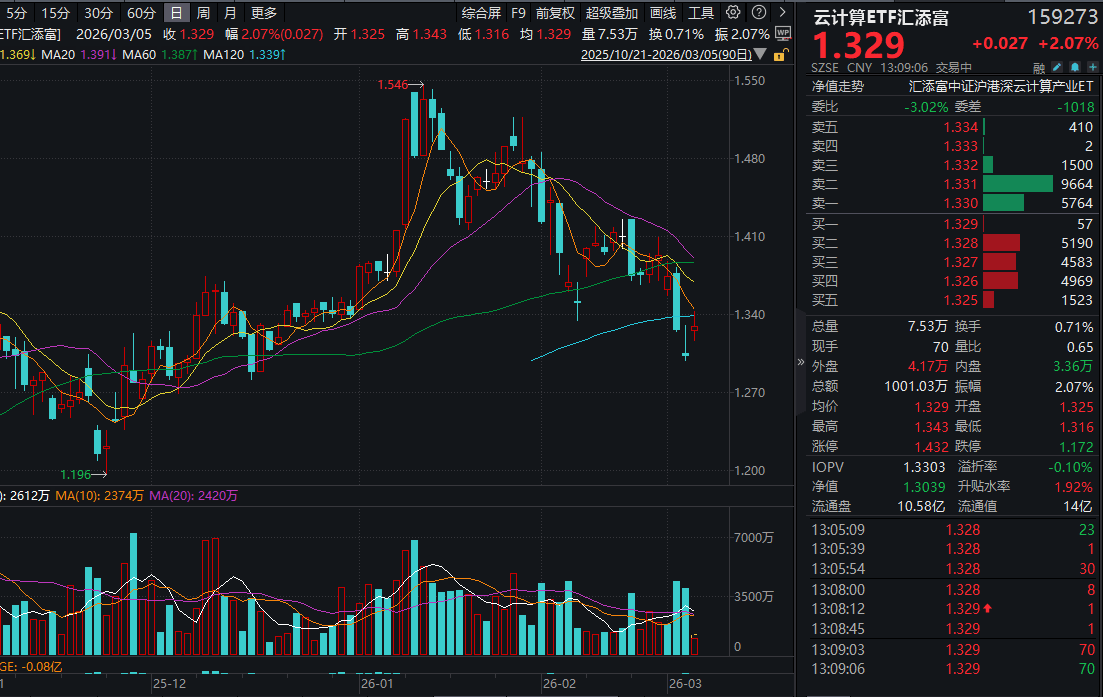
加码40亿,英伟达布局光通信!新易盛大涨超10%,云计算ETF汇添富(159273)大涨超2%!算力需求超预期,如何理解云需求“通胀”逻辑?
Sou Hu Cai Jing· 2026-03-05 06:01
Group 1 - The core viewpoint of the news highlights a strong rebound in the Asia-Pacific stock market, driven by a comprehensive rebound in US stocks and a significant increase in AI computing power, with the "computing power ETF" gaining over 2% [1][3] - Nvidia is increasing its investment in the computing power ecosystem, committing $2 billion to optical technology companies Lumentum and Coherent, which are key suppliers in the AI data center infrastructure [3][5] - The cloud computing ETF Huatai (159273) saw most of its weighted index stocks rise, with notable gains from companies like Xinyi and Zhongji [3][4] Group 2 - Citic Securities notes that the technology sector is experiencing upward pressure on capital expenditure (Capex) due to concerns over capital return rates and cash flow, leading to a shift in focus towards computing power and advanced processes [5][6] - The demand for computing power is expected to continue exceeding expectations in both overseas and domestic markets, with upstream sectors likely to maintain high profitability and price increases [6][8] - The recent iterations of large models from major companies like Google and Alibaba are driving AI inference demand, leading to a price increase in cloud services, marking a shift from price competition to premium monetization [8][9]

The Art of the Hedge: Tariffs, War Dividends, and the Spanish Trade Inquisition
Stock Market News· 2026-03-05 06:00
If there is one thing the global financial markets have learned in the early months of 2026, it is that stability is for people who don’t have a Truth Social account. Investors spent the first week of March attempting to price in a reality that feels increasingly like a fever dream written by a protectionist chatbot. Between the Supreme Court playing a high-stakes game of “legal whack-a-mole” with trade levies and the White House launching a maritime insurance start-up in the middle of a conflict zone, the ...

X @Cassandra Unchained
Cassandra Unchained· 2026-03-05 05:24
Actual SBC costs are not high simply because the employees' shares went up in value. The shares were not yet in employees' hands. The grants of RSUs are future promises, and all potential upside is funded by shareholders directly through either dilution or future buybacks to nowhere at much higher prices. Companies benefit by offloading all the employee shares' upside from the income statement, but it shows up down the road in the cash flow statement, and must be accounted.What actually happens - grant when ...
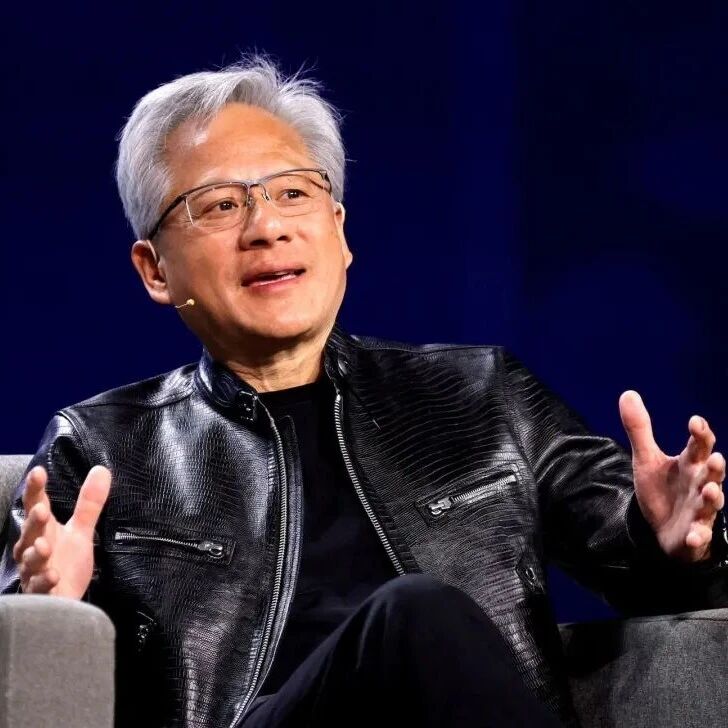
黄仁勋重磅发声:对OpenAI千亿投资机会已消失 并否认AI泡沫称增长“势不可挡”
美股IPO· 2026-03-05 04:40
Core Viewpoint - Nvidia's CEO Jensen Huang stated that the company's investment in OpenAI will not reach the previously discussed $100 billion, indicating that the opportunity for such an investment may no longer exist [1][3]. Group 1: Investment in OpenAI - Nvidia invested $30 billion in OpenAI during a financing round that totaled $100 billion, raising OpenAI's valuation to $730 billion, which is significantly lower than the $100 billion potential discussed last year [3]. - Huang emphasized that this might be the last opportunity for Nvidia to invest in a company with such strategic significance as OpenAI, which is preparing for an IPO by the end of the year [1][3]. Group 2: Strategic Relationships and Market Concerns - The lower-than-expected investment has raised concerns about the strategic relationship between Nvidia and OpenAI, despite Huang praising OpenAI's work as "incredible" and calling it one of the most influential companies of the era [3]. - Huang revealed that Nvidia's recent $10 billion investment in OpenAI competitor Anthropic is likely to be the company's last major investment in that area, as Anthropic is also preparing for an IPO [3]. Group 3: AI Market Growth and Company Performance - Huang addressed investor concerns regarding the potential for a bubble in AI investments, reiterating that the scaled deployment of AI computing has created substantial revenue opportunities for large data center operators like Microsoft [4]. - He highlighted a significant correlation between customer growth potential and computing power, stating that a threefold increase in computing capability leads to a threefold increase in customer sales [4]. - Huang pointed out that companies like Cadence Design Systems and Synopsys will play a larger and more central role in the industry ecosystem, which positively impacted their stock prices [4]. - Nvidia's historical performance was noted, with Huang asserting that the AI industry is just beginning a large growth cycle, which contributed to a 2.6% intraday increase in Nvidia's stock price [4].