
翰森制药

Search documents
港股生物医药板块暖意浓 创新药研发迎来收获期
Shang Hai Zheng Quan Bao· 2025-09-04 19:12
Core Insights - The Hong Kong biopharmaceutical sector has shown significant growth in the first half of the year, with many companies entering a phase of revenue generation from prior R&D efforts, leading to a rise in related indices [1][5] - Approximately 110 Hong Kong biopharmaceutical companies reported mid-year earnings, with nearly 70 companies experiencing year-on-year revenue growth, and around 10 companies achieving revenue growth exceeding 100% [1] - The Hang Seng Innovative Drug Index has increased by 117.55% year-to-date, indicating a rapid recovery in investor confidence in the Hong Kong biopharmaceutical market [1] Performance Drivers - Multiple factors contributed to the performance improvement, including increased sales of core products, accelerated licensing agreements, and the application of AI technology [1][3] - Leading companies like Hengrui Medicine and WuXi AppTec reported double-digit growth, with Hengrui's net profit increasing by 29.67% and WuXi's net profit rising by 95.5% [1][3] International Expansion - Several Hong Kong biopharmaceutical companies are accelerating their internationalization efforts, with notable examples including Akeso, which received approval for Glecirasib, resulting in a milestone payment of 50 million RMB [2] - Innovent Biologics reported a 74.3% increase in total revenue, with a significant reduction in losses, as it explores collaboration and licensing opportunities abroad [2] AI Technology Impact - The application of AI technology has emerged as a crucial growth driver, with companies like Crystal Holding reporting a 615.2% increase in revenue from drug discovery solutions [3] - Hengrui's collaboration with Insilico Medicine aims to leverage AI for accelerating the discovery and development of innovative therapeutic antibodies [3] R&D Investment - A common characteristic among high-performing companies is the sustained investment in R&D, with Hansoh Pharmaceutical increasing its R&D expenditure by approximately 20.4% to 1.441 billion RMB, representing 19.4% of its revenue [3][4] - Innovent Biologics has commercialized five new drugs and is advancing its next-generation innovation pipeline globally [4] Market Trends - The Hong Kong biopharmaceutical sector is experiencing a listing boom, with nearly 10 companies going public this year, including major players like Hengrui and Silver诺 [6] - The successful IPOs and significant stock price increases of newly listed companies have enhanced market confidence and attracted more firms to consider listing in Hong Kong [6]


国产玩家“围剿”司美格鲁肽
Xin Lang Cai Jing· 2025-09-04 11:48
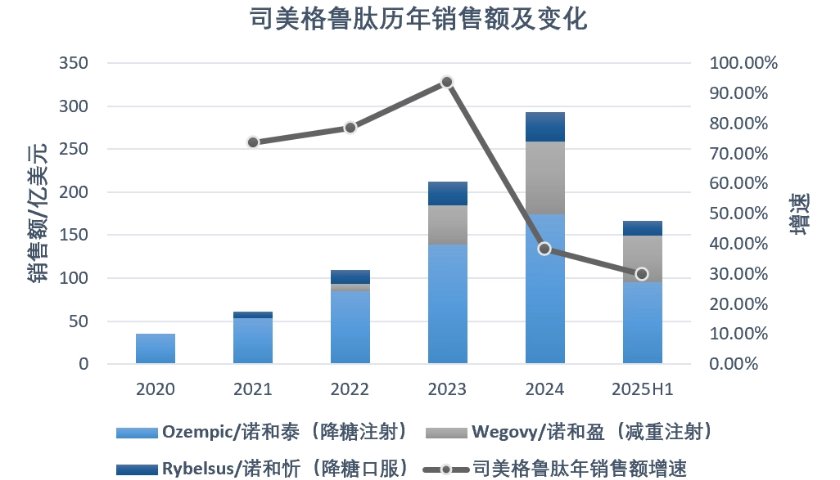
Core Viewpoint - The domestic market for semaglutide biosimilars is rapidly expanding, with multiple companies applying for market approval, indicating a potential surge in availability post-2026 when the original patent expires [1][2]. Group 1: Market Dynamics - The original semaglutide product has seen significant sales growth, reaching $29.3 billion in 2024, and is projected to surpass Merck's cancer drug, pembrolizumab, becoming the new global "blockbuster" [2]. - The approval of semaglutide for type 2 diabetes and weight management in the U.S. has spurred interest from numerous pharmaceutical companies in the GLP-1 receptor-targeting market [2][10]. Group 2: Regulatory and Development Challenges - Most domestic semaglutide biosimilars are currently applying for type 2 diabetes indications, with weight management indications still in phase 3 clinical trials, indicating a delay in broader market entry [5][11]. - The National Medical Products Administration (NMPA) has issued guidelines for clinical trial designs for semaglutide biosimilars, highlighting the complexities involved in regulatory approval [5][9]. Group 3: Production and Commercialization - Companies like Qilu Pharmaceutical and CSPC Pharmaceutical are utilizing solid-phase synthesis for production, while others are using recombinant fermentation methods, reflecting varied approaches to manufacturing [6][9]. - The competitive landscape suggests that while production capacity may not be a significant issue for domestic companies, their commercial capabilities will be crucial for success in a potentially price-sensitive market [5][9]. Group 4: Future Trends and Innovations - The future of GLP-1 drugs is expected to focus on innovative formulations, including long-acting, oral, and multi-target therapies, aiming to enhance efficacy and patient adherence [9][11]. - The market may ultimately be dominated by a few key players, as the development and commercialization of GLP-1 drugs require substantial investment and expertise [11][12].

翰森制药(03692):创新药收入高增,BD合作持续贡献增量
China Post Securities· 2025-09-04 07:43
Investment Rating - The report assigns a "Buy" rating for the company, marking its first coverage [1][8]. Core Insights - The company reported a revenue of 7.434 billion yuan for the first half of 2025, reflecting a year-on-year increase of 14.3%, with a profit of 3.135 billion yuan, up 15.0% year-on-year [4]. - The revenue from innovative drugs and collaborations continues to grow, with total revenue contribution rising to 83%, and innovative drug and collaboration product revenue reaching approximately 6.15 billion yuan, accounting for 82.7% of total revenue [5]. - The company has received approvals for new indications for its drug Amatinib, which is expected to enhance revenue potential, alongside multiple ongoing Phase III clinical trials [6]. - The company has secured significant collaboration income, including a 112 million USD upfront payment from Merck and an 80 million USD upfront payment from Regeneron [7]. - The company is positioned as a leading domestic pharmaceutical enterprise, transitioning from traditional generics to innovative business, with expected revenues of 14.432 billion yuan, 16.590 billion yuan, and 19.164 billion yuan for 2025, 2026, and 2027 respectively [8]. Financial Summary - The latest closing price is 36.36 HKD, with a total market capitalization of 225.4 billion HKD [3]. - The company has a debt-to-asset ratio of 11.33% and a price-to-earnings ratio of 42.3 [3]. - Forecasted revenues for 2025-2027 are 14.432 billion yuan, 16.590 billion yuan, and 19.164 billion yuan, with net profits projected at 4.986 billion yuan, 5.664 billion yuan, and 6.391 billion yuan respectively [12][13].

港股创新药ETF(159567)跌3.38%,成交额14.27亿元
Xin Lang Cai Jing· 2025-09-04 07:15
Core Viewpoint - The Hong Kong Innovative Drug ETF (159567) experienced a decline of 3.38% on September 4, with a trading volume of 1.427 billion yuan. The fund has shown significant growth in both share volume and total assets since its inception in January 2024 [1][2]. Group 1: Fund Performance - The Hong Kong Innovative Drug ETF (159567) was established on January 3, 2024, with a management fee of 0.50% and a custody fee of 0.10% [1]. - As of September 3, 2024, the fund's latest share volume was 6.668 billion shares, and its total assets reached 6.724 billion yuan. This represents an increase of 1586.48% in share volume and 1679.83% in total assets compared to December 31, 2023, when the share volume was 395 million shares and total assets were 378 million yuan [1]. Group 2: Trading Activity - Over the past 20 trading days, the cumulative trading amount for the Hong Kong Innovative Drug ETF (159567) was 33.138 billion yuan, with an average daily trading amount of 1.657 billion yuan. Since the beginning of the year, the cumulative trading amount over 165 trading days was 185.061 billion yuan, averaging 1.122 billion yuan per day [1]. Group 3: Fund Holdings - The current fund manager of the Hong Kong Innovative Drug ETF (159567) is Ma Jun, who has managed the fund since its inception, achieving a return of 99.52% during this period [2]. - Key holdings in the fund include: - Innovent Biologics (9.52% holding, 2.60 billion yuan market value) - WuXi Biologics (9.47% holding, 2.58 billion yuan market value) - BeiGene (8.73% holding, 2.38 billion yuan market value) - CanSino Biologics (7.62% holding, 2.08 billion yuan market value) - China National Pharmaceutical Group (7.17% holding, 1.96 billion yuan market value) - CSPC Pharmaceutical Group (6.34% holding, 1.73 billion yuan market value) - 3SBio (5.83% holding, 1.59 billion yuan market value) - Hansoh Pharmaceutical (4.54% holding, 1.24 billion yuan market value) - Zai Lab (2.86% holding, 781.055 million yuan market value) [2].


港股创新药概念股集体下跌,再鼎医药跌超10%
Mei Ri Jing Ji Xin Wen· 2025-09-04 02:44
Group 1 - The core viewpoint of the article highlights a collective decline in Hong Kong's innovative drug concept stocks on September 4, with significant drops in various companies [1] Group 2 - Zai Lab experienced a decline of over 10% [1] - Hengrui Medicine, Genscript Biotech, and Cloudmed fell by more than 5% [1] - WuXi AppTec dropped over 4%, while Innovent Biologics, WuXi Biologics, and Hansoh Pharmaceutical decreased by more than 3% [1]
中银创新医疗混合A:2025年上半年利润10.55亿元 净值增长率54.08%
Sou Hu Cai Jing· 2025-09-03 15:16
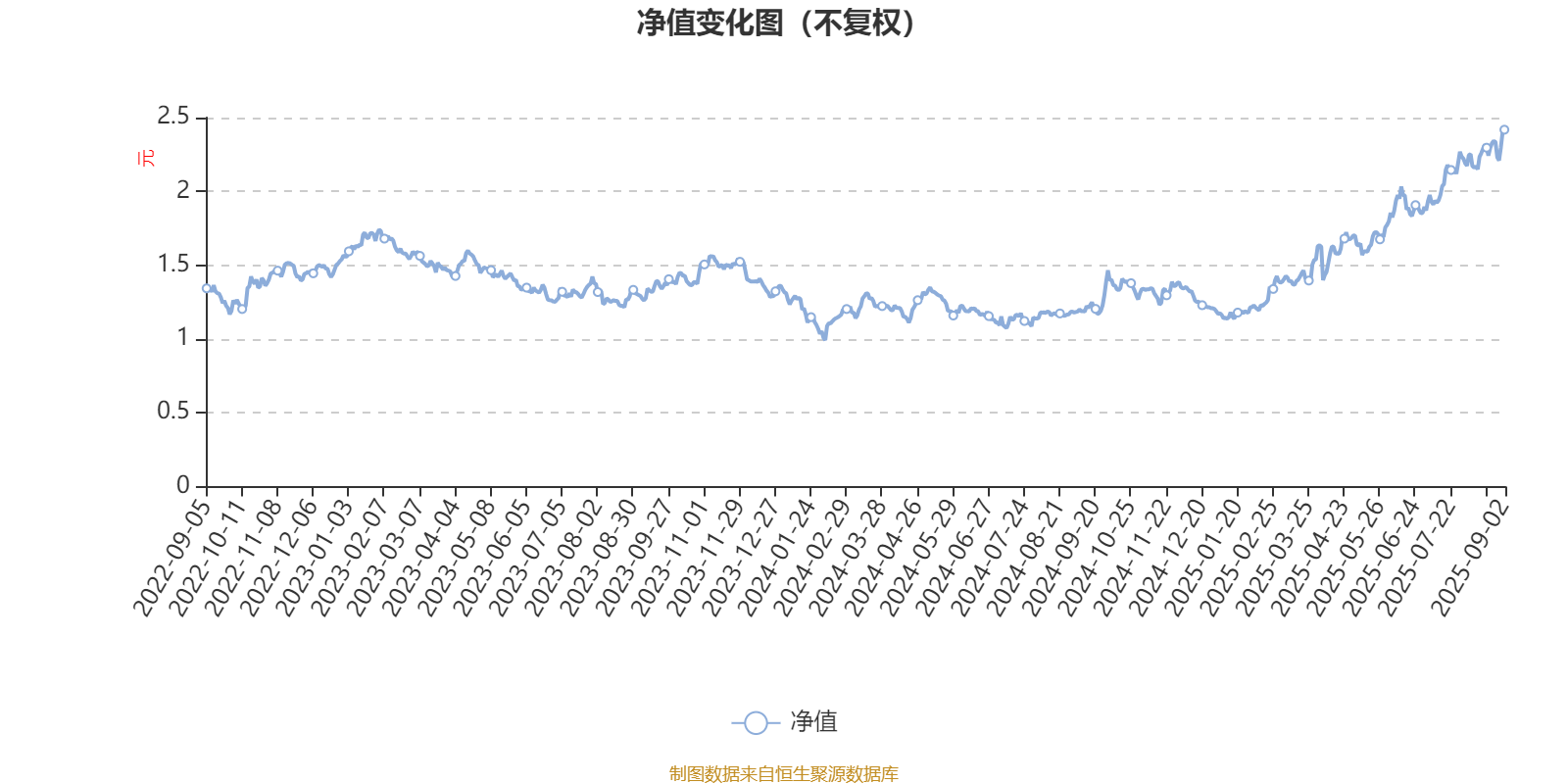
Core Viewpoint - The AI Fund Zhongyin Innovation Medical Mixed A (007718) reported a profit of 1.055 billion yuan for the first half of 2025, with a weighted average profit per fund share of 0.7264 yuan, and a net asset value growth rate of 54.08% [2] Fund Performance - As of September 2, 2025, the fund's unit net value was 2.418 yuan, with a recent three-month net value growth rate of 36.41%, ranking 12 out of 138 comparable funds [5] - The fund's six-month net value growth rate was 73.73%, ranking 8 out of 138, and the one-year growth rate was 105.10%, ranking 7 out of 135 [5] - Over the past three years, the fund's net value growth rate was 83.83%, ranking 2 out of 108 [5] Fund Management Insights - The fund manager, Zheng Ning, oversees four funds, all of which have positive returns over the past year [2] - The fund's management anticipates a moderate economic slowdown in the U.S. with a potential rise in inflation, influenced by tax cuts and regulatory relaxations under uncertain Trump policies [2] Valuation Metrics - As of June 30, 2025, the fund's weighted average price-to-earnings (P/E) ratio was approximately 71.41 times, compared to the industry average of 120.96 times [10] - The weighted average price-to-book (P/B) ratio was about 5.97 times, while the industry average was 4.07 times [10] - The weighted average price-to-sales (P/S) ratio was approximately 10.65 times, against an industry average of 6.52 times [10] Growth Metrics - For the first half of 2025, the fund's weighted average revenue growth rate was 0.11%, and the weighted average net profit growth rate was 29.65% [17] - The weighted annualized return on equity was 0.08% [17] Risk and Return Metrics - As of June 30, 2025, the fund's Sharpe ratio over the past three years was 0.6073, ranking 4 out of 105 comparable funds [25] - The maximum drawdown over the past three years was 40.72%, with the largest quarterly drawdown occurring in Q1 2024 at 27% [27] Fund Composition - As of June 30, 2025, the fund had a total scale of 1.266 billion yuan, with 24,000 holders collectively owning 683 million shares [32][35] - The fund's turnover rate over the last six months was approximately 88.46%, consistently below the industry average for two years [38] - The fund's top ten holdings have consistently exceeded 60% concentration over the past two years, with major stocks including Innovent Biologics, Kelun-Biotech, and Hengrui Medicine [41]

富时中国A50指数季度调整:纳入百济神州-U、药明康德 剔除中国核电等
智通财经网· 2025-09-03 10:59
Group 1 - FTSE Russell announced changes to the FTSE China 50 Index and FTSE China A50 Index, effective after market close on September 19, 2025 [2][3] - The FTSE China A50 Index will include new A-shares: BeiGene Ltd (688235.SH), Neway Valve (300502.SZ), WuXi AppTec (603259.SH), and Zhongji Xuchuang (300308.SZ) [2] - The index will remove A-shares: China National Nuclear Power (601985.SH), China Unicom (600050.SH), Guodian Nanjing Automation (600406.SH), and Wanhua Chemical (600309.SH) [2] Group 2 - The FTSE China A50 Index is a significant reference for overseas investors, and historical adjustments have attracted substantial passive capital from abroad [3] - The FTSE China 50 Index remains unchanged, with only the list of candidate stocks updated, including China Hongqiao (01378), Hansoh Pharmaceutical (03692), Huatai Securities (06886), JD Health (06618), and New China Life Insurance (01336) [3]



富时中国A50指数季度调整:纳入百济神州-U(688235.SH)、药明康德(603259.SH) 剔除中国核电(601985.SH)等
智通财经网· 2025-09-03 10:17
Group 1 - FTSE Russell announced changes to the FTSE China 50 Index and FTSE China A50 Index, effective after market close on September 19, 2025 [1] - The FTSE China A50 Index will include companies such as BeiGene Ltd (688235.SH), Xinyisheng (300502.SZ), WuXi AppTec (603259.SH), and Zhongji Xuchuang (300308.SZ) [1] - Companies removed from the FTSE China A50 Index include China National Nuclear Power (601985.SH), China Unicom (600050.SH), Guodian Nanjing Automation (600406.SH), and Wanhua Chemical (600309.SH) [1] Group 2 - The FTSE China A50 Index serves as an important reference for overseas investors, and historical adjustments to the index typically attract significant passive capital from abroad [1] - The FTSE China 50 Index remains unchanged, with only the list of candidate stocks updated to include China Hongqiao Group (01378), Hansoh Pharmaceutical (03692), Huatai Securities (06886), JD Health (06618), and New China Life Insurance (01336) [1]


半年豪掷176亿!中国药企研发加码,竞速全球“新赛场”
2 1 Shi Ji Jing Ji Bao Dao· 2025-09-03 07:17
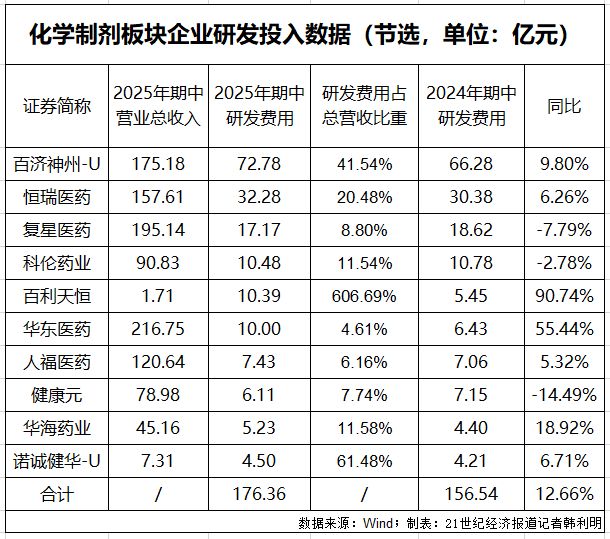
Core Insights - The Chinese biopharmaceutical market has become the second largest globally, with innovative drugs accounting for approximately 30% of global research and development [1] - During the "14th Five-Year Plan" period, China approved 210 innovative drugs and 269 innovative medical devices, showing a trend of accelerated growth [1] - The total amount of innovative drug licensing from China reached nearly $66 billion in the first half of 2025, indicating increasing global recognition of Chinese innovative drugs [1] R&D Investment - In the chemical preparation sector, the top ten pharmaceutical companies spent a total of 17.636 billion yuan on R&D in the first half of 2025, a year-on-year increase of 12.66% [2] - BeiGene led the sector with R&D expenses of 7.278 billion yuan, accounting for 41.54% of its total revenue, marking a 9.8% increase year-on-year [2] - Other companies like Hengrui Medicine and Fosun Pharma also invested over 1 billion yuan in R&D, reflecting a strong emphasis on innovation [1][2] Oncology Drug Development - Oncology remains a core focus for Chinese innovative pharmaceutical companies, with significant investments in R&D from firms like BeiGene and Hengrui Medicine [3] - BeiGene is developing several promising products in the hematological oncology space, including the BTK inhibitor Bruton and two late-stage products with global potential [3] - The global oncology drug market is expected to reach $328.6 billion by 2026, with China's market projected to grow to 376 billion yuan by 2026 and further to 755.1 billion yuan by 2031, reflecting a compound annual growth rate of 16.0% from 2024 to 2031 [4] Market Dynamics - The demand for oncology products is driving revenue for many pharmaceutical companies, with Hansoh Pharmaceutical reporting that its innovative oncology product Ameluz generated approximately 4.531 billion yuan in revenue, accounting for 60.9% of total revenue [5] - The industry is entering a phase of diverse development, with significant opportunities in ADC (antibody-drug conjugates) and other innovative therapies [5] - The five-year survival rate for cancer patients in China has improved from 40.5% in 2018 to 43.7% in 2022, indicating progress in cancer prevention and treatment [5] Technological Advancements - AI and digital technologies are reshaping the pharmaceutical R&D landscape, with new guidelines from the FDA aimed at integrating AI into preclinical research [7] - The competition in the oncology sector is intensifying, with a significant number of similar products in development, particularly in the dual-antibody and single-antibody markets [8] - The industry is focusing on creating a closed-loop research ecosystem that connects clinical needs with laboratory innovations to accelerate the translation of research into clinical applications [9]
医药生物行业跨市场周报:依沃西单抗国际多中心Ⅲ期中国部分推进,坚定看好创新药板块-20250903
EBSCN· 2025-09-03 07:06
Investment Rating - The report maintains an "Accumulate" rating for the pharmaceutical and biotechnology sector [8]. Core Viewpoints - The report expresses strong confidence in the innovative drug sector, particularly highlighting the progress of the PD-1/VEGF bispecific antibody drug, Ivosidenib, in its international multicenter Phase III clinical trials for high PD-L1 expressing NSCLC [2][22]. - Ivosidenib has shown significant overall survival (OS) benefits in the HARMONi-A study, confirming its clinical value beyond progression-free survival (PFS) [2][23]. - The report suggests that Ivosidenib's efficacy and safety are consistent across different ethnicities and regions, enhancing its international market potential [2][23]. Summary by Sections Market Review - Last week, the A-share pharmaceutical and biotechnology index fell by 0.65%, underperforming the CSI 300 index by 3.37 percentage points [1][17]. - The Hong Kong Hang Seng Medical Health Index dropped by 3.41%, lagging behind the Hang Seng Index by 1.96 percentage points [1][17]. Company Updates - Recent clinical applications include new undertakings for AK152 injection by Kangfang Biopharma and 9MW3811 injection by Maiwei Biopharma [33]. - Ongoing Phase III clinical trials include HS-20094 by Hansoh Pharmaceutical and TaiTasi by Rongchang Biopharma [33]. Clinical Research Progress - Ivosidenib is expanding its clinical research into various tumor types, including first-line treatments for high-incidence cancers and immune-resistant indications [3][31]. - The report recommends focusing on innovative companies involved in VEGF bispecific antibodies, such as Sanofi, Rongchang Biopharma, Junshi Biosciences, and Innovent Biologics [3]. Investment Strategy for 2025 - The report emphasizes a structural selection of investment opportunities based on payment willingness and ability, focusing on three payment channels: hospital payments, out-of-pocket payments, and overseas payments [3]. - Key recommendations include Heng Rui Medicine, Mindray Medical, United Imaging Healthcare, and Yuyue Medical [3].