极氪

Search documents
八部门联合印发方案推动,L3汽车将被有条件批准
Xuan Gu Bao· 2025-09-14 23:13
Group 1 - The "Work Plan" mentions the promotion of intelligent connected vehicle access and road trial pilots, with conditional approval for L3 level vehicle production access, aiming to enhance road traffic safety and improve relevant laws and regulations [1] - According to Galaxy Securities, several domestic brands such as Xiaopeng, Xiaomi, Li Auto, Huawei, Chery, GAC, and Zeekr have made significant advancements in intelligent driving this year, with leading automakers expected to achieve mass production of L3 level intelligent driving solutions by 2025, accelerating the development of the intelligent driving industry and enhancing the technological attributes of the automotive industry [1] - Qunzhi Consulting predicts that with the rapid rollout of L2+ to L3 high-level intelligent driving in the next two years, the market share of L3 intelligent driving is expected to reach 8.5% by 2026, with the global intelligent driving SoC market size projected to be approximately $5 billion in 2024, representing a year-on-year growth of 62% [1][2] Group 2 - Huafu Securities believes that the acceleration of L3 autonomous driving, combined with the decreasing configuration levels of LiDAR, will lead to a dual acceleration in demand penetration [2] - The L3 autonomous driving will require multiple LiDARs for safety redundancy, providing 360-degree or 270-degree coverage, while LiDAR is also being increasingly integrated into L2+ intelligent driving systems [2] - Companies like Jingwei Hengrun are set to mass-produce their city NOA solution based on NVIDIA Orin-X chips by the end of this year, while Altec provides chassis technology support for L3 and above autonomous driving solutions based on various intelligent digital chassis platforms [3]
暑假挽留计划,带娃自驾极氪7X挑战青甘大环线
Hu Xiu· 2025-09-14 07:06
Group 1 - The article discusses a family taking a road trip to fulfill a promise made to their children for a vacation, highlighting the importance of family time and experiences [1] - The trip involves driving the Zeekr 7X vehicle, indicating a focus on electric vehicles and their role in modern family travel [1] - The journey is described as an "extreme crossing" of the Qinghai-Gansu loop, suggesting a challenging and adventurous travel experience [1] Group 2 - The article emphasizes the excitement and surprises encountered during the road trip, reflecting the potential for memorable family adventures [1] - The timing of the trip at the end of summer vacation underscores the urgency of creating lasting memories before the school year begins [1] - The narrative suggests a trend towards experiential travel, where families seek unique and thrilling experiences together [1]
中国新能源汽车澳洲受指控,“维修权”究竟该归谁?
经济观察报· 2025-09-14 04:34
Core Viewpoint - The article discusses the challenges faced by consumers of electric vehicles (EVs) regarding high maintenance costs and limited repair options due to monopolistic practices by manufacturers, which contradicts the lower operational costs that attract consumers to EVs [1][6]. Group 1: Issues in EV Maintenance - Consumers are surprised by high maintenance and insurance costs for EVs, which are controlled by manufacturers, despite the lower operational costs that initially motivated their purchase [1][6]. - A report from the Australian Automotive Service and Repair Authority (AASRA) accuses five Chinese EV manufacturers of monopolistic practices by restricting access to independent repair services and withholding essential diagnostic software and technical data [2][8]. - The limited availability of authorized repair centers and parts leads to consumer frustration, as seen in the experience of an Australian industry worker who faced significant delays in repairs for a Chinese EV [2][3]. Group 2: Market Dynamics and Manufacturer Concerns - The high profit margins from after-sales services, particularly from the "three electric systems" (battery, motor, and electronic control), account for over 40% of EV manufacturers' after-sales profits, leading to reluctance in opening data to third-party repair services [6][8]. - The Chinese automotive industry faces scrutiny for its closed after-sales service model, which clashes with international regulations that require transparency and access for independent repair shops [9][10]. - The lack of penalties for Chinese EV manufacturers under existing regulations in China highlights a gap in enforcement compared to international standards, where violations can lead to significant fines [10][11]. Group 3: Future Directions and Recommendations - A balanced approach involving manufacturers, independent repair shops, regulatory bodies, and insurance companies is necessary to create a fair and competitive after-sales ecosystem for EVs [11]. - The article emphasizes the need for a shift towards a more open and competitive market that prioritizes consumer choice while ensuring safety and compliance with regulations [11].




领克汽车携高端电动/混动车型进军摩洛哥市场
Shang Wu Bu Wang Zhan· 2025-09-14 03:51
Core Insights - Lynk & Co has officially launched four high-end electric and hybrid models in Morocco, including the flagship SUV model 08 and hybrid model 01, as well as the compact SUV model 06 and pure electric model 02 [1] Company Overview - Lynk & Co positions itself in the "new high-end" market, combining minimalist and practical design with connectivity and sustainability [1] - The company currently operates over 700 sales points in more than 40 countries globally [1] Sales Projections - Lynk & Co aims to achieve sales of over 280,000 vehicles in 2024 [1] Ownership Structure - Following Volvo's exit in November 2024, the ownership structure of Lynk & Co will change significantly, with Geely holding 51% and Lynk & Co holding 49% of the shares [1]
从中国到澳洲,新能源汽车“维修权”之争
Jing Ji Guan Cha Wang· 2025-09-13 08:38
Core Viewpoint - Chinese electric vehicle manufacturers are facing accusations of repair monopolies in Australia, which has sparked discussions about the implications for both consumers and the industry [2][6]. Group 1: Accusations and Market Dynamics - The Australian Automotive Service and Repair Authority (AASRA) has reported that five Chinese EV companies, including BYD and Xpeng, are delaying and restricting consumers' access to non-authorized repair services, which limits competition and consumer choice [2][6]. - The repair market for electric vehicles is currently dominated by manufacturers, leading to high maintenance costs and limited options for consumers [4][9]. - The core issue lies in the closed service model of these companies, which contrasts with Australian regulations that require manufacturers to provide essential repair data to independent service providers [6][8]. Group 2: Legal and Regulatory Context - The Australian Competition and Consumer Commission (ACCC) enforces the Motor Vehicle Service and Repair Information Scheme (MVIS), which mandates that manufacturers must share diagnostic software and technical data with independent repair shops [6][8]. - Violations of this scheme can result in significant fines, with a recent example being Honda, which was fined AUD 18,780 for not providing flexible subscription options [6]. Group 3: Industry Perspectives and Future Outlook - Industry experts emphasize the need for a balanced approach that allows for safety while promoting fair competition in the repair market [9]. - The current situation reflects a clash between domestic practices of authorized service models and the regulatory environment in international markets, highlighting the importance of adapting business models for global expansion [8][9]. - There is a call for collaboration among manufacturers, independent repair shops, regulatory bodies, and insurance companies to create a more open and competitive aftermarket ecosystem [9].

新能源汽车“维修权”之争
Jing Ji Guan Cha Wang· 2025-09-12 14:58
Core Viewpoint - Chinese electric vehicle manufacturers are facing accusations of repair monopolies in Australia, which has sparked discussions about the implications for consumer rights and market competition [1][5]. Group 1: Accusations and Market Dynamics - The Australian Automotive Service and Repair Authority (AASRA) has reported that five Chinese EV companies, including BYD and Xpeng, are limiting consumer access to independent repair services and withholding essential diagnostic software and technical data [1][5]. - The repair market for electric vehicles in China is characterized by a low level of openness, with manufacturers controlling battery packs and software technology, making it difficult for third-party repair services to compete [1][3]. Group 2: Economic Implications - The after-sales service contributes significantly to the profitability of EV manufacturers, with over 40% of their gross profit coming from the three core systems (battery, motor, and electronic control) and software upgrades [3][4]. - The gross profit contributions from after-sales services for independent brand 4S stores in China are reported at 54%, which is substantially higher than new car sales and financial services [4]. Group 3: Regulatory Environment - The accusations against Chinese EV companies in Australia highlight a clash between their traditional "authorized + closed" service model and the local legal requirements, which mandate transparency and access to repair information for independent service providers [5][6]. - The Australian Competition and Consumer Commission (ACCC) enforces the Motor Vehicle Service and Repair Information Scheme (MVIS), which requires manufacturers to provide essential repair data to independent repair shops [6][7]. Group 4: Future Considerations - The long-term development of a fair and open after-sales ecosystem in the EV sector will require collaboration among manufacturers, independent repair shops, regulatory bodies, and insurance companies to establish standards and responsibilities [7].
“金九银十”旺季开启 中国新能源车市迎双线利好
Zhong Guo Xin Wen Wang· 2025-09-12 11:05
Group 1 - The Chinese new energy vehicle (NEV) market is experiencing a dual benefit of policy support and market resonance as the traditional consumption peak season approaches [1][2] - Various regions are launching limited-time subsidies to stimulate consumer demand, such as Shenyang's 50 million yuan subsidy and Chongqing's 100 million yuan budget for vehicle replacement [1] - The national government is reinforcing policy support, including the implementation of a new fiscal subsidy for personal consumption loans related to vehicle purchases [1][3] Group 2 - The "Golden September and Silver October" period is crucial for automakers to boost annual sales, with major brands preparing for this peak season [1][2] - Over 70% of new car launches in September are NEVs, with companies initiating promotional activities to convert market interest into actual orders [2] - Experts predict significant growth in the NEV market during this period, driven by rising consumer confidence and increased travel demand [2][3] Group 3 - The market is supported by ongoing government incentives such as trade-in programs and NEV promotions, while automakers are expected to leverage the second half of the year for sales boosts [3] - The China Automobile Dealers Association forecasts that NEV sales could exceed 13 million units by 2025, indicating strong market potential [3]

(经济观察)“金九银十”旺季开启 中国新能源车市迎双线利好
Zhong Guo Xin Wen Wang· 2025-09-12 10:23
Group 1 - The Chinese new energy vehicle (NEV) market is experiencing a dual benefit of policy support and market resonance as the traditional consumption peak season of "Golden September and Silver October" approaches [1][5] - Various regions are launching limited-time subsidies to stimulate consumer demand, such as Shenyang's 50 million yuan subsidy for NEVs and Chongqing's 100 million yuan budget for vehicle replacement [1][5] - National policies continue to strengthen support for the NEV market, including the implementation of a new fiscal subsidy scheme for personal consumption loans that includes auto loans [1][5] Group 2 - The automotive industry is fully entering the era of new energy and intelligence, with rapid iterations of new technologies and features that enhance consumer purchasing intentions [3] - Analysts predict significant growth in the NEV market during the "Golden September and Silver October" period, driven by steady economic growth, rising consumer confidence, and increased travel demand [5] - The China Automobile Dealers Association forecasts that NEV sales in China could exceed 13 million units by 2025, indicating strong market potential supported by policies and supply upgrades [5]
“一个吉利”战略持续落地:极氪、领克成立整车研究院,智驾业务整合预计9月完成
Mei Ri Jing Ji Xin Wen· 2025-09-12 09:09
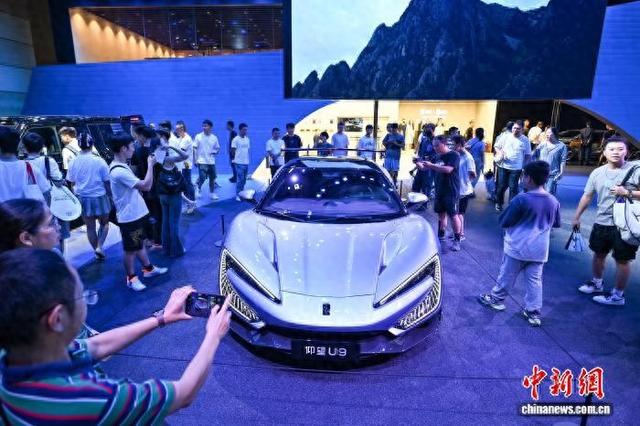
Core Viewpoint - Geely Auto Group is actively implementing its "One Geely" strategic integration plan, focusing on consolidating its intelligent driving business and optimizing resource allocation across its various brands [2][3]. Group 1: Organizational Restructuring - The intelligent driving business integration plan is expected to be completed within September, with a new dual CEO structure established for Qianli Technology [2]. - The internal restructuring includes a matrix management approach for R&D departments, adding three horizontal departments to enhance collaboration and efficiency [2][3]. - The integration aims to eliminate resource waste caused by multiple teams working independently, thereby improving research and development efficiency and reducing costs [3]. Group 2: Brand Management and Research - Geely has established independent research institutes for its brands, including Lynk & Co, Zeekr, and Geely, under a "central technology platform + independent brand research institute" management model [5][6]. - This model allows for technical collaboration while enabling each brand to respond flexibly to market demands, enhancing overall competitiveness [6]. - The privatization of Zeekr has been approved by shareholders, marking a significant step in the implementation of the "One Geely" strategy [6].
瑞声科技亮相德国车展展示车载技术
Huan Qiu Wang· 2025-09-12 09:04
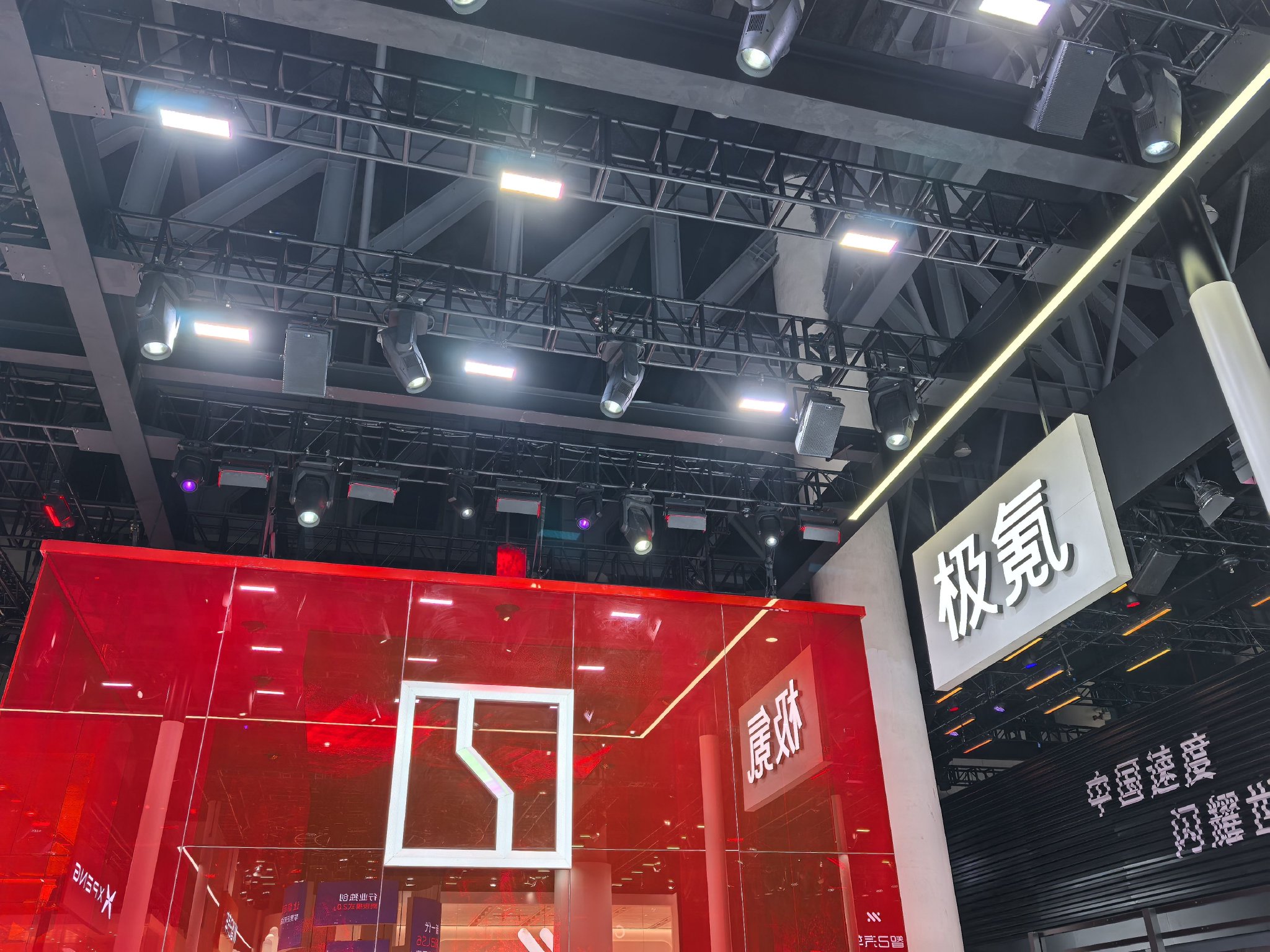
Core Viewpoint - AAC Technologies showcased its advancements in automotive acoustics and related technologies at the Munich International Motor Show, emphasizing its position as a key player in the automotive sound ecosystem [1][3]. Group 1: Company Developments - Since entering the automotive acoustics sector in 2018, AAC Technologies has integrated key technologies through strategic acquisitions, establishing a comprehensive acoustic ecosystem from perception to output [3]. - The company is now recognized as one of the few suppliers capable of providing end-to-end automotive acoustic solutions, including hardware, software, algorithms, and tuning services [3]. - AAC Technologies is ranked among the top ten global passenger car audio system providers and is the only Chinese company in this category [3]. Group 2: Technological Innovations - The company highlighted its collaboration with Zeekr and Naim Audio in developing the Zeekr 9X model, featuring a custom 9.2.4.8 immersive audio system with 32 speakers and 8 seat transducers, achieving a peak power of 3868W [5]. - The audio system utilizes a 3D virtual surround algorithm to enhance standard stereo sources into multi-layered auditory experiences, restoring three-dimensional spatial information [5]. - AAC Technologies presented a full-stack automotive acoustic solution based on "physical AI," demonstrating its technology's application in products like the Zeekr 9X [5]. Group 3: Market Position and Future Plans - The automotive business segment of AAC Technologies reported a year-on-year revenue growth of 13%, reaching 1.74 billion yuan, indicating its importance within the company's overall operations [5]. - The company aims to leverage global resources to assist partners like First Light Auto Parts and PSG in expanding into overseas markets, providing customized full-stack solutions to enhance the smart driving experience [6].