
极氪

Search documents
刑事调查!美联储,最新消息
Zheng Quan Shi Bao· 2025-09-05 00:28
Market Performance - On September 4, US stock indices closed higher, with the Dow Jones Industrial Average up 0.77%, the Nasdaq up 0.98%, and the S&P 500 up 0.83%, reaching new closing highs [1] - Major tech stocks saw significant gains, with Amazon rising over 4%, Netflix over 2%, and Google reaching a historical high with a 0.68% increase [1] - Chinese concept stocks generally declined, with the Nasdaq Golden Dragon China Index down 1.11%, and several companies like Alibaba and NIO dropping over 3% [1] Federal Reserve Developments - The Federal Reserve is experiencing internal divisions regarding interest rate decisions, with some members advocating for rate cuts while others emphasize inflation risks [6] - The probability of the Fed maintaining rates in September is 0.6%, while the likelihood of a 25 basis point cut is 99.4% [6] - Recent comments from New York Fed President John Williams suggest that while a rate cut may be appropriate over time, the impact of tariffs on inflation has been less severe than initially feared [6] Legal and Political Context - The Trump administration has urged the Supreme Court to expedite a ruling on tariffs, claiming that a recent appellate court decision undermines presidential authority in foreign trade matters [3] - The investigation into Federal Reserve Governor Lisa Cook by the Justice Department raises questions about her potential dismissal by Trump, marking a significant escalation in tensions between the administration and the Fed [4][5] - Trump's recent actions, including submitting new arguments to the Supreme Court, reflect ongoing conflicts regarding economic policy and the independence of the Federal Reserve [3][4]


“不及预期”的比亚迪,隐形的“另一半”
虎嗅APP· 2025-09-05 00:08
Core Viewpoint - BYD's performance in H1 2025 shows revenue growth but faces challenges from price wars and regulatory pressures, leading to a decline in stock prices and negative market sentiment [5][6][9]. Group 1: Financial Performance - In H1 2025, BYD reported revenue of 371.28 billion, a year-on-year increase of 23.3%, and a net profit of 15.51 billion, up 13.8% [5]. - Operating cash flow reached 31.83 billion, reflecting a significant year-on-year growth of 124.5% [5][16]. - BYD's gross profit from vehicle sales surpassed Tesla's, with a gross profit of 61.6 billion in H1 2025, compared to Tesla's 26.7 billion, marking a 231% increase in the profit ratio compared to Tesla [14]. Group 2: Sales and Market Dynamics - BYD's dual strategy of pure electric and plug-in hybrid vehicles has been crucial for maintaining its position as a global leader in new energy vehicle sales [9]. - In 2023, pure electric and plug-in hybrid sales reached 1.575 million and 1.438 million respectively, with pure electric contributing 57% to the growth of passenger vehicle sales [7]. - The sales dynamics shifted in 2024, with plug-in hybrids contributing 83.9% to the growth, indicating a potential resurgence in their popularity [7]. Group 3: Technological Advancements - BYD's fifth-generation DM hybrid technology has significantly reduced fuel consumption, making plug-in hybrids more appealing in urban settings [9]. - The introduction of the "Megawatt Charging" technology aims to revolutionize the charging ecosystem, allowing for rapid charging and addressing the "occupancy" issue at charging stations [41][43]. - BYD's R&D investment in H1 2025 was 30.88 billion, significantly higher than Tesla's 21.5 billion, showcasing its commitment to innovation [28]. Group 4: Financial Health and Debt Management - BYD's asset-liability ratio stood at 71.1% as of June 2025, a decrease of 3.6 percentage points from the end of 2024, indicating improved financial stability [18]. - The company has effectively managed its interest-bearing debt, which constituted only 3.6% of total liabilities as of mid-2025 [19]. - Financial expenses for H1 2025 were reported at 3.25 billion, reflecting a strategic focus on cost management [20].




刑事调查!美联储,最新消息!
证券时报· 2025-09-05 00:07
Market Overview - On September 4, US stock indices closed higher, with the Dow Jones Industrial Average up 0.77%, the Nasdaq up 0.98%, and the S&P 500 up 0.83%, reaching new closing highs [1] Technology Sector Performance - Major tech stocks saw significant gains, with Amazon rising over 4%, Netflix up over 2%, and Meta and Tesla each increasing over 1%. Google's stock price rose 0.68%, setting a new historical high [2] Chinese Stocks Performance - Popular Chinese stocks generally declined, with the Nasdaq Golden Dragon China Index falling 1.11%. Alibaba, Douyu, and Youdao dropped over 4%, while NIO and Xiaopeng fell over 3%. Baidu increased by 1.88% and Hesai by 2.21% [2] Federal Reserve Insights - Federal Reserve official Goolsbee indicated that the labor market may be deteriorating and inflation could rise again [3] - New York Fed President Williams suggested that a gradual rate cut may be appropriate, but did not specify a timeline. He noted that tariffs have had less impact on inflation than initially feared [12] Legal and Political Developments - The Trump administration urged the Supreme Court to expedite a ruling on tariffs, claiming that a previous court decision undermined presidential authority in foreign affairs and national security [7] - The Department of Justice is investigating Federal Reserve Governor Lisa Cook for allegedly submitting false information in mortgage applications [9] Federal Reserve Rate Decisions - There is expected to be significant internal disagreement within the Federal Reserve regarding rate decisions in September, with a high probability of a 25 basis point cut [12]
这个国家的中产,买爆中国电动汽车
36氪· 2025-09-04 10:33
Core Viewpoint - The article highlights the rapid adoption of electric vehicles (EVs) in Nepal, primarily driven by Chinese manufacturers, which has led to a significant shift in the automotive market from traditional fuel vehicles to electric options [6][19]. Group 1: Market Dynamics - In Nepal, 76% of new car sales are electric, a dramatic increase from nearly zero five years ago, with Chinese brands dominating the market [7][10]. - Currently, 4 out of every 5 new electric vehicles in Nepal are labeled "Made in China," indicating a strong presence of Chinese manufacturers [6][19]. - The local middle class shows a strong inclination to purchase electric vehicles, with 99% of current fuel vehicle owners likely to switch to electric in the near future [14][19]. Group 2: Economic Factors - The cost of operating electric vehicles is significantly lower than that of traditional fuel vehicles, with monthly fuel costs for fuel vehicles around 10,000 Nepalese Rupees compared to less than 2,000 for electric vehicles [10][12]. - The price of electric vehicles is approximately 16% lower than comparable fuel vehicles due to favorable tax policies, with electric vehicles facing a tax rate of 10% to 30% compared to over 200% for fuel vehicles [18][19]. Group 3: Government Support - The Nepalese government aims for electric vehicles to account for 25% of private car sales by 2025 and 90% by 2030, alongside policies mandating the scrapping of fuel vehicles over 20 years old [19][20]. - Incentives such as tax reductions for new electric vehicle assembly plants are in place, including a 40% income tax reduction for six years [38][39]. Group 4: Competitive Landscape - Chinese brands like BYD and others have established a strong foothold in the Nepalese market, with BYD projected to capture over 25% market share by 2024 [24]. - The article notes that while some Chinese brands have successfully entered the market, others like Geely and NIO have been slower to respond to the opportunities in Nepal [32][34]. Group 5: Challenges and Opportunities - Despite the growth potential, challenges remain, including the need for improved after-sales service and maintenance networks for electric vehicles [35]. - Local industry experts suggest that Chinese manufacturers should consider strategies to target the second-hand market and commercial sectors to maximize their market presence [31].
“金九银十”看车市|新车扎堆上市,购车补贴再升级
Bei Jing Shang Bao· 2025-09-04 10:29
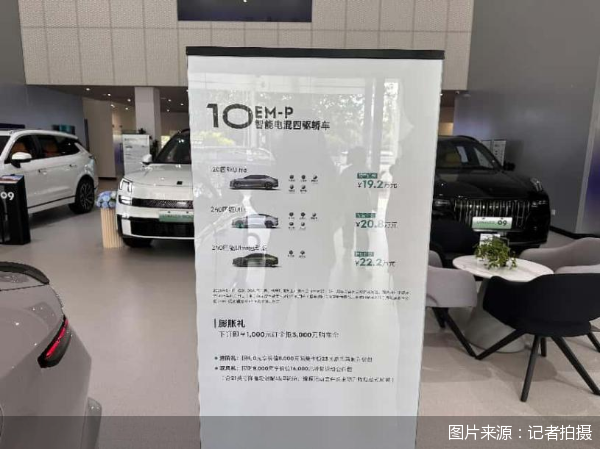
Group 1 - The automotive market is experiencing a consumption surge with the arrival of the traditional sales peak season, "Golden September and Silver October," as various automakers launch new models to capture market share and meet diverse consumer demands [1][10] - New energy vehicle (NEV) companies are expected to face intensified competition in the next six months, with safety and stability becoming critical competitive factors [1][10] - In September alone, at least 16 new car models were launched or upgraded, with over 70% being new energy vehicles, showcasing a vibrant market with diverse offerings [2] Group 2 - Major automakers are introducing new models tailored to the Chinese market, such as Audi's AUDI E5 Sportback and BMW's iX3, both aiming to attract younger consumers with competitive pricing [4][5] - The introduction of advanced technologies in new models, such as the Lynk & Co 10 EM-P and BYD's Fangchengbao, highlights the importance of technological innovation as a selling point [2][5] - Various automakers are targeting different market segments, from luxury to budget-friendly options, to cater to a wide range of consumer preferences [7] Group 3 - Government policies and automaker incentives are significantly driving consumer purchases, with new financial support measures like the personal consumption loan subsidy scheme set to lower economic costs for buyers [8][9] - Local governments are also implementing unique subsidy programs, such as cash incentives for purchasing new energy vehicles, further stimulating market demand [8] - Automakers are enhancing their promotional strategies, with companies like XPeng Motors and Buick offering attractive financing options and trade-in bonuses to boost sales [9] Group 4 - Economic experts express optimism about the automotive market's performance during the sales peak, attributing it to supportive policies and a recovering stock market that boosts consumer confidence [10] - The collaboration of various subsidies is effectively lowering the purchase threshold for consumers, particularly those sensitive to pricing [10] - To sustain sales momentum, automakers are encouraged to offer differentiated services and explore innovative use cases for vehicles, enhancing customer engagement and loyalty [10]

【新能源】2025年7月新能源汽车行业月报
乘联分会· 2025-09-04 08:38
Sales Performance - In July, the total passenger car sales reached 1.843 million units, a year-on-year increase of 1.5% but a month-on-month decrease of 13.9% [4] - The new energy vehicle (NEV) market saw sales of approximately 976,000 units, up 10.5% year-on-year but down 12.1% month-on-month, slightly outperforming the overall market [4] - NEVs accounted for 53.0% of total passenger car sales in July, an increase of 1.1% from the previous month and up 4.3% from the same month last year [4] New Energy Market Overview - Pure electric vehicle sales were about 611,000 units, a year-on-year increase of 25.0% but a month-on-month decrease of 9.6%; plug-in hybrid sales were approximately 365,000 units, down 7.5% year-on-year and down 15.8% month-on-month [9] - Cumulative sales of NEVs reached 6.25 million units by 2025, with a year-on-year increase of 27.2% [9] Top Cities for NEV Sales - The top 10 cities accounted for 25.5% of NEV sales, a slight decrease from 25.9% the previous month; the top three cities were Beijing, Chengdu, and Shanghai [10] - All top 10 cities had NEV penetration rates exceeding 50%, with Shenzhen leading at 66.2%, followed by Ningbo at 64.0% and Wuhan at 62.1% [10] Pure Electric Market Analysis - In July, the top three segments for pure electric vehicles were A0 class (18.4%), B-SUV (15.0%), and A-SUV (15.0%); the C-SUV segment saw a notable increase in market share from 2.9% to 6.2% year-on-year [15] - The personal user share in the pure electric market was 86.6%, a year-on-year increase of 37.2%, while the share of unit users was 5.5%, down 19.7% [16] Industry Dynamics - In July, significant events included Volkswagen's additional investment in Rivian, Tesla's first successful autonomous driving delivery, and the launch of Geely's new electric hybrid architecture [19][20][22] - BYD announced the launch of a car connectivity feature across all its brands, enhancing compatibility with major smartphone brands [22][23] - BMW partnered with Momenta to develop a new generation of intelligent driving assistance solutions, focusing on a model that simulates human brain processing [24] Policy Developments - The National Development and Reform Commission, along with other departments, issued a notice to promote the scientific planning and construction of high-power charging facilities, aiming to optimize the charging infrastructure network [27]

异动盘点0904|苹果概念股走强,中创新航涨超14%;垄断案获重大胜利,谷歌涨9.01%
贝塔投资智库· 2025-09-04 04:00
Group 1: Hong Kong Stock Market Highlights - UBTECH (09880) rose nearly 2% after securing a humanoid robot order worth 250 million yuan from a well-known domestic company, with delivery set to start within the year [1] - Goldwind Technology (02208) increased nearly 2% as renewable energy initiatives accelerate, leading to a significant improvement in the gross margin of its wind turbine business [1] - Zhongxin Innovation (03931) surged over 14% after winning a large battery project in India, indicating a strengthened global production capacity [1] - Ruipu Lanjun (00666) rose over 9.5% as leading energy storage battery companies approach full production capacity, with some starting to raise prices [1] - Jiexin International Resources (03858) increased over 9% due to the ongoing rise in tungsten prices, with data showing a 94.4% increase in the price of 65% black tungsten concentrate since the beginning of the year [1] Group 2: Semiconductor Sector Performance - Semiconductor stocks faced declines, with SMIC (00981) dropping over 6%, and Hua Hong Semiconductor (01347) and Shanghai Fudan (01385) also experiencing losses [2] - SMIC announced plans to issue A-shares to acquire a 49% minority stake in SMIC North, reflecting ongoing asset consolidation in the semiconductor sector [2] Group 3: US Stock Market Highlights - Google (GOOG.US) rose 9.01% after a significant legal victory in its antitrust case, avoiding the need to divest Chrome and Android systems [3] - Tesla (TSLA.US) increased 1.44% as Model Y L deliveries began earlier than expected [4] - Salesforce (CRM.US) saw a slight increase of 1.42% despite announcing a reduction of approximately 4,000 customer support positions [4] - Senmiao Technology (AIHS.US) surged 61.25%, with its core business involving internet finance and automotive finance [4]




Model 3上市不足月“闪降”1万元
Mei Ri Shang Bao· 2025-09-03 22:20
Core Viewpoint - Tesla has implemented a price reduction for the Model 3 in China, signaling an early start to the competitive pricing war in the electric vehicle market ahead of the traditional sales peak in September and October [1][5]. Group 1: Price Reduction and Market Strategy - On September 1, Tesla announced a price cut of 10,000 yuan for the long-range rear-wheel drive Model 3, reducing the price from 269,500 yuan to 259,500 yuan, just weeks after its launch [1]. - The price adjustment includes benefits for customers who have already placed orders but have not yet taken delivery, allowing them to enjoy the new pricing along with additional incentives such as five years of interest-free financing and an 8,000 yuan insurance subsidy [1]. - This price cut is seen as a strategic move to regain market share in the face of increasing competition from domestic brands in the 250,000 to 300,000 yuan electric sedan market [2][3]. Group 2: Sales Performance and Market Competition - The Model 3's sales have not met expectations, with only about 8,000 orders in its first week, which is 60% of the initial orders for the Model Y during its launch [2]. - In August, Tesla's sales of domestic electric vehicles fell by 4% year-on-year, with a total of 432,400 units sold in the first seven months of the year, representing a 13.7% decline compared to the previous year [2]. - The competitive landscape is intensifying, with domestic brands like Xiaomi and Zeekr offering models with superior specifications and lower prices, further pressuring Tesla's market position [2][4]. Group 3: Brand Perception and Market Dynamics - Tesla's brand premium is being challenged by the value-for-money propositions of Chinese brands, which are increasingly appealing to consumers [3]. - The reduction in raw material prices has allowed Tesla to maintain a gross margin of 17.2% in Q2, providing some buffer for its pricing strategy [3]. - The Model 3 has experienced significant price fluctuations, with a total of eight price changes since the beginning of 2023, leading to a decrease in its one-year resale value from 78% in 2022 to an estimated 63% in 2025 [4]. Group 4: Future Outlook - The price cut is expected to intensify competition in the electric vehicle market, particularly in the 200,000 to 300,000 yuan segment, as new models are launched during the Chengdu Auto Show [5]. - The upcoming months will be critical for Tesla as it navigates the challenges of brand aging and product iteration while responding to potential price adjustments from competitors [5].
新贵VS旧富:超豪华车客群正加速洗牌
3 6 Ke· 2025-09-03 10:19
Core Viewpoint - The luxury car market is facing unprecedented challenges due to the waves of electrification and digitalization, leading to the absence of top brands like Porsche, Bentley, Lamborghini, and Rolls-Royce at the Chengdu Auto Show [1][4]. Group 1: The Current State of Ultra-Luxury Brands - Ultra-luxury brands are experiencing a silent transformation, with historical sales in China peaking, such as Rolls-Royce's nearly 50% growth in 2021 and Bentley's 30% contribution from the Chinese market in 2022 [4][6]. - Some legendary luxury brands have quietly exited the market or undergone restructuring, such as Maybach being absorbed by Mercedes and Hummer transitioning to electric vehicles [6][8]. - Brands like Maserati and Infiniti are facing severe challenges in the Chinese market, with Maserati's 2023 import sales down 12% and Infiniti's sales dropping from 48,000 units in 2017 to 4,237 in 2022 [9][8]. Group 2: The Impact of Electrification - The electrification wave is forcing ultra-luxury brands to choose between embracing electric technology or sticking to traditional powertrains, with Porsche leading the way with over 40% of its global sales from electric models in 2024 [14][16]. - Rolls-Royce's first electric model, Spectre, focuses on luxury and seamless integration of electric technology, while Lamborghini aims for full electrification by 2028 with its Lanzador concept [18][20]. - The transition to electric vehicles is redefining the essence of luxury, with quietness becoming a new competitive point, as seen in Rolls-Royce's Spectre [23]. Group 3: Changing Consumer Demographics - The average age of luxury car owners in China has dropped to 35, significantly younger than in Western markets, indicating a shift in consumer preferences towards technology and personalization [24][26]. - The increasing proportion of female luxury car owners is influencing design language, as more women entrepreneurs and executives become customers [26][28]. - The market is diversifying, with Chinese consumers favoring SUVs and long-wheelbase models, while Western markets prioritize driving experience and customization [28][30]. Group 4: The Future of Luxury Brands - The rise of domestic brands like Li Auto and Zeekr is reshaping the ultra-luxury market, as they leverage a deep understanding of local consumer preferences in electrification and digitalization [33]. - Luxury brands must innovate their storytelling and customer engagement strategies to connect with younger consumers who value experiences over traditional heritage [34].
美股异动|极氪盘前涨约1.7% 集团销量连续六个月超4万台大关
Ge Long Hui· 2025-09-03 08:18
Group 1 - Zeekr (ZK.US) shares rose approximately 1.7% to $29 in pre-market trading [1] - In August, Zeekr and Lynk & Co. brands delivered a total of 44,843 vehicles, representing a year-on-year increase of 10.6%, marking the sixth consecutive month of sales exceeding 40,000 units [1] - Waymo announced the deployment of Jaguar I-Pace SUVs and Zeekr vans in Denver and Seattle, with initial operations involving human drivers before transitioning to autonomous driving system testing [1]