
腾讯控股

Search documents
智通港股通持股解析|2月24日
智通财经网· 2026-02-24 00:32
Group 1 - The top three companies by Hong Kong Stock Connect holding ratios are Haotian International Investment (71.99%), China Telecom (71.35%), and Southern Hengsheng Technology (69.35%) [1][2] - The largest increases in holding amounts over the last five trading days were seen in the following companies: Yingfu Fund (+3.739 billion), Tencent Holdings (+3.728 billion), and Alibaba-W (+2.238 billion) [1][2] - The companies with the largest decreases in holding amounts over the last five trading days include Zijin Mining (-589 million), Pop Mart (-406 million), and China Pacific Insurance (-354 million) [1][3] Group 2 - The latest holding ratios for the top 20 companies in Hong Kong Stock Connect show significant ownership, with Haotian International Investment leading at 71.99% and China Telecom at 71.35% [2] - The top 10 companies with the largest increases in holdings over the last five trading days include Xiaomi Group-W (+2.224 billion) and Meituan-W (+1.227 billion) [2] - The top 10 companies with the largest decreases in holdings include WuXi Biologics (-297 million) and Jiangxi Copper (-243 million) [3]





智通港股沽空统计|2月24日
智通财经网· 2026-02-24 00:22
Core Insights - The article highlights the top short-selling stocks in the market, indicating significant investor sentiment and potential market movements [1][2]. Short Selling Ratios - The highest short-selling ratio is observed in China Resources Beer (80291) at 100.00%, followed by JD Group (89618) at 92.61% and AIA Group (81299) at 82.83% [1][2]. - Other notable companies with high short-selling ratios include New World Development (80016) at 69.99% and Xiaomi Group (81810) at 69.65% [2]. Short Selling Amounts - The top three companies by short-selling amount are Meituan (03690) with 1.899 billion, Xiaomi Group (01810) with 1.248 billion, and Tencent Holdings (00700) with 1.223 billion [1][2]. - Alibaba (09988) follows with a short-selling amount of 1.107 billion, indicating substantial investor activity in these stocks [2]. Deviation Values - The highest deviation values, which reflect the difference between current short-selling ratios and the average over the past 30 days, are led by Yuan Da Pharmaceutical (00512) at 42.04%, Yuexiu Property (00123) at 40.19%, and COFCO Joycome (01610) at 39.65% [1][2]. - Other companies with significant deviation values include Sunac Services (01516) at 39.64% and China Ship Leasing (03877) at 39.39% [2].





豆包新机进入倒计时,智能体和App“战”到哪一步了?
2 1 Shi Ji Jing Ji Bao Dao· 2026-02-24 00:20
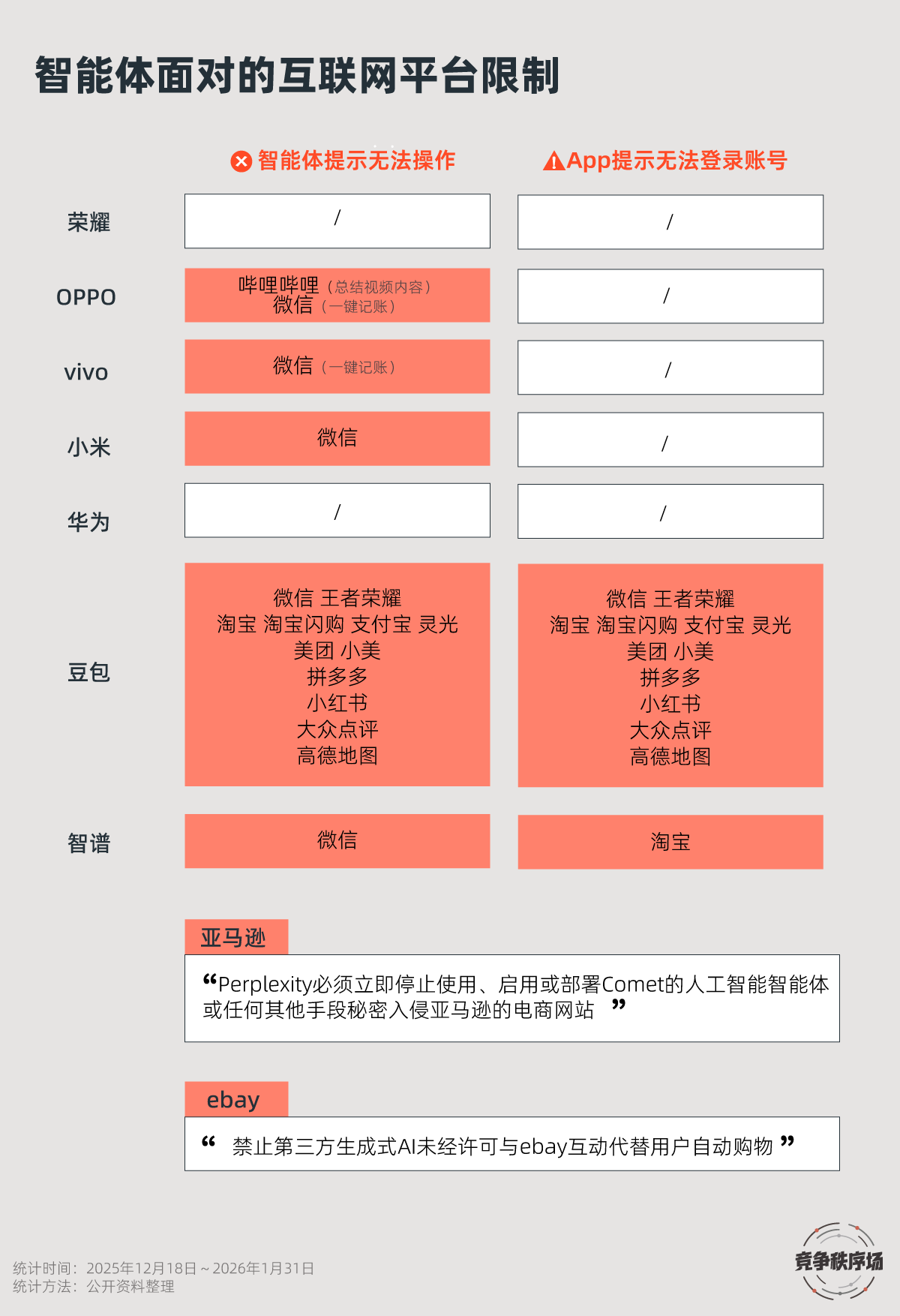
Core Insights - The launch of the "Doubao Mobile Assistant" by ByteDance and ZTE Nubia has sparked significant controversy, particularly due to restrictions imposed by major apps like WeChat and Alipay, which prevent the assistant from fully functioning [1][3] - The ongoing negotiations between ByteDance and hardware manufacturers highlight the challenges of integrating AI assistants into mobile devices, with concerns over system-level permissions and the potential impact on existing AI strategies of phone manufacturers [8][9] - The industry consensus indicates that a viable revenue-sharing model for mobile assistants has yet to be established, complicating the path to commercial agreements among stakeholders [7] Group 1: Market Dynamics - The Doubao Mobile Assistant sold out quickly at a price of 3499 yuan, but faced immediate operational challenges due to app restrictions [1] - ByteDance's initial attempts to partner with major phone manufacturers were unsuccessful, as companies were reluctant to relinquish control over their AI strategies [9] - Recent developments suggest a shift in attitude among app developers, with some agreeing to a "ceasefire" to allow for normal operations of the Doubao assistant [12] Group 2: Technical and Strategic Challenges - The need for system-level permissions for AI assistants poses a significant barrier, as manufacturers are hesitant to grant such access to third-party developers [8][9] - The complexity of integrating AI capabilities into mobile devices raises concerns about performance, battery life, and user experience, which are critical factors for consumers [10][17] - The industry is exploring various cooperation models, including A2A (Application-to-Application) frameworks, to facilitate smoother interactions between AI assistants and apps [11] Group 3: Regulatory and Competitive Landscape - The situation mirrors past conflicts in the tech industry, such as the 3Q War, highlighting ongoing tensions over platform boundaries and competitive practices [13] - The concept of "interoperability" is emerging as a potential framework for resolving disputes, with calls for fair access to system-level capabilities for all developers [14][15] - The need for a unified regulatory approach is emphasized, as stakeholders seek to establish clear rules that balance innovation with user privacy and data control [16][18]


万字详解智能体2.0:手机里的“互联互通”新战场
2 1 Shi Ji Jing Ji Bao Dao· 2026-02-24 00:10
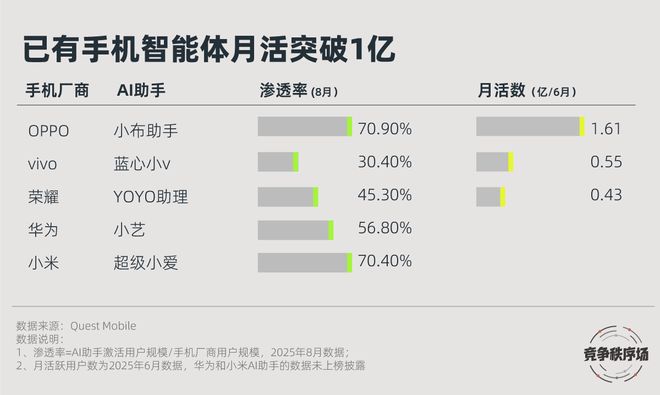
Core Insights - The AI industry is shifting focus towards edge-based intelligent agents, with significant developments in both domestic and international markets [1][2][3] - ByteDance's Doubao and other intelligent agents are gaining traction, operating across various personal devices and applications, but face challenges related to privacy and operational capabilities [2][3][5] - The industry consensus is that the future of intelligent agents will depend on their ability to connect multiple personal devices and services, reshaping the ecosystem [2][3] Group 1: Market Developments - OpenClaw has gained popularity in Silicon Valley, while Doubao is embedded in smartphones in China, with high demand reflected in the second-hand market [1] - The user base for intelligent agents among six major Chinese smartphone manufacturers grew by 65 million in one year, reaching a total of 535 million users [3] - OPPO, Vivo, and Honor are leading the charge in the domestic market, with OPPO's Xiaobu Assistant achieving 160 million monthly active users by June 2025 [3] Group 2: Technical Challenges - Current intelligent agents are struggling with task execution, often only able to perform basic functions like opening apps rather than completing complex tasks [7][8] - A recent evaluation of seven intelligent agents revealed a success rate of only 20% for completing tasks, with many tasks failing or being interrupted [5][7] - The technology behind these agents is still in its infancy, with most operating at a basic level and lacking the ability to handle complex, multi-step tasks effectively [8][10] Group 3: Privacy and Security Concerns - Intelligent agents require extensive permissions, often exceeding 100, raising concerns about privacy and potential misuse of sensitive data [17][18] - The use of high-sensitivity permissions, such as accessing location and reading messages, poses significant risks to user privacy [19][20] - The reliance on cloud processing for data handling introduces vulnerabilities, as sensitive information may be exposed during transmission [27][28] Group 4: Industry Dynamics - A ceasefire agreement has been reached between ByteDance and several app developers, allowing for normal login procedures while limiting AI operations [35] - The competitive landscape is marked by tensions between smartphone manufacturers and app developers, with concerns over the implications of intelligent agents on existing business models [30][31] - The future of intelligent agents hinges on establishing a viable revenue-sharing model and addressing the concerns of both hardware manufacturers and app developers [31][32]


盘前必读丨美股重挫道指跌超800点;天风证券顶格处罚落地
Di Yi Cai Jing· 2026-02-24 00:01
Group 1 - The spring market trend after the holiday is expected to continue, with price increases being a core focus for the first quarter [12] - The Ministry of Commerce emphasizes the importance of restoring global semiconductor supply chains and urges cooperation between China and the Netherlands [1] - The National Energy Administration plans to implement a new energy system and various energy planning initiatives by 2026, focusing on strategic projects and small-scale projects [2] Group 2 - The China Securities Regulatory Commission (CSRC) has taken action against Tianfeng Securities for illegal financing and information disclosure violations related to Wuhan Contemporary Technology Group [6] - The CSRC has also initiated an investigation into Qunke Technology for misleading statements during its overseas IPO process [7] - The market experienced significant declines, with major U.S. indices dropping, and notable movements in technology stocks, including Nvidia and Apple showing slight gains while others fell [9][11]


【跨市联动】春节港股梳理,节后市场展望,A股明日开门红可期?
Sou Hu Cai Jing· 2026-02-23 23:50
Core Viewpoint - The A-share market is set to open after the Spring Festival, with investors keenly watching for a "good start" in trading, influenced by the positive performance of the Hong Kong stock market during the holiday period [2] Group 1: Hong Kong Market Performance - The Hong Kong stock market showed a strong performance during the Spring Festival, with the Hang Seng Index and Hang Seng Tech Index experiencing upward trends, while traditional sectors like dairy and media lagged [2][3] - Gold stocks surged due to rising international gold prices, with Zijin Mining up over 8% and Shandong Gold up 7.53% during the holiday [3] - The renewable energy sector also performed well, with companies like Ruipu Lanjun and Ganfeng Lithium seeing significant gains, driven by optimistic forecasts for lithium prices [3] Group 2: Technology Sector Insights - The technology sector, particularly AI infrastructure, saw notable gains, with Longi Green Energy rising over 15% as demand for optical fibers surged due to AI data center construction [4] - Companies in the AI and robotics space, such as MINIMAX and Yujian, experienced substantial increases, reflecting heightened market interest in AI technologies [5] Group 3: Market Outlook Post-Festival - Historical data indicates a 75% probability of the Shanghai Composite Index rising in the five days following the Spring Festival, suggesting a positive market sentiment [9] - Various brokerages have differing views on post-festival investment opportunities, with a focus on technology growth, small-cap stocks, and sectors benefiting from policy changes [10] - The upcoming Two Sessions are expected to catalyze market movements, with infrastructure projects likely to see seasonal opportunities [10][11]

港股收盘 | 恒指收涨2.53% 科网股全线回暖 有色概念股走强
Zhi Tong Cai Jing· 2026-02-23 23:45
Market Overview - The Hong Kong stock market saw a strong performance, with the Hang Seng Index closing at 27,081.91 points, up 2.53% or 668.56 points, and a total trading volume of 172.96 billion HKD [1] - The Hang Seng Tech Index rose by 3.34%, indicating a positive trend in technology stocks [1] Blue-Chip Stocks Performance - Zijin Mining (02899) experienced a notable increase of 5.35%, closing at 44.95 HKD, contributing 22.03 points to the Hang Seng Index [2] - Other blue-chip stocks like Meituan-W (03690) and SMIC (00981) also saw significant gains, with increases of 5.26% and 5.02% respectively [2] Sector Highlights - Large technology stocks rebounded, with Meituan-W rising over 5% and other major players like JD, Alibaba, Xiaomi, and Baidu increasing by more than 3% [3] - The precious metals sector, particularly gold and copper, showed strong performance due to geopolitical tensions and trade policy uncertainties [5] - The lithium sector also saw gains, with companies like Ruipu Lanjun (00666) increasing by 15.42% [6][8] AI and Technology Developments - Alibaba Cloud launched a new open-source model, Qwen3.5-Plus, with competitive pricing, indicating a strong push in AI applications [4] - The AI sector is expected to see significant growth, with predictions of a shift in the competitive landscape by 2026 as domestic models gain traction against international counterparts [4] Geopolitical and Economic Factors - Rising geopolitical risks, particularly in the Middle East, are driving investors towards safe-haven assets like gold, with spot gold prices reaching 5,170 USD per ounce [5] - The market is entering a phase characterized by a focus on profitability and inflation-driven narratives, which may benefit the commodities sector, particularly in metals [6] Notable Stock Movements - Xunce Technology (03317) saw a significant rise of 12.78%, reaching a closing price of 90 HKD, following its inclusion in the Hang Seng Composite Index [9] - China Duty Free Group (01880) experienced a decline of 8.88%, closing at 91.85 HKD, amid changing U.S. tariff policies [9]
智通港股通资金流向统计(T+2)|2月24日
智通财经网· 2026-02-23 23:32
Core Insights - The top three stocks with net inflows of southbound funds are Yingfu Fund (02800) with 3.77 billion, Alibaba-W (09988) with 2.38 billion, and Tencent Holdings (00700) with 2.33 billion [1] - The top three stocks with net outflows are China Pacific Insurance (02601) with -282 million, CICC (03908) with -162 million, and China Gold International (02099) with -152 million [1] - In terms of net inflow ratios, Huaxia Hang Seng Technology (03088) leads with 879.94%, followed by Southern East-West Select (03441) with 591.15%, and Southern Hong Kong-US Technology (03442) with 309.32% [1] Net Inflow Rankings - Yingfu Fund (02800) had a net inflow of 3.77 billion, representing a 45.74% increase, closing at 27.480 (+0.37%) [2] - Alibaba-W (09988) saw a net inflow of 2.38 billion, with a 28.67% increase, closing at 160.100 (-0.25%) [2] - Tencent Holdings (00700) experienced a net inflow of 2.33 billion, with a 17.95% increase, closing at 548.000 (-0.54%) [2] Net Outflow Rankings - China Pacific Insurance (02601) had a net outflow of -282 million, with a -69.02% decrease, closing at 38.920 (-2.70%) [2] - CICC (03908) experienced a net outflow of -162 million, with a -52.09% decrease, closing at 21.960 (+0.83%) [2] - China Gold International (02099) saw a net outflow of -152 million, with a -46.72% decrease, closing at 201.000 (+3.40%) [2] Net Inflow Ratio Rankings - Huaxia Hang Seng Technology (03088) had a net inflow ratio of 879.94%, with a net inflow of 65.88 million, closing at 6.965 (+0.72%) [3] - Southern East-West Select (03441) recorded a net inflow ratio of 591.15%, with a net inflow of 57.37 million, closing at 11.650 (+0.52%) [3] - Southern Hong Kong-US Technology (03442) achieved a net inflow ratio of 309.32%, with a net inflow of 4.71 million, closing at 8.850 (+0.45%) [3]
马年春节假期“生肖游”火了
Shang Hai Zheng Quan Bao· 2026-02-23 23:31
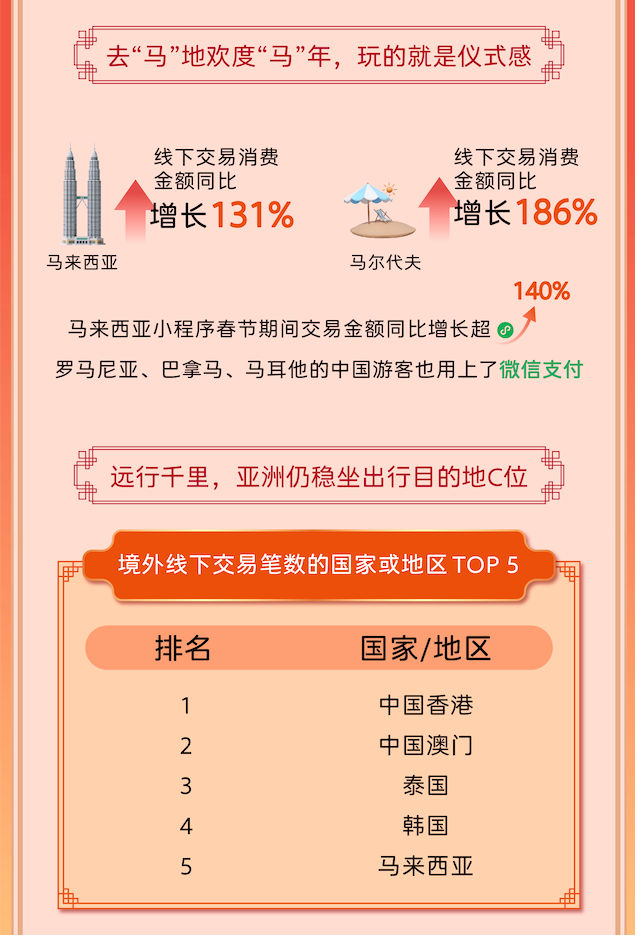
Core Insights - The 2026 Spring Festival holiday was the longest in history, leading to a surge in travel and consumer spending, with significant increases in both domestic and cross-border tourism [1][5][8] Group 1: Travel and Tourism Trends - Domestic travel orders on the Fliggy platform reached new highs during the Spring Festival, with ticket orders increasing by over 80% and hotel night stays rising by 75% year-on-year [1] - Cross-border travel saw explosive growth, particularly in Malaysia and the Maldives, where consumer spending increased by 131% and 186% respectively [3] - The report highlighted a significant rise in inbound tourism, with ticket orders for inbound travel to China increasing nearly tenfold during the holiday [6] Group 2: Consumer Spending Patterns - The report indicated that travel and entertainment spending saw a year-on-year increase of over 20% during the holiday period [7] - In Hainan, duty-free shopping experienced a remarkable growth of 81% in transaction amounts, driven by the long holiday and the operational effects of duty-free policies [8] - The report noted that the lower-tier cities showed strong consumer activity, with the fastest growth in payment transactions occurring in cities like Tongliao and Cangzhou [8] Group 3: Cultural and Experiential Travel - The trend of "cultural immersion" in travel experiences was noted, with significant increases in bookings for heritage sites and cultural experiences in cities like Guangdong and Henan [9] - The popularity of "Zodiac-themed travel" destinations surged, with specific locations like Malta and Romania attracting more tourists [3]
科网股全线回暖 美团-W涨超5% 机构称AI投资有望进入产业趋势下半场
Zhi Tong Cai Jing· 2026-02-23 23:20
Group 1 - The technology stocks have rebounded, with Meituan-W rising by 5.14% to HKD 84.9, JD Group-SW increasing by 3.56% to HKD 107.5, Alibaba-W up by 2.65% to HKD 151, Kuaishou-W gaining 2.63% to HKD 68.25, and Tencent rising by 2.01% to HKD 532.5 [1] - Alibaba's cloud division announced the open-source release of the new Qwen3.5-Plus model, with API pricing as low as RMB 0.8 per million tokens [1] - According to a report from Zhongyin International, the current AI market does not show significant signs of bubble formation, and AI investments are expected to enter the second half of the industrial trend by 2026 [1] Group 2 - Open Source Securities emphasizes the importance of AI commercialization and the expansion of application scenarios, predicting sustained demand for AI cloud services as model capabilities improve [1] - The rapid growth of domestic AI chips is highlighted, with Kunlun Chip officially starting its listing process in Hong Kong, and recommendations include Alibaba-W, Pinduoduo, Baidu Group-SW, and Tencent Holdings as beneficiaries [1]
