
浦发银行

Search documents
直击融资痛点,助企纾困解难 北京举办人工智能领域银企融资交流活动
Xin Lang Cai Jing· 2025-12-26 00:44
Core Viewpoint - The event "Moli AI Lecture Hall" held in Beijing aims to enhance financing connections between AI enterprises and financial institutions, promoting the development of the AI industry in the region [1][6]. Group 1: AI Industry Development - Beijing's efforts in high-quality development of the AI sector include the registration of 205 large models and 147 AI products, with a user base of 1.439 billion for leading models [2][7]. - The average daily usage frequency of these models is 746 million, maintaining the top position in model registration and industrial application scale nationwide [2][7]. - The city aims to become a globally influential hub for AI innovation and industry, contributing to national technological competitiveness [2][7]. Group 2: Financial Policy and Support - The People's Bank of China Beijing Branch is implementing supportive monetary policies to optimize financial resource allocation and enhance service quality for the tech sector [3][8]. - A comprehensive financial policy framework has been established, including a "technology finance" and "green finance" product supermarket to support tech enterprises [3][8]. Group 3: Service Stations and Resource Integration - The establishment of two large model ecological service stations in Haidian and Mentougou aims to address challenges faced by AI companies, particularly SMEs, in accessing policies, funding, and resources [4][9]. - The "Moli AI Lecture Hall" initiative has conducted 21 events, reaching over 1,200 companies and 12,000 participants, facilitating easier business operations in Beijing [4][9]. Group 4: Banking Support for AI Enterprises - Major banks, including the National Development Bank and several commercial banks, are introducing tailored financial products to address the financing challenges faced by AI companies [5][10]. - These banks are establishing regular communication channels with enterprises to broaden financing options and reduce costs, enabling tech companies to focus on development [5][10].
年内226家村镇银行解散退出
券商中国· 2025-12-25 15:31
Core Viewpoint - The pace of mergers and restructuring among village banks is accelerating, with 226 banks exiting the market in 2025, which is 2.72 times the number in 2024 [1][2]. Group 1: Mergers and Restructuring - The number of village banks that have exited the market has increased rapidly, with 83 banks in 2024, 9 in 2023, and 8 in 2022 [2]. - The main models for the mergers and restructuring of village banks this year are "village to branch" and "village to division" [4]. - The "village to branch" model involves the absorption and merger of village banks by their main initiating banks, allowing for a smooth transition of assets, liabilities, and operations [5]. Group 2: Participation of Major Banks - In 2023, major state-owned banks began participating in the "village to branch" model, with the Industrial and Commercial Bank of China acquiring Chongqing Bishan Rural Bank as the first instance [6]. - Other major banks, including Minsheng Bank and Shanghai Pudong Development Bank, have also engaged in the acquisition of village banks [6][7]. - The involvement of larger banks is seen as beneficial for both their development and the risk management of village banks [7]. Group 3: Market Exit and Future Trends - The central economic work conference emphasized the need to continue reducing and improving the quality of small financial institutions, accelerating the exit of village banks [9]. - Industry experts predict that the pace of village bank exits will continue to increase in 2026, focusing on market-oriented restructuring and improving corporate governance [10]. - The case of Sichuan Yilong Huimin Rural Bank, which has maintained its operations for 18 years, highlights the potential for some banks to thrive by focusing on niche markets and local service [10].



2500元/月雇个总监级AI数字员工,贵吗?
量子位· 2025-12-25 11:51
Core Insights - A profound transformation in corporate structure is occurring in Silicon Valley, where AI agents are evolving from mere tools to autonomous colleagues, significantly impacting the real estate industry [1] - The shift from traditional software to AI-driven digital employee teams is redefining business processes and operational costs [2][3] Group 1: AI in Real Estate - The real estate sector, characterized by high capital intensity and complex decision-making, is becoming a breakthrough area for AI applications [3] - Deep Intelligence has launched the "Real Estate AI-Ready" strategy, introducing a digital employee team that covers decision-making, marketing, and service scenarios [3][4] - The digital employees can produce comprehensive market analysis reports with high accuracy and efficiency, comparable to senior analysts, at a fraction of the cost [3][11] Group 2: Cost Efficiency and Workforce Transformation - Traditional real estate marketing teams require 6-8 personnel with monthly costs exceeding 150,000 yuan, while digital employees can cover the same functions for around 2,500 yuan, reducing labor costs by over 90% [11] - The future organizational structure will focus on maximizing AI efficiency, allowing human experts to concentrate on high-value tasks while digital employees handle standardized, time-consuming tasks [11] Group 3: Unique Advantages of Specialized AI - Unlike general AI models, Deep Intelligence's digital employees are designed to meet specific job requirements, ensuring they can perform complex tasks without the need for extensive training [12][13] - The proprietary AI space developed by Deep Intelligence integrates industry knowledge, business processes, and private data, creating a robust operational foundation for real estate applications [13][16] Group 4: Industry Trends and Future Outlook - The digital employee market in China is projected to reach 4.12 billion yuan in 2024, with a year-on-year growth of 85.3%, indicating a strong trend towards AI integration in various industries [19] - Companies that leverage AI to enhance their intellectual capacity will have a competitive edge, as opposed to those relying solely on human resources [20][21]

直击融资痛点,助企纾困解难,北京举办人工智能领域银企融资交流活动
Jin Rong Jie· 2025-12-25 10:29
Group 1 - The event "Moli AI Lecture Hall" was co-hosted by the Beijing Cyberspace Administration and the Beijing Branch of the People's Bank of China, attracting over 50 internet and AI companies and nearly 100 executives and financial personnel [1] - Beijing is focusing on high-quality development in the AI sector, having registered 205 large models and 147 AI products, with a user base of 1.439 billion for leading models and an average daily call frequency of 746 million [2] - The People's Bank of China is implementing supportive monetary policies and optimizing financial resource allocation, introducing a "technology finance" and "green finance" product supermarket to enhance service quality and support innovation [3] Group 2 - The establishment of AI service stations aims to address challenges faced by small and medium-sized enterprises in the AI sector, facilitating access to policies, funding, computing power, talent, and partnerships [4] - Major banks, including the China Development Bank and several commercial banks, presented financing policies to tackle the issues of "difficult and expensive financing" for AI companies, promoting inclusive finance and reducing financing costs [5]
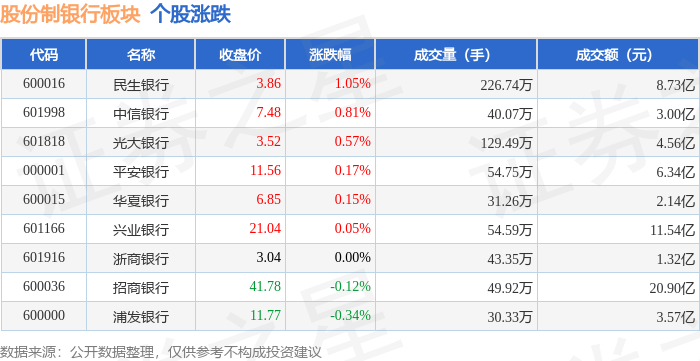
股份制银行板块12月25日涨0.12%,民生银行领涨,主力资金净流入1.22亿元
Zheng Xing Xing Ye Ri Bao· 2025-12-25 09:03
Group 1 - The banking sector saw a slight increase of 0.12% on December 25, with Minsheng Bank leading the gains [1] - The Shanghai Composite Index closed at 3959.62, up 0.47%, while the Shenzhen Component Index closed at 13531.41, up 0.33% [1] - The trading volume for Minsheng Bank was 2.2674 million shares, with a transaction value of 873 million yuan [1] Group 2 - The net inflow of main funds in the banking sector was 122 million yuan, while retail funds experienced a net outflow of 69.36 million yuan [1] - The detailed fund flow for individual banks shows that Ping An Bank had a net inflow of 51.47 million yuan from main funds [2] - Industrial Bank experienced the highest net outflow from main funds at 70.30 million yuan [2]




商业银行“出海”验成色:中行领跑,谁在悄然发力?
2 1 Shi Ji Jing Ji Bao Dao· 2025-12-25 08:34
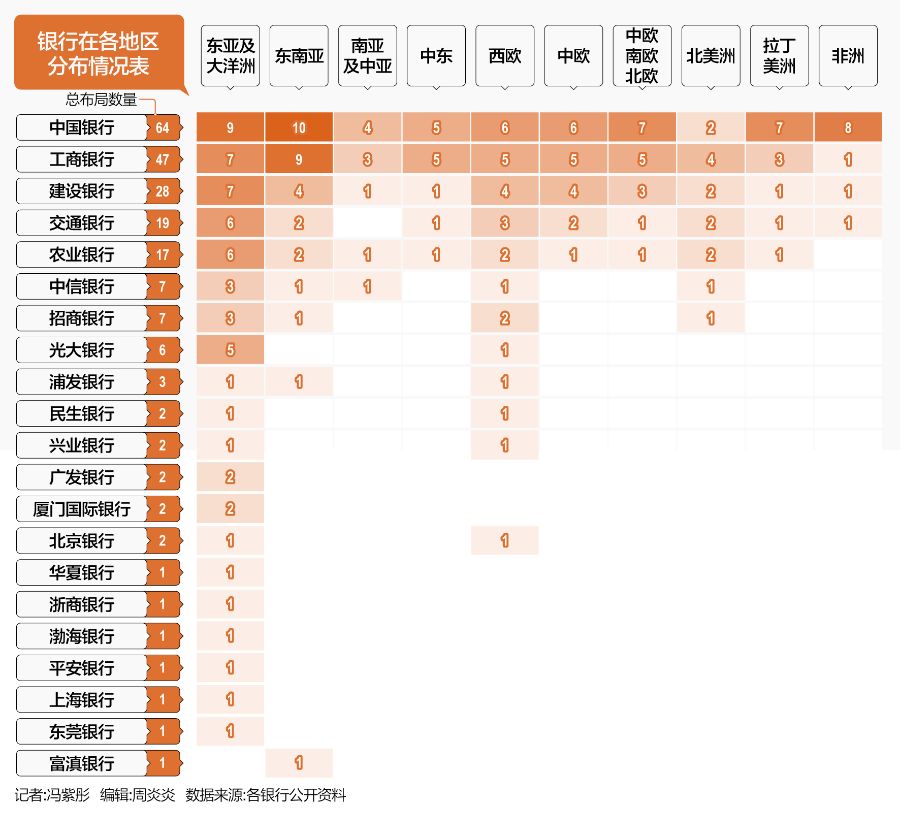
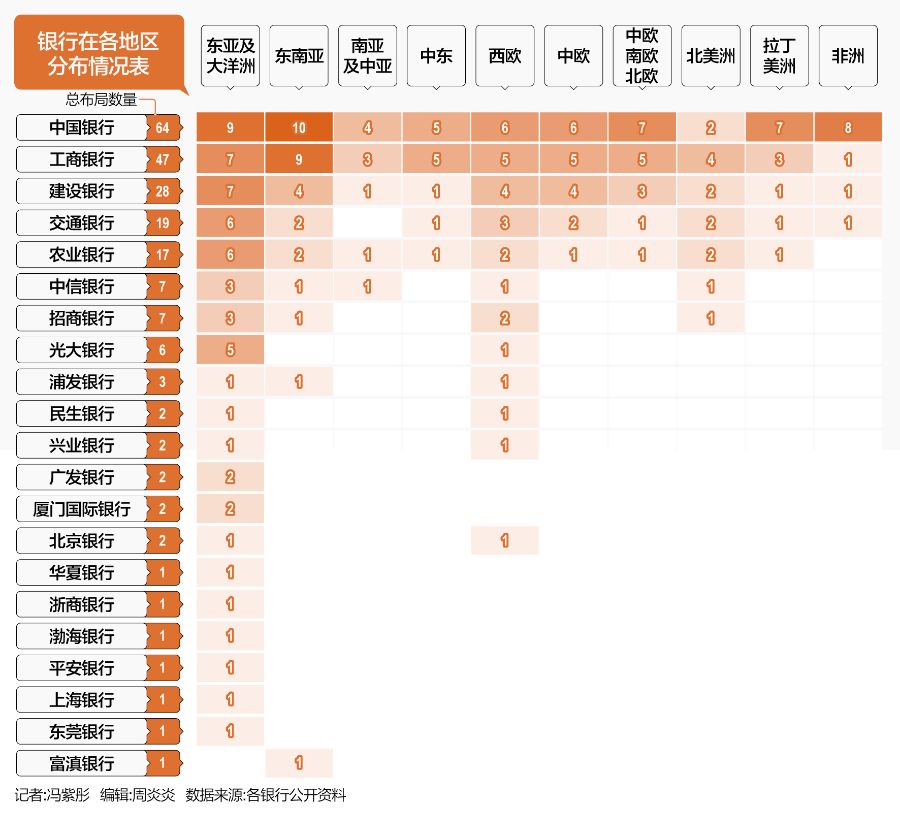
Core Insights - Chinese banks are expanding their overseas presence, establishing a comprehensive service network that covers major financial centers globally and key regions along the Belt and Road Initiative [1][4] - The internationalization strategy of Chinese banks has shifted from focusing primarily on traditional markets in Europe and the US to emerging markets in Southeast Asia, the Middle East, Latin America, and countries involved in the Belt and Road Initiative [1][9] Group 1: Overseas Expansion Strategies - Chinese banks utilize three main forms for overseas expansion: representative offices, branches, and subsidiaries, with larger banks often establishing branches or subsidiaries in mature markets and starting with representative offices in emerging markets [2][4] - The distribution of overseas institutions varies among banks, with a notable focus on new emerging markets and developing countries [2][4] Group 2: Performance of Major Banks - Bank of China leads in global presence with 539 overseas branches in 64 countries, including 45 countries involved in the Belt and Road Initiative, and has a strong focus on enhancing its competitive edge in Southeast Asia [4][12] - Industrial and Commercial Bank of China has 413 overseas institutions in 49 countries, with a significant presence in 30 Belt and Road countries, showcasing a flexible internationalization strategy [4][12] - Agricultural Bank of China has established 13 branches and 4 representative offices, focusing on supporting high-quality Belt and Road initiatives [4][12] Group 3: Revenue Growth and Performance Metrics - In the first half of 2025, Bank of China reported overseas revenue of 783.13 billion yuan, a 14.4% increase from the previous year, with overseas revenue accounting for 23.77% of total revenue [11][12] - Agricultural Bank of China achieved a 21.03% increase in overseas revenue, while Construction Bank's overseas revenue grew by 40.92%, indicating strong expansion momentum [12][14] - Shanghai Pudong Development Bank's overseas revenue surged by 119.37%, marking a significant growth and highlighting the effectiveness of its international strategy [14] Group 4: Challenges and Market Dynamics - Chinese banks face regulatory challenges in overseas markets, including compliance with both domestic and foreign regulations, which can lead to significant penalties [15][19] - The demand from Chinese enterprises for overseas financial services is evolving, with a shift towards more complex needs such as global treasury management and cross-border mergers and acquisitions [16][17] - Small and medium-sized enterprises are becoming a key growth driver for overseas financial services, emphasizing the need for lower financing thresholds and cost-effective payment solutions [16][17] Group 5: Future Directions and Strategic Focus - The future competitiveness of Chinese banks in international markets will depend on enhancing global collaboration, improving localization capabilities, and strengthening compliance risk management [18][19] - Emphasis on financial technology innovation and the development of cross-border digital infrastructure will be crucial for expanding their international footprint [19]





深度丨商业银行“出海”验成色:中行领跑,谁在悄然发力?
2 1 Shi Ji Jing Ji Bao Dao· 2025-12-25 08:32
Core Insights - Chinese banks are expanding their overseas presence, establishing a comprehensive service network that covers major financial centers globally and key regions along the Belt and Road Initiative [1][2] - The internationalization strategy of Chinese banks has shifted from traditional markets in Europe and the US to emerging markets in Southeast Asia, the Middle East, Latin America, and countries involved in the Belt and Road Initiative [1][2] Group 1: Global Expansion Strategy - Chinese banks are utilizing representative offices, branches, and subsidiaries for overseas expansion, with larger banks often establishing branches in mature markets and starting with representative offices in emerging markets [2] - The distribution of overseas institutions shows that major state-owned banks are leading the expansion, with a focus on both traditional and emerging markets [2][4] Group 2: Performance Metrics - As of June 2025, Bank of China leads with 539 overseas branches in 64 countries, including 45 Belt and Road countries, showcasing its extensive global network [4] - Industrial and Commercial Bank of China follows with 413 overseas institutions in 49 countries, including 250 in Belt and Road countries, demonstrating a flexible international strategy [4] - Agricultural Bank of China has established 13 branches and 4 representative offices, focusing on supporting high-quality Belt and Road initiatives [4] Group 3: Revenue Growth and Market Dynamics - In the first half of 2025, Bank of China reported overseas revenue of 783.13 billion yuan, a 14.4% increase from the previous year, with overseas revenue accounting for 23.77% of total revenue [12] - Industrial and Commercial Bank of China's overseas revenue was 562.52 billion yuan, showing a slight decline of 1.88%, while Agricultural Bank of China experienced a 21.03% increase [12][11] - The growth of overseas revenue among joint-stock banks, such as Shanghai Pudong Development Bank, which saw a 119.37% increase, highlights the varying performance across banks [14] Group 4: Challenges and Future Directions - Chinese banks face regulatory challenges in overseas markets, including compliance with both domestic and foreign regulations, which can lead to significant penalties [15] - The demand for diversified financial services is evolving, with a shift from traditional trade financing to more complex needs such as global treasury management and cross-border mergers [16] - Future competitiveness will depend on enhancing global collaboration, local operational capabilities, compliance risk management, and financial technology innovation [18][19]
智能体如何重塑金融业?这场会议给出答案
Guo Ji Jin Rong Bao· 2025-12-25 02:34
Group 1 - The core theme of the event is the transformation of the banking industry through AI technology, emphasizing that the application of intelligent agents has shifted from optional to essential for banks [2][4] - The "14th Five-Year Plan" highlights the importance of AI in driving the digital transformation of the financial sector, positioning it as a key practice for enhancing financial services and promoting high-quality development [2][3] - Experts suggest that the focus of digital finance should shift from the "household sector" to the "enterprise sector," as the latter has a lower level of digitalization, which can enhance the efficiency of financial institutions [2][3] Group 2 - The development of digital finance is seen as a means to support supply-side structural reforms, requiring banks to apply digital capabilities across various management and operational levels [3] - The successful implementation of intelligent agents in finance relies on three factors: technological breakthroughs, iterative business scenarios, and supportive policies [4][5] - Financial institutions are encouraged to enhance their technological maturity and adapt to new business scenarios while building a collaborative ecosystem for the deployment of intelligent agents [5][9] Group 3 - The event highlighted the challenges faced by banks in AI application, including the need for high-quality knowledge bases and the integration of business and technology [6][7] - There are significant challenges in software testing for AI applications, including the need for comprehensive testing across various dimensions and ensuring fairness and safety in AI applications [8][9] - The future of intelligent agents in banking is expected to focus on creating operational loops that assess both business outcomes and model parameters for continuous improvement [9][10]

银行年末加码汽车消费金融
Jing Ji Wang· 2025-12-25 02:12
Core Viewpoint - Banks are intensifying support for automotive consumer finance to stimulate the automotive market and align with national consumption policies, utilizing various loan schemes to meet consumer needs [1][4]. Group 1: Bank Initiatives - Multiple banks are launching targeted year-end purchase incentives, such as Ping An Bank's "minimum 0% interest" campaign with loan amounts ranging from 30,000 to 5 million yuan, and Postal Savings Bank's financial plan offering up to 4,500 yuan in subsidies for specific new models [2][3]. - Credit card installment plans are becoming a key focus for banks in automotive consumer finance, with ICBC offering up to 60 months of financing at minimum 0% interest for specific models purchased with their credit card [2]. Group 2: Customer Experience Enhancements - Some banks are upgrading automotive benefits for credit card holders to enhance customer experience, such as Industrial Bank's "monthly rewards" program for cardholders, allowing them to save up to 1,800 yuan annually [3]. Group 3: Industry Trends - The increase in automotive consumer finance by banks is a response to policy directives and a proactive measure to address slowing retail credit growth and the scarcity of quality assets [4]. - Experts predict a shift towards refined operations in automotive consumer finance, moving away from high-interest models to compliance-based, demand-driven service models, with a focus on electric vehicles and used car transactions [4][5].

银行业在并购金融领域创新步伐提速
2 1 Shi Ji Jing Ji Bao Dao· 2025-12-25 00:24
Core Viewpoint - The banking industry is accelerating its innovation in the mergers and acquisitions (M&A) finance sector, with a series of landmark "first" projects being launched as the year comes to a close [1] Group 1: Innovative Projects - Beijing Bank issued the first digital RMB M&A loan for technology enterprises in Hunan Province [1] - SPD Bank's Suzhou branch completed the first nationwide M&A financing project for holding-type real estate ABS in the thermal power sector [1] Group 2: Strategic Shift - Multiple banks have organized high-profile forums and closed-door seminars focused on the M&A finance sector for the first time this year [1] - This trend indicates a strategic shift in the banking industry from individual case operations to a systematic approach for ecosystem building and market layout [1] Group 3: Industry Competition - A deeper and more comprehensive strategic competition is unfolding among banks, centered around industrial upgrades and their own transformations [1]