
建信基金

Search documents
本周40只新基扫描:富国、鹏华、工银瑞信、华夏、易方达等26家公募PK 主题指数、FOF稳健、混合成长齐上阵
Xin Lang Cai Jing· 2026-01-19 08:17
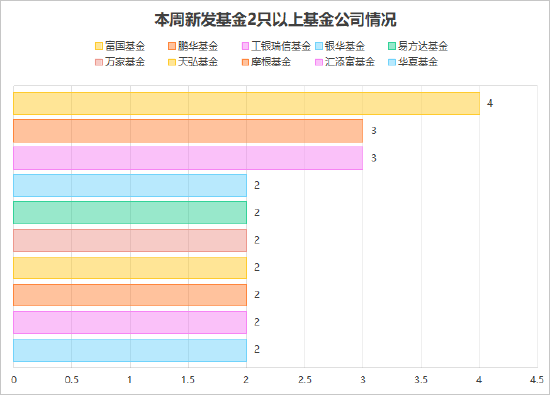
Group 1 - The public fund market is experiencing a new round of product issuance starting from January 19, with 40 new funds launched for subscription, involving 26 fund management companies [1][14] - The distribution of new funds includes 15 stock funds, 12 FOF funds, 9 mixed funds, and 4 bond funds [1][14] Group 2 - Among the 15 stock funds, theme index funds are the main focus, covering sectors such as engineering machinery, non-ferrous metals, chip design, healthcare, photovoltaic, animal husbandry, and artificial intelligence [3][16] - New funds are closely aligned with current market hotspots and policy directions, particularly in technology innovation and high-end manufacturing, with specific funds targeting semiconductor and AI industries [3][16] - The new funds also focus on renewable energy, industrial metals, and resource sectors, reflecting ongoing investment in energy transition and infrastructure [3][16] Group 3 - The 12 FOF funds launched are characterized by a "stable" positioning and set minimum holding periods of 3 to 6 months, aiming to provide clear styles and strong operational discipline for medium to long-term investment [6][19] - The overall strategy for the new FOFs emphasizes "fixed income+" with a significant allocation to bond assets, typically between 70% to 85%, serving as a stability component for returns [7][20] - Many FOF products include gold as a standard asset, highlighting its role as an inflation hedge and risk management tool in the current macroeconomic environment [7][20] Group 4 - The 9 mixed funds exhibit diverse strategies, focusing on themes such as quantitative stock selection, healthcare innovation, and consumer sectors in Hong Kong, with most funds having equity allocations between 60% to 90% [10][12] - The majority of mixed funds incorporate Hong Kong stock indices in their performance benchmarks, indicating a focus on valuation recovery opportunities in the Hong Kong market [10][12] Group 5 - The 4 newly issued bond funds primarily adopt a "fixed income+" strategy, suitable for investors with moderate to low risk tolerance, with most having low subscription thresholds [12][13] - The bond funds are designed to provide a stable income while allowing for some equity exposure, with varying subscription periods to accommodate investor preferences [12][13]

低波理财新选择 建信泓泰多元配置3个月持有FOF正在发行
Zhong Guo Jing Ji Wang· 2026-01-19 07:28
Group 1 - The core viewpoint of the news is that with the decline in interest rates for low-risk financial products, investors are increasingly turning to diversified asset allocation, as evidenced by the launch of the Jianxin Hongtai Multi-Asset Allocation FOF product aimed at low-risk investors [1] - Jianxin Hongtai Multi-Asset Allocation FOF is positioned as a low-volatility "fixed income plus" product, focusing on reducing exposure risks from single assets and single managers through asset allocation and product combination [1] - The product aims to enhance portfolio returns by primarily investing in bonds while selectively including low-volatility dividend assets, the S&P 500 index, and gold, which historically have low correlations, thus reducing overall portfolio volatility [1] Group 2 - The Jianxin Hongtai Multi-Asset Allocation FOF will be managed by Sun Yuemeng, who has 14 years of experience in the securities industry and has a strong focus on portfolio construction and asset allocation strategies [2] - Under Sun Yuemeng's management, the Jianxin Puzhe Pension Target Date 2040 Fund A achieved a 6-month return of 16.57%, outperforming its benchmark return of 10.08%, ranking second among 15 similar products [2] - Jianxin Fund is one of the first public FOF managers in China, with a well-established multi-layered investment system aimed at creating distinctive and high-quality FOF products to meet diverse asset allocation needs [2]
基金代销格局重塑进行时:“鲶鱼”入局 “差生”离场
Shang Hai Zheng Quan Bao· 2026-01-18 18:32
Group 1 - The fund distribution industry is experiencing a transformation with new entrants adopting a "buy-side advisory" approach, which is reshaping the market dynamics [1][2] - New institutions like E Fund Wealth Management are being added as distribution partners for multiple funds, indicating a shift in strategy among fund companies [2] - The entry of new players is seen as a potential catalyst for accelerating industry evolution, despite the prevailing challenges faced by traditional players [2][3] Group 2 - The industry is witnessing a rapid reshuffle, with many traditional firms exiting the market due to increasing competition and regulatory pressures [3] - The recent fee reforms initiated in July 2023 are driving a systematic adjustment in the fund distribution sector, emphasizing the need for a more sophisticated approach beyond the traditional sales model [3][4] - The transition towards a buy-side advisory model is being supported by policy changes and market demands, which are expected to enhance the growth potential of the public fund industry [4]
部分宽基指数依旧看多,后市或震荡向上:【金工周报】(20260112-20260116)-20260118
Huachuang Securities· 2026-01-18 11:43
Quantitative Models and Construction Methods 1. Model Name: Volume Model - **Construction Idea**: The model uses trading volume data to predict market trends - **Construction Process**: The model analyzes the trading volume of various broad-based indices to determine market sentiment. If the trading volume increases significantly, it indicates a bullish trend - **Evaluation**: The model is effective in capturing short-term market movements based on trading volume[1][14] 2. Model Name: Feature Longhu Board Institution Model - **Construction Idea**: This model uses institutional trading data from the Longhu Board to predict market trends - **Construction Process**: The model tracks the trading activities of institutions listed on the Longhu Board. A higher level of institutional buying indicates a bullish trend - **Evaluation**: The model is useful for understanding the impact of institutional trading on market trends[1][14] 3. Model Name: Feature Volume Model - **Construction Idea**: Similar to the Volume Model, this model uses specific volume features to predict market trends - **Construction Process**: The model analyzes specific volume features such as spikes or drops in trading volume to determine market sentiment - **Evaluation**: The model provides additional insights by focusing on specific volume features rather than overall volume[1][14] 4. Model Name: Intelligent Algorithm Model (CSI 300 and CSI 500) - **Construction Idea**: The model uses machine learning algorithms to predict market trends for the CSI 300 and CSI 500 indices - **Construction Process**: The model employs various machine learning techniques to analyze historical data and predict future trends for the CSI 300 and CSI 500 indices - **Evaluation**: The model is effective in capturing complex patterns and trends in the market using advanced algorithms[1][14] 5. Model Name: Limit Up and Down Model - **Construction Idea**: The model uses the frequency of limit up and down events to predict market trends - **Construction Process**: The model tracks the number of stocks hitting their daily limit up or down to gauge market sentiment. A higher number of limit up events indicates a bullish trend - **Evaluation**: The model is useful for capturing extreme market movements and sentiment[1][15] 6. Model Name: Up and Down Return Difference Model - **Construction Idea**: The model uses the difference between upward and downward returns to predict market trends - **Construction Process**: The model calculates the difference between the returns of stocks moving up and those moving down. A positive difference indicates a bullish trend - **Evaluation**: The model provides a balanced view of market sentiment by considering both upward and downward movements[1][15] 7. Model Name: Calendar Effect Model - **Construction Idea**: The model uses calendar-based patterns to predict market trends - **Construction Process**: The model analyzes historical data to identify recurring patterns based on the calendar, such as monthly or quarterly trends - **Evaluation**: The model is useful for capturing seasonal trends and patterns in the market[1][15] 8. Model Name: Long-term Momentum Model - **Construction Idea**: The model uses long-term momentum to predict market trends - **Construction Process**: The model tracks the long-term momentum of stocks to determine market sentiment. A positive momentum indicates a bullish trend - **Evaluation**: The model is effective in capturing long-term trends and movements in the market[1][16] 9. Model Name: Comprehensive Weapon V3 Model - **Construction Idea**: The model combines multiple indicators and models to provide a comprehensive market prediction - **Construction Process**: The model integrates various short-term, medium-term, and long-term models to generate a comprehensive market outlook - **Evaluation**: The model provides a holistic view of the market by combining multiple indicators and models[1][17] 10. Model Name: Comprehensive National Certificate 2000 Model - **Construction Idea**: Similar to the Comprehensive Weapon V3 Model, this model focuses on the National Certificate 2000 index - **Construction Process**: The model integrates various indicators and models specifically for the National Certificate 2000 index - **Evaluation**: The model is effective in providing a comprehensive outlook for the National Certificate 2000 index[1][17] Model Backtesting Results - **Volume Model**: All broad-based indices are bullish[1][14] - **Feature Longhu Board Institution Model**: Bullish[1][14] - **Feature Volume Model**: Bullish[1][14] - **Intelligent Algorithm Model (CSI 300)**: Bullish[1][14] - **Intelligent Algorithm Model (CSI 500)**: Bullish[1][14] - **Limit Up and Down Model**: Bullish[1][15] - **Up and Down Return Difference Model**: All broad-based indices are bullish[1][15] - **Calendar Effect Model**: Neutral[1][15] - **Long-term Momentum Model**: Neutral[1][16] - **Comprehensive Weapon V3 Model**: Bullish[1][17] - **Comprehensive National Certificate 2000 Model**: Bullish[1][17]
ETF市场跟踪与配置周报-20260117
Xiangcai Securities· 2026-01-17 12:21
Report Industry Investment Rating No relevant content provided. Core Views - PB-ROE framework's ETF rotation strategy recommends next week to focus on the communication, agriculture, forestry, animal husbandry, and transportation industries, corresponding to their industry ETFs; the ETF redemption sentiment indicator model suggests focusing on the Science and Technology Innovation 50 ETF, SSE 50 ETF, Medical ETF, Photovoltaic ETF, and Robot ETF [9][40] - Combining PB and ROE for industry configuration may be a better choice; the third quadrant's high PB high ROE and the fifth quadrant's low PB medium ROE are key focus areas; combining the third and fifth quadrants to construct a comprehensive PB-ROE strategy has an annualized return of 11.93% and an annualized excess return of 13.22% [32][33] Summary by Directory 1. Recent Market Overview (January 12 - January 16, 2026) - Index performance: Shanghai Composite Index closed at 4101.91, down 0.45% for the week; Shenzhen Component Index closed at 14281.08, up 1.14%; ChiNext Index closed at 3361.02, up 1.00%; Beijing Stock Exchange 50 closed at 1548.33, up 1.58%; Hang Seng Index closed at 26844.96, up 2.34%. The average daily trading volume of the Shanghai and Shenzhen stock markets was 34250.96 billion yuan, and the total trading volume for the week was 17.13 trillion yuan [12] - Industry performance: Among 31 Shenwan primary industries, 13 industries rose and 18 fell. The top three gainers were computer (up 3.82%), electronics (up 3.77%), and non-ferrous metals (up 3.03%); the top three losers were national defense and military industry (down 4.92%), real estate (down 3.52%), and agriculture, forestry, animal husbandry, and fishery (down 3.27%) [5][12] - Main funds: Main funds had net outflows for 5 trading days and no net inflows, with a total net outflow of 2752.39 billion yuan for the week. The industries with more net inflows were banks, public utilities, and coal; the industries with more net outflows were national defense and military industry, power equipment, and computer [5][13] 2. Recent ETF Market Performance (January 12 - January 16, 2026) - Overall situation: As of January 16, 2026, there were 1411 ETFs in the Shanghai and Shenzhen stock markets, with a total asset management scale of 60766.01 billion yuan. There were 1101 equity ETFs (38892.41 billion yuan), 53 bond ETFs (7479.66 billion yuan), 27 money market ETFs (1529.88 billion yuan), 17 commodity ETFs (2751.84 billion yuan), 207 cross-border ETFs (10070.46 billion yuan), and 6 unlisted ETFs (41.76 billion yuan) [20] - Newly listed and established ETFs: 8 ETFs were newly listed, all equity ETFs; 7 ETFs were newly established, with a total issuance scale of 51.24 billion yuan [21] - Equity ETFs: The median weekly increase or decrease was 0.59%. Science and technology semiconductor ETFs and semiconductor equipment ETFs performed well, with the Science and Technology Semiconductor ETF Peng Hua rising the most at 12.46%; aerospace and high-end equipment ETFs performed poorly, with the Aerospace ETF falling the most at 6.88%. The average weekly share change was a decrease of 19.4716 million shares. Software ETFs and media ETFs had more share increases, while the Science and Technology Innovation 50 ETF and CSI 300 ETF had more share decreases [24] - Bond ETFs: The median weekly increase or decrease of 53 bond ETFs was 0.12%. The convertible bond ETF had the highest increase of 0.91%, while the science and technology innovation bond ETF had the highest decrease of 0.00%. As of January 16, 2026, the Haifutong CSI Short-term Financing ETF had the largest scale of 631.50 billion yuan [27] - Cross-border ETFs: The median weekly increase or decrease was 1.18%. The China-South Korea Semiconductor ETF and Hong Kong Stock Connect Internet ETF had the highest increases, with the China-South Korea Semiconductor ETF rising 6.11%; the Hong Kong Securities ETF and Nasdaq Biotechnology ETF had the highest decreases, with the Hong Kong Securities ETF falling 2.28%. Since the beginning of the year, the median increase or decrease was 3.82%, with the China-South Korea Semiconductor ETF and Hong Kong Medical ETF having higher increases, and the Nasdaq ETF and Nasdaq Technology ETF having higher decreases [29] 3. PB-ROE Framework's ETF Rotation Strategy Tracking - Factor effectiveness: PB factor and PB quantile factor show certain stratification ability, and PB quantile factor is more effective; ROE factor's effectiveness declined after 2018; using ROE factor is better than ROE quantile factor; expected ROE factor is better than expected ROE year-on-year factor. Combining PB and ROE for industry configuration may be a better choice [32] - Key quadrants: The third quadrant's high PB high ROE and the fifth quadrant's low PB medium ROE are key focus areas. From 2017 to February 2024, the compound annualized excess returns of the third and fifth quadrant portfolios were 4.27% and 1.55% respectively [32] - Strategy improvement: After supplementing the PB-ROE framework with four dimensions, the annualized excess returns of the third and fifth quadrant strategies were 4.78% and 3.94% respectively. Combining the two strategies, the annualized return was 11.93% and the annualized excess return was 13.22% [33] - Recent performance: This week, the strategy focused on the communication, agriculture, forestry, animal husbandry, and transportation industries, with a cumulative return of -0.86%, and an excess return of -0.29% compared to the CSI 300 Index [8][34] - Performance since 2023: The cumulative return was 26.03%, with an excess return of 3.81% compared to the CSI 300 Index [8][36] - Performance since 2022: The cumulative return was 7.77%, with an excess return of 11.99% compared to the CSI 300 Index [39] 4. Investment Recommendations - PB-ROE framework: Focus on the communication, agriculture, forestry, animal husbandry, and transportation industries next week, corresponding to their industry ETFs [9][40] - ETF redemption sentiment indicator model: Focus on the Science and Technology Innovation 50 ETF, SSE 50 ETF, Medical ETF, Photovoltaic ETF, and Robot ETF next week [9][40]
债市乱纪元元年,优秀固收类基金的表现盘点
Sou Hu Cai Jing· 2026-01-15 23:01
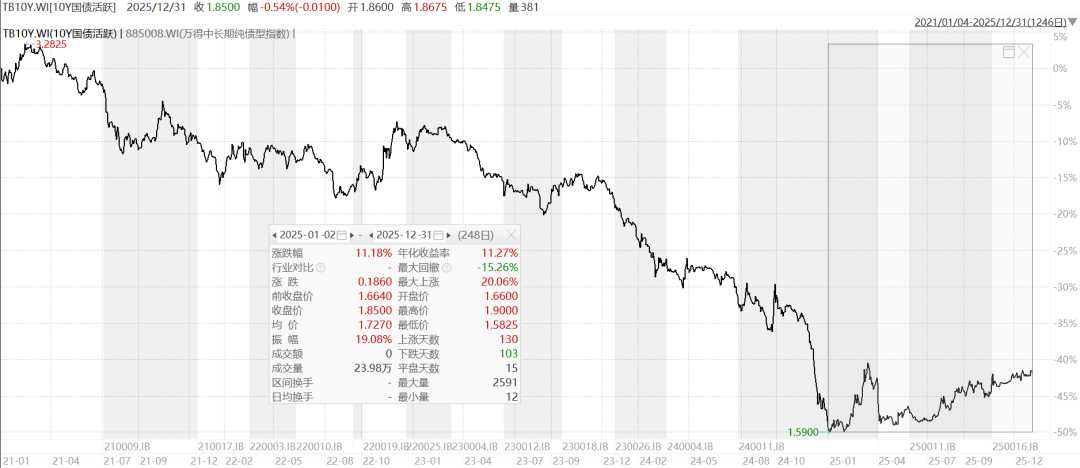
本文盘点一下2025年固收类基金的整体表现,并公示2025年固收类TOP50榜单的表现。 来源:零城投资 2025年固收类市场回顾 去年我们的总结文章就提到了,2024年是债牛,但是2025年将难以维系。 正如我们去年预测的那样,2025年长期国债收益率开始剧烈波动,十年期国债收益率上半年在底部来回震荡,从1.59%震荡回升至1.85%。 下图为近5年10年期国债收益率走势。(截至2025-12-31,数据来源:Wind,下同) 我也在过去一年的文章中反复提示,债市的黄金时代已经结束,进入乱纪元,天天"收蛋"的欢乐时光已结束。 如果说2024年是久期越长的债基收益越好,那么2025年基本上反过来了,中长期纯债基金的表现甚至不如短债基金,回撤也明显更大。 短债基金的收益率也并不比货币基金好多少,债市的夏普比和卡玛比全面下滑——这意味着乱纪元。 | 指数名称 | 年化收益率 | 最大回撤 | | --- | --- | --- | | (代表该类别平均水平) | | | | 万得中长期纯债型指数 | 0.86% | -0.88% | | 万得短期纯债型基金指数_ | 1.44% | -0.24% | | 万得货币 ...
股债波动中显优势:“固收+”跑赢纯固收,榜首产品涨幅超9%
2 1 Shi Ji Jing Ji Bao Dao· 2026-01-15 08:48
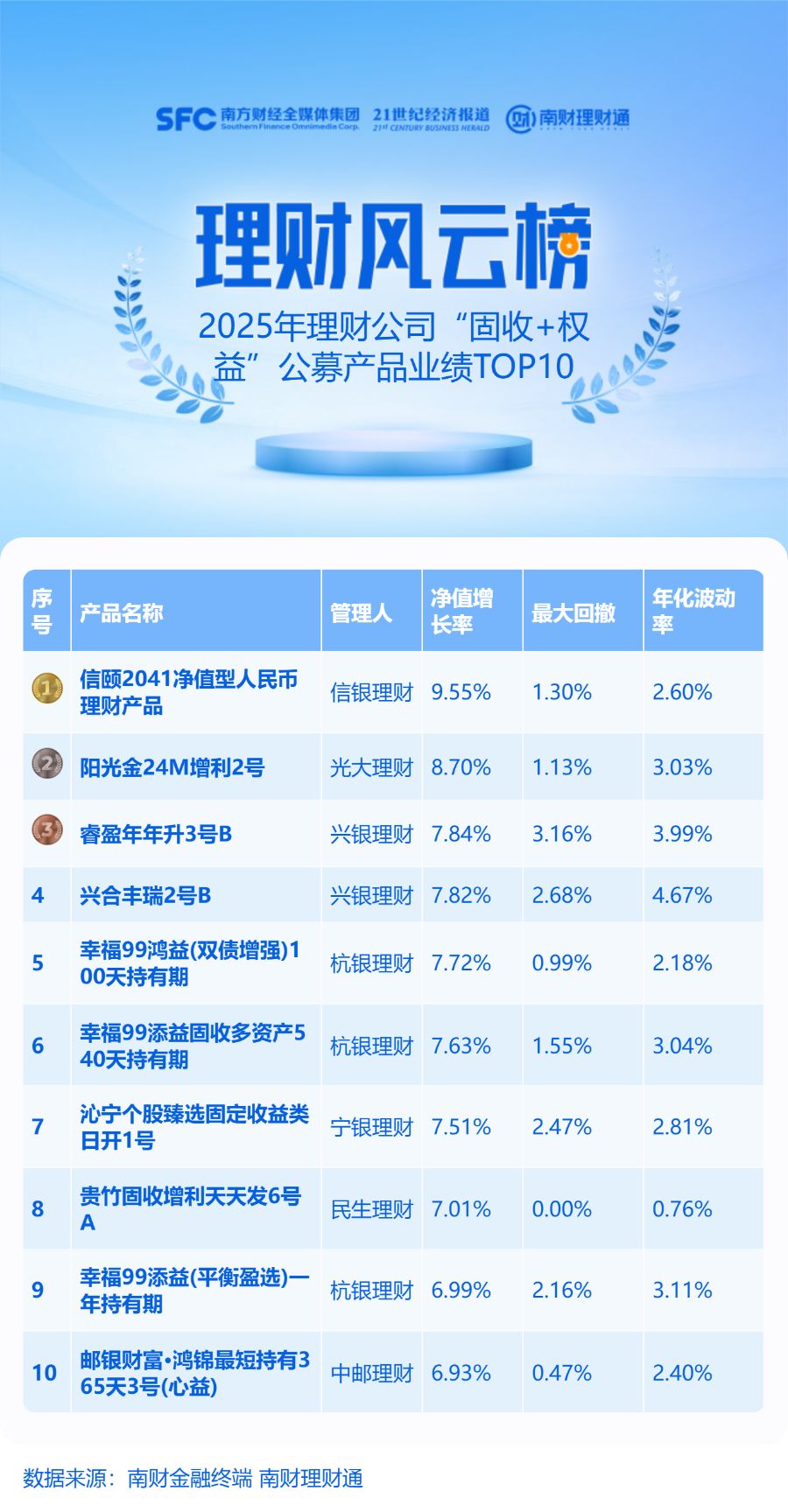
Core Insights - The article discusses the performance of wealth management products in 2025, highlighting the top 10 public products based on net value growth rates and their respective risk metrics [1][6]. Group 1: Product Performance - The top 10 wealth management products all achieved a net value growth rate of over 5%, with the top two products, "信颐2041" from 信银理财 and "阳光金24M增利2号" from 光大理财, exceeding 8% [7]. - The average yield of "固收+" products was 2.35% in 2025, outperforming pure fixed-income products which had an average yield of 2.11%, indicating a 24 basis points advantage [6]. - The "固收+权益" products, a core category of "固收+", also performed well with an average yield of 2.33% in 2025 [6]. Group 2: Risk Metrics - The maximum drawdown for the top products was kept below 2%, with "信颐2041" and "阳光金24M增利2号" both maintaining a maximum drawdown of 1.30% and 1.13% respectively [2][7]. - The product "睿盈年年升3号B" from 兴银理财 had a net value growth rate of 7.84% but exhibited a relatively higher maximum drawdown compared to other top products [7]. Group 3: Investment Strategies - "信颐2041" is designed for retirement investors around 2040, adjusting its asset allocation based on the investor's income and risk preference, with a conservative approach as the retirement date approaches [8]. - The product's investment strategy includes leveraging bond assets for stable returns and a maximum equity allocation of 20%, with a performance benchmark of 4%-6% [8]. - The product's quarterly performance showed significant growth, particularly in Q3 2025, where it achieved a net value growth rate of 5.65%, largely due to increased allocations in equity assets and public funds [8]. Group 4: Market Trends - The article notes a "股债跷跷板" effect in 2025, where the bond market initially thrived in a low-interest environment but adjusted as stock markets strengthened, leading to a shift in investment strategies [6][10]. - The year 2025 is characterized as a transformative period for bank wealth management, emphasizing the importance of diversified strategies in volatile markets [10].
重磅发布:公募基金主动权益TOP100基金经理榜单(2026年度)
Sou Hu Cai Jing· 2026-01-15 07:37
导读:记得2025和2024年初,我们发布基金经理TOP 100榜单时,都是主动权益面临"枪林弹雨"的市场 环境。2024年发布榜单时,A股市场刚刚经历了历史上第二大单月跌幅,股价平均跌21%,基金普遍跌 15%。2025年发布榜单时,A股市场也是开年连续四天下跌。但每一次我们都说,那时候买主动权益基 金,就是能赚到钱的! 去年初发布榜单时,我还说过,在指数基金大爆发的时代,具有阿尔法的主动权益基金更有价值!今 年,我还要说一句话: 主动权益基金会继续跑赢指数基金。我们也看好指数基金的大时代,但我认为 主动权益基金正在回归!我们很少预测市场,因为没这个能力。但今天 我敢比较自信的说,A股市场正 在一轮新的结构性牛市中。而且这一轮牛市下来,主动权益基金作为整体,会跑赢沪深300宽基指数 (当然,指数的波动大概率更低)。 和往常一样,这份榜单倾注了我和零城投资的心血。为了打磨每一个名字,我们都花了很多时间讨论。 从去年整个12月,我们两一直在讨论榜单的名单。也和往常一样,这是一份完全客观独立的榜单。我们 没有提前和任何基金公司、基金经理做过沟通。最后,这只是一份我们心中的主动权益基金经理"精选 池",不代表任何奖 ...
多只宽基ETF成交量放大 有色金属相关ETF领涨
Xin Lang Cai Jing· 2026-01-15 05:04
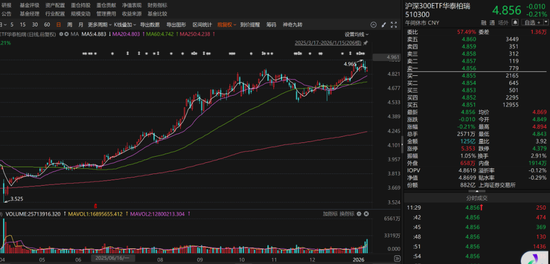
Group 1: ETF Market Performance - On January 15, multiple broad-based ETFs saw a significant increase in trading volume, with the Huatai-PB CSI 300 ETF achieving a half-day trading volume of 12.5 billion yuan, surpassing the highest daily trading volume since April 9, 2025 [1][11] - The Huatai-PB CSI 300 ETF experienced a slight decline of 0.21%, but its trading volume exceeded the previous day's total of 10.5 billion yuan [1][11] - Other ETFs, such as the Huatai-PB CSI A500 ETF and the Huaxia CSI A500 ETF, also reported substantial trading volumes of 12.6 billion yuan and 12.3 billion yuan, respectively, indicating a strong market interest [3][11] Group 2: Sector Performance - The performance of ETFs related to non-ferrous metals and batteries led the market on January 15, with the Southern Non-Ferrous Metals ETF rising by 2.75%, the GF Rare Metals ETF increasing by 2.45%, and the ICBC Credit Suisse Lithium Battery ETF up by 2.42% [6][13] - Analysts from Huatai Securities noted that the recent rise in resource prices is driven by multiple factors, including global monetary easing and increased demand for copper, silver, and rare metals due to AI data centers [13][14] Group 3: Investment Insights - The managers of the Ping An Resource Selected Mixed Fund highlighted a significant structural market for resource products in 2025, with precious metals and industrial metals like copper leading the gains [15] - They emphasized the importance of focusing on key sub-industry investment opportunities in 2026, particularly in industrial metals such as copper and aluminum, as well as in new energy metals like lithium and rare earths [15][16] - The long-term investment value of precious metals, particularly gold and silver, was also underscored, with gold being a core asset for risk diversification [16][17]
17只ETF公告上市,最高仓位65.79%
Zheng Quan Shi Bao Wang· 2026-01-15 02:42
Core Viewpoint - Two stock ETFs have announced their listing, with the latest positions showing that the ICBC New Energy ETF has a stock position of 39.69% and the Huabao CSI All Share Utilities ETF has a stock position of 20.33% [1] Group 1: ETF Listings and Positions - A total of 17 stock ETFs have announced listings since January, with an average position of 23.34%. The highest position is held by the Penghua CSI General Aviation Theme ETF at 65.79% [1] - Other ETFs with significant positions include the Xingquan CSI 300 Quality ETF at 62.01%, the Jianxin ChiNext Composite Enhanced Strategy ETF at 40.68%, and the ICBC New Energy ETF at 39.69% [1] - The lowest positions are seen in the Penghua CSI All Share Food ETF at 0.40%, the E Fund CSI Hong Kong Stock Connect Medical Theme ETF at 4.78%, and the Guotai CSI Hong Kong Stock Connect Internet ETF at 4.80% [1] Group 2: Fundraising and Institutional Holdings - The average fundraising for the ETFs listed in January is 351 million shares, with the largest being the Xingquan CSI 300 Quality ETF at 1.157 billion shares, followed by the Huabao CSI All Share Utilities ETF at 719 million shares and the Ping An Hang Seng China Central Enterprises Dividend ETF at 514 million shares [1] - Institutional investors hold an average of 10.48% of the shares, with the highest proportions in the Ping An Hang Seng China Central Enterprises Dividend ETF at 25.59%, the Penghua CSI General Aviation Theme ETF at 21.34%, and the Jianxin ChiNext Composite Enhanced Strategy ETF at 20.28% [2] - ETFs with lower institutional holdings include the Huabao CSI All Share Utilities ETF at 1.35%, the E Fund Shanghai Stock Exchange Sci-Tech Innovation Board Chip Design Theme ETF at 1.73%, and the Huabao CSI Hong Kong Stock Connect Medical Theme ETF at 4.46% [2]