海通证券

Search documents
2026年度投资策略——莫愁千里路,自有到来风
Sou Hu Cai Jing· 2026-02-14 10:55
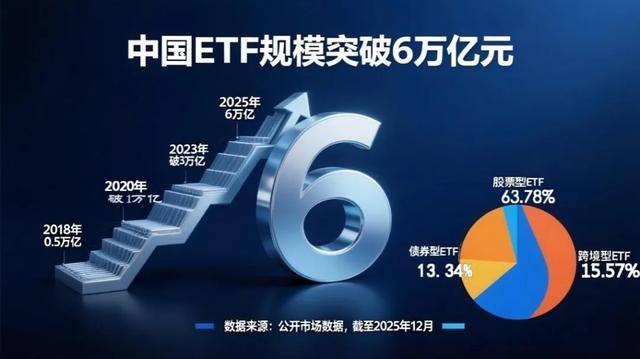
Group 1: 2025 Capital Market Review - The A-share market experienced a significant bull market in 2025, with the Shanghai Composite Index rising over 18% and surpassing the 4000-point mark, achieving multiple historical records [2] - The total trading volume of A-shares exceeded 400 trillion yuan for the first time, and the total market capitalization reached 100 trillion yuan, with margin trading balances returning to over 2 trillion yuan after ten years [2] - The total scale of ETFs in China reached 6.02 trillion yuan by the end of 2025, marking a growth of over 60% from the beginning of the year [2] Group 2: Fund Flows and Dividends - In 2025, there was a notable shift in deposits, with a slight increase of 0.62 trillion yuan in household deposits, while non-bank deposits surged by 4.11 trillion yuan, indicating a significant flow of funds from banks to the stock market [3] - The total cash dividends from A-share companies reached a record high of 2.64 trillion yuan, with 3,766 companies implementing cash dividends [3] - Over 1,300 companies announced stock repurchase plans, with a total repurchase amount exceeding 150 billion yuan [3] Group 3: Policy and Market Dynamics - In May 2025, the central bank and financial regulators introduced a series of policies to support the capital market, including interest rate cuts and measures to enhance market confidence [5] - The introduction of new listing standards for the Sci-Tech Innovation Board aimed to support companies in emerging sectors such as artificial intelligence and commercial aerospace [5] - The central government emphasized the importance of a stable capital market in its economic work meetings, indicating a commitment to enhancing the role of the capital market in economic growth [6][9] Group 4: 2026 Economic Outlook - The central economic work meeting outlined a focus on stabilizing growth and enhancing quality in 2026, with an emphasis on domestic demand and innovation-driven development [6] - A more proactive fiscal policy is expected in 2026, with plans for significant investments in consumer goods and equipment upgrades [7] - The monetary policy is anticipated to remain moderately accommodative, with expectations of 1-2 interest rate cuts throughout the year [7] Group 5: Investment Strategies for 2026 - The A-share market is expected to benefit from policy support, with a slow bull market likely to continue, emphasizing the importance of direction over index levels [18] - Three main investment themes for 2026 include the technology revolution, "anti-involution" strategies to reduce excessive competition, and safe-haven investments in the financial sector [19] - The focus on emerging industries such as AI, new energy, and advanced manufacturing is expected to create substantial investment opportunities [19]

振宏股份过会:今年IPO过关第21家 国泰海通过4单
Zhong Guo Jing Ji Wang· 2026-02-14 07:29
Core Viewpoint - Zhenhong Heavy Industry (Jiangsu) Co., Ltd. has been approved for IPO by the Beijing Stock Exchange, marking it as the 21st company to pass the review in 2026, with 15 from the Beijing Stock Exchange and 6 from the Shanghai and Shenzhen Stock Exchanges combined [1] Company Overview - Zhenhong Heavy Industry specializes in the research, production, and sales of forged wind power main shafts and other large metal forgings, serving various sectors including wind power, chemical, machinery, shipping, and nuclear power [1] - The company is classified as a high-tech enterprise [1] IPO Details - The company plans to issue no more than 22,913,043 shares (excluding the over-allotment option) and aims to raise approximately 450.975 million yuan for a project to expand its annual production capacity of high-quality forgings to 50,000 tons and to supplement working capital [2] Shareholding Structure - As of the signing date of the prospectus, Zhao Zhenghong directly holds 59.19% of the company's shares and indirectly holds 0.13% through Jisheng New Energy, totaling 59.31% ownership, and serves as the chairman and actual controller of the company [1] Review Meeting Insights - No specific opinions were raised during the review meeting [3] - Key inquiries included the sustainability of performance growth, the impact of raw material price fluctuations on product competitiveness and gross margins, and the reasons for negative operating cash flow in multiple periods [3]

上海证券2025年公募基金四季度分析:开放式债券基金
Shanghai Securities· 2026-02-14 07:20
Fund Size and Growth - The total size of open-end bond funds increased by CNY 368.6 billion to CNY 7.5657 trillion, representing a growth of 5.1%[1] - Index bond funds grew by 15.7% (+CNY 229.3 billion), while ordinary bond funds increased by 11.0% (+CNY 223.1 billion)[2] - Long-term pure bond funds saw a decline of 4.8% (-CNY 136.8 billion) in size[2] Performance Analysis - The median returns for short-term, medium-term, and long-term pure bond funds were 0.44%, 0.51%, and 0.51%, respectively[1] - Ordinary bond funds, convertible bond funds, and mixed bond funds had median returns of 0.51%, 1.09%, and 0.81%[1] - The yield curve showed a "bear steepening" trend, with 1-year and 10-year government bond yields at 1.34% and 1.84%, respectively[7] Asset Allocation - There was a general reduction in equity allocations across various bond funds, with ordinary bond funds decreasing by 0.7%, convertible bond funds by 0.4%, and mixed bond funds by 1.8%[18] - The allocation to pure bonds increased by 1.7% for ordinary bond funds and 1.7% for mixed bond funds[18] Bond Type Allocation - Financial bonds (government and corporate) saw an increase in allocation, while government bonds and short-term bonds decreased[22] - Long-term pure bond funds increased their medium-term bond allocation by 1.06%, while mixed bond funds increased corporate bond allocation by 3.03%[22]

2026年1月美国通胀数据点评:超级核心通胀压力仍存
GUOTAI HAITONG SECURITIES· 2026-02-14 07:09
Inflation Overview - In January 2026, the US CPI year-on-year growth fell to 2.4%, a decrease of 0.3 percentage points from the previous month, exceeding market expectations of 2.5%[9] - The month-on-month CPI growth decreased to 0.2%, down 0.1 percentage points, also surpassing market expectations of 0.3%[9] - Core CPI year-on-year growth decreased to 2.5%, while month-on-month growth increased to 0.3%, aligning with market expectations[9] Core Inflation Insights - The decline in overall inflation was primarily driven by falling energy and food prices, with energy prices dropping 1.5% month-on-month, contributing significantly to the overall CPI decrease[11] - Super core inflation, excluding food, energy, used cars, and rent, showed significant pressure, with a month-on-month increase of 0.5%, the highest since September 2022[18] - Core services, excluding energy services, saw a month-on-month increase of 0.4%, with notable rebounds in transportation and education services[21] Future Outlook - Future inflation may experience volatility, with potential rebounds in energy prices and used car prices expected in the coming months[23] - The average effective tariff rate in the US was 9.8% as of November 2025, indicating limited tariff increases, which may not significantly impact inflation in the short term[26] - Market expectations for Fed rate cuts remain at two times in 2026, with the first cut anticipated in June 2026[26] Risk Factors - Risks include potential geopolitical conflicts leading to surges in oil prices and unexpected changes in tariff or fiscal policies that could drive inflation higher[29]
低频选股因子周报(2026.02.06-2026.02.13):沪深 300 指数增强组合 2026 年累计超额收益 6.20%-20260214
GUOTAI HAITONG SECURITIES· 2026-02-14 06:10
Quantitative Models and Construction Methods 1. Model Name: CSI 300 Enhanced Portfolio - **Model Construction Idea**: Enhance the performance of the CSI 300 index by selecting stocks with superior characteristics[5][13] - **Model Construction Process**: - Select stocks from the CSI 300 index - Apply quantitative factors to enhance stock selection - Construct the portfolio based on the enhanced stock selection - **Model Evaluation**: The model aims to outperform the CSI 300 index by leveraging quantitative factors[5][13] 2. Model Name: CSI 500 Enhanced Portfolio - **Model Construction Idea**: Enhance the performance of the CSI 500 index by selecting stocks with superior characteristics[5][13] - **Model Construction Process**: - Select stocks from the CSI 500 index - Apply quantitative factors to enhance stock selection - Construct the portfolio based on the enhanced stock selection - **Model Evaluation**: The model aims to outperform the CSI 500 index by leveraging quantitative factors[5][13] 3. Model Name: CSI 1000 Enhanced Portfolio - **Model Construction Idea**: Enhance the performance of the CSI 1000 index by selecting stocks with superior characteristics[5][13] - **Model Construction Process**: - Select stocks from the CSI 1000 index - Apply quantitative factors to enhance stock selection - Construct the portfolio based on the enhanced stock selection - **Model Evaluation**: The model aims to outperform the CSI 1000 index by leveraging quantitative factors[5][13] Model Backtesting Results CSI 300 Enhanced Portfolio - **Weekly Return**: 1.51%[13] - **Monthly Return**: 0.01%[15] - **Annual Return**: 6.86%[15] - **Excess Return**: 6.20%[15] CSI 500 Enhanced Portfolio - **Weekly Return**: 2.28%[13] - **Monthly Return**: 0.59%[15] - **Annual Return**: 11.77%[15] - **Excess Return**: 0.60%[15] CSI 1000 Enhanced Portfolio - **Weekly Return**: 2.32%[13] - **Monthly Return**: -0.14%[15] - **Annual Return**: 11.84%[15] - **Excess Return**: 3.81%[15] Quantitative Factors and Construction Methods 1. Factor Name: Market Capitalization - **Factor Construction Idea**: Differentiate stocks based on their market capitalization[47] - **Factor Construction Process**: - Rank stocks by market capitalization - Construct long and short portfolios based on the top and bottom 10% of stocks - **Factor Evaluation**: Large-cap stocks outperformed small-cap stocks[47] 2. Factor Name: Price-to-Book Ratio (PB) - **Factor Construction Idea**: Differentiate stocks based on their PB ratio[47] - **Factor Construction Process**: - Rank stocks by PB ratio - Construct long and short portfolios based on the top and bottom 10% of stocks - **Factor Evaluation**: High PB stocks outperformed low PB stocks[47] 3. Factor Name: Price-to-Earnings Ratio (PE_TTM) - **Factor Construction Idea**: Differentiate stocks based on their PE ratio[47] - **Factor Construction Process**: - Rank stocks by PE ratio - Construct long and short portfolios based on the top and bottom 10% of stocks - **Factor Evaluation**: High PE stocks outperformed low PE stocks[47] Factor Backtesting Results Market Capitalization Factor - **Weekly Long-Short Return**: -0.69%[47] - **Monthly Long-Short Return**: 3.16%[47] - **Annual Long-Short Return**: 6.82%[48] Price-to-Book Ratio (PB) Factor - **Weekly Long-Short Return**: -2.58%[47] - **Monthly Long-Short Return**: -0.94%[47] - **Annual Long-Short Return**: -2.39%[48] Price-to-Earnings Ratio (PE_TTM) Factor - **Weekly Long-Short Return**: -2.15%[47] - **Monthly Long-Short Return**: -1.03%[47] - **Annual Long-Short Return**: -0.82%[48]
港股“大模型第一股”冲A 国泰海通“加盟”辅导
2 1 Shi Ji Jing Ji Bao Dao· 2026-02-14 03:58
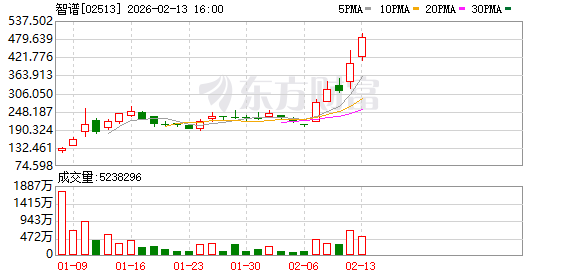
Core Viewpoint - The stock price of Zhiyuan Technology, known as the "first stock of large models" in Hong Kong, surged over 138.68% within five trading days, indicating strong market interest and momentum for AI-related companies [2][3] Group 1: IPO Developments - Zhiyuan Technology has updated its A-share IPO guidance report, adding Guotai Junan Securities as a new advisor alongside CICC, enhancing its advisory team [3][5] - The company previously withdrew its IPO guidance submitted in April 2025 and is now aiming for a listing on the Shanghai Stock Exchange's Sci-Tech Innovation Board [5][6] - The rapid re-initiation of A-share IPO guidance reflects Zhiyuan's commitment to establishing a dual capital platform ("A+H") [7] Group 2: Competitive Landscape - The competition among leading securities firms for IPO services in the AI sector is intensifying, with a focus on both speed and quality of submissions [3][12] - Guotai Junan Securities has a strong track record, having participated in 19 IPO projects on the Sci-Tech Innovation Board over the past three years, making it the top firm in terms of project count [8] - In contrast, CICC has been involved in 12 projects during the same period, highlighting the competitive dynamics between these top-tier firms [9] Group 3: Market Trends - The current environment allows unprofitable "hard tech" companies, including AI firms, to pursue IPOs, but the complexity of their technologies and business models leads to more rigorous scrutiny during the application process [14] - The collaboration between CICC and Guotai Junan Securities in past projects, such as the successful IPO of SMIC, showcases their established partnership in the hard tech sector [11][10]

又一老将出走!半数权益产品跑输基准,“老五家”基金公司迎多重考验
Sou Hu Cai Jing· 2026-02-14 03:17
Core Insights - Frequent turnover of key fund managers at Huaan Fund raises concerns about investment stability and research continuity [2][5] - Despite maintaining an overall scale of over 750 billion, growth is primarily driven by bond and index products, with limited contributions from equity investments [2][9] - The company has faced consecutive declines in revenue and net profit over the past two years, indicating pressure on profitability quality [2][11] Group 1: Manager Departures - Multiple core fund managers, including Jiang Xu, Sun Lina, and Li Xin, have left Huaan Fund within a year, with Jiang Xu resigning from all nine funds he managed [3][5] - Jiang Xu's departure is notable as he had been with the company for over 14 years and had managed funds with significant assets [3][4] - The turnover of key personnel has become a norm at Huaan Fund, impacting the continuity of investment strategies and increasing short-term performance volatility [5][10] Group 2: Investment Performance - Huaan Fund has reported cumulative losses of 43 billion in stock investments over the past three and a half years, with half of its actively managed equity products underperforming their benchmarks [2][10] - The company’s equity investment performance has been particularly poor, with 40 out of 80 products underperforming their benchmarks, and some lagging by over 30 percentage points [9][10] - In contrast, the bond investment segment has shown stable performance, generating a total profit of 261.48 billion, but this has not compensated for the losses in equity investments [10] Group 3: Financial Performance - Huaan Fund's operating revenue and net profit have both declined for two consecutive years, reflecting a challenging financial environment [2][11] - Management fee income has remained stable despite the fluctuations in investment performance, indicating a reliance on scale-driven revenue [10][11] - The company’s management scale has grown significantly, from approximately 639.56 billion in 2014 to 7494.64 billion by mid-2025, but this growth is increasingly dependent on fixed income and index products [7][9] Group 4: Leadership Changes - The recent retirement of long-serving chairman Zhu Xuehua and the appointment of Xu Yong introduces further uncertainty regarding the company's strategic direction [7][8] - Xu Yong's previous experience in managing funds has been notable, but he now faces a more complex situation with frequent talent turnover and a struggling equity segment [7][8] - The potential integration of Huaan Fund with Hai Futong Fund under new regulatory requirements adds another layer of complexity to the company's future [11]

海程邦达供应链管理股份有限公司关于使用暂时闲置募集 资金进行现金管理到期赎回并继续进行现金管理的进展公告
Zhong Guo Zheng Quan Bao - Zhong Zheng Wang· 2026-02-13 22:51
Core Viewpoint - The company is utilizing part of its idle raised funds for cash management to enhance fund efficiency and generate returns while ensuring the safety of the funds and not affecting the implementation of fundraising projects [2][5][11]. Group 1: Fund Management and Investment - The company has approved the use of idle raised funds for cash management, with a total investment amount of RMB 13,000 million [5][6]. - The funds are sourced from idle raised funds, specifically for purchasing high-security, liquid principal-protected financial products [6][7]. - Recent cash management activities include the redemption of structured deposits and investment products, yielding a total return of RMB 56.07 million from two investments [3][4]. Group 2: Financial Performance and Impact - As of September 30, 2025, the company's cash balance was RMB 96,305 million, with the cash management investment representing 13.50% of this amount, indicating a manageable impact on the company's financial status [11]. - The cash management strategy is designed to improve the efficiency of raised funds without disrupting the normal operations of the company's main business [11]. Group 3: Risk Management - The company acknowledges potential risks associated with market fluctuations and macroeconomic changes but emphasizes that the selected financial products are of high security and liquidity [2][9]. - Risk control measures include close monitoring of the financial products and the ability to take timely actions if adverse factors are identified [10].

合肥泰禾智能科技集团股份有限公司关于使用闲置募集资金进行现金管理到期赎回的公告
Shang Hai Zheng Quan Bao· 2026-02-13 17:22
Group 1 - The company has approved the use of idle raised funds for cash management, allowing up to 350 million yuan to be invested in low-risk, liquid financial products [2][3] - The company purchased structured deposits from Zheshang Bank and cash management products from China Galaxy Securities, each amounting to 40 million yuan [3] - The company has redeemed these financial products recently, indicating effective cash management practices [3] Group 2 - The company raised a total of 350.58 million yuan through a non-public offering of shares, with a net amount of 344.49 million yuan after deducting issuance costs [7] - The company has established a special account for the raised funds and signed four-party and five-party supervision agreements to ensure proper management and usage of the funds [10][16] - The agreements stipulate that the funds can only be used for the designated project, the 120MW/240MWh user-side energy storage project, and outline the responsibilities of all parties involved [12][18]

会议议程|国泰海通“远望又新峰”2026春季策略会
国泰海通证券研究· 2026-02-13 11:57
Core Viewpoint - The article discusses the upcoming 2026 Spring Conference organized by Guotai Junan Securities, focusing on macroeconomic outlooks, policy insights, and investment opportunities across various sectors, particularly in AI, real estate, and commodities. Group 1: Macroeconomic and Policy Outlook - The conference will feature speeches on China's macroeconomic and policy outlook, as well as the U.S. economic and monetary policy outlook, indicating a focus on global economic trends [2][12]. - Key discussions will include the reshaping of international order and the re-pricing of major assets, highlighting the importance of understanding macroeconomic shifts for investment strategies [5]. Group 2: AI and Technology Trends - The event will cover advancements in AI, including the development of AI memory engineering and its impact on CPU demand, suggesting a significant growth in the tech sector driven by AI applications [7][8]. - Various sessions will explore AI's penetration in marketing, gaming, and other sectors, indicating a broadening scope of AI applications and investment opportunities [8]. Group 3: Real Estate Insights - The conference will address the outlook for real estate prices in 2026, reflecting ongoing trends and potential investment opportunities in the property market [9]. - Insights into the Shenzhen real estate market will also be shared, providing localized perspectives on real estate dynamics [11]. Group 4: Investment Strategies and Opportunities - The conference will feature discussions on high-dividend stocks and technology transformation, emphasizing the search for resilient investment opportunities amid changing market conditions [11]. - There will be a focus on identifying beneficiaries of traffic redistribution and investment opportunities in the context of economic recovery and sectoral shifts [6]. Group 5: Commodity and Energy Sector Analysis - The event will include discussions on the energy sector, particularly the outlook for coal and electricity pricing, indicating a focus on commodity markets and their cyclical nature [41][42]. - Insights into the agricultural sector and potential investment opportunities will also be presented, reflecting a comprehensive approach to commodity investment strategies [36].