
银邦股份

Search documents
可转债市场周度跟踪:当双高转债遇上潜在强赎风险-20260119
Huafu Securities· 2026-01-19 13:27
Report Industry Investment Rating No relevant content provided. Core Viewpoints of the Report - Last week, the CSI Convertible Bond Index rose 1.08%, with increased weekly amplitude, and the equity - style convertible bonds with "high price and high conversion premium" remained active. The balance - weighted increase of debt - biased convertible bonds was 0.03%, balanced convertible bonds rose 0.19%, and equity - biased convertible bonds rose 3.87%, further widening the style excess. The balance - weighted conversion premium rate of convertible bonds with an absolute price above 130 yuan approached the historical high [2][10]. - The "leverage" of equity - style "high - price and high - premium" convertible bonds can still explain the current valuation system changes. Convertible bonds have a certain degree of "leverage", and the investment behavior of secondary bond funds also indicates that convertible bonds are a leveraged tool for stocks [15][19]. - Redemption disturbances have begun to marginally affect the performance of equity - style convertible bonds. Some convertible bonds that have announced forced redemptions experienced a double - kill of stocks and bonds, and some equity - style convertible bonds that have not met the forced - redemption conditions also showed weak performance with a significant compression of the conversion premium rate [21]. - The strong performance of new convertible bonds is an important support for the "high - price and high - premium" situation, but potential regulatory policy risks need to be noted. As of last Friday, the balance - weighted implied volatility of convertible bonds listed within 6 months exceeded 85%. Considering the increased regulatory guidance on the equity market, there may be specific requirements for new convertible bonds [3][23]. - Historically, unexpected forced redemptions have a short - term impact on the valuation of equity - style convertible bonds. After the impact, it is recommended to focus on equity - style varieties with a higher certainty of non - forced redemption [29]. Summary According to the Directory 1 When "High - price and High - premium" Convertible Bonds Encounter Potential Forced - redemption Risks - **Market Performance**: The CSI Convertible Bond Index rose 1.08% last week. Equity - style convertible bonds with "high price and high conversion premium" were active. In terms of style, debt - biased convertible bonds rose 0.03%, balanced convertible bonds rose 0.19%, and equity - biased convertible bonds rose 3.87%. The balance - weighted conversion premium rate of convertible bonds with an absolute price above 130 yuan was close to the historical high [2][10]. - **Valuation Explanation**: The "leverage" of convertible bonds can explain the current valuation system. The convertible bond valuation is related to the weighted index of underlying stocks, and the investment behavior of secondary bond funds also shows that convertible bonds are a leveraged tool for stocks [15][19]. - **Redemption Impact**: Redemption disturbances affected the performance of equity - style convertible bonds. Some bonds with announced forced redemptions had a double - kill of stocks and bonds, and some bonds that had not met the forced - redemption conditions also had a compressed conversion premium rate [21]. - **New Bond Support and Risks**: The strong performance of new convertible bonds supported the "high - price and high - premium" situation. As of last Friday, the balance - weighted implied volatility of convertible bonds listed within 6 months exceeded 85%. There may be regulatory risks for new convertible bonds [3][23]. - **Forced - redemption Impact on Valuation**: Historically, in the 5 trading days before an unexpected forced - redemption event, the valuation of equity - style convertible bonds was likely to be compressed, with a median compression amplitude of about 1 - 2 percentage points. After the event, there was no obvious pattern in the valuation performance. It is recommended to focus on equity - style varieties with a higher certainty of non - forced redemption [29]. - **Forced - redemption Counting Details**: Multiple convertible bonds are in the forced - redemption counting stage, and some are close to triggering forced redemptions. For example, Fuli Convertible Bond, Sailong Convertible Bond, and Tianjian Convertible Bond need at least 1 more day to trigger forced redemptions [35].
银邦股份:关于银邦转债预计满足赎回条件的提示性公告
Zheng Quan Ri Bao Zhi Sheng· 2026-01-19 12:17
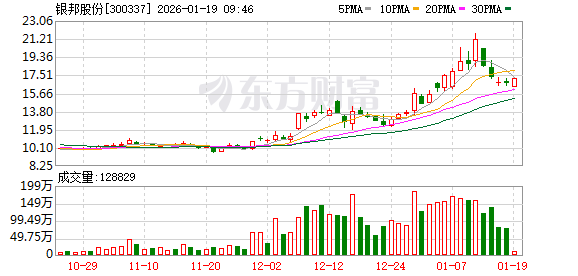
Core Viewpoint - YINBANG Co., Ltd. announced that from January 6, 2026, to January 19, 2026, its stock price must not be lower than 130% of the current conversion price (16.26 CNY/share) for ten trading days within any consecutive thirty trading days to trigger the conditional redemption clause of the "YINBANG Convertible Bonds" [1] Summary by Relevant Sections - The company has the right to redeem all or part of the unconverted "YINBANG Convertible Bonds" at the face value plus accrued interest if the conditional redemption clause is triggered [1] - Investors are advised to review the relevant provisions of the "Offering Circular" regarding the conditional redemption of convertible bonds and to pay attention to the company's subsequent announcements [1]

银邦股份(300337) - 关于银邦转债预计满足赎回条件的提示性公告
2026-01-19 08:16
银邦金属复合材料股份有限公司 关于银邦转债预计满足赎回条件的提示性公告 本公司及董事会全体成员保证信息披露内容的真实、准确和完整,没有虚假 记载、误导性陈述或重大遗漏。 特别提示: 自 2026 年 1 月 6 日至 2026 年 1 月 19 日,银邦金属复合材料股份有限公司 (以下简称"公司")股票在任意连续三十个交易日中已有十个交易日的收盘价 格不低于当期转股价格的 130%(即 16.26 元/股)。 若在未来触发"银邦转债"的有条件赎回条款(即在本次发行的可转换公司 债券转股期内,如果公司股票在任意连续三十个交易日中至少有十五个交易日的 收盘价格不低于当期转股价格的 130%(含 130%)),届时根据《银邦金属复合 材料股份有限公司向不特定对象发行可转换公司债券并在创业板上市募集说明 书》(以下简称"《募集说明书》")中有条件赎回条款的相关约定,公司董事 会有权决定按照本次可转换公司债券面值加当期应计利息的价格赎回全部或部 分未转股的"银邦转债"。 | | | 2、可转债上市情况 经深圳证券交易所同意,公司 7.85 亿元可转债已于 2025 年 1 月 24 日起在 深圳证券交易所挂牌上市交易, ...
有色金属行业报告(2026.1.12-2026.1.16):需求短期承压,建议逢低做多铜铝锡
China Post Securities· 2026-01-19 02:46
Investment Rating - The industry investment rating is maintained at "Outperform the Market" [1] Core Views - The report emphasizes that the demand for non-ferrous metals is under short-term pressure, recommending to buy copper, aluminum, and tin on dips [3][4][5] - Precious metals are viewed positively, with silver prices rising and expectations of continued inflows into ETFs due to macroeconomic conditions [3] - The report highlights the potential for supply-demand tightness in copper due to production adjustments and government spending expectations [4] Summary by Sections Industry Overview - The closing index for the non-ferrous metals sector is at 9404.84, with a weekly high of 9504.06 and a low of 4295.55 [1] Price Movements - LME copper decreased by 2.76%, aluminum by 1.96%, zinc by 0.19%, lead by 0.75%, and tin by 1.02% during the week [20] - COMEX gold fell by 0.17%, while silver increased by 5.63% [20] Inventory Levels - Global visible inventories saw an increase of 72,618 tons for copper and 35,512 tons for aluminum, while tin inventories rose by 3,159 tons [30][31]
银邦股份:最新持有飞而康快速制造科技有限责任公司股份比例为16.7183%
Mei Ri Jing Ji Xin Wen· 2026-01-19 01:45
Group 1 - The company holds a 16.7183% stake in Fei'er Kang Rapid Manufacturing Technology Co., Ltd. [2]

商业航天:为什么3D打印可成为商业航天最终加工解决方案?(附55页PPT)
材料汇· 2026-01-18 15:29
Core Viewpoint - The article discusses the evolution and commercialization of 3D printing technology, particularly its applications in the aerospace industry, highlighting its advantages in design flexibility, cost reduction, weight savings, and material innovation [3][4][39]. Group 1: Technological Advancements in 3D Printing - 3D printing has transitioned from a conceptual stage to mass production, supported by seven major technological routes that cater to various industry needs [3][4]. - The technology has evolved from plastic to metal applications, with over 20 different metal additive manufacturing techniques now available, significantly enhancing production quality and speed [5][8]. - The cost advantages of 3D printing are realized through technological innovations rather than mere scale, allowing for competitive pricing even at larger production volumes [9][12]. Group 2: 3D Printing in Aerospace - 3D printing is positioned as a final processing solution for commercial aerospace, enabling designs that significantly reduce the number of components [39][43]. - The technology allows for shorter supply chains and lower trial-and-error costs, which are critical in aerospace manufacturing [47][50]. - Weight reduction is a key benefit, with 3D printing enabling complex structures that contribute to significant fuel savings in aircraft [52][53]. Group 3: Investment Opportunities - Companies like Huazhu Business, Yinbang Co., and Feiwo Technology are highlighted for their strategic positions in the 3D printing market, particularly in aerospace applications [5][5][5]. - The article suggests that investment in firms with comprehensive 3D printing capabilities, especially in metal and polymer sectors, could yield substantial returns as the technology matures [5][5][5]. Group 4: Material Innovations - The development of high-temperature alloys for 3D printing is advancing, with significant potential for new materials that meet the demanding requirements of aerospace applications [63][64]. - The article emphasizes the importance of material properties, such as strength and heat resistance, in the performance of aerospace components [63][64]. Group 5: 3D Printing Techniques - The article categorizes 3D printing into seven main techniques, including Material Extrusion, Photopolymerization, and Powder Bed Fusion, each with distinct advantages and limitations [18][19]. - The integration of cooling structures and complex geometries is made easier through 3D printing, enhancing the performance of aerospace components [57][60]. Group 6: Case Studies and Applications - NASA's use of 3D printing in developing rocket engines demonstrates the technology's ability to reduce part counts and costs significantly [43][49]. - The article provides examples of successful 3D printed components in rocket engines, showcasing the technology's potential to streamline manufacturing processes [83][84].

3D打印行业研究:商业航天3D打印浪潮将至
SINOLINK SECURITIES· 2026-01-16 11:51
Investment Rating - The report suggests to pay attention to companies involved in commercial aerospace 3D printing due to the increasing maturity of 3D printing technology and its potential as a final processing solution in the aerospace sector [4]. Core Insights - 3D printing is transitioning from concept to mass production, supported by seven major technological routes that cater to various industry needs. The technology has shown significant cost advantages over traditional manufacturing methods, particularly in the consumer electronics sector [2][19]. - The aerospace industry is poised to benefit from 3D printing due to its ability to facilitate innovative product designs, reduce part counts, and optimize structures for weight reduction, which is critical in aerospace applications [2][4]. - The report highlights the growing application of 3D printing in rocket and satellite manufacturing, with domestic companies increasing their penetration rates in these areas [3][4]. Summary by Sections 1. Transition to Mass Production - 3D printing has evolved through various manufacturing stages, with significant advancements in technology leading to its current state where it can produce high-quality metal parts [13][14]. - The technology's cost advantages are realized not through scale alone but through innovations that lower unit production costs, making it competitive even at larger production volumes [19][21]. 2. 3D Printing as a Solution for Aerospace - The design philosophy has shifted from manufacturing-led to design-led, allowing for significant reductions in the number of parts and enhanced functionality through integrated designs [2][56]. - 3D printing reduces the supply chain complexity and lowers the costs associated with product lifecycle management, making it a viable alternative to traditional manufacturing methods [2][62]. - The technology enables lightweight designs through various structural optimizations, which is essential for aerospace applications [2][68]. 3. Rocket and Satellite Applications - The report notes that 3D printing is being increasingly utilized in the manufacturing of rocket thrust chambers, with domestic companies showing potential for growth in this area [3][4]. - In satellite manufacturing, 3D printing supports lightweight structures and functional integration, with ongoing investments from both domestic and international companies [3][4]. 4. Investment Recommendations - Companies such as Huazhu High-Tech, Yibang Co., and Feiwo Technology are highlighted for their involvement in the aerospace 3D printing sector, indicating strong growth prospects [4].
招商证券:国家战略与产业趋势共振 看好商业航天2026年投资机会
智通财经网· 2026-01-16 06:16
Core Viewpoint - The Chinese commercial aerospace industry is identified as a strategic emerging industry that resonates with national strategy and industrial trends, expected to see significant catalysts in 2026, including reusable rocket technology validation and IPO progress for commercial aerospace companies [1] Industry Status - The industry has developed a complete supply chain consisting of "satellites, rockets, and launch sites" over the past decade, with a current core issue being severe "insufficient capacity" in rocket launch capabilities, which is a bottleneck for scaling the industry [1] - In 2025, there will be a total of 323 orbital rocket launches globally, with the U.S. conducting 193 (SpaceX 165) and China 92 (Long March series 69), indicating a competitive landscape where the U.S. is currently leading [1] - The U.S. has deployed 3,724 satellites compared to China's 372, with the U.S. commercial launch market accounting for 82% of total capacity, approximately ten times that of China [1] Rocket Segment - The key to enhancing commercial aerospace capacity lies in reusable rocket technology, which transforms rocket hardware from "single-use" to "reusable assets," significantly reducing launch costs and increasing launch frequency and total payload [2] - SpaceX's Falcon 9 has achieved 32 reuse records by 2025, while China is expected to begin its first reusable rocket validation in 2026 [2] - The launch cost of Falcon 9 is approximately 18,000 yuan/kg, compared to 85,000 yuan/kg for Ariane 5, indicating a cost reduction of about 4-5 times due to reusable technology [2] Satellite Segment - As of now, SpaceX has launched 10,955 satellites with a long-term plan for about 42,000, while China's StarNet has launched 174 with a plan for 13,000 [3] - China has submitted an application for frequency and orbital resources for an additional 203,000 satellites to the ITU, marking the largest international frequency application action by China [3] - The current satellite deployment by China is just beginning, and with breakthroughs in reusable rocket technology, the satellite network in China is expected to experience significant growth [3] Investment Logic - Short-term: The supply chain for rocket capacity is expected to benefit from the current capacity shortage, with a focus on high-value components such as engines and structural parts [4] - Suggested investment opportunities include companies involved in 3D printing technology, high-barrier rocket materials, and high-quality structural components [4] - Long-term: The breakthrough in reusable technology is anticipated to shift the business model of rocket manufacturers from research and development to launch operations, enhancing profitability and operational efficiency [5] - The demand for satellites is expected to grow rapidly, with satellite companies being identified as having long-term inflationary attributes [6]

商业航天系列研究(一):国家战略与产业趋势共振,看好商业航天2026年投资机会
CMS· 2026-01-16 05:33
Investment Rating - The report maintains a positive outlook on the commercial aerospace industry, particularly focusing on the investment opportunities in the rocket supply chain due to existing supply gaps and the long-term potential of rocket manufacturers and satellite industry chains with commercial model advantages [1]. Core Insights - The Chinese commercial aerospace industry is identified as a strategic emerging industry that resonates with national strategies and industrial trends, expected to witness significant developments in 2026, including reusable rocket technology validation and IPO progress of commercial aerospace companies [1]. - The current core bottleneck in the industry is the insufficient launch capacity, which is crucial for the scaled development of the sector. The report highlights that in 2025, the global launch capacity is dominated by the US, with a significant gap compared to China [5][6]. - The report emphasizes the importance of reusable rocket technology, which can transform rockets from disposable assets to reusable ones, significantly reducing launch costs and increasing launch frequency and payload capacity [5][6]. Industry Overview - The commercial aerospace industry in China has developed a complete industrial chain consisting of satellites, rockets, and launch sites, gradually extending to measurement and control and applications [5]. - As of 2025, the US has conducted 193 rocket launches, while China has conducted 92, indicating a competitive landscape where the US currently leads [5]. - The report notes that the US has deployed 3,724 satellites compared to China's 372, highlighting the disparity in satellite deployment capabilities [5]. Investment Logic - Short-term opportunities are identified in the rocket supply chain due to the current launch capacity constraints, with specific recommendations for companies involved in high-value components and materials [6]. - Long-term prospects are focused on the transformation of rocket manufacturers' business models towards launch operations and the anticipated growth in satellite demand once the launch capacity bottleneck is resolved [6].
银邦股份1月15日获融资买入1.65亿元,融资余额9.96亿元
Xin Lang Cai Jing· 2026-01-16 01:25
截至1月9日,银邦股份股东户数6.04万,较上期减少8.38%;人均流通股11774股,较上期增加9.15%。 2025年1月-9月,银邦股份实现营业收入45.27亿元,同比增长18.81%;归母净利润6394.49万元,同比减 少41.60%。 1月15日,银邦股份跌2.78%,成交额13.37亿元。两融数据显示,当日银邦股份获融资买入额1.65亿 元,融资偿还2.10亿元,融资净买入-4572.57万元。截至1月15日,银邦股份融资融券余额合计9.98亿 元。 融资方面,银邦股份当日融资买入1.65亿元。当前融资余额9.96亿元,占流通市值的7.22%,融资余额 超过近一年90%分位水平,处于高位。 融券方面,银邦股份1月15日融券偿还5500.00股,融券卖出1700.00股,按当日收盘价计算,卖出金额 2.85万元;融券余量7.86万股,融券余额131.97万元,超过近一年90%分位水平,处于高位。 资料显示,银邦金属复合材料股份有限公司位于江苏省无锡市新吴区鸿山街道后宅鸿山路99号,成立日 期1998年8月25日,上市日期2012年7月18日,公司主营业务涉及铝合金复合材料、铝基多金属复合材料 以及 ...