
抖音

Search documents
传月之暗面将完成数亿美元融资;田渊栋揭露Meta乱象;OpenAI研究团队关键KPI向流量看齐 | AI周报
AI前线· 2025-10-26 05:32
Financing and Corporate Developments - Moonshot AI is set to complete a new financing round amounting to several hundred million dollars, with new overseas investors participating [2] - Intel has laid off approximately 35,500 employees in less than two years, with over 20,500 layoffs occurring in the summer of this year as part of a restructuring plan led by the new CEO [15] - Mercedes-Benz has seen around 4,000 employees voluntarily leave as part of a significant layoff plan, with senior staff eligible for severance packages up to €500,000 (approximately 4.15 million RMB) [16] - LiblibAI has completed a $130 million (approximately 920 million RMB) Series B financing, setting a record for domestic AI application financing in 2025 [21][22] AI and Technology Innovations - OpenAI's internal focus has shifted towards user engagement metrics as key performance indicators, raising concerns among employees about the company's direction [3] - Quark has launched an AI dialogue assistant as part of its "C Plan," integrating search and dialogue capabilities into its application [12] - Unitree Technology has released its new humanoid robot, Unitree H2, featuring a bionic face and enhanced flexibility with 31 joints [14][33] - Tencent has released the 1.1 version of its mixed reality model, allowing for the creation of 3D worlds in seconds [28] Employee Engagement and Corporate Culture - Pinduoduo has celebrated its 10th anniversary by gifting employees gold bars based on their tenure, with the amount significantly increased compared to last year [5] - Alibaba employees have reported being woken up by the disciplinary committee during lunch breaks, indicating a stricter enforcement of work hours [4] Market Reactions and Consumer Behavior - Apple's iPhone Air has received a lukewarm response in the Chinese market, leading to a reduction in production orders [19][20] - The launch of the ChatGPT Atlas browser by OpenAI aims to enhance user interaction with AI while browsing the internet [37]





双十一“抢跑”现象解析:时间战背后的商业逻辑与行业变迁
Sou Hu Cai Jing· 2025-10-25 20:43
Core Insights - The 2025 Double Eleven shopping festival has evolved into a 37-day event, marking a significant shift in consumer behavior and industry competition, reflecting a deeper transformation in the e-commerce landscape in China [1] Group 1: Consumer Behavior Changes - During the economic downturn, consumer savings willingness has increased by 42% compared to pre-pandemic levels, leading to a shift from panic buying to rational purchasing decisions [3] - The rise of low-price platforms has shifted consumer expectations from absolute lowest prices to value-for-money comparisons, prompting platforms to extend promotional periods to mitigate price volatility [4] Group 2: Inventory Management and Sales Strategies - The prevalence of pre-sale systems allows merchants to adjust production plans dynamically based on pre-sale data, significantly reducing inventory risks and improving turnover rates [5] - The extension of promotional periods is a strategic response to the need for better inventory management, enabling merchants to align production with actual demand [5] Group 3: Competitive Landscape and Technological Advancements - The competition among major platforms has shifted from simple promotional battles to a comprehensive resource competition, with platforms like Taobao and JD.com expanding their reach internationally [6] - The adoption of AI technologies has enhanced operational efficiency, allowing platforms to extend promotional periods while maintaining cost-effectiveness [7] Group 4: Market Dynamics and Globalization - The ceiling effect on market growth is evident, with Taobao's transaction growth rate declining from 1772% in 2010 to 8.5% in 2021, necessitating a focus on long-term user engagement rather than short-term sales spikes [9] - Platforms are now focusing on optimizing price competitiveness across different segments, moving away from a solely low-price strategy to a more nuanced pricing approach [10] - The global expansion of Double Eleven requires platforms to adapt to different time zones and consumer behaviors, highlighting the need for a flexible promotional strategy [11] Group 5: Future Trends - Future competition will center around three core variables: the penetration of instant retail, deep application of AI technologies, and balancing globalization with localization [12]

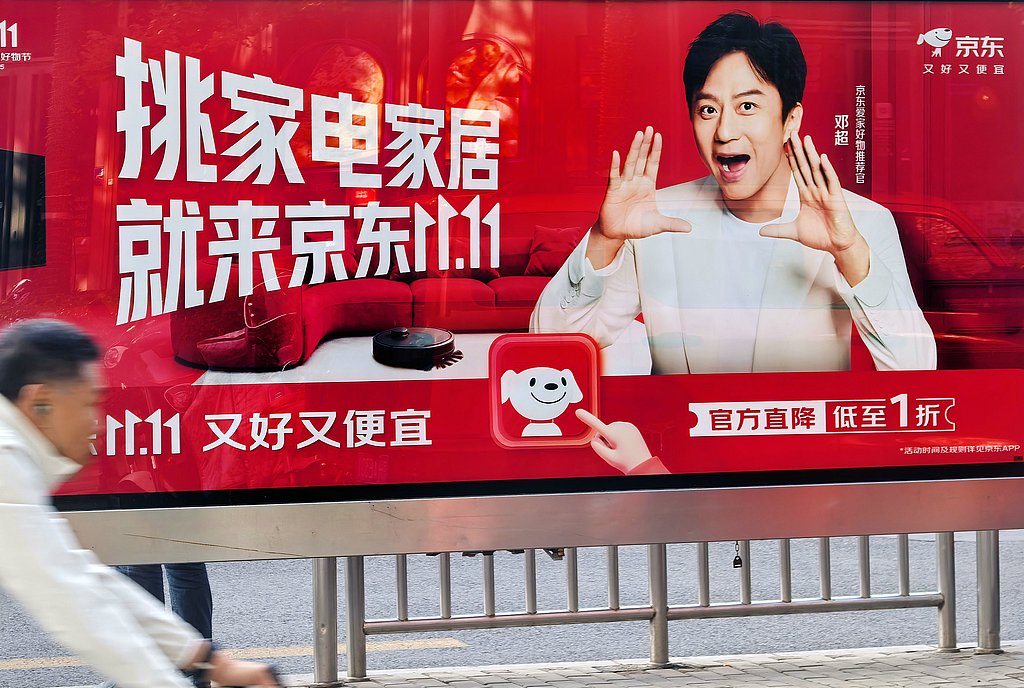
京东双11出新规:对商家实施“定价约束”,不能卖得比京东便宜
Sou Hu Cai Jing· 2025-10-25 08:45
Core Viewpoint - The annual "Double 11" shopping festival has intensified, with major e-commerce platforms like Taobao, JD.com, and Douyin ramping up promotional strategies, but there are emerging concerns regarding these practices [1] Group 1: JD.com's New Pricing Restrictions - JD.com has introduced new operational requirements during the "Double 11" period, limiting brands' cross-platform marketing activities, including prohibiting the use of terms suggesting lower prices [2][4] - Brands are reportedly under pressure to comply with JD.com's pricing constraints due to their high dependency on the platform for sales, with some brands having over 50% of their sales coming from JD.com [4][5] - JD.com has established a monitoring team to oversee pricing across platforms, imposing severe penalties for non-compliance, which can reach millions, with fines of up to 5 million for a single product [6] Group 2: Industry Reactions and Implications - Industry insiders suggest that JD.com's actions are a defensive strategy in response to changing e-commerce dynamics, particularly as live streaming and short video sales channels gain traction and divert users from JD.com [6][8] - The pricing restrictions primarily affect brands in the consumer goods and 3C electronics sectors, indicating JD.com's focus on maintaining its competitive edge in these areas [7][8] - Experts warn that these pricing restrictions may raise concerns about price monopoly and unfair competition, potentially attracting regulatory scrutiny in the future [11]


又一行业成时代眼泪?从遍地开花到亏本退出,背后原因令人深思
Sou Hu Cai Jing· 2025-10-25 05:51
Core Viewpoint - The traditional travel agency industry, once thriving, is now facing significant decline due to policy shifts, market changes, and evolving consumer habits, leading to many agencies exiting the market [1]. Group 1: Historical Context - The traditional travel agency industry experienced a boom, with the number of agencies increasing from 29,717 in 2013 to 56,275 in 2023, a growth of 24.61% from 2022 [3]. - In 2019, the industry reached its revenue peak at 710.34 billion, with many agencies thriving and even opening multiple locations in a single street [3]. - The industry employed over 310,000 people in 2023, with 67.4% holding a college degree, highlighting its role as a significant employment sector [3]. Group 2: Current Challenges - The market share of traditional travel agencies has plummeted, with only 2.53% of the outbound travel market choosing group tours in the first half of 2024, down from 839 participants per agency in 2019 to 355 in 2024, a decline of 57.69% [5]. - Revenue for the industry dropped to 160.16 billion in 2022, rebounding to 592.59 billion in 2023 but still below 2019 levels, with many agencies struggling to cover operational costs [5]. - A significant number of agencies are closing, with over 900 agencies deregistering in May 2024 alone, indicating a troubling trend of high turnover in the industry [6]. Group 3: Reasons for Decline - Policy changes favoring digital transformation in tourism have left traditional agencies behind, as the government promotes "smart tourism" and digital solutions [8]. - The rise of online travel platforms has eroded the traditional agencies' competitive edge, with platforms like Douyin achieving a GMV of over 300 billion in 2024, significantly impacting traditional business models [9]. - Consumer preferences have shifted towards personalized travel experiences, with private tours increasing nearly fourfold since 2019, indicating a move away from standardized group tours [10]. Group 4: Potential Recovery Strategies - Traditional agencies can leverage online platforms, with companies like Ctrip successfully using live streaming to boost sales, suggesting a viable path for attracting customers [11]. - Focusing on niche markets and offering customized services, such as wellness travel for seniors or educational trips for families, can help agencies differentiate themselves from online competitors [12]. - Compliance with regulations and improving service quality are essential for long-term sustainability, as evidenced by significant fines for non-compliance in the industry [13].

新华网财经观察丨“双十一”为什么越来越早了?
Xin Hua Wang· 2025-10-25 03:17
Core Insights - The "Double Eleven" shopping festival is starting earlier each year, with platforms like JD.com and Tmall launching promotions significantly ahead of the traditional date, reflecting a shift in consumer behavior and marketing strategies [2][10][11] Consumer Behavior Changes - Consumers are increasingly viewing "Double Eleven" with a sense of normalcy, leading to a more distributed purchasing approach rather than concentrating demand on a single day [2][10] - Complicated promotional strategies and logistical challenges during the shopping festival have caused some consumers to opt out of participating [2][10] Platform Strategies - E-commerce platforms are extending the promotional period to stimulate consumption in phases and enhance consumer experience [2][10] - AI tools are being integrated into shopping experiences to simplify choices and improve sales conversion rates [3][5] Merchant Perspectives - Larger merchants benefit from the extended period by reducing inventory pressure and improving stock turnover rates, while smaller merchants face challenges due to rising customer acquisition costs and competition [7][9] - The effectiveness of the "Double Eleven" promotions is perceived to be diminishing for some merchants, as competition intensifies and consumer attention becomes fragmented [7][10] Logistics and Operational Efficiency - The extended shopping period alleviates logistics pressures, allowing for better distribution of orders and improved consumer experience [9][10] Market Dynamics - Despite the proliferation of various promotional events, "Double Eleven" remains a critical sales period for e-commerce platforms, with significant user engagement and transaction growth reported in previous years [10][11] - The competition among platforms is intensifying, with market shares becoming more differentiated, as evidenced by the sales figures from major players [10][11] Evolution of "Double Eleven" - The significance of "Double Eleven" is evolving from a mere sales event to a broader indicator of e-commerce innovation and operational efficiency [12]


李佳琦“双11赔了20亿”?预售价高于现货价引发“退款潮”
Sou Hu Cai Jing· 2025-10-25 01:28
Group 1 - During the Double Eleven promotion, a controversy arose regarding pre-sale prices, with consumers discovering that the final payment for pre-sale items was higher than the current market price by 50-60 yuan, leading to a significant number of refunds [1][4] - Influential live streamer Li Jiaqi responded to rumors of massive returns, stating that claims of 8 billion yuan in returns were false and attributing the backlash to detractors [1][3] - Analysts suggest that the higher pre-sale prices may be due to the supply chain team's long product lines and early contract signings with brands, which could lead to price discrepancies as the promotion period progresses [3][6] Group 2 - The complexity of the promotional rules and the lack of clear price comparisons have frustrated consumers, who now expect a simpler and more transparent shopping experience [7][8] - The pre-sale system is seen as a way to attract consumers and help manage supply chain logistics, but it has also led to confusion and dissatisfaction among buyers when pre-sale prices exceed regular prices [7][10] - Experts argue that the pre-sale model still holds value for businesses, acting as a "reservoir" to secure orders and forecast production needs, despite the growing consumer skepticism [7][10] Group 3 - The dynamic pricing strategies and complex discount rules during the Double Eleven event have eroded consumer trust in promotional activities [11][15] - Recommendations for brands include establishing real-time price monitoring across platforms, optimizing product bundles, and managing consumer price expectations to maintain price stability [15][16] - The competitive landscape of e-commerce is shifting from price wars to value creation, indicating that simple low-price strategies are no longer sufficient for success [17][18]

王小龙大使出席抖音电商全球购新西兰招商会
Shang Wu Bu Wang Zhan· 2025-10-24 13:41
Core Insights - The event highlighted the robust development of the Chinese economy, which is expected to enhance trade cooperation between China and New Zealand, with trade projected to exceed 40 billion NZD this year, setting a new record [1] - TikTok's e-commerce platform is positioned as a new channel for New Zealand products and services, reflecting China's status as the world's largest e-commerce market [1] - Over 40 local New Zealand brands participated in the event, indicating strong interest in leveraging the new platform for market expansion [1]
快手调整本地生活业务架构,扩大收入规模反哺业务
3 6 Ke· 2025-10-24 13:02
Core Insights - Kuaishou is undergoing significant adjustments in its local life services business, transitioning service providers to become advertising service providers, which indicates a strategic shift towards enhancing advertising revenue generation [1][2][9] - The restructuring of the local life division, now renamed the Life Services Division, aims to integrate with the commercialization system, suggesting a focus on operational efficiency and revenue growth [1][9] - The competitive landscape in local life services is intensifying, with Kuaishou, Meituan, and Douyin dominating the market, while Alibaba and JD.com are increasing investments in instant retail and local services [2][8] Organizational Changes - The Life Services Division will now report to a higher executive level, with Liu Xiao appointed as the head, indicating a potential increase in resource allocation despite perceptions of reduced business weight [1][9] - The integration of various industry lines such as automotive, finance, education, and telecommunications into the Life Services Division is expected to enhance service efficiency for local merchants [1] Market Position and Strategy - Kuaishou's local life services are currently capturing approximately 25% of the transaction volume compared to Douyin, highlighting a significant gap in market share [8] - The operational strategy of Kuaishou's local life services is aligning closely with Douyin's, focusing on short videos and live streaming to sell local service packages, although Kuaishou has not yet seen a corresponding increase in transaction volume [2][8] - The adjustment in service provider assessment criteria to include advertising spending reflects a strategic pivot towards enhancing revenue generation through advertising [9] Future Outlook - Kuaishou is expected to introduce new policies following the restructuring, aiming to create a more favorable environment for service providers and enhance overall business performance [10]


今年双11 | 京东巡查商家不同平台价格:要求同价并放弃与达人合作
Xin Lang Cai Jing· 2025-10-24 10:39
Core Viewpoint - JD.com is intensifying scrutiny on merchants selling on its platform, enforcing price parity with other platforms, particularly Douyin, amid increasing competition and declining government subsidies for old-for-new programs [1][4]. Group 1: Price Control Measures - JD.com is requiring merchants to maintain the same prices across platforms, prohibiting lower prices on Douyin and banning collaborations with influencers for discounted sales [1][2]. - Merchants face penalties for selling popular products at prices lower than JD.com, with fines escalating from 5 million to 4.5 billion yuan depending on the number of infractions [2][4]. - The enforcement of price parity is not yet widespread, but it is expected to become a trend as JD.com continues to monitor prices on competing platforms [2]. Group 2: Competitive Landscape - JD.com is under pressure from competitors like Douyin, which has seen significant growth, with its GMV projected to reach 3.43 trillion yuan in 2024, positioning it as the third-largest player in the market [4]. - JD.com's last reported GMV was approximately 2.61 trillion yuan in 2020, with growth rates of 26.2% and 5.6% in 2021 and 2022, respectively, suggesting a potential GMV of at least 4 trillion yuan in 2024 [4]. - The rise of Douyin's e-commerce platform, particularly in live-streaming sales, poses a threat to JD.com's market position, as Douyin's growth rate could narrow the gap between the two platforms [4]. Group 3: Impact of Subsidy Changes - The reduction of government subsidies for old-for-new programs is expected to negatively impact sales in JD.com's core categories, particularly electronics and home appliances [5]. - Various regions have adjusted their subsidy policies, leading to a projected decline in retail sales of home appliances by at least 16.4% from September to December 2023, with some estimates suggesting a drop of 30-40% [5]. - Electronics and home appliances have historically contributed over 50% of JD.com's revenue, making the impact of subsidy changes particularly significant [5].
支付行业迎增资潮,资本实力成生存底线?
Guo Ji Jin Rong Bao· 2025-10-24 09:17
Core Viewpoint - The continuous capital increase of third-party payment institutions is driven by regulatory compliance and business expansion needs, as highlighted by the recent approvals for capital increases among various payment companies [1][4][5]. Group 1: Recent Capital Increases - JD Group's online payment subsidiary, Wangyin Payment, has been approved to increase its registered capital to 1.5 billion yuan [2]. - Silver Payment and Vipshop Payment have also received approvals to increase their registered capital to 310 million yuan and 200 million yuan, respectively [2]. - A total of 13 payment institutions have been approved for capital increases this year, with notable increases including Douyin Payment from 150 million yuan to 3.15 billion yuan [2]. Group 2: Regulatory Impact - The implementation of the Non-Bank Payment Institution Supervision Management Regulations has set a minimum registered capital requirement of 100 million yuan, which has prompted institutions to increase their capital to meet compliance [1][4]. - The regulations link net asset requirements to the average balance of reserve funds, necessitating capital increases as transaction volumes grow [4][6]. Group 3: Business Development Needs - The capital increases are not only for compliance but also driven by the need for business development, particularly in areas like cross-border payments and technological investments [5][6]. - High capital levels provide competitive advantages in B2B business expansion, negotiations with banks, and government project tenders [5]. Group 4: Market Dynamics - The capital increase trend reflects a combination of regulatory guidance, rising market concentration, and increasing compliance costs [6]. - Leading payment institutions are leveraging their capital advantages to transform into comprehensive financial technology service providers, while smaller institutions are advised to focus on niche markets to avoid competition [6].