纳芯微

Search documents
纳芯微(688052) - 第三届监事会第十八次会议决议公告
2025-06-13 11:45
二、监事会会议审议情况 苏州纳芯微电子股份有限公司(以下简称"公司")第三届监事会第十八次 会议于 2025 年 6 月 13 日在公司会议室以现场及通讯会议相结合的方式召开,会 议已于 2025 年 6 月 6 日以通讯方式发出会议通知。会议应出席监事 3 名,实际 出席监事 3 名,会议由严菲女士主持,会议的召集、召开、表决程序符合《中华 人民共和国公司法》和《苏州纳芯微电子股份有限公司章程》(以下简称"公司章 程")的相关规定,所作决议合法有效。经与会监事表决,会议形成如下决议: 证券代码:688052 证券简称:纳芯微 公告编号:2025-032 苏州纳芯微电子股份有限公司 第三届监事会第十八次会议决议公告 本公司监事会及全体监事保证本公告内容不存在任何虚假记载、误导性陈述或者重大遗 漏,并对其内容的真实性、准确性和完整性依法承担法律责任。 一、监事会会议召开情况 (一)审议通过《关于使用部分闲置募集资金及自有资金进行现金管理的 议案》 具体内容详见公司于同日在上海证券交易所网站(www.sse.com.cn)披露 的《关于使用剩余超募资金永久补充流动资金的公告》。 特此公告。 苏州纳芯微电子股份有限 ...

纳芯微连跌5天,兴证全球基金旗下2只基金位列前十大股东
Sou Hu Cai Jing· 2025-06-13 01:13
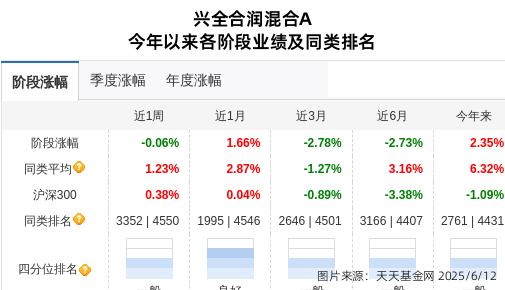
Group 1 - Naxin Microelectronics has experienced a decline for five consecutive trading days, with a cumulative drop of -11.08% [1] - Suzhou Naxin Microelectronics Co., Ltd. specializes in high-performance and high-reliability analog and mixed-signal chips [1] - Two funds under Xingzheng Global Fund have entered the top ten shareholders of Naxin Microelectronics, with both increasing their holdings in the first quarter of this year [1] Group 2 - Xingquan Helun Mixed A Fund has a year-to-date return of 2.35%, ranking 2761 out of 4431 in its category [1] - Xingquan Business Model Mixed (LOF) A Fund has a year-to-date return of 2.24%, ranking 2791 out of 4431 in its category [1] Group 3 - The fund managers of Xingquan Helun Mixed A and Xingquan Business Model Mixed (LOF) A are Xie Zhiyu and Qiao Qian, respectively [4][6] - Xie Zhiyu has been with Xingzheng Global Fund since January 29, 2013, and has held various positions, currently serving as the Deputy General Manager and Director of Research [4][5] - Qiao Qian has been with Xingzheng Global Fund since July 2008, serving as a researcher and assistant fund manager before becoming a fund manager [6]

研判2025!中国磁传感器行业细分类别、市场规模、竞争格局及前景展望:磁传感器市场高速增长,规模近百亿元,行业应用范围不断拓宽[图]
Chan Ye Xin Xi Wang· 2025-06-12 01:24
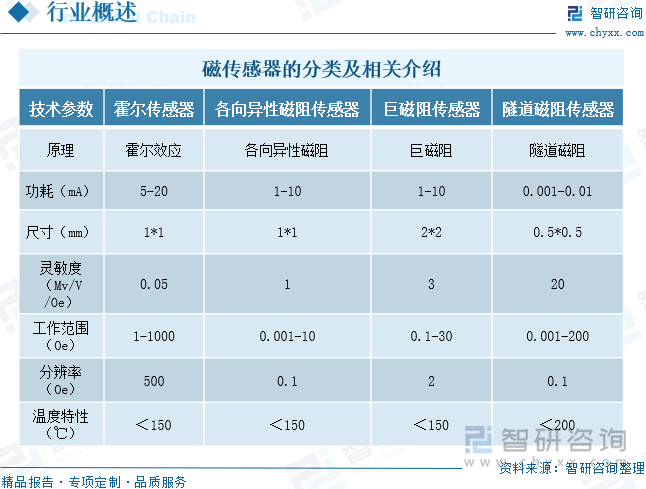
Core Insights - The magnetic sensor market in China is experiencing robust growth, with the market size projected to increase from 3.71 billion yuan in 2018 to 9.95 billion yuan by 2024, representing a compound annual growth rate (CAGR) of 17.87% [1][18] - Key drivers of this growth include sustained demand from consumer electronics, automotive electronics, and industrial automation, as well as the application of emerging technologies [1][18] - The integration of magnetic sensors in various applications such as smartphones, electric vehicles, and smart home devices is further propelling market demand [1][18] Industry Overview - Magnetic sensors are essential components in modern electronic systems, capable of accurately measuring physical quantities by capturing changes in magnetic fields [1][3] - The industry is categorized into Hall sensors and magnetic resistance sensors, with the latter further divided into anisotropic magnetoresistance (AMR), giant magnetoresistance (GMR), and tunnel magnetoresistance (TMR) sensors [3][5] Market Segmentation - Hall sensors dominate the market, holding approximately 69% market share in China, with a market size projected to grow from 3.01 billion yuan in 2017 to 6.55 billion yuan by 2024, at a CAGR of 13.84% [7][19] - The magnetic resistance sensor market is also expanding rapidly, with the market size expected to grow from 660 million yuan in 2018 to 3.33 billion yuan by 2024, achieving a CAGR of 30.96% [21] - AMR sensors are projected to grow from 370 million yuan in 2018 to 1.41 billion yuan by 2024, with a CAGR of 24.98% [22] - GMR sensors are expected to increase from 150 million yuan in 2018 to 560 million yuan by 2024, with a CAGR of 24.55% [22] - TMR sensors are anticipated to grow from 140 million yuan in 2017 to 1.36 billion yuan by 2024, achieving a remarkable CAGR of 46.07% [22] Industry Chain - The magnetic sensor industry chain consists of upstream suppliers of raw materials and core components, midstream manufacturers responsible for design and production, and downstream applications in various sectors such as consumer electronics, automotive electronics, and industrial automation [12][14] Key Companies - Notable companies in the magnetic sensor market include domestic players such as Shanghai Canrui Technology, Suzhou Naxin Microelectronics, and others, alongside global leaders like Allegro, Infineon, and TDK [25][27][29] Development Trends - The industry is focusing on enhancing product sensitivity, temperature stability, miniaturization, and low power consumption to meet the evolving demands of applications in precision measurement, automotive electronics, and IoT devices [31][32][34][35]



半导体6月投资策略:WSTS上修半导体销售额预测值,ADI表示订单在加速
Guoxin Securities· 2025-06-10 14:43
2025年06月10日 证券研究报告 | 半导体6月投资策略: WSTS上修半导体销售额预测值,ADI表示订单在加速 行业研究 · 行业投资策略 电子 · 半导体 投资评级:优于大市(维持) 证券分析师:胡剑 证券分析师:胡慧 证券分析师:叶子 证券分析师:张大为 证券分析师:詹浏洋 S0980521080001 S0980521080002 S0980522100003 S0980524100002 S0980524060001 021-60893306 021-60871321 0755-81982153 021-61761072 010-88005307 hujian1@guosen.com.cn huhui2@guosen.com.cn yezi3@guosen.com.cn zhangdawei1@guosen.com.cn zhanliuyang@guosen.com.cn 请务必阅读正文之后的免责声明及其项下所有内容 WSTS上修半导体销售额预测值,ADI表示订单在加速 l 5月SW半导体指数下跌6.23%,估值处于2019年以来59.92%分位 2025年5月SW半导体指数下跌6.23%,跑输 ...



全球与中国隔离式工业接口市场运营态势及发展动态规划报告2025-2031年
Sou Hu Cai Jing· 2025-06-09 15:55
【免费售后 服务一年,具体内容及订购流程欢迎咨询客服人员 】 全球与中国隔离式工业接口市场运营态势及发展动态规划报告2025-2031年 【全新修订】:2025年5月 【出版机构】:中智信投研究网 【内容部分有删减·详细可参中智信投研究网出版完整信息!】 报告目录 1 隔离式工业接口市场概述 1.1 产品定义及统计范围 1.2 按照不同产品类型,隔离式工业接口主要可以分为如下几个类别 1.2.1 全球不同产品类型隔离式工业接口销售额增长趋势2020 VS 2024 VS 2031 1.2.2 输出开关 1.2.3 数字输入IC 1.3 从不同应用,隔离式工业接口主要包括如下几个方面 1.3.1 全球不同应用隔离式工业接口销售额增长趋势2020 VS 2024 VS 2031 1.3.2 汽车领域 1.3.3 工业领域 1.3.4 其他 1.4 隔离式工业接口行业背景、发展历史、现状及趋势 1.4.1 隔离式工业接口行业目前现状分析 1.4.2 隔离式工业接口发展趋势 2 全球隔离式工业接口总体规模分析 2.1 全球隔离式工业接口供需现状及预测(2020-2031) 2.1.1 全球隔离式工业接口产能、产量、产 ...

自主可控加码,AI硬件加速落地 | 投研报告
Zhong Guo Neng Yuan Wang· 2025-06-09 01:30
Group 1: Industry Overview - The electronic industry is experiencing significant improvement in H1 2025, with A-share listed companies reporting a total revenue of 859.5 billion yuan, a year-on-year increase of 18%, and a net profit of 36.6 billion yuan, up 30% year-on-year [2] - The recovery trend is clear, with Q1 2025 showing growth compared to Q4 2024, despite being a traditional off-season [2] - The semiconductor equipment domesticization rate is becoming increasingly important, especially for advanced process testing lines and domestic HBM expansion [1][7] Group 2: Segment Performance - Power and analog semiconductors are showing continuous recovery, driven by low inventory levels after two years of stock adjustments [2] - Digital ICs are experiencing strong revenue and profit growth due to AI demand, with approximately 20% growth both year-on-year and quarter-on-quarter [2] - The smartphone, PC, and tablet markets exceeded expectations in Q1 2025, with year-on-year shipment increases of 1.5%, 4.9%, and 8.5% respectively [3] Group 3: Capital Expenditure and Investment Opportunities - Capital expenditure growth for fab plants is slowing down, with SMIC's capital expenditure expected to remain flat in 2025 [1][7] - Domestic testing lines and HBM expansion are recommended areas for investment, as they are expected to perform well [1][7] - Major companies like ByteDance and Alibaba are increasing their capital expenditure, indicating a positive outlook for cloud computing and AI chip demand [6] Group 4: Emerging Technologies and Trends - AI is becoming a core focus for hardware upgrades, with numerous companies launching AI and AR products in 2025 [3] - The storage market is showing signs of recovery, with optimistic guidance from Taiwanese manufacturers regarding Q2 performance [5] - The demand for differentiated IP in SoC design is increasing, with several domestic companies making significant technological advancements [4][6]
华创证券:智能感知层核心赛道 机器人&汽车打开磁传感器增量空间
Zhi Tong Cai Jing· 2025-06-09 01:29
Core Insights - Magnetic sensors are identified as core components in the intelligent perception layer, benefiting from the growth in robotics, automotive electronics, and the recovery of demand in new energy, industrial control, and consumer electronics sectors [1][2] Market Overview - The global magnetic sensor market was valued at $2.9 billion in 2023 and is projected to grow to $3.7 billion by 2029, with a CAGR of 4%. The primary application markets include automotive electronics, industrial, and consumer electronics [2] - Hall effect sensors are expected to dominate the market with a 64% share in 2024, while magnetoresistive sensors (AMR/GMR/TMR) are gaining traction due to their high precision and low power consumption [2] Emerging Applications - In the robotics sector, high-precision magnetic sensors are crucial for industrial automation and humanoid robots, exemplified by Tesla's Optimus Gen-3 [3] - In automotive electronics, the number of magnetic sensors per vehicle is projected to increase from 30-50 in traditional vehicles to 80-100 in hybrid and electric vehicles, driven by the rise of electric vehicles and ADAS features [3] - The new energy sector is seeing increased demand for TMR sensors due to higher precision requirements in photovoltaic inverters [3] - In industrial control, the penetration of magnetic sensors is expected to rise steadily due to the convergence of inventory cycles and Industry 4.0 upgrades [3] - In consumer electronics, government subsidies and AI hardware innovations are stimulating demand for magnetic sensors in high-value applications like AI glasses and wearable devices [3] Competitive Landscape - The magnetic sensor market is highly concentrated, with the top five global manufacturers holding over 70% market share, including Allegro, Infineon, and Melexis [4] - The domestic market in China has a low localization rate of 25% for magnetic sensor chips, indicating significant room for domestic manufacturers to grow [4] - Companies like Naxin Micro are actively pursuing technological advancements and market share, with plans to launch new AMR-based speed sensors and expand through acquisitions [4]

电子行业中期策略:自主可控加码,AI硬件加速落地
Soochow Securities· 2025-06-08 14:31
Group 1 - The electronic industry is experiencing a significant recovery in H1 2025, with Q1 revenue reaching 859.5 billion yuan, a year-on-year increase of 18%, and net profit of 36.6 billion yuan, up 30% year-on-year [14][21][20] - The semiconductor sector is seeing improvements across various segments, with power and analog ICs recovering, while digital ICs are benefiting from AI demand, showing around 20% growth in revenue and profit [18][20] - Inventory levels are slightly elevated, with total inventory at 678.7 billion yuan in Q1 2025, reflecting a 9% increase, while inventory turnover days rose from 73 days in Q4 2024 to 81 days in Q1 2025 [21][22] Group 2 - The consumer electronics sector is witnessing a surge in shipments, with smartphones, PCs, and tablets showing year-on-year growth of 1.5%, 4.9%, and 8.5% respectively in Q1 2025, driven by tariff fluctuations and subsidy policies [24][25][26] - AI has become a core driver for new product launches, with major manufacturers accelerating the development of AI systems and software ecosystems to enhance hardware capabilities [27][29] - The market is seeing innovative form factors, such as foldable PCs and desktop robots, with Huawei's MateBook series entering the traditional PC market, indicating a shift towards new computing paradigms [40][43] Group 3 - In the IC design sector, the analog segment is expected to see a turning point in 2025, with demand from automotive and industrial applications driving growth, while the storage segment is also on an upward cycle [2][3] - The SoC market is evolving with differentiated IP demands driven by various application scenarios, particularly in AI and ISP technologies [2][3] - The trend of large companies developing their own chips is increasing, with significant capital expenditures expected from major players like ByteDance and Alibaba, which will boost demand for custom IP and services [2][3] Group 4 - The equipment sector is focusing on domestic testing lines and the expansion of HBM production, with a notable slowdown in capital expenditure growth among fab plants [6][3] - The domestic market for storage and logic testing machines is expected to replicate the previous year's equipment market trends, with significant breakthroughs anticipated [6][3] - The overall outlook for computing hardware remains positive, with expectations of growth driven by both overseas and domestic advancements in AI technology [8][3]
敏芯股份连亏三年,支柱业务收入滑坡,低毛利困局难解,首发募投项目尚未盈利
Zheng Quan Zhi Xing· 2025-06-06 07:44
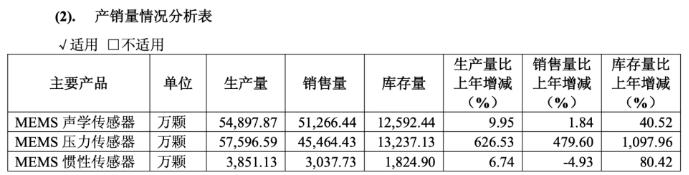
Core Insights - The company reported a revenue increase without profit, with a cumulative net loss of nearly 200 million yuan over three years [1][2] - The revenue growth was primarily driven by the pressure sensor business, but this was achieved at the cost of lower prices, leading to cash flow pressure and increased inventory [1][5] - The company is facing challenges with its core acoustic sensor business, which saw a revenue decline [2][3] Revenue and Profitability - In 2024, the company achieved total revenue of 506 million yuan, a year-on-year increase of 35.71%, but reported a net loss of 35.24 million yuan, although the loss narrowed compared to previous years [2][5] - The acoustic sensor business, which contributes nearly 50% of total revenue, experienced a revenue decline of 5.95%, generating 241 million yuan [2][3] - The pressure sensor business saw significant growth in sales volume, reaching 455 million units, but the average selling price dropped by 56.75% to 0.47 yuan per unit, impacting profit margins [3][5] Inventory and Cash Flow - The company's inventory increased to 241 million yuan, a 39% rise, which is higher than the revenue growth rate, leading to cash flow issues with a net cash flow from operating activities of -39.98 million yuan [5][6] - The overall gross margin has been declining, with a slight recovery to 24.88% in 2024, but still significantly lower than competitors [5][6] Business Model and Market Position - The company primarily serves ODM manufacturers in the consumer electronics sector, which limits its profit margins as these manufacturers face tight profit margins themselves [6][7] - The company has established relationships with notable end customers like Samsung and Xiaomi, but the profit distribution in the supply chain heavily favors brand owners [6][7] Financing and Investment Projects - The company plans to raise up to 300 million yuan through a new round of private placement, despite having unutilized funds from previous fundraising efforts [7][8] - Previous fundraising projects have not yielded expected profitability, with significant losses reported from earlier investments [7][8] Shareholder Actions - Major shareholders have been reducing their stakes, with significant sell-offs by the largest shareholder, raising concerns about the company's future prospects [9][10] - The stock price has dropped over 70% from its peak, reflecting market sentiment regarding the company's performance [11]

证监会备案 | 2025年5月境内企业境外上市备案情况分析
Sou Hu Cai Jing· 2025-06-06 01:46
Core Insights - The article highlights a surge in companies seeking to list in Hong Kong, driven by supportive policies and reforms in the capital market [2][9] - In May 2025, a total of 38 companies submitted applications for overseas listing, with 37 targeting Hong Kong and 1 targeting Taiwan, while no applications were made for the US Nasdaq [3][5] - The successful completion of 11 companies' listings in May indicates a growing trend towards Hong Kong as a preferred listing destination [5][6] Group 1: Listing Statistics - In May 2025, 38 companies submitted overseas listing applications, with 26 in accepted status and 12 requiring additional materials [3][4] - The average time for companies to obtain listing approval was approximately 9 months [5] - The industry distribution of approved companies shows a concentration in manufacturing (28%), biomedicine (27%), and consumer services and new energy technology (18%) [7] Group 2: Policy Support - The dual policy support from the Chinese government and the Hong Kong Stock Exchange has significantly enhanced the attractiveness of IPOs in Hong Kong [2][9] - The introduction of a fast track for "A+H" dual-listed companies and the "Science and Technology Enterprise Special Line" policy aims to facilitate the listing process for innovative companies [10][11] - These policies are designed to alleviate financing difficulties for technology companies and strengthen their position in the global supply chain [11]