
沪农商行

Search documents
中央城市工作会议解读:城市更新主线明确,关注信贷和资产质量改善机遇
Yin He Zheng Quan· 2025-07-16 11:12
Investment Rating - The report maintains a "Recommended" rating for the banking sector, indicating a positive outlook for the industry based on expected policy catalysts and improvements in asset quality [4]. Core Insights - The central urban work conference emphasizes urban renewal as a key strategy, which is expected to drive incremental credit and improve asset quality for banks. The focus is on optimizing urban structure, transforming economic dynamics, and enhancing quality [4]. - The report anticipates that the implementation of urban renewal policies will lead to increased financing needs, particularly through special bonds and loans, with an estimated potential for banks to generate an additional 100 to 200 billion yuan in credit from urban village renovations [4]. - The expected improvements in asset quality are linked to the restriction of high-rise buildings and the promotion of dilapidated housing renovations, which may alleviate cash flow pressures on real estate companies and reduce the depreciation of real estate collateral [4]. Summary by Sections Urban Renewal and Financing - The report highlights the importance of diverse financing methods for urban renewal, including central budget funds, long-term special bonds, local fiscal funds, and various types of loans [4]. - It notes that the current proportion of special bonds used as capital is around 10%, indicating significant room for growth [4]. Impact on Banking Sector - The report suggests that banks will benefit from increased participation in urban renewal projects, with both corporate and retail banking segments expected to see positive impacts [4]. - It mentions that the sample banks have shown signs of improvement in corporate real estate loans, with a year-on-year decrease in non-performing loan balances by 2.87% and a slight decline in the non-performing loan ratio [4]. Investment Recommendations - The report recommends specific banks, including Industrial and Commercial Bank of China, China Construction Bank, and Postal Savings Bank of China, among others, as potential investment opportunities due to their favorable positioning in the current market environment [4].





银行业中央城市工作会议解读:城市更新主线明确,关注信贷和资产质量改善机遇
Yin He Zheng Quan· 2025-07-16 08:48
Investment Rating - The report maintains a "Recommended" rating for the banking sector, indicating an expected performance exceeding the benchmark index by over 10% [30]. Core Insights - The central urban work conference emphasizes urban renewal as a key strategy, which is expected to drive incremental credit and improve asset quality for banks. The focus is on optimizing urban structure, transforming economic drivers, and enhancing quality [6]. - The report anticipates that the implementation of urban renewal policies will lead to increased financing needs, particularly through special bonds and loans, with an estimated bank credit increase of 100 to 200 billion yuan from urban village renovations [6]. - The asset quality of banks is expected to improve due to restrictions on high-rise buildings and the promotion of dilapidated housing renovations, which will alleviate cash flow pressures on real estate companies and reduce the depreciation of real estate collateral [6]. Summary by Sections Urban Renewal and Financing - The conference aims to promote infrastructure upgrades and develop new real estate models, which will stimulate financing demand. Various funding sources, including special bonds and loans, are highlighted as crucial for urban renewal projects [6]. - The report notes that the current ratio of special bonds used as capital is around 10%, indicating significant room for growth [6]. Impact on Banking Sector - Short-term investments in county urbanization, pipeline renovations, and dilapidated housing improvements are expected to generate increased real estate and infrastructure loans, benefiting banks' corporate business [6]. - The report projects that urban renewal will enhance consumer scenarios, particularly in the service sector and digital environments, leading to growth in retail banking consumer loans [6]. Asset Quality Improvement - The report indicates that as of the end of 2024, the proportion of corporate real estate loans and personal operating loans in total loans is 5.07% and 7.36%, respectively, with a noted decrease in non-performing loans for corporate real estate loans by 2.87% year-on-year [6]. - The overall real estate market is moving towards stabilization, with a narrowing decline in sales and prices, although it remains in a bottoming and transformation phase [6]. Investment Recommendations - The report suggests that short-term policy catalysts are likely to release infrastructure credit increments, while the long-term development of consumer finance will gradually reveal the advantages of retail banks [6]. - Specific bank stocks are recommended, including Industrial and Commercial Bank of China, China Construction Bank, and Postal Savings Bank of China, among others [6].
银行股息率即将显著提升
2025-07-16 06:13
各位投资者朋友大家下午好我是华安特略组分析师陈博近期市场对于银行板块关注度很高我们希望从多个角度对银行上涨的逻辑支撑然后未来的持续性角度对其做出一些详细的拆解所以我们未来会推出围绕银行多个问题探讨的系列报告那么我们将这个系列报告命名为银行放大镜系列今天给大家汇报该系列的第一篇报道银行股市率即将显著提升 这份报告主要是为了要探讨未来半年左右银行板块补息率的潜在变动幅度以及变化的时间节点那么核心结论是我们在转中期内仍然看好银行板块补息率整体维持在5%左右的一个水平并且有一个较强的支撑性那么接下来我们会从银行的主要分红方式银行的分红时间然后分红对补息率的具体影响三个方面进行拆解那么首先 我们从银行的派系方式去给大家做一个讲解通常来说上市公司分红有两种形式一种是发放现金股利的方式那么另外一种是股票股利比如说手上持有多少股然后以增发多余的股票为主那么上市公司其实可以根据实际情况选择其中的一种或者同时使用两种方式进行分红 那么我们其实可以看到就是从2022年到2024年银行公布的中报和年报中间实际上在42家A股上市银行中只有郑州银行在2023年采用了一次美股转赠的方式进行分红那么其余所有的上市银行的分红方式都是以派系为主 ...



“红包雨”来了!30余家上市行年度分红“到账”,哪家出手最阔绰?
Xin Lang Cai Jing· 2025-07-16 00:40
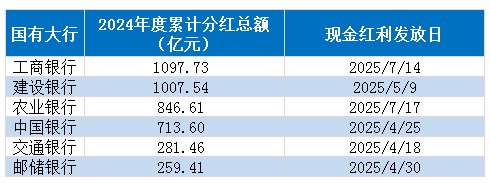
Core Viewpoint - A-share listed banks are experiencing a peak in dividend distribution for the 2024 fiscal year, with over thirty banks having completed their annual dividends and several others announcing dividend implementation plans [1][3][4]. Group 1: 2024 Annual Dividends - The Industrial and Commercial Bank of China (ICBC) leads with a total cash dividend of approximately 109.77 billion yuan for the previous year [3][4]. - The six major state-owned banks have collectively distributed over 420 billion yuan in dividends for 2024, with ICBC, China Construction Bank, Agricultural Bank of China, and Bank of China being the top contributors [4][6]. - Other banks such as China CITIC Bank and Beijing Bank have also announced significant cash dividends, with CITIC Bank distributing around 19.46 billion yuan [4][5]. Group 2: 2025 Mid-Year Dividend Plans - Several banks, including China Merchants Bank and Hangzhou Bank, have initiated plans for mid-year dividends in 2025, aiming to enhance investor returns [1][8][10]. - The focus on mid-year dividends is seen as a strategy to improve liquidity and provide more consistent cash flow to investors, which may support long-term stock price appreciation [10]. - Banks like Su Nong Bank and Changsha Bank have expressed intentions to implement mid-year dividend plans based on their financial performance and regulatory requirements [8][9]. Group 3: Stock Performance and Market Trends - The banking sector has shown strong performance in the A-share market, with several banks achieving significant stock price increases in the first half of the year [12][13]. - The overall dividend yield of the banking sector remains attractive, particularly in a low-interest-rate environment, making it appealing for long-term investors [10][13]. - Some banks have faced challenges in executing share buyback plans due to stock price fluctuations, indicating a cautious approach to capital management [11][14].




银行角度看6月社融:信贷增长有所恢复,政府债仍是主要支撑项
ZHONGTAI SECURITIES· 2025-07-15 10:41
Investment Rating - The report maintains an "Overweight" rating for the banking sector [2] Core Insights - The report highlights a recovery in credit growth, with government bonds remaining a primary support item. In June, social financing increased by 900.8 billion yuan year-on-year, with a total of 4.2 trillion yuan added, surpassing market expectations [9][10] - The structure of social financing shows a significant increase in credit, with a notable rise in government bond issuance, which reached 1.3508 trillion yuan in June, up 503.2 billion yuan year-on-year [10][12] Summary by Sections Social Financing Growth - In June, social financing increased by 900.8 billion yuan compared to the same month last year, with a total of 4.2 trillion yuan added, exceeding consensus expectations. The year-on-year growth rate of social financing reached 8.9%, a 0.2 percentage point increase from May [9][10] Credit Situation - New loans in June amounted to 2.24 trillion yuan, an increase of 110 billion yuan year-on-year, which is higher than market expectations. The year-on-year growth rate of credit balance was 7.1%, with the growth rate remaining stable compared to the previous month [12][13] - The credit structure indicates that various types of general loans (excluding bills) have increased year-on-year, while the characteristics of bill financing have weakened. Specifically, corporate short-term loans saw a significant increase [13][18] Liquidity and Deposit Situation - In June, M1 growth rate significantly increased, and the gap between M2 and M1 narrowed. M0, M1, and M2 grew by 12.0%, 4.6%, and 8.3% year-on-year, respectively [6][12] - The total increase in RMB deposits in June was 3.21 trillion yuan, which is 750 billion yuan more than the same period last year, with a year-on-year growth rate of 8.3% [6][12] Investment Recommendations - The report recommends focusing on the banking sector, particularly regional banks with strong certainty and advantages, such as Jiangsu Bank and Chongqing Rural Commercial Bank. It also highlights the importance of high dividend stability in large banks [6][12]



首份红利主题基金中报出炉,十大重仓股已无银行股踪影
2 1 Shi Ji Jing Ji Bao Dao· 2025-07-15 07:51
Core Viewpoint - The report of the China Europe Dividend Select Mixed Fund indicates a positive performance in net asset value growth, with A and C class shares showing growth rates of 2.16% and 2.01% over the past three months, and 15.74% and 15.08% since the fund's inception [1][2]. Fund Performance - As of June 30, the total fund shares amounted to 10.9 million, with A class shares at 4.73961 million and C class shares at 6.18585 million [2]. - The fund primarily invests in dividend-themed listed companies, managed by Liu Yong and Zhang Xue Ming, who have 9 and 8 years of experience in the securities industry, respectively [2]. Investment Strategy - The fund managers have shifted focus from bank stocks to market-oriented dividend stocks, citing a decrease in the attractiveness of bank dividends due to significant price increases [4]. - The top ten holdings in the second quarter no longer included bank stocks, with new investments in companies like Zhengmei Machine and Midea Group [3][4]. Market Context - The banking sector has seen substantial growth, with the Shanghai Securities Bank Index rising over 17% year-to-date, and several banks, including Xiamen Bank, showing increases exceeding 40% [4][5]. - Analysts remain optimistic about bank stocks, suggesting that the evolution of long-term bad debt cycles, rather than short-term economic fluctuations, will drive bank stock valuations [5][6]. Dividend Stock Appeal - The high dividends from dividend stocks are increasingly attractive in a low overall investment return environment, providing a valuable return source for funds facing a debt asset shortage [6]. - Banks are highlighted as the best performers among dividend stocks due to their stable future net profits and cash flows, supported by significant retained earnings [6].
回调是上车机会?红利低波ETF(512890)近5个交易日吸金10亿元
Xin Lang Ji Jin· 2025-07-15 07:49
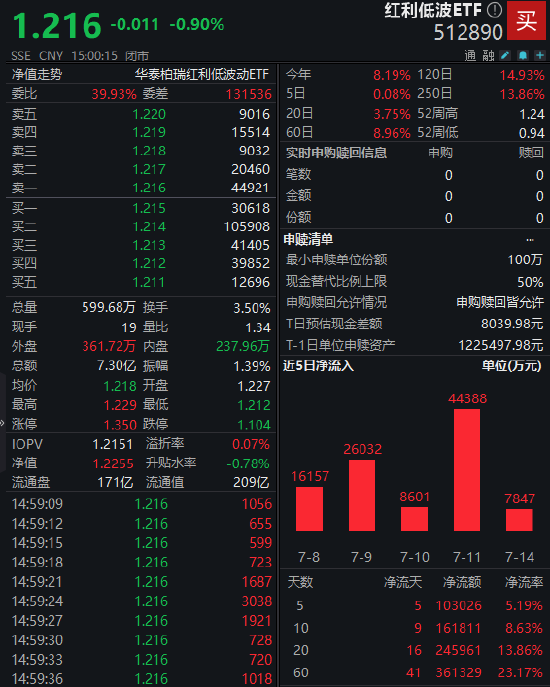
Core Viewpoint - The Hongli Low Volatility ETF (512890) has experienced significant growth in both net inflows and total assets, indicating strong investor interest and confidence in the fund's strategy [1][2][3]. Fund Performance - On July 15, the Hongli Low Volatility ETF (512890) closed down 0.90% with a trading volume of 730 million yuan, and a turnover rate of 3.50% [1][2]. - Over the past five trading days, the fund saw a net inflow of 1.03 billion yuan, and over the past 20 days, the net inflow reached 2.46 billion yuan [1][2]. - As of July 14, the fund's total assets reached a record high of 21.014 billion yuan, up 52.83% from 13.750 billion yuan at the end of 2024 [1][2]. Holdings and Strategy - The Hongli Low Volatility ETF (512890) was established on December 19, 2018, and its performance benchmark is the CSI Low Volatility Dividend Index [3]. - Major holdings include Chengdu Bank, Youngor, Industrial Bank, and Shanghai Bank, with significant weightings in the portfolio [3][4]. - The fund is suitable for investors seeking stable returns and low-risk exposure, particularly those without stock accounts, through its various share classes [4].
多家金融机构入局 碳信用代币化引发关注
Sou Hu Cai Jing· 2025-07-15 07:40
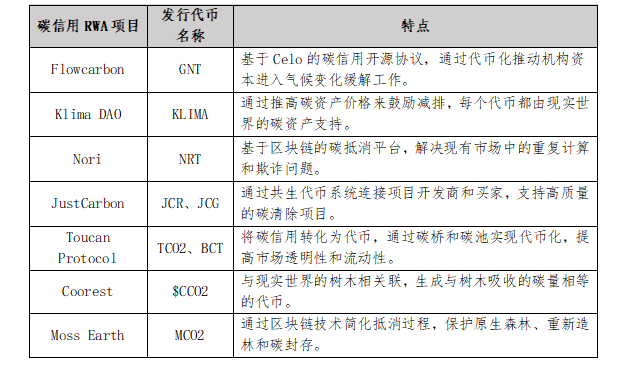
Core Viewpoint - The tokenization of carbon credits is expected to enhance market liquidity and provide low-cost, divisible carbon neutrality tools for enterprises, while potential risks should not be overlooked [1][3]. Group 1: Industry Developments - Northern Trust announced a collaboration with SWIFT to explore trading tokenized assets like carbon credits through commercial bank accounts in Australia [1]. - JPMorgan's blockchain division, Kinexys, is developing a new blockchain application aimed at tokenizing global carbon credits to address standardization and transparency issues in the voluntary carbon market (VCM) [1]. Group 2: Tokenization Projects - Flowcarbon (GNT): An open-source protocol based on Celo that promotes institutional capital into climate change mitigation through tokenization [2]. - Klima DAO (KLIMA): Encourages emission reductions by raising carbon asset prices, with each token backed by real-world carbon assets [2]. - Nori (NRT): A blockchain-based carbon offset platform that addresses issues of double counting and fraud in existing markets [2]. - JustCarbon (JCR, JCG): Connects project developers and buyers through a symbiotic token system, supporting high-quality carbon removal projects [2]. - Toucan Protocol (TC02, BCT): Converts carbon credits into tokens, enhancing market transparency and liquidity through carbon bridges and pools [2]. - Coorest ($CC02): Generates tokens equivalent to the carbon absorbed by trees, linking them to real-world forestry [2]. - Moss Earth (MC02): Simplifies the offset process through blockchain technology, focusing on protecting native forests, reforestation, and carbon sequestration [2]. Group 3: Significance of Tokenization - Carbon credit tokenization creates a new category of digital assets, attracting more investors and increasing funding and liquidity in the carbon market [2]. - The decentralized architecture of blockchain allows carbon credits, which are typically fragmented and hard to price, to become standardized tokens that can be traded freely and priced in real-time [2]. - On-chain data is immutable and fully auditable, preventing double counting and enhancing market credibility [2]. Group 4: Challenges and Risks - The complexity of technology introduces risks of financial fraud, as the tokenization process involves intricate blockchain technology and smart contracts [3]. - Global liquidity may exacerbate regional imbalances, as the tokenization of carbon credits could amplify disparities between developed and developing nations [3]. - The certification of underlying assets remains centralized, despite blockchain's improvements in transparency and traceability [3].
一键配置红利资产!平安上证红利低波动指数(A/C:020456/020457)近五个交易日吸金超70亿
Xin Lang Cai Jing· 2025-07-15 07:20
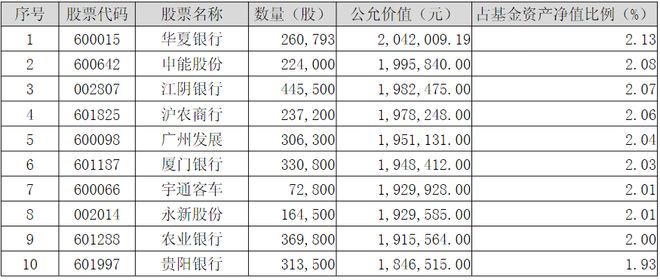
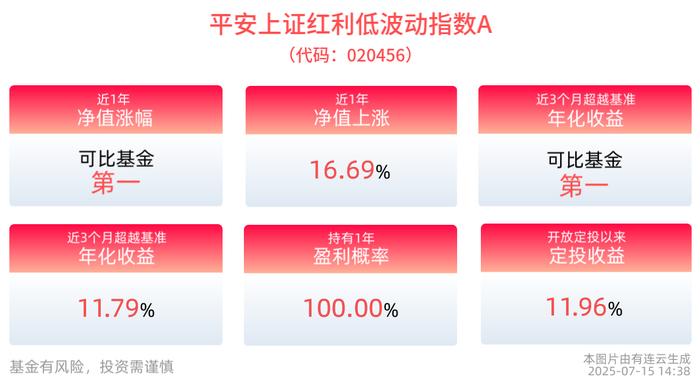
Core Viewpoint - The Ping An SSE Dividend Low Volatility Index A (020456) has shown strong performance with significant net inflows and positive returns, indicating a favorable investment opportunity in the low volatility dividend sector [4][5]. Fund Performance - As of July 14, 2025, the unit net value of Ping An SSE Dividend Low Volatility Index A is 1.15 yuan, up 0.63% from the previous trading day, with a cumulative increase of 16.69% over the past year, ranking in the top half of comparable funds [4]. - The fund has achieved a maximum monthly return of 11.16% since its inception, with the longest consecutive monthly gains being 2 months and a maximum gain of 7.40% [4]. - The average monthly return is 3.98%, with a 58.73% weekly profit percentage and a 60.57% monthly profit probability [4]. - The fund has a 100% historical probability of profit over a one-year holding period [4]. - The fund's Sharpe ratio over the past year is 1.15, ranking in the top half of comparable funds, indicating the highest return for the same level of risk [4]. Risk and Return Metrics - The maximum drawdown for the fund this year is 5.35%, compared to a relative benchmark drawdown of 0.44% [4]. - Since the launch of regular investment options, the fund has achieved a return rate of 11.96% [4]. Fund Management and Strategy - The management fee for the fund is 0.50%, with a custody fee of 0.10%, totaling a fee rate of 0.60% [5]. - The fund was established on April 23, 2024, and aims to closely track the SSE Dividend Low Volatility Index, minimizing tracking deviation and error [5]. - The fund manager, Qian Jing, has achieved a return of 15.88% since taking office [5]. Index Composition - The SSE Dividend Low Volatility Index selects 50 securities with good liquidity, continuous dividends, moderate dividend payout ratios, positive growth in earnings per share, and low volatility [5]. - The top ten holdings of the fund include COSCO Shipping Holdings, Chengdu Bank, Youngor Group, Industrial Bank, and Shanghai Rural Commercial Bank, accounting for a total of 27.50% of the portfolio [6][8].
2025年6月金融数据点评:社融信贷增长超预期,企业融资需求改善
Yin He Zheng Quan· 2025-07-15 07:07
Investment Rating - The report maintains a "Recommended" rating for the banking sector, indicating a positive outlook for the industry [1]. Core Insights - The social financing (社融) growth exceeded expectations, with June's new social financing reaching 4.2 trillion yuan, a year-on-year increase of 900.8 billion yuan. The total social financing stock grew by 8.9% year-on-year, with a month-on-month increase of approximately 0.2 percentage points [4]. - The demand for financing is showing signs of improvement, with both corporate and household credit increasing. The total RMB loans increased by 2.36 trillion yuan in June, a year-on-year increase of 171 billion yuan, marking a positive contribution to social financing growth [4]. - The report highlights that government bonds continue to be a major contributor to social financing growth, with new government bonds issued amounting to 1.35 trillion yuan in June, a year-on-year increase of 507.2 billion yuan [4]. - The M1 and M2 money supply indicators showed significant recovery, with M1 growing by 4.6% year-on-year and M2 by 8.3% year-on-year, indicating improved liquidity in the financial system [4]. Summary by Sections Social Financing Overview - In June, the new social financing was 4.2 trillion yuan, with a year-on-year increase of 900.8 billion yuan. The total stock of social financing grew by 8.9% year-on-year [4]. - The government bond issuance in June was approximately 2.77 trillion yuan, an increase of 818 billion yuan compared to the same period last year [4]. Credit Demand - By the end of June, the balance of RMB loans from financial institutions grew by 7.1% year-on-year. The new loans in June amounted to 2.24 trillion yuan, a year-on-year increase of 110 billion yuan [4]. - Household loans increased by 597.6 billion yuan, with short-term loans rising by 262.1 billion yuan, driven by consumption demand during promotional events [4]. Money Supply and Liquidity - M1 and M2 growth rates were 4.6% and 8.3% year-on-year, respectively, with month-on-month increases of 2.3 percentage points and 0.4 percentage points [4]. - Financial institutions' RMB deposits increased by 8.3% year-on-year, with a monthly increase of 750 billion yuan in June [4].