
产业链供应链韧性和安全

Search documents
发改委:对新能源汽车、锂电池、光伏等要综合整治“内卷式”竞争
Sou Hu Cai Jing· 2025-12-26 02:29
Core Insights - The article emphasizes the significant achievements in the development of traditional industries during the "14th Five-Year Plan" period and outlines the focus areas for optimization and enhancement in the "15th Five-Year Plan" period [1] Group 1: New Industries - The "new three types" industries, including new energy vehicles, lithium batteries, and photovoltaics, are highlighted as advantageous sectors for China, contributing to high-quality foreign trade development and showcasing China's strength in the global green industry transformation [4] - Challenges such as disorderly market competition and the need for stronger core advantages are acknowledged, with a call for comprehensive measures to address "involution" competition and enhance industry concentration [4] Group 2: Smart Manufacturing - China has established over 30,000 basic-level smart factories, more than 7,000 advanced-level smart factories, and over 500 excellent-level smart factories, with excellent-level factories achieving an average product development cycle reduction of 28.4% and a production efficiency increase of 22.3% [4] - The number of lighthouse factories in China accounts for over 40% of the global total, ranking first worldwide, and the installation of industrial robots has exceeded 250,000 units annually since the "14th Five-Year Plan," representing over 50% of the global share [4] Group 3: High-End Manufacturing - The high-end CNC machine tool and high-end shipbuilding industries face challenges in key core areas, highlighting the urgency of enhancing the resilience and safety of the industrial supply chain [5] - The "15th Five-Year Plan" aims to accelerate breakthroughs in critical core technologies, transform industrial models, and ensure the autonomy and reliability of the industrial chain system [5] Group 4: Market Regulation and Innovation - The article stresses the importance of regulating market competition, implementing fair competition review systems, and enhancing price monitoring and quality checks to prevent disorderly low-price competition [6] - Strengthening supply chain governance and ensuring timely payments to small and medium-sized enterprises are essential for creating a mutually beneficial industry ecosystem [6] - There is a call for increased technological innovation efforts to maintain a leading technological advantage and for macro-control measures to promote the exit of inefficient production capacities [6]

多措并举提升产业链供应链韧性和安全水平
Ren Min Ri Bao· 2025-12-03 22:29
Core Viewpoint - The resilience and security of industrial and supply chains are crucial for national economic security and high-quality development, as emphasized by Xi Jinping [1][2]. Group 1: Importance of Industrial and Supply Chain Resilience - Industrial chains represent the interconnected relationships among various industry segments, while supply chains encompass the entire process from suppliers to end-users, forming the economic "vascular system" [2]. - High resilience and security in industrial and supply chains imply inherent stability, autonomy, and flexibility, enabling quick adaptation to external shocks and maintaining operations under pressure [2]. - The current global landscape is marked by significant changes, with the restructuring of global industrial and supply chains due to geopolitical tensions and trade barriers, increasing complexity and uncertainty for China's supply chains [2][3]. Group 2: China's Industrial System and Challenges - China has developed the largest and most comprehensive industrial system globally, which supports its competitive edge and participation in global economic cooperation [3]. - Despite advancements, challenges remain, such as the need for stronger original innovation capabilities and overcoming reliance on foreign technology in critical areas [3]. Group 3: Technological Innovation and Integration - Technological innovation is essential for enhancing the resilience and security of industrial and supply chains, with a focus on key areas like artificial intelligence and advanced materials [4]. - Strengthening the role of enterprises in innovation and fostering collaboration between industry, academia, and research can accelerate the growth of innovative enterprises and improve technology transfer [4]. Group 4: Domestic Industrial Transfer - Promoting orderly domestic industrial transfer is vital for optimizing productivity and enhancing supply chain resilience, leveraging regional strengths and capabilities [5]. - Establishing collaborative mechanisms for resource flow and ensuring shared benefits between regions can enhance the capacity of less developed areas to absorb industries [5]. Group 5: Financial Support for Industrial Security - Financial services play a critical role in guiding capital towards key technological advancements and supporting the development of strategic emerging industries [6]. - Enhancing digital financial infrastructure and ensuring data security are crucial for maintaining the stability of industrial and supply chains [6].
前三季度钢企利润大增1.9倍,后续走势如何
Di Yi Cai Jing· 2025-11-01 02:45
Core Insights - The Chinese steel industry has shown significant improvement in operational efficiency in the first three quarters of the year, with total revenue of 4.56 trillion yuan, a year-on-year decrease of 2.36%, and total profits of 96 billion yuan, a year-on-year increase of 190% [1][2] - The industry is expected to achieve its best economic performance since 2022 if it adheres to production and sales principles in the fourth quarter [2] - The demand for steel remains weak, with apparent consumption down 5.7% year-on-year, marking the fifth consecutive year of decline [3] Revenue and Profitability - The steel industry's total revenue for the first three quarters was 4.56 trillion yuan, a decrease of 2.36% compared to the previous year [1] - Total profits reached 96 billion yuan, reflecting a 190% increase year-on-year, with a sales profit margin of 2.10%, up 1.39 percentage points from the previous year [1][2] Production and Consumption - The cumulative crude steel production was 746 million tons, a year-on-year decrease of 2.9%, with expectations to maintain this downward trend for the entire year [2] - Domestic apparent consumption of crude steel was 649 million tons, down 5.7% year-on-year, indicating ongoing challenges in demand [3] Export and Import Dynamics - Steel exports increased by 9.2% year-on-year to 87.96 million tons, while imports decreased by 12.6% to 4.53 million tons [3] - The net export of crude steel was 96.76 million tons, a year-on-year increase of 21.0% [3] Industry Challenges and Outlook - The steel industry faces challenges such as insufficient effective demand, weakening export expectations, and increasing supply-demand contradictions [3] - The fourth quarter is expected to see a seasonal decline in demand, increasing pressure on achieving supply-demand balance [3][4] - The Ministry of Industry and Information Technology has outlined a plan for the steel industry, aiming for an average annual growth of 4% in industrial added value, emphasizing efficiency and quality over expansion [4][5]
当好“稳定器” 做好“压舱石”——中国石油和化学工业联合会解读《石化化工行业稳增长工作方案(2025—2026年)》
Zhong Guo Hua Gong Bao· 2025-10-10 02:43
Core Viewpoint - The Ministry of Industry and Information Technology, along with five other departments, has released the "Work Plan for Stable Growth in the Petrochemical Industry (2025-2026)", which outlines clear requirements for the stable growth objectives, tasks, and support measures for the petrochemical industry in the coming two years [1][3]. Group 1: Industry Context and Challenges - The petrochemical industry plays a crucial role as a foundational and pillar industry in the national economy, with significant economic volume and high industrial relevance [2]. - The industry has faced declining profit levels for three consecutive years, with a projected profit drop of 8.8% in 2024 compared to the previous year, alongside a decrease in total import and export volume for two years [2][4]. - The industry's profit total is expected to decline from 1.16 trillion yuan in 2021 to 789.7 billion yuan in 2024, representing a decrease of over 30%, with revenue profit margins dropping from 8% to below 5% [4]. Group 2: Work Plan Objectives and Measures - The "Work Plan" emphasizes quality and efficiency, aiming for a stable recovery in economic benefits and promoting high-quality development throughout the industry [3][4]. - Key measures include enhancing high-end supply, addressing structural weaknesses, and promoting the quality upgrade of bulk products [4]. - The plan also highlights the need for scientific control over major project construction and the prevention of overcapacity risks in specific sectors [4]. Group 3: Innovation and Project Management - The plan proposes to streamline the management of pilot projects in the petrochemical sector to enhance innovation capabilities and facilitate the industrialization of research outcomes [5][6]. - It suggests simplifying approval processes for pilot projects and encourages local governments to establish clear conditions for the circulation of pilot project products [6]. Group 4: Safety and Environmental Upgrades - The plan outlines the importance of upgrading existing facilities and production systems to improve safety and environmental standards, particularly in older installations [7]. - It includes initiatives for digital and green transformations, supporting enterprises in energy-saving and pollution reduction efforts [7]. Group 5: Standardization and Regulatory Framework - The "Work Plan" stresses the need for a robust standardization framework to support the petrochemical industry's production and operational governance [8]. - It calls for the development of new standards in response to emerging industries and environmental challenges, including carbon footprint assessment and digital transformation standards [8].

8部门:加强铜铝锂镍钴锡等资源调查与勘探
Guan Cha Zhe Wang· 2025-09-28 09:29
Core Viewpoint - The Ministry of Industry and Information Technology, along with seven other departments, has issued a "Work Plan for Stable Growth in the Nonferrous Metal Industry (2025-2026)" to address challenges and promote high-quality development in the sector [1][2]. Background - The nonferrous metal industry is a crucial foundational sector in China, being the largest producer and consumer globally. In 2024, the industry's added value is expected to grow by 8.9%, with a revenue increase of 15.8% and profit growth of 16.5% [2][3]. - Despite rapid growth, issues such as resource security, high-end supply capabilities, and effective demand exploration have become more pronounced, necessitating the new work plan [2][3]. Overall Considerations - The work plan is guided by Xi Jinping's thoughts and aims to balance supply and demand while promoting innovation and collaboration across the industry [3][4]. - It emphasizes policy coordination, system thinking, and innovation to enhance the resilience and safety of the supply chain [3][4]. Main Goals - The plan sets a target for an average annual growth of around 5% in the industry's added value from 2025 to 2026, with a 1.5% annual increase in the production of ten major nonferrous metals [4][11]. Key Initiatives - **Resource Efficiency**: The plan includes actions to enhance resource utilization, such as implementing a new round of mineral exploration and supporting the recycling of waste metals [5][12]. - **Technological Innovation**: It aims to boost effective supply capabilities through technological advancements in high-end materials and manufacturing quality [6][14]. - **Investment Expansion**: The plan encourages effective investment to facilitate industry transformation and upgrade projects, including energy-saving and pollution-reduction initiatives [6][15]. - **Consumer Demand**: It seeks to stimulate market consumption by promoting high-end applications of nonferrous metals in various industries [7][17]. - **International Cooperation**: The plan emphasizes enhancing international collaboration and addressing trade restrictions to stabilize foreign trade [8][18]. Implementation Measures - **Organizational Support**: Local governments are encouraged to refine growth targets and policy measures, while industry associations play a role in promoting self-regulation [8][19]. - **Policy Support**: The plan outlines the use of long-term special bonds and tax reduction policies to support resource development and technological innovation [8][19]. - **Monitoring and Evaluation**: It calls for the use of big data and AI to monitor industry performance and address potential issues proactively [8][20].
事关重点车企!工信部上线账期问题反映窗口
Zheng Quan Shi Bao Wang· 2025-07-09 09:36
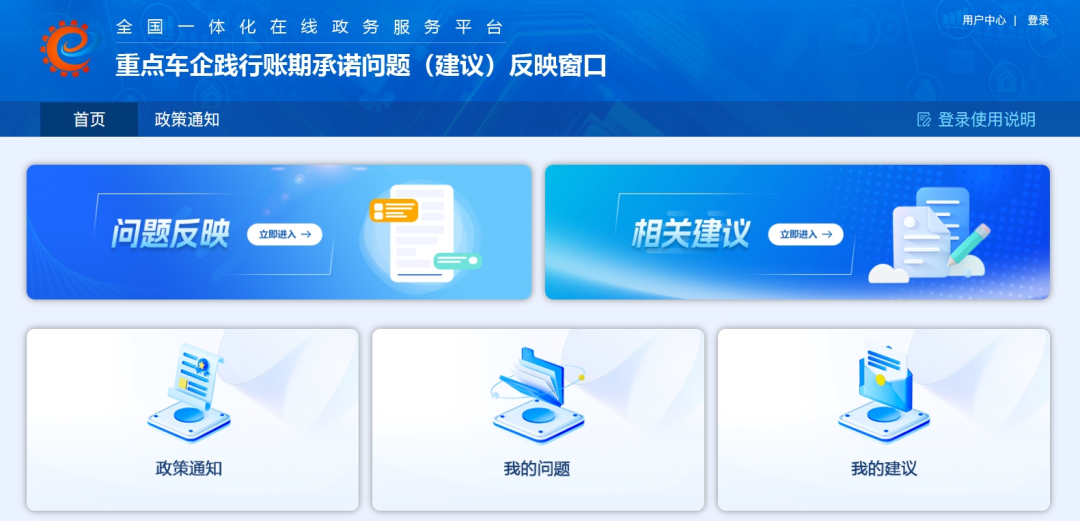
Core Viewpoint - The Ministry of Industry and Information Technology has launched an online feedback window to address issues related to payment cycles for small and medium-sized enterprises (SMEs) by key automotive companies, aiming to ensure compliance with the 60-day payment commitment and the implementation of the "Regulations on Ensuring Payment to SMEs" [1][3]. Group 1: Issues Addressed - The feedback window will handle four main types of issues: 1. Key automotive companies failing to adhere to the 60-day payment commitment, with payment terms exceeding this period in procurement contracts [1]. 2. Unreasonable payment term start dates set by key automotive companies, delays in providing inspection or acceptance certificates, and conditions tied to third-party payments [1]. 3. Coercion or indirect coercion of SMEs to accept non-cash payment methods such as commercial bills or electronic receivables [1]. 4. Other issues related to the inadequate implementation of the "Regulations on Ensuring Payment to SMEs" by key automotive companies [1]. Group 2: Industry Response and Future Actions - Seventeen key automotive companies, including FAW, Dongfeng, and GAC, have publicly committed to ensuring that supplier payment periods do not exceed 60 days, receiving positive social feedback [3]. - The Ministry aims to improve management processes and payment methods among key automotive companies through this initiative, enhancing the confidence and vitality of SMEs in the automotive industry [3][4]. - Future actions include guiding industry organizations to develop payment settlement norms for the automotive sector and promoting standardized contract templates to streamline payment processes [3][4]. Group 3: Importance of Supply Chain - The supply chain is described as the "lifeblood" of the automotive industry, crucial for industrial transformation and upgrading [4]. - Increasing competition in the new energy vehicle market has led to longer payment cycles and financial difficulties for suppliers, which could hinder technological innovation and sustainable development [4]. - The Ministry supports automotive companies in fulfilling their commitments and encourages the establishment of stable long-term relationships between large and small enterprises to enhance supply chain resilience and security [4].
车企承诺“支付账期不超过60天”,工信部发声!
券商中国· 2025-06-12 04:19
Core Viewpoint - The commitment of major automotive companies to limit payment terms to suppliers to no more than 60 days is crucial for building a collaborative and win-win ecosystem between vehicle manufacturers and parts suppliers, promoting sustainable industry development [1][2]. Group 1: Industry Commitment - Seventeen key automotive companies, including FAW, Dongfeng, GAC, and Seres, have pledged to adhere to the "payment terms not exceeding 60 days" commitment [1]. - This commitment is seen as significant for enhancing the resilience and safety of the automotive supply chain, especially in the context of increasing competition in the new energy vehicle market [1]. Group 2: Industry Development Environment - The Ministry of Industry and Information Technology emphasizes the importance of a stable and long-term cooperative relationship between vehicle manufacturers and supply chain companies [1]. - There is a call for the industry to strengthen self-discipline and for society to support the high-quality development of the new energy vehicle sector, while resisting negative online phenomena [2].
车企承诺“支付账期不超过60天”,工信部发声!
新华网财经· 2025-06-12 02:15
Core Viewpoint - The commitment of 17 key automotive companies to limit payment terms to suppliers to no more than 60 days is significant for building a collaborative and win-win ecosystem between vehicle manufacturers and parts suppliers, promoting sustainable development in the industry [1]. Group 1: Industry Commitment - The automotive industry is facing increased competition, particularly in the electric vehicle sector, leading to longer payment terms and financial difficulties for suppliers, which hinders technological innovation and sustainable development [1]. - The Ministry of Industry and Information Technology supports automotive companies in fulfilling their commitment and encourages the establishment of long-term stable partnerships with supply chain enterprises [1]. Group 2: Industry Environment - The current period is critical for the high-quality development of China's new energy vehicle industry, and companies are urged to lead by example and strengthen industry self-discipline [2]. - There is a call for society to support the high-quality development of the new energy vehicle industry and to resist negative online phenomena such as "internet water armies" and "black public relations" [2].
中经评论:以融促创,“链”就竞争力
Zhong Guo Jing Ji Wang· 2025-06-01 03:52
Group 1 - The core idea emphasizes the importance of strengthening supply-demand connections during challenging development periods, which is crucial for both enterprise operations and the stability of the industrial chain [1] - The "Hundred Events and Ten Thousand Enterprises" initiative aims to address information asymmetry by establishing comprehensive channels to gather resources and enhance the resilience and security of supply chains [1][2] - The collaboration between large enterprises and small and medium-sized enterprises (SMEs) is highlighted as a win-win situation, where large firms provide resources and innovation foundations, while SMEs offer market proximity and agility [1][2] Group 2 - The "Hundred Events and Ten Thousand Enterprises" activity has seen significant participation, with nearly 100,000 enterprises involved since 2022, resulting in 600.7 billion yuan in orders and 459.9 billion yuan in financing by 2024 [2] - By the end of 2024, China has cultivated 14,600 national-level specialized and innovative "little giant" enterprises, indicating a growing trend of SMEs integrating into supply chain innovation [2] - The initiative requires long-term commitment, with local departments expected to identify large enterprise needs and mobilize SMEs to enhance the precision and success rate of connections [2][3] Group 3 - The establishment of a mechanism for innovation demand and supply between large and small enterprises is crucial, allowing for market-driven innovation and verification of results [3] - Continuous efforts in the supply chain are necessary to ensure that innovation outcomes meet effective market demands, contributing to high-quality development [3]
粤电力A: 广东电力发展股份有限公司关于向广东省电力工业燃料有限公司增资的关联交易公告
Zheng Quan Zhi Xing· 2025-05-28 12:19
Group 1 - The company approved a capital increase of 600 million yuan to Guangdong Power Industry Fuel Co., Ltd. to enhance supply chain resilience and safety [1][5] - The company will contribute 300 million yuan, maintaining a 50% equity stake in the fuel company [1][4] - The capital increase aims to establish Guangdong Energy Bohe Fuel Supply Chain Co., Ltd., which will manage the Bohe terminal assets and related operations [4][5] Group 2 - Guangdong Energy Group, a state-owned enterprise, has a registered capital of 23.3 billion yuan and reported a net profit of 475.915 million yuan as of March 31, 2025 [2][3] - Guangdong Power Industry Fuel Co., Ltd. has a registered capital of approximately 204 million yuan and reported a net profit of 1.732 million yuan for the year 2024 [3][4] - The fuel company plays a crucial role in coal procurement and supply for the company's thermal power plants, establishing strategic partnerships with major coal enterprises [5][6] Group 3 - The capital increase is expected to strengthen the fuel company's coal supply and storage capabilities, facilitating the market-oriented transformation of the Bohe terminal [5][6] - The transaction is deemed fair and reasonable, with no harm to the interests of the company and its shareholders [6]
