以经济建设为中心

Search documents
五个维度,读懂二十届四中全会精神
Zhong Guo Xin Wen Wang· 2025-11-20 08:51
Group 1: Chinese-style Modernization - The central task of the Communist Party of China is to comprehensively promote the great rejuvenation of the Chinese nation through Chinese-style modernization [2] - The "15th Five-Year Plan" period is identified as a critical phase for achieving decisive progress in socialist modernization by 2035 [3] Group 2: Common Prosperity - Achieving common prosperity for all people is a fundamental goal and value pursuit of the Communist Party, emphasizing that development should benefit everyone [5][6] - The "15th Five-Year Plan" emphasizes the importance of inclusive and basic social welfare, high-quality employment, and improving the income distribution system [7] Group 3: Economic Development - The focus on economic development is reiterated as the core of the Party's basic line, essential for national strength and stability [8][9] - The "15th Five-Year Plan" aims to enhance high-quality development, emphasizing the need for a modern industrial system and the integration of technology and industry [10] Group 4: Technological Innovation - Technological innovation is highlighted as a key variable in the global landscape, with a focus on achieving high-level self-reliance in technology [11] - The "15th Five-Year Plan" outlines goals for improving the national innovation system and emphasizes the integration of technology and industry [12][13] Group 5: Cultural Strength - Cultural confidence is identified as essential for national rejuvenation, with a focus on promoting cultural prosperity as a key marker of Chinese-style modernization [14] - The "15th Five-Year Plan" includes initiatives for preserving cultural heritage, enhancing public cultural services, and improving international cultural communication [15]
“十五五”时期,“以经济建设为中心”如何发力
Zhong Guo Qing Nian Bao· 2025-11-18 07:03
Core Viewpoint - The "15th Five-Year Plan" emphasizes high-quality development as the main theme for China's economic and social development, continuing from the "14th Five-Year Plan" [1] Economic Growth and Goals - In 2024, China's per capita GDP is projected to reach $13,445, remaining below the $20,000 threshold for developed countries, indicating a need for sustained economic growth [2] - To achieve the 2035 goal of reaching the per capita GDP of developed countries, an average annual GDP growth rate of around 4.5% is necessary during the "15th" and "16th Five-Year Plans" [2] - The transition from high-speed growth to high-quality development requires a focus on quality and efficiency rather than mere quantity [3] Strategic Tasks and Industrial Development - The first of the 12 strategic tasks for the next five years is to build a modern industrial system, which is deemed essential for consolidating and strengthening the foundation of the real economy [4] - The modern industrial system should focus on intelligent, green, and integrated development, aiming to establish a manufacturing powerhouse and maintain a reasonable proportion of manufacturing [4] - The concept of total factor productivity is highlighted as crucial for economic growth, with the "15th Five-Year Plan" aiming for steady improvement in this area [4]
把经济建设这个中心抓得更牢
Sou Hu Cai Jing· 2025-11-03 21:52
Core Insights - The latest data from the National Bureau of Statistics indicates that China's automotive manufacturing, railway, shipping, aerospace, and other transportation equipment manufacturing industries have maintained double-digit growth year-on-year in the first three quarters [1] - High-tech manufacturing sectors, such as intelligent drone manufacturing and intelligent vehicle-mounted equipment manufacturing, have seen significant increases in value added, with growth rates of 59.9% and 25.1% respectively [1] - The 20th Central Committee of the Communist Party emphasizes the importance of economic construction, high-quality development, reform and innovation, and the need to meet the growing demands of the people [1] Investment and Economic Strategy - The focus on enhancing quality while expanding total volume is crucial, with a need to balance reasonable growth rates with structural optimization [2] - Key performance indicators will include total factor productivity, innovation capability, industrial resilience, resource allocation efficiency, and public service quality [2] - The approach aims to stabilize short-term growth while laying a foundation for long-term high-quality development [2] Industrial Development - Strengthening and optimizing the real economy is essential for implementing the focus on economic construction at the industrial and supply side [3] - The development of the domestically produced C919 aircraft exemplifies the need for a coordinated system involving research, manufacturing, certification, market expansion, and talent cultivation [3] - There is a call to address weaknesses in the industrial supply chain, particularly in core components, basic processes, and key materials [3] Market Integration - Promoting a unified national market is vital for enhancing domestic circulation and strengthening the domestic market [4] - Efforts will be made to streamline regulations and eliminate unreasonable regional barriers to improve the business environment [4] - The focus will also be on optimizing consumer environments and directing investments towards key areas that address shortcomings and enhance capabilities [4] Innovation and Productivity - Cultivating new productive forces is essential for aligning economic construction with innovation across various chains, including industry, finance, and talent [5] - Emphasis will be placed on demand-driven research organization and improving the efficiency of transitioning from pilot projects to large-scale applications [5] - Continuous reforms in key areas such as property rights protection, market-oriented resource allocation, and financial systems are necessary to remove obstacles to high-quality development [5]
新的五年规划,释放了哪些信号?
Sou Hu Cai Jing· 2025-10-29 01:46
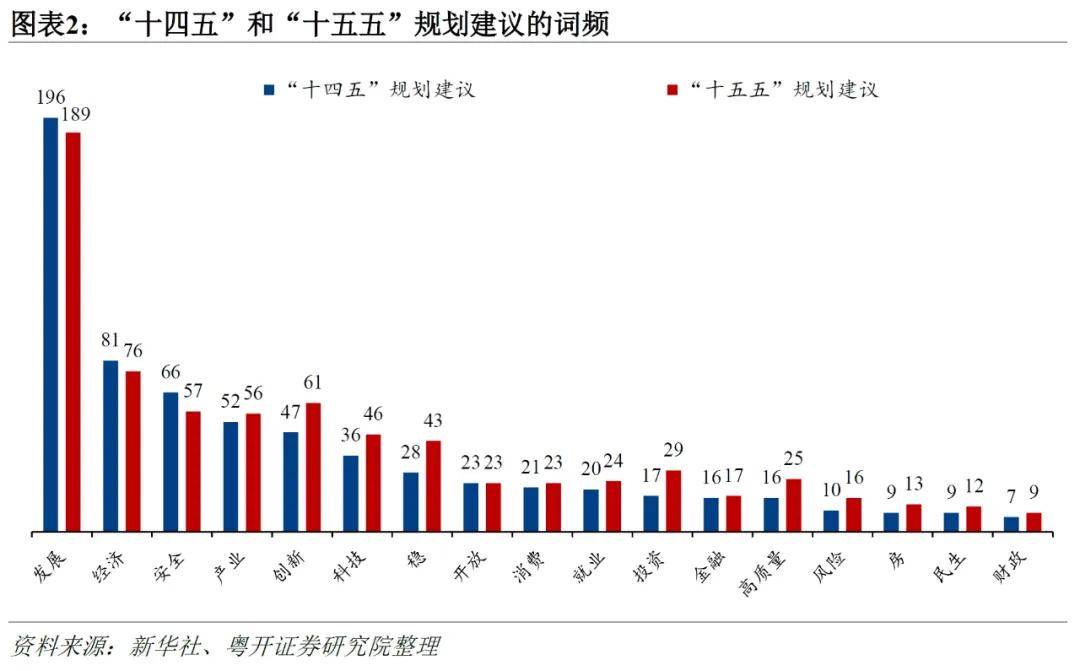
Core Viewpoint - The "14th Five-Year Plan" emphasizes economic construction, technological self-reliance, and high-quality development in real estate, indicating a shift in focus towards sustainable growth and innovation-driven development [1][3][20]. Economic Growth and Structure - The plan aims for a per capita GDP of approximately $25,000 by 2035, with current figures at $13,500, projected to exceed $14,000 this year [4][5]. - To achieve this goal, an average GDP growth rate of over 4.4% is necessary over the next decade [6]. - The focus is shifting from investment-driven growth to consumption and innovation-driven growth, marking a significant structural change in the economy [11]. Regional Development - The plan highlights the need for optimized regional economic layouts and coordinated development, with major urban clusters like Beijing-Tianjin-Hebei, Yangtze River Delta, and Guangdong-Hong Kong-Macau Greater Bay Area identified as key growth areas [12][13]. - The strategy aims to address regional disparities, particularly the widening gap between northern and southern regions [13]. High-Tech Industry Development - A goal to establish a new high-tech industry over the next decade is set, with a focus on strategic emerging industries such as new energy, new materials, and aerospace [14]. - The high-tech sector is expected to reshape industrial structures and urban competitiveness, with significant market potential in areas like electric vehicles and low-altitude economy [15][16]. Real Estate Sector - The real estate sector is now positioned as a foundation for public welfare rather than a pillar of economic growth, indicating a transition from rapid expansion to quality development [20]. - Sales in the real estate market have declined significantly, with new and second-hand housing sales dropping from 1.93 billion square meters to 1.5 billion square meters since 2021 [22]. - The focus is shifting towards urban renewal rather than new construction, impacting land finance and necessitating new revenue sources for local governments [24]. Investment in Human Capital - The plan proposes measures to create a family-friendly society, including financial support for child-rearing and education, which may stimulate population growth [26][27]. - The expansion of free education is also highlighted, with a potential move towards 12 years of free education [27]. - Wage increases are anticipated, with recent adjustments to minimum wage standards across various provinces signaling a commitment to improving income distribution [29][31].

专访|郑永年看“十五五”:经济发展,才能真正解决问题
Nan Fang Du Shi Bao· 2025-10-27 13:06
Core Insights - The 20th Central Committee's Fourth Plenary Session emphasized the importance of the "15th Five-Year Plan" as a critical period for achieving socialist modernization, highlighting the need for development amidst changing domestic and international conditions [2][4]. Economic Development Focus - The "15th Five-Year Plan" reiterates the centrality of economic construction, reflecting the necessity to adapt to both international economic nationalism and domestic modernization goals [5][6]. - The current economic strategy should shift investment focus from material construction to human capital, aligning with the need for high-quality development [5][6]. GDP Growth and New Industries - Future GDP growth is projected to maintain around 5%, with a strong emphasis on nurturing new industries to drive economic activity [9][10]. - The need for regulatory reform is highlighted to facilitate the emergence of new sectors, particularly in services and technology, which are currently underdeveloped [9][10]. Regional Coordination and Development - The Guangdong-Hong Kong-Macao Greater Bay Area is identified as a key economic growth region, with recommendations for improved coordination among cities to enhance competitiveness and innovation [11][12]. - The potential for the Greater Bay Area to develop into a highly integrated market is emphasized, drawing parallels with the European common market model [13].

“十五五”将至,中国经济又有怎样的新机遇?专家解读→
Yang Shi Wang· 2025-10-25 03:16
Group 1 - The core message of the 20th Central Committee's Fourth Plenary Session emphasizes the importance of prioritizing economic development, which is seen as a fundamental national policy since the reform and opening up, crucial for China's significant achievements over the past 40 years [1][4] - China's per capita GDP has increased over 70 times since the beginning of the reform and opening up, but it still only matches the global average, indicating challenges ahead to reach the level of developed countries by 2035 [4] - The U.S. attempts to suppress China's economic development through trade wars and other means, highlighting the importance of the central government's reaffirmation of economic construction as a guiding principle [4] Group 2 - The 20th Central Committee's Plenary Session calls for seizing the high ground in technological development, recognizing the intensifying competition in technology, especially under geopolitical tensions [5][7] - In the next five years, breakthroughs in core frontier areas of technology are expected, with artificial intelligence being a major focus, where China has made significant advancements and may have surpassed the U.S. in certain applications [7][9] - China is also leading in quantum computing and has made substantial progress in energy technologies, including nuclear fusion and advanced nuclear power, indicating a potential for explosive growth in these sectors during the 14th Five-Year Plan [11] Group 3 - China's approach to foreign trade and investment is evolving into a new phase, characterized by a "China + N" model, where global enterprises will produce in China while diversifying their production locations [13][15] - The new openness strategy includes welcoming high-quality foreign enterprises and supporting Chinese companies in expanding globally, aiming to create a synergistic industrial chain [17] - The focus remains on economic construction, technological advancement, new industrial chains, domestic markets, consumption, and improving people's livelihoods as key battlegrounds during the 14th Five-Year Plan [17]

扭住经济建设这个中心 ——武汉党员干部群众学习领会党的二十届四中全会精神之一
Chang Jiang Ri Bao· 2025-10-25 00:50
Group 1 - The 20th Central Committee of the Communist Party of China emphasizes "economic construction as the center" as a guiding principle for the 14th Five-Year Plan period, aiming to solidify the foundation for socialist modernization and promote high-quality development [1][2][3] - The transformation of China's social contradictions necessitates a focus on economic construction to meet the growing needs of the people and to foster new productive forces [2][5] - The importance of establishing a modern industrial system and strengthening the real economy is highlighted, with a focus on intelligent, green, and integrated development [2][5] Group 2 - The 14th Five-Year Plan period is seen as a critical phase for the transition from old to new growth drivers, with economic development being the key to solving various issues [5][6] - Technological innovation is identified as the core engine for high-quality development, with an emphasis on integrating new development patterns for enterprise growth [6][7] - The need for a robust technology finance service system to enhance the efficiency of technology resource allocation is stressed, aiming to support the entire cycle of technological innovation [7][8] Group 3 - The goal of achieving a per capita GDP at the level of moderately developed countries by 2035 is set, with a focus on enhancing economic, technological, and comprehensive national strength [8][9] - Companies in Wuhan are actively engaging in sectors like the Beidou industry, aiming for significant advancements and market expansion, particularly in the context of the Belt and Road Initiative [9][10] - Collaborative efforts between academia and industry are essential for achieving key material localization goals, with ongoing projects demonstrating successful partnerships [10]
新闻1+1丨“十五五”,有哪些关键部署?
Yang Shi Wang· 2025-10-24 22:41
Core Points - The 20th Central Committee's Fourth Plenary Session emphasizes the importance of economic construction as a central focus for China's development during the 14th Five-Year Plan period [2] - The session highlights the need for China to accelerate high-level technological self-reliance and innovation, particularly in key frontier areas such as artificial intelligence, quantum computing, and life sciences [3][5] - The integration of domestic demand expansion and investment in human capital is identified as crucial for enhancing consumer capacity and fostering a skilled workforce [7] - The establishment of a unified national market is deemed a significant task for the 14th Five-Year Plan, aimed at improving resource allocation efficiency and boosting domestic demand [9] - The new phase of high-level opening up is characterized by a shift towards a "China + N" model, where global enterprises engage in production and research in China while diversifying their operations internationally [10] Economic Construction - The focus on economic construction is rooted in the historical context of China's reform and opening up, which has led to significant GDP growth [2] - The need for continued economic growth is underscored by the public's desire for improved living standards and the challenges posed by international pressures, particularly from the U.S. [2] Technological Development - The session calls for breakthroughs in several core technological fields, with artificial intelligence being a primary focus, where China has made rapid advancements [3][5] - Other areas of emphasis include quantum computing, life sciences, and energy technologies, with expectations for explosive growth in these sectors during the 14th Five-Year Plan [5][6] Human Capital Investment - Investment in human capital is highlighted as essential for expanding domestic demand, with policies aimed at increasing income share and enhancing public welfare [7] - The importance of cultivating a well-educated workforce is reiterated, as it has been a key driver of China's rapid economic development [7] Unified National Market - The creation of a unified national market is seen as vital for effective resource allocation and resilience against external uncertainties [9] - Key components of this initiative include standardizing rules, systems, and government actions to enhance market efficiency [9] High-Level Opening Up - The new opening-up strategy emphasizes welcoming high-quality foreign enterprises while supporting Chinese companies in global expansion [10] - This approach aims to create synergies between domestic and foreign enterprises, enhancing China's position in global supply chains [10]
民生证券首席经济学家陶川:四中全会背后的5个新亮点
Zheng Quan Ri Bao Wang· 2025-10-24 13:36
Core Points - The Fourth Plenary Session of the 20th Central Committee of the Communist Party of China will be held from October 20 to 23, 2025, in Beijing, focusing on the formulation of the 15th Five-Year Plan for national economic and social development [1] - The meeting is significant as it sets the stage for a new five-year journey amid increasing uncertainties and aims to achieve the goal of basically realizing socialist modernization by 2035 [1] Group 1 - The economic growth targets in the 15th Five-Year Plan are expected to be more clearly defined compared to the 14th Five-Year Plan, with a focus on anchoring the current potential growth rate and setting specific economic growth expectations for the next five years [1] - The emphasis on "daring to struggle and being good at fighting" highlights the need to create favorable conditions for economic development in a complex and uncertain environment, addressing both external competition and internal reform obstacles [2] - The 15th Five-Year Plan places new productive forces at a more central strategic position, aiming to strengthen China's leadership in global high-tech fields and focusing on future industrial development, including the goal of becoming a "space power" [2] Group 2 - The plan aims to boost consumption by exploring new supply and demand strategies, with a focus on improving the consumption environment and innovating consumption scenarios in areas such as domestic products, sports events, cultural tourism, and the silver economy [2] - Ensuring the successful completion of the growth targets set in the 14th Five-Year Plan is a current priority, with a gradual easing of policies expected in the fourth quarter to achieve the annual economic growth target of around 5%, requiring a GDP growth of approximately 4.5% in the fourth quarter [3] - The focus will be on implementing existing measures, with additional tools likely reserved for deployment next year, reflecting a pragmatic approach to transition from past to future planning [3]
【招银研究|政策】高质量发展的新内涵——党的二十届四中全会经济思想学习体会
招商银行研究· 2025-10-24 12:47
Core Viewpoint - The article discusses the outcomes of the Fourth Plenary Session of the 20th Central Committee of the Communist Party of China, emphasizing the strategic opportunities and challenges facing the country in the upcoming "15th Five-Year Plan" period [1][2]. Group 1: Situation Assessment - The meeting praised the significant achievements during the "14th Five-Year Plan" period, highlighting advancements in economic, technological, and comprehensive national strength [2]. - It identified the next five years as a critical period for achieving socialist modernization, while acknowledging the complex and changing development environment [2]. - The meeting reiterated the importance of maintaining a focus on economic construction and emphasized the need for strategic determination and proactive historical engagement [2]. Group 2: Development Goals - Seven main goals for the "15th Five-Year Plan" period were proposed, including significant improvements in high-quality development, technological self-reliance, and national security [3]. - The long-term vision for 2035 includes substantial increases in economic, technological, and national defense strength, with a target for per capita GDP to reach the level of moderately developed countries [3]. - The meeting highlighted the importance of national defense and international influence as new goals, reflecting a focus on security amid global changes [3]. Group 3: Key Work Areas - Twelve key work areas were outlined, with the construction of a modern industrial system prioritized, emphasizing the need for a robust real economy [5]. - Accelerating technological self-reliance and innovation was highlighted as essential for leading new productive forces, with a focus on education, talent, and core technology breakthroughs [6]. - The meeting stressed the importance of expanding domestic demand and establishing a new development pattern, with a focus on enhancing the internal circulation of supply and demand [7]. - High-level openness and cooperation were emphasized, aiming to create a win-win situation in response to global challenges [8]. - The meeting called for optimizing regional economic layouts and promoting coordinated regional development, identifying key growth areas [9]. - Enhancing and improving people's livelihoods was underscored, with a focus on common prosperity and addressing urgent social issues [10]. - The meeting outlined the need for sustained economic policy efforts to achieve annual development goals, with a GDP growth rate of 5.2% in the first three quarters of the year [11].