
全产业链协同创新

Search documents
京津冀自贸试验区搭台助企业融入“大市场”
Xin Lang Cai Jing· 2026-02-27 17:29
本报讯(记者 李佳)北京青年报记者昨日从北京市商务局获悉,为深入落实京津冀协同发展战略、自 由贸易试验区提升战略,京津冀三地自贸试验区聚焦生物医药、数字经济、现代物流等重点领域,系统 梳理了41家重点企业在产供链体系建设和区域协作中的供给能力和合作需求,形成第一批京津冀自贸试 验区全产业链协同发展机会清单,为企业搭建精准对接平台,助力企业深度融入全国统一大市场、打通 内外贸一体化路径、拓展全球合作网络。 生物医药产业链方面,清单整合医药研发、生产、流通、临床应用等多个环节企业信息,对外释放 AI+药物研发、基因编辑与细胞治疗、临床试验与转化服务、进出口与通关服务等方面的合作商机。 北京市商务局表示,下一步,京津冀三地自贸试验区将围绕全产业链协同创新,结合企业实际需求持续 搭建对接交流平台,让"供给"与"需求"实现双向奔赴,把北京科技创新优势、天津先进制造研发优势、 河北环京地缘优势结合起来,推动技术联合攻关、科技资源开放共享、应用场景联建联用,合力打造区 域协同开放典范、全产业链创新高地,不断提升京津冀自贸试验区全产业链创新发展水平。 例如,昌平一家生物医药企业寻求在基因编辑技术落地转化方面寻求合作伙伴,合作 ...
耐洗丝绸助国潮服饰热销(年味里的新质生产力)
Sou Hu Cai Jing· 2026-02-24 23:30
Group 1 - The new Chinese-style clothing market, represented by the "Guochao" fashion, is expected to exceed 220 billion yuan in 2024 and surpass 250 billion yuan in 2025 [2] - The integration of technology in new Chinese-style clothing has significantly boosted sales, with some stores reporting up to three times the usual daily custom orders [2] - Young consumers are increasingly favoring convenient-to-care-for fabrics, leading to a shift in material preferences towards more practical options [3] Group 2 - The introduction of machine-washable silk and innovative fabrics like "butterfly satin" has led to a nearly 20% increase in sales for companies adopting these technologies [4] - The silk industry is focusing on overcoming common issues such as washability and durability, with advancements in fabric technology being crucial for maintaining silk's natural qualities [5] - The trend towards functional and practical fabrics is reshaping the market, with innovations allowing for new applications of traditional materials like cashmere and wool [6] Group 3 - The silk industry is characterized by a predominance of small to medium enterprises, which often struggle with research and development investments, impacting their ability to innovate [6][7] - The future of silk products is expected to transition from traditional luxury items to high-performance textiles that are easy to care for and culturally significant [6] - Innovation in silk fabrics is seen as essential for breaking the homogenization of products and enhancing profit margins for companies [7]


我国造船业三大指标领跑全球 连续16年世界第一
Guo Ji Jin Rong Bao· 2026-02-24 02:38
Core Insights - In 2025, China's shipbuilding industry continues to lead globally, achieving significant milestones in three key metrics for 16 consecutive years [8][19] - The industry has seen a substantial increase in shipbuilding completion volume, new orders, and backlog, with completion volume at 53.69 million deadweight tons, accounting for 56.1% of the global total [8] - Nearly 90% of ships built in China are exported, indicating a strong international demand for Chinese shipbuilding capabilities [8][9] Shipbuilding Performance - China's shipbuilding completion volume reached 53.69 million deadweight tons, representing 56.1% of the global total [8] - New orders amounted to 107.82 million deadweight tons, making up 69.0% of the global total [8] - The backlog of orders stood at 274.42 million deadweight tons, which is 66.8% of the global total, marking a new high [8] International Demand - International shipowners are increasingly turning to Chinese shipyards for orders, with 89.6% of completed ships, 89.5% of new orders, and 93.2% of the backlog being for exports [9] - Major international companies, including those from Greece and Singapore, have placed significant orders with Chinese shipyards [8][9] Competitive Advantages - China's shipbuilding industry is recognized for its speed and cost-effectiveness, with the ability to deliver ships faster than competitors [9][10] - The comprehensive industrial chain in China provides a competitive edge, allowing for lower overall construction costs and reliable delivery capabilities [10][11] - The integration of AI in shipbuilding processes has improved efficiency, with production capacity increasing by 25% [12] Green Transition - The industry is making strides in green technology, with the delivery of advanced LNG-powered vessels and other eco-friendly ships [13] - Chinese shipyards are adapting to varying international market demands, focusing on sustainability and compliance in different regions [13] Industry Ecosystem - A robust ecosystem of over 7,000 supporting enterprises has been established, enhancing collaboration and reducing costs in the supply chain [14] - The ability to provide quick service and support is a significant advantage for Chinese shipbuilders compared to foreign competitors [14] Future Outlook - The shipbuilding industry is positioned to continue its growth, with a focus on maintaining competitive pricing while enhancing quality [15][18] - The challenge lies in advancing to higher value segments of the global supply chain while ensuring attractive cost-performance ratios [18]


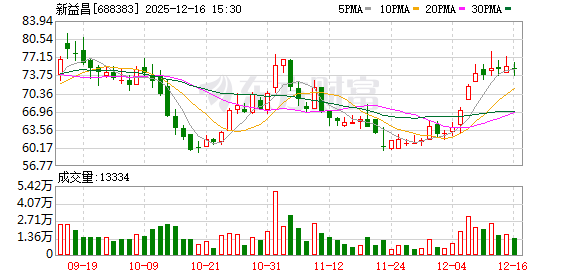
新益昌:携手辰显光电深耕玻璃基,产业链协同破解量产痛点
Zheng Quan Shi Bao Wang· 2025-12-17 01:12
Core Viewpoint - The strategic cooperation between Xinyi Chang and Chenxian Optoelectronics marks a significant step in the high-end semiconductor equipment sector, focusing on the mass transfer of glass-based Micro-LED chips and addressing challenges in industrialization and cost optimization [2][3]. Group 1: Strategic Cooperation - Xinyi Chang and Chenxian Optoelectronics have signed a strategic cooperation framework agreement to collaborate on glass-based Micro-LED technology [2]. - The partnership aims to tackle the core process of mass transfer for glass-based Micro-LED chips and explore applications in commercial displays, smart meetings, and automotive displays [2][3]. - This collaboration is seen as a key move for Xinyi Chang in its strategic layout within the new display sector, targeting a market worth hundreds of billions [2]. Group 2: Industry Trends - The glass-based Micro-LED industry is rapidly emerging, driven by the increasing demand for AI chip computing power and the need for advanced packaging materials [2][3]. - Major global tech companies like AMD, Apple, and NVIDIA are investing in this sector, enhancing the industrialization of semiconductor advanced packaging and high-end optical communication [2]. - The technology has transitioned from laboratory verification to accelerated engineering and industrialization, particularly in high-pixel density and high-brightness displays [3]. Group 3: Technological Advancements - Glass-based Micro-LED technology offers significant advantages such as high reliability, structural simplicity, ultra-high pixel density, and micro-level stitching precision [3]. - The collaboration between Xinyi Chang and Chenxian Optoelectronics is expected to create a synergy that combines technical expertise and industrial resources, facilitating breakthroughs in core processes [3]. Group 4: Future Outlook - The partnership is anticipated to accelerate the localization of core equipment and the iteration speed of processes in the high-end display sector [4]. - As the cooperation deepens, it is expected to help establish a self-controlled industrial ecosystem in China and promote the global market penetration of glass-based Micro-LED technology [4].

长三角高端装备产业标杆效应显现
Guo Ji Jin Rong Bao· 2025-11-25 00:52
Core Viewpoint - The high-end equipment manufacturing industry in China is experiencing significant growth driven by innovation, with a focus on advanced productivity and international competitiveness [1][2] Group 1: Industry Development - The high-end equipment manufacturing sector is witnessing a continuous increase in market size, improved industrial structure, and enhanced international competitiveness [1] - China has maintained its position as the world's largest industrial robot market for 12 consecutive years, with notable growth in collaborative and service robots [1] - The energy equipment sector is expanding but facing intense competition, prompting a shift towards demand-driven, quality-focused, and optimized structures [1] - The low-altitude economy is identified as a strategic emerging industry, with future commercialization focusing on urban air traffic, agricultural applications, and low-altitude tourism [1] - Intelligent transportation equipment is evolving around 5G, V2X, algorithms, big data, and autonomous driving technologies [1] Group 2: Regional Insights - The Yangtze River Delta has established 26 national-level advanced manufacturing clusters, accounting for 32.5% of the national total, showcasing significant industrial agglomeration and synergy [2] - Shanghai leads in the number of high-end equipment companies, supported by its strategic alignment with national policies and a mature industrial ecosystem [2] - Jiangsu, Zhejiang, and Anhui provinces collectively account for nearly 60% of the high-end equipment sector, demonstrating effective regional collaboration [2] Group 3: Capital Investment - Investment activities in the high-end equipment sector are rebounding, particularly in robotics and intelligent transportation, with a trend towards early-stage financing [3] - From 2020 to mid-2025, the Yangtze River Delta accounted for nearly half of the national financing events and amounts in the high-end equipment sector, indicating strong market confidence [3] - Shanghai's financing activities are particularly noteworthy, with 682 financing events totaling 119.2 billion yuan from 2020 to mid-2025 [3] - Shanghai benefits from over 500 effective industrial policies, the formation of four trillion-level core industrial clusters, and a high level of internationalization [3] Group 4: Future Opportunities and Challenges - Companies need to overcome critical technology bottlenecks and accelerate independent research and development while respecting industrial development laws [4] - Digital empowerment is essential for companies to transition towards intelligent and green development, with industrial internet playing a key role in transforming manufacturing and service systems [4] - Increased capital investment is necessary to enhance competitive advantages, encouraging companies to engage with multi-tiered capital markets [4] - The focus should shift from "single-point breakthroughs" to "full industrial chain collaborative innovation" to improve cooperation efficiency [4] - Companies should expedite their global expansion to enhance supply chain resilience and security [4]
恒力集团:民营企业的速度与担当
Jing Ji Wang· 2025-11-24 09:12
Core Insights - Hengli Group has demonstrated remarkable strategic ambition and execution capabilities during the 14th Five-Year Plan period, evolving from a textile and chemical fiber company to a high-end equipment manufacturer [1][3] - The company aligns its development with national strategies, focusing on areas where the industry is lacking and expanding into global weak points [1] Group 1: Company Development - Hengli Group has established nine production bases and diversified its operations across textiles, chemical fibers, new materials, and petrochemicals [1] - The company has achieved significant milestones, including a projected sales revenue of 871.5 billion yuan in 2024 and ranking 81st in the Fortune Global 500, making it the 3rd largest private enterprise in China [3] Group 2: Innovation and Technology - Hengli has pioneered molecular refining technology and applied full hydrogenation processes in its refining projects, increasing crude oil utilization by 5% [4] - The company has built three industrial silk workshops with a total capacity of 800,000 tons, producing high-strength polyester industrial silk that can replace steel in various applications [5] - Hengli's subsidiary, Kanghui New Materials, has developed a 3.9-micron ultra-thin carbon-based film, becoming the first in China to produce such a product using melt direct drawing technology [6] Group 3: Expansion into New Industries - In 2022, Hengli entered the shipbuilding industry by acquiring assets from the former STX (Dalian), with its first phase of the "Marine Factory" achieving full operation in 150 days [7] - The company has initiated the construction of the Marine Technology Industrial Park, focusing on high-end marine equipment and related manufacturing [9] - Hengli aims to create a modern, intelligent, and green shipbuilding and marine equipment manufacturing base, contributing to China's transition from a shipbuilding power to a strong shipbuilding nation [10]

京津冀自贸试验区开启三大重点领域全产业链协同创新
Xin Hua Wang· 2025-11-21 04:07
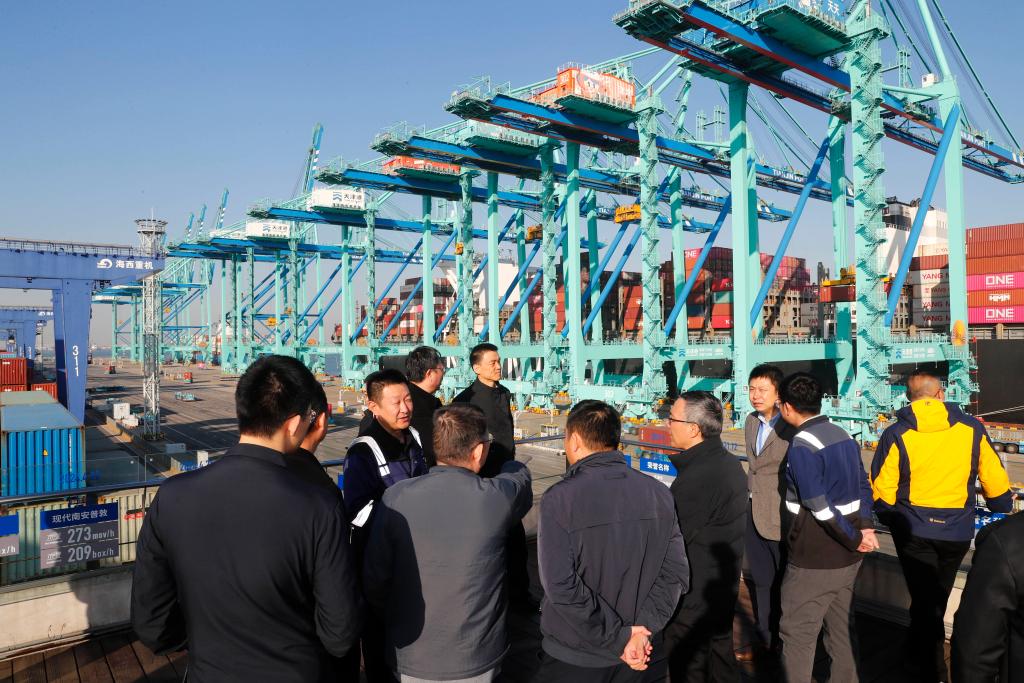
Core Points - The article discusses the signing of the "Action Plan for Collaborative Innovation of the Full Industrial Chain in the Beijing-Tianjin-Hebei Free Trade Zone," which aims to enhance collaboration in three key sectors: advanced manufacturing, digital economy, and modern logistics [2][6] - The initiative is a response to national strategic directives aimed at promoting integrated innovation across the industrial chain, with a goal to create a world-class industrial cluster [6][7] Group 1: Collaborative Innovation - The three regions will focus on collaborative innovation in advanced manufacturing, digital economy, and modern logistics over the next three years [2][6] - The plan aims to leverage the strengths of each region: Beijing's technological innovation, Tianjin's advanced manufacturing capabilities, and Hebei's logistics advantages [6][8] Group 2: Industry-Specific Developments - The biopharmaceutical industry is highlighted as a key area for advanced manufacturing collaboration, with over 1,000 biopharmaceutical companies established in the Zhongguancun Life Science Park [2] - The modern logistics sector will benefit from the implementation of a "single window" for international trade, enhancing efficiency and convenience for cross-border logistics [8] Group 3: Policy and Strategic Framework - The initiative aligns with the Central Government's strategy to enhance the role of free trade zones in China's reform and opening-up process [7] - The collaborative efforts have already resulted in 64 innovative practice cases aimed at improving cross-regional cooperation and sharing the benefits of reform [7]
11月19日重要资讯一览
Zheng Quan Shi Bao Wang· 2025-11-19 14:20
Group 1 - Zhang Guoqing emphasized the need for state-owned enterprises to enhance independent innovation capabilities and integrate technological and industrial innovation to cultivate new productive forces and competitive advantages [2] - The focus is on increasing R&D investment in basic research and accelerating the layout and construction of original technology sources, aiming for breakthroughs in key core technologies and frontier technologies [2] - State-owned enterprises are encouraged to collaborate with universities, research institutions, and private enterprises to address technological challenges and build innovation platforms [2] Group 2 - The signing of the "Beijing-Tianjin-Hebei Free Trade Zone Full Industry Chain Collaborative Innovation Action Plan" marks a significant step in collaborative innovation across three regions, focusing on advanced manufacturing, digital economy, and modern logistics [3] - Tianjin will lead the collaborative innovation in advanced manufacturing, Beijing in digital economy, and Hebei in modern logistics, leveraging their respective functional positions [3] Group 3 - The Ministry of Industry and Information Technology forecasts that China's AI toy market will grow to 29 billion yuan by 2025, up from approximately 24.6 billion yuan in 2024 [5] - The rise in AI toys is attributed to advancements in materials, processes, and technologies, enhancing product quality and variety, with a notable trend towards interactive and intelligent toys [5] Group 4 - The Ministry of Industry and Information Technology plans to develop an implementation plan to promote the adaptation of supply and demand in consumer goods, encouraging toy companies to leverage AI technology to create new demands [6] - The focus will also be on product innovation and ensuring data and network security for AI toys, with the aim of integrating traditional culture into toy design [6] Group 5 - The State Administration for Market Regulation aims to effectively address quality safety hazards in children's and student products by 2027, enhancing safety levels through stringent quality supervision and compliance with national standards [7] - The initiative includes increased oversight of toy production and a focus on online sales channels to ensure compliance with safety standards [7] Group 6 - The Hong Kong Financial Services and the Treasury Bureau and Shenzhen's local financial management authority are exploring mechanisms for cross-border financial data flow, aiming to enhance cooperation in financial technology [8] - This initiative includes the development of a cross-border credit verification platform to assist enterprises in reducing financing costs [8] Group 7 - The Dutch government has suspended an administrative order against Anshi Semiconductor, returning control of the company to its Chinese owners, which may impact the semiconductor market dynamics [10] - Counterpoint Research predicts a 50% increase in memory prices by the second quarter of 2026 due to a shortage of key chips, particularly affecting traditional LPDDR4 [11]
京津冀自贸一体化 “保税+新业态”打造世界级产业集群
Bei Jing Shang Bao· 2025-11-19 14:03
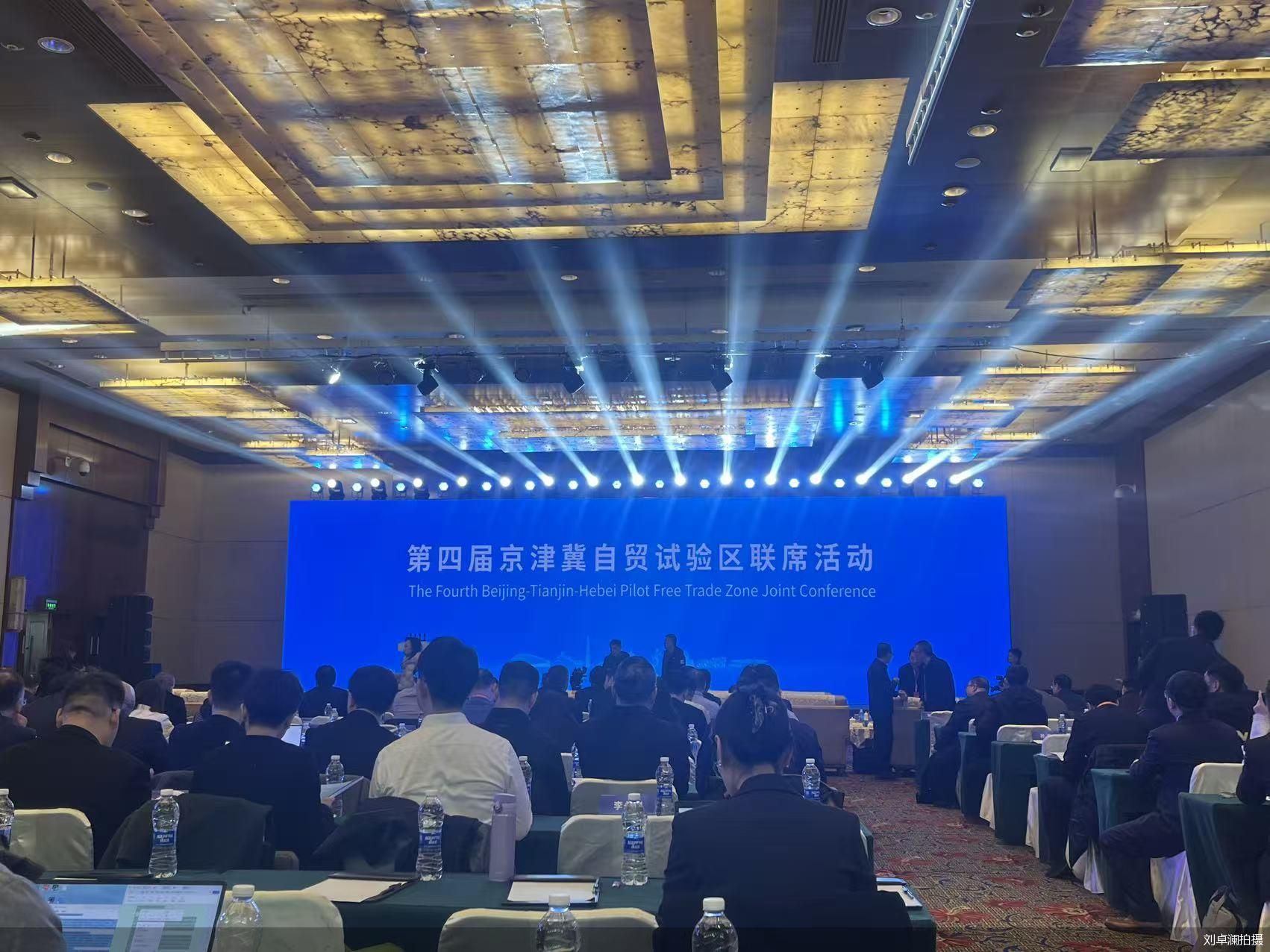
Core Insights - The fourth joint event of the Beijing-Tianjin-Hebei Free Trade Zone was held in Tianjin, focusing on enhancing collaborative development and innovation across the entire industrial chain [1][3] - Beijing serves as the core engine for the collaborative development of the region, achieving breakthroughs in various areas such as government services, open platform construction, and regional industrial cooperation [1][3] Group 1: Achievements and Innovations - Beijing's Free Trade Zone has introduced several institutional innovations, including standardized government services and cross-border tax-free display transactions for cultural and artistic products, which have been replicated nationwide [3][4] - The three regions have collectively published 64 collaborative innovation practice cases and signed multiple strategic cooperation agreements, enhancing their collaborative efforts [4][5] Group 2: Future Directions - The focus will be on deepening institutional collaboration, aligning with international high-standard trade rules, and expanding openness in sectors like telecommunications, healthcare, and digital economy [3][5] - The regions aim to strengthen industrial chain collaboration, particularly in advanced manufacturing and biomedicine, to optimize resource allocation and achieve shared development [5][10] Group 3: Specific Initiatives - The establishment of the Beijing-Tianjin-Hebei Digital Outbound Service Alliance aims to provide digital transformation and cross-border resource matching services for enterprises in the region [4][5] - The signing of the "Beijing-Tianjin-Hebei Free Trade Zone Full Industrial Chain Collaborative Innovation Action Plan" outlines collaborative innovation paths in key industries such as advanced manufacturing, digital economy, and modern logistics [10][11]
京津冀签署自贸试验区全产业链协同创新行动方案
Xin Hua Wang· 2025-11-19 12:48
首届京津冀自贸试验区联席会议2021年在天津召开,此后在三地轮流举办,已累计发布京津冀自贸 试验区协同发展创新实践案例64项。据悉,三地自贸试验区已推出"一地创新、三地互认"政策共享清 单,建立"总部+基地""研发+生产""贸易+基地"等产业合作模式,深化政府服务、港口建设、招商引 资、司法保障等领域的合作联动,成为京津冀协同发展的生动样板和重要动力。 【纠错】 【责任编辑:刘子丫】 根据行动方案,立足天津全国先进制造研发基地功能定位,天津自贸试验区牵头开展先进制造全产 业链协同创新;立足北京全球数字经济标杆城市功能定位,北京自贸试验区牵头开展数字经济全产业链 协同创新;立足河北全国现代商贸物流重要基地功能定位,河北自贸试验区牵头开展现代物流全产业链 协同创新。 天津市滨海新区区委书记、天津自贸试验区管委会主任连茂君表示,三地围绕深度服务京津冀"六 链五群"产业布局,把北京科技创新优势、天津先进制造研发优势、河北环京地缘优势结合起来,推动 技术联合攻关、科技资源开放共享、应用场景联建联用,合力打造自主创新的重要源头和原始创新的主 要策源地,共同建设世界级先进制造业集群。 新华社天津11月19日电(记者李鲲、宋 ...