单车智能

Search documents
特斯拉Autopilot败诉的启示
Zhong Guo Qi Che Bao Wang· 2026-02-24 08:14
Core Viewpoint - The Miami federal court upheld a $243 million compensation ruling against Tesla, marking a significant legal precedent in the autonomous driving sector, particularly regarding the responsibilities of car manufacturers in accidents involving their systems [1][3]. Accident Recognition - The fatal accident occurred on April 25, 2019, when a Tesla Model S, driven by George Mackey using the Autopilot system, crashed into a stationary vehicle, resulting in one death and one serious injury. Mackey was found 67% responsible for the accident due to distraction, while Tesla was deemed 33% responsible for system failures [2]. - The jury awarded $243 million in damages, including $43 million in compensatory damages and $200 million in punitive damages, after Tesla rejected a $60 million settlement offer [2]. Case Focus - The court highlighted that Tesla's Autopilot system failed to recognize a stationary vehicle and did not issue warnings or engage emergency braking, indicating a technical flaw. The marketing of the system as capable of full autonomy misled consumers about its actual capabilities [4]. - Tesla's Autopilot is classified as L2-level technology, requiring driver supervision, yet the accident occurred in a scenario not aligned with its intended use [4]. Consumer Misleading - Statements from Tesla's CEO, including claims of "sleeping while driving" within two years, contributed to consumer misconceptions about the system's capabilities, leading to over-reliance and distractions while driving [5]. Evidence Integrity - Tesla's deletion of crucial data related to the accident was viewed as an obstruction of justice, impacting the integrity of the evidence presented in court. This action violated regulations requiring the retention of accident data [6]. Regulatory Differences - The regulatory landscape for autonomous driving differs between the U.S. and China. The U.S. emphasizes commercial viability and has enacted laws to facilitate the production of autonomous vehicles, while China focuses on safety and controlled testing environments [8][9]. - The U.S. has introduced legislation to standardize regulations for autonomous vehicles, while China's policies are still evolving, prioritizing safety and controlled development [9]. Technological Approaches - The U.S. primarily follows a "single vehicle intelligence" approach, relying on onboard sensors and algorithms, while China adopts a "vehicle-road collaboration" model, enhancing decision-making through real-time interactions with roadside equipment [10]. - American consumers show high acceptance of autonomous driving technologies, influenced by continuous investment and marketing from companies like Tesla, whereas Chinese companies focus on cost-effectiveness and practical applications to gain market share [11].

从高频词到热度下降 V2X遭遇阶段性阵痛?
Huan Qiu Wang· 2026-01-30 03:20
Core Insights - The V2X (Vehicle-to-Everything) market in China is experiencing a significant growth in the number of vehicles equipped with this technology, but it still lags behind the adoption of 5G technology, which has seen a much higher penetration rate [2][3] - The contribution of joint venture brands to V2X is substantial, while domestic brands are focusing more on 5G technology [2] - The V2X market is currently facing challenges, indicating a phase of stagnation despite previous hype [2][7] V2X Market Performance - In the first eleven months of 2025, the delivery of passenger cars equipped with V2X reached 662,300 units, marking a year-on-year increase of 59.67%, with a penetration rate of 3.20% [2] - In contrast, 5G-equipped vehicles delivered 5,619,000 units during the same period, showing a year-on-year growth of 91.09% and a penetration rate of 27.14% [2] - Joint venture brands accounted for 77.50% of V2X contributions, while domestic brands contributed 73.21% to 5G installations [2] Challenges in V2X Development - The V2X market is hindered by unclear business models and difficulties in achieving investment returns, leading to slow development [7][8] - The lack of a unified standard for "vehicle-road-cloud integration" complicates investment and operational models [8][10] - The current V2X applications face issues such as fragmented scenarios and low maturity, which restrict market advancement [8] Advances in Single Vehicle Intelligence - The rapid development of single vehicle intelligence is attributed to technological advancements and cost reductions, with significant improvements in hardware and software capabilities [4][5] - The penetration of automated navigation systems (NOA) in urban settings is increasing, with 3.129 million vehicles equipped with this feature by November 2025, representing a 15.1% penetration rate [5] - The cost of key technologies, such as LiDAR, has significantly decreased, facilitating broader adoption [6] Future Directions for V2X - Industry experts suggest that the current challenges in V2X are not purely technical but stem from a lack of ecosystem participation [9] - There is a need for collaboration between single vehicle intelligence and V2X to enhance the overall driving experience and address specific scenarios [9][10] - Government involvement is crucial for advancing infrastructure and developing diverse business models to stimulate market activity [10]

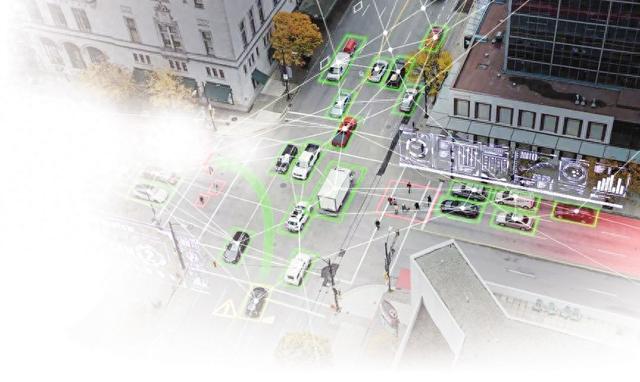
产业与政策共振,车路云赋能智驾
Changjiang Securities· 2025-10-30 15:38
Investment Rating - The report maintains a "Positive" investment rating for the software and services industry [11] Core Insights - The global automotive industry is undergoing a deep transformation, shifting from traditional mechanization to highly intelligent and connected driving technologies, which are becoming the main driving force for innovation in the automotive sector [4][7] - The "Vehicle-Road-Cloud Integration" construction, as a leading intelligent driving solution in China, is expected to enter a new construction cycle supported by policies, accelerating the development of related industrial chains [10][9] - In the short term, roadside construction is expected to accelerate, leading to a gradual increase in vehicle-mounted terminals, while in the medium to long term, operational services will have vast market potential [10][4] Summary by Sections Intelligent Driving: A New Trend in Future Mobility - Intelligent driving technology is transitioning from L2 (combined driving assistance) to L3 (conditional automated driving), with the penetration rate of high-level intelligent driving systems in China's passenger car market continuously increasing [7][23] - In 2023, the sales of intelligent connected passenger vehicles with combined auxiliary driving functions reached 9.953 million units, with a market penetration rate of 47.3% [23] Vehicle-Road-Cloud Integration: China's Leading Intelligent Driving Solution - Intelligent driving is divided into two technical paths: vehicle-road-cloud integration and single-vehicle intelligence. The former combines vehicles with road and cloud resources for safer and more efficient automated driving [8][40] - The domestic market for intelligent driving SoC chips is currently at a disadvantage, with foreign solutions dominating over 80% of the market share [44][45] Policy Support: Accelerating Vehicle-Road-Cloud Integration Construction - Policy guidance is a key driving force for the development of vehicle-road-cloud integration in China, with the government continuously issuing relevant policies to promote the digital upgrade of transportation facilities [9][56] - As of July 2024, 17 national-level intelligent connected vehicle testing zones and 20 pilot cities for vehicle-road-cloud integration have been established [57][61] Investment Recommendations: Focus on the Entire Vehicle-Road-Cloud Industry Chain - The report suggests focusing on the entire industry chain of vehicle-road-cloud integration, particularly on infrastructure manufacturers that facilitate vehicle-road collaboration [10][4]
广汽、一汽等均布局“车路云一体化”迎阶段性成果
Mei Ri Jing Ji Xin Wen· 2025-10-23 18:12
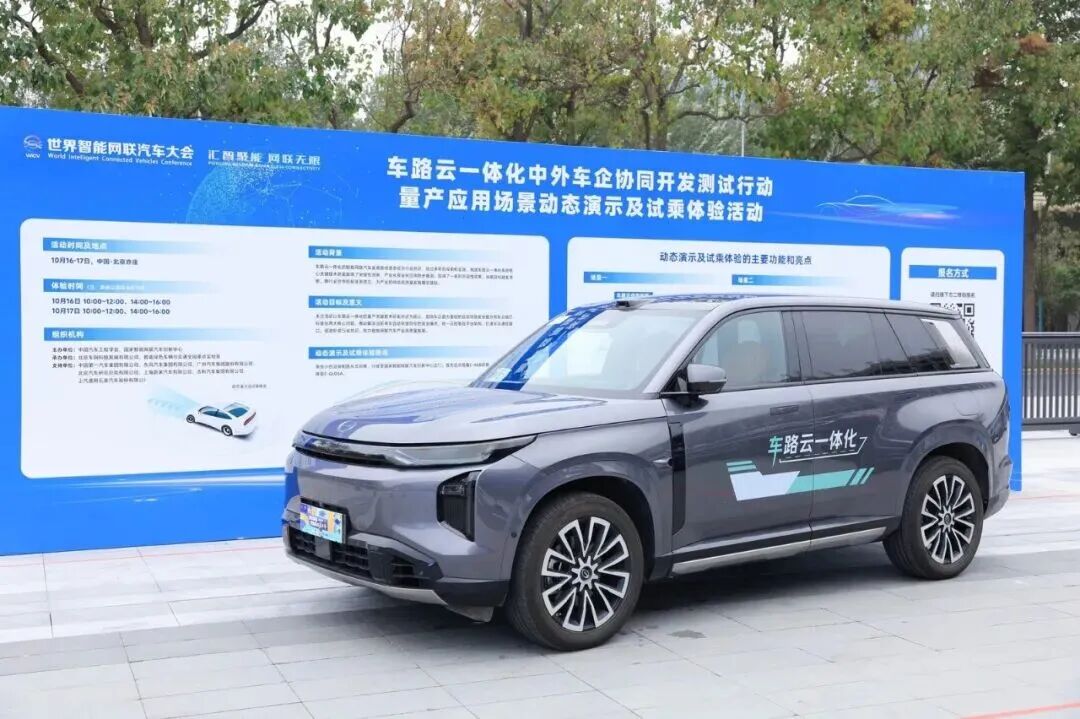
Core Insights - GAC Group collaborates with 14 domestic and international automotive and autonomous driving companies to participate in a demonstration event for "Vehicle-Road-Cloud Integration" organized by the National Intelligent Connected Vehicle Innovation Center [1] - The event showcased two key application scenarios: "Cloud-Supported Automatic Emergency Braking" and "Cloud-Supported Green Wave Speed Guidance" [1] - The "Vehicle-Road-Cloud Integration" initiative is expected to significantly support the commercialization of smart public transport and unmanned delivery systems, with a projected industry scale exceeding 300 billion yuan by 2030 [1] Industry Overview - "Vehicle-Road-Cloud Integration" utilizes advanced information and communication technologies to create a cyber-physical system that integrates people, vehicles, roads, and clouds, enhancing traffic safety, energy efficiency, comfort, and operational efficiency [2] - This system allows vehicles to interact with roadside devices and cloud servers, improving safety through real-time risk information sharing and decision-making support [2] - The initiative represents an upgrade from the previous "Vehicle-Road Collaboration" concept, focusing on a holistic design for better synergy between smart vehicles and traffic systems [2] Technological Development - Various regions are actively promoting "Vehicle-Road-Cloud Integration" technology, with significant investments such as Beijing's 9.9 billion yuan project for smart road upgrades [3] - There is ongoing debate in the industry regarding the merits of "Single Vehicle Intelligence" versus "Vehicle-Road-Cloud Integration," with some companies advocating for the former due to lower costs and shorter implementation times [3][4] - GAC Group emphasizes that "Vehicle-Road-Cloud Integration" is a new phase in smart vehicle development, enhancing existing single-vehicle systems with digital infrastructure to overcome perception limitations [3] Market Challenges - Despite policy support and expanding pilot cities, "Vehicle-Road-Cloud Integration" lags behind single-vehicle intelligence in terms of industry enthusiasm, market acceptance, and technological maturity [5] - High costs and long infrastructure development cycles pose significant challenges, leading some companies to pivot towards more popular AI technologies [5][6] - The reliance on government investment for infrastructure and the current inadequacy of roadside technology to meet autonomous driving needs are critical barriers to progress [5][6] Future Directions - Experts suggest a phased approach to promoting "Vehicle-Road-Cloud Integration," starting with closed environments to refine technology before broader implementation [6] - Vehicles must possess standalone intelligent driving capabilities to ensure effective integration with roadside systems, creating a commercial ecosystem that enhances traffic safety [6]

广汽、一汽等均布局,“车路云一体化”迎阶段性成果,万亿赛道将迎来爆发期?
3 6 Ke· 2025-10-22 12:39
Core Viewpoint - GAC Group collaborates with 14 domestic and international automotive and autonomous driving companies to participate in a demonstration event for "Vehicle-Road-Cloud Integration," showcasing applications like "Cloud-Supported Automatic Emergency Braking" and "Cloud-Supported Green Wave Speed Guidance" [1] Group 1: Industry Development - The "Vehicle-Road-Cloud Integration" initiative has gained traction due to multiple factors including policy support, technological advancements, and market demand, with major players like FAW Group, Geely, and Dongfeng also making strategic moves in this area [1] - By 2030, the smart transportation industry in China is expected to exceed 300 billion yuan, with the economic value generated by "Vehicle-Road-Cloud Integration" projected to reach 25,825 billion yuan by 2030 [1] Group 2: Technical Insights - "Vehicle-Road-Cloud Integration" utilizes advanced information and communication technologies to create a cohesive system that enhances traffic safety, energy efficiency, and comfort by integrating vehicles with roadside devices and cloud servers [2] - The system allows for real-time communication of critical risk information beyond the driver's line of sight, significantly improving safety in complex driving scenarios [4] Group 3: Challenges and Controversies - There is ongoing debate in the industry regarding the reliance on "Single Vehicle Intelligence" versus "Vehicle-Road-Cloud Integration," with some companies emphasizing the high costs and long timelines associated with smart road construction [5] - The current state of "Vehicle-Road-Cloud Integration" is hindered by its dependence on government infrastructure investment and the need for improved roadside technology to meet autonomous driving requirements [8][9] - The integration faces challenges such as high costs for smart road upgrades and low connectivity rates for public transport vehicles, which may hinder the formation of a commercial closed loop [8][9]
广汽、一汽等均布局!“车路云一体化”迎阶段性成果,万亿赛道将迎来爆发期?
Mei Ri Jing Ji Xin Wen· 2025-10-22 10:04
Core Viewpoint - GAC Group collaborates with 14 domestic and international automotive and autonomous driving companies to participate in a demonstration event for "Vehicle-Road-Cloud Integration," showcasing key applications like "Cloud-Supported Automatic Emergency Braking" and "Cloud-Supported Green Wave Speed Guidance" [1] Group 1: Industry Developments - The "Vehicle-Road-Cloud Integration" initiative aims to unify people, vehicles, roads, and cloud systems using advanced information and communication technologies, enhancing traffic safety and efficiency [2] - The initiative has gained traction due to supportive policies, technological advancements, and market demand, with major players like FAW Group, Geely, and Dongfeng also making strategic moves [1] - By 2030, the smart transportation industry in China is projected to exceed 300 billion yuan, with the economic value of "Vehicle-Road-Cloud Integration" expected to reach 25,825 billion yuan [1] Group 2: Application Scenarios - GAC Group's "Cloud-Supported Automatic Emergency Braking" can provide real-time risk information and decision-making support to enhance driving safety in complex scenarios [3] - "Vehicle-Road-Cloud Integration" is an upgraded version of the previously discussed "Vehicle-Road Collaboration," focusing on a holistic design for better synergy between smart vehicles and traffic systems [3] Group 3: Challenges and Controversies - There is ongoing debate in the industry regarding the reliance on "Single Vehicle Intelligence" versus "Vehicle-Road-Cloud Integration," with some companies emphasizing the high costs and long timelines associated with smart road construction [4] - The current state of "Vehicle-Road-Cloud Integration" is hindered by its dependence on government infrastructure investment and the need for improved roadside technology to meet autonomous driving requirements [7][6] - The high costs associated with implementing "Vehicle-Road-Cloud Integration" may deter consumer adoption, as potential increases in vehicle prices could lead to a lack of commercial viability [7][6] Group 4: Future Directions - Experts suggest a phased approach to promoting "Vehicle-Road-Cloud Integration," starting with closed environments to refine technology before broader implementation [8] - Achieving a balance between "Single Vehicle Intelligence" and "Vehicle-Road-Cloud Integration" is essential for developing a comprehensive and effective transportation system [4]
中国“自动驾驶第一人”,竟因1.5万元破产?
电动车公社· 2025-10-10 17:20
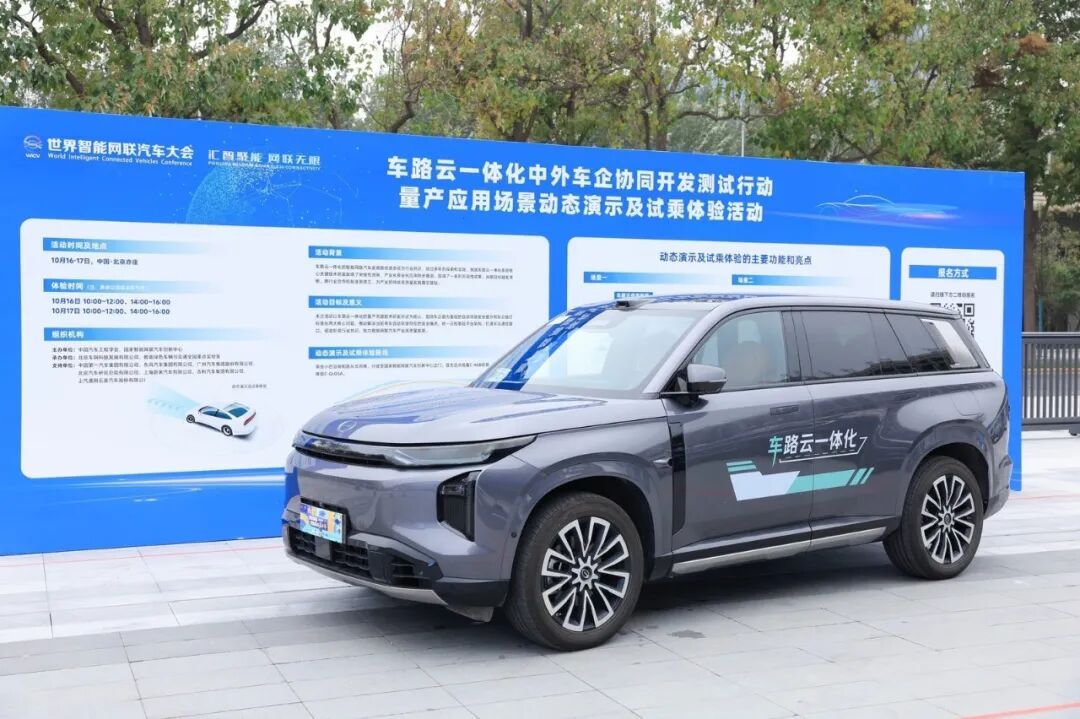
Core Viewpoint - The article discusses the challenges faced by the autonomous driving industry, highlighting the contrasting fates of companies like Zhongzhixing and Wenyan Zhixing, and emphasizes the importance of commercial viability in technology adoption [1][92]. Group 1: Industry Overview - The autonomous driving industry has seen intense competition, with some brands successfully emerging while many others have failed [1]. - Companies like Huawei dominate the autonomous driving supplier market, while others struggle to survive [2][3]. Group 2: Zhongzhixing's Downfall - Zhongzhixing recently declared bankruptcy due to a labor dispute involving a mere 15,000 yuan, which exposed its larger financial issues [4][6]. - The company had accumulated nearly 50 million yuan in debt, with insufficient assets to cover it, leading to its liquidation [6][88]. Group 3: Wang Jin's Background - Wang Jin, the founder of Zhongzhixing, is a prominent figure in the autonomous driving field, having held key positions at Alibaba, Google, and Baidu [9][32]. - His contributions significantly impacted the growth of these companies, particularly in technology and product development [17][30]. Group 4: Technological Approaches - Zhongzhixing adopted an aggressive "vehicle-road collaboration" approach, which aimed to enhance autonomous driving through extensive infrastructure investment [64][67]. - In contrast, Wenyan Zhixing pursued a more mainstream "single-vehicle intelligence" strategy, focusing on equipping individual vehicles with advanced sensors and computing power [62][64]. Group 5: Challenges in Implementation - Despite some initial success, Zhongzhixing's projects struggled to achieve commercial viability due to the high costs and long timelines associated with infrastructure development [81][83]. - The company faced significant hurdles in convincing automakers to adopt its vehicle-road collaboration technology, especially as competitors focused on more flexible solutions [90][92]. Group 6: Conclusion - The article concludes that the failure of Zhongzhixing illustrates the need for emerging technologies to find a balance between innovation and market practicality [92][93]. - It suggests that while cutting-edge technologies like vehicle-road collaboration may have potential, they require a solid commercial foundation to succeed [95].


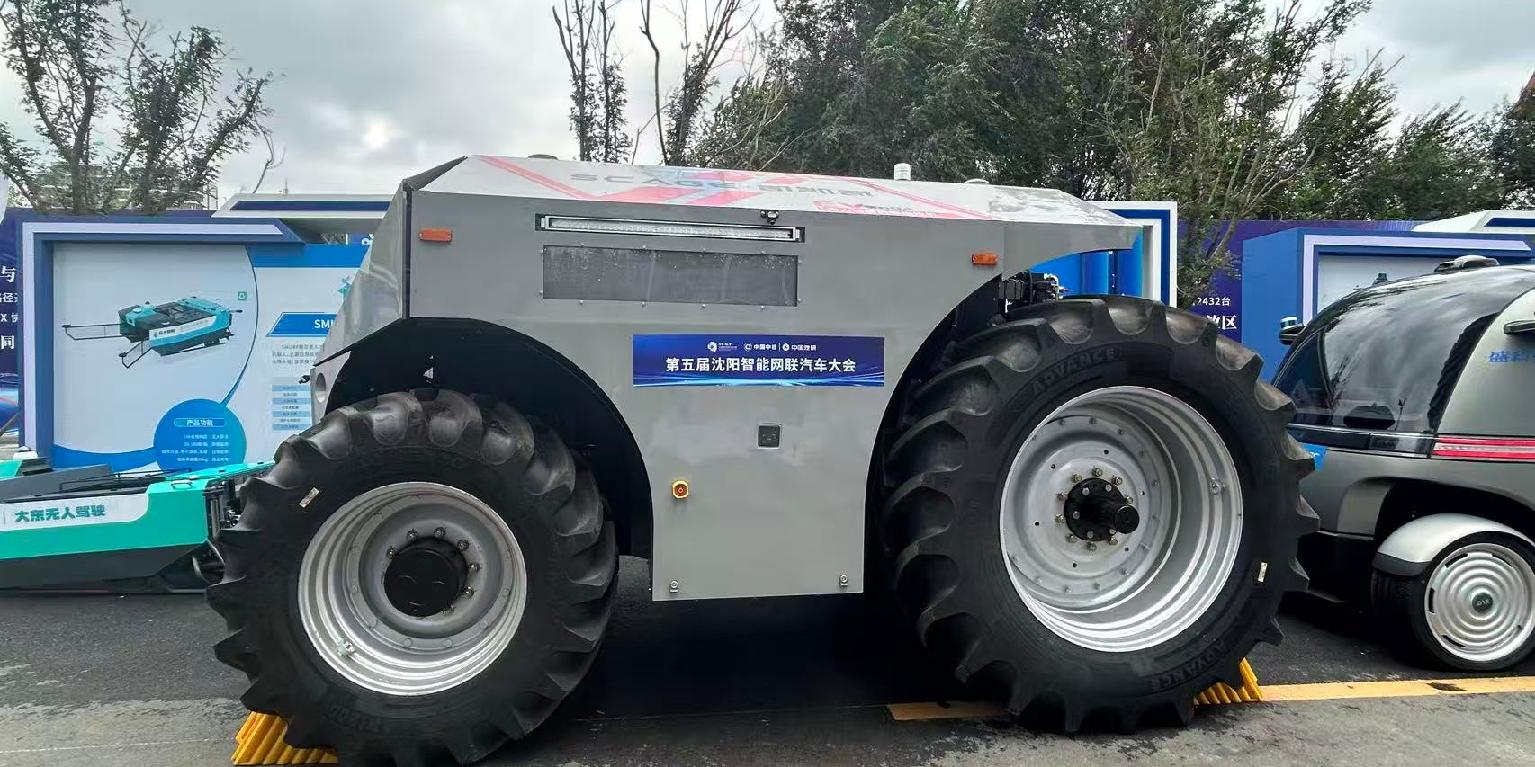
沈阳智能网联汽车大会:“车路云”遇冷,Robotaxi、无人物流车成主角
Jing Ji Guan Cha Wang· 2025-09-27 15:35
Group 1 - The fifth Shenyang Intelligent Connected Vehicle Conference highlighted the prominence of smart driving companies over traditional passenger vehicle manufacturers, with a focus on Robotaxi, unmanned agricultural machinery, and unmanned logistics delivery [2][3] - Shenyang aims to integrate AI, communication, and big data into its automotive manufacturing to overcome industry bottlenecks and foster new growth, marking a shift from traditional manufacturing to "smart manufacturing" [2] - The "Vehicle-Road-Cloud Integration" application, previously a key theme, has been downplayed in this conference, indicating challenges in its current implementation [3] Group 2 - The conference featured limited participation from passenger vehicle manufacturers, with notable entries including the Brilliance BMW 5 Series V2X retrofitted research vehicle and the Baidu Apollo and Jiangling New Energy collaboration [4] - The current trend in autonomous driving is leaning towards single-vehicle intelligence, particularly L3 level advanced driver assistance systems, while the "Vehicle-Road-Cloud Integration" model is less favored by companies due to high investment and long infrastructure development cycles [4] - A surge in L4 level Robotaxi and unmanned logistics vehicles has been observed, with significant investments such as the establishment of "Zhaofu Intelligent Technology Co., Ltd." with over 3 billion yuan in initial funding [5] Group 3 - Shenyang's intelligent connected vehicle industry is focusing on demonstration operations for Robotaxi, unmanned agricultural machinery, and various unmanned delivery vehicles [5] - The city has signed over 20 projects with industry partners, including collaborations with major logistics and technology companies [6] - Despite the emergence of unmanned logistics vehicles, many face profitability challenges, relying heavily on subsidies for operation [7] Group 4 - Most unmanned logistics vehicles currently operate on single-vehicle intelligence systems, lacking the benefits of "Vehicle-Road-Cloud Integration," which limits their effectiveness in complex environments [8] - Efforts are being made to address industry challenges, including collaboration among five northern cities to unify standards, enhance safety regulation, and promote data sharing [8]
中国自动驾驶第一人,破产了
商业洞察· 2025-09-15 09:28
Core Viewpoint - The article discusses the downfall of Zhongzhixing Technology Co., Ltd., a once-prominent player in the autonomous driving industry, highlighting the challenges faced by companies in this sector and the implications of their strategic choices [4][24]. Group 1: Company Overview - Zhongzhixing Technology Co., Ltd. was founded in 2018 with a registered capital of 150 million yuan, focusing on vehicle-road collaboration technology [7]. - The company was established by Wang Jin, a notable figure in the autonomous driving field, previously a senior vice president at Baidu and the first general manager of Baidu's autonomous driving division [8][10]. Group 2: Business Challenges - The company faced severe financial difficulties, culminating in a court ruling for bankruptcy due to an inability to pay a labor arbitration amount of 15,000 yuan [4][5]. - Zhongzhixing had received four rounds of financing totaling several hundred million yuan, with the last round occurring in March 2023, but failed to secure further funding thereafter [21]. Group 3: Strategic Choices - Zhongzhixing chose a "vehicle-road collaboration" approach, which is more complex and reliant on extensive infrastructure upgrades, as opposed to the "single-vehicle intelligence" route favored by competitors like Tesla and Waymo [16][18]. - The reliance on government involvement and significant investment for infrastructure development proved to be a critical challenge for Zhongzhixing, leading to its eventual collapse [18][27]. Group 4: Industry Context - The autonomous driving sector is experiencing a downturn, with several companies, including those once valued at over 9 billion yuan, entering bankruptcy or restructuring [24]. - Analysts indicate that the current investment climate favors technologies that can demonstrate quicker commercialization, putting pressure on autonomous driving companies to provide clear profitability timelines [24][27]. Group 5: Lessons Learned - The case of Zhongzhixing serves as a warning to entrepreneurs in cutting-edge technology sectors: a promising technological vision must be paired with a viable path to navigate real-world financial pressures [26]. - The article emphasizes that while "vehicle-road collaboration" is a long-term goal, the immediate focus should be on strategies that allow for faster implementation and lower initial costs [26][27].

又一家自动驾驶公司破产,1.5万债务都还不起了
阿尔法工场研究院· 2025-09-11 00:03
Core Viewpoint - The article discusses the downfall of the autonomous driving company Zhongzhixing, highlighting the shift in the Chinese autonomous driving industry from enthusiasm to a harsh reality, marked by financial struggles and the need for a viable business model [4][6][30]. Company Overview - Zhongzhixing, once a promising player in the autonomous driving sector, has entered bankruptcy liquidation, with its founder Wang Jin, a prominent figure in the industry, unable to pay even a small debt of 15,000 yuan [5][10][11]. - The company was founded in 2018 with a registered capital of 150 million yuan, aiming to provide autonomous driving technology and services based on vehicle-road collaboration [17][22]. Industry Context - The autonomous driving industry in China is experiencing a "liquidation moment," with several once-prominent companies facing bankruptcy or restructuring, indicating a significant downturn after a period of rapid growth [28][29]. - The shift in capital market sentiment has made it essential for autonomous driving companies to present clear paths to profitability, moving away from speculative investments [31][32]. Strategic Challenges - Zhongzhixing's chosen strategy of "vehicle-road collaboration" has proven to be a significant challenge, as it requires extensive infrastructure investment and government involvement, making it difficult for a startup to succeed [23][24]. - In contrast, the "single vehicle intelligence" approach adopted by competitors has allowed for quicker commercialization and lower initial costs, leading to its dominance in the market [30]. Financial Struggles - The company has accumulated debts exceeding 47 million yuan, with multiple creditors involved, reflecting a dire financial situation [11][13]. - The inability to pay even minor debts indicates a complete depletion of resources, underscoring the financial pressures faced by startups in the autonomous driving sector [25]. Future Outlook - The article suggests that the collapse of Zhongzhixing is not the end of the industry but rather a beginning of structural differentiation, where surviving companies must focus on cost reduction and efficient commercialization [33][34]. - Companies are now exploring specific scenarios for application, such as port autonomous trucks and last-mile delivery, which present lower barriers to entry and quicker returns [34]. Conclusion - The future of the autonomous driving industry will depend on companies' ability to balance technological feasibility, commercial value, and cost control, moving away from mere technological competition to a focus on operational efficiency and market adaptability [35][36].