
多元化投资组合

Search documents
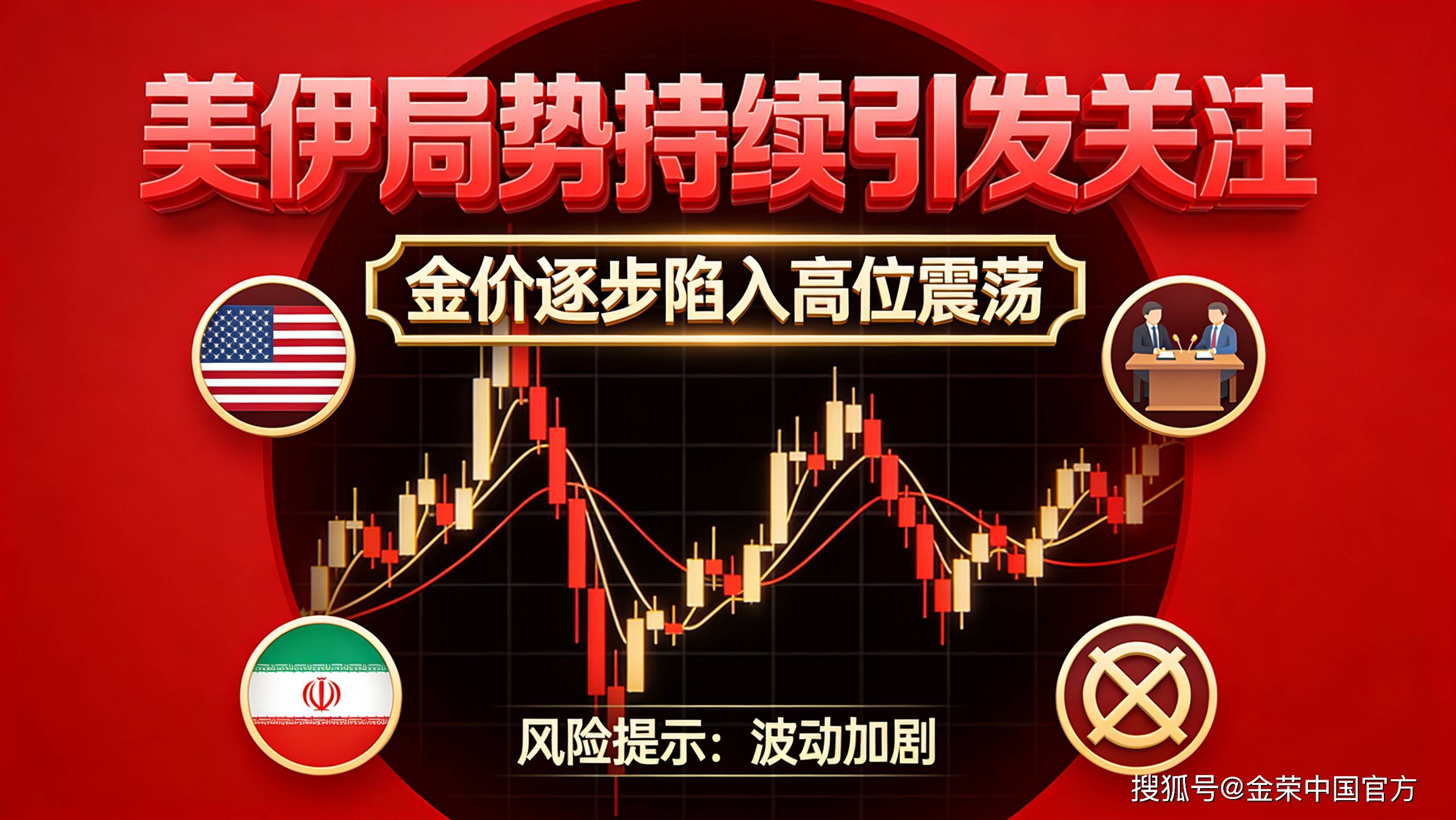
金荣中国:美伊局势持续引发关注,金价逐步陷入高位震荡
Sou Hu Cai Jing· 2026-02-27 02:01
Market Overview - International gold maintained a volatile trend on February 26, with an opening price of $5,194.83 per ounce, a high of $5,217.58, a low of $5,130.36, and a closing price of $5,185.81 [1]. Economic Indicators - The number of initial jobless claims in the U.S. increased by 4,000 to 212,000 for the week ending February 21, which was below the expected 215,000. Continuing claims fell to 1.83 million, indicating a stable labor market [3]. - The Federal Reserve's Goolsbee expressed a cautious approach to interest rate cuts, emphasizing the need to avoid overheating the economy before inflation eases [3]. Gold Market Insights - The World Gold Council noted that as U.S. stock market valuations approach levels seen during the internet bubble, any failure to meet profit targets could undermine investor confidence, potentially increasing demand for gold as a safe haven [4]. - The current disparity between confidence in economic prospects and uncertainty in economic policy is a key reason for gold's strong performance over the past year and into the current year [4]. - Despite concerns about gold being overbought, the strategic importance of gold remains high, as it has historically provided diversification and reduced losses during market stress [5]. Trade and Geopolitical Developments - U.S. Trade Representative Greer indicated that the 10% global tariff imposed by President Trump may increase to 15% for some countries, while tariffs on China are expected to remain unchanged to avoid escalating tensions [5]. - Discussions regarding Iran's nuclear program are ongoing, with U.S. officials planning to evaluate potential actions against Tehran, focusing on nuclear facilities and missile bases [6][8]. ETF Holdings - The largest gold ETF, SPDR Gold Trust, saw an increase in holdings by 0.28 tons, bringing the total to 1,097.9 tons [8]. Interest Rate Projections - According to CME's FedWatch, the probability of a 25 basis point rate cut by the Federal Reserve in March is 4%, with a 96% chance of maintaining current rates [9].

世界黄金协会:黄金的持有量仍然偏低,但需谨慎对待估值过高和宏观风险
Ge Long Hui A P P· 2026-02-26 15:09
Core Viewpoint - The significant disparity between confidence in economic prospects and uncertainty in economic policies is a key reason for gold's strong performance over the past year and its continued good performance this year [1] Group 1: Economic Outlook and Gold Performance - Investors face the core issue of how to allocate assets between market certainty and policy uncertainty [1] - Despite concerns about gold being overbought, the strategic holding of gold remains low [1] Group 2: Investment Strategy and Asset Allocation - Investors should recognize the monetary and fundamental factors driving market increases, especially with more easing policies expected by 2026 [1] - High valuations and ongoing macro risks necessitate a cautious approach, highlighting the need for a diversified investment portfolio [1] - Geopolitical changes and U.S. policy fluctuations are influencing asset allocation, suggesting a focus on quality assets like gold [1]
传统金融巨头如达利欧如何看待比特币作为避险资产的价值?
Sou Hu Cai Jing· 2026-02-22 13:38
Core Viewpoint - Ray Dalio, founder of Bridgewater Associates, holds a nuanced view on Bitcoin's value as a hedge, recognizing its technological breakthroughs and potential against fiat currency devaluation, while warning about its volatility, regulatory risks, and the possibility of being replaced by superior alternatives. He ultimately advocates for a limited allocation of Bitcoin within a diversified investment portfolio [1]. Group 1: Basic Position - Dalio acknowledges Bitcoin as an "incredible invention" that disrupts traditional fiat currency systems and has generated significant wealth for early adopters. He highlights three key hedging attributes of Bitcoin: 1. Limited supply: The fixed total supply aligns with global demand for scarce wealth storage assets, especially amid high debt and currency overproduction [1]. 2. Decentralization advantage: Bitcoin can be privately held and transacted across borders, making it more resistant to confiscation risks compared to real estate [1]. 3. Liquidity value: Bitcoin is easier to trade and convert into cash quickly compared to physical gold, catering to cash demands during crises [1]. Group 2: Core Shortcomings - Dalio points out Bitcoin's main weaknesses: - Technological replacement risk: The fixed Bitcoin protocol may become obsolete if superior cryptocurrencies emerge [2]. - Policy vulnerability: Governments may not tolerate assets that threaten fiat currency sovereignty, with the greatest risk to Bitcoin being its success, which could provoke stringent regulations [2]. - Speculative nature: Most holders engage in short-term trading rather than long-term savings, making Bitcoin more akin to an "option" than a stable store of value [2]. Group 3: Comparison with Gold - Dalio consistently uses gold as a benchmark for evaluating Bitcoin, noting that gold possesses advantages that Bitcoin struggles to match: - Historical validation: Gold has maintained purchasing power over millennia, even as 80% of fiat currencies have disappeared [3]. - Central bank endorsement: Gold is recognized as the third-largest reserve asset globally, supported by sovereign institutions [3]. - Anti-regulatory characteristics: Physical gold can be held anonymously, providing better protection against government tracking compared to Bitcoin [3]. - Empirical data shows that during market turmoil, gold typically rises while Bitcoin tends to fall, highlighting Bitcoin's inadequate hedging function [3]. Group 4: Allocation Logic - Based on a profound understanding of the global debt system (with a current financial asset to hard currency ratio of 8.5:1), Dalio believes fiat currencies face typical devaluation risks and suggests including Bitcoin in a diversified portfolio under strict conditions: 1. Proportional control: Allocate 10%-15% to Bitcoin and gold combined, with a lower specific allocation to Bitcoin to avoid excessive risk exposure [4]. 2. Functional positioning: Bitcoin should serve as a supplementary tool against fiat devaluation rather than replace gold as a core hedging asset [4]. 3. Dynamic adjustment: Continuous assessment of regulatory developments (e.g., Bitcoin ETFs) and institutional participation is necessary, as significant elevation in Bitcoin's status may depend on mainstream adoption by major countries or institutions [4]. - Dalio estimates that if investors shift 50% of their gold holdings to Bitcoin, it could potentially drive Bitcoin prices up by 160%, contingent on regulatory maturity and the conversion of long-term savings demand [4]. Group 5: Future Outlook - Dalio's framework revolves around two major contradictions: - Technology vs. institution: Bitcoin represents a technological evolution in currency, but the government's monopoly on currency sovereignty cannot be overlooked [5]. - Ideal vs. reality: Although Bitcoin theoretically possesses hedging attributes, its actual performance is still dominated by speculative sentiment, requiring a complete cycle for validation [5]. - He advises investors to remain humble, suggesting that in an era of fiat system reconstruction, Bitcoin is a noteworthy option but must be approached with caution regarding "chasing" risks, placing it within a liquidity management strategy (reserving 12-24 months of cash) and a defensive framework of hard assets (gold, resources) [5].

阿瑞斯资本2025年Q4财报发布,业绩稳健获市场认可
Jing Ji Guan Cha Wang· 2026-02-11 21:12
Core Viewpoint - Ares Capital Corporation (ARCC) reported its Q4 2025 earnings, showing a stable performance with earnings per share of $0.50, which met expectations, while revenue of $793 million was slightly below expectations by 0.28% [1][2] Group 1: Financial Performance - The total investment portfolio value increased to $29.5 billion, reflecting a year-over-year growth of 10% [2] - The net asset value (NAV) per share rose to $19.94, marking a year-over-year increase of 0.25% [2] - The stock price rose by 1.67% in pre-market trading following the earnings report, indicating market recognition of the company's stable performance [1] Group 2: Strategic Focus - The company remains optimistic about maintaining its dividend and is focusing on strategic investments in the software and professional sectors [1] - Management acknowledged that interest rate fluctuations could impact short-term performance but plans to address challenges through a diversified investment portfolio and risk management [2] - Ares Management Corporation (ARES), an affiliate of Ares Capital, announced the acquisition of GCP's international business, expected to be completed in the first half of 2025, although this transaction has limited direct relevance to ARCC [2]

达利欧称黄金仍是最安全的投资选择
Xin Lang Cai Jing· 2026-02-04 23:20
Core Viewpoint - Ray Dalio, founder of Bridgewater, asserts that despite recent declines in gold prices, gold remains the safest investment choice [1][3] Group 1: Gold as an Investment - Dalio emphasizes that central banks globally still hold significant amounts of gold, with gold reserves surpassing the euro last year, making it the second-largest reserve asset [1][3] - He believes that if policymakers were to express their views clearly, they would indicate that gold is the safest investment in the current environment [1][3] - Dalio states that the safety of gold does not change daily, highlighting its long-standing role as a hedge against inflation and a substitute for fiat currency [1][3] - He advises investors to consider what percentage of their total investment portfolio should be allocated to gold rather than focusing on whether gold prices will rise or fall [1][3] Group 2: Economic Context and Risks - Recent declines in gold and other metals were attributed to investors reacting to the nomination of Kevin Warsh as Federal Reserve Chair by Trump, leading to adjustments in expectations regarding interest rates and the dollar [1][3] - Economic risks, such as concerns over rising unsustainable U.S. debt levels and potential weakening of the dollar against other fiat currencies, have also impacted gold's attractiveness over the past year [4] - Dalio warns that the U.S. is on the brink of a capital war, with geopolitical tensions causing global investors to hesitate in purchasing U.S. bonds [5] - He describes gold as a diversification tool that performs particularly well during economic downturns, stressing the importance of maintaining a diversified investment portfolio [5]
Bitcoin Falls Below $80,000, Down 5% Over Past 24 Hours
Yahoo Finance· 2026-01-31 19:31
Core Insights - Bitcoin experienced a significant drop, falling below the $80,000 mark, which triggered a widespread crash in the cryptocurrency market [1] - The total market capitalization of the crypto market declined by over 6% to $2.73 trillion, with over $100 billion disappearing in just five hours [2] - This downturn marks the lowest price for cryptocurrencies since April 2025, raising questions about Bitcoin's role in investment portfolios [3] Market Impact - Bitcoin's value plummeted by 5% within 24 hours, trading at $78,479.21, leading to declines in other cryptocurrencies such as Ethereum (down 12% to $2,395.58) and Solana (down 11% to $103.44) [1] - Liquidations in the crypto market totaled over $1.61 billion, with Ether leading at $560 million, followed by Bitcoin at $481 million [2] - The largest single liquidation order was an Ether order worth $13.38 million on Hyperliquid [2] Broader Implications - The crash has raised serious concerns about the stability and reliability of digital currencies, highlighting the high-risk nature of crypto investments [4] - The simultaneous decline of gold, a traditional safe-haven asset, has prompted investors to seek alternatives, emphasizing the need for diversified investment portfolios [5]
财富效应的魔力:从月薪五千到资产翻倍
Sou Hu Cai Jing· 2025-12-18 02:11
Core Insights - The article emphasizes that achieving significant wealth growth is attainable through understanding the wealth effect and implementing effective financial strategies [1][9]. Group 1: Wealth Growth Principles - The essence of the wealth effect lies in regular savings and prudent investments, which generate compound interest over time, leading to substantial asset growth [1]. - Stable cash flow is fundamental for wealth accumulation, necessitating effective budgeting and expenditure management to ensure investable funds each month [2]. - Recognizing the power of compound interest is crucial; for instance, investing 1,000 yuan monthly at an annual return of 10% can yield a total of 200,000 yuan after 10 years [3]. Group 2: Financial Management Strategies - Establishing a budget plan is essential, detailing monthly income and necessary expenses while allocating a portion for investments [3]. - Controlling non-essential expenditures is vital; reducing luxury spending can free up funds for more valuable uses, such as investments or self-improvement [3]. - Creating an emergency fund covering 3-6 months of living expenses helps avoid dipping into investment funds during unforeseen circumstances [3]. Group 3: Investment Approaches - Investment is key to wealth growth; selecting suitable investment channels and diversifying portfolios can mitigate risks and enhance returns [5][7]. - Understanding various investment channels, such as stocks, bonds, and real estate, is necessary to align with individual risk tolerance and investment goals [7]. - Regularly adjusting investment portfolios in response to market conditions is important for maintaining a balanced risk-return profile [7]. Group 4: Personal Development for Wealth Growth - Continuous learning and self-improvement are vital for enhancing earning potential; acquiring new skills can lead to higher income opportunities [6][8]. - Expanding professional networks can provide additional opportunities and resources, facilitating wealth growth [6]. - Exploring multiple income streams through side jobs or freelance work can supplement primary income sources [6]. Group 5: Psychological Aspects of Wealth Growth - Maintaining a positive mindset is crucial for overcoming challenges in the wealth accumulation process; a calm approach during market fluctuations is necessary [8][11]. - Cultivating patience is essential, as wealth growth is a long-term endeavor that requires sustained effort [11]. - Overcoming fear and anxiety related to market volatility is important for maintaining confidence in financial strategies [11].

When 401(k)s Fail, Bring Out the Birkin? 1 In 10 Americans Think Luxury Handbags Are A Retirement Plan
Yahoo Finance· 2025-11-06 18:31
Core Insights - A survey indicates that 1 in 10 Americans view luxury handbags or lottery winnings as potential retirement strategies, reflecting widespread financial uncertainty [1][3] - Only 37% of U.S. adults find it realistic to retire between ages 65 and 70, with 30% lacking confidence in covering daily expenses throughout retirement [2][4] - The desire for guaranteed retirement income is high, with 92% of respondents seeking alternatives to Social Security [4] Group 1: Financial Anxiety and Retirement Planning - The survey highlights a growing sense of desperation regarding traditional retirement planning, leading some to consider unconventional assets like luxury handbags as viable options [3] - Many Americans feel that traditional retirement tools, such as 401(k)s, are flawed due to market risks and lack of guaranteed income [4] - The perception that luxury items could serve as a fallback retirement strategy underscores a significant shift in how individuals view financial security [1][3] Group 2: Investment Strategies and Portfolio Diversification - While luxury handbags may retain value better than fast fashion, they are still considered speculative investments and not substitutes for a diversified retirement portfolio [5] - 401(k) plans are recognized as a straightforward method for saving for retirement, but reliance solely on stock market investments is deemed risky [6] - A diversified portfolio should include a mix of cash savings, bonds, and income-generating assets to mitigate risks associated with market fluctuations [6]
香港投资基金公会调查:76%受访者至少每年检视强积金投资组合
智通财经网· 2025-10-24 05:51
Core Insights - The Hong Kong Investment Funds Association (HKIFA) survey indicates that Mandatory Provident Fund (MPF) savings are the most frequently mentioned source of expected retirement income among working individuals (63%) and retirees (49%), highlighting the MPF's central role in the retirement security system [1] Group 1: Investment Behavior - 76% of respondents review their MPF investment portfolios at least annually, indicating a reasonable level of engagement [1] - The primary factors driving portfolio adjustments are current fund performance and market volatility, which may lead to "buy high, sell low" outcomes [1] - Employees are encouraged to establish a balanced and diversified investment portfolio based on different life stages, financial goals, and risk tolerance, with regular reviews and management [1] Group 2: Asset Preferences - Stock investments remain the most common asset class within MPF, with over 80% of respondents holding related allocations, and Hong Kong stocks are the most favored investment option overall [1] - Looking ahead to the next 12 months, respondents show a preference for stocks in Hong Kong, China, and the United States [1] - 53% of respondents believe the current types of funds available are sufficient, particularly among those aged 50 and above [1] Group 3: Future Investment Options - Sustainable development funds are the most desired new investment option for MPF plans, with 37% of respondents expressing interest, followed by advanced industry funds (31%) and high-yield bond funds (30%) [1]
Valmont(VMI) - 2025 Q3 - Earnings Call Transcript
2025-10-21 14:02
Financial Data and Key Metrics Changes - Net sales increased by 2.5% year-over-year to $1.05 billion, with operating margin improving by 120 basis points and diluted earnings per share rising by 21% to $4.98 [4][14][15] - Gross profit margin increased to 30.4%, up 80 basis points from the previous year [14] - Operating income rose to $141 million, with operating margins at 13.5%, reflecting improved infrastructure results [14][15] Business Line Data and Key Metrics Changes - Infrastructure sales grew by 6.6% to $808.3 million, driven by a 12.3% increase in utility sales due to pricing and higher volumes [15] - Agriculture sales decreased by 9% year-over-year to $241.3 million, primarily due to lower irrigation equipment volumes and economic pressures in Brazil [16][17] Market Data and Key Metrics Changes - The utility market is experiencing strong demand driven by data center expansion, manufacturing onshoring, and broader electrification, with transmission CapEx expected to grow at a 9% CAGR through 2029 [8][15] - The Asia-Pacific market for lighting and transportation remains pressured, with operational challenges impacting results [9][15] Company Strategy and Development Direction - The company is focused on simplifying its business, directing resources to high-return initiatives, and enhancing performance in attractive markets [5][6] - Valmont aims to lead the North American utility market through capacity expansion and operational improvements, with significant investments in brownfield utility expansions [5][19] Management's Comments on Operating Environment and Future Outlook - Management expressed confidence in the long-term fundamentals of the business, despite near-term macro pressures, and highlighted the importance of disciplined execution and innovation [12][20] - The company raised its full-year adjusted diluted earnings per share expectations to a range of $18.70-$19.50, indicating positive momentum [22] Other Important Information - The company is investing in technology and aftermarket parts, with aftermarket sales growing by 15% year-over-year [20] - A new Chief Accounting Officer has joined the team, bringing extensive experience in large-scale manufacturing [22] Q&A Session Summary Question: Infrastructure margins and improvement initiatives - Management highlighted that margin improvements stem from pricing and cost actions, with utility expansions contributing significantly to operating margins [25][26] Question: Capacity additions in utility - Management confirmed that capacity additions are tracking above expectations, with plans to exceed the benchmark of $100 million in additional revenue for every $100 million of capacity [29][30] Question: Utility segment pricing trends - Management indicated that pricing remains strong due to tariff mitigation plans and a healthy bid market, with expectations for continued strength in pricing [63][64] Question: Agriculture margins and bad debt expense - Management acknowledged challenges in agriculture margins due to lower sales and bad debt expense, but expects improvements in future quarters as issues are resolved [66][67]
