市场情绪择时模型

Search documents
行业间交易波动率升至高位,市场情绪得分进一步回落——量化择时周报20260308
申万宏源金工· 2026-03-09 07:31
Group 1 - Investor sentiment has been declining throughout the week, with the market sentiment indicator dropping to 1.40 from 1.85, indicating a neutral to bearish outlook [4][5][8] - The industry trading volatility has been rising, suggesting increased sector rotation, while the price-volume consistency indicator has slightly decreased, reflecting a neutral sentiment overall [8][12][16] - The average daily trading volume for the entire A-share market decreased by 26.52% to 17,932.48 billion, indicating reduced market activity compared to the previous week [12][14] Group 2 - The short-term scores for industries such as utilities, oil and petrochemicals, coal, environmental protection, and transportation are leading, with utilities scoring 100, indicating strong short-term performance [31][32] - The model indicates that the banking sector's short-term score is rising, and both value and large-cap styles are currently favored [31][40] - The correlation between industry congestion and weekly price changes is low at 0.39, suggesting that high congestion sectors like oil and petrochemicals are experiencing significant price increases, while low congestion sectors like retail and real estate may have better long-term value [35][38]


成交量快速反弹,市场情绪细分指标出现回升——量化择时周报20260301
申万宏源金工· 2026-03-02 07:31
Core Viewpoint - Investor sentiment has stabilized over the week, with the market sentiment indicator at 1.85 as of February 27, slightly down from 1.9 before the holiday, indicating a neutral sentiment perspective [3][4]. Market Sentiment Indicators - The market sentiment structure indicators include various metrics such as industry trading volatility, trading congestion, price-volume consistency, and others, which collectively inform the sentiment direction [2]. - The price-volume consistency indicator has shown a rapid rebound, indicating improved alignment between price movements and market attention, reflecting a notable recovery in market sentiment [6][8]. - The total trading volume for the entire A-share market increased significantly by 90.13% week-on-week, with an average daily trading volume of 24,402.93 billion yuan, indicating heightened market activity [10][12]. - The industry trading volatility has been on the rise, suggesting increased frequency of capital switching between different sectors, leading to a temporary recovery in trading activity [15]. - The financing balance ratio has decreased rapidly but remains above the upper limit of the Bollinger Band, indicating a cooling of leveraged funds and a slight decline in investor risk appetite [20]. Industry Performance Insights - The short-term scores for industries such as environmental protection, machinery, and construction materials are among the highest, indicating strong potential for these sectors [29]. - The correlation between trading congestion and weekly price changes is strong at 0.62, with sectors like steel, non-ferrous metals, and basic chemicals showing significant gains due to high congestion levels [33]. - The current model indicates a preference for large-cap and value styles, although the strength of these signals is relatively weak, suggesting a need for further observation [36][37].

情绪周中回落,价量一致性快速下降——量化择时周报20260208
申万宏源金工· 2026-02-09 08:03
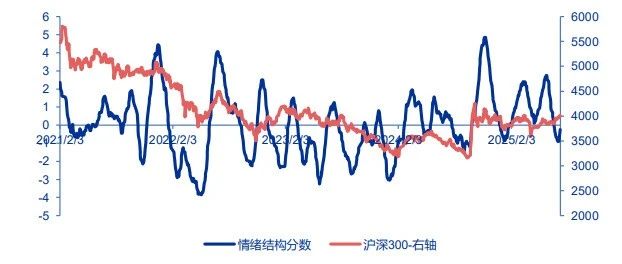
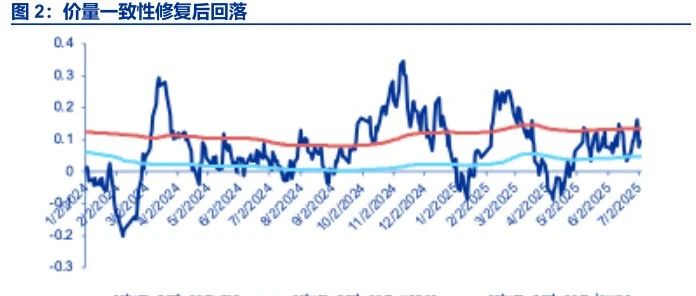
Core Viewpoint - Market sentiment has cooled, with the sentiment indicator at 2.65 as of February 6, slightly up from 2.6 the previous week, indicating a neutral stance from a sentiment perspective [4][5]. Sentiment Model Viewpoint - The sentiment model indicates a decline in market sentiment, with a rapid decrease in price-volume consistency, suggesting a significant drop in the correlation between price increases and market attention [5][7]. - The sentiment structure indicator is calculated using various sub-indicators, with a scoring method that evaluates the sentiment direction and Bollinger band positions, resulting in a 20-day moving average of the summed scores [2][3]. Market Activity - The price-volume consistency indicator has rapidly declined, reflecting a significant reduction in the degree of price-volume matching, indicating a cooling market sentiment [5][7]. - The total trading volume for the A-share market decreased significantly by 21.43% week-on-week, with an average daily trading volume of 24,066.54 billion yuan, marking a notable drop in market activity [10][14]. Sector Analysis - As of February 6, 2026, the sectors with the highest short-term scores include construction materials and petroleum & petrochemicals, both scoring 93.22, indicating strong short-term performance [28]. - The correlation between sector congestion and weekly price changes is negative at -0.30, suggesting that high congestion sectors like food and beverage are experiencing significant price increases, while low congestion sectors may have more stable valuations [31][32]. Financing and Investment Sentiment - The financing balance ratio has slightly increased and remains above the upper Bollinger band, indicating a high level of leveraged funds and a generally positive risk appetite among investors [21][24]. - The RSI indicator has shown a decline, reflecting a decrease in short-term upward momentum and an increase in selling pressure, indicating a reduction in market participation willingness [23][34]. Overall Market Signals - The current model indicates a preference for large-cap and value styles, with signals suggesting potential strengthening in these areas as indicated by the rapid decline of the 5-day RSI relative to the 20-day RSI [28][35].

量化择时周报:市场情绪得分继续回落,多项指标维持震荡-20251207
Shenwan Hongyuan Securities· 2025-12-07 14:11
Group 1: Market Sentiment - The market sentiment score continued to decline, reaching 2.4 as of December 5, down from 3.15 the previous week, indicating a bearish outlook from a sentiment perspective [2][8] - The overall trading activity in the market decreased, with total A-share trading volume dropping by 2.35% week-on-week, averaging 16,961.78 billion yuan, reflecting reduced market activity [15] - The financing balance ratio has been on the rise, reaching a three-year high, suggesting an increase in leveraged funds and a structural recovery in market risk appetite [28] Group 2: Sector Performance - The short-term scores for sectors such as telecommunications, household appliances, national defense, social services, and building materials have shown upward trends, with the petroleum and petrochemical sector having the highest short-term score of 79.66 [40][41] - The industry trading volatility has slightly decreased, indicating a slowdown in the pace of capital switching between sectors, with liquidity marginally weakening [23][26] - The correlation between sector crowding and weekly price changes is negligible, suggesting that high crowding sectors like national defense and telecommunications have experienced significant gains, but caution is advised regarding potential high-level pullbacks [44][46] Group 3: Timing Models - The current model indicates a preference for large-cap and value styles, with signals suggesting a potential strengthening of these trends in the future [40][50] - The communication sector has seen a rapid increase in short-term scores, indicating a favorable outlook for this sector [40] - The model's analysis of the relative strength index (RSI) suggests that while the value style is currently dominant, there may be a weakening of this signal in the near future [50]
从结构化视角全新打造市场情绪择时模型——申万金工量化择时策略研究系列之一
申万宏源金工· 2025-08-26 08:01
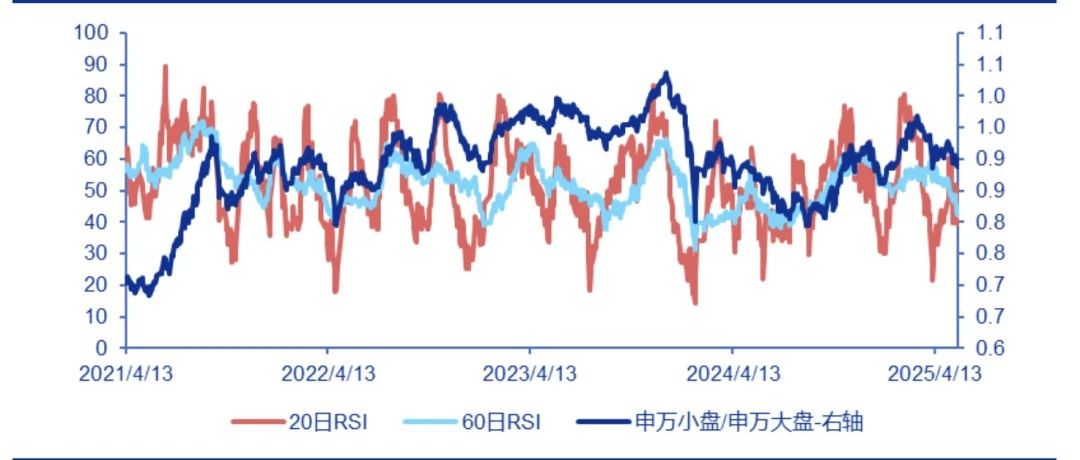
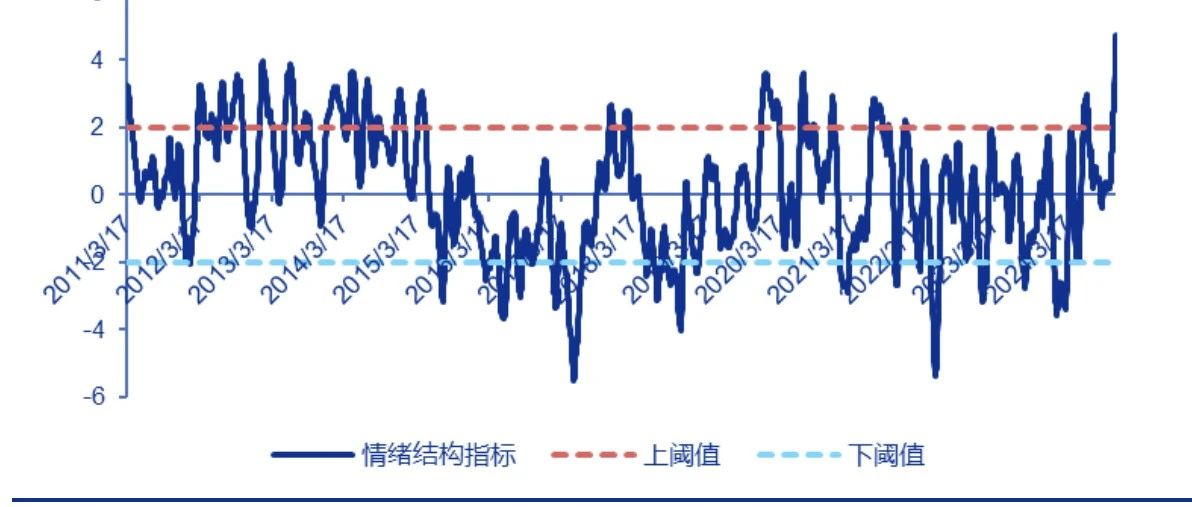
Core Viewpoint - The article discusses the limitations of traditional market sentiment indicators and proposes a new approach to measure market sentiment through structural indicators, aiming to provide more detailed insights for market timing decisions. Group 1: Market Sentiment Measurement - The existing market sentiment indicators lack sensitivity and are not effective in signaling market reversals, as they are influenced heavily by a limited number of metrics [1][3][9] - The proposed sentiment temperature model consists of five indicators: total turnover rate, trading volume, northbound capital inflow, and volatility indices for options [1][3] - The methodology for constructing the sentiment temperature involves averaging the VIX percentiles and smoothing the data over a five-day period [1] Group 2: Structural Indicators - The article emphasizes the need for structural indicators to better capture market trading characteristics, especially in weak trend environments where investment hotspots shift rapidly [9][10] - Key structural indicators include: - **Industry Turnover Rate Consistency**: Measures the degree of consensus among funds regarding industry sectors, indicating whether market trading behavior is consistent or shifting [11][14] - **Industry Concentration**: Reflects the degree of trading activity concentration in specific sectors, with higher values indicating a lack of diversification in fund preferences [18][20] - **Industry Performance and Turnover Consistency**: Assesses whether the performance of leading sectors aligns with their trading volumes, indicating market sentiment stability [21][24] - **Growth Board Activity**: Indicates risk appetite among investors, with higher activity in the growth sector suggesting bullish sentiment [25][28] Group 3: Financing Data - The financing balance to free float market value ratio serves as a long-term sentiment indicator, with increases suggesting bullish sentiment and decreases indicating bearish sentiment [29][32] - The article also discusses the use of the Relative Strength Index (RSI) as a sentiment indicator, where values above 50 indicate strong buying power [33][34] Group 4: Timing Strategy - The sentiment structure indicators have been tested for their effectiveness in timing strategies, with daily strategies outperforming weekly ones in terms of annualized returns and risk management [91][92] - The backtesting results show that the sentiment indicators can provide significant excess returns compared to the benchmark index, with a notable reduction in drawdown and volatility [91][92]
模型提示行业交易拥挤度上升,市场情绪逐渐修复——量化择时周报20250711
申万宏源金工· 2025-07-15 07:21
Group 1 - The market sentiment score has increased, indicating a further recovery in market sentiment, with the score rising from -0.9 to -0.25 as of July 11 [1][3] - The industry trading volatility has risen, reflecting a recovery in fund activity and a decrease in short-term sentiment uncertainty [3][5] - The overall trading volume in the A-share market has increased, with the highest daily trading volume reaching 17,366.10 billion RMB on Friday [8][11] Group 2 - The short-term trend scores for industries such as construction materials, construction decoration, and basic chemicals have significantly increased, with construction materials showing a rise of 21.05% [17] - The relative strength index (RSI) indicates that small-cap stocks are currently favored, with a strong signal for growth style, although there are multiple signal switches that require further observation [19][17]
模型提示价量匹配度降低,市场情绪回落较快 ——量化择时周报20250704
申万宏源金工· 2025-07-08 06:32
Group 1 - The market sentiment score has further declined, with the current score at -0.9 as of July 4, down from -0.65 the previous week, indicating a bearish outlook [1][3] - The trading volatility between industries has decreased, suggesting a lack of active capital and increased uncertainty in short-term sentiment [3][11] - The overall trading volume in the A-share market has shown a slight increase compared to the previous week, but the daily trading volume has been on a downward trend, with the lowest daily trading volume recorded at 1.33 trillion RMB on Thursday [5][8] Group 2 - The short-term trend scores for industries such as steel, construction materials, and basic chemicals have significantly increased, with construction materials showing a rise of 90.91% [23][24] - The banking, communication, media, and comprehensive sectors are identified as the top five industries with the strongest short-term trends [23] - The value style is currently dominant, with the model indicating a preference for large-cap stocks over growth stocks [23][24]
模型提示价量匹配度降低,市场情绪回落较快——量化择时周报20250620
申万宏源金工· 2025-06-23 05:54
Group 1 - The market sentiment score has further declined, indicating a bearish outlook as of June 20, with a score of 0.05, down from 0.8 the previous week [1][4][6] - The price-volume consistency has decreased, reflecting a lack of capital activity and increased divergence in market sentiment [4][6] - The overall trading volume in the A-share market has significantly decreased, with a daily trading volume of 1.09 trillion RMB, marking the lowest for the month [9] Group 2 - The electronic industry shows a significant upward trend, with a short-term trend score increase of 25.00%, indicating strong performance [18][19] - The banking, oil and petrochemical, communication, comprehensive, and national defense industries are identified as the top five sectors with the strongest short-term trends [18] - The small-cap value style is currently favored, while there are signs of a potential strengthening of the large-cap style [20]
模型提示市场情绪回落,小盘成长占优——量化择时周报20250531
申万宏源金工· 2025-06-03 03:06
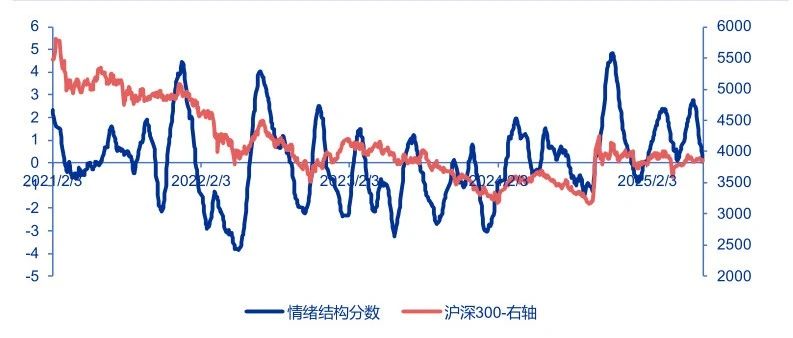
Core Viewpoint - The market sentiment score has declined, indicating a bearish outlook for the market as it has ended its upward repair trend [1][4]. Group 1: Market Sentiment Indicators - The market sentiment structure indicator has shown significant fluctuations over the past five years, with a low position for most of 2023, only breaking above 2 in October 2024 [1]. - As of May 30, the market sentiment score was 2.5, down from 2.65 the previous week, suggesting a shift towards a bearish sentiment [1]. - The decline in sentiment is supported by a decrease in industry trading activity and a drop in the PCR combined with VIX indicators, reflecting increased uncertainty in fund sentiment [4][6]. Group 2: Industry Performance - The trading activity score across industries has significantly decreased, indicating a lack of investment themes and weak trends in industry performance [6][13]. - The overall trading volume in the A-share market has dropped, with a notable decline in the first three trading days of May, reaching a low of 1.16 trillion RMB on Friday [8]. - The industry performance shows that sectors like environmental protection, biomedicine, and national defense have maintained positive growth, while sectors like automobiles, electric equipment, and non-ferrous metals have seen significant declines [16][17]. Group 3: Short-term Trends - The short-term trend scoring model indicates that sectors such as computer, media, electronics, and biomedicine have shown significant upward trends, with the computer sector's score increasing by 22.22% [19][20]. - The model suggests that small-cap growth stocks are currently favored, with strong signals indicating a preference for this style despite a potential strengthening of value styles [21].
模型提示市场情绪平稳,大盘风格占优——量化择时周报20250523
申万宏源金工· 2025-05-26 03:41
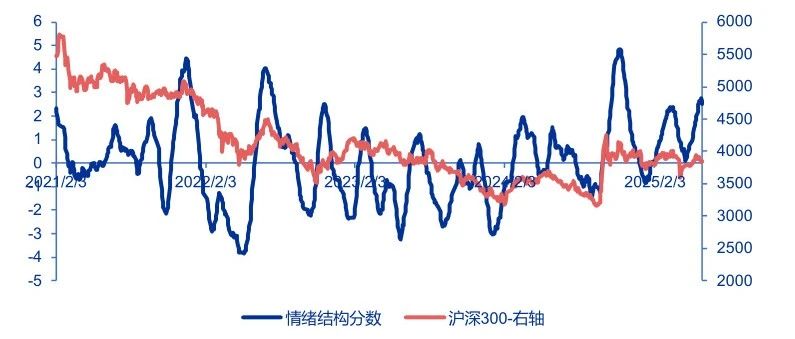
Group 1 - The market sentiment score is currently stable, with the sentiment structure indicator fluctuating around the 0 axis within the range of [-6, 6]. As of May 23, the market sentiment indicator has risen, indicating a bullish outlook [1][3] - The sentiment indicators have not shown significant changes compared to the previous week, with trading volume and investment themes being crucial for further sentiment improvement. The market risk appetite has decreased, and the industry trend scores remain negative [3][11] - The total trading volume for the week was approximately 1.18 trillion RMB, with a daily trading volume of 974.53 million shares on Friday [5] Group 2 - The industry trend scores continue to be negative, indicating a lack of investment themes and weak industry performance. The sectors with the highest gains include pharmaceuticals, comprehensive, automotive, and coal, while the sectors with the largest declines include electronics, computers, communications, and machinery [11][13] - The short-term trend scores for various industries have shown significant increases, particularly in the household appliances sector, which saw a rise of 24% [17][18] - The current model indicates a preference for large-cap stocks, with the growth style continuing to dominate despite a strengthening value trend [17][19]