投资组合再平衡

Search documents
巴克莱模型显示月末再平衡触发温和美元买盘 美国科技股疲软成催化因素
Sou Hu Cai Jing· 2026-02-23 17:45
Core Insights - Recent performance of US tech stocks has been weak, prompting Barclays to advise global fund managers to buy US dollars by the end of February for portfolio rebalancing [1] Group 1: Market Signals - Barclays' month-end foreign exchange flow model indicates a mild buy signal for the dollar against all major currencies during month-end periods [1] - The catalyst for this signal stems from widespread concerns about the disruptive impact of artificial intelligence and related spending, compounded by the decline in tech stocks affecting asset performance [1] Group 2: Portfolio Rebalancing Logic - According to conventional rebalancing logic, when US assets outperform global assets, fund managers typically sell dollars to return to target allocation levels; conversely, if US assets underperform while maintaining hedged positions, they need to buy dollars to adjust portfolio structure [1] - The relative underperformance of the US stock market has dominated the month-end model calculations, ultimately triggering the mild buy signal for the dollar against major currencies [1] Group 3: Political and Economic Context - Barclays notes that global political uncertainty continues in February, keeping the market cautious, while US economic data remains robust, demonstrating strong resilience [1] - Political risks surrounding Prime Minister Starmer's position in the UK have intensified, further weakening the pound; meanwhile, the strong electoral performance of Japan's ruling party supports the yen [1]

美股跑输引发月末再平衡,巴克莱:美元兑所有主要货币现温和买入信号
Jin Rong Jie· 2026-02-23 17:31
Group 1 - The core viewpoint of the articles indicates that global fund managers are expected to buy US dollars as part of their routine portfolio rebalancing at the end of February, driven by the recent underperformance of US tech stocks [1][2] - Barclays' report highlights that the recent concerns surrounding the disruptive potential of artificial intelligence and related spending have negatively impacted US tech stocks, prompting a buy signal for the dollar against all major currencies [1] - The logic behind this dollar buying signal is based on the need for fund managers to correct deviations from target asset allocation ratios when US assets underperform compared to global markets, leading to increased demand for dollars [1] Group 2 - Since February, US tech stocks have faced significant pressure, with geopolitical uncertainties contributing to a cautious market attitude, while US economic data continues to show resilience [2] - Barclays also noted that a recent Supreme Court tariff ruling is expected to favor higher-risk currencies in the forex market, which may reduce investor preference for US assets and the dollar, creating a short-term hedge against the dollar buying pressure from portfolio rebalancing [2]
传奇投资人泰珀Q4加码美光和Meta,减持Whirlpool并清仓Fiserv
Xin Lang Cai Jing· 2026-02-18 13:14
Core Insights - Appaloosa Management, led by David Tepper, has adjusted its investment portfolio for Q4 2025, focusing on increasing positions in Micron and Meta while reducing holdings in Whirlpool and others [1] Group 1: Investment Adjustments - The hedge fund increased its stake in Micron by 1 million shares, bringing total holdings to 1.5 million shares with a total market value of approximately $428 million [1] - Appaloosa also raised its investment in Meta by 230,000 shares, increasing total holdings to 600,000 shares with a market value of around $396 million [1] Group 2: Reductions in Holdings - The fund reduced its position in Whirlpool by 1.59 million shares, indicating a significant decrease in investment [1] - Appaloosa completely exited its positions in Fiserv and Truist Financial, selling all 925,000 shares and 1.3875 million shares respectively [1] Group 3: New Investments - The hedge fund has added a South Korean ETF to its portfolio, reflecting a strategic rebalancing between technology and cyclical stocks [1]


道富投资管理:沃什提名致贵金属崩盘,月末再平衡进一步加剧抛售
Sou Hu Cai Jing· 2026-01-31 06:13
Core Viewpoint - Trump's nomination of Waller as the next Federal Reserve Chair is seen as a positive for the dollar and negative for precious metals [1] Group 1 - The nomination may lead to increased market volatility due to month-end portfolio rebalancing [1] - There has been a consensus in the market over the past two to three weeks to short the dollar and go long on precious metals [1]
亚太股市齐涨,SK海力士涨超3%,白银日内涨超3%,铜价再创新高
Sou Hu Cai Jing· 2026-01-06 07:06
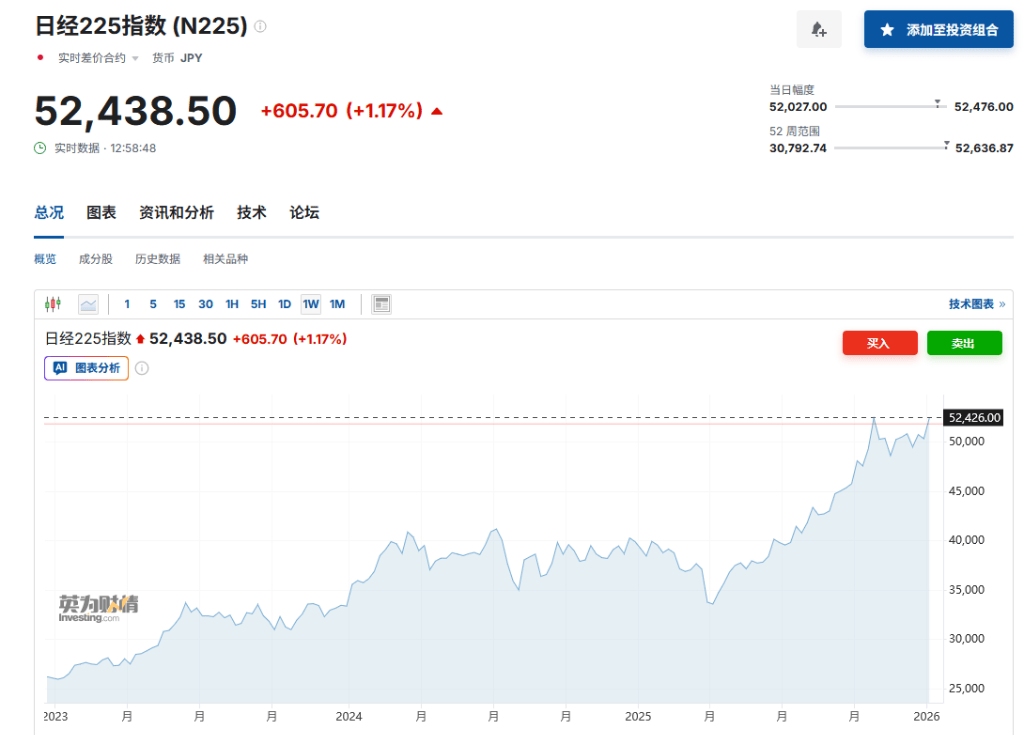
Core Viewpoint - Asian stock markets reached a historical high on Tuesday, driven by technology stocks, with significant price increases anticipated in server DRAM, particularly in DDR5 and HBM segments, benefiting from AI demand [1][2] Group 1: Market Performance - The MSCI Asia-Pacific Index rose by 1.1%, with a stock ratio of over 2:1 in favor of gainers [1] - The South Korean Composite Index surpassed 4500 points, with SK Hynix shares increasing by 3.3% to a record high [6] - The Nikkei 225 Index rose over 1%, approaching last year's record high, while the Tokyo Stock Exchange Index reached a new record [6] - The Taiwan Weighted Stock Index increased by 1.4% to 30,511.610 points, marking a historical high [6] - The Singapore Straits Times Index hit an intraday historical high [6] Group 2: Valuation and Investment Trends - Despite three consecutive years of growth, Asian stocks remain relatively cheap compared to U.S. tech stocks, with the MSCI Asia-Pacific Index trading at a P/E ratio of 15, while the S&P 500 Index is at 22 and the Nasdaq 100 Index at 25 [2] - Japanese markets are particularly strong, with retail investors driving some of the gains, and foreign investors are expected to re-enter the Japanese market due to easing portfolio rebalancing pressures [2][4] Group 3: Policy and Economic Outlook - Morgan Stanley analysts predict a strong year for risk assets, supported by a combination of fiscal, monetary, and regulatory policy easing [5] - The overall bullish sentiment in the stock market remains intact, with expectations for stronger earnings growth and a revival in AI financing and M&A activities [7]

Why Overdiversifying Your Portfolio Is a Really Bad Idea
The Motley Fool· 2025-12-27 16:22
Core Viewpoint - Diversification is essential for protecting portfolio value, but overdiversification can lead to disappointing results [1][2][4] Group 1: Importance of Diversification - Diversification helps reduce the risk of poor-performing investments by including a mix of investment types that behave differently under specific economic conditions [1][2] - A well-diversified portfolio minimizes the impact of losses from any single investment, as seen in the example of spreading investments across 20 different stocks or asset types [2] Group 2: Risks of Overdiversification - Overdiversification can dilute the overall gains of a portfolio, as high-performing assets may not significantly contribute to returns if overshadowed by numerous low-performing investments [8] - Mental fatigue can arise from managing a complex portfolio, leading to less strategic decision-making [8] - Investors may miss opportunities to invest in higher-quality assets due to spreading their money too thin [8] - Higher transaction costs can occur from managing a larger number of assets, increasing fees and management costs [8] Group 3: Signs of Overdiversification - Indicators of overdiversification include owning too many similar investments, difficulty in tracking holdings, and a portfolio performance that mirrors or underperforms the market [8] - Challenges in rebalancing due to holding many small positions and inability to recall the rationale behind several investments are also signs of overdiversification [8]

Aalberts N.V.: Aalberts reports progress on divestment programme
Globenewswire· 2025-12-01 06:30
Core Viewpoint - Aalberts N.V. is actively restructuring its European portfolio through three significant transactions aimed at enhancing its strategic focus and aligning with its 'thrive 2030' strategy [4][5]. Group 1: Divestments - Aalberts has agreed to divest 100% of Metalis SAS, a French company generating annual revenue of approximately EUR 158 million and employing 1,045 people [2]. - The company will also divest 100% of BROEN ApS, a Danish firm with annual revenue of around EUR 82 million and 500 employees, with closure expected in the first half of 2026 [4]. Group 2: Shareholding Reduction - Aalberts has reached an agreement to reduce its shareholding in Kan Sp. z.o.o (KAN) from a controlling majority to 45%, changing the accounting treatment from full consolidation to equity accounting. KAN generates annual revenue of approximately EUR 160 million and has 800 employees [3]. Group 3: Strategic Direction - CEO Stéphane Simonetta emphasized the company's commitment to disciplined capital allocation and strategic choices to maintain leadership positions, aligning with global trends such as urbanization, technology acceleration, reshoring, and decarbonization [5]. - The impact of these transactions is not expected to alter the full year EBITA outlook previously provided in the 3Q results [5].

恒生港股通高股息低波动指数冲击6连涨,恒生红利低波ETF(159545)场内频频溢价;“去风险”下投资组合再平衡,港股红利板块逆势走强
Sou Hu Cai Jing· 2025-10-27 06:28
Core Viewpoint - The Hang Seng High Dividend Low Volatility Index (HSHYLV.HI) has shown resilience, increasing by 0.46% and achieving a six-day winning streak, while the broader Hang Seng Index has declined by 2.49% during the same period [1]. Group 1: Market Performance - The Hang Seng High Dividend Low Volatility Index has risen over 6% from October 9 to October 24, contrasting with the decline of the Hang Seng Index [1]. - Key stocks contributing to the index's performance include Cheung Kong (up 1.3%), China Petroleum & Chemical Engineering (up 2.6%), and China Shenhua Energy (up 1.8%) [1]. Group 2: Fund Details - The Hang Seng Low Dividend ETF (159545) closely tracks the Hang Seng High Dividend Low Volatility Index, with a current fund size of 4.037 billion yuan and active trading exceeding 100 million yuan [1]. - The fund's distribution mechanism allows for evaluation of excess returns and distributable profits quarterly, enhancing cash yield stability for investors [2]. Group 3: Industry Focus - The Hang Seng High Dividend Low Volatility Index is designed to reflect the performance of high dividend, low volatility stocks available through the Hong Kong Stock Connect, with a focus on mature and stable sectors such as finance, real estate, and energy [1].
Financial Tips for New Investors
Yahoo Finance· 2025-10-06 09:30
Investment Research and Strategy - Conducting due diligence is essential for making informed investment decisions, whether for stocks or bonds [1][2] - Understanding investment products, their evaluation, and the importance of consulting with investment professionals can enhance decision-making [2][3] Financial Planning - Defining investment goals and time horizons is crucial before opening an investment account, as it influences the types of investments chosen [4] - Establishing a solid financial foundation, including an emergency fund and paying off high-interest debt, is recommended before starting to invest [5] Investment Approach - Diversification across different asset classes and sectors can reduce risk and smooth out portfolio volatility [7] - Awareness of costs and fees associated with investments is vital, as even small differences can significantly impact overall returns [8][9] Account Management - Different investment accounts have varying fee structures, and understanding these costs is important for effective investment management [10][11] - Utilizing tax-advantaged accounts can provide benefits for long-term savings, including retirement and education [12][13] Investment Strategy - Regular investment through strategies like dollar-cost averaging can help mitigate market timing risks and benefit from compounding [15] - Monitoring investments and staying informed about market changes is essential for aligning with financial goals [16][17] General Investment Advice - Each investor's financial situation is unique, and skepticism towards investment fads is advised; thorough research is necessary [18]
美股最动荡月份来了
Di Yi Cai Jing Zi Xun· 2025-09-02 00:18
Core Viewpoint - September is historically the most volatile month for the U.S. market, with uncertainties such as potential Fed rate cuts and political pressures on the Fed adding to the suspense of whether the S&P 500 can maintain its strength after reaching historical highs [2][3]. Market Analysis - Historical data shows that since 1927, the S&P 500 index has a 56% probability of declining in September, with an average drop of 1.17%. In the last decade, the average decline has been worse at 1.93%, and in the first year of a presidential term, the probability rises to 58% with an average drop of 1.62% [3]. - The forward P/E ratio of the S&P 500 has reached 22 times, nearing levels seen at the end of the dot-com bubble, raising concerns about valuation risks. There is a potential for selling pressure as pension and mutual funds rebalance portfolios at the end of September [6]. - Since August, there has been a shift in the market, with cyclical sectors and small-cap stocks leading gains, while large tech stocks have lagged. Non-essential consumer goods ETFs rose by 4.3%, financial sector ETFs by 2.6%, and the Russell 2000 small-cap index increased by 7.3%, significantly outperforming tech and communication sectors, which saw around 1% growth [6]. Economic Indicators - Recent U.S. economic data presents a mixed picture, with significant declines in non-farm payrolls from May to July, and deteriorating consumer confidence in August. However, retail sales and earnings reports from major retailers indicate that consumer spending remains robust, suggesting that the impact of tariffs may not be as severe as feared [6]. - The upcoming non-farm payroll report is expected to show an increase of 75,000 jobs in August, with the unemployment rate potentially rising slightly to 4.3%. The weak job numbers from July and downward revisions for May and June have heightened expectations for a Fed rate cut [7][8]. Federal Reserve Outlook - Fed Chair Jerome Powell has indicated a shift from a cautious stance, acknowledging that inflation risks are tilted upward while employment risks are downward. This suggests a potential adjustment in policy stance may be necessary [7]. - Market expectations for a September rate cut are already priced in, but the probability of more than two cuts this year has dropped from over 50% to below 30% [9]. - Political pressures on the Fed, particularly from President Trump, raise concerns about the Fed's ability to maintain its independence in monetary policy. The potential for Trump to influence Fed appointments could lead to a more dovish monetary policy environment [9].