
楼市政策松绑

Search documents
“沪七条”落地,上海或成一线城市“企稳第一城”
3 6 Ke· 2026-02-25 08:11
Core Viewpoint - Shanghai's real estate market is experiencing significant policy adjustments aimed at stimulating demand and improving market conditions following the recent Spring Festival holiday [1][2][3]. Policy Adjustments - The new policy includes a reduction in the purchase restrictions for non-local residents, shortening the required social insurance or individual income tax payment period from 3 years to 1 year [1][2]. - Non-local residents can now purchase one additional property in the outer ring of Shanghai if they have paid social insurance or individual income tax for at least 1 year [1][2]. - Holders of the Shanghai residence permit for over 5 years can buy one property in the city without needing to provide proof of social insurance or tax payments [2]. Housing Fund Loan Optimizations - The maximum loan amount for first-time homebuyers using the housing provident fund has been increased from 1.6 million yuan to 2.4 million yuan, with potential increases for families with multiple children [2][3]. - The recognition of loan counts has been optimized, allowing families with existing loans to apply for new loans if they have either no housing or only one property [3]. - The support for multi-child families has been expanded to include second home purchases, with a maximum loan amount increase of 20% for such cases [3]. Property Tax Policy Improvements - Starting January 1, 2023, there will be a temporary exemption from personal housing property tax for adult children purchasing their family's only home [3]. Market Impact - The adjustments are expected to lower the financial burden on first-time and upgrading homebuyers, enhancing their purchasing power and improving the liquidity of the second-hand housing market [3]. - Shanghai's real estate market is showing signs of recovery, with second-hand housing transactions exceeding 20,000 units for three consecutive months, indicating a positive trend [4][5].
楼市“沪七条”出台!业内称精准赋能三大需求,上海望成一线城市企稳标杆
Cai Jing Wang· 2026-02-25 07:38
Core Viewpoint - The new housing policy "沪七条" in Shanghai aims to optimize and adjust the city's real estate policies, effective from February 26, 2026, to better meet the needs of various buyer groups and stimulate market demand [1] Group 1: Housing Purchase Policy Adjustments - The policy reduces the social insurance or personal income tax payment period required for non-local residents to purchase homes within the outer ring of Shanghai to a minimum of 1 year [2] - Eligible non-local residents can purchase an additional home within the outer ring if they have paid social insurance or personal income tax for at least 3 years [2] - Holders of the Shanghai residence permit for over 5 years can buy one home in the city without needing to provide proof of social insurance or tax payments [2] Group 2: Housing Fund Policy Optimization - The maximum loan amount for first-time homebuyers using the housing fund is increased from 1.6 million yuan to 2.4 million yuan, with potential increases for families with multiple children and those purchasing green buildings, reaching up to 3.24 million yuan [4] - The policy allows families who have previously used housing fund loans to apply for new loans if they have no homes or only one home in the city and have settled their previous loans [4] - The support for multi-child families is expanded to include second home purchases, with a 20% increase in the maximum loan amount for such cases [4] Group 3: Market Impact and Demand Release - The optimization of housing fund policies is expected to enhance purchasing power and improve the liquidity of the second-hand housing market, thereby stimulating demand in both the new and second-hand housing markets [5] - The adjustment of the personal housing property tax policy will facilitate the improvement and replacement needs of local families, which is crucial for enhancing the liquidity of the second-hand housing market [6] - The new policies are designed to address the real demands of first-time buyers, upgrade needs of long-term residents, and replacement needs of local families, potentially making Shanghai a benchmark for market stabilization among first-tier cities [7]
北京楼市新政后新房网签量增长显著
2 1 Shi Ji Jing Ji Bao Dao· 2025-12-29 11:07
Core Viewpoint - Beijing has implemented further adjustments to its real estate policies, aimed at easing restrictions and stimulating the housing market, particularly for non-local families and multi-child households [1][10]. Policy Adjustments - The duration for social security or individual income tax payments required for non-local families to purchase homes within the Fifth Ring has been reduced from 3 years to 2 years, and for homes outside the Fifth Ring, from 2 years to 1 year [1]. - The new policies also support multi-child families in purchasing an additional home, eliminate the distinction between first and second home mortgage rates, lower the down payment ratio for public housing loans, and optimize the business environment [1]. Market Response - Following the policy announcement, there has been a positive response in the Beijing housing market, with increased visitor numbers and transaction volumes for new homes and second-hand properties [2]. - Data from the China Index Academy indicates that from December 25 to December 28, the average daily online signing volume for new residential properties was 133 units, a 44.6% increase compared to the period before the policy change [2]. Customer Behavior - Sales personnel reported a noticeable increase in customer inquiries and visits to properties, with weekend viewings estimated to be about 30% higher than usual [3][4]. - Some customers who had been hesitant previously made decisions to purchase after the policy changes, indicating a quicker decision-making process [4]. Market Segmentation - Despite the overall positive response, there remains a significant differentiation in market performance across various districts and projects, with some areas experiencing minimal changes in visitor and transaction volumes [6][8]. - In certain mature residential areas, such as the Panjiayuan region, real estate agents noted that the impact of the new policies was not significantly felt, with stable demand for smaller units but no notable increase in prices or sales [9]. Long-term Outlook - The gradual approach to policy adjustments suggests that the effects on the housing market may take longer to materialize, with analysts indicating that the current supply surplus and increasing demand for improved housing options provide buyers with more choices, potentially extending decision-making timelines [11]. - The recent policy changes are seen as a significant step, with expectations that similar adjustments may occur in other major cities like Shanghai and Shenzhen [11].
楼市“回血”不是梦
Sou Hu Cai Jing· 2025-11-02 18:36
Core Insights - The Chinese real estate market is experiencing a revival driven by policy relaxations, with major cities like Beijing, Shenzhen, and Shanghai implementing measures to boost buyer confidence and market activity [5]. Policy Changes - Over 200 cities have introduced more than 510 real estate policies by the end of October, marking the most intensive market rescue season in history [5]. - Key measures include the removal of purchase restrictions in certain areas, adjustments to mortgage rates, and increased subsidies for families with three children [5]. Market Response - The transaction volume of second-hand homes in Beijing, Shanghai, and Shenzhen has surged by 30% year-on-year, indicating a significant recovery in market confidence [5]. - Developers are adopting innovative marketing strategies, such as offering parking spaces in live-streaming sessions and various discounts, making the market more accessible [5]. Future Outlook - The future of the real estate market is expected to shift from price competition to a focus on quality, emphasizing living experience and stability of expectations [5]. - The new guiding principles for the market are "stabilizing expectations, activating demand, and optimizing supply," reflecting the shift towards high-quality development [5].


上海楼市,说好的金九银十呢?!
Sou Hu Cai Jing· 2025-09-17 01:37
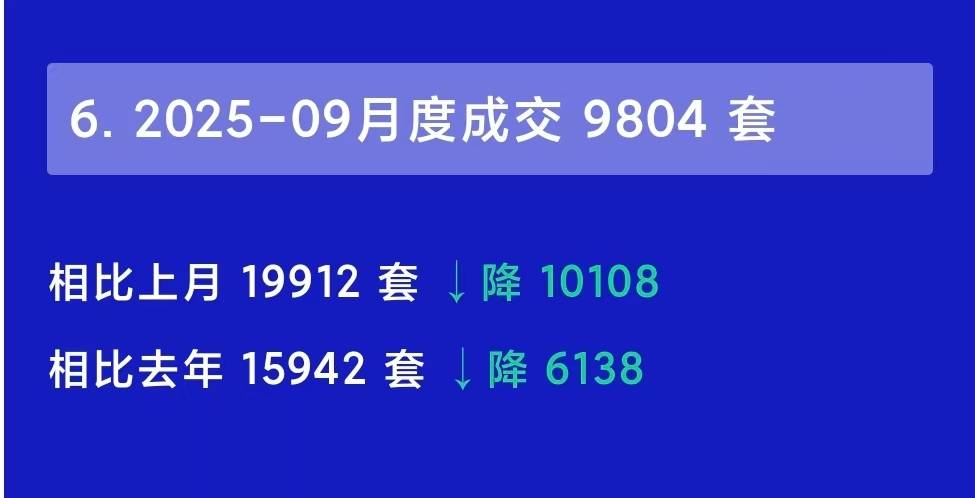
Core Insights - The Shanghai second-hand housing market is experiencing a lack of significant sales activity despite the traditionally strong sales period of September and October, with 9,804 transactions recorded in September, showing no notable improvement in volume [1] - The average price of second-hand residential properties in Shanghai has decreased by 0.80% month-on-month in September, indicating an overall downward trend [1] Market Dynamics - The number of second-hand housing listings in Shanghai is approaching 390,000, leading to an imbalance in supply and demand [3] - Despite some policy relaxations in the Shanghai real estate market, buyer sentiment remains cautious due to economic uncertainties and a competitive landscape of similar properties, with many buyers adopting a wait-and-see approach [3] - The influx of negative information regarding real estate online has further exacerbated buyer hesitation, with sellers becoming more eager to sell while buyers remain reluctant [3] Long-term Outlook - There is potential for increased market activity and a possible rebound in transaction volume due to the recent policy relaxations, as more individuals may qualify to purchase homes [3] - Current pricing appears to be stabilizing, with transaction levels largely dependent on location, future prospects, and the properties themselves [3] - The market has seen a shift in buyer perception, with many feeling that prices have not yet reached a rational level, leading to a disconnect between seller expectations and buyer willingness to purchase [3] Buyer Segments - First-time homebuyers and those looking to upgrade their living conditions remain the primary drivers of the market, with a sustained demand for high-quality properties [5] - Young buyers seeking their first homes and those looking to improve their living situations are expected to continue to release demand in the market [5] - The demand for high-quality housing, particularly in desirable neighborhoods with good amenities, is likely to increase as buyers prioritize property quality and community environment [5]
中国建筑公布2025年1—8月经营情况,业务规模稳健增长
Zheng Quan Shi Bao Wang· 2025-09-16 07:49
Group 1 - The core viewpoint of the articles highlights that China State Construction (601668.SH) has maintained a steady growth in its business operations, with a total new contract amount of 28,799 billion yuan for the first eight months of 2025, reflecting a year-on-year increase of 1.0% [1] - In the construction business, the new contract amount reached 26,644 billion yuan, up 1.8% year-on-year, with the housing construction business contributing 17,606 billion yuan (0.2% increase) and infrastructure business 8,954 billion yuan (5.0% increase) [1] - The domestic business accounted for 25,306 billion yuan, showing a 2.2% year-on-year growth, while physical indicators included a housing construction area of 155,615 million square meters, new construction area of 18,041 million square meters, and completed area of 12,479 million square meters [1] Group 2 - In the real estate sector, China State Construction reported a contract sales amount of 215.5 billion yuan and a contract sales area of 8.12 million square meters, with a narrowing year-on-year decline [1] - The company acquired land reserves of 576,000 square meters, bringing total land reserves to 7,473,000 square meters by the end of the period [1] - Recent major projects amounting to 8.59 billion yuan are progressing steadily, including significant housing projects in Saudi Arabia and China, which are expected to support the completion of annual targets [2] - The easing of housing market policies in August 2025, such as expanding the use of housing provident funds and relaxing purchase restrictions, is anticipated to stimulate market activity, with a potential rebound in market activity expected in September [2] - As a leader in the construction and real estate industry, China State Construction is expected to maintain strong resilience in its development due to its robust construction capabilities, technological innovation, and quality real estate project reserves [2]

内房股集体走低 世茂集团跌近5% 中梁控股跌超3%
Zhi Tong Cai Jing· 2025-09-15 03:18
Core Viewpoint - The Chinese real estate sector is experiencing a collective decline, with significant drops in stock prices for major companies, driven by negative investment and sales data released by the National Bureau of Statistics [1] Group 1: Market Performance - Major real estate stocks such as Shimao Group, Zhongliang Holdings, Sunac China, and China Overseas Grand Oceans have seen declines of 4.71%, 3.41%, 3.21%, and 3.07% respectively [1] - As of the end of August, the total investment in real estate development reached 60,309 billion yuan, reflecting a year-on-year decrease of 12.9% [1] Group 2: Sales Data - From January to August, the sales area of new commercial housing was 57,304 million square meters, down 4.7% year-on-year, with residential sales area also decreasing by 4.7% [1] - The sales revenue for new commercial housing was 55,015 billion yuan, a decline of 7.3%, with residential sales revenue dropping by 7.0% [1] Group 3: Inventory and Market Dynamics - As of the end of August, the unsold inventory of commercial housing was 76,169 million square meters, which is a reduction of 3.17 million square meters compared to the end of July [1] - The report from CMB International indicates that the overall supply and demand in the housing market remain weak, with increasing differentiation between cities and projects [1] Group 4: Policy Impact and Future Outlook - August saw a focus on policies related to housing provident funds and easing restrictions, aimed at stimulating market activity [1] - The expectation for September is a traditional peak marketing season, where real estate companies may accelerate their sales efforts and increase discounts, particularly in core first-tier cities where favorable policies are being introduced [1]

深夜突发!深圳楼市限购调整,本周六起施行!
证券时报· 2025-09-05 15:38
Core Viewpoint - Shenzhen's new real estate policy aims to optimize housing purchase regulations and improve housing affordability for residents and enterprises, following similar adjustments in Beijing and Shanghai [1][2]. Policy Adjustments - The policy includes adjustments to residential purchase regulations, allowing enterprises to buy housing for employee needs under specific conditions, such as a minimum of 1 year of establishment and a tax payment of 1 million RMB in certain districts [2]. - Personal housing loan policies are also optimized, with banks no longer differentiating between first and second home loans in interest rate pricing, allowing for more flexible loan terms [2]. Housing Fund Regulations - New proposals for the Shenzhen Housing Provident Fund include six new withdrawal scenarios to support employees in purchasing their first or second homes, including full withdrawal for the first home and 60% for the second home [3]. - The policy allows for the withdrawal of funds to cover housing taxes and extends the scope of loan repayment withdrawals to nationwide, facilitating easier access to funds for homebuyers [3]. Purchase Conditions - Residents eligible to purchase homes in specific districts can buy without limits, while non-residents face restrictions based on their tax and insurance payment history [4]. - Single adults are subject to the same purchase limits as families, reflecting a more inclusive approach to housing access [4]. Market Trends - In July, Shenzhen's real estate market showed a decline in new home sales while second-hand home transactions increased, indicating a shift in buyer preferences [6]. - By August, second-hand home transactions showed signs of recovery, with a reported increase in sales, although the market remains sensitive to pricing and policy changes [6][7]. Comparative Analysis - Compared to other first-tier cities, Shenzhen is adjusting its policies to align with broader trends of easing restrictions, as seen in Guangzhou's complete cancellation of purchase limits [7]. - The overall trend in major cities indicates a move towards targeted easing of restrictions to stimulate demand and alleviate inventory pressures, with Shenzhen's policies reflecting this strategic direction [7].

降息!放水!9月楼市真的要启动了吗?
Sou Hu Cai Jing· 2025-08-27 21:08
Economic Indicators - In July, the total electricity consumption reached 1.02 trillion kWh, a year-on-year increase of 8.6%, indicating structural changes in the economy [1][3] - Industrial electricity consumption accounts for nearly 60%, while traditional high-energy-consuming sectors such as chemicals, steel, non-ferrous metals, and building materials saw a collective decline in electricity usage [1][3] - High-tech manufacturing, electronic devices, biomedicine, and industrial robotics experienced electricity consumption growth rates exceeding 10% [3] Transportation and Financing - Railway freight volume has shown positive growth for six consecutive months, with July's freight volume reaching 452 million tons, a year-on-year increase of 4.5% [3] - The balance of domestic and foreign currency loans remained above 272 trillion yuan, with a year-on-year growth of 6.7%, indicating sustained financing willingness [3] Monetary Policy Expectations - The market widely anticipates a 25 basis point interest rate cut by the Federal Reserve, which would alleviate global funding cost pressures and expand China's monetary policy space [6] - Historical experience suggests that the LPR may be lowered by 10-15 basis points on September 22, aiming for a balance between stable exchange rates and supporting the real estate market [6] Real Estate Market Dynamics - Domestic policies are entering a sensitive phase, with intentions to stabilize the real estate market becoming evident [8] - Potential policy paths include urban village renovations, updating dilapidated housing, and supporting improvement demand, all pointing towards a high-quality housing market [8] - The relaxation of purchase restrictions in Beijing and the potential for similar actions in Shanghai and Shenzhen may lead to a rebound in core city real estate markets if combined with interest rate cuts [8][10] Long-term Real Estate Trends - Historical patterns indicate that stock markets often rise before real estate markets, suggesting a potential correlation in the current cycle [10] - Despite concerns about population peaks and high vacancy rates, the continuous expansion of money supply supports the long-term upward trend in core city housing prices [11] - The urbanization rate in China has just crossed 66%, with population and resources still concentrating in major cities, reinforcing the demand for real estate [11] Investment Strategies - The current low down payment ratios and mortgage rates present favorable conditions for homebuyers, making it a rational choice to sell properties in non-core areas and invest in prime locations [13] - The potential for housing prices in top cities to increase by 3-5 times over the next two decades is supported by the natural results of compounding and deepening urbanization [13] - Investors are advised to focus on "hardcore assets" such as properties near subway stations, quality school districts, and industrial clusters, which provide liquidity support and resilience [18]
北京限购破冰,沪深箭在弦上!但楼市回暖的最大障碍,是我们自己
Sou Hu Cai Jing· 2025-08-15 07:42
Group 1 - The core viewpoint of the article highlights the recent policy changes in Beijing that have led to increased customer traffic in properties outside the Fifth Ring Road, indicating signs of market stabilization despite no explosive growth in transactions [2][10] - The anticipation for similar policy adjustments in Shanghai and Shenzhen is evident, with industry insiders believing that it is only a matter of time before these cities follow suit [3][4] - The policy shift in Beijing represents a significant change in regulatory philosophy, moving from strict controls to more flexible measures, which could serve as a reference for other first-tier cities [5][6] Group 2 - The article suggests that the market may experience a structural trend, with certain areas in Beijing seeing significant month-on-month transaction increases, while more remote regions may continue to face pressure [8] - Data from Shenzhen indicates a decline in the proportion of new citizens purchasing homes, reflecting a decrease in purchasing power, which could impact the effectiveness of any forthcoming policy relaxations [9] - The "sample effect" from Beijing's policy changes has sparked market expectations, but the complexity and time lag of policy transmission are highlighted, emphasizing that policies alone cannot create purchasing power [10]
