特高压技术

Search documents
中国电力设备凭啥“爆单”全球
Ke Ji Ri Bao· 2026-03-02 00:27
◎本报记者李均 近日,在长三角地区的江苏亚威变压器有限公司,国内首台345千伏级全绝缘超高压大容量变压器下 线,发往美国市场。据介绍,去年4月,这家企业凭借优越技术方案、过硬品控能力及显著交付优势, 在国际竞标中脱颖而出,拿下美国一家电力企业的三台特种变压器订单。该订单产品需同时满足大容 量、超高压、全绝缘等要求,此前国内制造企业尚未涉足该领域,无经验可循。在获得订单后,这家企 业立即组建专项设计研发小组,从电磁计算、结构布置等方面进行科学论证,筛选出最好的设计方案。 研发团队还运用最新款模拟仿真验证软件,对全物理过程进行模拟验证,最终一次性通过客户评 生产线全线满产,订单量充足;新增产能加速落地,工人们各司其职赶工交付……近日,科技日报记者 从广东、江苏、河北、山东等地部分电力设备制造企业了解到,当前,随着全球算力建设迎来爆发式增 长以及能源工程的加速推进,面向数据中心、算力中心的订单大多已排至2027年,海外订单更是呈井喷 式增长,企业正加快生产步伐。中国电力设备制造产业凭借核心技术突破和全产业链布局的硬核优势, 已形成"特高压技术引领、智能运维升级、绿色低碳转型、全球市场拓展"的立体格局,牢牢占据全球市 ...


华明装备2025年净利润同比增长15.54% 海外与高端双轮驱动启新篇
Zheng Quan Ri Bao Wang· 2026-02-27 03:01
"这是本公司核心业务首次突破20亿元大关,通过深度绑定国内大型变压器厂商,我公司正凭借技术、 成本和交付等优势分享全球市场红利。"华明装备有关负责人对《证券日报》记者说。 报告期内,华明装备积极推进全球化布局,新加坡区域总部成立、印尼工厂正式投产、土耳其工厂稳定 运营等,构建了从生产、销售到服务的立体化海外网络,在欧洲、巴西、北美等多个地区实现快速增 长,海外本地化运营网络已初具雏形。 2月26日晚,华明电力装备股份有限公司(以下简称"华明装备(002270)")发布2025年年度报告。在 全球能源转型与电网升级浪潮中,该公司2025年交出了一份含金量十足的成绩单:全年实现营业收入 24.27亿元,同比增长4.5%;归属于上市公司股东的净利润7.1亿元,同比增长15.54%。在业绩增长的同 时,该公司同步披露了高分红预案:拟向全体股东每10股派发现金红利2.10元(含税),2025年全年该 公司累计现金分红总额将达5.46亿元,占当年净利润的76.9%。 海外收入占比提升 2025年,华明装备核心业务所处的电力设备行业迎来了多重利好共振,国内业务持续受益于电网投资的 稳定增长和新能源发电占比的提升;海外市场需 ...

美苏日全折戟,中国却做到了!想学这一招?全球标准都由中国定!
Sou Hu Cai Jing· 2026-02-18 15:14
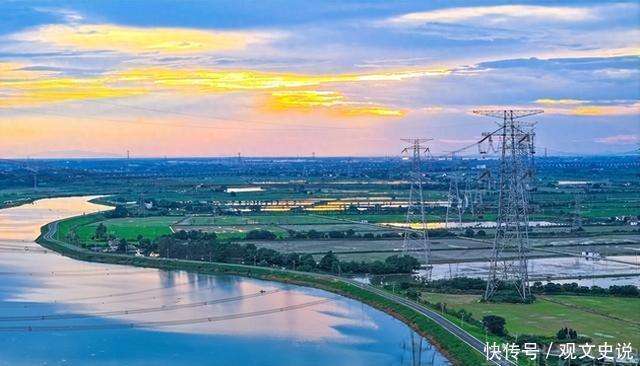
在这样的困境下,很多人都会问,得州发生了停电,难道不能从其他州调电过去支援吗?毕竟咱们中国 在遇到困难时,总是有难八方支援,电网相互连接,大家都能帮上一把。可惜,美国的电网体系并不像 咱们想的那样。美国本土的电网是三足鼎立的:东部电网、西部电网,还有一个就是特立独行的得州电 网。而这三个电网几乎完全没有互联互通,彼此之间就像是三个独立的王国,即便东部和西部电力充 足,也无能为力,根本无法互相支援。 那美国人是不是傻,竟然不知道把电网连起来呢?当然不是!其实,他们早就想过这一点,也做了不少 努力,但是技术实力始终限制了他们的能力。电力输送的最大难题就是损耗。随着输电距离的增加,电 力的损耗也会迅速增加。目前国际上使用的500千伏超高压输电,最经济的传输距离大概在600到800公 里左右。可得州离东西部的主要电源点动辄超过1500公里,这样的距离,电力如果强行送过去,发出的 电是100度,送到目的地可能就只剩下几度了。如此一来,根本没有人愿意做这种亏本买卖。 大家好,欢迎来到老闫侃时事!最近,美国能源部长在公开场合的一番话,真的是让人意外到掉下巴。 她居然直言不讳地表示,希望能向中国取取经,看看咱们在特高压输电技 ...

宏盛华源:公司掌握了各类钢结构加工技术、高强度角铝加工技术等
Zheng Quan Ri Bao· 2026-02-02 11:43
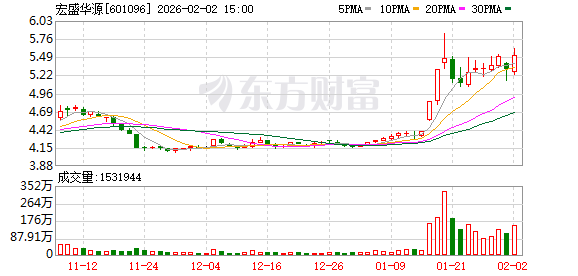
Core Viewpoint - The company is enhancing collaborative innovation, deepening technology research and development, optimizing product quality, and innovating technology applications to address various technical challenges in the steel structure industry [2] Group 1: Technological Advancements - The company has successfully tackled technical challenges such as weathering steel, welding stress in cast steel nodes, color matte anti-corrosion for towers, non-rinsing water galvanization, high-strength spiral anchor welding, and design of tracking photovoltaic brackets [2] - The company has mastered various steel structure processing technologies and high-strength angle aluminum processing technologies [2] Group 2: Industry Participation - The company has been deeply involved in China's ultra-high voltage construction since its inception, acquiring core technologies and processes [2] - The company has accumulated a solid technical foundation and rich experience, with its technology level being widely recognized both within and outside the industry [2] Group 3: Application of Technologies - The company has successfully applied its relevant technologies to new types of lattice tower wind turbine units [2]

瞭望·吾心吾乡|“一门三工匠”:最高峰上再登顶
Xin Hua Wang· 2026-02-01 08:09
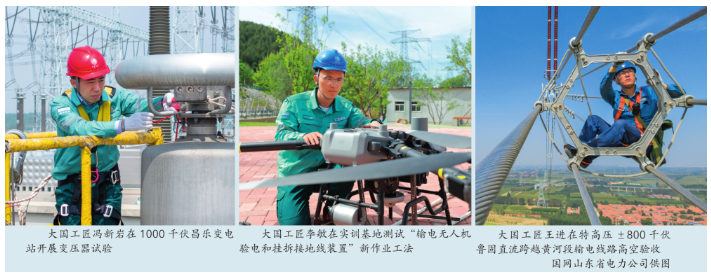
Core Viewpoint - The article highlights the achievements of three prominent craftsmen in the ultra-high voltage (UHV) sector of the State Grid Shandong Electric Power Company, showcasing the synergy between UHV technology development and the cultivation of skilled workers in China [1][2]. Group 1: Achievements of Craftsmen - Wang Jin, the world's first person to perform live-line work on ±660 kV direct current, initiated a legacy of excellence in the UHV field by receiving the "National Craftsman of the Year" award in 2018 [1][3]. - Feng Xinyan, an authority on UHV transformer diagnostics, followed Wang in receiving the same honor in 2022, demonstrating the high standards and rigorous demands of UHV technology [1][4]. - Li Min, a pioneer in UHV drone inspection technology, represents the new generation of craftsmen, furthering the legacy of innovation and skill in the industry [1][5]. Group 2: Technical Challenges and Innovations - The UHV engineering sector is critical to China's energy strategy, with stringent standards that require precision to the millimeter level, particularly in transformer diagnostics [2][4]. - Wang Jin's successful emergency repair of a critical component on the world's first ±660 kV line exemplifies the high-stakes environment in which these craftsmen operate [2][3]. - Feng Xinyan improved the accuracy of UHV live detection from below 50% to nearly 100%, preventing potential losses exceeding 1 billion yuan through his innovative diagnostic methods [4][6]. Group 3: Training and Knowledge Transfer - The tradition of "master-apprentice" relationships in the State Grid Shandong Electric Power Company has fostered a culture of skill transfer, with Wang Jin mentoring Li Min and others [8][9]. - The company has established a robust ecosystem for talent development, integrating training platforms, innovation initiatives, and a supportive environment for skill enhancement [11][12]. - The "进·新" innovation team, led by Wang Jin and Feng Xinyan, has successfully implemented advanced technologies and methodologies, including drone inspections and GIS fault simulation, to enhance operational efficiency [12][13]. Group 4: Future Prospects - The ongoing development of UHV technology and the cultivation of skilled craftsmen are expected to continue, with the company aiming to produce more skilled workers in the coming years [12][13]. - The integration of innovative training programs and the establishment of a culture that encourages experimentation and learning from failures are key to sustaining growth in the UHV sector [12][13].
特变电工尾盘涨停,成交额达200亿元
Zhi Tong Cai Jing· 2026-01-19 07:19
Group 1: Company Overview - TBEA is a leading player in the global ultra-high voltage technology sector, holding approximately 6.2% market share in the global power transmission and transformation equipment market, ranking fourth globally [2] - The company has a domestic market share of over 45% in ultra-high voltage transformers and over 20% globally, with more than 30% share in the ±800kV and above converter transformer segment [2] - TBEA is the only company globally to have achieved mass production of ±1100kV converter transformers, with technology parameters that are industry-leading [2] Group 2: Recent Developments - On January 19, TBEA experienced significant buying activity, leading to a stock price surge and a trading volume of 20 billion yuan [1] - The State Grid of China announced an investment plan of 4 trillion yuan during the 14th Five-Year Plan period, a 40% increase compared to the previous plan, signaling a peak period for the power grid equipment industry [1] Group 3: International Expansion - TBEA is recognized as a benchmark enterprise for the Belt and Road Initiative, exporting products and services to over 90 countries, and is a key supplier for power grid upgrades in the Middle East and Africa [3] - The company secured a record contract worth 16.4 billion yuan for a super high voltage project in Saudi Arabia, marking the largest single order in China's power transmission and transformation equipment export history [3] - TBEA's overseas revenue is projected to increase from 12% in 2023 to 25% by mid-2025, with a backlog of over 5 billion USD in overseas contracts [3] Group 4: Financial Performance - For the first three quarters of 2025, TBEA reported revenue of 72.6 billion yuan and a net profit attributable to shareholders of 5.48 billion yuan, reflecting a year-on-year growth of 28% [4]

重庆累计消纳“疆电” 突破100亿千瓦时
Zhong Guo Dian Li Bao· 2026-01-06 02:58
Core Insights - The "Xinjiang Power to Chongqing" project has successfully transmitted over 10 billion kilowatt-hours of electricity since its operation, marking a significant milestone in cross-regional energy cooperation in China [1] Group 1: Project Overview - The "Xinjiang Power to Chongqing" project is part of China's 14th Five-Year Plan and is the first ultra-high voltage direct current (UHVDC) line connecting Northwest and Southwest China [1] - The project was commissioned on June 10, 2025, with a total length of 2,260 kilometers and an investment of approximately 28.6 billion yuan [1] Group 2: Technical Advantages - Utilizing UHV technology, electricity generated from wind and solar energy in Xinjiang can reach Chongqing in just 7 milliseconds, with a maximum daily transmission capacity of nearly 100 million kilowatt-hours [1] Group 3: Economic and Social Impact - The abundant electricity supply supports the development of trillion-yuan industrial clusters in sectors such as automotive and electronics [1] - The project has integrated into various aspects of daily life in Chongqing, from residential electricity use to commercial operations and public services, becoming a cornerstone for the city's stable operation [1]
万里银线 强国脊梁——我国建成世界上规模最大、最复杂的输变电工程
Zhong Guo Dian Li Bao· 2025-12-23 08:21
Core Insights - China's electricity consumption is expected to exceed 10 trillion kilowatt-hours for the first time by 2025, surpassing the total consumption of the EU, Russia, India, and Japan combined for 2024 [1] - The country has built the world's largest and most advanced power transmission network, with a reliability rate of 99.924% [1] Group 1: Development of High Voltage Transmission - The capacity of China's ultra-high voltage (UHV) transmission has increased from 270 million kilowatts at the end of the 13th Five-Year Plan to 340 million kilowatts, a growth of over 25% [2] - The total length of UHV direct current lines has surpassed 40,000 kilometers, marking a 43% increase from the previous period [2] - The UHV alternating current network has expanded significantly, with the length increasing from 12,000 kilometers to over 20,000 kilometers, a growth of over 67% [2] Group 2: Clean Energy Transition - The proportion of clean energy transmitted through UHV direct current channels has risen from less than 40% at the end of the 13th Five-Year Plan to nearly 60% in 2024, with annual clean energy transmission reaching 420 billion kilowatt-hours, a 70% increase [6] - The construction of UHV transmission channels has accelerated, with projects like the first "wind-solar-fire-storage integrated" UHV project and the "desert energy" transmission channel successfully operational [7][8] Group 3: Technological Innovations - China's UHV technology has achieved breakthroughs in various fields, establishing a self-controlled technical standard system [11] - Key technologies have overcome significant challenges, such as high-altitude construction and integrating large hydropower stations [12] - The integration of digital technology has enhanced the efficiency and reliability of the UHV network, with significant improvements in operational decision-making and equipment assessment [12] Group 4: Global Leadership and Export - China has established itself as a global leader in UHV technology, with the unique ±1100 kV UHV direct current transmission technology setting international standards [13] - Successful projects like the Belo Monte UHV project in Brazil demonstrate China's capability to export high-end equipment and technology [13]
电网老旧分裂,就连稳定供电都做不到,美国AI产业还怎么赢中国?
Sou Hu Cai Jing· 2025-12-23 00:36
Core Viewpoint - The competition between China and the US in the AI industry is heavily influenced by their respective power supply capabilities, with China leveraging its stable electricity grid to support AI development while US tech giants struggle with outdated infrastructure and high costs [1][3]. Group 1: Power Supply and AI Development - AI requires significant electricity, with training a model like ChatGPT consuming energy equivalent to 30,000 Tesla vehicles running 200,000 kilometers, or enough to power 40,000 households for a day [7]. - By 2030, global data centers' electricity consumption is expected to double, surpassing Japan's total electricity usage, making power supply a critical factor for AI survival [9][11]. - China's AI labs benefit from a stable power supply through high-voltage transmission lines, ensuring consistent electricity from renewable sources like hydropower, while the US faces challenges with its aging power grid [11][30]. Group 2: US Power Grid Challenges - The US power grid is plagued by aging infrastructure, with 70% of transmission lines and transformers over 25 years old, leading to inefficiencies and vulnerability to extreme weather [15][21]. - During the 2021 Texas winter storm, over 4 million users lost power, resulting in significant economic losses exceeding $100 billion, highlighting the grid's unreliability [18][21]. - The fragmented nature of the US power grid, divided into independent regional networks, limits its ability to respond effectively to crises, as seen in the Texas power outages [23][30]. Group 3: China's Power Grid Advantages - China's power grid operates as a unified system, allowing for efficient energy distribution across vast distances, which supports AI development in urban centers [30][35]. - The country has mastered high-voltage transmission technology, enabling low-loss electricity delivery over long distances, which is crucial for integrating renewable energy sources [32][35]. - China's electricity costs are significantly lower than those in the US, providing a competitive advantage for AI companies in terms of operational expenses [38][42]. Group 4: Future Implications - As AI technology advances, electricity demand will continue to rise, potentially widening the gap between China's and the US's power grid capabilities [44]. - China's robust power infrastructure is expected to sustain its AI industry's growth and foster related sectors, while the US risks falling behind if it cannot address its power grid issues [44].

特朗普破大防,不如中国?美国AI电力遥遥领先,都要归功于我
Sou Hu Cai Jing· 2025-12-12 13:32
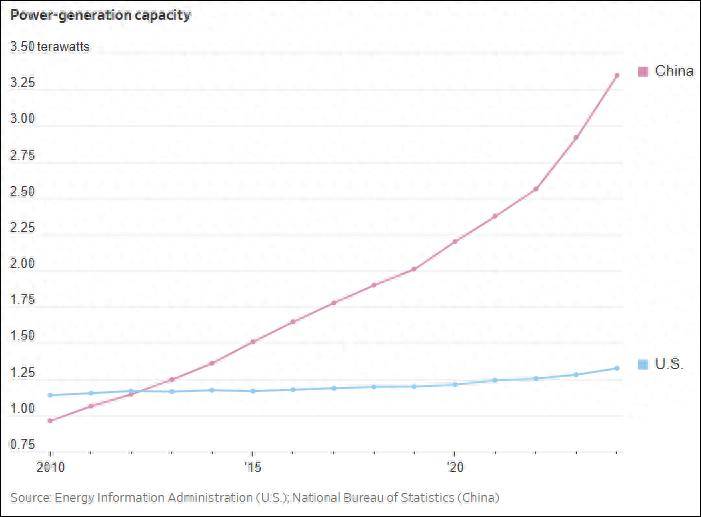
Core Viewpoint - The article discusses China's dominance in AI-related electricity production, contrasting it with the U.S. response led by former President Trump, highlighting the competitive landscape between the two nations in the AI sector and the underlying energy infrastructure needed to support it [1][6]. Group 1: China's Strengths in AI and Energy - China's electricity generation has significantly outpaced other regions, with growth from 2010 to 2024 exceeding the total growth of the rest of the world [6]. - In 2022, China's electricity generation was more than double that of the U.S., and the electricity costs for data centers in China are less than half of those in the U.S. [8]. - Inner Mongolia's "Grassland Cloud Valley" has become a hub for data centers, with over 100 centers either operational or under construction, and a total investment exceeding 160 billion yuan [8]. Group 2: U.S. Response and Challenges - Trump's claims about the rapid construction of AI factories and self-built power facilities in the U.S. were met with skepticism, especially as the U.S. Energy Secretary emphasized AI as a top priority for the government [4][10]. - The U.S. faces significant challenges in electricity reliability, particularly in the Midwest and Southwest, where summer power shortages are common [12]. - The slow progress on infrastructure projects, such as the "Southern Spirit" transmission project in Texas, highlights the difficulties the U.S. faces in meeting the growing energy demands of the AI industry [12][14]. Group 3: Long-term Planning and Future Outlook - Morgan Stanley predicts that China's investment in grid projects will reach $560 billion by 2030, with Goldman Sachs estimating that China's backup power capacity could be three times the expected global data center electricity demand [10]. - The article suggests that the competition in AI and energy will continue, with China's centralized energy system and ongoing policy investments providing a distinct advantage over the U.S.'s fragmented and aging infrastructure [14][16].